KNOWLEDGE ARTICLE
What Is Structured Data?
JSON-LD, Schema.org
Describes page entities, properties and relationships in a machine-readable format.
At a glance
JSON-LD is a common implementation. Search engines can use it to interpret a page, but markup must agree with what visitors see.
Expressing page content as entities and relationships
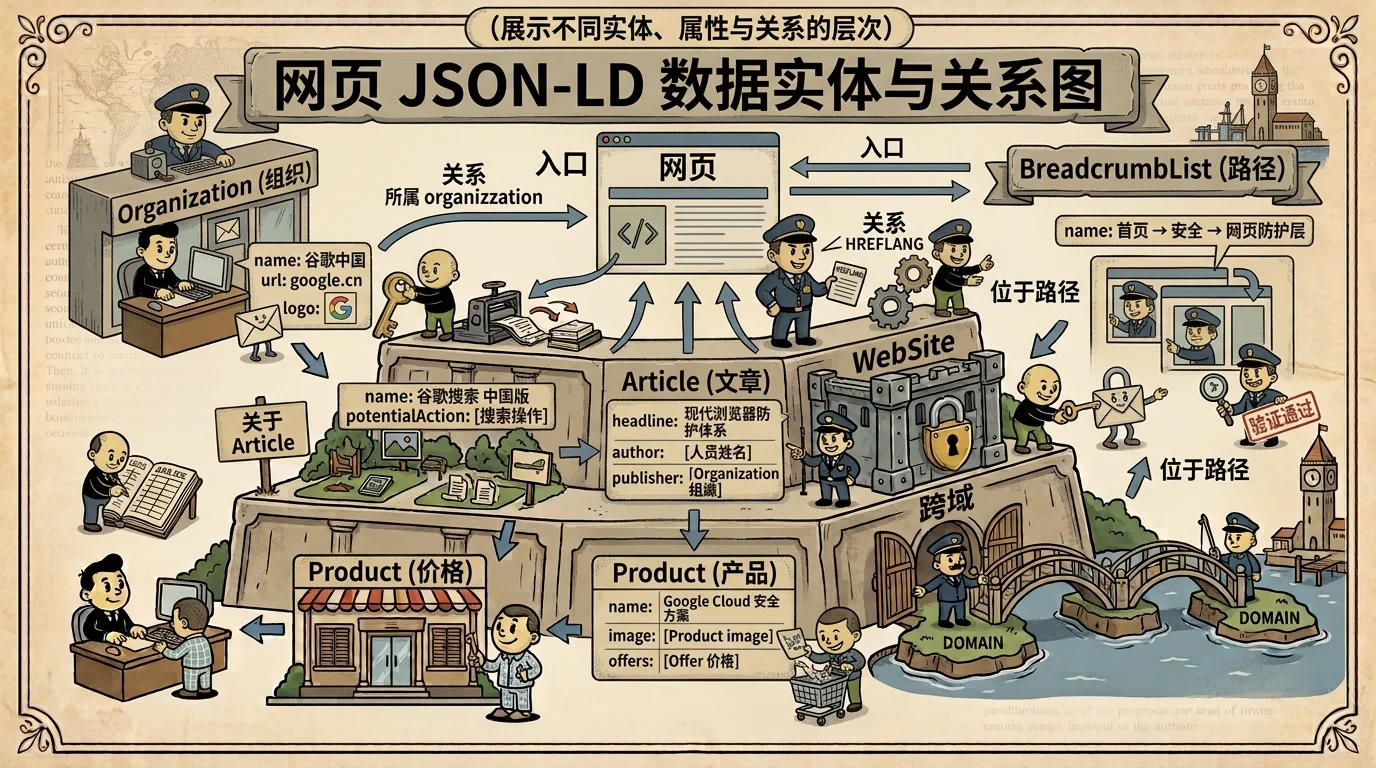
Structured data uses vocabularies such as Schema.org to describe entities including Organization, WebSite, Article, Product, Offer and BreadcrumbList. JSON-LD places this information in script blocks without changing the visible layout, helping machines understand who published what, its properties and its relationships.
Markup should describe visible content belonging to the current page. It may establish eligibility for some enhanced results, but search engines still evaluate text, images, quality, policy compliance and reputation. Code alone does not guarantee a rich result.
Keeping a JSON-LD graph connected
- Stable @id values let Organization, WebSite and page entities reference each other across script blocks instead of creating apparently unrelated duplicates.
- Choose @type to match the main content. A Product can connect to an Offer; an Article can connect to its author, publisher and dateModified.
- Breadcrumbs, site identity and organization details are separate entities. Connect them through URLs or @id rather than placing every property on one type.
- Arrays, languages, prices, availability and ratings must follow the vocabulary and platform requirements. Valid syntax does not guarantee correct meaning.
Common problems with automatically generated markup
Templates may turn a missing price into zero, confuse site-hosted reviews with independent ratings, repeat one Article title across pages or retain outdated availability. Even syntactically valid markup can be ignored or violate policy when it diverges from the content.
Generate JSON-LD from the actual content model and update it when values change. Validators check syntax and eligibility; search-platform reports show observed results. Editorial spot checks remain important for semantic mistakes.
Practical use and interpretation
Detected JSON-LD types, entities and key properties can be displayed with their potential search uses. Platform data is required to establish whether enhanced results are actually appearing.
No JSON-LD does not mean no structured markup: the page may use Microdata or RDFa. A check of one format should report that specific result or leave overall markup status unknown.
Points to consider
Correct markup may qualify for enhanced presentation; misleading markup can be ignored or lead to manual action.
Frequently asked questions
Does JSON-LD guarantee rich search results?
No. Content, quality, technical and platform requirements still apply; the search engine decides what to display.
Can markup contain information absent from the page?
It should agree with visible content. Misleading prices, ratings or identity claims can be ignored or penalized.
Can one page use several Schema types?
Yes. Use @id and properties to describe real relationships rather than conflicting or unrelated duplicate objects.