KNOWLEDGE ARTICLE
What Is TLS?
SSL, HTTPS transport encryption
Provides encryption, authentication and integrity for connections between browsers and websites.
At a glance
TLS underpins HTTPS. Certificates authenticate domain identities, while the protocol and cipher suite protect data in transit. What people call an SSL certificate is generally used with TLS today.
TLS, SSL certificates and HTTPS
Transport Layer Security provides encryption, integrity checking and server authentication between clients and servers. HTTPS is HTTP carried over a TLS-protected connection. An 'SSL certificate' generally means an X.509 certificate used for TLS; the SSL protocol itself is historical technology.
A certificate authority issues the certificate. Browsers build a chain to a trusted root and check conditions including validity, the hostname in SAN, signatures and revocation status. DV, OV and EV describe validation levels, not guarantees about website content, products or transactions.
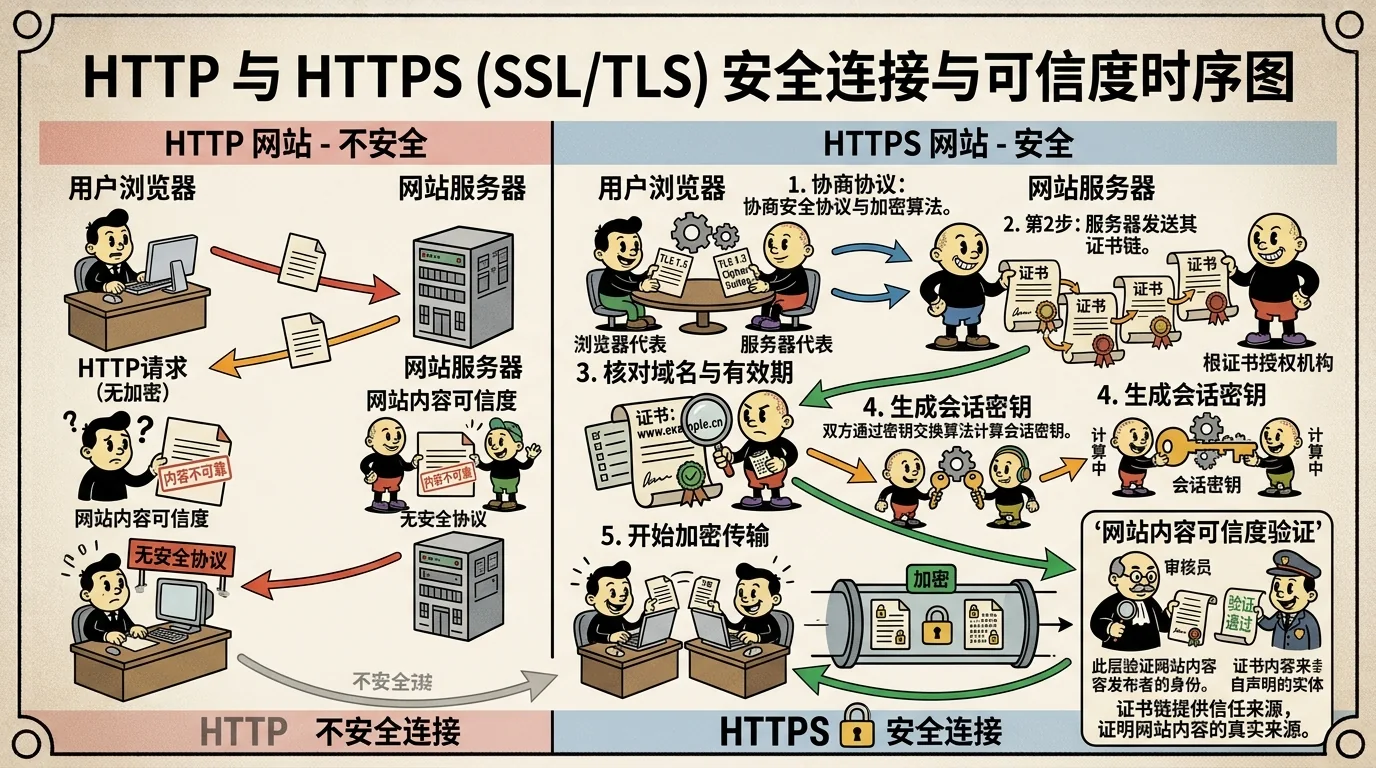
How a TLS connection is established
- The client advertises supported TLS versions, cipher suites and handshake parameters; the server selects mutually supported settings.
- The server supplies its certificate and handshake material. The client checks the certificate chain, hostname, validity period and signature.
- Key exchange derives session keys, after which efficient symmetric encryption protects application data.
- TLS 1.3 simplifies the handshake and removes several legacy algorithms. The actual connection result determines which protocol was negotiated.
What certificate information reveals
- The issuer and chain describe how technical trust is established. SAN lists the identities covered by the certificate.
- Issue and expiry dates establish current validity and may suggest automated renewal. A short lifetime does not make a website inherently more trustworthy.
- Certificate transparency logs reveal issuance history. Mechanisms such as OCSP can check whether a certificate has been revoked before its expiry date.
- A hostname mismatch, expired certificate or incomplete chain can disrupt access. A valid certificate establishes connection-level conditions, not overall website safety.
Practical use and interpretation
Consistent supported and negotiated protocols, subject, issuer, validity, trust and hostname-match results suggest basic HTTPS maintenance. A free DV certificate can provide modern connection encryption; payment is not a reliable measure of security.
Normal HTTPS means the connection and certificate meet the current validation conditions. Content accuracy, business identity and application code are separate matters that require their own evidence.
Points to consider
A valid certificate, matching hostname and suitable protocol are basic requirements for normal HTTPS access.
Frequently asked questions
Are free certificates less secure than paid ones?
Not inherently. With suitable algorithms, validation, a complete chain and client trust, a free DV certificate can establish a secure TLS connection. Differences often concern identity checks, support and service plans.
Does a valid certificate prove a website is trustworthy?
It primarily authenticates the connection to a covered domain and enables encryption. It does not guarantee the website's content, operator or transactions.
Should a TLS 1.3 website retain TLS 1.2?
That depends on its clients. Many websites offer both modern TLS 1.3 and compatible TLS 1.2 while disabling older protocols and weak algorithms.