
 aear.org
No paid content found
aear.org
No paid content found
Categories: Education & Learning
Animal Education & Rescue (AEAR) We are committed to helping countless numbers of animals & people through rescue, education & therapy.
 Visit website
 Updated: 2026-09-24 07:32
 Language: English (default)
 Access: Normal
 Profile views 1
 Outbound visits 0
Related questions
More questions →What Routine Veterinary Care Do Dogs Need?
Routine veterinary care for dogs centers on regular wellness exams plus preventive treatments — vaccinations, parasite control, and dental checks — scheduled at intervals that change as a dog ages. It is the care you book when your dog appears healthy, not the care you seek when something is already wrong. Greenville Veterinary Clinic describes itself as a full-service facility providing professional health care to cats and dogs at every stage of life, which is the general-practice model this article assumes.
Wellness visits vs. sick or emergency visits
These are different appointments with different goals, and knowing which one you need saves time and stress.
| Wellness visit | Sick or emergency visit | |
|---|---|---|
| Trigger | Scheduled, dog seems healthy | New symptom, injury, or sudden change |
| Purpose | Prevent problems, track trends over time | Diagnose and treat a current problem |
| Typical content | Physical exam, vaccines due, parasite prevention, weight and dental review | Problem-focused exam, possibly diagnostics |
| Timing | Planned weeks ahead | Same day or as soon as possible |
A wellness exam can turn into a sick visit if the vet finds something — that's normal and not a sign you booked wrong.
Core preventive care
Vaccinations
Vaccination schedules are set by your veterinarian based on your dog's age, lifestyle, and local risk. Some vaccines are considered core for most dogs; others (like those for certain lifestyle or regional risks) are recommended only for dogs with specific exposure. Ask which vaccines your dog actually needs rather than assuming a fixed list applies.
Parasite prevention
This covers both internal parasites (such as intestinal worms) and external ones (such as fleas and ticks). Prevention is typically ongoing rather than a one-time treatment, and the right product depends on your dog's size, age, and environment. Your vet is the right source for which product and how often.
Dental checks
Dental health is part of the physical exam. Vets look for tartar buildup, gum inflammation, and broken or loose teeth, and can advise on home care or whether a professional cleaning is warranted.
How often, and what gets checked
Frequency depends on life stage. Puppies need more frequent visits because they're completing their initial vaccine series and growing quickly. Healthy adult dogs are generally seen about once a year. Senior dogs often benefit from more frequent exams because problems tend to appear earlier and are easier to manage when caught sooner.
At a typical exam, expect the vet to:
- Take a history — appetite, energy, bathroom habits, behavior changes
- Weigh your dog and compare to previous visits
- Check the mouth, eyes, ears, skin, and coat
- Listen to the heart and lungs
- Palpate the abdomen and check joints and mobility
- Review which vaccines and parasite preventives are due
The weight trend and history are often as informative as the hands-on exam, which is why keeping annual visits matters even when your dog seems fine.
Signs your dog should be seen sooner
Don't wait for the next scheduled visit if you notice:
- Not eating or drinking, or a sudden change in either
- Vomiting or diarrhea that persists or repeats
- Limping, stiffness, or reluctance to move
- Difficulty breathing, coughing, or choking
- Collapse, seizure, or disorientation
- Straining to urinate or defecate
- A wound, swelling, or lump that is new or changing
- Eye or ear discharge, or persistent scratching
When in doubt, call the clinic and describe what you're seeing — staff can tell you whether it warrants an urgent visit.
Preparing for an appointment
- Gather records. Bring vaccination history and any records from a previous vet, especially if you've recently moved or adopted. This prevents unnecessary repeat vaccines.
- Write down your questions. Note behavior changes, diet questions, or concerns as they come up, so you don't forget them in the room.
- Note current medications and preventives. Include names and how often you give them.
- Bring a stool sample if asked. Some clinics request one for parasite screening.
- Use a leash or carrier. Keeps your dog and other patients safe in the waiting area.
Choosing a general practice
Look for a clinic that offers full-service care for dogs and cats, states its scope clearly, and can tell you how it handles after-hours emergencies — either through its own service or a referral partner. If your dog has a chronic condition, ask whether the practice manages it in-house or refers to a specialist.
How to Stop a Cat from Scratching Furniture Without Declawing
You can redirect scratching without declawing by giving your cat a better surface to scratch, placing it where the scratching already happens, and making the old target less appealing. This works because scratching is normal cat behaviour — used for marking, claw maintenance, and stretching — so the goal is to change where it happens, not to stop it entirely. This approach suits indoor cats of any age; if scratching started suddenly or comes with other changes in behaviour or health, treat it as a possible medical or stress issue and involve a veterinarian.
Why cats scratch
Scratching is not spite or misbehaviour. It serves at least three purposes:
- Marking — claws leave both a visual mark and a scent from glands in the paws, so scratching communicates territory.
- Claw maintenance — scratching sheds the outer layers of the claw and keeps them in condition.
- Stretching — the motion exercises the shoulders, back, and paws.
Because scratching meets real needs, punishment tends to backfire: a cat may simply scratch where you are not watching, or become more anxious. Redirecting the behaviour is more reliable.
Match the scratcher to your cat
Cats have preferences, and a post they ignore is usually the wrong type rather than a refusal to use one. Offer variety first, then keep what gets used.
| Preference | Options to try |
|---|---|
| Orientation | Vertical posts, horizontal pads, or angled boards |
| Material | Sisal rope, cardboard, carpet, or wood |
| Height | Tall enough to stretch fully upright, or flat for horizontal scratching |
| Stability | Firm and wobble-free — a post that tips will be avoided |
A useful rule: a vertical post should be tall enough that your cat can stretch to full length with its front paws reaching the top. Unstable or short posts are a common reason cats return to the sofa.
Place scratchers where scratching happens
Put the new surface next to the spot your cat already targets, not in a back room. Once it is being used consistently, you can move it gradually — a few centimetres at a time — toward where you would prefer it.
For a cat that scratches in several places, place a scratcher at each site. Near favourite sleeping areas and room entrances also helps, since scratching often happens on waking or when moving between spaces.
Redirect in the moment
When you see your cat start on the furniture:
- Interrupt calmly — a soft sound or a toy tossed nearby is enough to break the moment. Avoid shouting or spraying, which can create fear rather than a new habit.
- Guide to the scratcher — place the cat on or beside it, or dangle a toy along the surface so the paws make contact.
- Reward immediately — praise, a treat, or a play session right after scratching the correct surface. Timing matters: the reward must follow the behaviour, not the interruption.
- Repeat consistently — new habits form over days to weeks, not once.
Protect furniture while the habit forms
Temporary barriers give the new routine time to take hold:
- Double-sided tape or a smooth plastic cover on the targeted area.
- A throw or fitted cover over the arm or corner being scratched.
- Furniture moved slightly, or a scratcher placed directly in front of the spot.
These are short-term measures. Remove them gradually once the scratcher is in regular use.
When scratching points to something else
Scratching is usually normal, but changes in pattern can signal more:
- Sudden increase in scratching, especially in a previously settled cat.
- Scratching at walls, doors, or unusual surfaces rather than furniture.
- Over-grooming, hiding, appetite changes, or litter box changes alongside the scratching.
- New stress — a move, a new pet, a new baby, or changes in routine.
In these cases, the scratching may be a symptom of stress or a medical problem. A veterinarian can assess whether there is an underlying issue and advise on next steps. Declawing is a surgical procedure that removes part of the toe, and it is not required to solve a scratching problem — the steps above address the behaviour directly.
Website Overview
Identifiable technologies and additional version or configuration signals make the service easier to fingerprint, which may help targeted scanners narrow their checks. An established domain and managed infrastructure suggest continuity of operations and may support dependable delivery, although neither guarantees service quality.
Domain and Registration
Registered in 2007, this domain has about 19 years of history. That suggests continuity, although ownership and purpose may have changed. Transfer-protection status is present, helping reduce the risk of unauthorized domain transfers. The registrar is GoDaddy.com, LLC, a widely used domain service provider. The domain uses the common .org extension, which is not an independent safety signal.
DNS and Email
The observed email authentication setup is incomplete: SPF is missing. Nameservers are provided by GoDaddy, indicating managed DNS hosting. MX records point to the Google Workspace email service. DNSSEC signatures were not detected, so this additional DNS authenticity protection is not confirmed. The lowest observed DNS TTL is 600 seconds.
TLS and Certificates
The public key uses EC with 256 bits. The server supplied a complete certificate chain. No organization name is present in the certificate; the available fields are consistent with domain validation. The certificate was issued within the Google Trust Services cloud or CDN ecosystem. The certificate's total validity is about 90 days, consistent with a short renewal cycle.
HTTP and Browser Security
The checked browser-security headers were not detected, leaving fewer explicit browser-side safeguards. No X-Powered-By header was found, reducing one common source of backend fingerprinting information. The cf-ray response header indicates a CDN or caching proxy in the delivery path. No obvious internal addresses or debug information were found in the headers. The Server header identifies cloudflare without an exact version.
Technology Stack Analysis
The public page identifies WordPress 7.0.6, React, jQuery, Cloudflare, with exact versions exposed for 1 technologies. These details can narrow vulnerability checks, although exposure alone is not a vulnerability.
Search and Social Sharing
The Generator tag identifies WordPress 7.0.6, making the publishing system easier to fingerprint. Twitter Card metadata is configured. JSON-LD includes Organization data, helping describe the organization as an entity. The title has 32 characters, within a common display range. A meta description is present, with 135 characters.
 Hosting and Email
 GoDaddy
 Hosting
 Cloudflare
 Google Workspace
 Location
 United States
 Pages, Search and Sharing
| Meta description | Animal Education & Rescue (AEAR) We are committed to helping countless numbers of animals & people through rescue, education & therapy. |
|---|---|
| Canonical URL | https://www.aear.org/ |
| Language | English (default) |
| Twitter Card | summary_large_image |
Social Sharing Preview
11 fields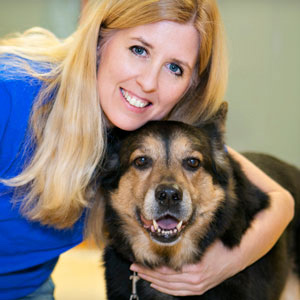
Sharing metadata
| og:url | https://www.aear.org/ |
|---|---|
| og:type | website |
| og:image | https://www.aear.org/wp-content/uploads/2017/12/sandy-team-image.jpg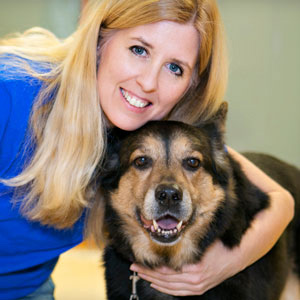 |
| og:title | Home - Animal Education & Rescue |
| og:locale | en_US |
| og:site_name | Animal Education & Rescue |
| og:image:type | image/jpeg |
| og:description | Animal Education & Rescue (AEAR) We are committed to helping countless numbers of animals & people through rescue, education & therapy. |
| og:image:width | 300 |
| og:image:height | 300 |
| twitter:card | summary_large_image |
robots.txt (opens in a new tab)
0 rulesAll bots 0 allowed · 0 disallowed

 All bots
No matching rules.
Sitemaps
1 Registration details RDAP / WHOIS
| Registrar | GoDaddy.com, LLC |
|---|---|
| Registered | 2007-01-26 |
| Expires | 2027-01-26 |
| Domain status | client delete prohibited、client renew prohibited、client transfer prohibited、client update prohibited |
| Nameservers | ns37.domaincontrol.com、ns38.domaincontrol.com |
| DNSSEC | unsigned |
 DNS records
| Type | Name | Value | TTL | Priority |
|---|---|---|---|---|
| A | aear.org | 160.153.0.55 | 600 | — |
| MX | aear.org | aspmx.l.google.com | 3600 | 1 |
| MX | aear.org | alt1.aspmx.l.google.com | 3600 | 5 |
| MX | aear.org | alt2.aspmx.l.google.com | 3600 | 5 |
| MX | aear.org | alt3.aspmx.l.google.com | 3600 | 10 |
| MX | aear.org | alt4.aspmx.l.google.com | 3600 | 10 |
| MX | aear.org | i7pyqsjfanugaqkhkb75aqssyecbjv7c4fu5lws2rcopjssm4fea.mx-verification.google.com | 3600 | 15 |
| NS | aear.org | ns37.domaincontrol.com | 3600 | — |
| NS | aear.org | ns38.domaincontrol.com | 3600 | — |
| CNAME | www.aear.org | aear.org | 3600 | — |
| DMARC | _dmarc.aear.org | v=DMARC1; p=none; | 600 | — |
 TLS and certificates
| Assessment | Normal configuration |
|---|---|
| Supported protocols | TLSv1.2、TLSv1.3 |
| Negotiated protocol | TLSv1.3 |
| Certificate subject | aear.org |
| Issuer | Google Trust Services |
| Valid until | 2026-11-01T00:09 · Remaining when checked: 37 days |
| Verification details | Certificate trust: Passed · Hostname match: Passed |
 HTTP response headers
| Header | Value |
|---|---|
| content-type | text/html; charset=UTF-8 |
| cache-control | public, max-age=2678400 |
| server | cloudflare |
| set-cookie | Redacted |
 Identified technologies
User reviews (0)