
dickinsonstate.edu No paid content found
Categories: Education & Learning
Explore Dickinson State University in Dickinson, North Dakota, with affordable, flexible, accredited degrees, small classes, campus life, and online options.
 Visit website
 Updated: 2026-10-02 15:14
 Language: English (default)
 Access: Normal
 Profile views 2
 Outbound visits 0
Related questions
More questions →How to Find an Affordable College and Graduate with Little or No Debt
The most reliable way to find an affordable college is to compare net cost, not sticker price — the amount you actually pay after scholarships and financial aid. Then look for schools that publish debt-free graduation rates and have transfer agreements, because those two signals tell you whether the low price holds up over a full degree. Butler County Community College (BC3) is one example that publishes both: it reports that 82% of its Class of 2026 graduated debt-free, and it separates its programs into career-ready and transfer-ready tracks.
Start with net cost, not tuition
Sticker price is the advertised tuition. Net cost is what remains after grants, scholarships, and aid are applied. A college with higher tuition but strong aid can cost you less than a cheaper one with no aid.
To estimate net cost for any school:
- Find the school's net price calculator (most U.S. colleges are required to publish one).
- Enter your household income and dependency status.
- Compare the resulting number across 3–5 schools, not just one.
- Add costs the calculator may exclude: books, transportation, housing, and fees.
BC3's site frames affordability around "affordable tuition, scholarships, and financial aid" as the combination that produces debt-free graduation — not tuition alone. That framing is the right one to copy when you evaluate any school.
Affordability signals worth checking
Not every school advertises the same numbers. These are the signals that actually predict whether you'll finish without debt:
| Signal | Why it matters | Where to find it |
|---|---|---|
| Debt-free graduation rate | Shows the share of students who finished without borrowing | School's homepage or consumer info page |
| Transfer agreements | Credits that don't transfer force you to retake (and repay for) courses | "Transfer programs" or "articulation agreements" pages |
| Tuition freezes or guarantees | Protects you from mid-degree price increases | Financial aid or tuition policy pages |
| Student-to-faculty ratio | Smaller ratios can mean fewer retakes and faster completion | School stats page |
| Locations and online options | Commuting or studying online cuts housing and travel costs | Campus/location listings |
BC3 publishes several of these directly: it states a #1 ranking among Pennsylvania community colleges, 5 locations plus virtual options, and an 11:1 student-to-faculty ratio. The location count matters for cost because living at home and attending a nearby campus removes room and board from your total.
Compare college types on the same dimensions
Different institution types trade off cost, flexibility, and transfer risk. Use the same criteria for each:
- Community colleges — Lowest tuition, career and transfer tracks, often commutable. Main risk: credits may not transfer to a four-year school unless an agreement exists.
- State universities — Higher tuition, broader four-year programs, more research resources. Main risk: total cost over four years without aid.
- Online programs — Flexible scheduling, no relocation cost. Main risk: some programs carry fees or lack transfer recognition.
BC3 sits in the first category and explicitly splits its offerings into career-ready programs, transfer-ready programs, and virtual programs, which lets you pick a path based on whether you plan to enter the workforce or continue to a bachelor's degree.
Calculate total cost, not just tuition
Tuition is one line. Your real budget includes:
- Tuition and mandatory fees
- Books and supplies
- Transportation or commuting costs
- Housing and food (if not living at home)
- Lost income from reduced work hours
Then subtract:
- Grants and scholarships (don't need repayment)
- Federal work-study or part-time income
- Employer tuition benefits, if any
A school with low tuition but no nearby campus may cost more once you add housing. A school with a nearby campus and online options — like BC3's five locations plus virtual programs — can reduce both lines.
Steps to apply for aid and scholarships
- File the FAFSA (Free Application for Federal Student Aid) as early as it opens for your target year.
- Apply to the school — BC3 lists a "Start Application" step and a fall enrollment window (Fall 2026 Session 2 begins Sept. 14).
- Apply for institutional scholarships separately; they often have their own deadlines.
- Ask about payment plans if aid doesn't cover the full balance.
- Confirm your credits transfer before enrolling if you plan to continue elsewhere.
Watch for low-price traps
A low sticker price can hide costs that erase the savings:
- Hidden fees — lab, technology, or program fees not in the advertised tuition.
- Non-transferable credits — retaking courses at a four-year school doubles the cost of those credits.
- Extended graduation time — if required courses fill up or aren't offered each term, you pay for extra semesters.
- Aid that doesn't renew — a first-year scholarship that isn't guaranteed for year two changes your net cost.
Before committing, ask the school directly: What percentage of students graduate debt-free? Do you have transfer agreements with four-year schools? Are there fees beyond tuition? BC3 answers the first two on its site; get the third in writing from any school you're considering.
A practical decision path
- List 3–5 schools within commuting or online reach.
- Run each net price calculator with your real income.
- Check debt-free graduation rate and transfer agreements.
- Add books, transport, and housing to each estimate.
- Apply for FAFSA and every scholarship with a deadline you can meet.
- Confirm transfer credit acceptance before you enroll.
If your goal is finishing without debt, prioritize schools that combine low net cost, transfer agreements, and a commutable or online option — the combination BC3 uses to explain its debt-free rate.
What Does It Mean to Be an IB Student? Roles and Expectations Across the Four Programmes
Being an IB student means more than attending a school that offers an International Baccalaureate programme. It means learning through a specific framework that asks you to think critically, communicate clearly, and take responsibility for your own progress. The IB's four programmes — the Primary Years Programme (PYP), Middle Years Programme (MYP), Diploma Programme (DP), and Career-related Programme (CP) — share a common philosophy but place different demands on students at each stage.
This article explains what the IB expects from students, how responsibilities change across the four programmes, and how families can prepare for the transition.
The foundation: the IB learner profile
Across all four programmes, the IB describes ten attributes it hopes students develop. These are usually called the learner profile. Students are encouraged to be:
- Inquirers — curious and skilled at asking good questions
- Knowledgeable — exploring ideas across a range of subjects
- Thinkers — using critical and creative thinking
- Communicators — expressing ideas confidently in more than one language
- Principled — acting with integrity and fairness
- Open-minded — appreciating other perspectives and cultures
- Caring — showing empathy and respect
- Risk-takers — approaching uncertainty with courage
- Balanced — attending to intellectual, physical, and emotional well-being
- Reflective — assessing their own learning and experience
These attributes are not a checklist to complete. They describe habits and dispositions that teachers look for and that students are expected to demonstrate over time. In practice, they shape how lessons are taught, how projects are assessed, and how students are asked to behave toward one another.
How student responsibilities differ across the four programmes
Each programme has its own structure, age range, and expectations. The table below summarises the main differences.
| Programme | Typical age range | Core expectation of the student | Main assessment emphasis |
|---|---|---|---|
| PYP | 3–12 | Active participation, curiosity, and reflection on learning | Teacher observation, portfolios, student-led conferences |
| MYP | 11–16 | Connecting subjects to real-world contexts; developing research and self-management skills | Criterion-based assessment, personal project, interdisciplinary units |
| DP | 16–19 | Independent academic work across six subject groups plus core requirements | External exams, coursework, extended essay, theory of knowledge |
| CP | 16–19 | Combining academic study with career-related learning and a reflective project | Career-related study, DP courses, personal and professional skills |
PYP: building the habits of inquiry
In the PYP, the student's main job is to engage. Children are expected to ask questions, work with others, and reflect on what they have learned. The emphasis is on developing curiosity and basic research skills rather than on formal examinations. Students often take part in units of inquiry that connect subjects, and they may lead conferences where they explain their learning to parents.
MYP: making connections and managing yourself
The MYP asks students to go further. They study eight subject groups and are expected to connect what they learn to the world around them. A key responsibility is the personal project, an independent piece of work that students plan, research, and complete over an extended period. This is often the first time students must manage a long-term deadline largely on their own. Service learning also becomes more structured, and students are encouraged to reflect on their role in the community.
DP: depth, independence, and the core
The DP is the most academically demanding of the four programmes. Students typically study six subjects, three at higher level and three at standard level, and complete three core requirements:
- Theory of knowledge (TOK) — a course that asks how we know what we claim to know
- The extended essay — an independent research paper of up to 4,000 words
- Creativity, activity, service (CAS) — a programme of ongoing experiences outside academic study
DP students are expected to manage a heavy workload, meet external examination deadlines, and produce original academic work. Independent study is not optional; it is central to the programme.
CP: academic study with a career focus
The CP is designed for students who want to combine academic courses with career-related learning. Students take at least two DP courses alongside a career-related study programme, and complete a reflective project. They also develop personal and professional skills. The CP suits students who learn best when their studies connect directly to a practical field, while still requiring the critical thinking and communication skills common to all IB programmes.
How assessment and independence change as students progress
One of the clearest patterns across the IB is the shift from teacher-led assessment toward student-led responsibility.
In the PYP, teachers observe and document learning, and students are guided through reflection. In the MYP, students are assessed against published criteria and must increasingly manage their own projects. By the DP and CP, students are preparing for external examinations and independent research, and they are expected to organise their time, seek help when needed, and meet deadlines without constant reminders.
This progression is deliberate. The IB wants students to leave as self-directed learners who can think for themselves.
Common misconceptions about being an IB student
Several myths circulate about the IB. Here are a few clarifications.
- "IB students must be geniuses." The programmes are demanding, but they are designed for a broad range of students. Effort, curiosity, and organisation matter as much as raw ability.
- "The IB is only about exams." Assessment includes projects, portfolios, oral work, and service. The DP has external exams, but the core requirements are equally important.
- "Students must be fluent in a second language before starting." Language learning is part of the IB, and support is usually available. Requirements vary by programme and school.
- "IB students have no free time." The workload is real, but the learner profile includes balance. Schools generally encourage students to manage their time and well-being.
- "All IB schools are the same." Schools implement the programmes in different ways, and the range of subjects and support offered can vary.
Preparing for the transition into an IB programme
If you are a student or a parent preparing to enter an IB programme, the following steps can help.
- Read the programme guide for your specific programme. The IB publishes curriculum and assessment information for PYP, MYP, DP, and CP. Understanding the structure reduces surprises.
- Talk to current students and teachers. Ask about workload, deadlines, and what support is available.
- Build organisational habits early. A simple planner, weekly review, and clear study space make a difference, especially in the MYP and DP.
- Practise reflection. The IB asks students to think about their own learning. Keeping a short journal or notes on what worked and what did not is useful preparation.
- Ask about language and subject choices. Requirements differ by programme and school, so confirm the details with the school directly.
- Plan for the core requirements. In the DP, the extended essay, TOK, and CAS take time. Starting early and setting interim deadlines helps.
- Use school support. Coordinators, counsellors, and teachers are there to help. Asking for guidance is part of being a successful IB student.
A practical summary
Being an IB student means developing the learner profile attributes while meeting the specific demands of your programme. In the PYP, that means curiosity and participation. In the MYP, it means making connections and managing independent work. In the DP, it means academic depth and completing the core. In the CP, it means combining academic study with career-related learning and reflection.
Across all four, the common thread is responsibility: for your learning, your time, and your contribution to the community around you. Understanding that early makes the transition smoother and the experience more rewarding.
Website Overview
Software versions and possible internal network details are exposed together, potentially making targeted reconnaissance easier. Identifiable technologies and additional version or configuration signals make the service easier to fingerprint, which may help targeted scanners narrow their checks.
Domain and Registration
Unknown
DNS and Email
Nameservers are provided by ndus.edu, indicating managed DNS hosting. MX records point to the Microsoft 365 email service. No CNAME was found; the observed records resolve directly to addresses. SPF and DMARC are configured. DKIM status is unknown. TXT records include verification markers for Google. Such markers may also remain after a service stops being used.
TLS and Certificates
The certificate includes the organization field Dickinson State University. The certificate issuer is Sectigo Limited, a commercial certificate authority. The certificate uses an RSA 2048-bit public key, offering broad client compatibility. The server supplied a complete certificate chain. The certificate is valid for about 198 days in total, with 97 days remaining.
HTTP and Browser Security
The Server header exposes the software version: Microsoft-IIS/10.0. This makes version-targeted checks easier, but is not proof of an exploitable vulnerability. X-Powered-By exposes backend information: PHP/7.4.13, ASP.NET. The checked browser-security headers were not detected, leaving fewer explicit browser-side safeguards. CORS permits any origin to read this response. This is common for public resources; sensitive responses need narrower handling. The headers contain possible internal network information: Microsoft-IIS/10.0.
Technology Stack Analysis
The public page identifies jQuery, Bootstrap, Google Tag Manager, Google Analytics, Microsoft IIS 10.0, PHP, with exact versions exposed for 1 technologies. These details can narrow vulnerability checks, although exposure alone is not a vulnerability.
Search and Social Sharing
Open Graph is partially configured; og:type is missing. Twitter Card metadata is configured. JSON-LD includes Organization data, helping describe the organization as an entity. The title has 42 characters, within a common display range. A meta description is present, with 157 characters.
 Hosting and Email
 Hosting
 Microsoft 365
 Location
 United States
 Pages, Search and Sharing
| Meta description | Explore Dickinson State University in Dickinson, North Dakota, with affordable, flexible, accredited degrees, small classes, campus life, and online options. |
|---|---|
| Canonical URL | https://dickinsonstate.edu/index.html |
| Language | English (default) |
| Twitter Card | summary_large_image |
Social Sharing Preview
15 fields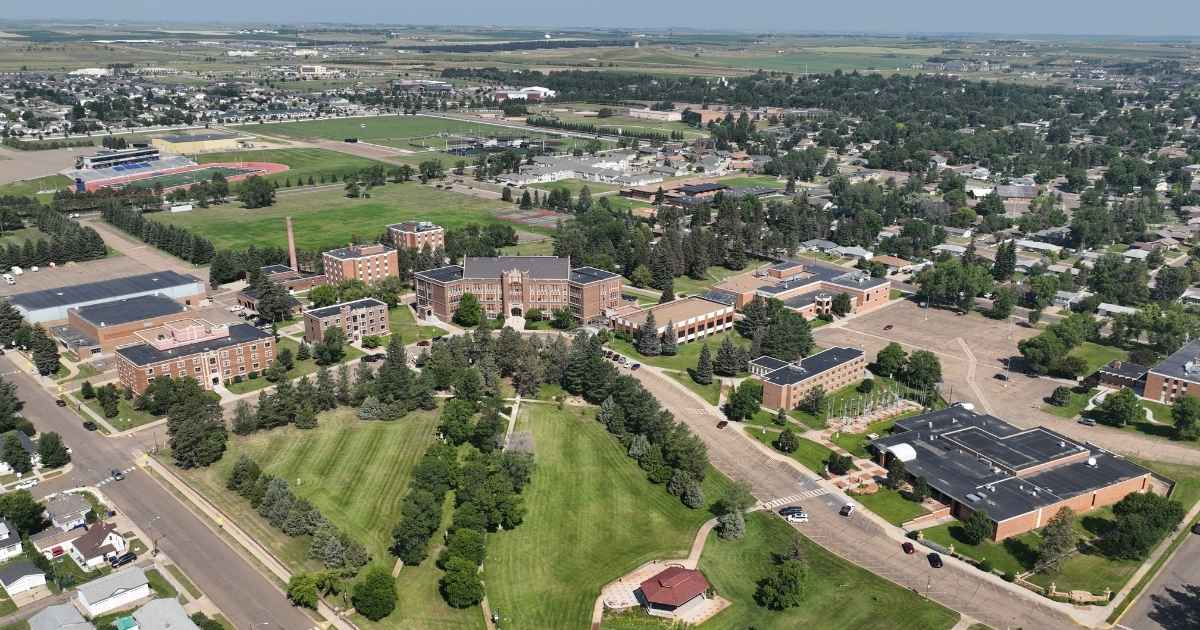

Sharing metadata
| og:url | https://dickinsonstate.edu/index.html |
|---|---|
| og:image | https://dickinsonstate.edu/seo/dickinson-state-university-campus-preview.jpg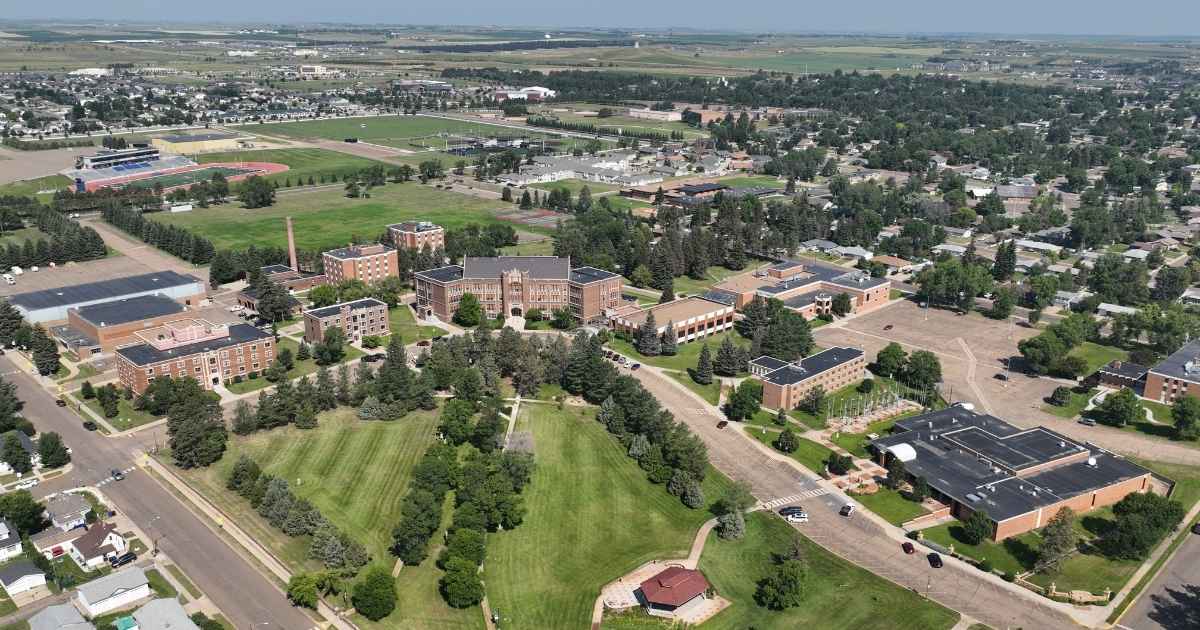 |
| og:title | Dickinson State University | Dickinson, ND |
| og:image:alt | Dickinson State University campus in Dickinson, North Dakota |
| og:image:type | image/jpeg |
| og:description | Explore Dickinson State University in Dickinson, North Dakota, with affordable, flexible, accredited degrees, small classes, campus life, and online options. |
| og:image:width | 1200 |
| og:image:height | 630 |
| og:image:secure_url | https://dickinsonstate.edu/seo/dickinson-state-university-campus-preview.jpg |
| twitter:url | https://dickinsonstate.edu/index.html |
| twitter:card | summary_large_image |
| twitter:image | https://dickinsonstate.edu/seo/dickinson-state-university-campus-preview.jpg |
| twitter:title | Dickinson State University | Dickinson, ND |
| twitter:image:alt | Dickinson State University campus in Dickinson, North Dakota |
| twitter:description | Explore Dickinson State University in Dickinson, North Dakota, with affordable, flexible, accredited degrees, small classes, campus life, and online options. |
robots.txt (opens in a new tab)
71 rulesAll bots 1 allowed · 6 disallowed

 All bots

/
/_resources//_showcase//_qa//_uat//_training//404.html
googlebot 1 allowed · 6 disallowed
//_resources//_showcase//_qa//_uat//_training//404.html
bingbot 1 allowed · 6 disallowed
//_resources//_showcase//_qa//_uat//_training//404.html
applebot 1 allowed · 6 disallowed
//_resources//_showcase//_qa//_uat//_training//404.html
oai-searchbot 1 allowed · 6 disallowed
//_resources//_showcase//_qa//_uat//_training//404.html
chatgpt-user 1 allowed · 6 disallowed
//_resources//_showcase//_qa//_uat//_training//404.html
perplexitybot 1 allowed · 6 disallowed
//_resources//_showcase//_qa//_uat//_training//404.html
perplexity-user 1 allowed · 6 disallowed
//_resources//_showcase//_qa//_uat//_training//404.html
claudebot 1 allowed · 6 disallowed
//_resources//_showcase//_qa//_uat//_training//404.html
claude-searchbot 1 allowed · 6 disallowed
//_resources//_showcase//_qa//_uat//_training//404.html
gptbot 0 allowed · 1 disallowed
/
No matching rules.
Sitemaps
1 Registration details RDAP / WHOIS
Unknown
 DNS records
| Type | Name | Value | TTL | Priority |
|---|---|---|---|---|
| A | dickinsonstate.edu | 64.19.220.43 | 900 | — |
| MX | dickinsonstate.edu | dickinsonstate-edu.mail.protection.outlook.com | 3600 | 0 |
| NS | dickinsonstate.edu | ns1.ext.ndus.edu | 28800 | — |
| NS | dickinsonstate.edu | ns2.ext.ndus.edu | 28800 | — |
| NS | dickinsonstate.edu | ns4.az.ndus.edu | 28800 | — |
| TXT | dickinsonstate.edu | _globalsign-domain-verification=8vC-dhgNEVemxuEva11KVp2YRVcHaqxkNRRfZ_ztTR | 3600 | — |
| TXT | dickinsonstate.edu | _globalsign-domain-verification=hxdC7b6uE01Ezs1Pkct484uYF2ADnE18d0gGGZ5OMA | 3600 | — |
| TXT | dickinsonstate.edu | _globalsign-domain-verification=ir7BTJfb0dQ59T7X-rdXZ-zh7eK9aBcN_iIUjTMx4C | 3600 | — |
| TXT | dickinsonstate.edu | adobe-idp-site-verification=69e4a0576c65eab27724f4b6f06860f1114fe1f9937239cd0489d3dce3366d7c | 3600 | — |
| TXT | dickinsonstate.edu | amazon-business-verification=70f7fb7e7e9352f5d31e8052042e8ba7adf55130d0b2d18752afcf6aaad8fa9e | 3600 | — |
| TXT | dickinsonstate.edu | globalsign-domain-verification=CUyJ0QHDWspYAgjgXWs-r2oNsiqp7T-cYV3_9EgsQ_ | 3600 | — |
| TXT | dickinsonstate.edu | google-site-verification=JZZZoxN6iRan2Sl9tNT6-ICVU_F68AM58URCgUu_kak | 3600 | — |
| TXT | dickinsonstate.edu | v=spf1 include:_spf.123formbuilder.com include:amazonses.com include:spf.protection.outlook.com include:askadmissionsmail.com include:mh.blackboard.com ip4:165.234.75.60 ip4:134.129.134.225 ip4:134.129.134.226 ip4:134.129.134.227 ip4:134.129.182.216 ip4:104.40.83.106 ip4:198.187.196.100 ip4:134.129.134.234 ip4:134.129.134.235 ip4:134.129.134.236 ip4:38.106.32.22/32 ip4:38.106.32.46/32 include:spf-na.exlibrisgroup.com ~all | 3600 | — |
| DMARC | _dmarc.dickinsonstate.edu | v=DMARC1; p=none; rua=mailto:[email protected] | 28800 | — |
 TLS and certificates
| Assessment | Normal configuration |
|---|---|
| Supported protocols | TLSv1.2 |
| Negotiated protocol | TLSv1.2 |
| Certificate subject | www.dickinsonstate.edu |
| Issuer | Sectigo Limited |
| Valid until | 2027-01-07T23:59 · Remaining when checked: 97 days |
| Verification details | Certificate trust: Passed · Hostname match: Passed |
 HTTP response headers
| Header | Value |
|---|---|
| content-type | text/html; charset=UTF-8 |
| server | Microsoft-IIS/10.0 |
| access-control-allow-origin | * |
 Identified technologies
User reviews (0)