
 freecad.org
No paid content found
freecad.org
No paid content found
Categories: Development
FreeCAD, the open source 3D parametric modeler
 Visit website
 Updated: 2026-09-23 17:44
 Language: English (default)
 Access: Normal
 Profile views 1
 Outbound visits 0
Related questions
More questions →What Are Open-Source UI Element Libraries and How Do They Differ From UI Frameworks?
An open-source UI element library is a collection of individual, ready-made interface pieces—buttons, cards, inputs, toggles, loaders—that you copy into your own project and adapt. A UI framework, by contrast, is a structured system of components, conventions, and often a theming layer that governs how your whole interface is built. The practical difference: an element library gives you a snippet; a framework gives you a way of working. If you need a polished button in ten minutes, reach for the element library. If you're building a 40-screen product with a team, you probably want the framework.
What "open-source UI element library" actually means
The term gets used loosely, so it helps to separate the parts:
- Open-source: the code is publicly available, and the license tells you what you may do with it—copy, modify, redistribute, or use commercially.
- UI element: a single, self-contained piece of interface, usually small enough to read in one sitting. A button with hover states, a pricing card, a search field.
- Library: a browsable, searchable collection of those elements, typically contributed by many different people.
On a site like Uiverse, elements are shared by a community and written in plain CSS or Tailwind. You find one you like, copy the markup and styles, paste them into your project, and adjust colors, spacing, and text to fit. There's no package to install and no build step required—which is exactly the appeal, and also the source of most of the confusion.
Element library vs. UI framework: the core differences
| Dimension | Open-source UI element library | UI framework / design system |
|---|---|---|
| Unit of reuse | A single snippet you copy | A component you import or call |
| Installation | None; paste into your code | Package install, config, sometimes a provider |
| Consistency | Depends on you; each element may look different | Enforced by shared tokens and APIs |
| Theming | Manual edits per element | Central theme/config file |
| Updates | You own the copy; no upstream updates | Version bumps bring fixes and changes |
| Accessibility | Varies per contributor; must be checked | Usually tested and documented |
| Best for | Prototypes, landing pages, small sites, one-off needs | Multi-page apps, teams, long-lived products |
| Learning curve | Low—read the CSS | Higher—learn the API and conventions |
The table isn't a verdict. It's a map of trade-offs. Element libraries win on speed and freedom; frameworks win on consistency and maintenance.
Licensing and attribution: what to check before you paste
This is where people get into trouble, and it's worth slowing down for.
- Find the license. Every element or collection should state one. Common open-source licenses include MIT, Apache-2.0, and BSD. Some projects use copyleft licenses like GPL, which can impose obligations if you redistribute your code.
- Understand what the license permits. MIT and Apache-2.0 are permissive: you can typically use the code in commercial and closed-source projects. Copyleft licenses may require you to release derivative source under the same terms.
- Check attribution requirements. Permissive licenses usually require you to keep the copyright notice and license text somewhere in your project. That's a real obligation, not a formality.
- Look for per-element terms. On community sites, the site's overall terms and the individual contributor's stated wishes may differ. If a contributor asks for credit, honor it.
- When in doubt, ask or avoid. If a snippet has no license at all, you don't have clear permission to reuse it. Treat "no license" as "not open source," even if the code is publicly visible.
This article is general information, not legal advice. For commercial products with real exposure, have someone qualified review the licenses you're relying on.
How to use a community element in your project: a practical workflow
Here's a repeatable process that avoids most of the usual mess.
1. Start from a real need, not a browsing session
Decide what you need first—"a compact primary button with a loading state"—then search. Browsing aimlessly produces a pile of pretty snippets that don't fit together.
2. Copy the smallest version that works
Take the markup and the styles. Strip anything you don't need: demo wrappers, extra animations, decorative layers. Less code means fewer surprises.
3. Convert it to your conventions
If your project uses design tokens or CSS variables, replace hard-coded values:
/* Before: hard-coded */
.button { background: #4f46e5; border-radius: 8px; }

/* After: token-based */
.button { background: var(--color-primary); border-radius: var(--radius-md); }
This one step is what keeps a copied element from looking like a foreign object in your UI.
4. Check accessibility before you ship
Community elements vary widely here. Verify at minimum:
- Keyboard focus is visible and the element is reachable by Tab.
- Color contrast meets WCAG AA (4.5:1 for normal text).
- Interactive elements use semantic HTML (
<button>, not a clickable<div>). - Form inputs have associated labels.
- Motion respects
prefers-reduced-motion.
5. Test in context
Paste it into a real page with real content. Long labels, small screens, and dark mode break more copied elements than anything else.
6. Note where it came from
Keep a short comment or an internal credits file: source, license, date. Future you—and your legal reviewer—will be grateful.
Where element libraries genuinely shine
- Prototypes and demos: you need something clickable today, not a design system.
- Landing pages and marketing sites: a handful of distinctive elements, each custom.
- Filling gaps: your framework lacks one specific component, and you don't want to build it from scratch.
- Learning: reading well-made CSS is one of the fastest ways to improve.
- Small projects: a personal site doesn't need a theming architecture.
Where they fall short
- Consistency at scale: ten elements from ten contributors rarely look like one product.
- Maintenance: you own every copy. When your design changes, you edit each one.
- Accessibility debt: you inherit whatever the contributor did or didn't do.
- No upstream fixes: a bug fixed in the original won't reach your copy.
- Integration friction: different naming conventions, different units, different assumptions about resets.
When to choose which
Choose an element library when the scope is small, the timeline is short, or you need a few distinctive pieces rather than a whole system.
Choose a framework or design system when multiple people build multiple screens over months, when consistency is a product requirement, or when accessibility and theming need to be guaranteed rather than checked.
A hybrid works well for many teams: adopt a framework for the structural components—forms, navigation, layout—and borrow individual elements for the places where you want personality. Just route every borrowed element through the same token and accessibility checks, so it lands as part of your system rather than beside it.
The short version: open-source UI element libraries are a fast, flexible way to get good-looking interface pieces into a project. They are not a substitute for a design system, and the license and accessibility details are the part worth reading carefully.
Crossword Weaver vs Other Windows Crossword Puzzle Makers: Which Should You Choose?
Crossword Weaver is a Windows-only crossword puzzle maker that supports two distinct puzzle styles: free-form puzzles built from only your own words, and themed symmetrical newspaper-style grids. It offers a demo so you can test it before buying. Choose it if you need both styles in one tool and work on Windows; look at alternatives if you need cross-platform support, a browser-based workflow, or a free tool with no purchase step.
The core difference: two puzzle styles in one tool
Most crossword makers specialize in one output style. Crossword Weaver's distinguishing feature is that it handles both:
| Puzzle style | What it means | Typical use |
|---|---|---|
| Free-form | Grid shaped around only your words, no filler entries | Vocabulary lists, quick custom puzzles, personal projects |
| Themed symmetrical | Newspaper-style grid with symmetrical layout | Classroom handouts, publications, polished printables |
If you only ever need one style, a simpler or cheaper tool may cover you. If you switch between casual word-list puzzles and publication-style grids, having both in one program avoids juggling two tools.
Windows compatibility and trying before buying
Crossword Weaver is Windows only. That is a hard constraint, not a preference:
- Windows users: you can run it natively.
- Mac, Linux, or Chromebook users: you would need a Windows environment, or you should choose a cross-platform or web-based alternative instead.
- Before purchasing: the site provides a demo. Use it to confirm the puzzle styles, grid behavior, and output match your needs. The demo is the intended evaluation path, so treat it as your compatibility and feature check rather than assuming the paid version behaves the same in every detail.
The site references purchasing, so plan for a paid product rather than assuming it is free. Pricing details are not specified in the available information, so check the site directly for current terms.
Output: printable and playable puzzles
Crossword Weaver is described as producing printable and playable puzzles. When comparing tools, check these output dimensions on the same basis:
- Print: does the tool export a clean grid plus clues suitable for paper handouts?
- Play: can the puzzle be solved on screen, or is it print-only?
- Format control: can you adjust grid size, clue layout, and numbering?
A tool that prints well but has no on-screen play mode suits classroom handouts. A tool with playable output suits digital assignments or casual solving. Decide which of these you actually need before comparing, because it narrows the field quickly.
Ease of use and automation
Crossword Weaver emphasizes automatic generation: you supply words and clues, and it builds the grid. The practical questions to ask of any maker:
- How much manual grid adjustment is required after auto-generation?
- Does it handle word placement conflicts for you, or do you fix them by hand?
- How long does a typical puzzle take from word list to finished output?
For hobby use, a rougher auto-generated grid is fine. For publishing or repeated classroom use, the amount of manual cleanup matters more than the feature list.
Which tool fits your use case
- Hobby and personal puzzles: a free or low-cost maker is often enough. Crossword Weaver's demo lets you judge whether the two-style support is worth paying for.
- Classroom use: prioritize printable output, fast generation from vocabulary lists, and Windows availability if your school machines run Windows.
- Publishing or newspaper-style grids: the symmetrical themed style is the relevant feature. Compare how each tool handles symmetry and grid polish, since that is where output quality diverges most.
- Cross-platform or browser-based work: Crossword Weaver is not the fit. Choose a web-based maker instead.
How to decide
- Confirm you are on Windows. If not, stop here and look at cross-platform tools.
- Decide whether you need both free-form and symmetrical styles, or just one.
- Download the demo and build one real puzzle you would actually use.
- Check the output: print it, and try solving it on screen if playable output matters to you.
- Compare the result against one alternative on the same puzzle, then decide whether the purchase is justified.
The fastest way to choose is to run the same puzzle through Crossword Weaver's demo and one competing tool, then compare grid quality, output options, and time spent.
What Does Engineering at Netflix Actually Look Like?
Engineering at Netflix is a decentralized, senior-heavy model built on the company's "freedom and responsibility" culture: small teams of experienced engineers own problems end to end, make their own technical decisions, and are trusted to act in the company's interest without heavy process. That model suits people who want autonomy and can operate without close direction. It is documented publicly through the Netflix TechBlog, which covers the company's engineering work, culture, and product developments. The sections below explain how the model is organized, what it looks like in practice, and where it differs from a typical tech company.
How engineering is organized
Netflix's engineering structure follows from its culture rather than from a fixed org chart. The key traits:
- Small, empowered teams. Work is organized around problems and services rather than large functional departments. Teams own their area end to end, including design, build, and operation.
- Decisions made close to the work. Engineers are expected to make technical calls themselves instead of routing them through layers of approval. This is the "freedom" half of freedom and responsibility.
- High seniority density. The model assumes engineers can self-direct, so hiring skews toward experienced people who need little supervision.
- Responsibility as the counterweight. Freedom is paired with accountability: if you make the call, you own the outcome and the consequences.
The practical effect is fewer coordination layers and more individual ownership than in companies that rely on centralized architecture boards or stage-gate approvals.
Core practices and how they shape the work
Freedom and responsibility
This is the cultural mechanism behind most engineering decisions at Netflix. Engineers are trusted to choose tools, designs, and priorities, and are expected to use good judgment about cost, risk, and impact. It replaces rules with context: instead of a policy for every case, people are given the information to decide well.
Context over control
Because decisions are decentralized, alignment comes from shared context — goals, constraints, and data — rather than from directives. Leaders set context; engineers act within it.
Ownership of outcomes
Teams are accountable for the systems they build, including reliability and cost. That pushes engineering decisions toward what actually works in production, not just what looks good in a design doc.
Candor
Direct, specific feedback is part of the culture, which matters for a model that depends on people correcting course quickly without formal escalation.
Real engineering problems Netflix solves
Netflix's engineering work clusters around a few hard, large-scale problems:
| Problem area | What engineering has to handle |
|---|---|
| Streaming | Delivering video reliably to a very large, globally distributed audience |
| Personalization | Recommending content that keeps members engaged |
| Reliability | Keeping systems available and resilient at scale |
| Data and experimentation | Measuring what works and feeding it back into product decisions |
These are the kinds of problems the TechBlog documents: how systems are built, what tradeoffs were made, and what the team learned.
How the TechBlog fits in
The Netflix TechBlog is the public record of this work. It publishes posts on engineering efforts, company culture, and product developments, which makes it a useful primary source if you want to see how the culture translates into actual technical decisions rather than just reading the values statement. For anyone evaluating whether this environment fits them, the blog is the most direct evidence available of how Netflix engineers think and write about their own work.
How it differs from typical tech-company engineering
- Less process, more judgment. Fewer approvals and gates; more reliance on individual engineers to decide well.
- Decentralized by default. Authority sits with teams, not with central architecture or program functions.
- Seniority as a precondition. The model works because it assumes self-direction; it is a poor fit for environments that need close guidance or highly standardized procedures.
- Accountability is explicit. Autonomy is not license — you own the results.
Who this model suits
It fits engineers who are comfortable owning ambiguous problems, making decisions without a clear playbook, and being held accountable for outcomes. It fits less well if you prefer defined processes, close direction, or a clear separation between deciding and doing. The honest test is whether the TechBlog's posts describe the kind of work you want to do — that is the closest public proxy for what the day-to-day actually looks like.
Website Overview
An established domain and managed infrastructure suggest continuity of operations and may support dependable delivery, although neither guarantees service quality. Several search or sharing settings need attention. Together they may make snippets, preview images or preferred URLs less consistent across platforms.
Domain and Registration
Registered in 2003, this domain has about 23 years of history. That suggests continuity, although ownership and purpose may have changed. Transfer-protection status is present, helping reduce the risk of unauthorized domain transfers. The registrar is Gandi SAS, a widely used domain service provider. The domain uses the common .org extension, which is not an independent safety signal.
DNS and Email
Nameservers are provided by gandi.net, indicating managed DNS hosting. MX records point to the gandi.net email service. No CNAME was found; the observed records resolve directly to addresses. SPF and DMARC are configured. DKIM status is unknown. TXT records include verification markers for Google. Such markers may also remain after a service stops being used.
TLS and Certificates
The certificate uses an RSA 2048-bit public key, offering broad client compatibility. The server supplied a complete certificate chain. No organization name is present in the certificate; the available fields are consistent with domain validation. The certificate was issued by Let's Encrypt, commonly associated with automated certificate services. The certificate's total validity is about 89 days, consistent with a short renewal cycle.
HTTP and Browser Security
The checked browser-security headers were not detected, leaving fewer explicit browser-side safeguards. No X-Powered-By header was found, reducing one common source of backend fingerprinting information. CORS permits the specified origin https://forum.freecad.org. No obvious internal addresses or debug information were found in the headers. The Server header identifies nginx without an exact version.
Technology Stack Analysis
The public page identifies nginx without precise versions, leaving fewer clues for version-specific scanning.
Search and Social Sharing
No homepage canonical URL was detected. If duplicate URLs exist, consolidation may be less explicit. Open Graph is partially configured; og:type is missing. Twitter Card metadata is configured. The title has 39 characters, within a common display range. A meta description is present, with 46 characters.
 Hosting and Email
 Hosting
 DigitalOcean, LLC
 Location
 Frankfurt am Main, Hesse, Germany
 Pages, Search and Sharing
| Meta description | FreeCAD, the open source 3D parametric modeler |
|---|---|
| Canonical URL | Not detected |
| Language | English (default) |
| Twitter Card | summary |
Social Sharing Preview
6 fields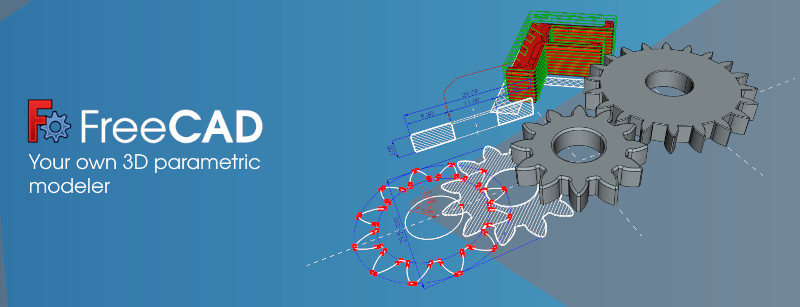
Sharing metadata
| og:image | https://freecad.org/images/banner.jpg |
|---|---|
| og:title | FreeCAD: Your own 3D parametric modeler |
| og:description | FreeCAD, the open source 3D parametric modeler |
| twitter:card | summary |
| twitter:site | @FreeCADNews |
| twitter:creator | @FreeCADNews |
robots.txt (opens in a new tab)
0 rules
All bots 0 allowed · 0 disallowed

 All bots
- Interval
Crawl delay 10 seconds
No matching rules.
Sitemaps
0No sitemaps found
 Registration details RDAP / WHOIS
| Registrar | Gandi SAS |
|---|---|
| Registered | 2003-09-10 |
| Expires | 2027-09-10 |
| Domain status | client transfer prohibited |
| Nameservers | ns-130-b.gandi.net、ns-134-a.gandi.net、ns-23-c.gandi.net |
| DNSSEC | unsigned |
 DNS records
| Type | Name | Value | TTL | Priority |
|---|---|---|---|---|
| A | www.freecad.org | 104.248.36.231 | 300 | — |
| MX | freecad.org | spool.mail.gandi.net | 10800 | 10 |
| MX | freecad.org | fb.mail.gandi.net | 10800 | 50 |
| NS | freecad.org | ns-130-b.gandi.net | 10800 | — |
| NS | freecad.org | ns-134-a.gandi.net | 10800 | — |
| NS | freecad.org | ns-23-c.gandi.net | 10800 | — |
| TXT | freecad.org | SNAPCRAFT_IO_VERIFICATION=b0e31f8978464433da3beb994d86d4244931ddc88aebc9e436bcdb420410b695 | 10800 | — |
| TXT | freecad.org | google-site-verification=T0lUMZJqvGY7rnb0rqX2rMXkt0-ynhK2bQmitwm0I5I | 10800 | — |
| TXT | freecad.org | itce0hbiiietrefpb12vmjihau | 10800 | — |
| TXT | freecad.org | v=spf1 include:_mailcust.gandi.net ~all | 10800 | — |
| DMARC | _dmarc.freecad.org | v=DMARC1; p=quarantine; adkim=s; aspf=s; rua=mailto:[email protected] | 10800 | — |
 TLS and certificates
| Assessment | Normal configuration |
|---|---|
| Supported protocols | TLSv1.2、TLSv1.3 |
| Negotiated protocol | TLSv1.3 |
| Certificate subject | freecad.org |
| Issuer | Let's Encrypt |
| Valid until | 2026-10-26T08:37 · Remaining when checked: 32 days |
| Verification details | Certificate trust: Passed · Hostname match: Passed |
 HTTP response headers
| Header | Value |
|---|---|
| content-type | text/html; charset=UTF-8 |
| server | nginx |
| access-control-allow-origin | https://forum.freecad.org |
 Identified technologies
User reviews (0)