
 简体中文
 English

Website review
This review may include AI-generated content and is not individually verified. Domain, certificate and other facts come from the observed data on this page.
What is AABCA?
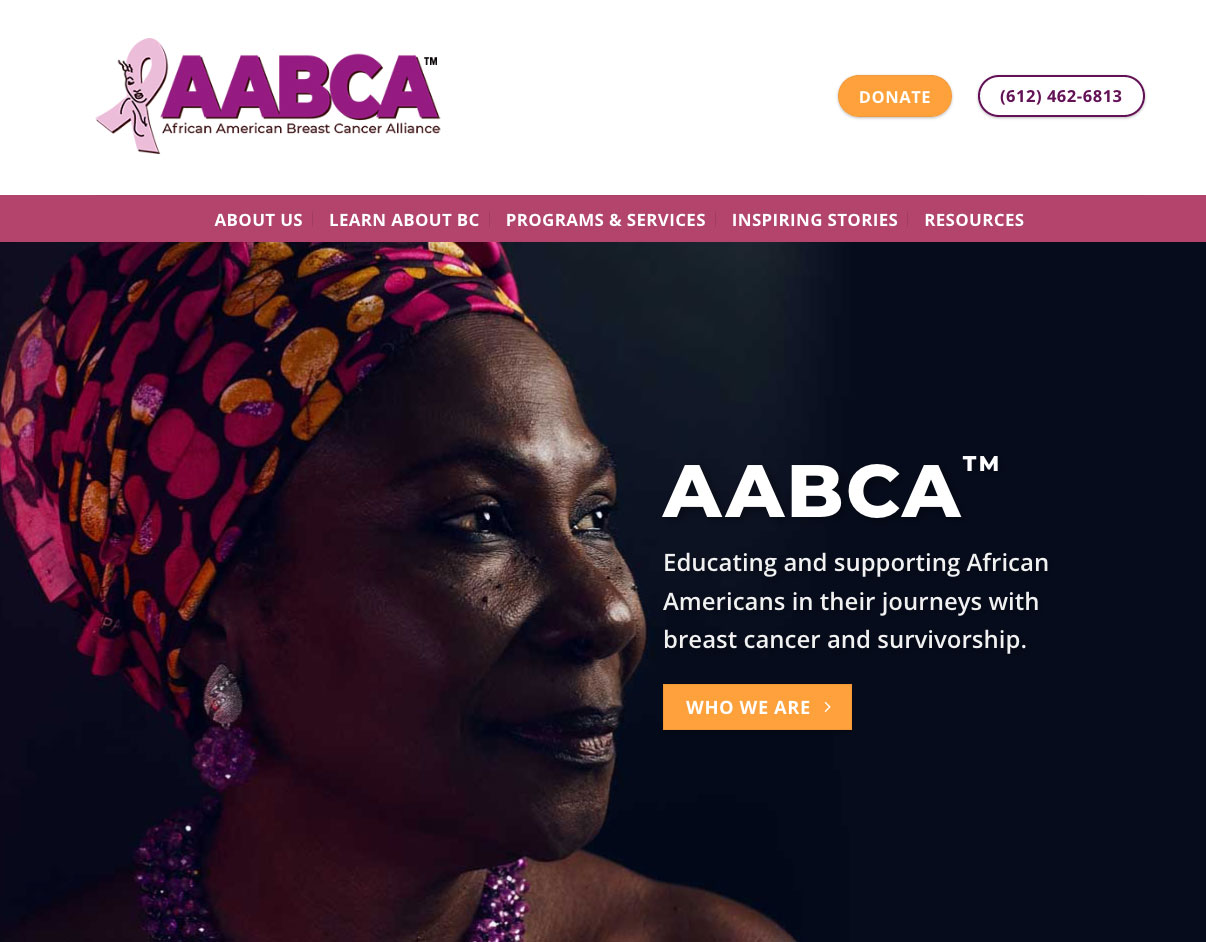
AABCA stands for the African American Breast Cancer Alliance, a nonprofit focused on connecting, educating and supporting Black women, men, families and communities through breast cancer diagnosis and survivorship. Its stated mission is to build awareness, provide networking and resources, and offer support to Black Americans affected by breast cancer.
What it offers
- Support networks: A survivors' network and member community, so people can talk with others who share similar experiences.
- Education and awareness: Information about breast cancer and its impact on Black women and men.
- Programs and services: Ongoing initiatives described on the site, alongside survivor stories meant to inform and encourage.
- Community updates: News and event highlights shared through Instagram.
Who it is for
The site is aimed at Black Americans who have been diagnosed with breast cancer, as well as their families, caregivers and communities. It speaks directly to someone newly diagnosed and unsure where to turn, and to longer-term survivors looking for connection.
A practical next step
If you or someone close to you has received a diagnosis, start with the survivors' network and the programs section to see what support fits your situation. For background on breast cancer generally, the American Cancer Society and Breastcancer.org offer broader medical and practical information that complements a community-focused organization like AABCA.
How can I get support from AABCA after a breast cancer diagnosis?
For someone facing a breast cancer diagnosis, the most direct route is the Survivors Network that AABCA promotes on its homepage with the line "Share, Support, Survive." That is the organization's own on-ramp for people who want to connect with others who have been through diagnosis and treatment. The site also points to Programs & Services and a "Being There" section, which are the places to look for the practical help and peer connection it describes.
What the site signals
- A named network to join. "Join Our Survivors Network" is presented as the main call to action, so treat that as the first thing to look for on the site.
- A stated audience. AABCA describes itself as connecting, educating and supporting Black women, men, families and communities through breast cancer and survivorship. If you are Black or supporting a Black family member, the framing is explicitly for you.
- Programs and services. The page lists "Programs & Services" alongside "Being There" and "Inspiring Stories," suggesting a mix of support and shared experience rather than only information.
- Community presence. The Instagram feed shows events, member spotlights and acknowledgements of figures in Black medical history, which gives a sense of an active community rather than a static brochure.
A practical next step
Open the site and go straight to the Survivors Network sign-up, then browse Programs & Services to see what fits your stage—newly diagnosed, in treatment, or years out. If you are contacting them, say plainly what you need: someone to talk to, help understanding options, or support for a partner or child. Specific asks get specific answers.
Choosing between options
If you are weighing where to start, use this rough comparison:
| Need | Where to start |
|---|---|
| Talk to someone who has been through it | AABCA Survivors Network |
| Understand programs and practical help | AABCA Programs & Services |
| Broader national information and helplines | American Cancer Society or National Cancer Institute |
| A second opinion on treatment decisions | Your care team first, then a specialist center |
AABCA's strength is culturally specific peer support and community; large national organizations are stronger for clinical reference material and 24-hour helplines. Many people use both—community for the human side, national resources for the medical detail.
What programs and services does AABCA offer for Black breast cancer survivors?
AABCA (African American Breast Cancer Alliance) is a support and education organization focused on Black women, men, families, and communities affected by breast cancer. Its stated work centers on connecting people to resources, raising awareness, and offering community through survivorship.
Programs and services described
- A "Being There" support offering: listed under Programs & Services, framed as a way the organization is present for people facing a diagnosis.
- A Survivors Network: the site invites visitors to "Join Our Survivors Network," positioning it as the main peer-community entry point for survivors.
- Educational content on Black women and breast cancer: the site highlights this topic and points to video material.
- Inspirational stories: survivor stories are presented as part of the site's content, useful for people who want to see experiences like their own.
- Awareness, networking, and resources: described as the organization's vision and mission for Black women and men impacted by breast cancer.
- Community updates via Instagram: program news and member features are shared there.
How to use this
If you or someone close to you has just been diagnosed, the Survivors Network and the "Being There" support path are the most direct starting points; the stories and educational material suit people who are earlier in gathering information. A practical next step is to contact AABCA through the site to ask what the Survivors Network involves—format, frequency, and whether it is peer-led or staff-led—since those details determine whether it fits your needs. For broader context on breast cancer in Black communities, organizations such as American Cancer Society and Breastcancer.org publish general educational material that can complement AABCA's community-focused support.
How do I join the AABCA Survivors Network?
The AABCA Survivors Network is the organization’s connection point for Black women, men, families and communities affected by breast cancer. The site presents it with the invitation “Share, Support, Survive.”
How to start
The homepage does not spell out a separate application form for the Survivors Network. Its clearest joining route is the “Join Our Survivors Network” prompt on the site. If that prompt does not lead directly to a form, use the site’s contact or support channels to ask how to be added. The homepage also says AABCA is “here to help” and describes “Being There” as a program, so asking about the network through that support route is a reasonable next step.
What to expect
The network appears to be built around peer connection and shared experience rather than a formal membership scheme. The site emphasizes connecting, educating and supporting Black Americans through diagnosis and survivorship, and highlights stories and community activity. Someone joining might therefore expect to hear about support, events or ways to connect with others—but the exact member benefits and meeting format are not detailed on the homepage.
For a concrete example: a newly diagnosed Black woman looking for people who understand both cancer and her community could ask AABCA how the network works and whether it offers peer contact or group support. A family member could ask the same about support for caregivers.
A useful check before joining
Ask AABCA directly:
- What participation in the Survivors Network involves
- Whether it is for survivors only or also for patients, caregivers and family
- How contact happens—email, events, groups or another format
- What privacy and contact preferences you can set
Related organizations include Black Health Matters and American Cancer Society, but AABCA is the specific organization named in your question.
Does AABCA provide resources for family members and caregivers of Black breast cancer patients?
Yes. AABCA's own framing explicitly includes families and communities, not only patients: its mission text speaks to "black women, men, families, and communities in the struggle and survivorship of breast cancer," and its "Who We Are" section addresses anyone who cares about someone diagnosed ("If you or someone you care about has been diagnosed with breast cancer, you have many questions"). The site also points caregivers toward its Survivors Network and programs as entry points.
What that looks like in practice
- For a worried relative: start with the "Being There" and programs sections, which are the site's main routes into support and education rather than clinical content.
- For someone supporting a survivor long-term: the Survivors Network and community events are the natural fit, since AABCA's emphasis is connection and shared experience.
- For broader awareness: the vision and mission material covers networking and resources, useful if you are organizing support within a church, workplace or family group.
What to keep in mind
The page evidence shows AABCA as a connection-and-education organization; it does not present itself as a medical provider, so treat it as a complement to, not a substitute for, a care team. Caregiver-specific programming is implied by the family-and-community language rather than spelled out in detail, so confirm what exists before relying on it.
Next step: if you are supporting a newly diagnosed relative, look at the programs and Survivors Network pages together and pick one concrete action—joining the network or attending an event—rather than browsing broadly. For condition background to share with family, the American Cancer Society and National Cancer Institute are established general references.
How can I donate to or volunteer with AABCA?
AABCA is a support and education organization for Black women, men, families and communities affected by breast cancer, so donations and volunteering both go toward programs rather than general charity overhead. The site's own framing—"Share, Support, Survive"—suggests two natural entry points: giving money, and giving time or peer support.
Donating
The site includes a checkout page processed through Stripe, which indicates it accepts online card payments directly. Start there for a one-time gift. If you want to give in another form (memorial gift, employer match, recurring support), contact the organization first to confirm what it can accept—the site does not spell out those options, so treat that as advice to verify rather than a listed feature.
Volunteering
The clearest route is the Survivors Network sign-up promoted on the homepage. That is the most plausible place for survivors and supporters to plug in, and it doubles as a way to hear about events. AABCA also posts current activities on Instagram, which is useful for spotting event-based volunteer needs such as walks, outreach tables or community gatherings. Because the site does not publish a formal volunteer application, email or call before assuming a specific role exists.
| What you want to give | Best first step | What to confirm |
|---|---|---|
| Money, once | Online checkout | Whether a receipt is issued for taxes |
| Money, recurring or in honor of someone | Direct contact | Accepted methods and dedication process |
| Time as a survivor or supporter | Survivors Network sign-up | Time commitment and expectations |
| Time at events | Instagram updates, then contact | Upcoming needs and location |
A practical example
A reader in Minneapolis whose mother is a survivor might join the Survivors Network to receive updates, then ask whether AABCA needs help staffing a local outreach event or sharing stories for awareness campaigns. That matches the organization's stated focus on networking, resources and support.
For context on breast cancer resources more broadly, the American Cancer Society and Breastcancer.org maintain support and donation information; compare how each allocates funds if charitable accountability matters to you. As a decision rule: donate online if you want speed, but contact AABCA directly if you want your gift or time tied to a specific program.
 GoDaddy
 Cloudflare
 Google Workspace
User reviews (0)