Website profiles · Technology insights · Alternatives

absbattery.com No paid content found

Categories: Other

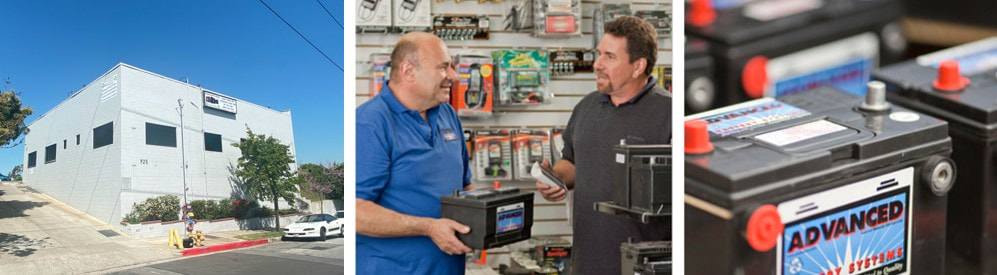
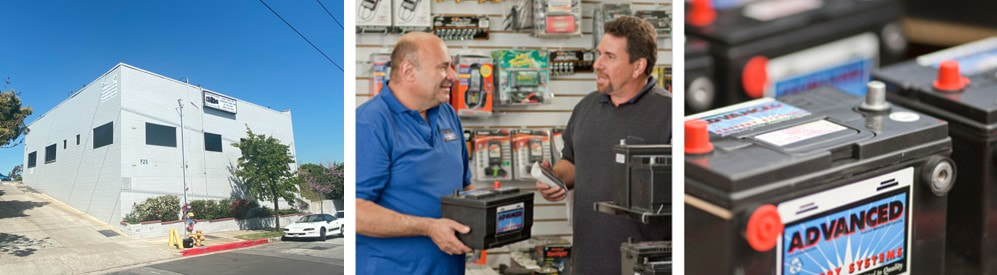
Advanced Battery Systems specializes in the distribution of batteries and related battery products.

Visit website

Updated: 2026-09-22 13:32 Language: English (default) Access: Normal

Profile views 1 Outbound visits 0
Advanced Battery Systems - Home Full homepage screenshot
Editorial Review

Website Review

What is Advanced Battery Systems?

Advanced Battery Systems is a distributor of batteries and related battery products. Rather than manufacturing cells itself, the company positions itself as a supplier that connects buyers with a range of battery types and accessories, with automotive and car batteries appearing among its stated focus areas.

Who it typically serves

  • Vehicle owners or mechanics looking for replacement auto or car batteries
  • Businesses seeking a distribution source for batteries in bulk
  • Individuals needing general-purpose batteries and related accessories

What to expect

As a distribution-focused site, its value usually lies in product variety and availability rather than proprietary technology. Visitors can generally browse categories, identify a battery that matches their application, and inquire about purchasing or distribution. Because the company describes itself broadly as specializing in "batteries and related battery products," the catalog may extend beyond automotive use to other battery categories.

Trade-offs to consider

A distributor model can mean broad selection and convenient sourcing, but it also means product performance depends on the original manufacturers rather than the seller. Buyers with specialized requirements — unusual sizes, high-drain applications or strict warranty needs — may want to confirm specifications and support directly before ordering.

The site is best suited to anyone seeking a straightforward supplier of batteries, particularly for automotive needs, rather than a research or manufacturing resource.

What types of batteries does Advanced Battery Systems distribute?

Advanced Battery Systems specializes in the distribution of batteries and related battery products. Its stated focus, together with keywords such as "auto" and "car," indicates that automotive and vehicle batteries are a core part of the catalog. This suggests the site is primarily aimed at drivers, mechanics, and businesses seeking replacement or bulk batteries rather than at consumers shopping for general electronics.

Because the company describes itself as a distributor, its audience may include retailers, repair shops, and commercial buyers who need a steady supply, alongside individual customers replacing a car battery. A distribution model typically means a broad inventory across brands and sizes rather than a single in-house product line, so buyers can often compare fitments and specifications in one place.

Trade-offs are worth noting. A distributor can offer wide availability and competitive volume pricing, but product depth varies by brand and region, and the site does not publish pricing signals or online payment platforms. That may indicate quotes, phone orders, or in-person purchasing instead of instant online checkout. Anyone needing a specific battery should confirm the exact type, size, and terminal layout directly with the company, since the available information does not detail every category it carries.

Does Advanced Battery Systems offer car batteries?

Yes. Advanced Battery Systems describes itself as specializing in the distribution of batteries and related battery products, and its listed keywords include "auto" and "car," which suggests car batteries are part of its catalog.

Who it may suit

  • Vehicle owners looking for a replacement battery, typically for cars or similar vehicles.
  • Small repair shops or installers that need a distribution source rather than a single retail purchase.
  • Buyers comparing brands or chemistries, since distributors often carry several lines.

What to check before buying

Because the site is a distributor, availability, brand selection, warranty terms and shipping or pickup options can vary. It is worth confirming:

  1. The exact group size or fitment for your vehicle.
  2. Whether the battery is for starting, deep-cycle or auxiliary use.
  3. Warranty length and return conditions.
  4. Whether local pickup or delivery applies to your area.

Prices are not indicated in the supplied information, so you would need to request a quote or check the site directly. If you need a battery matched to a specific make and model, contacting the company with your vehicle details is the most reliable route.

Does Advanced Battery Systems provide battery installation or related services?

Advanced Battery Systems presents itself as a distributor of batteries and related battery products, with keywords pointing to automotive and car batteries. That positioning suggests the core offer is supply rather than service.

What the site indicates

  • Distribution focus: the description emphasizes distribution, which typically means selling batteries and accessories rather than performing installations.
  • Product categories: auto and car batteries are highlighted, a segment where buyers often install the battery themselves or rely on a garage or retailer.
  • No service listings shown: the supplied information contains no service menu, appointment booking, or installation offering.

Practical interpretation

If you need a battery fitted, this site may be most useful for purchasing the battery itself, then arranging installation separately through a mechanic or auto shop. Conversely, if you already know the correct battery type and are comfortable fitting it, a distributor can be a straightforward source. Trade-offs are simple: buying from a distributor may mean lower product cost but no fitting, while a full-service garage usually bundles the battery with installation at a higher total.

Because the input does not confirm or deny installation services, treat this as an indication rather than a definitive answer. Checking the site directly for a services page or contact details would resolve it.

How can I find a retailer or distributor for Advanced Battery Systems products?

To find a retailer or distributor for Advanced Battery Systems products, start with the manufacturer itself. Advanced Battery Systems - Home describes the company as specializing in the distribution of batteries and related battery products, which suggests it may act as a distributor rather than only a manufacturer. That distinction matters: if the company already distributes directly, you may be able to buy from it without a separate retail intermediary.

Practical steps include:

  • Check the company's own site for a dealer, distributor or contact section.
  • Note the product categories you need (for example, auto or car batteries) so you can ask about availability.
  • Contact the company directly and ask which retailers or distributors serve your area.
  • Ask local auto-parts stores and battery specialists whether they stock or can order the brand.

Trade-offs depend on your needs. Buying through a local retailer typically offers faster pickup and easier warranty handling, while going directly to a distributor may suit bulk or trade purchases. Availability can vary by region, so confirming coverage before travelling is worthwhile. If the site lists no dealer locator, a direct enquiry is usually the most reliable route.

What are the warranty terms for batteries purchased through Advanced Battery Systems?

The available information for Advanced Battery Systems does not include warranty terms. The site is described as specializing in the distribution of batteries and related battery products, with keywords such as battery, batteries, auto and car. That tells you it is a distributor rather than necessarily the manufacturer, which matters for warranty questions.

Warranty coverage for batteries typically depends on the brand and model, not only the seller. A distributor may pass through the manufacturer's warranty, may offer its own limited replacement policy, or may handle claims on the manufacturer's behalf. Common variables include the coverage period, whether it is pro-rated, whether it covers defective cells only or also capacity loss, and what proof of purchase is required.

If you need the exact terms, the practical route is to contact the seller directly and ask for the written warranty for the specific battery you intend to buy. Ask whether the warranty is provided by the manufacturer or the distributor, how long it runs from the purchase date, what is excluded, and how a claim is filed. For auto and car batteries in particular, installation, charging practice and vehicle electrical faults are often relevant to whether a claim is accepted. Without a stated policy, no warranty length or coverage can be confirmed from the supplied information.

Related questions

More questions →
How to Match a Car Battery to Your Vehicle: Group Size, Terminals, and Power Ratings

To choose the right car battery, match three things to your vehicle: the group size (physical dimensions and terminal layout), the terminal type and position, and the power ratings your car actually needs (CCA, RC, and Ah). The most reliable method is to read the group size and ratings off your current battery label or your owner's manual, then confirm the new battery matches before buying. Brand and price matter far less than these fit and performance specifications—a battery that doesn't physically fit or can't deliver enough cold-cranking amps will fail you regardless of how good the brand is.

Why Group Size Comes First

Battery group sizes are standardized codes (like 24F, 35, 47/H5, 65, 34/78) that define a battery's length, width, height, and terminal configuration. Two batteries can have identical power ratings but completely different footprints.

Group size matters for three practical reasons:

  • Physical fit: The battery tray and hold-down bracket are built for one footprint. A battery that's too tall may hit the hood; one that's too long won't seat in the tray.
  • Terminal alignment: Cable lengths are fixed. If the positive and negative posts are on the wrong side, your cables may not reach, or they may reach but force an awkward, unsafe routing.
  • Hold-down security: A battery that isn't clamped down properly can shift, crack, or short against metal. The hold-down is not optional.

If you only remember one rule: never buy a battery by brand and "looks about right." Get the group size.

Terminal Type and Position

Terminals are not universal. Check these details:

Post vs. side terminals

  • Top-post (SAE): Standard round posts on top. Common on most Asian and many domestic vehicles.
  • Side-terminal: Threaded holes on the side, used on many GM vehicles. Requires side-terminal bolts, not clamps.
  • Dual-terminal: Both top posts and side terminals, useful for accessories.

Polarity and orientation

Positive and negative posts can be positioned in different corners. A battery with the same group size but reversed polarity can put the positive post where your negative cable expects to connect. Reversing polarity can damage the alternator, ECU, and other electronics. Always verify which side is positive before connecting.

Terminal size

Some batteries use smaller posts or require adapters. If your cables have specific clamp sizes, confirm they'll grip the new posts securely.

Understanding the Power Ratings

Three ratings appear on almost every battery label. Each answers a different question.

Rating What it measures When it matters most
CCA (Cold Cranking Amps) Amps delivered for 30 seconds at 0°F (−18°C) while staying above 7.2V Cold climates; starting a cold engine
RC (Reserve Capacity) Minutes a battery can run the car's essential loads at 25A If the alternator fails; long idling with accessories
Ah (Amp-hours) Total energy capacity over 20 hours Deep-cycle and accessory-heavy use; less critical for starting

For a standard starting battery, CCA is the number to match or exceed. Meeting the manufacturer's CCA spec ensures reliable cold starts. RC is a secondary safety margin. Ah matters more for deep-cycle or dual-purpose batteries than for pure starting batteries.

A common mistake is buying a battery with higher CCA "for safety." Higher CCA within the same group size is generally fine, but it doesn't fix a wrong group size or terminal layout—and an oversized battery may not fit.

Step-by-Step: Verifying the Correct Battery

Follow this sequence before you buy:

  1. Check the owner's manual. Look for the battery specification section. It usually lists group size and minimum CCA.
  2. Read your current battery label. Note the group size, CCA, RC, and Ah. If the car has been running well on it, this is a proven match.
  3. Measure if the label is unreadable. Record length, width, height, terminal type, and which corner the positive post sits in.
  4. Note the hold-down style. Is it a top bracket, bottom ledge, or side clamp? This affects which group sizes will secure properly.
  5. Confirm the new battery matches group size and polarity. Then check that CCA meets or exceeds the manual's minimum.
  6. Inspect cables and clamps before installation. Corroded or stretched cables should be replaced, not forced onto new posts.
  7. Connect positive first, then negative. When removing, disconnect negative first. This reduces short-circuit risk.

Quick checklist

  • [ ] Group size matches
  • [ ] Positive/negative post positions match
  • [ ] Terminal type matches (post, side, or dual)
  • [ ] CCA meets or exceeds spec
  • [ ] Hold-down bracket fits securely
  • [ ] Cables reach without strain

Common Mistakes to Avoid

  • Ignoring group size because "it looks similar." A few millimeters can mean a loose hold-down or a hood that won't close.
  • Reversing terminals. Double-check polarity before connecting. This is the most expensive mistake.
  • Skipping the hold-down. An unsecured battery can short against the hood or frame.
  • Assuming all side-terminal batteries are interchangeable. Thread pitch and depth can vary.
  • Buying by CCA alone. High CCA with the wrong footprint is still the wrong battery.
  • Forgetting registration/reset. Some vehicles require a battery registration or BMS reset after replacement to charge correctly. Check your manual.

When to Ask a Distributor for Help

Some situations are genuinely hard to resolve from a label alone:

  • Older or unusual vehicles where the original group size is discontinued or undocumented.
  • Modified vehicles with relocated batteries, added accessories, or non-standard trays.
  • Imported vehicles where the domestic group size cross-reference is unclear.
  • Unreadable labels and no owner's manual available.

In these cases, a battery distributor can cross-reference group sizes, confirm terminal configurations, and suggest equivalents. Provide your vehicle's year, make, model, engine, and—if possible—a photo of the current battery and its terminals. That information lets a specialist match fit and power without guesswork.

The Bottom Line

Matching a car battery is a specification exercise, not a brand loyalty test. Confirm the group size, verify terminal type and polarity, and meet the manufacturer's CCA requirement. Check the hold-down, inspect your cables, and connect in the right order. If your vehicle is unusual or the label is gone, get the year, make, model, and engine to a distributor and let them cross-reference. Doing these steps takes a few minutes and prevents the most common—and most costly—battery replacement errors.

What Does an Automotive Journalist Actually Do? A Look Inside the Job

An automotive journalist drives new cars, then explains them to an audience in words. That is the short answer. The longer answer involves road testing, research, interviewing, writing to deadline, and maintaining editorial independence from the companies whose products you cover. It is a writing job first and a car job second — the cars are the subject matter, not the point of the exercise.

If you are interested in cars and in writing, and you want to know whether this career path suits you, the sections below set out what the work actually involves, how people get into it, and what the practical realities look like.

The core activities

Road testing

A road test is not a drive for pleasure. You collect a car — usually from a manufacturer's press fleet — and assess it against a brief. That means noting performance, ride, handling, refinement, cabin quality, practicality, fuel or energy consumption, and how it compares with rivals. You take photographs or work with a photographer. You check specifications and prices. Then you write it up to a word count and a deadline.

The driving skill required is real but modest: you need to be observant, consistent and safe, not a racing driver. The harder skill is knowing what to notice and how to describe it so a reader who has never sat in the car understands what it is like to live with.

Feature writing

Features go beyond a single car. Typical examples:

  • A comparison of three family SUVs over a week
  • A long-read on why a particular engine layout fell out of favour
  • A first-person piece about a long journey in an electric car, including charging
  • A profile of a designer, engineer or company founder

Features need a structure and an argument. They usually require more research than a road test and often more interviewing.

News reporting

News is the fastest-moving part of the job. It covers launches, factory announcements, regulation, recalls, motorsport, and industry financial results. News writing demands accuracy and speed, and a tolerance for rewriting the same story as facts change. Trade publications and news desks live on this; consumer magazines use less of it.

Interviewing

Interviews are a core skill and often the part newcomers underestimate. You need to research the subject, prepare questions that go beyond the press release, listen properly, and then turn a conversation into a readable piece. Automotive interviewees range from chief executives to test drivers to factory workers.

Photography and video

Many roles now expect some visual work, or at least close collaboration with photographers and videographers. Even if you never hold a camera, you need to understand how images and video support a story, and how to write scripts or captions for them.

How this differs from car blogging and PR copywriting

These three are often confused. They are not the same job.

Automotive journalism Car blogging PR copywriting
Who you work for An editor and an audience Yourself, or an ad-funded platform A manufacturer, agency or brand
Who you answer to Editorial standards Your own judgement, plus traffic The client's commercial aims
Independence Expected Variable Not applicable — you are promoting
Typical output Road tests, features, news, reviews Reviews, opinion, personal builds Press releases, brochures, sponsored content
Main pressure Deadlines and accuracy Audience growth and income Client approval

The line between them can blur, particularly online, where advertising and affiliate revenue sit close to editorial. But the distinction matters: a journalist's value to a reader rests on the reader trusting that the assessment was not bought. If you want to write about cars, decide early which of these you are aiming for, because the skills overlap but the ethics and the working conditions differ.

What the job demands day to day

  • Writing ability. This is the primary skill. If you cannot write clearly and to length, the car knowledge will not save you.
  • Research discipline. Specifications, prices, history, technical background — you need to get these right, and to know when you do not know.
  • Deadline tolerance. Magazine and news deadlines are fixed. Late copy is a problem regardless of quality.
  • Technical literacy. You do not need an engineering degree, but you need to understand how a car works well enough to explain it and to spot when a claim does not add up.
  • Diplomacy. You will deal with PR people, engineers and executives. You need to be pleasant and still ask the awkward question.
  • Editorial independence. The practical reality is that manufacturers control access to press fleets, launch events and interview subjects. Maintaining independence while depending on that access is the central tension of the job.

Routes into the field

There is no single entry route, but common ones include:

  1. Journalism training first. A journalism degree or postgraduate course teaches news writing, law, ethics and shorthand. You then specialise in motoring.
  2. Specialist knowledge first. An engineering, motorsport or technical background, combined with demonstrable writing, can open doors — particularly in trade and technical publishing.
  3. Freelance pitching. Build a portfolio by writing for small outlets, student publications, club magazines or your own site, then pitch to editors with specific, well-researched ideas. Pitching is a skill in itself: know the publication, propose something it does not already have, and keep it short.
  4. Starting in a related role. Press office work, motorsport media, dealership or workshop experience, or content roles can all lead sideways into journalism.

Whichever route you take, a portfolio of published work matters more than a stated interest in cars. Editors want evidence you can write.

Where the work sits alongside other activities

Automotive journalism is rarely a single full-time staff job for an entire career. Many people combine it with other work:

  • Books. Writing or contributing to books on cars, marques or motorsport history is a common extension, and often a labour of love rather than a primary income.
  • Lecturing and teaching. Journalism, media and automotive courses increasingly employ practitioners to teach writing, reporting and industry knowledge.
  • Freelance across several outlets. A mix of magazine, newspaper, online and trade work is normal, and provides some insulation when one outlet cuts its budget.
  • Consulting and events. Some journalists host awards, moderate panels, or advise companies — work that requires care to avoid conflicts of interest.

If you are considering this path, the useful test is not whether you like cars. It is whether you like writing about them, repeatedly, to a deadline, for an audience that will notice when you get it wrong. If the answer is yes, the next step is to write something and try to get it published.

Website Overview

An established domain and managed infrastructure suggest continuity of operations and may support dependable delivery, although neither guarantees service quality. Several search or sharing settings need attention. Together they may make snippets, preview images or preferred URLs less consistent across platforms.

Domain and Registration

Registered in 1998, this domain has about 27 years of history. That suggests continuity, although ownership and purpose may have changed. Transfer-protection status is present, helping reduce the risk of unauthorized domain transfers. The registrar is GoDaddy.com, LLC, a widely used domain service provider. The domain uses the common .com extension, which is not an independent safety signal.

DNS and Email

The observed email authentication setup is incomplete: DMARC is missing. Nameservers are provided by GoDaddy, indicating managed DNS hosting. MX records point to the Google Workspace email service. DNSSEC signatures were not detected, so this additional DNS authenticity protection is not confirmed. The lowest observed DNS TTL is 600 seconds.

TLS and Certificates

The public key uses EC with 256 bits. The server supplied a complete certificate chain. No organization name is present in the certificate; the available fields are consistent with domain validation. The certificate was issued within the Google Trust Services cloud or CDN ecosystem. The certificate's total validity is about 90 days, consistent with a short renewal cycle.

HTTP and Browser Security

The checked browser-security headers were not detected, leaving fewer explicit browser-side safeguards. No X-Powered-By header was found, reducing one common source of backend fingerprinting information. The cf-ray response header indicates a CDN or caching proxy in the delivery path. No obvious internal addresses or debug information were found in the headers. The Server header identifies cloudflare without an exact version.

Technology Stack Analysis

The public page identifies Cloudflare without precise versions, leaving fewer clues for version-specific scanning.

Search and Social Sharing

No homepage canonical URL was detected. If duplicate URLs exist, consolidation may be less explicit. Open Graph is partially configured; og:type is missing. The title has 31 characters, within a common display range. A meta description is present, with 99 characters. The observed directives allow indexing and link following.

Hosting and Email

DNSGoDaddy
HostingCloudflare
EmailGoogle Workspace
Location United States flagUnited States 199.34.228.66

User reviews (0)

  • No reviews yet.

Pages, Search and Sharing

Meta descriptionAdvanced Battery Systems specializes in the distribution of batteries and related battery products.
Canonical URLNot detected
LanguageEnglish (default)
Twitter CardNot detected
nerdybot 0 allowed · 1 disallowed
  • Disallow/
dotbot 0 allowed · 0 disallowed
  • IntervalCrawl delay 10 seconds
All bots 0 allowed · 3 disallowed
  • Disallow/ajax/
  • Disallow/apps/
  • Disallow/http://www.carclubbatteries.com/welcome.html

Registration details RDAP / WHOIS

RegistrarGoDaddy.com, LLC
Registered1998-12-11
Expires2026-12-10
Domain statusclient delete prohibited、client renew prohibited、client transfer prohibited、client update prohibited
Nameserversns41.domaincontrol.com、ns42.domaincontrol.com
DNSSECunsigned

DNS records

TypeNameValueTTLPriority
Aabsbattery.com199.34.228.66600
MXabsbattery.comaspmx.l.google.com36001
MXabsbattery.comalt1.aspmx.l.google.com36005
MXabsbattery.comalt2.aspmx.l.google.com36005
MXabsbattery.comalt3.aspmx.l.google.com360010
MXabsbattery.comalt4.aspmx.l.google.com360010
NSabsbattery.comns41.domaincontrol.com3600
NSabsbattery.comns42.domaincontrol.com3600
TXTabsbattery.comv=spf1 include:_spf.google.com ~all3600
CNAMEwww.absbattery.comabsbattery.com3600

TLS and certificates

AssessmentNormal configuration
Supported protocolsTLSv1.2、TLSv1.3
Negotiated protocolTLSv1.3
Certificate subjectwww.absbattery.com
IssuerGoogle Trust Services
Valid until2026-11-30T16:19 · Remaining when checked: 69 days
Verification detailsCertificate trust: Passed · Hostname match: Passed

HTTP response headers

HeaderValue
content-typetext/html; charset=UTF-8
cache-controlmax-age=30, private, no-store
servercloudflare

Identified technologies

Cloudflare