
 简体中文
 English
Website review
This review may include AI-generated content and is not individually verified. Domain, certificate and other facts come from the observed data on this page.
What is Are You You?
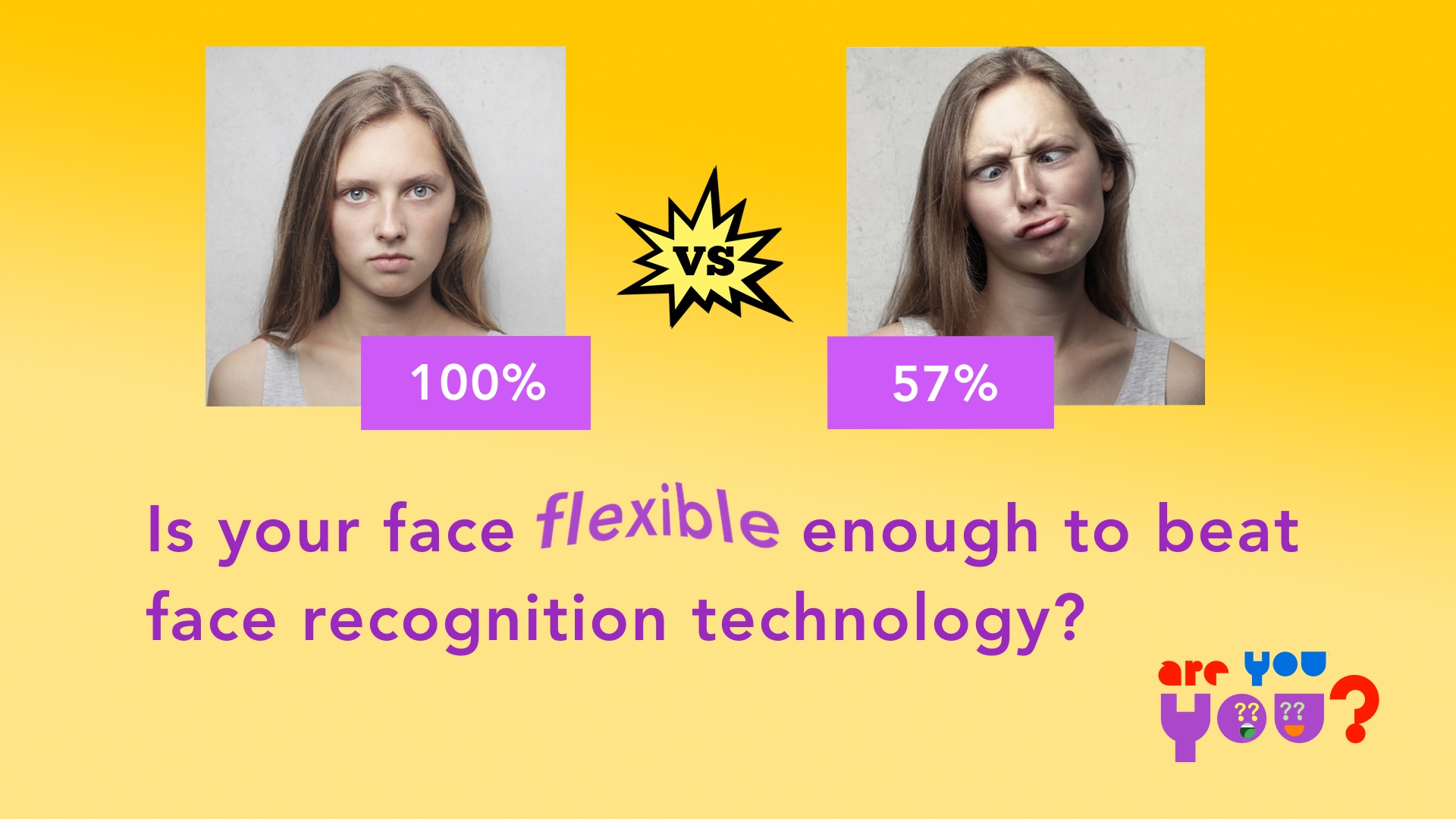
Are You You? is a free browser game by artist and privacy designer Tijmen Schep, made as part of the EU-funded Sherpa research project. Its goal is to show, light-heartedly, how hard it can be to escape face recognition technology.
The play is simple: the page asks for camera access, then a face recognition model runs entirely in your browser and tries to match your face to your earlier photo. To win, you pull faces — turn your head, stick out your tongue, laugh, take off your glasses, push your cheeks around — until the match meter drops below 50%. Each round gives you a score and a "face print," and the results screen shows which of your expressions the algorithm found least like you.
What makes it worth trying
- Privacy by design: the site says the algorithm runs locally, with no uploads, cookies or tracking; only the final score is stored, as a viewer count.
- Concrete learning: instead of a lecture, you feel where recognition fails — pose, expression, accessories — which is useful context for debates about surveillance and facial recognition.
- Low barrier: a camera, a browser and a few minutes are enough. It suits classrooms, workshops and anyone curious about how these systems behave.
The trade-off is that it is a demonstration, not a test of real-world systems: it shows one model's behaviour under playful conditions, not how commercial surveillance tools would handle the same faces.
As a next step, play one round normally and one deliberately distorted, and compare the match percentages — that gap is the most useful thing the game teaches. Related privacy campaigns and projects are linked from the site itself, such as Reclaim Your Face.
How does the face recognition game work and how do I win?
The game asks for camera access, takes your photo after a five-second countdown, and then scores how strongly the face recognition algorithm still matches you to that photo. Your aim is to fool it into dropping below 50% match by pulling faces, moving your head, sticking out your tongue, laughing, removing glasses or using your hands to distort your face. According to the site, the model runs entirely in your browser, no images are uploaded, and only the final score is stored.
How to play well
- Start from a neutral pose, then change one thing at a time so you can see what actually moves the meter.
- Try the suggestions the site lists first: head movement, tongue out, laughing, glasses off, hands reshaping your face.
- Watch the match percentage rather than the funny-face effort; the goal is a low score, not maximum silliness.
- After each round, review the "face prints" and the photos that looked least like you to learn which distortions worked.
Who it suits
It is a short educational demo by artist and privacy designer Tijmen Schep, made for the EU-funded Sherpa project on AI and human rights. It suits classroom use, privacy workshops or a quick five-minute break, and it makes its point without collecting personal data.
A useful next step is to treat it as a conversation starter: after playing, ask why a system that fails on funny faces may still be unreliable in real settings, and what safeguards you would want before face recognition is used on you. For broader context on facial recognition and rights, see Reclaim Your Face.
Is my camera data or face image uploaded or stored when I play?
No. According to the site's own explanation, the face recognition model runs locally in your browser, your camera feed stays on your device, and no pictures of your face are uploaded anywhere. It also states that the site sets no cookies, does no tracking, and collects no personal data.
What is stored
The only thing the site says it keeps is your final score, which it uses as a viewer count—not your image or camera data.
What you still need to allow
Camera access is required to play, so your browser will ask for permission. That permission lets the page use the camera; it does not, by itself, send footage anywhere. If you want extra certainty, you can deny camera access after playing, or use a browser setting that asks each time.
A practical way to check
Open your browser's developer tools, go to the Network tab, and play one round. If the page were uploading images, you would see outgoing requests carrying large data during the game. This is general advice, not a claim about this site's specific implementation—but the site's own statement is that everything runs locally.
The project is described as an educational piece by artist and privacy designer Tijmen Schep, made as part of the EU-funded Sherpa research consortium. For background on the wider campaign it references, see Reclaim Your Face.
What strategies can help me fool the face recognition algorithm?
The game's own instructions list the practical moves: turn your head side to side and up and down, stick out your tongue, laugh, take off your glasses, and use your hands to deform your face. The goal is to push the match meter below 50%, so the most effective approach is to combine several of these at once rather than relying on one expression. Changing your head angle and partially covering your face with your hands disrupts the geometry the algorithm relies on more than an exaggerated expression alone.
A workable sequence
- Start neutral so the meter registers a high baseline, then begin distorting.
- Change pose first (angle and distance from the camera), since a shifted face is a bigger departure than a funny mouth.
- Add occlusion: hands on cheeks, hair across the face, glasses off.
- Hold each variation for a moment so the meter can respond before you switch.
What the game is actually demonstrating
Are You You? is an educational project by privacy designer Tijmen Schep, built within the EU-funded Sherpa research consortium. Its stated aim is to show how hard it can be to escape face recognition, while keeping the tone light. That framing matters for how you read your score: a low match rate in the game shows the algorithm is sensitive to pose and occlusion, not that you have defeated face recognition in general. Systems trained on more varied data, or using depth or infrared input, would be harder to fool.
Practical caveat
The page states the model runs locally in your browser, no photos are uploaded, and only the final score is stored as a viewer count. Camera access is required to play, so use a device and setting you are comfortable with. If the topic interests you, the campaign referenced at the end of the game is Reclaim Your Face.
Who created Are You You and what is the Sherpa project behind it?
Are You You? was created by Tijmen Schep, an artist and privacy designer. The site describes it as an educational project: a light-hearted game that shows how hard it can be to escape face recognition technology. You play by pulling faces to push the recognition meter below 50%, and the face analysis runs locally in your browser rather than on a server.
What the Sherpa project is
Sherpa is an EU-funded research consortium that explores how AI systems could better protect human rights. Are You You? was made as part of that project, with support from the European Union.
Why this pairing makes sense
Schep's background as a privacy designer fits the game's approach: instead of explaining facial recognition in the abstract, it lets you feel the technology tracking your face in real time. The EU research context explains the emphasis on rights and on privacy-friendly design, such as local processing, no cookies and no tracking.
If you want to understand the wider debate the game is part of, the site points readers toward the Reclaim Your Face campaign. To explore Schep's other work on privacy and technology, search for his name directly rather than relying on unofficial links.
What does my final score mean and how is it calculated?
Your final score is a playful measure of how often you managed to stop the face recognition algorithm from matching you to your original photo. It is not a formal accuracy test or a privacy audit—it is a game score built from repeated rounds of facial gymnastics.
How the score is built
Each round, the site takes a photo of you, then asks you to make faces until the match meter drops below 50%. The score combines:
- Level results — the page shows three levels, each labelled Bad or Fail depending on your performance.
- A "beat the system" bonus — awarded for successful evasion.
- An average match figure — the page reports how often, on average, the algorithm concluded it was likely the same person, plus a percentage for how "you" you were across attempts.
So a strong score means you repeatedly pushed the match below the threshold, not that you defeated face recognition in general. The algorithm runs locally in your browser; the site states that only the final score is stored, as a viewer count, and that no face images are uploaded.
What to take from it
Treat the score as a demonstration of how hard it can be to escape face recognition, presented light-heartedly by artist and privacy designer Tijmen Schep as part of the EU-funded Sherpa project. A low score is the expected outcome for most people; a high score mostly shows which expressions and props (tongue out, glasses off, hands deforming the face) confuse this particular model.
As a next step, play once normally and once with deliberate changes—glasses removed, head turned—and compare the average match percentage. The difference is more informative than the total. For context on facial recognition and privacy, see Reclaim Your Face.

User reviews (0)