
 简体中文
简体中文 English
Website review
This review may include AI-generated content and is not individually verified. Domain, certificate and other facts come from the observed data on this page.
What is the Behmer Lab?
The Behmer Lab is the Insect Physiology & Behavior Research Group at Texas A&M University, led by Spence Behmer. It studies insect physiology and behavior, including their ecological and evolutionary bases, using a "bottom-up" approach that treats individual behavior as a tool for understanding physiological and higher-level processes. The group has also begun using sequencing approaches to study physiology.
Its stated research areas are:
- Physiological ecology
- Insect sterol (cholesterol) biology
- Mechanisms of learning
Study organisms include grasshoppers, caterpillars, ants, Drosophila, and hemipterans (insects with sucking mouthparts).
Who it is for
The site is aimed at prospective students and postdocs, collaborating researchers, and entomologists interested in insect nutrition, sterol biology, or learning. A reader deciding whether to reach out should look for overlap with those three research areas and with the lab's experimental insects; the lab explicitly invites questions and points prospective students and postdocs to a dedicated page.
What the page shows about its work
The news section mixes conference talks, awards, and publications, which is useful for judging current activity and direction. Examples include work on nutrition mediating insect susceptibility to Bt toxins (Scientific Reports) and on lipogenesis across nutritional environments (Journal of Insect Physiology). Behmer's roles with the Gordon Research Conference on Plant-Herbivore Interactions also indicate engagement with the broader plant–herbivore research community.
For a concrete next step, read the prospective students and postdocs page, then check recent publications for methods and questions that match your interests. For related context, see Texas A&M University and Entomological Society of America.
What research areas does the Behmer Lab focus on?
The Behmer Lab, formally the Insect Physiology & Behavior Research Group at Texas A&M University, focuses on three broad research areas:
- Physiological ecology — how insect physiology interacts with ecological conditions, including nutrition and life-history trade-offs.
- Insect sterol (cholesterol) biology — the study of sterols, which insects need but generally cannot synthesize themselves.
- Mechanisms of learning — the physiological and behavioral underpinnings of learning in insects.
The lab's stated approach is "bottom-up": individual behavior is used as a tool to understand physiological and higher-level processes, with recent work adding sequencing methods. Study organisms span grasshoppers, caterpillars, ants, Drosophila, and hemipterans (sucking insects), and recent publications cover topics such as nutrition's effect on susceptibility to Bt toxins and lipogenesis across nutritional environments.
Who this is useful for
A prospective graduate student or postdoc can use these three areas to judge fit before making contact. If your interest is, say, insect nutrition and toxin susceptibility, the physiological ecology thread is the closest match; if it is sterol metabolism or learning mechanisms, the other two areas are more relevant.
Next step
Open the lab's prospective students and postdocs page first, then read one recent publication from your area of interest so your inquiry can reference specific work rather than general interest. For context on the department, see Texas A&M Department of Entomology.
How can prospective students and postdocs join the Behmer Lab?
Prospective students and postdocs should start by exploring the lab's site and then contacting the lab directly. The Behmer Lab page states that prospective students and postdocs can "click here to learn more about the lab," and it also invites visitors to "contact us if you have any questions." That means the practical path is: read the lab's research pages first, then send a focused inquiry rather than a generic request.
What to do before you email
- Read the three research areas: physiological ecology, insect sterol (cholesterol) biology, and mechanisms of learning.
- Note the study organisms: grasshoppers, caterpillars, ants, Drosophila, and hemipterans (sucking mouthparts).
- Understand the lab's stated approach: a "bottom-up" emphasis on individual behavior as a tool for understanding physiological and higher-level processes, plus recent sequencing approaches.
- Check the recent news and publications to see what the lab has been working on and where its current momentum lies.
How to make your inquiry useful
A strong first email is specific. Mention which of the three research areas fits your interests, which insect system you have experience with, and what you want to do in the lab. If you are a prospective graduate student, say so clearly and note your intended degree level and timing. If you are a postdoc, state your prior research and the kind of project you would propose.
A concrete example
A prospective PhD student interested in nutrition and learning might write: "I read your work on nutrition mediating insect susceptibility to Bt toxins and your NSF-funded life-history trade-off research. I have experience rearing caterpillars and running behavioral assays. I am applying for fall admission and would like to know whether the lab is taking students in the mechanisms of learning area." That is more useful than asking whether positions are open.
Decision criterion
Before committing to a lab, ask whether your interests match the lab's "bottom-up" approach and whether you are comfortable working with the specific insects listed. If you want a lab that emphasizes individual behavior as a route to physiology, this one fits. If you want a purely molecular or sequencing-first lab, the fit may be weaker, even though sequencing approaches are now part of the work.
For broader context on insect physiology and behavior research, see Entomological Society of America and Texas A&M University.
What insect species are used in the Behmer Lab's research?
The Behmer Lab uses a mix of chewing and sucking insects to study physiology and behavior from the individual outward. According to the lab's own site, the species mentioned are grasshoppers, caterpillars, ants, Drosophila, and hemipterans (insects with sucking mouthparts).
What each group brings to the research
- Grasshoppers and caterpillars are the classic chewing herbivores, useful for questions about plant feeding, nutrient balance, and how diet affects performance.
- Ants offer social context, letting the lab connect individual behavior to colony-level outcomes.
- Drosophila provides a well-studied genetic toolkit, which fits the lab's move toward sequencing approaches.
- Hemipterans (aphids, bugs, and relatives) feed by sucking sap or plant fluids, so they present a very different nutritional and physiological problem than leaf-chewing species.
How the species list maps onto the lab's three research areas
The lab describes three broad areas: physiological ecology, insect sterol (cholesterol) biology, and mechanisms of learning. The species choice follows from those questions rather than from a single model organism. Sterol biology, for instance, matters most for insects that cannot make cholesterol themselves and must get it from their diet — a constraint that plays out differently in a sap feeder than in a caterpillar. Learning studies, meanwhile, tend to favor species that are easy to rear and test in controlled conditions.
If you are choosing a lab or model system
Ask whether the species can actually answer your question, not just whether it is convenient. A comparative approach across chewing and sucking insects is powerful for nutrition and sterol work, but it demands more rearing infrastructure than a single-species project. If your interest is molecular, Drosophila lowers the barrier; if it is ecological realism in agricultural settings, grasshoppers, caterpillars, and hemipterans are closer to the field.
For prospective students or postdocs, the lab's own site is the place to check current projects and contact details: Behmer Lab. You can also look up the group's recent publications to see which species appear in the work that interests you most.
What are the key publications from the Behmer Lab?
The lab's own site highlights a set of recent papers rather than a ranked publication list, so the clearest "key publications" are the ones tied to its three research areas: physiological ecology, insect sterol (cholesterol) biology, and mechanisms of learning.
Featured on the site
- Roeder, K.A. and Behmer, S.T. (2014) — a paper on lifetime consequences, listed under "Key Publications and Features." It connects to the lab's nutritional ecology work, where diet composition is tracked across an insect's whole life rather than in a single stage.
- Deans, C.A., Behmer, S.T., Tessnow, A.E., Tamez-Guerra, P., Pusztai-Carey, M. and Sword, G.A. (2017) — "Nutrition affects insect susceptibility to Bt toxins," Scientific Reports 7, 39705. The lab describes this as a very important paper, and it pairs with a related Current Opinion in Insect Science piece on nutrition as a neglected factor in herbivore susceptibility to Bt toxins.
- A 2016 paper in the Journal of Insect Physiology on lipogenesis across different nutritional environments, part of the lab's NSF-funded life-history trade-off research.
How to decide what matters for you
- If you care about applied pest management, start with the Bt toxin papers. They argue that what an insect eats changes how well a control tactic works, which matters to anyone testing resistance or dose-response.
- If you care about basic physiology, the lipogenesis and sterol work is the better entry point, since sterol biology is one of the lab's three stated pillars.
- If you care about behavior and learning, look for the mechanisms-of-learning output, which uses insects such as Drosophila, ants and caterpillars.
Next step
The site's news entries point to the Scientific Reports paper as the one the group most wants read. Read that first, then follow its citations backward to the 2016 Journal of Insect Physiology work to see how the nutrition-and-trade-off theme developed. For the lab's full output and current preprints, Welcome to the Behmer Lab is the authoritative starting point, and departmental listings at Texas A&M Department of Entomology often carry the same records.
What recent news and announcements are available from the Behmer Lab?
The Behmer Lab's news page is a dated activity log, not a continuously updated bulletin. Its entries run from October 2016 through July 2017 and cover three recurring themes: lab head Spence Behmer's conference and seminar travel, student awards and defenses, and newly published papers.
Travel and talks
The announcements record invited talks and visits by Spence Behmer, including a talk at Toulouse University and at SIP16 in Tours (July 2017), a trip to China to visit Northwest A&F University, Huazhong Agricultural University and the Institute of Zoology in Beijing (May 2017), a talk at the BExME workshop at Penn State University (March 2017), and attendance at the Gordon Research Conference on Plant-Herbivore Interactions in Ventura, California (February 2017). The same entry notes he served as Vice Chair for the 2017 meeting and Chair for the 2019 meeting — useful context if you want to gauge the lab's standing in that research community.
Student milestones
Two entries concern lab member Richelle Marquess: a Department of Entomology MS Student of the Year Award (February 2017) and a successful thesis defense (October 2016). For a prospective graduate student, this is the most directly relevant section, since it shows the lab publicizes individual student progress rather than only group-level output.
Publications
Several posts flag new papers, with links or citations:
- A paper on nutrition mediating insect susceptibility to Bt toxins, published in Scientific Reports (2017, article 39705), described on the page as "a very important paper."
- A related paper in the Journal of Insect Physiology on lipogenesis across different nutritional environments, tied to NSF-funded life-history trade-off research.
- A paper in Current Opinion in Insect Science on nutrition as a neglected factor in insect herbivore susceptibility to Bt toxins.
How to use this
If you are evaluating the lab for a PhD or postdoc, treat the news list as a snapshot of a specific period rather than a current status report. A practical next step: read the two Bt-toxin papers together, since the Scientific Reports study and the Current Opinion piece appear to build one argument about nutrition as an underappreciated variable in pest control. Then compare that research emphasis against other insect physiology groups working on similar questions, such as Texas A&M Department of Entomology, the lab's home department, or Entomological Society of America for conference context. To check whether the lab is still active on these topics, look for more recent publications under Behmer's name rather than relying on this page's dates.
 Cloudflare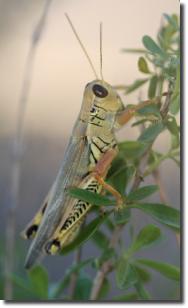
User reviews (0)