
 简体中文
简体中文 English
Website review
This review may include AI-generated content and is not individually verified. Domain, certificate and other facts come from the observed data on this page.
What is ChessBlunders.org?
ChessBlunders.org is a chess improvement site that turns your own mistakes into training material. You run your games through Stockfish 16 analysis to locate blunders, then replay those positions as puzzles instead of solving generic tactics sets.
What that means in practice
- Blunder detection: The engine flags the moves that cost you the most, so you see the actual errors you make rather than a random puzzle mix.
- Puzzle conversion: Those flagged positions become exercises, letting you retry the exact decision you got wrong.
- Feedback loop: Analysis and practice sit in one workflow — find the error, drill it, then check whether the pattern recurs in later games.
Who it suits
| Player type | Fit |
|---|---|
| Club player with a backlog of own games | Strong — the value comes from your games, not a shared puzzle database |
| Beginner learning basic tactics | Weaker — a structured tactics course covers more ground faster |
| Coach or student reviewing together | Useful — concrete positions from real games are easier to discuss than abstract themes |
A realistic scenario
You finish a league game, paste the moves in, and the analysis highlights a moment where you grabbed a pawn and dropped a piece. Instead of noting "be more careful," you get that position back as a puzzle and solve it until the correct move is automatic. Next time a similar capture temptation appears, you have already rehearsed the response.
Next step
Gather three to five of your recent losses and run them through. If the same mistake type keeps appearing — back-rank weakness, overloading a defender, rushing a pawn break — that repetition is your training plan, and you can compare your progress against general resources like Lichess or Chess.com for extra practice games.
How does ChessBlunders.org use Stockfish 16 to analyze my chess games?
ChessBlunders.org uses Stockfish 16 as its analysis engine to scan your finished games for mistakes, then converts those mistakes into puzzles you can drill.
In practice, the workflow is:
- You supply a game (typically by importing a PGN or pasting moves).
- Stockfish 16 evaluates the positions and flags the moves that lose significant advantage — the blunders.
- The site turns each flagged position into a puzzle, so you replay the critical moment and try to find the better move yourself.
The key design choice is that Stockfish does the detection, but the training is yours. Instead of just showing an engine line you skim and forget, the position becomes a repeatable exercise. This suits club players who keep losing the same types of games and want a feedback loop tighter than "run full-game analysis, nod, move on."
A practical next step: after your next lost game, don't just read the engine's top line. Note the two or three positions the analysis marks as blunders, then work them as puzzles a day later, without the engine visible. If you still can't find the right move cold, that position — not the opening you were blaming — is your study material.
To compare how other sites handle post-game analysis and puzzle training, you can look at Lichess and Chess.com. Lichess is free and open, with built-in Stockfish analysis and puzzle sets; Chess.com bundles analysis and puzzles into a broader paid ecosystem. ChessBlunders.org's narrower focus — only your own blunders, turned into your own puzzles — is its main trade-off: less breadth, but tighter relevance to the mistakes you actually make.
Can I practice my own blunders as puzzles on ChessBlunders.org?
Yes. ChessBlunders.org is built around exactly that loop: you analyze your games with Stockfish 16, it identifies your blunders, and you then practice those positions as puzzles. The site's own description frames this as turning your mistakes into improvement, so practicing your own blunders is the core purpose rather than a side feature.
H3 How the workflow typically fits together
- You bring in a game you played (usually by pasting or importing the PGN).
- The engine analysis flags the moments where your move lost significant advantage.
- Those flagged positions are converted into puzzle form, so you re-solve the position you actually got wrong instead of a random tactics set.
H3 Why this differs from generic puzzle sites
| Approach | What you practice | Main trade-off |
|---|---|---|
| Random tactics trainer | Common patterns and motifs | Broad coverage, but may not touch your recurring weaknesses |
| Your own blunders as puzzles | Positions from your real games | Highly personal and memorable, but narrower and dependent on how many games you analyze |
H3 A practical reader scenario
Suppose you keep dropping material in the middlegame after a queen trade. On a generic trainer you might grind hundreds of unrelated puzzles before meeting that exact pattern. Using your own blunders, the same mistake reappears as a puzzle within minutes of analysis, which makes the correction much more likely to stick because the position already feels familiar.
H3 Trade-offs to weigh
- Personal blunder puzzles are only as good as the games you feed in; analyze regularly to keep the pool fresh.
- Re-solving your own errors can feel repetitive, and the puzzle set is limited by how many blunders you actually made.
- A mixed routine often works best: use your own blunders for targeted repair, and broader trainers for pattern volume.
H3 Next step
Play or import one recent game, run the analysis, and pick the single worst blunder to solve first. If you want to complement this with general pattern training, established options include Lichess and Chess.com, both of which offer their own puzzle and analysis tools.
Is ChessBlunders.org free to use?
ChessBlunders.org does not present any pricing information on its site, and nothing in the available page content indicates paid tiers, subscriptions or payment platforms. Treat it as a free-to-use tool based on what the site itself shows.
That fits its stated purpose: you upload or analyze your games with Stockfish 16, the site flags your blunders, and you can then drill those positions as puzzles. There is no visible paywall between those steps.
What to check before relying on it
- Whether analysis limits exist (games per day, depth of Stockfish 16 analysis, or puzzle storage).
- Whether an account is required to save your blunder history.
- Whether the service depends on donations or ads, which can change over time.
A practical way to decide If you mainly want to review a handful of your own games and turn recurring mistakes into repeatable puzzles, a free tool like this covers the core need. If you need long-term progress tracking, coach dashboards or opening repertoires, compare it with a broader training platform before committing your study time.
For a second opinion on free analysis, you can also check Lichess, which offers built-in game analysis and puzzle practice, and Chess.com, which has both free and paid training features. Running your game through two engines is a quick way to see whether the blunders ChessBlunders.org surfaces match what other tools report.
How does practicing blunders on ChessBlunders.org help me improve at chess?
Practicing your own blunders as puzzles on ChessBlunders.org helps because it turns passive review into active recall. Instead of reading an engine line once and nodding, you re-solve the exact position where you went wrong, so the correction is tied to a move you actually made under real conditions.
What the site does with your game
According to the site's own description, it analyzes your games with Stockfish 16 to find blunders, then converts those positions into puzzles you practice. That two-step loop matters: detection gives you the list, and re-solving builds the memory.
Why your own mistakes beat generic puzzles
Generic tactics trainers teach patterns, but they rarely match your habits. Your blunder set is a personalized diagnostic — it shows whether you keep dropping pieces to the same knight fork, missing back-rank mates, or rushing in time trouble.
| Approach | What it trains | Main trade-off |
|---|---|---|
| Generic puzzle sets | Broad pattern recognition | Not tailored to your weaknesses |
| Your blunders as puzzles | Your specific recurring errors | Narrower; depends on how many games you've analyzed |
A practical routine
- Play a few serious games and let the analysis run.
- Work the resulting blunder puzzles without moving pieces first — commit to an answer.
- When you fail one, write one sentence on why you missed it.
- Revisit the same set a week later; if you now solve it instantly, the lesson stuck.
The trade-off is honesty: the puzzles only help if you treat them as a test, not a walkthrough. Pair this with a broader trainer for general tactics — for example Lichess offers free puzzles and analysis if you want volume alongside your personal set.
Next step: after your next batch of games, sort your blunder puzzles by theme and pick the single most common one to focus on for the week.
What are the best ways to use ChessBlunders.org for chess training?
Use ChessBlunders.org as a mistake-review loop rather than a place to browse random puzzles. Its stated purpose is to run your own games through Stockfish 16, surface blunders, and convert those mistakes into puzzles you can practice. That makes it strongest for players who already have games to review and want their training to target recurring weaknesses.
A practical training routine
- Play and save your games in whatever app or site you normally use, then import the ones you lost or drew.
- Run the analysis and read the blunder list in context. Don't just note the engine's best move; try to name what you missed — an undefended piece, a loose back rank, a tactic you didn't calculate.
- Practice the generated puzzles a few days later, not immediately. Delayed recall tests whether you actually learned the pattern.
- Tag the cause in a notebook: "missed knight fork," "traded into a lost endgame," "rushed move in time trouble." After ten games, the tags tell you what to study.
- Re-test the same puzzle set a week or two later. If you still fail the same positions, that's your real training priority.
Who gets the most from it
- Club players with a backlog of games who want review to lead somewhere instead of ending at "I blundered on move 23."
- Players preparing for a specific opponent or tournament, who can feed recent games in and see which errors repeat under pressure.
- Self-directed learners who prefer their own mistakes over generic puzzle sets.
It's a weaker fit if you have no games to import, or if you want structured lessons, opening theory or coached feedback — those need different tools.
Trade-offs to weigh
| Approach | Strength | Limitation |
|---|---|---|
| Your own blunders as puzzles | Directly relevant; high recall value | Narrow — you only rehearse positions you already reached |
| Generic tactical puzzle sets | Broad pattern coverage | Less personal; easy to solve without fixing your habits |
| Full engine review alone | Complete and objective | Passive; insight often fades without practice |
The best combination is usually both: use your own blunders for targeted repair, and a broader puzzle source for patterns you haven't yet encountered.
A concrete next step
Pick your three most recent losses, run them through ChessBlunders.org, and write one sentence per blunder explaining the cause. If the same cause appears twice, build a small study plan around it — for example, ten back-rank puzzles or a session on counting attackers and defenders — before your next event.
 vercel-dns.com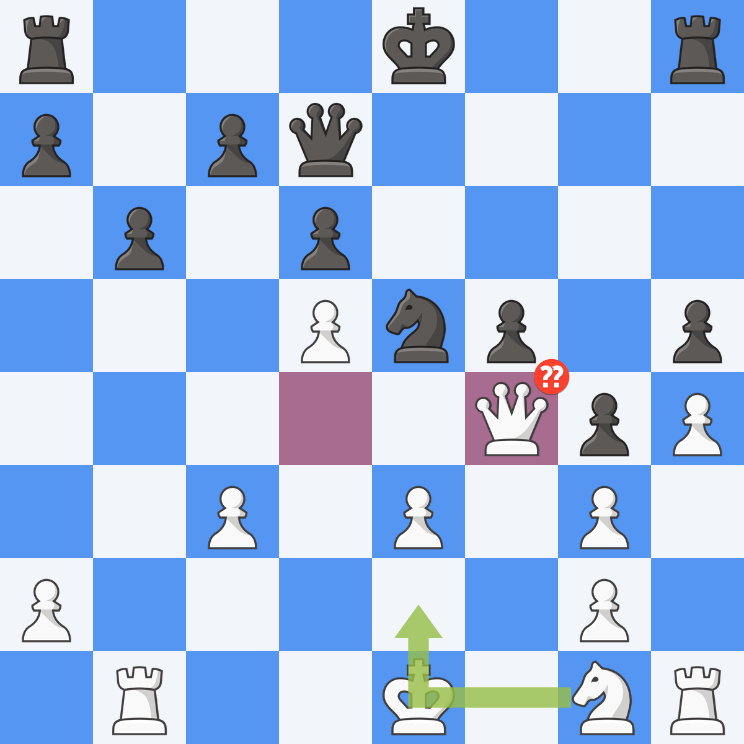

User reviews (0)