
 简体中文
 English
Website review
This review may include AI-generated content and is not individually verified. Domain, certificate and other facts come from the observed data on this page.
What is Clan Dunlop?
Clan Dunlop is the family heritage site for people carrying the Dunlop name and its variants — Dunlap and Delap — descended from the old Scottish family of East Ayrshire. The site presents itself as "The House of Dunlop," a home base for a scattered surname community now spread across the United States, Canada, Australia and New Zealand, and it gathers history, heraldry and genealogy in one place rather than acting as a membership organization or commercial shop.
What the site covers
The navigation reflects a broad heritage remit rather than a single essay:
- Origins of the name — derived from the lands of Dunlop in Cunningham, Ayrshire, with the place name explained as Dun (fort) and Lop (at the bend or winding).
- The Village of Dunlop and the "Dunlop of That Ilk" chiefs, listed from William de Dunlop through James Wallace-Dunlop.
- Tartan — the Dunlop Modern, registered with the Scottish Tartan Society as STS# 1197, designed by Richard Dunlop in 1982 and first shown at the Grandfather Mountain Highland Games in North Carolina.
- Houses and symbols — Dunlop House, manor houses and the coat of arms.
- People — biographies of notable clansmen and women, a veterans section covering wars from Scotland and Britain to America and India, and a featured figure in Oct-Alva Dunlap, born in 1805 in Canajoharie, New York, seven generations from James, 13th of that Ilk, after whom Dunlap, Illinois was laid out in 1871.
- Genealogy — multiple books noted as available for genealogists, some online, plus a pointer to an Ancestry.com tree.
Who it suits
A reader is best served here if they already suspect a Dunlop, Dunlap or Delap connection and want orientation: where the name comes from, which branch names and migration routes exist, and what records or publications might carry them further. Someone researching a specific ancestor in Scotland, Ulster or North America will find the genealogy and migrations sections the practical starting point; someone interested in clan identity, tartan or chiefly lineage will gravitate to those pages instead. Because the tone is celebratory — the opening passage on Celtic defenders of the land is evocative rather than evidentiary — treat narrative pages as leads to verify against records, not as proof of a particular line.
As a next step, decide which question you are actually asking. If it is "am I descended from this family?", begin with the genealogy books and the migrations pages, then confirm each generation in civil or church records. If it is "what does this name mean and who were its chiefs?", the history of the name and the chiefs list answer it directly. For broader context, the official clan and tartan authorities, such as Standing Council of Scottish Chiefs and Scottish Register of Tartans, let you cross-check chiefly status and tartan registration independently.
How can I trace my Dunlop, Dunlap, or Delap ancestry through the clan's genealogy resources?
Start with the clan site's genealogy section, then work backward through records: birthplace, migration date, and the spelling used in each document. The site is built for exactly this task—it describes itself as a home for Dunlops, Dunlaps, and Delaps descended from the East Ayrshire family, with branches in the USA, Australia, New Zealand, and Canada.
What the site gives you
- Genealogy page: the site says multiple books are available for genealogists, some online. Treat these as compiled secondary sources—great for leads and context, not proof on their own.
- Name history: the surname comes from the lands of Dunlop in Cunningham, Ayrshire. Knowing the origin parish helps you target Scottish records.
- Chiefs list: thirty chiefs of the name, from William de Dunlop to James Wallace-Dunlop. Useful for placing a family in time and for distinguishing branches.
- Migrations and stories: pages on migration and clan stories show where families settled, which helps you guess a destination port or county.
- Notables and veterans: short biographies of clansmen and women, including veterans from Scotland, Britain, America, and India. A named ancestor here can anchor a line.
- Worked example: the page sketches Oct-Alva Dunlap, founder of Dunlap, Illinois—born 1805 in Canajoharie, New York, seven generations from James, 13th of that Ilk, with the village laid out in 1871. That is the pattern to follow: a person, a place, a date, a generation count.
A practical sequence
- Collect what your family already knows: full names, birth and death dates, places, and the spelling each person used.
- Search the site's genealogy books and biographies for the earliest known ancestor. Note the generation number if given.
- Check the chiefs list and name history to see whether your line plausibly connects to the Ayrshire heartland or to a migrant branch.
- Read the migrations page for your ancestor's destination—America, Canada, Australia, New Zealand, or Ireland.
- Confirm every link with civil records, church registers, censuses, or gravestones before accepting it.
Spelling is the main trap
Dunlop, Dunlap, and Delap are variants of one name, and clerks wrote what they heard. Search all three, plus loose versions, in every index. A New York birth record may say Dunlap while a Scottish parish register says Dunlop for the same family.
For wider context, the official sites of the Ancestry and FamilySearch services hold record collections you can search by variant, and the ScotlandsPeople service covers Scottish statutory and parish records. Use the clan site to orient yourself, then verify in original records.
Where can I find the Dunlop tartan and is it registered with the Scottish Tartan Society?
The Dunlop tartan is documented on the clan's own site, Clan Dunlop, which states that the Dunlop Modern is registered with the Scottish Tartan Society as STS# 1197. According to that page, it was designed by Richard Dunlop in 1982 and first seen at the Grandfather Mountain Highland Games in North Carolina. If you need to confirm the registration or order cloth, treat the STS number as your search key and verify it with the registering body or a tartan mill rather than relying on a single page.
Practical next steps
- For verification: quote "Dunlop Modern, STS# 1197" to the Scottish Tartan Authority (the current registering body) or a reputable weaver.
- For a kilt or scarf: ask the mill whether it holds the modern sett in stock, since availability varies by weaver and weight.
- For family history context: the same site covers the name's origin in the lands of Dunlop in Cunningham, Ayrshire, and lists the chiefs of the name, which helps if you are tracing which line you descend from.
As a general rule, confirm thread count and sett size with the seller before commissioning anything expensive, and check whether a "Dunlop" variant you see online is the registered modern tartan or an unrelated design trading under the same name.
What is the history of the Village of Dunlop in East Ayrshire and the origin of the Dunlop name?
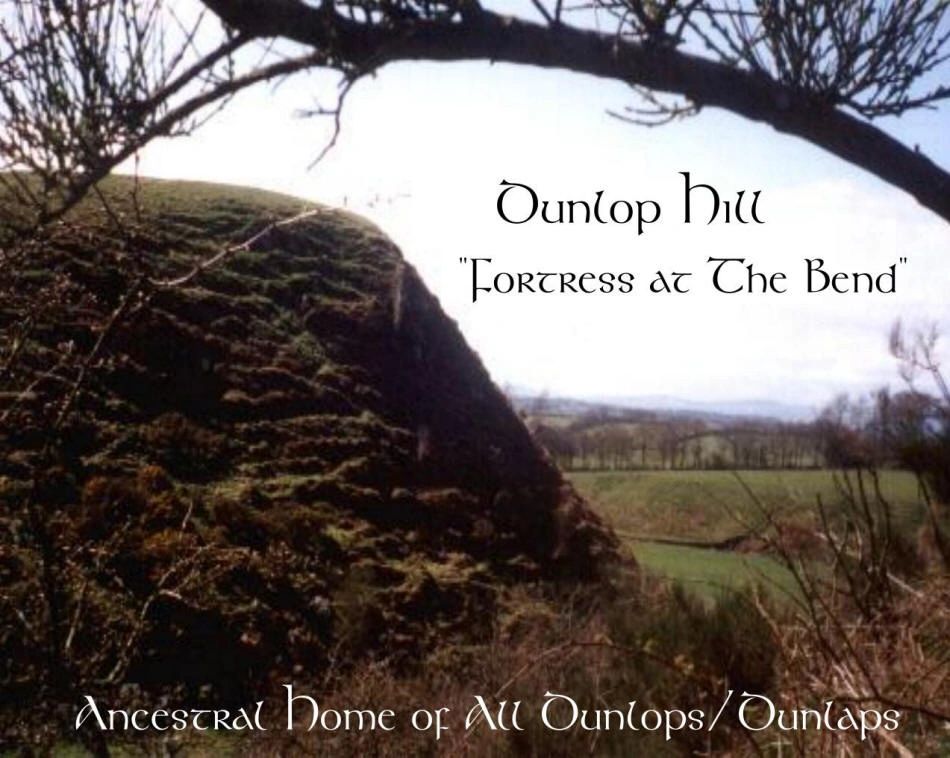
The site traces the Dunlop name to the lands of Dunlop in the Cunningham district of East Ayrshire, southwest Scotland. It explains the name as coming from Gaelic Dun (fort) and Lop (at the bend or winding), describing a small fortified rise near the Glazert burn that local Celtic families defended over many centuries. The page presents this as the clan's origin story rather than a neutral etymology, so treat the fort-and-bend translation as the site's account.
What the site covers on the village and name
- The place: A section titled "The Village of Dunlop" and a "History of the Name" section sit alongside the clan's origins narrative.
- The chiefly line: A list of the thirty chiefs "of That Ilk," running from William de Dunlop to James Wallace-Dunlop.
- Symbols: The Dunlop Modern tartan, registered as STS# 1197 and designed by Richard Dunlop in 1982, first shown at the Grandfather Mountain Highland Games in North Carolina.
- Migration and descendants: Sections on migrations, genealogy resources, notables and veterans, and a biography of Oct-Alva Dunlap, born in 1805 in New York and linked to the founding of Dunlap, Illinois in 1871.
How to use it
If you are researching a Dunlop, Dunlap or Delap line, start with the genealogy and migrations sections, then compare what you find against civil records and the ScotlandsPeople indexes for Ayrshire births, marriages and deaths. For the surname's wider context, check the Scottish Government or local East Ayrshire heritage sources rather than relying on a single clan page. The site is strongest as a family-history hub and clan-identity resource; for scholarly etymology, weigh its account against place-name dictionaries.
For a concrete example: someone with a Dunlap ancestor who emigrated to Illinois can use the Oct-Alva Dunlap biography as a starting lead, then verify dates and places in census and land records before accepting the connection.
Who are the notable Dunlops and veterans featured on the site, and what did they accomplish?
The site does not list every notable Dunlop or veteran in the supplied page text. It gives the theme of both sections and one named example, with the rest behind "see biography" and similar links.
Notable Dunlops
- Oct-Alva Dunlap, founder of Dunlap, Illinois is the one notable described in any detail. The site says he was born on October 26, 1805, at Canajoharie, Montgomery County, New York, and was seven generations from James, 13th of that Ilk. The village of Dunlap, Illinois, was laid out on June 11, 1871. His biography is linked from the home page.
- The Dunlop Notables section is described as short biographies of clansmen and women who "made their marks in History in the places they have landed." No individual names or achievements from that section appear in the supplied text.
- The Chiefs of the Name are a separate list running from William de Dunlop to James Wallace-Dunlop, described as thirty chiefs. The page does not describe their individual accomplishments.
Veterans
The Dunlop Veterans section is framed as a record of Dunlops who fought "from Scotland and Britain to America and India." The supplied text names no veterans and gives no campaigns, units or awards, so individual accomplishments cannot be summarized from this page alone.
How to use the site
If you are researching a specific ancestor, start with the Notables and Veterans sections and then check the Genealogy page, which mentions multiple books for genealogists, some online. For a named individual, the biography links are the place to confirm dates and places rather than relying on the section summaries.
For wider context on the surname and its Ayrshire origins, the official sites of the Clan Dunlop and the Scottish Tartan Society (which registers the Dunlop Modern tartan as STS# 1197) are useful cross-checks.
How do I join or contact Clan Dunlop, and is there a membership or clan society to get involved with?
Contact the site through its Contact Us page; joining is a matter of connecting with the clan organization behind the site and asking about current membership. The site presents itself as the home for Dunlops, Dunlaps and Delaps descended from the East Ayrshire family, with branches in the USA, Australia, New Zealand and Canada, so it is the natural first point of contact for anyone researching the name or wanting to get involved.
What the site offers beyond contact
- Genealogy resources — the site notes multiple books available for genealogists, some online, plus family history material.
- Clan history — pages on the name's origin in Ayrshire, the Village of Dunlop, the thirty chiefs from William de Dunlop to James Wallace-Dunlop, and clan royalty.
- Tartan information — the Dunlop Modern tartan, registered with the Scottish Tartan Society as STS# 1197 and designed by Richard Dunlop in 1982.
- Stories and migrations — including profiles such as Oct-Alva Dunlap, founder of Dunlap, Illinois, and a veterans section.
A practical next step
If your goal is membership, write through the Contact Us page with a short note: your name spelling (Dunlop, Dunlap or Delap), where your family line is based, and what you are looking for — a clan society, genealogical help, or event information. That gives the volunteers something specific to answer.
For comparison, the official clan bodies below can confirm whether a recognised society exists and how to join:
| Website | Best for |
|---|---|
| Clan Dunlop | Contact, family history, tartan and notable clansmen |
| Council of Scottish Clans & Associations | Finding recognised clan societies and membership guidance |
| Standing Council of Scottish Chiefs | Confirming a clan's recognised chief and status |
As general advice rather than a feature of this site: clan organisations are usually run by volunteers, so expect a slower reply, and check whether any fee covers a newsletter, tartan goods or event support before committing.
 GoDaddy
 Amazon.com, Inc.

User reviews (0)