
 Visit website
 Updated: 2026-09-22 12:13
 Language: English (default)
 Access: Normal
 Profile views 6
  Outbound visits 1
 Website Review
What is MegaMek?
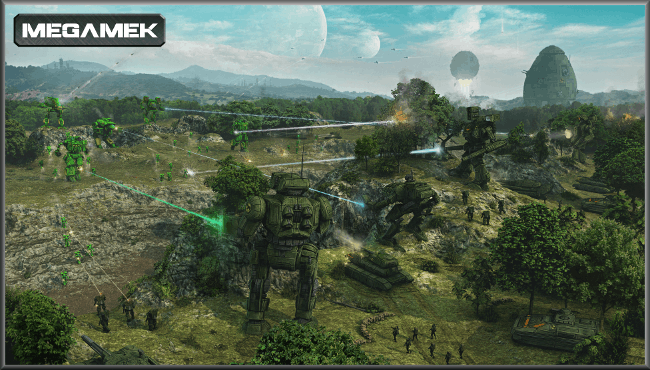
MegaMek is an unofficial, open-source, Java-based adaptation of the Classic BattleTech tabletop game. It recreates the hex-grid tactical combat of the board game on a computer, handling movement, line of sight, weapons fire, heat, terrain and unit damage according to BattleTech rules. It is free software released under the GPL, so players can download and use it without purchasing a commercial licence.
The project is more than a single program. It typically includes companion tools such as MegaMekLab for designing and editing units, and MekHQ for running a persistent campaign that links individual battles into a larger mercenary or faction storyline.
Who it suits
- BattleTech players who want to play matches online or against a computer opponent.
- Groups spread across different locations, since MegaMek supports networked play.
- Campaign enthusiasts interested in managing rosters, repairs and contracts between battles.
Trade-offs
- Being unofficial, it is not a licensed commercial product and may not match every published rule or piece of artwork.
- The interface reflects its long development history and can feel dense to newcomers.
- Java-based deployment and manual setup may require more effort than a typical store-bought game.
Official information is available at MegaMek.
How does MegaMek compare to the official BattleTech board game?
MegaMek is an unofficial, open-source adaptation of the Classic BattleTech board game, distributed under the GPL. It recreates the tabletop ruleset as a Java-based client/server program rather than a physical product, so the core appeal is rules fidelity with digital convenience.
Practical differences
- Setup and space: No miniatures, maps or dice are required; play happens on screen, which suits remote opponents and players short on table space.
- Opponents: The server model supports networked play, and computer-controlled opponents are available for solo sessions.
- Rules handling: Movement, line of sight, heat and damage are tracked by the software, reducing manual bookkeeping but also hiding some arithmetic that tabletop players perform themselves.
- Components: The project family includes MegaMek itself, plus MekHQ for campaign management and MegaMekLab for unit design, so it covers play beyond single scenarios.
Trade-offs
It is unofficial, so it is not a substitute for official publications, miniatures or organised play. Presentation is functional rather than miniature-focused, and the interface may feel dense to newcomers. Conversely, it is free, cross-platform Java software, making it easy to try and well suited to long campaigns or play-by-network groups. Players who value the tactile tabletop experience may still prefer physical games; those prioritising accessibility and automation typically find MegaMek a practical companion.
What are the differences between MegaMek, MekHQ, and MegaMekLab?
MegaMek, MekHQ and MegaMekLab are separate programs in the same open-source project, each covering a different part of the Classic BattleTech experience. They share rules data and file formats, so they are often used together.
Core differences
| Program | Main purpose | Typical user |
|---|---|---|
| MegaMek | Plays out battles on a hex map, with a Java client/server setup that supports online or networked games | Players who want to fight scenarios against another person or the computer |
| MekHQ | Runs a persistent campaign: managing a unit, personnel, contracts, repairs, finances and advancing time between battles | Campaign players and game masters |
| MegaMekLab | Builds and edits units such as 'Mechs, vehicles and other designs, checking them against construction rules | Players and designers creating or validating custom units |
How they fit together
A common workflow is to design a unit in MegaMekLab, add it to a force in MekHQ, then resolve the resulting engagement in MegaMek and feed the outcome back into the campaign. MegaMek can also be played on its own for one-off games, and MekHQ is useful mainly when continuity and logistics matter more than a single battle.
All three are unofficial, free and open source under the GPL, available from MegaMek. They suit hobbyists comfortable with Java applications and tabletop-level detail; the trade-off is steeper setup and record-keeping than a streamlined video game.
How can I play MegaMek online with others?
MegaMek is an open-source, Java-based adaptation of the Classic BattleTech tabletop game. It is designed for networked play, so playing with others online typically means connecting to a host server rather than using a single shared screen.
Ways to play online
- Direct host/join: One player runs a game as the host, and others connect over the internet using the built-in client/server networking. The host controls game options and scenario setup.
- Dedicated or community servers: Groups often run persistent servers so players can join at arranged times. This suits regular campaigns and pickup matches.
- Play-by-email or scheduled sessions: Because turns can be detailed, some communities coordinate matches in advance rather than relying on drop-in play.
What you need
- The MegaMek client installed on each player's machine.
- Matching game versions between host and clients, since version mismatches can prevent connections.
- A scenario or force setup, often prepared in advance.
- Voice chat or a messaging channel, which is practical for coordinating large battles.
Trade-offs
Online play removes the need for a physical table and lets distant players share a match, but setup is more technical than a typical commercial game. Expect to manage network settings, versions and scheduling. The companion tools MekHQ for campaign management and MegaMekLab for unit design are often used alongside it.
Start at MegaMek to find downloads, documentation and community contact points.
Is MegaMek free to use and what are its licensing terms?
MegaMek is free to use. The project describes itself as open-source, free software released under the GNU General Public License (GPL). That means there is no purchase requirement to download and play, and the source code can be inspected, modified and redistributed under the same licence.
The GPL also shapes how the project can be reused. If you distribute a modified version, you generally must make the corresponding source available under compatible terms. This matters to developers who want to build on the engine, but it places few practical limits on ordinary players.
MegaMek is an unofficial, Java-based adaptation of the Classic BattleTech board game and runs as a client/server application, so players can connect over a network. The same ecosystem includes companion tools such as MekHQ for campaign management and MegaMekLab for unit design, which are typically distributed alongside it.
Who it suits
- Players wanting a no-cost way to play BattleTech-style matches online.
- Groups comfortable with Java setup and server configuration.
- Modders and developers, because the GPL permits study and adaptation.
Trade-offs
- It is a community project, not an official BattleTech product.
- Java and client/server configuration may add setup effort compared with commercial games.
Official details: MegaMek.
What are the system requirements to run MegaMek?
MegaMek is an open-source, Java-based client/server implementation of Classic BattleTech, so its practical requirements follow from running a Java application rather than a native game engine. The project distributes the software under the GPL and offers it free of charge.
What matters in practice
- Java runtime: A compatible Java installation is the core dependency. Because MegaMek is Java-based, it can run on Windows, macOS and Linux wherever a suitable Java version is available.
- Memory: Large battles with many units, vehicles, infantry and aerospace assets increase heap usage. Allocating more memory to the Java process is a common adjustment for bigger games.
- Storage and display: The download includes game data and unit files, and the map and unit displays benefit from a reasonably sized screen.
- Network: For online play, one participant typically hosts a server and others connect as clients; local hot-seat play avoids that need.
Related tools
The same ecosystem includes MegaMekLab for unit construction and MekHQ for campaign management. These are separate applications and may have their own demands, though they share the Java foundation.
Trade-offs
The Java approach gives broad platform coverage and easy updates, but performance depends heavily on the installed Java version and available memory. Players running very large scenarios should expect to tune those settings rather than rely on a fixed minimum specification.
Official details and downloads are at MegaMek.
 Hosting and Email
 Hosting
 Fastly
 Location
 United States
 Pages, Search and Sharing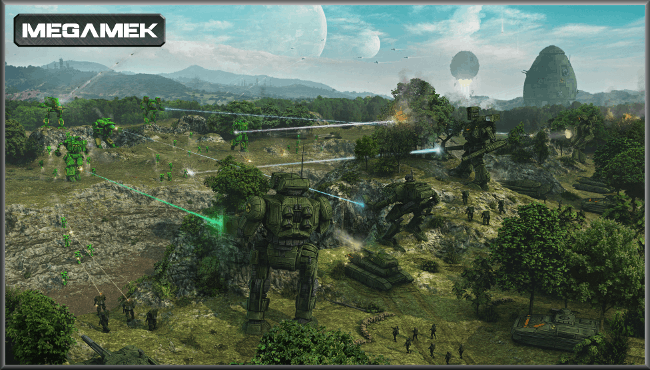


 Registration details

 Identified technologies
User reviews (0)