Website profiles · Technology insights · Alternatives

printchess.com

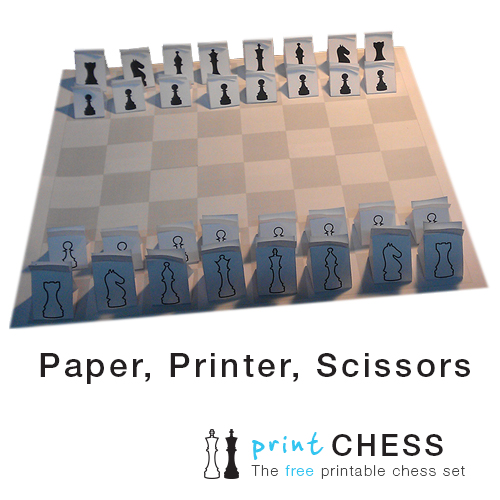
The Original and Best Free Downloadable Paper Chess Set (3D!).  Print on Paper. Cut with Scissors. Fold. No glue required. Download as PDF. Simple. Fast. Effective.

No paid content found
Visit website
Profile views 6 Outbound visits 1 Normal

At a glance

Category
Games & Board Games
Language
English
Paid-content signal
No paid content foundObserved
Registered
2015
Hosting
20i LimitedInferred
HTTPS certificate trusted
PassedObserved
Last updated

Website review

This review may include AI-generated content and is not individually verified. Domain, certificate and other facts come from the observed data on this page.

What is Print Paper Chess?

Print Paper Chess is a free, downloadable chess set you print at home. The site offers PDFs for black pieces, white pieces, a board and a rules sheet; you print them, cut the pieces out with scissors, fold them into shape, and play. No glue is required, and the board is designed across two sheets that you join together.

What you actually get

  • Black and white piece sheets – separate PDFs for each colour.
  • A printable board – full-sized, printed on two sheets and assembled.
  • A rules sheet – useful if you are teaching someone the game.
  • Folding construction – the pieces are three-dimensional once folded, so they stand up and read clearly on the board.

Who it suits

It is most useful when a normal set is inconvenient or unavailable:

  • Travellers and commuters who want a set that packs flat and can be reprinted if lost.
  • Teachers, parents and club organisers running beginners' sessions where several sets are needed at once.
  • Budget-conscious players who want to try chess without buying equipment.
  • Craft-minded children who enjoy the cutting and folding as part of the activity.

The trade-off is preparation time and durability. Paper pieces are light and will not survive rough handling like wooden or plastic ones; the site itself suggests thicker paper or card stock, which is sensible advice. Folding is also fiddly for small hands, so an adult may need to help younger children.

A practical example

A primary school teacher preparing a lunchtime chess club could print five sets on card stock, have a parent volunteer cut and fold them, and keep them in a folder. If a piece is crushed, reprinting one sheet restores it — something you cannot do with a lost plastic knight.

How to decide

Choose the printable set if portability, cost and replaceability matter more than feel and longevity. Choose a conventional set if you play regularly and want pieces that survive years of use. If you want to compare ready-made options, Chess.com and Lichess cover online play and learning resources rather than physical sets.

A useful next step: download the PDFs and print one set on ordinary paper first as a trial run. If the folding works for you, reprint on card stock for the version you will actually keep.

How do I download and print the free chess set?

Download the four PDFs from Print Paper Chess, print them on card stock if you can, then cut and fold the pieces and join the two board sheets. The site describes the set as free, no-glue, and 3D: the pieces are printed flat, cut out with scissors, and folded into shape.

Step by step

  1. Download. On Print Paper Chess, right-click and Save-As each PDF: black pieces, white pieces, the chess board, and the rules of chess sheet.
  2. Print. Use a standard printer. The site recommends thicker paper or card stock for durability — a sensible call, since thin office paper makes pieces that flop and tear.
  3. Cut. Cut out the individual pieces and the board along the marked lines.
  4. Assemble the board. The board is designed to print across two sheets, which you then join together.
  5. Fold the pieces. Fold each piece along its tabs so it stands up; no glue is required.
  6. Play. Set up the pieces and start a game.

Practical choices

Your situation What to do
Playing at home regularly Print on card stock; keep the board taped to a stiff backing
Classroom or club, many sets needed Print several copies and let students colour or label their own pieces
Travel or a one-off game Standard paper is fine; accept that pieces will be light and may need reprinting
Teaching a beginner Print the rules sheet alongside the pieces so the game can start immediately

A useful next step: before cutting anything, print one test page of pieces on your usual paper and fold one pawn. If it stands and holds its shape, continue; if it collapses, switch to card stock before printing the rest. The board join is the other weak point — reinforce the seam with tape on the underside so the two sheets do not separate mid-game.

What materials and printer settings should I use for the paper chess pieces?

For a printable set like the one at Print Paper Chess, ordinary 80 gsm copier paper is the minimum, but it makes flimsy pieces that tip over and crease badly during folding. A light card stock in the 160–250 gsm range is the practical sweet spot: stiff enough to stand and hold a fold, still thin enough to pass through most home printers and to be cut cleanly with scissors. Heavier board (300 gsm and up) gives the sturdiest pieces but often jams inkjet feed paths and is hard to fold neatly by hand.

Printer settings that matter

  • Paper type / media setting: set it to "card stock", "thick paper" or "heavyweight" so the printer slows the feed and adjusts the roller gap. Leaving it on "plain paper" is the most common cause of jams and smeared ink on card.
  • Print quality: choose the highest quality or "photo" mode for solid black areas. Draft mode leaves pale, patchy black pieces that look poor on the board.
  • Scale: print at 100% / "actual size", not "fit to page". Scaling changes the piece size relative to the board squares, and pieces may no longer sit correctly.
  • Duplex: leave it off unless the design is explicitly double-sided; single-sided sheets are easier to align when cutting and folding.
  • Ink type: pigment or laser toner sits on the surface and resists smudging better than dye ink, which can run if hands are slightly damp.

Material choices by situation

Use case Suggested stock Why
One-off game, quick trial 160–200 gsm card Cheap, prints reliably, stands up for a few sessions
Classroom or club, reused often 200–250 gsm card, laminated Survives handling; laminate before cutting for wipe-clean pieces
Travel set 200 gsm card, printed on coloured stock Light, reprintable if lost or crushed
Display or gift 250–300 gsm, laser printer Crisp edges and firmer fold lines

Practical tips

Score fold lines lightly with a blunt knife or empty ballpoint before folding — on card, a clean crease line is the difference between a sharp piece and a cracked one. Cut with sharp scissors or a craft knife and steel ruler for straight board edges. If you plan to laminate, do it before cutting so the sealed edge protects the piece. Reprint spare sheets of the pieces most likely to be lost; that is the main advantage of a downloadable set over a bought one.

A good next step: print one test sheet of a single piece on your intended stock at 100% scale, fold it, and check it against a board square before committing to the full set.

Can I customize the printable chess set with my own colors and designs?

Yes. The set is designed to be printed at home, so the simplest customization happens before you cut and fold: print the black-piece pages on dark card stock, or open the PDF in an image editor and recolor the pieces before printing. The board is meant to be printed on two sheets and joined, which also makes it easy to swap in your own square colors or a themed border.

Practical ways to customize

  • Paper color: Print the white pieces on cream or parchment card stock and the black pieces on charcoal or navy paper. This changes the set's look without touching the files.
  • Recoloring the pieces: Convert the PDF pages to images, then use any editor to change fills. Keep strong contrast between the two sides so pieces stay readable across the board.
  • Board design: Replace the standard light/dark squares with two colors you like, or add a decorative margin. Because the board prints on two sheets, you can design each half separately and line them up when joining.
  • Personal touches: Add names, a club logo, or a small diagram of the starting position to the board's edge. Print a second set in different colors for a travel or classroom copy.

The trade-off is durability and legibility. Thicker card stock and laminated sheets hold up better but can be harder to fold cleanly; very light or very dark color pairs can make pieces hard to distinguish at a glance. If you are making a teaching set, prioritize contrast over decoration.

For a concrete next step: download the PDF, print one test page of each side on ordinary paper, and check that your chosen colors read clearly under your usual lighting before committing to card stock. If you want a reference point for standard piece shapes and board proportions while you redesign, compare with Chess.com or Lichess.

Is this printable chess set suitable for teaching children or beginners?

Yes—this site is built for exactly that kind of low-stakes introduction to chess. It offers a free downloadable set in PDF form: black pieces, white pieces, a board printed across two sheets that you join together, and a rules-of-chess sheet. Assembly is print, cut with scissors, fold—no glue required. For teaching, that matters less than the practicalities: a beginner or child can hold, move and even keep a piece without much worry, and a lost pawn costs nothing but a reprint.

Where it fits a teaching session

  • First lessons and rules: The included rules sheet means you can hand a child or adult the printed set and start from zero without buying equipment.
  • Classroom or club taster sessions: Print multiple sets, so several pairs can play at once instead of sharing one board.
  • Travel and waiting time: Reprint and carry a set anywhere; if pieces get crumpled, print again.
  • Colouring and ownership: Printing multiple sets lets children personalise their own pieces, which tends to increase engagement.

Trade-offs to expect

Paper pieces are light and can slide or blow around, and folded pieces will not feel like weighted wooden or plastic ones. Fine motor skills matter here: cutting and folding small pieces is fiddly for younger children, so an adult may need to prepare the set in advance. For durability, the site recommends thicker paper or card stock, and that is the single biggest upgrade you can make. If you want a set that survives years of club use, this is a starter or spare rather than a replacement for a sturdy board.

A practical next step

Print one set on ordinary paper first to test the folding and board join, then reprint on card stock once you know it works for your group. If you want a second free option to compare, Lichess offers online play and study tools that pair well with a physical paper set for practising between lessons.

How does the printable chess set compare in cost and portability to a traditional chess set?

The printable set is effectively free to acquire and far easier to carry, while a traditional set costs money up front but survives years of use without reprinting.

Cost

The printable set is distributed as free PDF downloads, so the only real cost is paper, printer ink and optional card stock. That makes it attractive for classrooms, clubs running many boards at once, or anyone testing whether a child will stick with chess before buying equipment. A traditional set has a purchase price, but you pay once and stop paying; there is no per-use consumable. Over a long period of regular play, the cheap option can quietly stop being the cheap option if you keep reprinting worn pieces.

Portability

Portability here means something different from a travel set. A printable set travels as a flat file: you can email it, reprint it at the destination, or fold a copy into a notebook, and it takes up almost no space. A traditional set travels as physical pieces, which means a bag, a box, and the risk of losing a knight. The printable version wins on packing and replacement; you can print a spare queen in minutes, whereas replacing a single piece from a boxed set is often awkward or impossible.

Trade-offs in play

Paper pieces are light and can shift or blow around, and folded pieces will not feel like weighted wooden or plastic ones. They are also slower to set up the first time because of the cutting and folding. A traditional set gives you stability, a satisfying feel, and instant readiness. Choosing between them is mostly about frequency and setting:

  • Occasional games, teaching, travel, or large groups: printable, because cost and reprintability matter more than feel.
  • Regular club or tournament-style play, or anyone who values touch and durability: a traditional set, because the one-off cost buys years of stable play.

A practical middle path is to print the board and pieces on thicker card stock for home use, and keep a cheap magnetic travel set for games on the move. If you want the free files, start at Print Paper Chess and check the paper weight recommendation before printing a full set.

Related questions

More questions →
PDF Invoices in Legal Billing: What to Include and When to Use Them

A PDF invoice in legal billing is a fixed-format document that presents the fees and costs owed on a matter in a layout that looks the same on every device. It is the digital equivalent of a printed bill: readable, portable, and easy to attach to an email or upload to a client portal. Its main limitation is that it is not machine-readable in the way a LEDES file is, so a client's e-billing system cannot automatically ingest it. PDF works best for flat-fee matters, small or one-off engagements, and clients who do not run an automated billing platform.

What "PDF" means in a legal billing context

When a billing tool offers to send an invoice "in PDF," it is generating a rendered document rather than a structured data file. The distinction matters:

  • PDF is a presentation format. A human reads it. Line items, totals, and matter details appear as text and tables on a page.
  • LEDES (Legal Electronic Data Exchange Standard) is a structured, delimited text format. An e-billing system parses it, validates it against outside counsel guidelines, and routes it for review.
  • Email delivery is a transport method, not a format. You can email a PDF, email a LEDES file, or email a link to an online invoice.

These three are often confused because a single invoice can combine them: a LEDES file delivered by email, or a PDF attached to an email. The format is what the client's systems can read; the delivery method is how it arrives.

When a PDF invoice is the right choice

PDF is usually appropriate when the client does not require electronic submission through a billing platform. Common scenarios:

  • Flat-fee and fixed-price matters. When the invoice is one or two lines, a structured file adds no value.
  • Small businesses and individuals. Clients without an accounts payable system can open a PDF and pay from it.
  • Retainers and replenishment requests. A simple statement of the retainer balance is easy to read as a PDF.
  • Pro bono or courtesy bills. Where no formal e-billing review applies.
  • Backup documentation. Even when a LEDES file is submitted, a PDF is often attached for the reviewer's convenience.

If the client has outside counsel guidelines requiring LEDES submission, a PDF alone will typically be rejected or returned for manual entry. Check the client's billing requirements before choosing the format.

PDF versus LEDES versus emailed invoice: a quick comparison

Factor PDF LEDES Email (as delivery)
Machine-readable No Yes N/A
Accepted by e-billing platforms Rarely Yes Depends on attachment
Setup effort Low Higher (mapping fields) Low
Best for Flat fees, small clients, backup Corporate and insurer clients Any format
Risk Manual re-entry by client Format rejection if fields are wrong Lost or filtered messages

Core elements of a compliant legal PDF invoice

A PDF invoice should stand on its own. If a client's AP department picks it up with no context, it should still answer who, what, when, and how much.

Firm and client identification

  • Firm name, address, and contact details
  • Tax or VAT identification number where applicable
  • Client name and billing contact
  • Invoice number and invoice date
  • Client matter number or reference

Matter and timekeeper detail

  • Matter name and description
  • For each timekeeper: name, initials, and billing rate
  • Time entries with date, narrative description, and time recorded in tenths of an hour
  • Clear separation of fee earners if rates differ

Fees, expenses, and totals

  • Fees subtotal
  • Disbursements and expenses, itemized with dates
  • Taxes applied
  • Prior payments, credits, or trust retainer applied
  • Total amount due and currency

Payment terms

  • Due date and payment window
  • Accepted payment methods
  • Remittance details or a payment link
  • Late-payment terms if the engagement letter specifies them

A useful test: hand the PDF to someone who has never seen the matter and ask them to confirm the amount due and the period covered. If they hesitate, the invoice is missing something.

Practical limitations to plan around

PDF invoices shift work to the recipient. Someone at the client has to read the document and key the data into their system, which introduces delay and transcription errors. PDFs also cannot be validated against billing guidelines automatically, so a reviewer may reject a line item that a LEDES rule would have caught before submission.

Two habits reduce the friction:

  1. Send a consistent template. Clients learn where to find the total, the matter number, and the payment terms.
  2. Keep a LEDES version in reserve. If a client later adopts an e-billing platform, you can convert rather than rebuild.

Choosing between PDF, LEDES, and email delivery

Work from the client's requirements backward:

  • Does the client mandate LEDES submission? If yes, PDF is a supplement, not a substitute.
  • Is the matter flat-fee or very small? PDF is usually sufficient.
  • Does the client have no billing system? PDF delivered by email or portal is the simplest path.
  • Is the invoice complex with many timekeepers and expenses? A structured format reduces disputes, even if the client accepts PDF.

When in doubt, ask the client's billing contact which format they prefer and whether a PDF attachment is acceptable alongside any required file. That one question prevents most rejected invoices.

Easy Legal Billing supports sending or scheduling invoices in LEDES, email, or PDF formats, which lets you match the format to each client's requirements rather than forcing one approach across every matter.

How to Download, Print, and Assemble the Free Paper Chess Set from Print Paper Chess

Print Paper Chess offers a free downloadable chess set as PDF files: black pieces, white pieces, a full-sized board, and a rules sheet. You download each PDF by right-clicking and choosing Save-As, print on a standard printer (thicker paper or card stock recommended for durability), then cut out the pieces, fold them, and join the two board sheets. No glue is required, and the site notes the set has been recognized by The New York Times as a convenient, cost-effective option.

What you get

The download includes four separate PDF documents:

  • Black chess pieces — detailed, stylish pieces ready to print
  • White chess pieces — equally elegant pieces ready to print
  • Printable chess board — a full-sized board designed to print on two sheets that are then joined together
  • Rules of chess sheet — so beginners can start playing right away

All of these are available as free PDF downloads, which means you can access and print them as many times as you like.

Step-by-step: download, print, assemble, play

1. Download the PDFs

Right-click each PDF link (black pieces, white pieces, board, and rules sheet) and choose Save-As to save the file to your device. Do this for each document you need.

2. Print

Use a standard printer to print the documents. The site recommends thicker paper or card stock for durability — this matters most for the pieces, which get folded and handled.

3. Assemble the pieces

Cut out the pieces with scissors and fold them together. The design is fold-based, so no glue is required.

4. Assemble the board

The chess board is designed to print on two sheets, which you then join together to form the full-sized board.

5. Set up and play

Set up your pieces on the assembled board and start playing. Because the files are digital, you can reprint a fresh set whenever the paper version wears out.

Why choose a printable set

The site lists several advantages of a printable chess set:

Benefit What it means in practice
Cost-effective No need to spend money on an expensive chess set
Portable Easily reprint and carry your set anywhere
Customisable Print multiple sets and personalize them with your own colours and designs
Educational A hands-on way to teach chess to beginners and children

Practical tips and common snags

  • Save each PDF separately. The pieces, board, and rules sheet are individual documents, so right-click and Save-As each one rather than assuming a single combined file.
  • Don't skip the card stock. Standard paper works for printing, but the site specifically recommends thicker paper or card stock for durability — folded paper pieces on thin stock will not survive many games.
  • The board is two sheets, not one. Plan for joining them; a single-sheet print will not give you the full-sized board.
  • No glue needed. If you find yourself reaching for glue, re-check the fold — the pieces are designed to hold together by folding.
  • Reprint freely. Since the set is a free download, you can print replacements or extra sets for teaching, travel, or spares.

Who this is for

The set suits all skill levels — from a seasoned grandmaster to a beginner eager to learn the game. It is especially useful if you want a low-cost set for teaching children, a travel-friendly set you can reprint if lost, or a customisable set you can colour and design yourself.

Is the Print Paper Chess Set Suitable for Beginners and Educational Use?

Yes. Print Paper Chess (printchess.com) is designed for all skill levels, and its free PDF download includes a rules of chess sheet alongside the pieces and board. That combination — a playable set plus written rules — makes it a reasonable fit for beginners, classrooms, clubs, and anyone teaching chess to children. The main trade-off is durability: paper pieces will not survive the handling that a wooden or plastic set will.

What you actually get

The site offers a single free downloadable set, delivered as PDF documents:

  • Black chess pieces — print and cut out
  • White chess pieces — print and cut out
  • Printable chess board — full-sized, designed to print across two sheets and be joined together
  • Rules of chess sheet — included with the download

The pieces are 3D: you print, cut with scissors, and fold them together. According to the site, no glue is required. The board is assembled by joining two printed sheets.

Why it works for beginners

The rules sheet is the key point for a beginner. A set without rules assumes you already know how the pieces move; this one does not. A new player can download everything in one go and start learning from the same source.

The site also states the set suits all skill levels, from beginners to experienced players, and describes the educational value directly: it is presented as a hands-on way to teach chess to beginners and children. That framing matters less than the practical reality — a paper set is cheap enough to hand out one per learner, which is not true of a traditional set.

Why it works for teaching

Three properties make it useful in an educational setting:

  • Cost. The download is free, so a class or club can equip every learner without a budget line.
  • Reprintability. If a piece is lost, torn, or drawn on, you print another. Sets can be replaced per student rather than per classroom.
  • Customisability. The site notes you can print multiple sets and personalise them with your own colours and designs. For teaching, that means colour-coding pieces by student, marking board squares for notation drills, or producing oversized pieces for demonstration.

The site also lists portability and cost-effectiveness as general advantages of printable sets, and describes chess itself as supporting problem-solving, critical thinking, memory, planning, and patience — the usual case for chess as a teaching tool.

Where a paper set falls short

Be clear about the limits before you commit a class to it:

  • Durability. Paper pieces and a two-sheet board will not withstand repeated rough handling. The site recommends thicker paper or card stock, which is the single most useful upgrade you can make.
  • Assembly time. Every learner must cut and fold their own pieces. That is a one-off cost per set, but it is real time out of a lesson — and for younger children, folding accuracy varies.
  • Board seams. The board prints on two sheets and must be joined. A visible seam down the middle is normal and does not affect play, but it is not the solid surface of a traditional board.
  • No storage. There is no box or bag described. You will need your own envelope or folder if sets are to be reused.

A practical way to use it

If the goal is teaching rather than casual play:

  1. Download the PDFs for the black pieces, white pieces, board, and rules sheet.
  2. Print on card stock rather than standard paper — this is the difference between a set that lasts a term and one that lasts a lesson.
  3. Have learners cut and fold their own pieces. Treat this as part of the lesson: naming each piece as it is assembled.
  4. Join the two board halves, then work through the rules sheet together.
  5. Store each set in a labelled envelope so it can be reused.

For a first introduction to chess, or for a group where buying sets is not practical, the Print Paper Chess set covers the essentials: pieces, board, and rules, at no cost. For a club that plays weekly, expect to reprint pieces regularly — or treat the paper set as a starter and move to a durable set once learners are committed.

What Is Print Paper Chess? A Free Printable 3D Chess Set

Print Paper Chess (printchess.com) is a website that offers a free downloadable paper chess set you print yourself. According to the site, the set is designed as a 3D build: you print the PDFs on paper, cut the pieces with scissors, and fold them together — no glue required. It includes black pieces, white pieces, a printable chess board, and a rules of chess sheet, all available as PDF downloads. It suits anyone who wants a low-cost, portable chess set, from beginners to experienced players, and the site states it has been recognised by The New York Times as a convenient and cost-effective option.

What you get

The download covers everything needed to start playing:

  • Black chess pieces — a PDF of the black set, described as detailed and stylish
  • White chess pieces — an equivalent PDF for the white set
  • Printable chess board — a full-sized board designed to print across two sheets and then be joined together
  • Rules of chess sheet — a PDF covering the rules

All files are PDF documents, so you need a standard printer and paper to use them.

How to download and assemble

The site lays out four steps:

  1. Download — right-click and Save-As the PDFs for the black pieces, white pieces, board, and rules sheet.
  2. Print — use a standard printer. The site recommends thicker paper or card stock for durability.
  3. Assemble — cut out the pieces and the board, then fold the pieces together. The board prints on two sheets and is joined into one.
  4. Play — set up the pieces and play.

The key practical points: no glue is needed for the pieces, and the board requires joining two printed sheets, so plan for a flat surface and something to align the halves.

Why choose a printable set

The site lists several advantages:

Benefit What it means in practice
Cost-effective No need to buy a physical chess set
Portable You can reprint and carry it anywhere
Customisable Print multiple sets and personalise them with your own colours and designs
Educational A hands-on way to teach chess to beginners and children

Who it is for

Because the set is free to download and reprintable, it works well for classrooms, travel, clubs running multiple boards on a budget, or anyone learning the game who wants a physical set without buying one. The site notes it is suitable for all skill levels, from beginners to seasoned players.

What to check before you start

  • Paper weight matters. Standard paper will print, but the site specifically recommends thicker paper or card stock for pieces that hold up to folding and play.
  • The board is two sheets. Budget time to print both halves and join them accurately so the squares line up.
  • You supply the printer and paper. The downloads are free PDFs; the printing itself is on you.
  • Scissors required. Assembly is cut-and-fold, not tear-and-play.

If you want a chess set you can produce in minutes from a home printer, with no glue and no purchase, Print Paper Chess is built exactly for that. Start by downloading the four PDFs, print the pieces on card stock if you have it, and assemble the board from its two sheets first so you have somewhere to set up.

Benefits of a Printable Chess Set from Print Paper Chess vs. a Traditional Set

A printable chess set from Print Paper Chess is a free PDF download you print, cut, and fold yourself — no glue required. It wins on cost, portability, and replaceability, and it's a strong choice for teaching beginners or running multiple games at once. A traditional set still wins on durability, feel, and long-term play. Choose the printable version if you want zero cost and easy reprints; choose a physical set if you play regularly and want pieces that last.

How the Two Compare

Dimension Print Paper Chess (printable) Traditional chess set
Cost Free PDF download Paid purchase
Materials Paper or card stock you supply Wood, plastic, or similar
Assembly Print, cut with scissors, fold — no glue Ready to play out of the box
Durability Replaceable by reprinting Long-lasting
Portability Reprint and carry anywhere Pack and carry the physical set
Customisation Print multiple sets; personalise colours and designs Fixed appearance
Best for Beginners, classrooms, travel, spares Regular players, clubs, display

Cost: Free Download vs. Buying a Set

The printable set is available as a free PDF download, so the only cost is paper, printer ink, and time. A traditional set requires an upfront purchase. If you want chess available in several places — home, classroom, holiday bag — printing several copies costs far less than buying several sets.

Portability and Reprinting

Because the set is a file rather than an object, you can reprint it wherever you have a printer. If a piece is lost, torn, or crumpled, you print a replacement instead of buying a new set. That makes it practical for travel, classrooms, and anywhere pieces are likely to go missing.

Customisation

You can print as many sets as you like and personalise them with your own colours and designs. This is difficult or impossible with a fixed traditional set, and it's useful when you want colour-coded sets for different players or a themed board for an event.

Educational Value

Print Paper Chess highlights the hands-on learning experience: beginners and children assemble the pieces and board themselves, then learn the game with a set they built. The download also includes a rules of chess sheet, so a new player has everything needed to start.

What You Need to Know Before Choosing

  • Recommended materials: Print Paper Chess recommends thicker paper or card stock for durability. Standard printer paper works but wears faster.
  • Assembly required: You cut out the pieces and board with scissors and fold them together. The board is designed to print on two sheets that are then joined.
  • Board size: The board is full-sized and printed across two sheets, so it isn't a single flat sheet.
  • Recognition: The site states its downloadable set was recognised by The New York Times as a convenient, cost-effective option.

When a Traditional Set Is the Better Choice

Pick a traditional set if you play often, want the weight and feel of real pieces, or need a set that survives years of regular use without reprinting. Pick the printable set if cost, portability, replaceability, or classroom use matter more than durability — or if you simply want to try chess today without buying anything.

Website Overview

Identifiable technologies and additional version or configuration signals make the service easier to fingerprint, which may help targeted scanners narrow their checks. An established domain and managed infrastructure suggest continuity of operations and may support dependable delivery, although neither guarantees service quality.

Domain and Registration

Registered in 2015, this domain has about 10 years of history. That suggests continuity, although ownership and purpose may have changed. The registrar is Tucows Domains Inc., a widely used domain service provider. The domain uses the common .com extension, which is not an independent safety signal.

DNS and Email

The observed email authentication setup is incomplete: DMARC is missing. Nameservers are provided by stackdns.com, indicating managed DNS hosting. MX records point to the stackmail.com email service. No CNAME was found; the observed records resolve directly to addresses. DNSSEC signatures were not detected, so this additional DNS authenticity protection is not confirmed.

TLS and Certificates

The certificate uses an RSA 2048-bit public key, offering broad client compatibility. The server supplied a complete certificate chain. No organization name is present in the certificate; the available fields are consistent with domain validation. The certificate was issued by Let's Encrypt, commonly associated with automated certificate services. The certificate's total validity is about 89 days, consistent with a short renewal cycle.

HTTP and Browser Security

X-Powered-By exposes backend information: PHP/8.3.35. The checked browser-security headers were not detected, leaving fewer explicit browser-side safeguards. No obvious internal addresses or debug information were found in the headers. The Server header identifies Apache without an exact version. Cookie security attributes are unknown.

Technology Stack Analysis

The public page identifies WordPress 7.0.7, jQuery, Apache, PHP, with exact versions exposed for 1 technologies. These details can narrow vulnerability checks, although exposure alone is not a vulnerability.

Search and Social Sharing

The meta description has 164 characters and may be shortened in search results. The Generator tag identifies Divi v.5.0.0-public-beta.7.2, making the publishing system easier to fingerprint. Twitter Card metadata is configured. JSON-LD includes Organization data, helping describe the organization as an entity. The title has 24 characters, within a common display range.

Hosting and Email

DNSstackdns.com
Hosting20i Limited
Emailstackmail.com
Approximate IP geolocation (inferred; a CDN or proxy may differ from the origin server) United Kingdom flagUnited Kingdom Inferred 185.151.30.155

Registration details

RDAP / WHOIS

RegistrarTucows Domains Inc.
Registered2015-12-27
Expires2026-12-27
Domain statusactive
Nameserversns1.stackdns.com、ns2.stackdns.com、ns3.stackdns.com、ns4.stackdns.com
DNSSECunsigned

DNS records

DNS

TypeNameValueTTLPriority
Awww.printchess.com185.151.30.1553600—
AAAAwww.printchess.com2a07:7800::1553600—
MXprintchess.commx.stackmail.com360010
NSprintchess.comns1.stackdns.com3600—
NSprintchess.comns2.stackdns.com3600—
NSprintchess.comns3.stackdns.com3600—
NSprintchess.comns4.stackdns.com3600—
TXTprintchess.comv=spf1 include:spf.stackmail.com a mx -all3600—

TLS and certificates

TLS / SSL

AssessmentNormal configuration
Supported protocolsTLSv1.2、TLSv1.3
Negotiated protocolTLSv1.3
Certificate subject*.printchess.com
IssuerLet's Encrypt
Valid until2026-11-10T00:57 · Remaining when checked: 31 days
Verification detailsCertificate trust: Passed · Hostname match: Passed

HTTP response headers

HTTP

HeaderValue
content-typetext/html; charset=UTF-8
cache-controlpublic, s-maxage=3600
serverApache
set-cookieRedacted

Identified technologies

WordPress 7.0.7jQueryApachePHP

Pages, Search and Sharing

Meta descriptionThe Original and Best Free Downloadable Paper Chess Set (3D!).  Print on Paper. Cut with Scissors. Fold. No glue required. Download as PDF. Simple. Fast. Effective.
Canonical URLhttps://www.printchess.com/
LanguageEnglish (default)
Twitter Cardsummary_large_image
All bots 0 allowed · 0 disallowed
  • IntervalCrawl delay 2 seconds

User reviews (0)

  • No reviews yet.