
 shawnolson.net
 Paid content
Categories: Arts & Culture
Shawn Olson Creative Arts is a collection of artwork, journalism, poetry, photography, 3d and more by technical artist Shawn Olson in Columbus Ohio.
 Visit website
 Updated: 2026-09-24 02:35
 Language: English (default)
 Access: Normal
 Profile views 0
 Outbound visits 0
Related questions
More questions →What Does Photography Mean on a Digital Art and Wallpaper Site?
On Skinbase, photography is one of the content categories that sits alongside digital art, wallpapers, and skins in a shared community gallery. It refers to camera-based images that creators upload, and it is browsed through the same discovery rails as other work: Rising Now, Trending This Week, Fresh Uploads, Community Favorites, and Hall of Fame. If you are looking for real-world scenes rather than rendered or generated artwork, photography is the category to scan for.
Photography as a category, not a separate section
The site describes itself as a place to "discover digital art, wallpapers, skins, and photography from a global creator community." That wording places photography on equal footing with the other three categories rather than treating it as a sub-type of digital art.
In practice this means:
- Photography appears in the same feeds as digital art and wallpapers, sorted by the same signals (recency, trending momentum, medals).
- A single creator can publish across categories. In the visible listings, Gregor Klevže, Paul R. Herold, Hythem Khalifa, and bagelriver all appear repeatedly, and their work spans landscape-style scenes, celestial subjects, and abstract pieces.
- The category label tells you about the origin of the image (a camera), not about its quality tier or its download permissions.
How photography differs from rendered or generated digital art
The distinction that matters when browsing is where the image came from, because that affects what you can expect from it.
| Dimension | Photography | Rendered / generated digital art |
|---|---|---|
| Origin | Captured with a camera | Created or generated in software |
| Typical subject matter | Real places, real light, real weather | Anything, including impossible scenes |
| Detail behavior | Noise, grain, and lens artifacts are normal | Often cleaner, sometimes unnaturally smooth |
| Reuse as wallpaper | Usually needs cropping to fit screen ratios | Often authored at common screen ratios |
This is a general distinction, not a rule the site enforces. A photograph titled "Mediterranean Coast from Above" and a piece titled "Crimson Eclipse Planet" can sit side by side in the same rail, and you decide which one you want based on the look, not the label.
How to browse photography on the site
The homepage exposes several rails, each answering a different question:
- Rising Now — newest work gaining early attention. Good for seeing what just landed.
- Trending This Week — strongest short-term signal. Good for a quick scan of what the community is actively engaging with.
- Fresh Uploads — pure recency, no ranking. Good if you want to be early on something.
- Community Favorites — ranked by a 30-day medal count. The visible entries show values like "30d medals: 10" and "30d medals: 5," so this rail is explicitly a 30-day momentum measure, not an all-time one.
- Hall of Fame — described as "all-time medal standouts," so use this when you want proven, long-standing work rather than this month's activity.
A practical browsing sequence: start with Trending This Week to calibrate what the community currently values, then switch to Fresh Uploads if you want something not yet widely seen, and use Community Favorites when you want a shortlist that has already been filtered by other people's medals.
Using photography as a wallpaper
The site's own framing is "Digital Art & Wallpapers," and photography is listed among the downloadable content types. The page does not publish per-image license terms, resolution options, or download restrictions in the material available, so treat the following as workflow guidance rather than a statement of what the site permits:
- Open the image you want at its largest available view.
- Check the displayed resolution against your screen. If it is smaller than your display, upscaling will soften it.
- Crop to your aspect ratio (16:9, 21:9, or a phone ratio) rather than stretching, which distorts.
- If the site offers a download control on the item page, use that rather than a screenshot, since a screenshot captures only what is rendered on screen.
If you plan to use an image beyond a personal device background, look for an explicit license or permission statement on the item or creator page first. Nothing in the available site material confirms reuse rights, so do not assume them.
How community signals surface good photography
Medals are the site's visible quality signal. The Community Favorites rail states it "highlights the strongest 30-day medal signal," and each entry shows a count. In the visible data, "My Art" by bagelriver leads with 10 medals over 30 days, while several others sit at 5.
Two things follow from this:
- A high medal count means recent community approval, not permanent quality. The 30-day window means a piece can be excellent and still fall out of this rail.
- Hall of Fame is the counterweight. It aggregates all-time standouts, so it is the better place to look for work that has held up over time rather than peaked this month.
If you are evaluating a photographer to follow, cross-check their presence across Trending, Community Favorites, and Hall of Fame. Appearing in all three suggests consistent reception rather than a single lucky upload.
Common points of confusion
"Is photography a filter I can apply?" The available site material shows category rails and creator listings, not a documented filter interface. Browse by rail and by creator rather than assuming a dedicated photography filter exists.
"Are these all real photographs?" Titles like "Full Moon 8-27-2026" and "Moon Eclipse 8-27-2026" suggest dated captures, but the site does not label individual items as camera-originated versus generated. Judge by the image itself.
"Do medals cost anything?" The site links to a Pricing page under its academy section, but the available material does not describe what that pricing covers or whether medals relate to it. Do not assume medals are free or paid based on the link alone.
What Does It Mean to Be an Artist? A Painter's Practice Explained
Being an artist means sustaining a working practice, not just producing occasional pieces. The clearest way to see the difference is through a painter like Holly Farrell, a Canadian artist who lives and works in Toronto. Her practice shows how subject matter, routine, and intent separate a working artist from a hobbyist: she paints the common tools of day-to-day existence, and she treats those still lifes as meditations on people and places she has known.
Working artist vs. hobbyist
The line is not talent or income. It is whether the work is organized around a continuing practice.
| Dimension | Working artist | Hobbyist |
|---|---|---|
| Output | Ongoing body of work with a through-line | Occasional pieces, often unrelated |
| Subject | A chosen territory explored over time | Whatever seems appealing in the moment |
| Routine | Regular studio time, even without inspiration | Painting when time and mood allow |
| Framing | Work is presented, discussed, and positioned | Work stays private or informal |
| Intent | Each piece answers a question the artist is asking | Each piece is an end in itself |
For Farrell, the through-line is explicit: nostalgia drives her subject matter. That single stated driver explains why her paintings return to ordinary objects rather than ranging across unrelated themes.
Still life as portraiture
The most useful idea in Farrell's practice is that still life can function as portraiture. She considers her still life paintings to be simple meditations on people and places she has known.
That reframes what a still life is for. Instead of a study of objects, it becomes a way of holding a person or place in view through the things associated with them. The objects are not the subject so much as the evidence of the subject.
How to read a still life this way
- Ask what person, place, or period the objects point to, rather than what they depict literally.
- Notice which objects are chosen and which are left out — selection is the portrait.
- Look at how ordinary the items are. Farrell's subjects are the common tools of day-to-day existence, which keeps the reference personal rather than monumental.
- Treat the painting as a meditation, not a document. It records a feeling about someone, not a likeness.
Why nostalgia and daily objects sustain a practice
Nostalgia is often dismissed as sentiment. In a working practice it does real structural work:
- It supplies an inexhaustible subject. Everyday tools and domestic objects are everywhere, so the artist never runs out of material.
- It creates consistency. A single emotional driver keeps a body of work coherent across years.
- It lowers the barrier to starting. The artist does not need a grand theme to begin a painting — only an object tied to a memory.
- It gives the viewer an entry point. Everyone has ordinary objects charged with personal meaning, so the work reads without explanation.
If you are building your own practice, this is the transferable lesson: pick a driver specific enough to repeat and broad enough to never exhaust.
What a studio-based painting career looks like day to day
A studio practice is less romantic and more administrative than it appears. Based on how Farrell's practice is described — living and working in Toronto, with painting as her occupation — the recurring elements are:
- Studio time as a default. The studio is where the working day happens, not a place visited when inspired.
- A settled subject territory. Time goes into exploring one area deeply rather than searching for a new theme each time.
- Slow accumulation. A body of work builds piece by piece; no single painting carries the career.
- Presentation and context. Work is shown and explained — the phrase "still life as portraiture" is itself a framing that helps viewers understand the intent.
- Place as input. Living and working in one city means the people and places feeding the nostalgia are close at hand.
How to look at this kind of work
If you encounter still life painting that reads as portraiture rather than decoration, use these questions:
- What is the emotional temperature — warm, elegiac, matter-of-fact?
- Are the objects elevated or left plain? Plainness usually signals personal memory rather than display.
- Does the composition feel like a portrait's framing — a single subject given full attention?
- What would you need to know about the artist's life to complete the reading?
The last question is the point. Still life as portraiture asks the viewer to supply the relationship, which is why the artist's own statement — that these are meditations on people and places she has known — matters more than any visual analysis.
The takeaway
Being an artist, in this model, means choosing a subject you can return to for years, tying it to something you actually feel, and showing up in the studio to work through it. Farrell's practice demonstrates the whole chain: nostalgia as the driver, everyday objects as the material, still life as the form, and portraiture as the meaning.
What Does a Motoring Journalist Actually Do? Skills, Work and Routes Into the Job
A motoring journalist spends far less time driving exotic cars than the job title suggests. The reality is a mix of research, interviewing, writing, editing, photography, admin and deadline pressure, with driving serving as the raw material rather than the whole job. If you are considering this career, the useful question is not "how do I get free cars?" but "can I produce accurate, readable copy about cars, quickly, to a standard an editor will pay for?"
The day-to-day work
The work varies enormously between staff jobs and freelance life, and between news desks, road test teams and feature writers. A typical week might include:
- Road testing. Collecting or receiving a press car, driving it in defined conditions, recording notes on performance, ride, cabin quality, practicality and running costs, then returning it. The driving is often a small fraction of the time; writing it up properly takes longer.
- News and feature writing. Turning press releases, interviews, industry announcements and data into stories with a clear angle. News needs speed and accuracy; features need structure, colour and a reason to exist beyond "this car exists".
- Interviewing. Talking to engineers, designers, executives, racers or other journalists, then extracting quotable, accurate material. This requires preparation and the discipline to check facts afterwards.
- Photography and video. Many outlets expect journalists to shoot their own stills or contribute to video. Even where a photographer is provided, understanding framing and lighting helps you direct the shoot.
- Sub-editing and production. Checking facts, writing headlines and captions, fitting copy to a word count, and working within a content management system. Accuracy here protects both you and the publication.
- Deadlines and admin. Invoicing, pitching, chasing payments, filing expenses and managing a diary are unavoidable, especially freelance.
Core skills editors actually look for
Technical knowledge matters, but it is rarely the deciding factor. The skills that get people hired and kept on are:
- Clean, accurate writing. Grammar, spelling, sentence rhythm and the ability to explain something complex simply. A single factual error can damage a publication's credibility.
- News judgement. Knowing what is genuinely new, relevant or surprising, and what is filler. This is learned by reading widely and understanding the audience.
- Mechanical and technical understanding. You do not need to be an engineer, but you should understand how a differential, a turbocharger or a hybrid system works well enough to explain it and to ask sensible questions.
- Digital basics. Headlines that work online, subheadings, internal links, image alt text and an awareness of how search and social distribution affect a story's reach.
- Reliability. Filing on time, to length, in the agreed format. Editors remember who makes their life easier.
Entry routes that exist in practice
There is no single door into the industry. Common routes include:
- Journalism or media degrees, which teach reporting, law, ethics and shorthand, followed by work experience on a motoring desk or a general news outlet.
- Specialist automotive journalism courses, which combine writing with technical and industry knowledge. These can help you build contacts and a portfolio, but check the content and reputation rather than assuming the name guarantees work.
- Work experience and internships at magazines, websites, newspapers or broadcasters. Even a short placement can lead to shifts, and shifts can lead to staff roles.
- Freelance pitching. Approaching editors with specific, well-researched ideas. This is how many people build a portfolio and income simultaneously, though payment terms and rates vary widely and should be agreed in writing.
- Adjacent experience. Motorsport media, dealership or workshop work, engineering study, or a strong personal blog can all provide credible subject knowledge and writing samples.
How the role has changed
Online publishing, video and social media have reshaped the job. Turnaround times are shorter, stories are often published first and refined later, and journalists are frequently expected to appear on camera or contribute to podcasts and social clips. Analytics mean editors can see what readers actually engage with, which influences commissioning. For new entrants this is an opportunity: a well-made video review or a clearly written specialist blog can demonstrate ability without a traditional newsroom background. It also raises the bar for versatility.
Staff roles versus freelance work
| Staff role | Freelance | |
|---|---|---|
| Income | Regular salary, usually with benefits | Variable, dependent on commissions and payment terms |
| Workflow | Assigned by an editor, part of a team | You pitch, negotiate and manage your own diary |
| Security | More predictable | Less predictable; multiple clients needed |
| Variety | Focused on one publication's needs | Potentially wider, but you must sell each idea |
| Admin | Handled largely by the employer | Invoicing, tax, expenses and chasing payment are yours |
Many people move between the two, and some combine a staff job with occasional freelance work where contracts allow.
Building a portfolio without inventing experience
A portfolio should show what you can do, not claim what you have not done. Practical options include:
- Writing for student publications or local outlets, even on non-motoring subjects.
- Running a blog or newsletter with consistent, well-researched posts.
- Offering to cover small events, club meets or launches for a local paper or website.
- Taking a specialist course and using its assignments as samples.
- Volunteering for a motorsport team or club's media output.
Label any practice or student work clearly as such. Editors value honesty and can usually tell the difference between a genuine clip and a padded CV.
A realistic starting point
If you want to test the fit, try this: pick a car you can access, write a 600-word review with a clear angle, a factual specification section and a verdict, then ask someone who reads critically to mark it. Repeat with a news story from a press release and a short interview. If you enjoy the research, the checking and the rewriting as much as the driving, the career is worth pursuing. If you only enjoy the driving, the writing will feel like a chore, and that is the part editors pay for.
How Does the Iroquois Indian Museum Use Art to Share Iroquois Culture?
The Iroquois Indian Museum in Howes Cave, New York, is an educational institution whose stated purpose is to foster understanding of Iroquois culture by using Iroquois art as a window into that culture. In practice, that means a visit is organized around original work by Iroquois artists—both traditional and contemporary—rather than around a conventional timeline of historical objects. The approach suits anyone who wants to encounter Haudenosaunee (Iroquois) culture as something living and currently being made, not only as history.
The mission, stated plainly
The museum describes itself as "an educational institution dedicated to fostering understanding of Iroquois culture using Iroquois art as a window to that culture." Two things follow from that sentence:
- Art is the method, not just the subject. The exhibits are built to teach culture through the work, so the art carries the interpretation.
- The frame is Iroquois-specific. This is not a general Native American collection; the focus is the Iroquois (Haudenosaunee) peoples and their artists.
What "art as a window" actually means
Using art as the interpretive lens changes what you look at and how you look at it. A painting, basket, carving, or piece of beadwork can carry:
- Continuity — designs, materials, and techniques passed down across generations.
- Change — how artists respond to new materials, markets, and ideas over time.
- Voice — the artist's own perspective on identity, community, and history, in their own words rather than only through a curator's label.
Because the museum's collection spans both traditional and contemporary Iroquois work, the two are shown as connected rather than as "past" versus "present." A contemporary piece and an older one can be read as part of the same ongoing practice.
What a visitor can expect
Based on the museum's own description of its purpose, plan for:
- Original Iroquois art across media and periods, including work by living artists.
- Cultural context connecting the art to Haudenosaunee history, values, and present-day communities.
- An educational framing — the institution positions itself as educational first, so expect interpretive material rather than a purely aesthetic gallery experience.
The museum is located in Howes Cave, NY, in the Schoharie County area of upstate New York — Iroquois homelands region — which gives the visit a geographic as well as cultural context.
Why art instead of only historical objects
Art does something a case of artifacts often cannot: it shows a culture thinking and making decisions now. A historical object answers "what was made?" An artwork by a named Iroquois artist can answer "what is this artist saying, and to whom?" That shift keeps the culture from being frozen at a single moment and puts Iroquois people in the position of authors of their own representation.
Practical notes before you go
- Check current hours, admission, and exhibition schedule directly with the museum, since these change seasonally and are not fixed in the source material here.
- Payment: the site lists PayPal among its payment platforms; confirm accepted methods for admission when you book or arrive.
- Plan around the art. If you want the most from the visit, read the artist labels and interpretive text — that is where the "window" framing does its work.
If your interest is specifically in how a museum can teach a living culture through contemporary creative practice, this is the model to look at. If you want a broad survey of Native American nations across the continent, note that this museum's scope is deliberately narrower: the Iroquois, seen through their art.
Website Overview
An established domain and managed infrastructure suggest continuity of operations and may support dependable delivery, although neither guarantees service quality. Page metadata, canonical configuration and social previews work together to provide more consistent search and sharing presentation.
Domain and Registration
Registered in 2001, this domain has about 25 years of history. That suggests continuity, although ownership and purpose may have changed. Transfer-protection status is present, helping reduce the risk of unauthorized domain transfers. The registrar is GoDaddy.com, LLC, a widely used domain service provider. The domain uses the common .net extension, which is not an independent safety signal.
DNS and Email
Nameservers are provided by DigitalOcean, indicating managed DNS hosting. MX records point to the masterwebdesigners.com email service. SPF and DMARC are configured. DKIM status is unknown. DNSSEC signatures were not detected, so this additional DNS authenticity protection is not confirmed. The lowest observed DNS TTL is 1800 seconds.
TLS and Certificates
The certificate uses an RSA 2048-bit public key, offering broad client compatibility. The server supplied a complete certificate chain. No organization name is present in the certificate; the available fields are consistent with domain validation. The certificate was issued by Let's Encrypt, commonly associated with automated certificate services. The certificate's total validity is about 89 days, consistent with a short renewal cycle.
HTTP and Browser Security
X-Powered-By exposes backend information: PHP/7.3.33, PleskLin. The checked browser-security headers were not detected, leaving fewer explicit browser-side safeguards. No obvious internal addresses or debug information were found in the headers. The Server header identifies nginx without an exact version. Cookie security attributes are unknown.
Technology Stack Analysis
The public page identifies nginx, PHP without precise versions, leaving fewer clues for version-specific scanning.
Search and Social Sharing
No viewport meta tag was detected, which may affect mobile layout behavior. The title has 25 characters, within a common display range. A meta description is present, with 148 characters. No Generator meta tag is publicly exposed. A canonical URL is set and points to the current website.
 Hosting and Email
 DigitalOcean
 Hosting
 Location
 Secaucus, New Jersey, United States
 Pages, Search and Sharing
| Meta description | Shawn Olson Creative Arts is a collection of artwork, journalism, poetry, photography, 3d and more by technical artist Shawn Olson in Columbus Ohio. |
|---|---|
| Canonical URL | https://www.shawnolson.net/ |
| Language | English (default) |
| Twitter Card | Not detected |
Social Sharing Preview
5 fields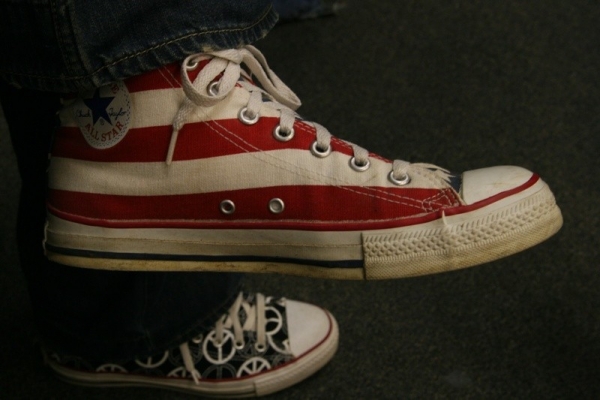
Sharing metadata
| og:url | https://www.shawnolson.net/ |
|---|---|
| og:type | website |
| og:image | https://www.shawnolson.net/media/1/image/jpeg/page/3892_1_1434_4_bucks-chucks.jpg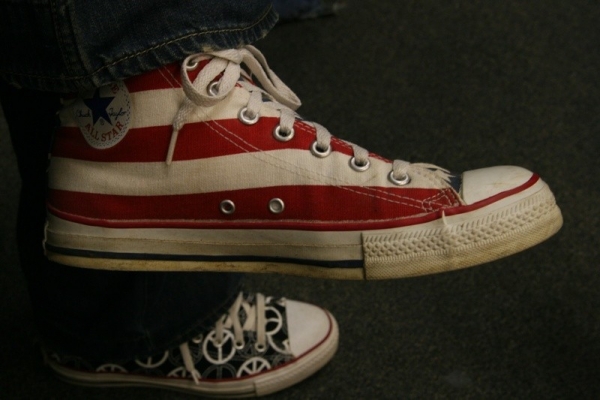 |
| og:title | Shawn Olson Creative Arts |
| og:description | Shawn Olson Creative Arts is a collection of artwork, journalism, poetry, photography, 3d and more by technical artist Shawn Olson in Columbus Ohio. |
robots.txt (opens in a new tab)
25 rulesamazonbot 0 allowed · 1 disallowed

 amazonbot

/
anthropic-ai 0 allowed · 1 disallowed
/
awariorssbot 0 allowed · 1 disallowed
/
awariosmartbot 0 allowed · 1 disallowed
/
bytespider 0 allowed · 1 disallowed
/
ccbot 0 allowed · 1 disallowed
/
chatgpt-user 0 allowed · 1 disallowed
/
claudebot 0 allowed · 1 disallowed
/
claude-web 0 allowed · 1 disallowed
/
cohere-ai 0 allowed · 1 disallowed
/
dataforseobot 0 allowed · 1 disallowed
/
diffbot 0 allowed · 1 disallowed
/
facebookbot 0 allowed · 1 disallowed
/
google-extended 0 allowed · 1 disallowed
/
gptbot 0 allowed · 1 disallowed
/
magpie-crawler 0 allowed · 1 disallowed
/
newsnow 0 allowed · 1 disallowed
/
news-please 0 allowed · 1 disallowed
/
omgili 0 allowed · 1 disallowed
/
omgilibot 0 allowed · 1 disallowed
/
peer39_crawler 0 allowed · 1 disallowed
/
peer39_crawler/1.0 0 allowed · 1 disallowed
/
perplexitybot 0 allowed · 1 disallowed
/
scrapy 0 allowed · 1 disallowed
/
turnitinbot 0 allowed · 1 disallowed
/
No matching rules.
Sitemaps
1 Registration details RDAP / WHOIS
| Registrar | GoDaddy.com, LLC |
|---|---|
| Registered | 2001-08-16 |
| Expires | 2035-08-16 |
| Domain status | client delete prohibited、client renew prohibited、client transfer prohibited、client update prohibited |
| Nameservers | ns1.digitalocean.com、ns2.digitalocean.com、ns3.digitalocean.com |
| DNSSEC | unsigned |
 DNS records
| Type | Name | Value | TTL | Priority |
|---|---|---|---|---|
| A | shawnolson.net | 192.241.162.28 | 17363 | — |
| MX | shawnolson.net | server7.masterwebdesigners.com | 86400 | 10 |
| NS | shawnolson.net | ns1.digitalocean.com | 1800 | — |
| NS | shawnolson.net | ns2.digitalocean.com | 1800 | — |
| NS | shawnolson.net | ns3.digitalocean.com | 1800 | — |
| TXT | shawnolson.net | v=spf1 +a +mx +a:server7.masterwebdesigners.com -all | 34644 | — |
| CNAME | www.shawnolson.net | shawnolson.net | 60783 | — |
| DMARC | _dmarc.shawnolson.net | v=DMARC1; p=none | 2233 | — |
 TLS and certificates
| Assessment | Normal configuration |
|---|---|
| Supported protocols | TLSv1.2、TLSv1.3 |
| Negotiated protocol | TLSv1.3 |
| Certificate subject | shawnolson.net |
| Issuer | Let's Encrypt |
| Valid until | 2026-12-20T20:22 · Remaining when checked: 87 days |
| Verification details | Certificate trust: Passed · Hostname match: Passed |
 HTTP response headers
| Header | Value |
|---|---|
| content-type | text/html; charset=UTF-8 |
| cache-control | no-store, no-cache, must-revalidate |
| server | nginx |
| set-cookie | Redacted |
 Identified technologies
User reviews (0)