Website profiles · Technology insights · Alternatives

thenaturalline.com No paid content found

Categories: Arts & Culture

Scientific illustration as a fine art. Illustration of Nature. Elizabeth Romanini. Art Nature

Visit website

Updated: 2026-09-23 05:23 Language: English (default) Access: Normal

Profile views 2 Outbound visits 0
Home Full homepage screenshot
Editorial Review

Website Review

What is The Natural Line?

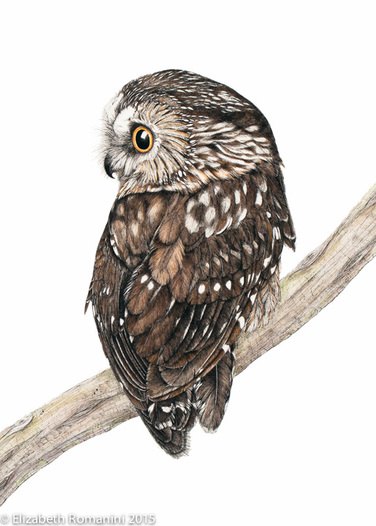
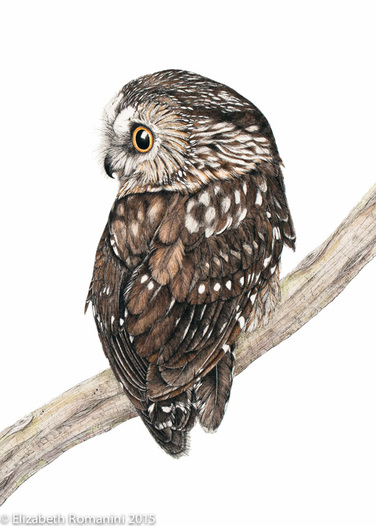
The Natural Line is the studio and online home of artist Elizabeth Romanini, who describes her work as "scientific illustration as a fine art." Her focus is a subtle exploration of shapes and structure found in the natural world, presented as single-plane studies of birds, insects and plants in their environments. She treats each piece as an intimate portrait of the subject, aiming to magnify the beauty already present in nature, and notes that while she keeps a sense of realism out of respect for her subjects, a bit of whimsy sometimes appears.

The site reflects a small working studio rather than a large publisher or gallery. Its offerings are organized around formats such as pen and ink, pencil, prints, mini prints and cards, alongside a store, blog and videos. Romanini says she researches the habits and habitats of her subjects before drawing, working from field sketches of live animals, preserved specimens, and foliage and background material brought into her studio.

H3 Practical uses

  • Original and print work for nature lovers: bird, insect and plant studies suit people who want detailed, observational artwork rather than generalized wildlife imagery.
  • Cards and mini prints: useful as gifts or for small wall spaces, or as an affordable way to try the artist's style before considering a larger piece.
  • Studio visits: her studio is in Aptos, California, in the hills above Monterey Bay. It opens periodically, she tries to take part in Open Studios each year, and visits can also be arranged by appointment.
  • Open Studios: a self-guided tour of nearly 300 artists' studios, juried and sponsored by the Arts Council of Santa Cruz County, held over the first three weekends of October.

H3 How to decide whether it fits you If you value accurate anatomy and habitat detail, the research-driven approach is the main draw. If you prefer loose or abstract nature art, the emphasis on realism may be less appealing. If you want to see work in person, the studio location and Open Studios timing matter more than the online listings; if you are buying from elsewhere, start with the cards or mini prints to judge the linework before choosing a larger print or original.

A useful next step is to look through the pen and ink and pencil sections, then check the blog or videos for a sense of how a drawing develops from field sketch to finished study. You can also contact Romanini with comments or questions, or ask to receive invitations to her shows.

What types of artwork does Elizabeth Romanini create?

Elizabeth Romanini creates pen-and-ink and pencil drawings of nature, with birds, insects and plants as her main subjects. She describes the work as single-plane studies: close, detailed portraits of one subject rather than wide landscapes or scenes with many elements. The style is realistic, based on research into each animal's or plant's habits and habitat, though she notes that "a wee bit of whimsy" sometimes enters a drawing.

The site presents the work in several forms, so the answer depends on whether you are asking about original art or reproductions:

  • Original drawings — pen-and-ink and pencil studies of birds, insects, plants and foliage.
  • Prints — reproduced versions of the drawings.
  • Mini prints and cards — smaller, lower-commitment formats, useful if you want a gift or a first piece rather than a framed original.

A practical way to decide what suits you: if you want a one-of-a-kind piece and are drawn to the texture of hand-drawn line work, look at the originals. If you are buying for a small space, a gift, or a budget you would rather not stretch, the mini prints and cards are the more sensible entry point, and they still carry the same subject matter and style.

For context on the wider tradition she works in, the California Arts Council and Society of Illustrators both cover illustration and studio-art practice, while the National Audubon Society is a useful reference for the bird subjects themselves. If you are local to the Monterey Bay area, her studio in Aptos is occasionally open to the public and can also be visited by appointment — worth checking before you plan a visit.

Can I purchase prints or cards of the artwork?

Yes. The site lists Prints, Mini prints, and Cards alongside the original Pen & Ink and Pencil work, so printed reproductions and greeting-card formats appear to be part of what's offered. The artwork centers on single-plane studies of birds, insects and plants, drawn from field sketches and preserved specimens, with a realistic approach and occasional touches of whimsy.

What to consider

  • Originals vs. reproductions: Pen & ink and pencil pieces are likely one-of-a-kind; prints and cards are the affordable, repeatable option if you want the imagery without an original's price or care requirements.
  • Format fit: Mini prints and cards suit small spaces, gifts or framing in groups; larger prints suit a single focal wall.
  • Subject matter: If you have a particular bird, insect or plant in mind, browse by subject before deciding, since the catalogue is nature-specific rather than general.

Practical next step

Look through the Prints, Mini prints and Cards sections and note the titles you like. If you're unsure which format matches your space or budget, contact the artist directly — the site invites comments and questions, and also mentions studio visits by appointment in Aptos, California, plus participation in Santa Cruz County Open Studios each October. For background on the artist and the studio tour, see The Natural Line and the Arts Council of Santa Cruz County.

How can I visit Elizabeth Romanini's studio in Aptos, California?

Elizabeth Romanini opens her Aptos studio to the public periodically and otherwise by appointment, so the practical route is: check her site for current open-studio dates, then contact her directly to arrange a visit if none are listed.

Two ways in

  • Open Studios (seasonal): She aims to take part each year in Open Studios, a juried, self-guided tour of nearly 300 artists' studios run by the Arts Council of Santa Cruz County, held over the first three weekends of October. This is the easiest way to see the work in person without a private arrangement.
  • By appointment: Her studio can be visited by appointment at other times. She also invites people to ask for invitations to her shows, so a message about upcoming exhibitions is a reasonable second purpose for getting in touch.

How to arrange it

  1. Go to The Natural Line and look for the contact option, plus the blog and videos sections, which are the most likely places for dated announcements about shows and studio events.
  2. Write a short note stating the dates you're considering, how many people are coming, and whether you're interested in originals, prints, mini prints or cards. Her work is pen-and-ink and pencil studies of birds, insects and plants, so mentioning a specific subject helps her point you to the right pieces.
  3. If October doesn't suit you, ask directly for an appointment rather than assuming the studio is open.

A realistic visitor scenario

Say you're in the Monterey Bay area for a long weekend in spring and want to see the drawings rather than order online. Open Studios won't be running, so the appointment route is your only option — and because her drawings come out of field sketches, preserved specimens and foliage brought into the studio, a visit is a chance to see the research behind each portrait, not just the finished sheet. Budget extra time for the drive into the hills above Monterey Bay and confirm the exact address and parking when she replies, since a home studio isn't a gallery with set public hours.

Decision criterion

If your dates fall in the first three weekends of October, plan around Open Studios and simply show up. At any other time of year, treat a visit as a private appointment that must be confirmed in advance.

What is the Open Studios event and how can I attend?

Open Studios is a self-guided tour of roughly 300 artists' studios in Santa Cruz County, California, held on the first three weekends of October and sponsored and juried by the Arts Council of Santa Cruz County. Elizabeth Romanini, the artist behind The Natural Line, participates most years and opens her Aptos studio—in the hills above Monterey Bay—during the event.

To attend:

  • Check the Arts Council of Santa Cruz County's official Open Studios listings for the current year's dates, map and participating artists, since the event is juried and schedules can shift.
  • Plan a route in advance; with hundreds of studios spread across the county, most visitors pick a cluster (Aptos, Santa Cruz, Watsonville and so on) per day.
  • If you want to see Romanini's pen-and-ink birds, insects and plants specifically, contact her through The Natural Line to confirm her studio is open that year and to receive show invitations.
  • Outside October, her studio can be visited by appointment, which is the more reliable option if your trip doesn't line up with the event.

One practical note: Open Studios is a studio-visit format rather than a gallery fair, so expect to see works in progress, field sketches and source material alongside finished pieces—useful if you want to understand how the research into a subject's habits and habitat feeds into a drawing.

How does Elizabeth Romanini research the subjects for her scientific illustrations?

Elizabeth Romanini researches each subject before drawing it, focusing on the animal's or plant's habits and habitat. On her site she describes doing “extensive research” first, then building the image from several sources: field sketches of live animals, preserved specimens, and foliage or other background material brought into her studio. The result is a single-plane study—an intimate portrait of a bird, insect or plant—that aims for realism with occasional whimsy.

If you want to see how that research translates into finished work, look at the subject categories and process notes on The Natural Line. For a practical test of the method, compare one of her bird or insect studies with your own field notes or photos of the same species: check whether the posture, markings and surrounding foliage match what you observed in life, and whether the composition tells you something about the habitat rather than just the specimen.

Her studio is in Aptos, California, and she participates in the Santa Cruz County Open Studios tour, usually the first three weekends of October; visits are also possible by appointment. That makes the site most useful to people who already draw or study nature and want to see how field observation, specimen reference and studio material are combined before the pen-and-ink work begins.

Related questions

More questions →
How Does the Iroquois Indian Museum Use Art to Share Iroquois Culture?

The Iroquois Indian Museum in Howes Cave, New York, is an educational institution whose stated purpose is to foster understanding of Iroquois culture by using Iroquois art as a window into that culture. In practice, that means a visit is organized around original work by Iroquois artists—both traditional and contemporary—rather than around a conventional timeline of historical objects. The approach suits anyone who wants to encounter Haudenosaunee (Iroquois) culture as something living and currently being made, not only as history.

The mission, stated plainly

The museum describes itself as "an educational institution dedicated to fostering understanding of Iroquois culture using Iroquois art as a window to that culture." Two things follow from that sentence:

  • Art is the method, not just the subject. The exhibits are built to teach culture through the work, so the art carries the interpretation.
  • The frame is Iroquois-specific. This is not a general Native American collection; the focus is the Iroquois (Haudenosaunee) peoples and their artists.

What "art as a window" actually means

Using art as the interpretive lens changes what you look at and how you look at it. A painting, basket, carving, or piece of beadwork can carry:

  • Continuity — designs, materials, and techniques passed down across generations.
  • Change — how artists respond to new materials, markets, and ideas over time.
  • Voice — the artist's own perspective on identity, community, and history, in their own words rather than only through a curator's label.

Because the museum's collection spans both traditional and contemporary Iroquois work, the two are shown as connected rather than as "past" versus "present." A contemporary piece and an older one can be read as part of the same ongoing practice.

What a visitor can expect

Based on the museum's own description of its purpose, plan for:

  • Original Iroquois art across media and periods, including work by living artists.
  • Cultural context connecting the art to Haudenosaunee history, values, and present-day communities.
  • An educational framing — the institution positions itself as educational first, so expect interpretive material rather than a purely aesthetic gallery experience.

The museum is located in Howes Cave, NY, in the Schoharie County area of upstate New York — Iroquois homelands region — which gives the visit a geographic as well as cultural context.

Why art instead of only historical objects

Art does something a case of artifacts often cannot: it shows a culture thinking and making decisions now. A historical object answers "what was made?" An artwork by a named Iroquois artist can answer "what is this artist saying, and to whom?" That shift keeps the culture from being frozen at a single moment and puts Iroquois people in the position of authors of their own representation.

Practical notes before you go

  • Check current hours, admission, and exhibition schedule directly with the museum, since these change seasonally and are not fixed in the source material here.
  • Payment: the site lists PayPal among its payment platforms; confirm accepted methods for admission when you book or arrive.
  • Plan around the art. If you want the most from the visit, read the artist labels and interpretive text — that is where the "window" framing does its work.

If your interest is specifically in how a museum can teach a living culture through contemporary creative practice, this is the model to look at. If you want a broad survey of Native American nations across the continent, note that this museum's scope is deliberately narrower: the Iroquois, seen through their art.

What Makes a Photograph Fine Art? A Guide for Landscape and Aerial Nature Photography

Fine art photography is photography made primarily as an artistic statement rather than to document, sell, or illustrate something. The subject can be a river, a coastline, or an aerial view of farmland — what makes it fine art is the intent behind the image and the way it is crafted, not the subject itself. A documentary photo answers "what happened here?"; a fine art photo asks the viewer to look at light, form, color, and mood for their own sake.

This guide explains how to tell the difference, how landscape and aerial work fit into the fine art tradition, and what to look for when you're evaluating a photograph — whether you're a viewer, a collector, or a photographer trying to understand your own direction.

The core distinction: intent, not subject

Most confusion about fine art photography comes from looking for the wrong signal. People expect a special subject (something exotic or dramatic) or a special technique (heavy editing, black and white, long exposure). Neither is the real marker.

The real marker is intent:

  • Documentary photography aims to record accurately. A news photo of a flooded river is judged by whether it tells the truth about the event.
  • Commercial photography aims to sell or promote. A resort's aerial coastline shot is judged by whether it makes the property look appealing.
  • Stock photography aims to be broadly usable. It is often deliberately generic so many buyers can license it.
  • Fine art photography aims to express a point of view. It is judged by whether the image is visually and emotionally coherent, and whether it rewards repeated looking.

A single photographer can work in all four modes. The same river can be documented for a news story, shot commercially for a tourism campaign, and photographed as fine art — the difference is what the image is for.

Why "it's edited" is not the answer

A common misconception is that fine art photography equals heavy editing, and that unedited images are somehow more honest or more artistic. In practice, editing is a tool, not a category. Darkroom manipulation — dodging, burning, contrast control, cropping — has been part of photography since its earliest decades. What matters is whether the choices serve a coherent vision. An over-processed image with no point of view is not fine art; a restrained image with a clear point of view can be.

How landscape, aerial, and abstract nature work becomes fine art

Nature is one of the oldest subjects in fine art photography, and it is also one of the easiest places to slip into postcard mode. The difference usually comes down to three things: composition, abstraction, and consistency of vision.

Composition over scenery

A scenic location does not make a fine art photograph. What makes it work is how the photographer organizes the frame:

  • Simplification. Removing distracting elements until the essential structure remains.
  • Rhythm and repetition. Patterns in waves, dunes, tree lines, or river bends that guide the eye.
  • Scale and ambiguity. Aerial views often remove familiar reference points, so a river delta can read as an abstract drawing rather than a map.
  • Light as subject. In fine art landscape work, light and atmosphere are often the real subject, with the land as a supporting element.

Abstraction as a legitimate goal

Aerial and close-up nature photography can push toward abstraction: the image stops being "a photo of a river" and becomes a study of line, texture, and color. This is not a gimmick. Abstraction asks the viewer to engage with visual qualities directly, the same way an abstract painting does. If you are evaluating such an image, ask whether the composition holds up when you ignore what the subject is.

Consistency of vision

Fine art is usually recognized across a body of work, not a single frame. A photographer whose river images, sea images, and aerial abstracts all share a recognizable approach to light, palette, and framing is working with a point of view. A random collection of pretty scenes, however well executed individually, reads differently.

What to look for when evaluating a fine art nature photograph

Whether you are browsing a portfolio or considering a print, these questions are more useful than "is it pretty?"

Question What it reveals
Does the image have a clear focal structure, or does the eye wander without resolution? Compositional intent
Would it still work if you didn't know the location? Whether the image stands on its own
Is the light and color treatment consistent with the mood, or does it feel applied? Whether editing serves the vision
Does it reward a second and third look? Depth versus immediate impact
Does it fit coherently with the rest of the artist's work? Whether there is a sustained point of view
Is the print quality, paper, and presentation appropriate to the image? Craft and presentation standards

A note on printing and presentation

In fine art photography, the print is often considered the finished work, not the file. That means paper choice, size, edition size, and signing can all matter. If you are buying or exhibiting, ask about these directly — a photographer working in a fine art mode should be able to tell you how the print was made and whether it is part of a limited edition. If no such information is available, treat claims about "fine art" status with appropriate caution.

Common misconceptions, briefly

  • "Fine art must be black and white." No. Color is central to a great deal of fine art photography, especially in nature and aerial work.
  • "Fine art means no editing." No. Editing is a craft decision. The question is whether it is coherent.
  • "Fine art needs a dramatic location." No. A quiet stretch of river or an ordinary field can be fine art if the seeing is strong.
  • "Any nature photo is fine art if it's beautiful." Beauty helps, but intent, composition, and consistency are what distinguish the category.
  • "Fine art and stock are opposites." They are different purposes. Some images can serve both, but they are evaluated by different criteria.

Practical takeaway

If you want to recognize fine art photography, stop looking for a subject or a filter. Look for a point of view: a deliberate composition, a coherent treatment of light and color, and a body of work that holds together. Landscape, river, sea, and aerial nature subjects are among the richest material for this kind of work precisely because they let the photographer move between the recognizable and the abstract. The test is simple — does the image make you look again, and does it hold up when you do?

What Is Nature Photography and How Do You Approach It?

Nature photography is the practice of photographing the natural world—landscapes, plants, animals, weather, and natural textures—with the goal of representing those subjects faithfully or expressively. You can approach it with almost any camera, but the craft comes down to four decisions: what you include in the frame, how you handle light, when you press the shutter, and how much you disturb what you're photographing. This guide covers how nature photography relates to neighboring genres, what to shoot, how to set up, and where the ethical lines fall.

Nature photography vs. landscape, wildlife, and street photography

These labels overlap, and most photographers move between them. The useful distinction is what the photograph is about.

Genre Primary subject Typical concern
Nature photography The natural world broadly—flora, fauna, terrain, weather, textures Showing natural subjects as they are, or as they feel
Landscape photography A wide view of terrain and sky Scale, depth, and the arrangement of a scene
Wildlife photography Animals, often in motion or at distance Behavior, timing, and reach
Street photography People in public, urban settings Candid human moments and urban life

A close-up of frost on a leaf is nature photography but not landscape. A deer crossing a road in a city is arguably wildlife and street. The categories are a convenience for finding work and audiences, not a rulebook. If your subject is the natural world rather than people or built environments, "nature" is a fair label.

What to photograph

You don't need a rare subject. Common, repeatable subjects are how most people build skill:

  • Landscapes and terrain — coastlines, hills, forests, deserts, fields.
  • Plants and botanicals — leaves, bark, flowers, moss, fungi, seed heads.
  • Animals — birds, insects, mammals, amphibians, and the traces they leave (tracks, nests, burrows).
  • Weather and sky — fog, storms, snow, rain on surfaces, cloud formations.
  • Natural textures and patterns — ripples, rock strata, ice, sand, reflections.

A useful exercise: pick one subject category and photograph it ten different ways in a single outing. That constraint forces you past the first obvious shot.

Gear and settings for outdoor shooting

You can start with a phone. The limits show up in reach (small, distant subjects) and in low light. If you're choosing a first dedicated setup, these are the practical trade-offs:

  • Wide-angle lens (roughly 16–35mm equivalent) — landscapes, big skies, environmental context. Good for showing where something lives.
  • Standard zoom (roughly 24–70mm) — the most flexible single lens; works for plants, textures, and mid-range scenes.
  • Telephoto (roughly 100mm and up) — wildlife and distant detail. Reach matters more than aperture for most beginners, because you often can't get close.

Settings that solve common outdoor problems:

  • Aperture priority is a reasonable default. Stop down to f/8–f/16 for landscapes where you want front-to-back sharpness; open up for a blurred background behind a plant or animal.
  • Fast shutter speed for anything moving—birds, insects, wind-blown foliage. If your images are soft, shutter speed is the first thing to raise.
  • Low ISO when light allows, to keep noise down. Raise it only when you can't get the shutter speed or aperture you need.
  • Manual focus or single-point autofocus for small subjects, so the camera locks onto the leaf rather than the background.
  • A tripod for low light, long exposures (water, clouds), and precise composition.

Light, composition, and timing

Light does more for a nature image than gear does.

  • Shoot in the hours around sunrise and sunset. Low, angled light gives texture and color that harsh midday sun flattens.
  • Overcast light is soft and even—excellent for plants, fungi, and detail work, where harsh shadows would hide the subject.
  • Backlight (sun behind the subject) can rim leaves, seed heads, and animal fur, separating them from the background.
  • After rain or fog, colors saturate and atmosphere adds depth.

For composition:

  • Simplify. Move your feet and your camera angle until the background stops competing with the subject.
  • Use a clear focal point. One leaf, one bird, one rock. The eye needs somewhere to land.
  • Watch the edges of the frame for distracting twigs, litter, or bright patches.
  • Include scale when it helps—a person, a known object, or a repeating pattern shows how large something is.

Timing is often the whole photograph: the moment a bird turns its head, the second the wind drops, the instant the light breaks through. Patience and returning to the same place repeatedly beat chasing new locations.

Ethics and field practice

How you make the photograph matters as much as the result.

  • Keep your distance from wildlife. Use a longer lens rather than moving closer. If an animal changes its behavior because of you—stops feeding, moves away, becomes defensive—you're too close.
  • Don't bait, lure, or handle animals to get a shot, and don't disturb nests, dens, or resting sites.
  • Stay on trails where they exist, and avoid trampling plants, moss, or fragile ground for a better angle.
  • Leave what you find. Don't pick flowers or move rocks and logs for composition.
  • Follow local rules for protected areas, which may restrict drones, flash, access hours, or where you can stand.
  • Be honest in editing. Adjusting exposure and color is normal; removing or adding elements and presenting the result as a documentary nature photograph is not.

A practical starting routine

  1. Pick one location you can revisit easily.
  2. Go at a time with good light—early or late, or on an overcast day.
  3. Choose one subject category and one lens or focal length.
  4. Take the obvious shot first, then push yourself to five more variations: different angle, height, distance, and light direction.
  5. Review on a larger screen, note which choices worked, and return to the same spot under different conditions.

The photographers who improve fastest are usually the ones who return to the same places repeatedly and pay attention to light and timing, rather than the ones who collect the most locations.

How Do You Draw Vector Graphics in Inkscape?

Inkscape is a professional vector graphics editor for Linux, macOS, and Windows that stores drawings as SVG (Scalable Vector Graphics). You draw by creating and editing objects defined by paths, shapes, and mathematical coordinates rather than pixels, so your artwork can be resized without losing quality. This guide covers the core workflow: setting up a document, drawing with shapes and the pen tool, editing nodes, managing fills, strokes, and layers, and exporting your work.

Vector vs. raster drawing

A raster image (like a photo or a PNG) is a grid of colored pixels. Enlarging it too far reveals those pixels as blur or blocky edges. A vector drawing describes shapes mathematically — a circle is stored as a center point and a radius, not as a pattern of dots — so it stays sharp at any size.

That difference shapes how you work in Inkscape:

  • Objects, not paint. You place and transform discrete objects (rectangles, paths, text) instead of brushing pixels.
  • Editable at any time. You can return to a shape later and change its size, color, or curve.
  • Resolution-independent output. The same file can produce a small icon or a large poster.

Vector graphics suit logos, icons, diagrams, illustrations, posters, and anything that needs clean edges or repeated resizing. Raster graphics remain the better choice for photographs and painterly textures.

Setting up a new document

  1. Open Inkscape and choose File > New (or start from a template if one fits your output).
  2. Open File > Document Properties to set the page size and orientation. Match this to your intended output — for example, A4 for a printable poster or a square canvas for an icon.
  3. Decide on units (px, mm, in) in the same dialog so your measurements stay consistent.
  4. Save early with File > Save As and keep the .svg format. SVG is Inkscape's native format and preserves all editable objects.

A useful habit: set the document size before drawing, because changing it later can shift how your composition sits on the page.

Core drawing tools

Inkscape gives you two broad approaches — draw a predefined shape, or draw a path point by point.

Shapes

The shape tools create objects you can still adjust parametrically:

  • Rectangle — drag to draw; use the tool controls to set exact width, height, and corner rounding.
  • Ellipse/Circle — drag for an ellipse, or hold Ctrl to constrain to a circle.
  • Star/Polygon — set the number of points or sides and the spoke ratio.
  • 3D Box — build simple perspective boxes.

Because these stay parametric, you can select a rectangle later and change its corner radius without redrawing it.

Pen and Bezier

The Pen (Bezier) tool draws paths directly:

  • Click to place straight-line corner nodes.
  • Click and drag to pull out curve handles, creating smooth curves.
  • Press Enter to finish an open path, or close it by clicking the first node.

This is the tool for custom outlines — a logo mark, a map boundary, a hand-drawn silhouette.

Pencil (freehand)

The Pencil tool draws freehand paths. You can smooth the result afterward, which makes it useful for quick sketching that you then clean up.

Editing nodes and paths

Once a path exists, the Node tool is where precision happens. Select a path and you can:

  • Move nodes to reshape the outline.
  • Add or delete nodes to control how much detail a curve carries.
  • Convert between corner and smooth nodes to switch between sharp angles and flowing curves.
  • Adjust handles to change a curve's direction and tension.

A practical rule: use as few nodes as the shape allows. Fewer, well-placed nodes produce cleaner curves and smaller files than many nodes nudged into place.

You can also combine and modify paths with operations like Path > Union, Difference, and Combine, which merge or subtract shapes to build complex forms from simple ones.

Fills, strokes, and layers

Every object has a fill (its interior) and a stroke (its outline). The Fill and Stroke panel controls both:

  • Fill: flat color, gradient, or pattern; plus opacity.
  • Stroke: color, width, and style such as dashes and caps.
  • The Ctrl+Shift+F shortcut opens this panel directly.

Layers (via the Layer menu) let you separate parts of a drawing — background, main artwork, annotations — and lock or hide each independently. This keeps complex drawings manageable and lets you work on one element without accidentally selecting others.

Exporting your drawing

Inkscape's native save format is SVG, which keeps everything editable. When you need a different format:

  • File > Save As and choose SVG to keep the working file.
  • File > Export (or Export As) to produce a PNG at a chosen pixel size or DPI, or to export a selected area only.

For print or further editing elsewhere, keep the SVG as your master and export PNG copies as needed. Exporting a PNG at a higher DPI gives you a larger raster version, but the SVG remains the source of truth.

Common sticking points

  • "My lines look jagged." You may be zoomed in on a raster preview; vector paths stay smooth. Check the actual path, not the screen rendering.
  • "I can't select what I want." Another object or layer may be on top or locked. Check the layer panel and object order.
  • "The file got huge." Excessive nodes or embedded raster images inflate SVG size. Simplify paths and link rather than embed large images where possible.
  • "Nothing is editable." If you imported a raster image, it stays a bitmap inside the document — you can move and scale it, but not edit its pixels as vectors.

Where to go next

Start with one small project — an icon or a simple diagram — and use only shapes plus the node tool. Once that feels natural, add the pen tool for custom curves and gradients for depth. The Inkscape project publishes documentation and tutorials on inkscape.org, and the software runs on Linux, macOS, and Windows desktops.

Website Overview

An established domain and managed infrastructure suggest continuity of operations and may support dependable delivery, although neither guarantees service quality. Several search or sharing settings need attention. Together they may make snippets, preview images or preferred URLs less consistent across platforms.

Domain and Registration

Registered in 1999, this domain has about 27 years of history. That suggests continuity, although ownership and purpose may have changed. Transfer-protection status is present, helping reduce the risk of unauthorized domain transfers. The registrar is Squarespace Domains II LLC, a widely used domain service provider. The domain uses the common .com extension, which is not an independent safety signal.

DNS and Email

The observed email authentication setup is incomplete: DMARC is missing. Nameservers are provided by Google Cloud DNS, indicating managed DNS hosting. MX records point to the Google Workspace email service. No CNAME was found; the observed records resolve directly to addresses. TXT records include verification markers for Google. Such markers may also remain after a service stops being used.

TLS and Certificates

The public key uses EC with 256 bits. The server supplied a complete certificate chain. No organization name is present in the certificate; the available fields are consistent with domain validation. The certificate was issued within the Google Trust Services cloud or CDN ecosystem. The certificate's total validity is about 90 days, consistent with a short renewal cycle.

HTTP and Browser Security

The checked browser-security headers were not detected, leaving fewer explicit browser-side safeguards. No X-Powered-By header was found, reducing one common source of backend fingerprinting information. The cf-ray response header indicates a CDN or caching proxy in the delivery path. No obvious internal addresses or debug information were found in the headers. The Server header identifies cloudflare without an exact version.

Technology Stack Analysis

The public page identifies Cloudflare without precise versions, leaving fewer clues for version-specific scanning.

Search and Social Sharing

No viewport meta tag was detected, which may affect mobile layout behavior. No homepage canonical URL was detected. If duplicate URLs exist, consolidation may be less explicit. Open Graph is partially configured; og:type is missing. The title has 4 characters, within a common display range. A meta description is present, with 96 characters.

Hosting and Email

DNSGoogle Cloud DNS
HostingCloudflare
EmailGoogle Workspace
Location United States flagUnited States 199.34.228.56

User reviews (0)

  • No reviews yet.

Pages, Search and Sharing

Meta descriptionScientific illustration as a fine art. Illustration of Nature. Elizabeth Romanini. Art Nature
Canonical URLNot detected
LanguageEnglish (default)
Twitter CardNot detected
nerdybot 0 allowed · 1 disallowed
  • Disallow/
All bots 0 allowed · 3 disallowed
  • Disallow/ajax/
  • Disallow/apps/
  • Disallow/https://www.etsy.com/shop/thenaturalline

Registration details RDAP / WHOIS

RegistrarSquarespace Domains II LLC
Registered1999-05-11
Expires2027-05-11
Domain statusclient delete prohibited、client transfer prohibited
Nameserversns-cloud-c1.googledomains.com、ns-cloud-c2.googledomains.com、ns-cloud-c3.googledomains.com、ns-cloud-c4.googledomains.com
DNSSECunsigned

DNS records

TypeNameValueTTLPriority
Awww.thenaturalline.com199.34.228.5614400
MXthenaturalline.comaspmx.l.google.com144001
MXthenaturalline.comalt1.aspmx.l.google.com144005
MXthenaturalline.comalt2.aspmx.l.google.com144005
MXthenaturalline.comalt3.aspmx.l.google.com1440010
MXthenaturalline.comalt4.aspmx.l.google.com1440010
NSthenaturalline.comns-cloud-c1.googledomains.com21600
NSthenaturalline.comns-cloud-c2.googledomains.com21600
NSthenaturalline.comns-cloud-c3.googledomains.com21600
NSthenaturalline.comns-cloud-c4.googledomains.com21600
TXTthenaturalline.comgoogle-site-verification=NpbHdmx4b9-dmFD0IYSpbpYKTenvuLREttc6SkBY7ls14400
TXTthenaturalline.comv=spf1 include:_spf.google.com ~all14400

TLS and certificates

AssessmentNormal configuration
Supported protocolsTLSv1.2、TLSv1.3
Negotiated protocolTLSv1.3
Certificate subjectwww.thenaturalline.com
IssuerGoogle Trust Services
Valid until2026-11-23T17:14 · Remaining when checked: 61 days
Verification detailsCertificate trust: Passed · Hostname match: Passed

HTTP response headers

HeaderValue
content-typetext/html; charset=UTF-8
cache-controlmax-age=30, private, no-store
servercloudflare

Identified technologies

Cloudflare