
 Visit website
 Updated: 2026-09-21 12:48
 Language: English (default)
 Access: Normal
 Profile views 7
  Outbound visits 1
 Website Review
What is TS/S Stefan Batory?
TS/S Stefan Batory was a Polish ocean liner that sailed from 1968 to 1988. She is remembered as the last major transatlantic liner in regular service under the Polish flag, operated by Polish Ocean Lines (Polskie Linie Oceaniczne, PLO) and closely associated with the port of Gdynia.
What she was used for
- Transatlantic crossings carrying passengers between Poland and North America, especially to and from Montreal.
- Emigrant and visiting travel, including Polish emigrants and their families, as well as tourists and business travellers.
- Later cruising and ferry-style service, as long-distance ocean liner travel declined and operators shifted toward leisure voyages.
Why she matters
For many Polish travellers and emigrants, the ship was a practical means of crossing the Atlantic and an emotional symbol of departure, return and family ties. Her long career makes her a focus for maritime historians, former passengers and crew, and people researching Polish emigration.
A dedicated fan site, TS/S Stefan Batory, Polish Ocean Liner 1968-1988, collects historical material about the vessel. Such sites are typically suited to enthusiasts and researchers rather than to people seeking current travel bookings, since the ship no longer operates.
When did the TS/S Stefan Batory operate as a Polish ocean liner?
The TS/S Stefan Batory served as a Polish ocean liner from 1968 to 1988, a period of roughly two decades. The vessel was operated by Polish Ocean Lines (Polskie Linie Oceaniczne) and became one of the best-known ships on the Polish merchant fleet, sailing from the port of Gdynia.
Its career spanned a time of significant change in transatlantic travel. By the late 1960s, jet aircraft had already taken most of the passenger market, so the ship's role was less about speed and more about affordable, comfortable sea crossings. It carried a mix of leisure passengers, travellers with ties to Poland, and emigrants, and it was also used for cruises in later years.
A website dedicated to the ship documents this era in detail, including photographs, voyage information and memories. It is suited to maritime historians, former passengers and crew, and anyone researching Polish emigration or Cold War-era shipping. The site is bilingual in English and Polish, which makes it useful for readers approaching the subject from either language. Note that it is an enthusiast tribute rather than an official operator archive, so details should be checked against other sources where precision matters.
What role did the TS/S Stefan Batory play in Polish emigration?
The TS/S Stefan Batory served Polish Ocean Lines (Polskie Linie Oceaniczne) from 1968 to 1988, and during those two decades it became one of the last great transatlantic liners carrying Polish emigrants and travellers to North America. For many families leaving Poland, the ship was the practical bridge between the old life and the new: a departure from Port Gdynia and a crossing to ports such as Montreal or New York, where onward journeys began.
The site dedicated to the liner TS/S STEFAN BATORY, Polish Ocean Liner 1968-1988 documents this period with a focus on the ship's history and its role in Polish emigration.
Its role can be understood on several levels:
- Passenger transport: It carried emigrants, visiting relatives and tourists at a time when air travel was still costly or restricted for many Poles.
- Cultural bridge: The voyage functioned as a social space where Polish language, customs and emigrant networks were sustained in transit.
- Symbolic meaning: For the Polish diaspora, the ship represented both departure and continued connection with Poland.
Trade-offs were inherent: sea travel was slower than flying, but it allowed larger luggage allowances and a gradual transition, which may have suited families emigrating permanently. The vessel is therefore remembered less as a luxury liner than as a working emigrant ship, historically significant for the Polish communities it helped establish abroad.
What ports did the TS/S Stefan Batory serve, especially Port Gdynia?
Overview
This fan-maintained site documents the Polish Ocean Liner TS/S Stefan Batory, which sailed under the Polish Ocean Lines (Polskie Linie Oceaniczne, PLO) flag from 1968 to 1988. It is best suited to maritime historians, former passengers and crew, and people researching Polish emigration by sea.
Routes and ports
Gdynia was the ship's home port and the heart of its itinerary, so the site treats it as a focal point. The Batory typically ran a regular North Atlantic service linking Poland with northern Europe and North America, with calls that may have included:
- Gdynia, Poland (home port)
- Other Baltic and North Sea ports such as Copenhagen or Rotterdam
- North American ports, commonly Montreal and New York
The ship also operated cruises and charter voyages, so port calls varied by season and year. For emigrants leaving Poland, Gdynia was the point of departure; for travellers and cargo, the transatlantic run was the main function.
What the site offers
The content appears to centre on voyage histories, photographs, passenger memories and emigrant recollections, plus a section of personal memories connected to the MS Costa Concordia disaster. Because it is a tribute archive rather than an official operator page, details such as exact sailing dates or port rotations are best verified against timetables or PLO records. For comparison, the ship's career overlaps with other classic liners, but the site's value lies in its Polish-language and English-language material on one vessel.
TS/S Stefan Batory, Polish Ocean Liner 1968-1988
What was the history of the TS/S Stefan Batory under Polish Ocean Lines?
A focused enthusiast archive
This site is a single-ship memorial rather than a general maritime database. It gathers material about the TS/S Stefan Batory during its Polish Ocean Lines years, 1968–1988, and is written in English with Polish-language elements, suggesting a bilingual audience of former passengers, crew, emigrant families and shipping historians.
Typical content on such a page includes:
- Service chronology under Polish Ocean Lines (PLO)
- Routes linking Gdynia with North Atlantic and other ports
- The ship's role carrying Polish emigrants and visiting relatives abroad
- Photographs, deck plans, menus, postcards and voyage ephemera
- Crew and passenger recollections, plus memorabilia listings
Who it suits
Readers researching emigration by sea, Polish maritime heritage or transatlantic travel in the later liner era will find the ship-level detail useful. Because it is a tribute site, expect personal memory and scanned documents rather than neutral institutional history, and treat dates or figures as needing confirmation against archives.
For broader context, official or institutional sources may help:
Trade-offs: depth on one vessel versus no coverage of other ships; nostalgic tone versus scholarly detachment; and possible gaps where material depends on donations.
How does the TS/S Stefan Batory relate to the MS Costa Concordia disaster memories?
The connection is thematic rather than operational. This site is a memorial archive for the TS/S Stefan Batory, a Polish Ocean Lines transatlantic liner that served from 1968 to 1988, and its keyword list also includes “MS Costa Concordia Disaster Memories.” That suggests the site treats the two ships as reference points in a shared memory of passenger shipping — one remembered for decades of emigrant crossings and liner nostalgia, the other for a 2012 disaster.
For readers, the contrast is the point. The Stefan Batory material is likely aimed at former passengers, Polish emigrants, maritime historians and people researching Polish Ocean Lines, Gdynia and postwar migration. The Costa Concordia thread would appeal to those interested in how modern cruise disasters are recalled and discussed online.
A simple comparison:
| Aspect | TS/S Stefan Batory | MS Costa Concordia |
|---|---|---|
| Era | 1968–1988 | 2012 disaster |
| Role | Transatlantic liner, emigrant travel | Cruise ship disaster memory |
| Audience | Liner and migration history readers | Disaster and cruise-safety readers |
The pairing is best understood as memory culture: one page preserves pride and passage, the other commemorates loss. Anyone seeking official casualty figures, investigation findings or ticket information should consult authoritative maritime or news sources, not a fan memorial site alone.
 Hosting and Email
 Amazon Route 53
 Hosting
 Cloudflare
 Google Workspace
 Location
 United States
 Pages, Search and Sharing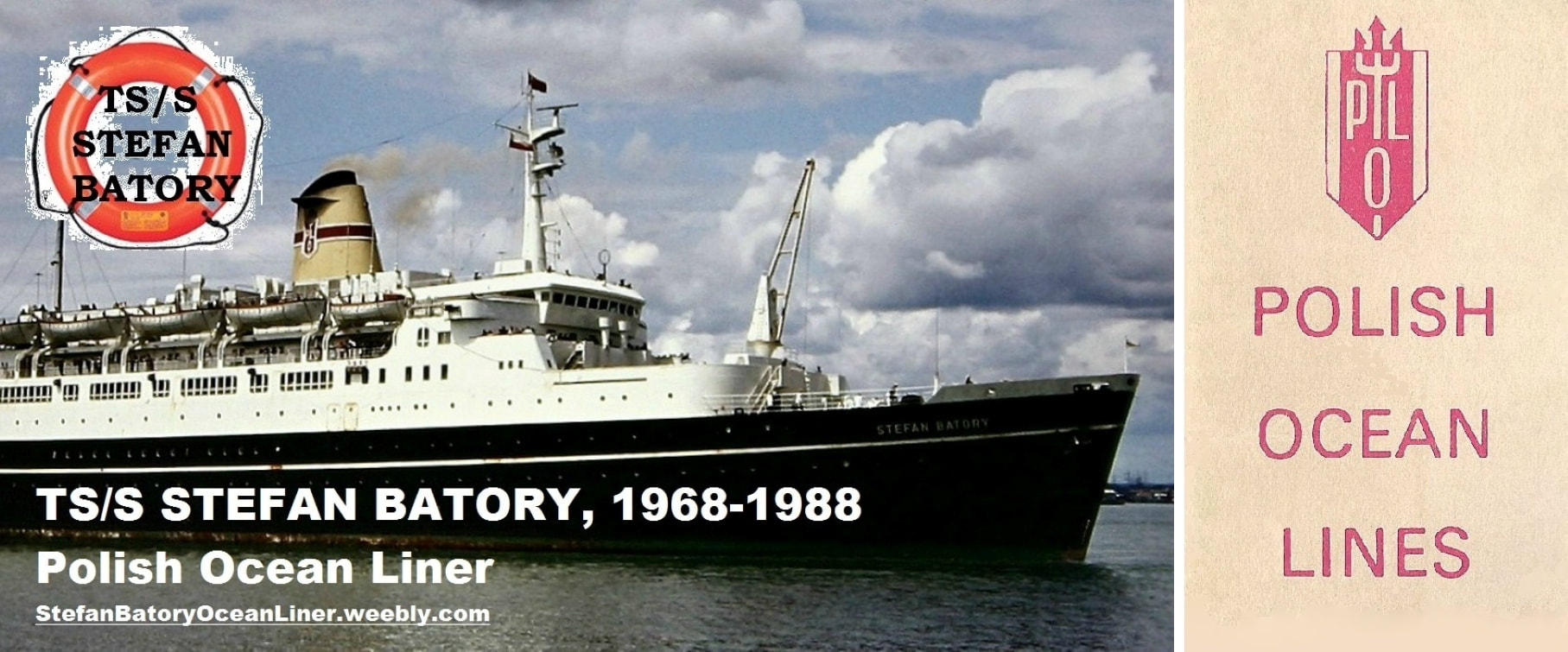


 nerdybot

 Registration details

 Identified technologies
User reviews (0)