
 简体中文
简体中文 English
Website review
This review may include AI-generated content and is not individually verified. Domain, certificate and other facts come from the observed data on this page.
What is Virtual Piano?
Virtual Piano is a free browser-based piano keyboard you play with your computer keyboard, phone or tablet. Instead of reading staff notation, you follow music sheets that use plain letters: each letter maps to a key you press. The site describes itself as the original online piano, used by more than 19 million people a year, with no download or install required to start; a web app is offered as an option for mobile and tablet devices.
How it works in practice
- Find a song through the search box or by browsing the Music Sheets section.
- Open the sheet, where letters correspond to your keyboard keys.
- Press the highlighted keys to play the song.
Because the notation is alphabetical rather than traditional, you can produce a recognisable tune within a minute or two even with no musical training. That makes it well suited to quick breaks, casual learners, teachers looking for a low-friction classroom demo, and anyone curious about piano before committing to lessons or an instrument.
What it is not
It is a keyboard-and-screen instrument, so it will not teach finger placement, dynamics or pedalling the way a real piano or a structured course would. Touchscreen playing also feels different from physical keys. The site notes that a fuller set of features sits behind optional membership, while the core playing experience and the thousands of music sheets are described as free.
A useful next step
Pick one short, familiar song from the Music Sheets, play it slowly until the key pattern feels natural, then try it again without looking at the sheet. If you want structured practice beyond that, a dedicated notation or method resource is a better fit — for example Music Theory for reading music, or IMSLP for public-domain scores.
How do I play a song on Virtual Piano using my computer keyboard?
Pick a song, read its letter-based sheet, then press the matching keys on your computer keyboard. Virtual Piano is built around this loop: the notes are written as plain letters rather than staff notation, so you can start without any music-reading background.
The basic steps
- Open the site and use the search box or browse the Music Sheets section to choose a song.
- Look at the sheet: the letters correspond to keys on your keyboard, not to note names you need to decode.
- Press the highlighted keys in order. The site highlights what to play next, so you can follow along in real time.
What makes it approachable
The main trade-off is simplicity versus expression. Letter sheets get you playing within a minute, but they reduce a piece to a sequence of key presses, so dynamics, fingering and hand independence are largely up to you. If you already read music or want to develop piano technique, a keyboard-and-notation approach will teach you more; if your goal is to play recognizable tunes quickly, this is one of the fastest routes.
A realistic first session
Choose a short, familiar melody rather than a long piece. Play it slowly once to learn the key positions, then repeat at tempo. Because your hands stay on the computer keyboard, the physical layout differs from a piano, so expect a short adjustment period before the letters feel automatic.
Next step
If you want a more structured path, look at the site's Education section, which is aimed at using the platform for learning rather than just playing. For a different feel, Musicca offers note-reading and ear-training exercises, and musictheory.net covers the notation side that letter sheets skip.
What are the differences between the free version and a Virtual Piano membership?
The free version of Virtual Piano is a complete, browser-based keyboard: you open the site, pick a song from the Music Sheets, and play it immediately using letter keys on your computer keyboard, phone, or tablet. No download, no account and no ability to read music notation are required, because the sheets use plain alphabet letters rather than staff notation. The site describes the music sheets as free, and says the platform is free to use by anyone, anywhere, anytime.
The membership is presented as the way to reach "the full range of the platform's powerful features." The page does not itemise what those extra features are, so treat any specific claim about member-only songs, tools or content as unconfirmed until you see it listed on the site itself.
A practical way to decide
| Your situation | Sensible starting point |
|---|---|
| You want to try playing today, or you are teaching a child letter-to-key mapping | Free version — nothing to install, sheets are free |
| You play occasionally, or mainly want the game-style note practice | Free version is likely enough |
| You play regularly, want more than the core sheet library, or want to support the project | Consider membership, after checking the current feature list on the site |
One concrete scenario: a parent using a tablet with a child can search a familiar tune, read the letter sequence, and play it within a minute — that whole loop sits in the free tier. A teacher running weekly keyboard sessions across a class may find the free sheets sufficient, but should confirm whether any tracking or progress features they want sit behind membership.
Next step: open the Music Sheets section, pick one song you already know, and play through it. That tells you in a few minutes whether the free version covers your needs before you look at membership at all.
If you want a second free browser keyboard to compare key layouts and sheet formats, Musicca offers online piano exercises, and Virtual Piano itself remains the reference point for alphabet-based sheets.
Where can I find free music sheets for Virtual Piano?
Free music sheets for Virtual Piano are found on the site itself, under its Music Sheets section. Virtual Piano's own sheets are written in plain alphabet letters rather than standard notation, and each letter maps to a key on your computer keyboard.
Virtual Piano
How to get to them
- Open the Music Sheets area, or type a song title into the Virtual Piano search box.
- Pick a song; the sheet highlights the keys to press.
- Play along on your keyboard, phone or tablet — no download needed to start.
H3. What "free" covers here The site states that its music sheets are free, and that there are thousands of them. It also says a membership exists for people who want the platform's fuller feature set, so treat the sheets as the free layer and membership as optional rather than required for basic playing.
H3. If you want conventional sheet music instead Virtual Piano's letter sheets are a shortcut for people who don't read notation. If you already read staff notation, or you want arrangements with rhythm and fingering detail, general sources are worth knowing:
- MuseScore — community-uploaded scores, many free to view and play back.
- IMSLP — public-domain classical scores, best for older repertoire.
- 8notes — free beginner-to-intermediate arrangements across instruments.
A practical rule: use Virtual Piano's own sheets when you want to play within minutes by keyboard letter, and use a notation-based library when you want to learn a piece properly or play it on a real piano.
Can I use Virtual Piano on a mobile phone or tablet?
Yes. Virtual Piano is designed to run in a browser on a computer, mobile phone or tablet, and the page also notes an optional Web App for mobile and tablet devices. You do not need to download or install anything to start playing, and the music sheets use plain alphabet letters rather than standard notation, so a touchscreen user can begin without prior music-reading skills.
H3 What changes on a phone or tablet
- Input: instead of a physical QWERTY keyboard, you tap the on-screen keys. This can feel slower for fast passages but is fine for learning melodies and note recognition.
- Screen space: the keyboard and any sheet are more cramped in portrait; landscape generally gives a wider playable range.
- Setup: browser play works immediately; the mobile Web App is offered as an option if you want a more app-like experience.
H3 Practical scenario A beginner on a phone can open the site, search for a song in the Music Sheets, and follow the highlighted letters by tapping the corresponding keys. For a more comfortable session, use landscape orientation and a quiet room, and start with short, simple tunes before attempting dense arrangements.
H3 Decision criterion Choose the browser version if you want zero installation and quick access. Choose the mobile Web App if you plan to practise regularly on a phone or tablet and prefer a dedicated entry point. If you need precise, fast playing, a computer keyboard remains the most responsive input.
Next step: open Virtual Piano on your device, pick one beginner music sheet, and play through it once to see whether tapping or typing suits you better.
What is Melody Survival and how does it help improve piano skills?
Melody Survival is a free browser-based arcade game on Virtual Piano that mixes piano notes with action gameplay. You guide a character through ten galaxies, collecting glowing blue music notes while dodging hot stars. It is separate from the main keyboard-and-music-sheets experience, but it uses the same note and keyboard framework.
How it builds piano skills
- Note recognition: You identify notes quickly under time pressure, which transfers to reading Virtual Piano's letter-based music sheets faster.
- Listening awareness: Reacting to musical cues trains your ear to connect what you hear with what you play.
- Concentration: Dodging hazards while collecting notes forces sustained focus, similar to keeping tempo and accuracy through a full piece.
- Keyboard familiarity: Repeated exposure to note positions helps you find keys without looking, useful for the computer-keyboard layout.
Who it suits
| Player | Why it fits |
|---|---|
| Complete beginners | Low-pressure way to absorb note names before tackling a song |
| Kids and casual players | Game format keeps practice engaging |
| Players stuck on speed | Adds a timed challenge that plain sheet practice lacks |
If you already read standard notation and want technique drills, this is a supplement rather than a replacement. For a practical start, play a few rounds to warm up, then open a music sheet on Virtual Piano and apply the note recognition you just practised.
 Cloudflare
 Microsoft 365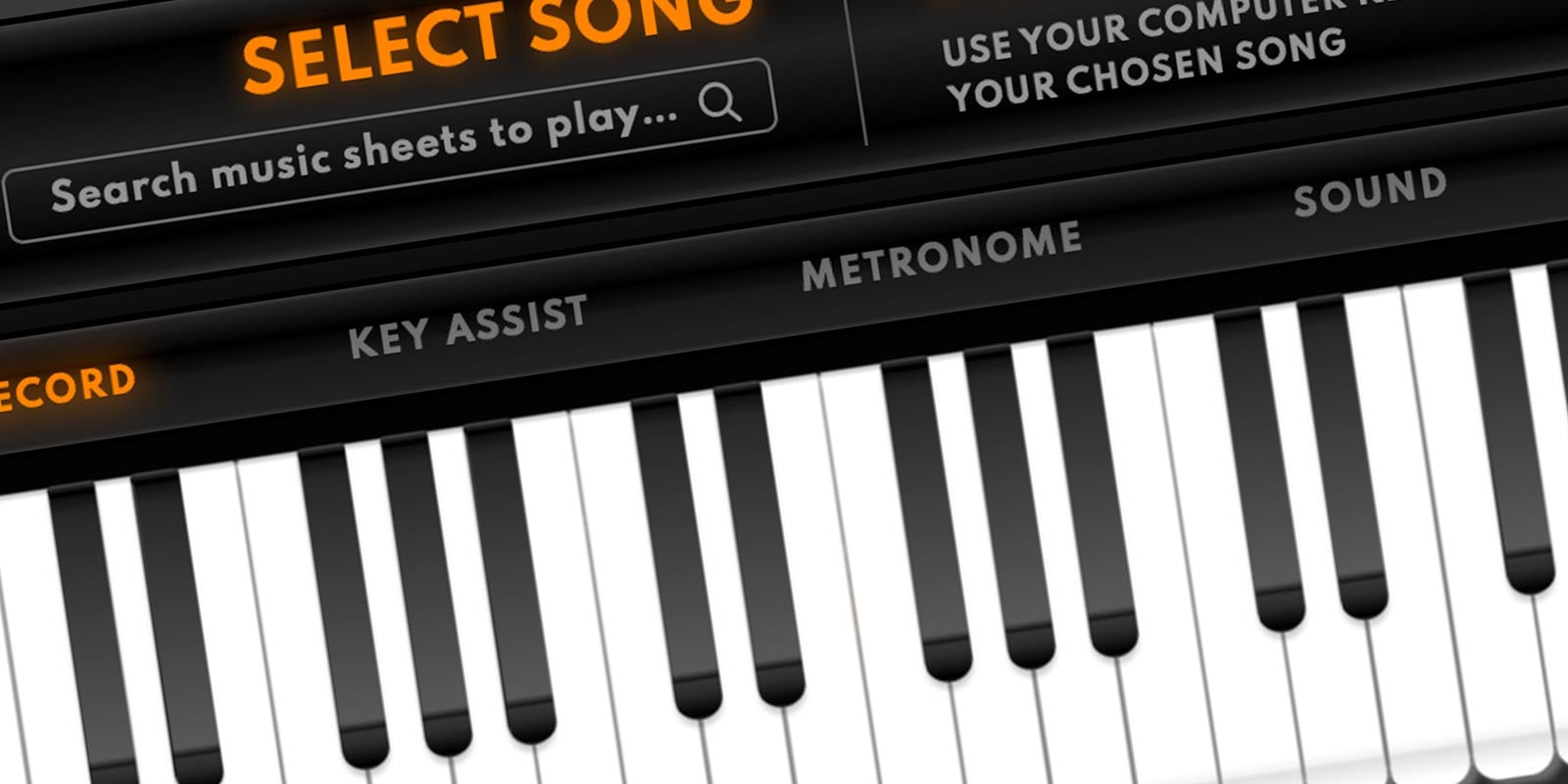
User reviews (0)