
 youthmusicillinois.org
No paid content found
youthmusicillinois.org
No paid content found
Categories: Other
Central Illinois Youth Orchestra
 Visit website
 Updated: 2026-09-24 08:42
 Language: English (default)
 Access: Normal
 Profile views 0
 Outbound visits 0
Related questions
More questions →What Is a Community Wind Band and Who Can Join?
A community wind band is a voluntary ensemble of woodwind, brass, and percussion players who rehearse and perform together, usually outside of school, military, or professional settings. It is typically open to adults of all ages, including people returning to an instrument after a long break, and the main requirement is usually a basic ability to play your instrument rather than an audition or music qualification. Bristol Concert Wind Band (BCWB), for example, describes itself as a community wind band promoting wind music in the Bristol region through tuition, development, and performance opportunities for adults of all ages.
What makes a band a "community" wind band?
The word "community" describes how the group is organised and who it serves, not the style of music. A community wind band usually:
- Draws players from a local area rather than recruiting nationally or by competition
- Exists for the enjoyment and development of its members, not as a paid professional ensemble
- Welcomes a range of ages and playing backgrounds
- May run its own tuition or development sessions alongside rehearsals
This separates it from a school band (tied to a school's students), a military band (part of an armed forces structure), or a professional ensemble (players are paid and usually auditioned to a high standard). A community band can still play to a good standard and perform public concerts — the difference is in purpose and membership, not necessarily in quality.
Who can join?
Most community wind bands are aimed at adults, and BCWB specifically states it provides opportunities for "adults of all ages." In practice, that means:
- Returning players who played at school or college and want to start again
- Adult beginners or improvers who have some playing ability and want a group to play with
- Experienced amateurs who want to keep playing without a professional commitment
The key question is usually not age but playing level. A band needs to be able to rehearse and perform together, so most expect you to be able to read music and play your instrument to a reasonable standard. If a band runs its own tuition and development programme — as BCWB says it does — that can be a route in for players who are not yet ready for full rehearsals.
Which instruments are typical?
Wind bands are built around three families:
| Family | Typical instruments |
|---|---|
| Woodwind | Flute, oboe, clarinet, bassoon, saxophone |
| Brass | Trumpet, horn, trombone, euphonium, tuba |
| Percussion | Timpani, drum kit, tuned and untuned percussion |
Some bands also include double bass or keyboard. If you play one of these instruments, you are likely to find a place; bands are often short of certain instruments (bassoon, oboe, horn, tuba, percussion), so those players can be especially welcome.
What is the time commitment?
This varies by band, but the pattern is usually:
- Weekly rehearsals — often an evening, lasting around two hours
- Additional sectionals or development sessions — if the band runs a tuition programme
- Concerts — a handful per year, sometimes more, with extra rehearsals beforehand
- Practice at home — enough to learn your part between rehearsals
Before committing, it is worth asking how many concerts the band plays per year and whether attendance at rehearsals is expected every week. Some bands are relaxed about occasional absences; others rely on regular attendance to prepare for specific performances.
Why join an adult community band?
The benefits tend to fall into two groups:
Musical
- A reason to keep playing and improving
- Experience of playing in a section and following a conductor
- Access to a wider repertoire than you would play alone
- Tuition and development opportunities if the band provides them
Social
- A regular group of people with a shared interest
- A local activity that does not depend on being a student
- Performance opportunities that give playing a purpose
For many adults, the social side is as important as the music — it is a weekly commitment that combines a hobby with a ready-made community.
How to find a local band and what to ask
Search for "community wind band" plus your town or region, or look for regional wind band associations and local music hubs. BCWB is one example of a band serving a specific area (Bristol, UK) with an explicit community and development focus.
Before attending a first rehearsal, ask:
- What playing standard do you expect? — so you know whether you are ready
- Do you audition? — many community bands do not, but some do
- What is the rehearsal schedule? — day, time, and location
- How many concerts per year, and are they compulsory?
- Are there subscriptions or fees? — costs vary and are not always advertised
- Do you offer help for returning players or beginners?
- Can I come along to a rehearsal to try it? — a trial visit is the best way to judge fit
If the band runs a development or tuition programme, ask whether that is separate from the main rehearsals and whether there is a waiting list. Attending one rehearsal as a visitor will tell you more about the standard, the atmosphere, and the conductor's style than any description.
How to Listen to Free Music, Radio, and Podcasts on iHeart
iHeart is a free streaming platform that combines live radio stations, customizable artist stations, playlists, and podcasts in one place. You can start listening without paying by opening iheart.com in a browser or using the iHeart app, then searching for a station, artist, song, or podcast. A subscription is only relevant for certain premium features; the core listening experience described on iHeart's site is available for free.
What you can listen to on iHeart
iHeart organizes its content into a few main types, and knowing the difference helps you find what you want faster.
| Content type | What it is | Best for |
|---|---|---|
| Live radio stations | Thousands of real-time broadcast stations | Hearing a scheduled show, local station, or live event |
| Artist stations | Stations built around a specific artist | Continuous music in the style of an artist you like |
| Playlists | Curated or self-made collections of songs | A defined set of tracks for a mood or activity |
| Podcasts | On-demand episodic shows | Talk, news, storytelling, and interviews |
| Music and trending news | Updates on artists, songs, and bands | Discovering what's new |
The key distinction is live versus on-demand. Live radio plays whatever is broadcasting right now, so you can't skip tracks. Artist stations and playlists behave more like on-demand listening, where you control the starting point.
How to start listening for free
You can begin on either the web or the app. The steps are similar.
- Open the platform. Go to iheart.com in a browser, or install the iHeart app on your phone or tablet.
- Search or browse. Use the search function to enter a station name, artist, song, or podcast. Alternatively, browse categories to see what's available.
- Select what you want to hear. Choosing a live station starts playback immediately. Choosing an artist creates or opens a station built around that artist.
- Press play and adjust. Use the player controls to pause, change volume, or move between stations. On live radio, expect no track skipping; on artist stations, you have more control over what plays next.
- Save what you like. Favoriting a station or artist makes it easier to return to later without searching again.
Expected result: audio begins playing shortly after you select content, and your favorites appear in your account for quick access next time.
Creating your own stations and playlists
- Artist stations: Start from an artist you like, and the station plays music in that style. This is the fastest way to get continuous music without building a list yourself.
- Playlists: Add individual songs to a playlist when you want a specific set of tracks rather than a continuous stream. This suits workouts, commutes, or a fixed party set.
- Tip: Use artist stations for discovery and playlists for control. If a station drifts away from what you want, switch to a playlist instead of fighting the stream.
What's free versus what needs a subscription
iHeart's own description states that its music, podcasts, and radio stations are available for free, and that you can listen to thousands of live stations or create your own artist stations and playlists. The site also references a subscription, which indicates that some features sit behind a paid tier.
Because the exact free-versus-paid split isn't fully detailed in the available information, treat it this way:
- Assume free: live radio stations, artist stations, playlists, podcasts, and general music/news browsing, based on iHeart's stated offering.
- Check before assuming: any feature labeled as premium, ad-free, or subscription-only. If a paywall appears, that specific feature requires payment.
- Don't assume: that a subscription is required to listen at all, or that everything is free. Verify at the point where you're asked to sign up or pay.
Common snags and how to handle them
- A station won't play. Live stations can be unavailable due to regional restrictions or temporary outages. Try another station to confirm whether the issue is the station or your connection.
- You can't skip a track. That's expected on live radio. Switch to an artist station or playlist if you want control.
- Search returns too many results. Add the type of content to your search, such as the artist name plus "station," or search podcasts separately from music.
- You lose your favorites. Sign in to an account so saved stations and playlists persist across sessions and devices.
Quick decision guide
- Want background music with no effort? Open an artist station.
- Want a specific set of songs? Build a playlist.
- Want a live show or local broadcast? Pick a live radio station.
- Want talk or storytelling? Go to podcasts.
- Want to avoid paying? Stick to the free listening options above and check any prompt before entering payment details.
What Is the Illinois Theatre Association (ITA) and How Can You Get Involved?
The Illinois Theatre Association (ITA) is a statewide nonprofit that advocates for theatre at every level in Illinois — youth, high school, college/university, community, and professional. It serves artists, educators, students, and audiences through divisions, festivals, awards, and resources. You can get involved by joining as a member, attending or registering for events like the Community Theatre Festival, participating in the Illinois High School Theatre Festival (IHSTF), or using its job board, auditions listings, and event calendars. ITA is an organization, not a venue or a single production, so "joining" means membership or participation rather than buying a ticket to one show.
What ITA Does
ITA describes its purpose as advocating for the values theatre brings to individuals across Illinois, and its mission as inspiring, engaging, challenging, nurturing, educating, and empowering artists and audiences to enhance the state's cultural landscape. In practice, that work shows up in a few concrete ways:
- Divisions organized by theatre type, so members find peers and programming that match their setting.
- Festivals and events, including the Illinois High School Theatre Festival and a Community Theatre Festival.
- Recognition, through Awards of Excellence and a list of past awardees.
- Information and connections, through news, articles, an event calendar, a job board, and auditions.
The Five Divisions and Who They Serve
ITA groups its work into divisions, each with its own calendar of events:
| Division | Who it serves |
|---|---|
| Youth Theatre | Young performers and the adults who work with them |
| High School Theatre | High school students, teachers, and directors |
| College/University Theatre | College and university programs, faculty, and students |
| Community Theatre | Local, volunteer-based and community groups |
| Professional Theatre | Working theatre professionals and companies |
Each division has a dedicated calendar, so you can filter events to the part of the field you care about rather than scanning everything.
Key Programs and Events
Illinois High School Theatre Festival (IHSTF)
IHSTF is ITA's high school festival and has its own section of the site covering teachers, students, vendors and college exhibitors, the festival committee, advertising and sponsorships, important dates and deadlines, participation guidelines, festival history, and festival documents. If you're a high school teacher or student, this is the main entry point — start with the important dates and deadlines and the participation guidelines before anything else.
Community Theatre Festival
The 2026 Community Theatre Festival, themed "Come Together," is scheduled for 11/07/2026–11/08/2026 at Morton College's Jedlicka Performing Arts Center, 3801 S Central Ave, Cicero, IL 60804. Registration is available through the event listing. ITA frames the theme around community theatre as a gathering place — "where strangers become castmates, where castmates become friends and friends become family."
Awards, News, and eFollowspot
ITA runs Awards of Excellence with a published list of past awardees, maintains a news section and articles, and publishes eFollowspot, its newsletter. These are useful if you want to see who's active in Illinois theatre or follow what the organization is highlighting.
How to Join and What You Get
Membership is handled through the Join link in the site's main navigation. ITA doesn't publish pricing or eligibility details in the material available here, so check the Join page directly for current terms rather than assuming a cost or a free tier.
Based on what the site exposes, membership connects you to:
- Division-specific event calendars (Community, Youth, College & University, Professional, High School)
- The member-sponsored events and performance calendars
- The job board and auditions listings under Industry Opportunities
- Festival participation pathways, including IHSTF and the Community Theatre Festival
- News, articles, and eFollowspot
If you're unsure which division fits, pick the one matching where you actually work or perform — a community theatre actor belongs in Community Theatre, a high school director in High School Theatre.
Resources Worth Knowing About
Beyond membership, ITA's site offers several things you can use directly:
- Job Board — postings for theatre work in Illinois
- Auditions — audition notices
- Event calendars — a general ITA calendar plus five division calendars
- Performance Calendar — listings of member-sponsored events
- Festival Documents and Important Resources — practical materials for festival participants
- Board of Directors and Board Information — who governs the organization
ITA vs. a Theatre Venue
A common point of confusion: ITA is a statewide advocacy and membership organization. It is not a theatre building, a producing company, or a ticketing platform. When you see "ITA" attached to an event, it usually means ITA is organizing, sponsoring, or promoting it — as with the Community Theatre Festival at Morton College — not that ITA owns the venue. If you're looking for a specific show's tickets, go to that production or venue; if you're looking to join a statewide network, advocate for theatre, or plug into festivals and job listings, that's ITA.
Getting Started
- Decide your role — student, teacher, community artist, college faculty, or professional.
- Open the Join page and review current membership terms.
- Check your division's calendar for the next event near you.
- If you're in high school theatre, go straight to IHSTF's important dates and participation guidelines.
- Browse the job board and auditions if you're looking for work or performance opportunities.
What Is Latin Jazz and How Does It Differ from Mainstream Jazz?
Latin jazz is jazz played with Afro-Caribbean rhythmic structures at its core rather than as decoration. The most audible difference from mainstream (straight-ahead) jazz is the rhythm section: Latin jazz builds on a repeating, dance-derived groove — the clavé, the tumbao, the cascara — while mainstream jazz typically rides a swinging cymbal pattern with a walking bass. If you want to hear the distinction in practice, trombonist and composer Papo Vázquez works squarely in this tradition, including Afro-Puerto Rican and Afro-Caribbean jazz, and his recordings are a practical entry point.
The core difference: rhythm is the foundation, not the flavor
In mainstream jazz, the drummer's ride cymbal and the bassist's walking line define the pulse, and soloists float over that swing feel. In Latin jazz, the groove is a fixed, repeating pattern that the whole band locks into. The rhythm doesn't just accompany the soloists — it is the form.
| Dimension | Mainstream / straight-ahead jazz | Latin jazz |
|---|---|---|
| Rhythmic base | Swinging ride cymbal, walking bass | Clavé, tumbao, cascara, montuno patterns |
| Role of percussion | Drum kit, occasional hand percussion | Congas, timbales, bongos, güiro as core voices |
| Feel | Swung, conversational, elastic | Dance-derived, cyclical, locked |
| Bass | Walking quarter notes | Tumbao — syncopated, anticipatory |
| Piano | Comping behind soloists | Montuno vamps and repeated figures |
| Soloist's freedom | Over the swing | Over the groove, often in clave |
Neither is "harder" or "better." They solve different problems: mainstream jazz prioritizes linear swing and interplay; Latin jazz prioritizes interlocking rhythm and collective groove.
Where Latin jazz comes from
Latin jazz is not one tradition but a family of them, shaped by the movement of African rhythms through the Caribbean and into the United States:
- Afro-Cuban jazz — the best-known branch, built on son, mambo, and rumba rhythms, developed in New York and Havana.
- Afro-Caribbean jazz — a broader category covering Cuban, Puerto Rican, Dominican, and other Caribbean roots.
- Afro-Puerto Rican jazz — draws on bomba and plena traditions alongside jazz harmony and improvisation.
These are overlapping labels, not separate genres. A single band can move between them within one tune.
Papo Vázquez as a listening entry point
Papo Vázquez is a trombonist, composer, and arranger working in Latin jazz, Afro Puerto Rican jazz, and Afro Caribbean jazz. His site identifies him as a Grammy-nominated artist and an NEA Master Artist, and his working group is Papo Vázquez's Mighty Pirates Troubadours. Downbeat Magazine's Howard Mandel described the group as "stirring," and the site links to a Downbeat four-star review.
For someone new to the music, his catalog is useful because it sits at the intersection of the categories above — you can hear the rhythmic foundation and the jazz improvisation at the same time rather than as separate layers.
How to start listening
The site points to several ways to hear the music:
- Streaming and digital platforms — Apple Music, iTunes, Amazon, Spotify, and Pandora are listed as available outlets.
- Physical CDs — the site offers CD purchase for U.S. and Puerto Rico only.
- Interviews and reviews — links include an interview on Cafe Latino with Laura Fernandez, a Fundación Nacional Para La Cultura Popular interview, and an NPR Alt Latino Best of 2024 mention.
If you are exploring the genre more broadly, a practical approach is to pick one rhythmic pattern — the clavé — and listen for it across several recordings. Once you can hear the clavé, the difference between Latin jazz and straight-ahead jazz becomes obvious rather than theoretical.
A quick way to test your ear
Play a mainstream jazz trio track and a Latin jazz track back to back and listen to the bass. If the bass is walking in even quarter notes, you are in swing territory. If the bass is playing a syncopated, repeating figure that anticipates the beat, you are hearing a tumbao — and you are in Latin jazz.
What Is a Flute and What Should Beginners Know Before Starting?
A flute is a woodwind instrument that makes sound when a stream of air splits across an opening, setting the air inside the tube vibrating. Beginners usually start on the concert flute in C, and the practical first steps are: get an instrument in playable condition, learn to assemble and care for it, and find a teacher or group to play with. The notes below cover how the instrument works, the main members of the flute family, what to check on a first instrument, and how to plug into a local flute community.
How a flute produces sound
Unlike a clarinet or saxophone, the flute has no reed. You shape your lips into an opening (the embouchure) and direct an air stream across the edge of the tone hole in the headjoint. The air stream alternately enters and exits the tube, which sets up a standing wave — the vibrating column of air that you hear as a pitch.
Two consequences follow from that mechanism:
- Pitch depends on the length of the vibrating air column. Pressing keys opens and closes holes along the body, changing the effective length of the tube.
- Tone quality depends heavily on the air stream, not on a reed or mouthpiece. That is why flute players spend a lot of early practice time on breathing, embouchure, and long tones rather than on finger speed.
The main members of the flute family
| Instrument | Typical range | Common role |
|---|---|---|
| Concert flute in C | Roughly three octaves upward from middle C | Standard starting instrument; melody in bands and orchestras |
| Piccolo | Sounds an octave above the concert flute | Highest voice; band and orchestral color |
| Alto flute in G | Sounds a fourth below written pitch | Warmer, lower color; chamber and some band writing |
| Bass flute in C | Sounds an octave below written pitch | Low flute choir and contemporary ensemble writing |
Beginners almost always start on the concert flute. The piccolo, alto, and bass flutes are usually taken up later, once basic embouchure and breath control are established, because they demand more air control or a different embouchure adjustment.
Choosing a first flute
A first instrument matters more than most beginners expect, because a flute that leaks or is badly out of adjustment will fight you on every note. Points to check:
- Mechanism condition. Every key should move smoothly and seal completely. A technician can check pad sealing; a leaking pad makes low notes nearly impossible.
- Headjoint response. Try the headjoint alone first. A headjoint that responds easily across low and high registers is a good sign.
- Materials and level. Student flutes are commonly made with a silver-plated body and headjoint; higher-level instruments may use solid silver. Material affects tone and price, but condition and fit matter more at the beginner stage.
- Fit to the player. For younger players, curved headjoints or offset G keys can make the instrument easier to hold. Hand size and arm length should guide this.
- Budget reality. New student instruments and used instruments vary widely in price. A used instrument from a reputable maker, checked by a technician, is often a better value than a new instrument of unknown quality.
If possible, have a teacher or experienced player try the instrument before you commit.
Assembly, care, and daily habits
Assembly order
- Hold the body at a point away from the keys.
- Gently twist the headjoint into the body with a slight back-and-forth motion — never force it straight in.
- Attach the footjoint the same way, aligning the rod so the keys fall naturally under your fingers.
- Avoid gripping the mechanism while twisting; pressure on the rods is a common cause of bent keys.
After playing
- Swab the inside of the tube with a cleaning rod and cloth to remove moisture.
- Wipe fingerprints off the plating with a soft cloth.
- Return the instrument to its case; do not leave it on a chair or stand where it can be knocked over.
Habits that prevent repair bills
- Do not eat sugary food immediately before playing.
- Do not use household tools to adjust screws or springs.
- Have the instrument serviced periodically by a repair technician; small adjustments are cheaper than a rebuild.
Finding teachers, ensembles, and a local flute community
A teacher shortens the learning curve on embouchure and breath support, and a group gives you a reason to keep playing. Regional flute organizations are one route into both.
The Upper Midwest Flute Association (UMFA) describes itself as a flute organization for flutists of all ages, levels, and skills, based in the Twin Cities (Minneapolis/St. Paul, Minnesota) with members from across the Upper Midwest. For a beginner in that region, an organization of this kind is a practical starting point for:
- Connecting with other flutists and teachers in the area
- Hearing about events such as Flute Fest
- Finding ensemble or performance opportunities suited to your level
If you are outside that region, look for a similar state or regional flute association, a university flute studio, or a community band with a flute section — any of these can point you toward a teacher and a group to play with.
A realistic first-year path
- Weeks 1–4: Learn assembly, posture, breathing, and producing a steady tone on the headjoint alone.
- Months 2–3: Add simple scales and short pieces; focus on long tones and clean articulation.
- Months 4–6: Expand range into the second octave; start playing duets or easy ensemble parts.
- Months 6–12: Join a community band, flute choir, or school ensemble, and consider a teacher check-in on your instrument's condition.
The instrument itself is simple in concept — air across an edge, a vibrating column of air, keys that change its length — but the control takes time. Getting a playable flute, good habits, and a community around you is what makes the first year work.
Website Overview
An established domain and managed infrastructure suggest continuity of operations and may support dependable delivery, although neither guarantees service quality. Several search or sharing settings need attention. Together they may make snippets, preview images or preferred URLs less consistent across platforms.
Domain and Registration
Registered in 2017, this domain has about 9 years of history. That suggests continuity, although ownership and purpose may have changed. Transfer-protection status is present, helping reduce the risk of unauthorized domain transfers. The registrar is GoDaddy.com, LLC, a widely used domain service provider. The domain uses the common .org extension, which is not an independent safety signal.
DNS and Email
Nameservers are provided by GoDaddy, indicating managed DNS hosting. MX records point to the Microsoft 365 email service. SPF and DMARC are configured. DKIM status is unknown. TXT records include verification markers for Google. Such markers may also remain after a service stops being used. DNSSEC signatures were not detected, so this additional DNS authenticity protection is not confirmed.
TLS and Certificates
The public key uses EC with 256 bits. The server supplied a complete certificate chain. No organization name is present in the certificate; the available fields are consistent with domain validation. The certificate was issued within the Google Trust Services cloud or CDN ecosystem. The certificate's total validity is about 90 days, consistent with a short renewal cycle.
HTTP and Browser Security
The checked browser-security headers were not detected, leaving fewer explicit browser-side safeguards. No X-Powered-By header was found, reducing one common source of backend fingerprinting information. The cf-ray response header indicates a CDN or caching proxy in the delivery path. No obvious internal addresses or debug information were found in the headers. The Server header identifies cloudflare without an exact version.
Technology Stack Analysis
The public page identifies Cloudflare without precise versions, leaving fewer clues for version-specific scanning.
Search and Social Sharing
No homepage canonical URL was detected. If duplicate URLs exist, consolidation may be less explicit. Open Graph is partially configured; og:type is missing. The title has 10 characters, within a common display range. A meta description is present, with 32 characters. The observed directives allow indexing and link following.
 Hosting and Email
 GoDaddy
 Hosting
 Cloudflare
 Microsoft 365
 Location
 United States
 Pages, Search and Sharing
| Meta description | Central Illinois Youth Orchestra |
|---|---|
| Canonical URL | Not detected |
| Language | English (default) |
| Twitter Card | Not detected |
Social Sharing Preview
5 fields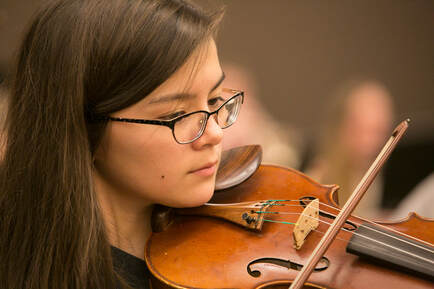
Sharing metadata
| og:url | https://www.youthmusicillinois.org/ |
|---|---|
| og:image | https://www.youthmusicillinois.org/uploads/1/2/4/5/124516159/editor/2018-03-cico-07.jpg?1645471070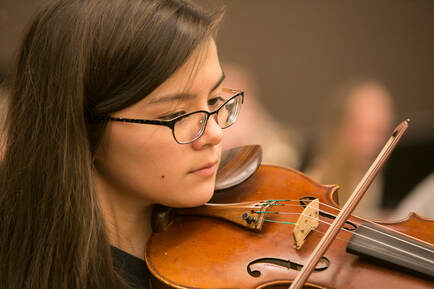 |
| og:title | YMI - Home |
| og:site_name | Youth Music Illinois |
| og:description | Central Illinois Youth Orchestra |
robots.txt (opens in a new tab)
10 rulesnerdybot 0 allowed · 1 disallowed

 nerdybot

/
dotbot 0 allowed · 0 disallowed
- Interval
Crawl delay 10 seconds
All bots 0 allowed · 9 disallowed
/ajax//apps//our-program.html/join-ymi.html/about.html/https://docs.google.com/document/d/1kGWRxtDLVgQcOK7vAUxw9xWLmbBdsGGzV1Q5t4NhLdU/edit?ts=5ea49be7/support.html/suzuki-school-of-music.html/members.html
No matching rules.
Sitemaps
1 Registration details RDAP / WHOIS
| Registrar | GoDaddy.com, LLC |
|---|---|
| Registered | 2017-03-14 |
| Expires | 2027-03-14 |
| Domain status | client delete prohibited、client renew prohibited、client transfer prohibited、client update prohibited |
| Nameservers | ns25.domaincontrol.com、ns26.domaincontrol.com |
| DNSSEC | unsigned |
 DNS records
| Type | Name | Value | TTL | Priority |
|---|---|---|---|---|
| A | youthmusicillinois.org | 199.34.228.77 | 3600 | — |
| MX | youthmusicillinois.org | youthmusicillinois-org.mail.protection.outlook.com | 3600 | 0 |
| NS | youthmusicillinois.org | ns25.domaincontrol.com | 3600 | — |
| NS | youthmusicillinois.org | ns26.domaincontrol.com | 3600 | — |
| TXT | youthmusicillinois.org | NETORGFT12553515.onmicrosoft.com | 3600 | — |
| TXT | youthmusicillinois.org | google-site-verification=VPQMU0AlesSmIbxfvidr0F9JxR8hZ4xsHDOw-D3oU3U | 3600 | — |
| TXT | youthmusicillinois.org | v=spf1 include:secureserver.net -all | 3600 | — |
| CNAME | www.youthmusicillinois.org | youthmusicillinois.org | 3600 | — |
| DMARC | _dmarc.youthmusicillinois.org | v=DMARC1; p=none; | 600 | — |
 TLS and certificates
| Assessment | Normal configuration |
|---|---|
| Supported protocols | TLSv1.2、TLSv1.3 |
| Negotiated protocol | TLSv1.3 |
| Certificate subject | www.youthmusicillinois.org |
| Issuer | Google Trust Services |
| Valid until | 2026-11-20T21:53 · Remaining when checked: 57 days |
| Verification details | Certificate trust: Passed · Hostname match: Passed |
 HTTP response headers
| Header | Value |
|---|---|
| content-type | text/html; charset=UTF-8 |
| cache-control | max-age=30, private, no-store |
| server | cloudflare |
 Identified technologies
User reviews (0)