
 简体中文
简体中文 English
Website review
This review may include AI-generated content and is not individually verified. Domain, certificate and other facts come from the observed data on this page.
What is The Society of California Pioneers?
The Society of California Pioneers is a not-for-profit museum, library and cultural organization in San Francisco focused on preserving and studying early California history, culture and art. Founded in 1850, it holds archives documenting the state's founding era, including the Gold Rush and the 1906 Earthquake and Fire.
Its main public draws are:
- The Alice Phelan Sullivan Library, open to researchers working with the collection.
- A programming room for lectures and events tied to the collection.
- Membership open to direct descendants of anyone in California before 1850, with programs for others who want to support the work.
If you are researching a California family, a Gold Rush-era figure or an early San Francisco topic, the practical next step is to check the research resources and services before visiting, since archival access often requires planning ahead. Casual visitors may get more from scheduled lectures and programming than from the library itself.
How can I research my California pioneer ancestors using the Society's collections?
Start with the Society's research services at The Society of California Pioneers, then plan a visit to the Alice Phelan Sullivan Library at 300 Fourth Street in San Francisco's Yerba Buena neighborhood. The archives focus on the founding and early history of California, including the Gold Rush and the 1906 Earthquake and Fire, so they are strongest for ancestors in California before roughly 1900.
What to do before you go
- Gather names, approximate dates, and places from family records. Pioneer-era research usually hinges on a place (a mining town, a rancho, a San Francisco ward) more than a surname alone.
- Check whether you qualify for membership. The Society limits membership to direct descendants of anyone in California before 1850, but its programs are open to anyone who wants to support the work. If you have a documented pre-1850 ancestor, membership may give you a closer connection to the community that studies these families.
- Contact the library in advance with your specific question. Ask what finding aids, indexes, or manuscript collections cover your ancestor's county or occupation, and whether you need an appointment.
How to use the collections
The archives are manuscript-heavy rather than a single genealogical database. Expect to work with original documents, personal papers, and organizational records. That means slower, more contextual research: you may find a diary, a business ledger, or a letter that names your ancestor, but you probably will not find a ready-made family tree.
Bring a research log and be ready to cross-check the Society's holdings against other repositories. For California-wide records, the FamilySearch catalog and the Internet Archive can fill gaps; for federal and regional context, the Library of Congress has useful guides. If your ancestor arrived by sea, ship passenger lists and San Francisco newspaper indexes are worth searching in parallel.
A quick comparison
| Situation | Best first move |
|---|---|
| Ancestor in California before 1850 | Ask about membership eligibility and the earliest manuscript collections |
| Gold Rush-era ancestor | Search the archives for mining, business, and correspondence records |
| Ancestor in San Francisco around 1906 | Look for earthquake and fire-related records and city directories |
| No documented California connection | Start with census and vital records elsewhere, then return if you find a California link |
Practical decision criterion
Use the Society's collections when you have a named ancestor, a plausible California place, and a date range. If you only have a family story with no dates or locations, spend a few hours on census, cemetery, and newspaper records first; you will get much more out of the archives once you can ask a precise question.
What types of archival materials are available for the Gold Rush and 1906 Earthquake?
The Society of California Pioneers holds archives that document California’s founding and early history, with the Gold Rush and the 1906 Earthquake and Fire named among the defining events its collections cover. The page points researchers to the Alice Phelan Sullivan Library, where its extensive California-history collection is available for research.
H3 What that means in practice
- The materials are archival and library-based, so expect primary-source research rather than a general-interest display.
- The Gold Rush and 1906 Earthquake are described as subjects documented within the Society’s archives, not as separate online databases with item-level detail published on the homepage.
- Access is framed for researchers and the public, including researchers from outside the area.
H3 A useful next step If you are researching a specific person, business, neighborhood or event, check the research resources and services page first, then contact the library with names, dates and places before visiting. That lets staff tell you whether relevant material exists and what formats it is in.
For broader context, compare with other California repositories such as California Historical Society and Online Archive of California. The practical trade-off: The Society of California Pioneers is strongest for early California and pioneer-era records, while larger statewide networks may be better for finding scattered collections across many institutions.
Who is eligible for membership and what are the benefits?
Membership at The Society of California Pioneers is built around descent, not open enrollment. According to the site, membership is available to direct descendants of anyone who was in California before 1850. If you do not have that lineage, you are not shut out entirely: the Society says it offers programs for everyone who wants to get involved and support its work.
What the site states about eligibility
- Full membership: direct descendants of anyone in California prior to 1850.
- Everyone else: can take part through the Society's programs and support its work, though the site does not describe a general public membership tier.
What membership supports and gives you access to
The site does not list a benefits table, so the practical value is best understood through what the organization offers:
- The Alice Phelan Sullivan Library, which welcomes researchers from around the world to work with its California history collection.
- A programming room hosting lectures and other events tied to the collection.
- Archives documenting the founding and early history of California, including the Gold Rush and the 1906 Earthquake and Fire.
- A new location at 300 Fourth Street in San Francisco's Yerba Buena neighborhood.
A useful way to decide
If you are researching family roots in pre-1850 California, membership is the most direct fit — the lineage requirement is also a research question, and the library's collections are the natural place to verify it. If your interest is broader California history, start with the research resources and public programs rather than membership.
For context on the era the archives cover, Library of Congress and Internet Archive hold complementary digitized material, while The Society of California Pioneers itself is the place to confirm current membership details and program schedules.
What are the current hours and location for visiting the museum and library?
The Society of California Pioneers is now at 300 Fourth Street in San Francisco's Yerba Buena neighborhood, and it welcomes visitors to its new home, which includes the Alice Phelan Sullivan Library and a programming room for lectures and other events. The site does not list current opening hours, so check the official site or contact the society before you go.
The Society of California Pioneers
Does the Society offer public programs, lectures, or exhibitions?
Yes. The Society of California Pioneers offers public programming in its new home at 300 Fourth Street in San Francisco's Yerba Buena neighborhood, and it maintains an online resources section for those who cannot visit in person.
What's available to the public
- Lectures and programming: The site describes a dedicated programming room used for lectures and other events tied to the collection. These are open to visitors, not restricted to members.
- Exhibitions and museum space: The organization identifies itself as a museum as well as a library, so expect collection-based displays alongside the library.
- Library research access: The Alice Phelan Sullivan Library welcomes researchers from around the world to work with its California history holdings. The archives cover the Gold Rush, the 1906 Earthquake and Fire, and other defining events.
- Online resources: A section of the site is devoted to online resources, useful if you want a sense of the collections before traveling.
- Membership vs. programs: Membership is limited to direct descendants of people in California before 1850, but the site explicitly says programs are offered to everyone who wants to support the work.
Who it suits
| Visitor | Best fit |
|---|---|
| Genealogist tracing a pre-1850 California family | Library research access; membership eligibility may apply |
| Historian or student of the Gold Rush or 1906 disaster | Archival collections and lectures |
| Casual visitor or family | Museum displays and public programming |
| Out-of-town researcher | Online resources first, then a planned library visit |
Next step
Check the site's Visit Us and Research pages for current hours, event listings and any appointment requirements before you go, since programming schedules change. If your interest is a specific person or event, contact the library in advance so staff can flag relevant material.
 Cloudflare
 Google Workspace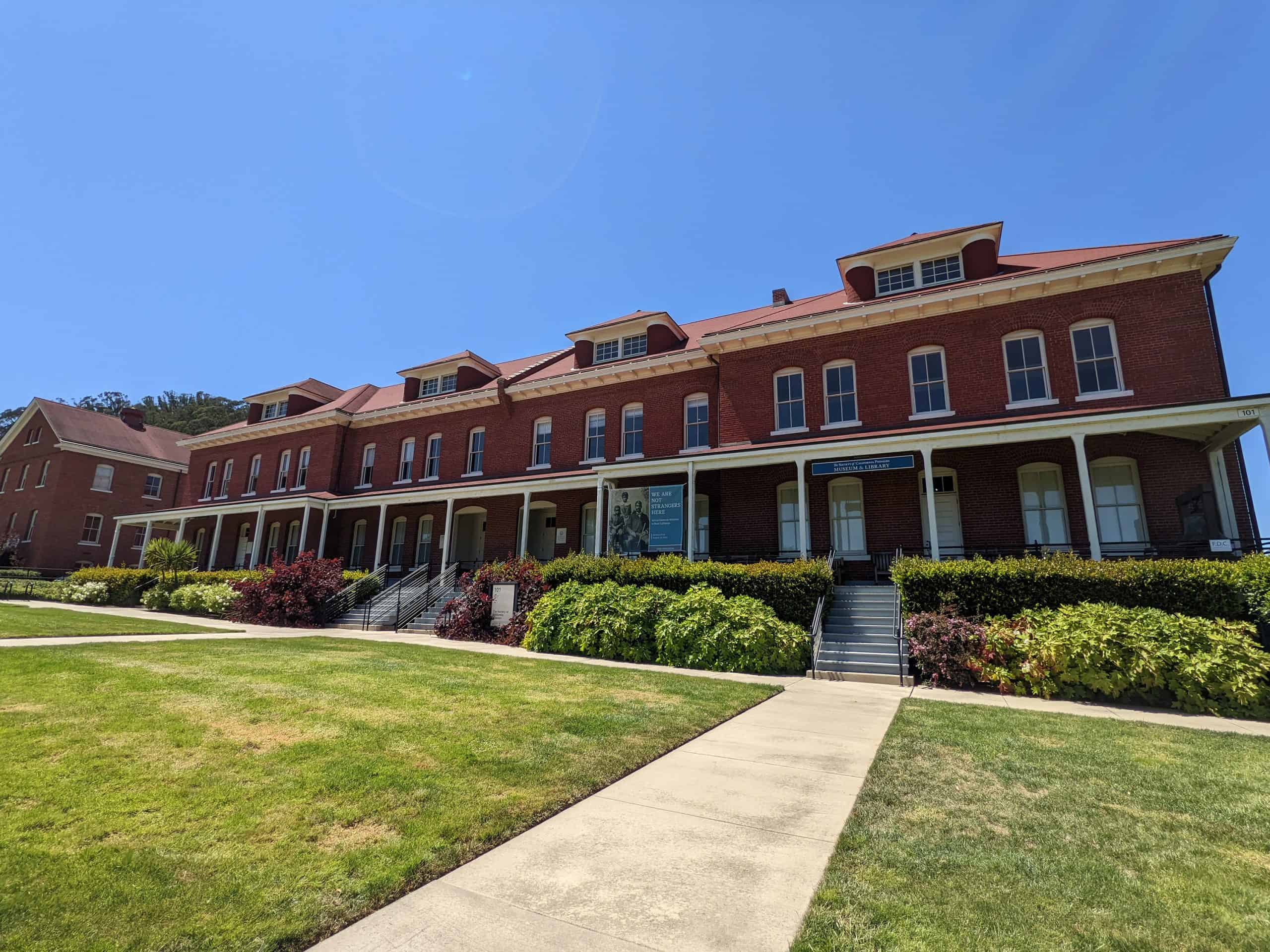

User reviews (0)