Website profiles · Technology insights · Alternatives

cursed.epic.net

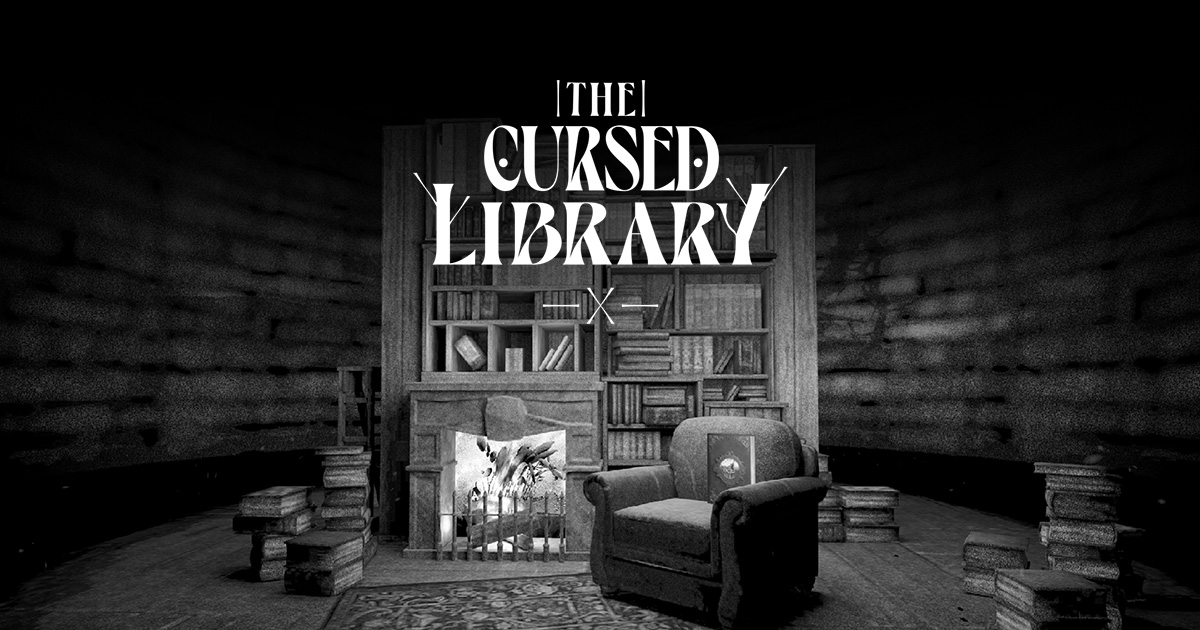
Find the six portals that will lead you to the dark and disturbing worlds hidden in this cursed library.

No paid content found
Visit website
Profile views 0 Outbound visits 0 Normal
The Cursed Library Full homepage screenshot

At a glance

Category
Other
Language
English
Paid-content signal
No paid content foundObserved
Registered
1995
Hosting
epic-sys.ioInferred
HTTPS certificate trusted
PassedObserved
Last updated

Website review

This review may include AI-generated content and is not individually verified. Domain, certificate and other facts come from the observed data on this page.

What is The Cursed Library?

The Cursed Library is a browser-based interactive storybook experiment by the EPIC Agency, built around a single conceit: six portals hidden inside a "cursed library" each open onto a dark, illustrated world. The worlds are named Worlds, Library, Ogre, Hidden Wolf, Little Red, Night, Bluebeard and Kafka, and visitors navigate by clicking and dragging to turn around, moving between scenes and going back or quitting a world. The page asks you to put your sound on and click anywhere to start, and offers a minimal experience toggle plus an info panel. Credits list Karim Maaloul for concept, illustration and code; Stevie J Jones for music, poems, narration and code; and Jules Maxwell for music and voices.

What kind of experience it is

This is a mood piece rather than a game or a reference site. The dark-world framing, narrated poems and original score point to a short, atmospheric session you move through at your own pace, with no scores, accounts or obvious task structure. The "minimal experience" toggle suggests the creators anticipated visitors who want less motion or fewer layered elements.

Who it suits

  • Curious browsers with ten spare minutes who enjoy illustrated, slightly eerie web art and don't mind turning sound on.
  • Designers and creative coders looking at how illustration, audio and interaction are combined in one piece — the credits make the collaboration visible.
  • Readers drawn to fairy-tale and literary themes, given the Little Red, Bluebeard and Kafka world names.

It is a poor fit for anyone who needs content quickly, prefers no audio, or wants something to read rather than explore.

A practical next step

Open it with sound on and a mouse or trackpad, since turning around depends on click-and-drag. Try the minimal experience toggle early if motion or layered audio feels distracting, and use the info panel to confirm controls before wandering. If the first portal doesn't hold your attention, the others are short enough to sample individually rather than treating the whole library as one sitting.

For comparison, other experimental web projects of this type include Active Theory and Hello Monday.

How do I find all six portals in The Cursed Library?

The page itself does not publish a walkthrough or a list of portal locations. What it does make clear is how the experience is meant to be explored: sound on, click anywhere to start, then click and drag to turn around and use the Previous/next scene and Enter world controls to move between scenes. The six portals correspond to the six "Worlds" named on the page: Library, Ogre, Hidden Wolf, Little Red, Night Bluebeard and Kafka. So a practical route is to treat each named world as one portal target, enter every world you find, and use the Previous/next scene controls to sweep each scene fully before leaving.

A concrete way to work through it

  1. Turn sound on before starting. Narration and poems carry clues, and the page explicitly asks for audio.
  2. In each scene, drag slowly through a full turn rather than flicking past. Portals are likely to sit off the initial viewing angle.
  3. Enter any world you reach, then use "Go back" and the Previous/next scene controls to check whether that scene holds more than one portal.
  4. Track progress against the six world names above, not against portal count alone. If you have entered all six worlds, you have almost certainly found all six portals.
  5. Use the minimal experience toggle if the illustration and motion make searching harder; it reduces visual noise while you look.

If you get stuck

The experience is credited to Karim Maaloul, Stevie J Jones and Jules Maxwell as an EPIC Agency experiment, so it is a small artistic piece rather than a game with a published solution. Community discussion is the realistic fallback: search for the title on Reddit or look for playthrough notes on YouTube, where a recorded run will show the turning angles and scene order far faster than trial and error. For context on the studio behind it, see Epic.

What are the dark worlds in The Cursed Library based on?

The dark worlds in The Cursed Library are based on classic fairy tales and dark literature. The page's "Worlds" menu names six portals: Library, Ogre, Hidden Wolf, Little Red, Night Bluebeard and Kafka. The first five point to familiar story territory — an ogre, the wolf and Little Red Riding Hood, and Bluebeard — while "Kafka" signals a literary rather than folkloric source, evoking Franz Kafka's unsettling fiction. The site frames these as "dark and disturbing worlds hidden in this cursed library," so each portal is an illustrated reinterpretation of a story's grim undercurrents rather than a retelling of a cheerful version.

To see the basis for yourself, put your sound on and click to start, then click and drag to turn around the library and enter a portal; the previous/next scene controls let you move between worlds, and the info panel credits the concept and illustration to Karim Maaloul and the music, poems and narration to Stevie J Jones and Jules Maxwell. If you are deciding whether it suits a reader, ask whether they want an atmospheric, sound-led experience of familiar tales (Little Red, Bluebeard) or are drawn to the more literary Kafka portal — the two ends of the selection.

Do I need sound on to experience The Cursed Library?

Yes, the site asks you to turn your sound on before you start. The opening screen says "Put your sound on and click anywhere to start," so audio is part of the intended experience from the first moment.

Why sound matters here

The credits list music, poems, narration and voices alongside the concept, illustration and code, which suggests the audio carries story and atmosphere rather than acting as optional background. If you play muted, expect to lose narration and mood that the visuals alone don't replace.

When muting still makes sense

  • Shared or quiet spaces: you can still explore the six portals and turn the camera by clicking and dragging, but treat it as a visual walkthrough rather than the full experience.
  • A first look: if you only want to see whether the tone suits you, a silent minute is fine, then restart with sound for the real run.
  • Headphones: the strongest fit for a dark, narrated library, since voices and poems are easier to follow without room noise.

Practical next step

Open the site with headphones on, click once to start, and keep the info panel handy for controls like entering a world, previous/next scene and quitting. If you need silence, use the minimal experience toggle rather than muting, so you keep the structure while reducing distraction.

For comparison with other atmospheric browser experiments, Epic hosts this one, and you can look at Karim Maaloul's work to see how his interactive pieces handle sound and motion.

How do I navigate and turn around inside a world in The Cursed Library?

Click and drag to turn around inside a world. The site's own on-screen instructions list "Click and drag to turn around," alongside "Enter world," "Previous / next scene," "Go back / Quit world," and "Toggle minimal experience." Sound is part of the experience, so the page asks you to put your sound on and click anywhere to start before choosing among the six portals.

A practical route through it

  1. Click anywhere on the opening screen to start, with sound on.
  2. Pick one of the six portals on the Worlds screen to enter a world.
  3. Inside, click and drag to look around and turn; use the previous/next controls to move between scenes.
  4. Use "Go back / Quit world" to leave and return to the library.
  5. If the visuals or narration get overwhelming, switch on "Toggle minimal experience."

One reader scenario: if you are exploring on a laptop trackpad, drag slowly and in short strokes, since turning is continuous rather than stepped. On a shared or quiet space, the minimal experience toggle is the sensible first move before you start, since the audio carries poems and narration rather than just atmosphere.

For a broader frame, EPIC Agency is the studio behind this experiment, and the credits name Karim Maaloul for concept, illustration and code, with Stevie J Jones and Jules Maxwell on music, poems and narration. Treat those credits as the site's own attribution, not a guarantee of how each scene behaves.

What is the minimal experience mode in The Cursed Library and when should I use it?

Minimal experience mode is a toggle in The Cursed Library that strips the interactive site back to a simpler, lower-distraction view. The page presents the library as a set of six portals into dark worlds (Library, Ogre, Hidden Wolf, Little Red, Night Bluebeard, Kafka), with controls for turning around, entering a world, moving between scenes, and quitting a world; the "Toggle minimal experience" control sits alongside these. The page evidence describes the control but not exactly what it removes, so treat the precise behaviour as something to check in the toggle itself.

When it's useful

  • Reading the poems and narration: if you mainly want the text and voices by Karim Maaloul, Stevie J Jones and Jules Maxwell, a pared-back view keeps attention on the words rather than the scene.
  • Older laptops, tablets or low-power browsers: heavy illustration and sound can stutter; a simpler mode is the obvious first thing to try before giving up.
  • Shared or quiet settings: classrooms, offices or late-night reading, where less visual motion and fewer prompts help.
  • Repeat visits: once you know the layout, you may want to move between the six worlds without the full framing.

When to leave it off

Use the full experience for a first visit. The concept, illustration and music are the point of the piece, and the portals are designed to be discovered by looking around and clicking. If you disable the richer presentation immediately, you lose the atmosphere that makes the dark worlds land.

A practical test: open one world with minimal mode on, then the same world with it off. If the difference is mostly decoration, keep minimal mode for subsequent visits; if it changes pacing or navigation, use the full version and reserve minimal mode for slow connections or distracted settings. For context on the studio behind it, see EPIC Agency.

Related questions

More questions →
What Is The Cursed Library (cursed.epic.net)?

The Cursed Library is an interactive web experience set inside a "cursed library" where you search for six portals that lead to dark, disturbing worlds. It is a browser-based experiment built with illustration, music, poems, and narration, and it is best experienced with your sound on.

What you actually do

The site presents a library scene you explore by clicking and dragging to turn around. Your goal is to find six portals, each opening onto a different dark world. The worlds named on the page are:

  • Library Ogre
  • Hidden
  • Wolf
  • Little Red
  • Night
  • Bluebeard
  • Kafka

The page's own instruction is direct: "Put your sound on and click anywhere to start." From there you click and drag to look around, enter a world when you find one, move between scenes with previous/next controls, and go back or quit a world when you're done. There is also a minimal experience toggle and an info panel you can open or close.

Who made it

The Cursed Library is credited as an EPIC Agency Experiment. The team listed on the page is:

Role Person
Concept, illustration, code Karim Maaloul (@yakudoo)
Music, poems, narration, code Stevie J Jones (@1x1_music)
Music, voices Jules Maxwell (@julesmaxmusic)

What kind of experience to expect

This is not a game with scores or a conventional menu-driven structure. It is closer to an interactive storybook or art piece: you navigate a scene, discover portals, and are pulled into short dark-themed worlds built around familiar story figures (Little Red, Bluebeard, Kafka) alongside original ones. The combination of narration, poems, and music means audio is central rather than optional decoration.

Before you start

  • Turn your sound on. The page explicitly asks for it, and narration and music carry much of the experience.
  • Use a desktop browser with a mouse or trackpad. The core interaction is click-and-drag to turn around, which suits pointer input.
  • Expect a short, exploratory visit rather than a long campaign. You are looking for six portals, so the scope is bounded.
  • Try the minimal experience toggle if the full presentation feels heavy or distracting.

The page does not state pricing, account requirements, or download options, so treat it as something you open and explore in the browser directly.

What Worlds and Portals Are in The Cursed Library?

The Cursed Library (cursed.epic.net) is an interactive horror experience built around a single goal: find the six portals hidden in the library, each leading to a dark, disturbing world. The site's "Worlds" menu lists eight names — Library, Ogre, Hidden, Wolf, Little Red, Night, Bluebeard, and Kafka — but the library itself is the hub you start in, so the six portals correspond to the remaining themed worlds. The exact one-to-one mapping between portal and world name isn't spelled out on the page, so treat the list as the set of scenes you can encounter rather than a confirmed portal-by-portal index.

The worlds listed on the site

World What to expect
Library The starting hub — the cursed library you explore and turn around in
Ogre A dark world reached through one of the hidden portals
Hidden A dark world reached through one of the hidden portals
Wolf A dark world reached through one of the hidden portals
Little Red A dark world reached through one of the hidden portals
Night A dark world reached through one of the hidden portals
Bluebeard A dark world reached through one of the hidden portals
Kafka A dark world reached through one of the hidden portals

The names point to fairy-tale and literary horror territory — Little Red and Wolf, Bluebeard, and Kafka — which fits the site's description of "dark and disturbing worlds hidden in this cursed library."

How the worlds work as scenes

Each world is presented as a scene you enter and then leave, not a page you scroll. The on-screen controls confirm this structure:

  • Click and drag to turn around — you look around the library to spot portals.
  • Enter world — once you find a portal, you go through it.
  • Previous / next scene — you move between scenes within a world.
  • Go back / Quit world — you return to the library.
  • Toggle minimal experience — a stripped-back viewing mode.
  • Open / Close info panel — credits and details.

So the loop is: explore the library, find a portal, enter its world, move through that world's scenes, then quit back to the library to hunt for the next one.

Practical notes before you start

  • Turn your sound on. The site asks for this explicitly, and the experience includes music, poems, and narration, so the audio is part of the worlds rather than optional background.
  • Click anywhere to start after the loading screen.
  • You need to find the portals yourself. The page doesn't mark their locations; discovery is the point.
  • Expect to revisit the library. Since you quit each world back to the hub, plan on returning between worlds to continue the search for all six.

Who made it

The credits identify Karim Maaloul (concept, illustration, code), Stevie J Jones (music, poems, narration, code), and Jules Maxwell (music, voices), presented as "An EPIC Agency Experiment." That context helps set expectations: it's a short, art-driven interactive piece rather than a large game with saved progress or menus beyond the scene controls listed above.

How to Explore and Control The Cursed Library (cursed.epic.net)

The Cursed Library is a browser-based interactive experience: turn your sound on, click anywhere to start, then click and drag to look around the library and select one of six portals (Worlds: Library, Ogre, Hidden, Wolf, Little Red, Night, Bluebeard, Kafka as listed on the page). Once inside a world, use the on-screen controls to move between scenes, go back, or quit. The site is an "EPIC Agency Experiment" created by Karim Maaloul (concept, illustration, code), Stevie J Jones and Jules Maxwell (music, poems, narration, voices, code).

Before you start

  • Sound on: The experience includes music, poems, and narration, so enable audio on your device before beginning.
  • Click to start: The landing screen instructs you to "Put your sound on and click anywhere to start."
  • Input: A mouse or trackpad is the primary control; the core navigation is click-and-drag.

Step-by-step: navigating the library

  1. Start the experience. Turn your sound on and click anywhere on the opening screen.
  2. Look around. Click and drag to turn around the library and find the portals.
  3. Choose a world. The page lists the Worlds — Library, Ogre, Hidden, Wolf, Little Red, Night, Bluebeard, Kafka — and asks you to "Find the six portals that will lead you to the dark worlds hidden in this cursed library." Select a portal to enter its world.
  4. Move within a world. Use Previous / next scene to move between scenes.
  5. Leave a world. Use Go back to return, or Quit world to exit the world entirely.
  6. Adjust the view. Use Toggle minimal experience to switch to a stripped-back presentation, and Open / Close info panel to view or hide the credits and information.

Expected result: You can freely turn around the library, enter any portal you find, step through its scenes, and exit cleanly back to the library at any time.

Controls at a glance

Action Control
Start Click anywhere (sound on first)
Look around the library Click and drag
Enter a world Select a portal
Move within a world Previous / next scene
Return from a world Go back
Exit a world Quit world
Simplify the interface Toggle minimal experience
Show or hide credits/info Open / Close info panel

Common sticking points

  • Nothing happens on the first click: Confirm your sound is on and that you clicked directly on the page, not on a browser overlay.
  • Can't find all the worlds: The experience frames the task as finding six portals; the Worlds list names the destinations, so explore by dragging around the full library rather than staying in one view.
  • Lost inside a world: Use Go back to return to the previous point or Quit world to exit to the library.
  • Distracted by interface elements: Switch on Toggle minimal experience to reduce on-screen clutter.

Who it's for

This guide suits first-time visitors who want to move through the experience without missing controls, and anyone returning who wants a quick reference for scene navigation and the minimal-experience toggle. No account or download steps are described on the page; the experience runs in the browser once you click to start.

Who Created The Cursed Library and Why?

The Cursed Library (cursed.epic.net) was created by three named collaborators and is presented as an EPIC Agency Experiment. According to the site's own credits, Karim Maaloul (@yakudoo) handled concept, illustration, and code; Stevie J Jones (@1x1_music) handled music, poems, narration, and code; and Jules Maxwell (@julesmaxmusic) handled music and voices. The stated purpose is experiential rather than informational: visitors put their sound on, click to start, and search the library for six portals leading to dark, disturbing hidden worlds.

The credited team and what each person did

The site lists credits directly on its landing page, which makes the division of labor unusually clear for a small interactive project.

Contributor Handle Credited roles
Karim Maaloul @yakudoo Concept, illustration, code
Stevie J Jones @1x1_music Music, poems, narration, code
Jules Maxwell @julesmaxmusic Music, voices

A few things follow from this breakdown:

  • The visual world and the interaction come from the same person. Maaloul is credited with both illustration and code, so the look of the library and the mechanics of turning around and entering portals were likely designed together rather than handed off between separate teams.
  • Writing and sound are intertwined. Jones is credited with poems, narration, and code, which suggests the text and audio are part of the same authored layer rather than added afterward.
  • Two people contributed music and voices. Jones and Maxwell both appear under music, and both under voice-related roles, so the audio identity of the piece is shared.

Why it was made: an agency experiment

The site describes itself as "An EPIC Agency Experiment." That label is the clearest statement of purpose available on the page, and it frames the project as a trial of a format rather than a commercial product or a reference resource.

The practical implication for a visitor is that the experience is short-form and exploratory. The page's own instructions point to this: put your sound on, click anywhere to start, and find the six portals that lead to the dark worlds hidden in the library. The named worlds visible in the interface — Library, Ogre, Hidden, Wolf, Little Red, Night, Bluebeard, Kafka — read as a set of literary and folkloric references rather than a single narrative.

If you are trying to decide whether to open it, the credits answer the "who" question directly, and the "EPIC Agency Experiment" label tells you what kind of thing to expect: a designed, sound-led web experience, not a database or a guide.

What this means if you are citing or sharing it

  • Attribute all three contributors, not just one. The concept and code credit often gets cited alone, but the poems, narration, and voices are separately credited and are central to the experience.
  • Describe it as an experiment. The site's own framing is the safest description; avoid presenting it as a finished commercial product.
  • Point people to the on-page credits. They are visible on the landing screen, so anyone can verify the roles without leaving the site.

For the related questions of what the library is and how to move through it, the credits above are the starting point: the same team built both the atmosphere and the controls, which is why the navigation instructions and the visual style feel like one piece.

Website Overview

Limited stack disclosure and few obvious backend markers suggest a more restrained public footprint. That reduces easy fingerprinting clues but is not proof of overall security. An established domain and managed infrastructure suggest continuity of operations and may support dependable delivery, although neither guarantees service quality.

Domain and Registration

Registered in 1995, this domain has about 31 years of history. That suggests continuity, although ownership and purpose may have changed. Transfer-protection status is present, helping reduce the risk of unauthorized domain transfers. The domain uses the common .net extension, which is not an independent safety signal.

DNS and Email

The lowest TTL is 60 seconds, supporting rapid record changes at the cost of more frequent lookups. Nameservers are provided by Cloudflare, indicating managed DNS hosting. MX records point to the Google Workspace email service. SPF and DMARC are configured. DKIM status is unknown. TXT records include verification markers for Google, Apple, Microsoft. Such markers may also remain after a service stops being used.

TLS and Certificates

The certificate uses an RSA 2048-bit public key, offering broad client compatibility. The server supplied a complete certificate chain. No organization name is present in the certificate; the available fields are consistent with domain validation. The certificate was issued by Let's Encrypt, commonly associated with automated certificate services. The certificate's total validity is about 89 days, consistent with a short renewal cycle.

HTTP and Browser Security

The checked browser-security headers were not detected, leaving fewer explicit browser-side safeguards. No X-Powered-By header was found, reducing one common source of backend fingerprinting information. No obvious internal addresses or debug information were found in the headers. No explicit CDN or WAF marker was found in the response headers. No CORS permission header was found, so browsers normally restrict cross-origin script access.

Technology Stack Analysis

No obvious technology stack is exposed. This may reflect restrained information disclosure, although the underlying technologies remain unknown.

Search and Social Sharing

No homepage meta description was detected, leaving snippet selection more dependent on page text. No homepage canonical URL was detected. If duplicate URLs exist, consolidation may be less explicit. Open Graph is partially configured; og:type is missing. Twitter Card metadata is configured. The title has 18 characters, within a common display range.

Hosting and Email

DNSCloudflare
Hostingepic-sys.io
EmailGoogle Workspace
Approximate IP geolocation (inferred; a CDN or proxy may differ from the origin server) France flagParis, Paris Department, France Inferred 195.154.68.189

Registration details

RDAP / WHOIS

RegistrarOVH sas
Registered1995-09-09
Expires2027-09-08
Domain statusclient delete prohibited、client transfer prohibited
Nameserversdimitris.ns.cloudflare.com、janet.ns.cloudflare.com
DNSSECunsigned

DNS records

DNS

TypeNameValueTTLPriority
Aprod-cluster.epic-sys.io195.154.68.1893600—
MXepic.netalt2.aspmx.l.google.com3003
MXepic.netaspmx2.googlemail.com3005
MXepic.netaspmx3.googlemail.com3005
MXepic.netaspmx4.googlemail.com3005
MXepic.netaspmx5.googlemail.com3005
NSepic.netdimitris.ns.cloudflare.com86400—
NSepic.netjanet.ns.cloudflare.com86400—
TXTepic.netMS=ms8744055260—
TXTepic.netanthropic-domain-verification-brbtf3=ivWuCiaUtZMeySoKzekDfkQt460—
TXTepic.netapple-domain-verification=2lAgaVts1Shoowqe60—
TXTepic.netgoogle-site-verification=5IcFVaNp0rQvMUkgIGCfGJf2-PxSUZtq3IqJGNtKnFg60—
TXTepic.netgoogle-site-verification=9dMGjxDaL5OraWVZqT62bJoAdDGQsmCMN2dR6mMwRls60—
TXTepic.netgoogle-site-verification=llz9njNWJ6tOYDzu2F5K4nwolc-e_P_qXoo2vDYGjgU60—
TXTepic.netv=spf1 include:_spf.google.com include:spf.mailjet.com include:spf.orbit.teamleader.eu ~all60—
CNAMEcursed.epic.netprod-cluster.epic-sys.io300—
DMARC_dmarc.epic.netv=DMARC1; p=reject; pct=100; rua=mailto:[email protected]; sp=none; aspf=r;3600—

TLS and certificates

TLS / SSL

AssessmentNormal configuration
Supported protocolsTLSv1.2、TLSv1.3
Negotiated protocolTLSv1.3
Certificate subjectcursed.epic.net
IssuerLet's Encrypt
Valid until2026-12-13T21:23 · Remaining when checked: 57 days
Verification detailsCertificate trust: Passed · Hostname match: Passed

HTTP response headers

HTTP

HeaderValue
content-typetext/html
cache-controlmax-age=31536000

Identified technologies

Technology stack: Unknown

Pages, Search and Sharing

Meta descriptionNot detected
Canonical URLNot detected
LanguageEnglish (default)
Twitter Cardsummary_large_image

No robots.txt found

No sitemaps found

User reviews (0)

  • No reviews yet.