Website profiles · Technology insights · Alternatives

dynast.io No paid content found

Categories: Games & Board Games

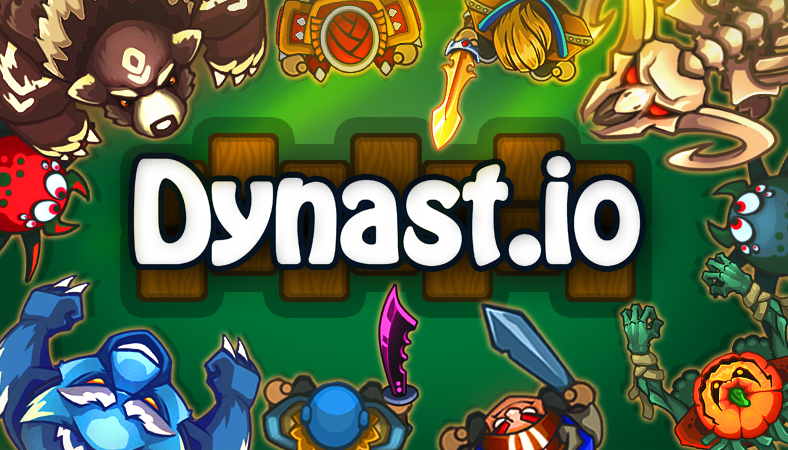
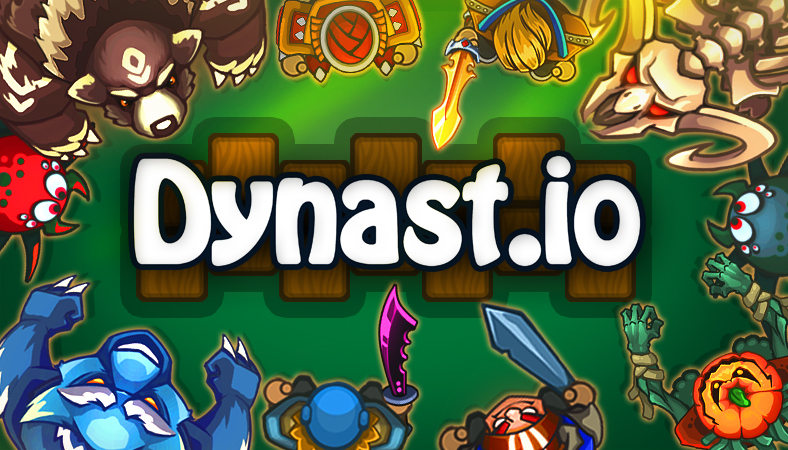
Play Dynast.io - 60-150 player 2D real-time massive multiplayer survival game! Build, Craft, Fight, Survive!

Visit website

Updated: 2026-09-30 06:28 Language: English (default) Access: Normal

Profile views 2 Outbound visits 0
Dynast.IO Full homepage screenshot
Editorial Review

Website Review

What is Dynast.IO?

Dynast.IO is a browser-based 2D multiplayer survival game with RPG elements, played in real time against large groups of other people. You survive, gather resources, build a base, craft weapons and fight — either solo or alongside friends. Matches support roughly 60–150 players at once, so the world feels crowded and competitive rather than like a quiet single-player sandbox.

Because the page asks you to rotate your device, expect a landscape orientation: it runs in a browser on desktop and on phones or tablets held sideways.

What you actually do

  • Gather materials and craft tools, weapons and base parts.
  • Build and defend a base while other players are doing the same nearby.
  • Fight other players and groups, or try to avoid them and grow quietly.
  • Progress your character over a session through RPG-style upgrades.

Who it suits

It fits players who like fast, session-based survival with real opponents and don't mind losing progress to a better-prepared group. If you prefer slow, solo base-building with no PvP pressure, this style of game will feel harsh.

How it compares

Game type Player scale Session feel
Dynast.IO 60–150 per match Persistent PvP pressure, group play
Single-player survival One Full control, no raids

Next step

Open Dynast.IO in a desktop browser or a phone in landscape mode, play one short session to learn the crafting loop, then decide whether to bring friends — teaming up is usually the difference between surviving and being wiped early.

How do I play Dynast.IO with friends in multiplayer?

You play Dynast.IO with friends by joining the same live server and cooperating in the shared world — there is no separate "invite" lobby described on the site. The game is a browser-based 2D survival MMO where 60–150 players share one real-time map, so the practical approach is to coordinate which server/room you all enter, then meet up in-game. On mobile, the page instructs you to rotate your device to landscape mode before playing, so everyone should do that first.

A simple way to get everyone into the same world

  1. Pick a voice channel (Discord, party chat, etc.) so you can call out your location and server.
  2. Have one person load Dynast.IO first and note the server/room they land in.
  3. Everyone else joins that same server as quickly as possible — in large multiplayer survival games, the map fills up and you may be placed elsewhere if you wait.
  4. Agree on a rendezvous point near the spawn area, then move outward together.

What "playing together" actually looks like

  • Shared base building: Pool resources so one person gathers wood/stone while another builds walls and storage.
  • Crafting roles: Split tasks — someone focuses on weapons, someone on tools and defenses.
  • Fighting as a group: With up to 150 players in one match, solo players get picked off; a small squad covering each other survives longer.

Trade-offs to expect

Approach Upside Downside
Join the same big server Lots of action, easy to find fights Crowded, harder to claim land
Split into a quiet corner Safer early base Longer to find resources/opponents
Voice chat coordination Faster building, fewer deaths Requires everyone to be online at once

Next step

Before inviting friends, load the game once yourself to confirm it runs in your browser and that you can rotate to landscape on your device. Then set a fixed play time — real-time survival games punish players who join late and miss the group's early resource-gathering window.

For related browser survival and .io multiplayer options, you can compare with Glor.io.

What are the best strategies for surviving longer in Dynast.IO?

Focus on positioning, base discipline and early economy rather than chasing fights. Dynast.IO is a 60–150 player real-time survival game where you build, craft and fight alongside friends, so most deaths come from being caught in the open or from a base that is easy to find and break.

H3 Practical priorities

  • Spawn and move away from the busiest areas before harvesting; dense starting zones mean early ambushes.
  • Bank progress often. Carry only what you need for the current trip so a death costs materials, not your whole stockpile.
  • Build small first, expand later. A compact base is faster to wall, cheaper to repair and harder to fully loot.
  • Layer defenses instead of relying on one wall; attackers who break through one barrier should meet another.
  • Craft weapons in tiers, not all at once. A reliable mid-tier weapon you can replace beats a rare one you are afraid to lose.
  • Play with friends when possible. Shared crafting and split roles (builder, scout, fighter) reduce individual risk.
  • Rotate your device to landscape before playing, as the game requires it on phones.

H3 Decision criteria If you are new, prioritize escape routes and resource routes over kills. If you already have a base, prioritize reinforcement and storage redundancy. If you play in a group, prioritize communication and a shared stash location over individual gear.

A useful next step: pick one map edge region, establish a small base there, and run short harvest loops until you can craft a full replacement kit before expanding. For a comparable survival-and-crafting reference point, Glor.io covers a similar genre style.

What can I craft and build in Dynast.IO?

Dynast.IO is a browser-based 2D survival game that mixes crafting and base-building with RPG-style progression, played in real time with roughly 60–150 other people per server. Crafting and building are central: you gather resources, turn them into weapons and gear, and put up a base you and your friends can defend.

H3 What you can craft

  • Weapons — the game's own description highlights crafting weapons, and combat is the main pressure in a 150-player world, so expect a range of melee and ranged options rather than a single starter tool.
  • Tools and gear — survival crafting loops normally gate your gathering and fighting ability behind better tools and equipment, so early crafting is about unlocking faster resource collection.
  • Base components — walls, structures and storage are the usual building blocks of a survival base; the exact parts aren't listed on the page.

H3 What you can build

  • A personal or shared base — the site explicitly frames building as something you do "with your friends," so the design assumes group bases rather than solo huts.
  • Defensive structures — with up to 150 players on a map, anything you build is a target, so walls and layout matter as much as the resources you store inside.
  • A staging point for fights — a base is where you craft, respawn and regroup between runs out into the map.

H3 Practical scenario If you're starting with two or three friends, the sensible order is: gather with basic tools, craft better gathering tools first, then craft weapons, and only then commit resources to a base. Bases are expensive and visible; building one before you can defend it just advertises your loot. If you're playing solo, keep your first base small and out of the way, and treat crafting weapons as the priority over expanding walls.

H3 How it compares

Play style Crafting focus Building focus
Solo Weapons and tools first Small, hidden, low-cost base
Small group Shared tools, then combat gear One defended base with storage
Large group Specialised roles (gatherer, crafter, fighter) Larger base, layered defences

H3 Next step Open Dynast.IO on a device in landscape mode — the page itself asks you to rotate your phone before playing — and check the in-game crafting menu on your first life. That menu is the authoritative list of recipes; the site's description names weapons, base building and crafting but doesn't publish the full item list, so treat anything beyond that as general survival-game expectation rather than confirmed content.

Is Dynast.IO free to play?

Yes — Dynast.IO is free to play in the browser. The site itself presents it as a playable online game with no purchase step described in the page evidence; it simply asks you to rotate your phone to landscape mode to start.

That fits the typical .io game model: you open the page, the game loads, and you play. If you are deciding whether to try it, the practical test is quick — load it on a desktop or rotate your phone, and see whether the game starts without a paywall or account requirement. If a store page or in-game prompt later offers cosmetics or extras, that would be optional spending rather than an entry fee.

For a concrete scenario: a student on a school laptop or a phone with limited storage can try it without installing anything or entering payment details. That is the main advantage of browser-based survival games over downloadable titles. The trade-off is that browser games often depend on a stable connection and may have less content depth than paid standalone survival games.

If you want a comparison point, other free browser multiplayer games such as Agar.io and Slither.io follow the same free-to-play, no-install approach, though their gameplay is simpler than a survival game with building and crafting.

What devices and browsers can run Dynast.IO?

Dynast.IO runs in a web browser and is built for landscape orientation, so the practical requirements are a browser and a device you can hold sideways. The page itself prompts visitors to rotate their phone or device to landscape mode before playing, which tells you the game is designed with mobile touchscreens in mind rather than desktop-only play.

Devices

  • Phones and tablets: These are the primary target, since the game asks you to rotate your device horizontally. A phone or tablet held in landscape is the expected setup.
  • Desktop and laptop computers: A browser-based game like this generally works on a computer too, where the landscape requirement is satisfied automatically by a wide screen. The page evidence does not name specific desktop support, so treat this as a reasonable expectation rather than a confirmed feature.

Browsers

The page evidence does not list supported browsers. As general advice, browser games of this type usually run best on current versions of Chrome, Firefox, Safari or Edge, and often struggle on older or heavily restricted browsers. If you hit loading or input problems, try updating your browser or switching to another one before assuming the game is unavailable.

Practical next step

Open Dynast.IO on your phone, turn it sideways, and see whether the game loads and responds to touch. If it does not, try the same site on a desktop browser. That single test will tell you more about your device's compatibility than any general list, because actual performance depends on your browser version, operating system and hardware.

Related questions

More questions →
What Is Gourd Craft and How Are Gourds Turned into Art?

Gourd craft is the practice of turning dried, hollowed gourds into decorative and functional objects—masks, musical instruments, bowls, and wall art. It works because a mature gourd dries into a hard, lightweight shell that can be cut, carved, burned, painted, and finished much like wood, while keeping the organic shape it grew into. The approach below reflects the range of work shown in the Elwha River Gourd Art galleries, which group pieces into wildlife, nature-inspired, human portrait, abstract, mask, and musical instrument categories.

Why gourds suit crafting

A gourd is the fruit of a hard-shelled vine in the Cucurbitaceae family, related to squash and pumpkins but grown for its shell rather than its flesh. Once cured, the shell becomes rigid and durable, and its hollow interior means a single gourd can become a container, a resonator, or a mask without being built up from flat material.

That combination—a pre-formed three-dimensional shape plus a workable surface—is what makes gourds attractive to crafters. You are not starting from a rectangular board; you are responding to a shape that already exists.

Core techniques

Most gourd work moves through a sequence of cleaning, marking, cutting, and surface treatment. The specific techniques vary by project:

  • Cleaning and scraping — removing the outer skin and interior pulp and seeds after curing.
  • Cutting and carving — opening the gourd with a small saw or craft knife, then refining edges with files and rotary tools.
  • Pyrography — burning designs into the shell with a heated pen. The Elwha River site lists a separate pyrography section, and the same technique appears on paper as well as gourd surfaces.
  • Painting, dyeing, and staining — adding color, often after sealing the surface.
  • Assembling — combining a gourd body with other materials, which is how gourd banjos and thumb pianos (kalimba, mbira) are built.

A note on musical instruments

Gourd musical instruments are a distinct branch of the craft. The site's gallery includes gourd banjos and thumb pianos, where the dried shell acts as the resonator and the craftsperson adds a neck, strings, or metal tines. This is closer to instrument building than to decorative craft, and it requires the gourd to hold its shape under tension.

Types of finished pieces

Category Examples
Masks Carved and painted face pieces, often with cut openings
Musical instruments Gourd banjos, kalimba/thumb piano, mbira
Decorative art Wildlife, nature-inspired, portrait, and abstract designs
Functional objects Bowls, containers, and similar hollow forms

The site also documents a "Making A Gourd Mask" page, which suggests mask-making is treated as a teachable process rather than a single finished product.

Preparing and drying gourds

The preparation stage is where most beginners lose a project, so it is worth treating as its own step:

  1. Harvest at full maturity — the shell should be hard and the stem beginning to dry.
  2. Cure in a dry, ventilated space — air movement matters more than heat; a damp gourd will rot or grow mold.
  3. Wait until the gourd is light and the seeds rattle — this is the practical signal that moisture has left the shell.
  4. Scrape and clean the surface — remove the outer skin and any mold, then sand.
  5. Clean the interior — scoop out pulp and seeds before cutting openings or assembling parts.

Skipping the curing step is the most common failure point: an under-dried gourd will crack, shrink, or develop mold after you have already invested work in the surface design.

Where to find inspiration and community

The Elwha River Gourd Art site organizes its own work by subject and links outward to directories and web rings, including a gourd art directory, a general craft directory, and a crafters' catalog described as a virtual craft show running since 1998. These listings are a reasonable starting point for browsing other makers' work and for finding supply or exhibition channels.

The same site notes that its author, Patrick Loafman, has published a novel (Somewhere Upriver, Event Horizon Press) and two poetry chapbooks, and formerly edited The Dandelion Farm Review—a reminder that gourd craft often sits alongside other creative work rather than in isolation.

Practical starting point

If you want to try gourd craft, begin with a cured gourd, a small saw, sandpaper, and a rotary tool, and make a simple bowl or mask before attempting pyrography or an instrument. The skills transfer: cleaning and cutting teach you how the shell behaves, and that knowledge is what makes carving, burning, and assembly predictable later.

What Is Brand Strategy and How Does It Connect Business Strategy to Brand?

Brand strategy is the bridge between what a business is trying to achieve and how that ambition shows up for customers and employees. It translates business strategy — market position, growth targets, competitive advantage — into a coherent set of choices about positioning, purpose, personality, brand architecture, and messaging. Those choices then guide every executional decision: visual identity, verbal tone, sonic signature, and customer or employee experience. You need a brand strategy when business goals and brand expression have drifted apart, when you're entering new markets or categories, or when multiple sub-brands and touchpoints no longer tell one story.

Brand strategy vs. business strategy vs. branding execution

These three are often conflated, but they operate at different levels:

Layer Core question Typical outputs
Business strategy Where will we compete and how will we win? Market selection, growth model, operating priorities
Brand strategy What must our brand mean and stand for to deliver that? Positioning, purpose, personality, architecture, messaging
Branding execution How does that meaning become tangible? Visual, verbal, sonic and motion design; digital, physical and behavioural experiences

Business strategy sets the destination. Brand strategy defines the meaning that makes the destination credible and desirable. Execution makes that meaning visible, audible, and felt at every touchpoint.

What brand strategy typically includes

Positioning

The specific space the brand intends to own in the customer's mind, relative to alternatives. It answers: who we are for, what we offer, why it's different, and why it matters.

Purpose

The reason the brand exists beyond profit — the difference it intends to make for people, clients, and the wider world. Purpose is what keeps positioning from becoming a purely tactical claim.

Personality

The human characteristics the brand expresses consistently — how it sounds, behaves, and feels. This is what makes a brand recognizable even when the logo isn't present.

Brand architecture

How the portfolio is organized: master brand, endorsed brands, sub-brands, product brands. Architecture determines where meaning lives and how it flows across offerings.

Messaging

The core narrative and proof points that carry positioning and purpose into communications, sales, and internal alignment.

How insight, data, and analytics inform brand strategy

A credible brand strategy is informed by insight and powered by data and analytics — not by internal opinion alone. In practice this means connecting business strategy to brand through evidence: market and category analysis, customer research, competitive mapping, and performance data. The output isn't a deck of assertions; it's a set of choices with a defensible rationale that can be tested and refined.

How brand strategy guides design and experience

Once the strategic choices are set, they direct every facet of the brand:

  • Visual design — identity systems, typography, color, imagery, motion
  • Verbal design — naming, tone of voice, messaging frameworks
  • Sonic design — audio identity, sound signatures
  • Experience — brand-led customer and employee experiences across physical, digital, and behavioural touchpoints

This is the practical value of strategy: it gives designers, writers, and experience teams a shared brief so that decisions across dozens of touchpoints reinforce one meaning instead of fragmenting it.

Signs you need a brand strategy or refresh

  • Business strategy has shifted (new markets, new segments, M&A) but the brand still tells the old story
  • Customers can't articulate what you stand for, or describe you the same way competitors are described
  • Sub-brands and product lines have multiplied without a clear architecture
  • Visual, verbal, and experience touchpoints feel like they belong to different companies
  • Internal teams lack a shared language for what the brand means and how to express it

Typical process: from research to rollout

  1. Research and insight — understand the business strategy, market context, customer needs, and current brand perception.
  2. Strategy development — define positioning, purpose, personality, architecture, and messaging, grounded in the evidence.
  3. Expression — translate strategy into visual, verbal, sonic, and motion design systems.
  4. Experience design — apply the brand across physical, digital, and behavioural touchpoints for customers and employees.
  5. Rollout and governance — activate internally and externally, with guidelines and measures that keep execution aligned over time.

The sequence matters: strategy before expression, expression before rollout. Skipping ahead to design without strategic choices usually produces a new look that solves nothing.

How to judge whether a brand strategy is any good

A useful test is whether the strategy can answer three questions clearly: What do we stand for? Why should anyone believe it? How will every team — design, product, marketing, HR — know what to do differently on Monday? If it can't, it's a description of the brand, not a strategy for it.

What Is Dynast.io and How Do You Play This 2D Survival MMO?

Dynast.io is a browser-based 2D real-time multiplayer survival game with RPG elements, played in matches of roughly 60–150 players. You survive, build a base, craft weapons, and fight alongside friends. To play, open dynast.io and hold your device in landscape orientation — the site blocks play in portrait mode with a "Rotate your phone" prompt.

What kind of game is Dynast.io?

It is a massive multiplayer survival game that runs in a web browser rather than as an installed app. The official description frames the core activities as building, crafting, fighting, and surviving, with RPG elements layered on top — meaning your character develops over the course of play rather than starting fresh with every action.

Two features define the experience:

  • Real-time multiplayer at scale. A single match supports about 60 to 150 players, so the world is crowded and competitive rather than a solo sandbox.
  • 2D perspective. The game renders in two dimensions, which keeps it light enough to run in a browser while still supporting large player counts.

The "io game" label in the site's own keywords places it in the same family as other browser multiplayer titles, but the survival-and-base-building loop and the 60–150 player scale set it apart from simpler arena-style io games.

The core loop: survive, build, craft, fight

The game's tagline — "Survive, build your base, craft weapons with your friends" — maps directly onto how a session plays out:

  1. Survive. Stay alive in a shared world where other players are a constant threat.
  2. Build your base. Construct a base as a foothold and a place to store progress.
  3. Craft weapons. Turn gathered resources into weapons and gear.
  4. Fight. Defend what you have built and compete with other players.
  5. Play with friends. The description explicitly supports crafting and playing alongside friends, so grouping up is part of the intended experience, not an afterthought.

Because the world is persistent within a match and shared with up to 150 players, base building and crafting are not just solo progression — they are also how you protect yourself from everyone else.

How to start playing

Getting in is deliberately simple, but there is one hard requirement.

Prerequisite: a device with a browser and a screen that can be held horizontally — a phone, tablet, or computer.

Steps:

  1. Open dynast.io in your browser.
  2. If you are on a phone or tablet, rotate your device to landscape orientation. The site displays "Rotate your phone / Rotate your device to landscape mode to play" and will not let you proceed in portrait.
  3. Once the game loads in landscape, join a match and begin the survival loop: gather, build, craft, and fight.

Expected result: you are in a live match with other players, able to move, build, and craft.

Common snag: holding your phone upright. The rotation prompt is the single most common blocker for new mobile players — the game simply will not start until the device is horizontal. On a desktop or laptop this is not an issue.

What the site does and does not tell you

The official page confirms the game's genre, its 60–150 player scale, its browser-based nature, and the landscape requirement. It does not publish pricing details or payment options, so whether any part of the game is paid, and whether an account or login is required, is not established by the available information — check the site itself before assuming either way.

If you want a browser survival game with a large live player base and a build-craft-fight loop you can share with friends, Dynast.io fits that description. Start by opening the site on a device you can turn sideways.

What Is a Survival Game and What Do You Actually Do in One?

A survival game is a game built around a repeating loop: you start with almost nothing, gather resources from the world, turn those resources into tools, weapons, and shelter, and then try to stay alive while the environment and often other players work against you. You'd enjoy the genre if you like slow-burn progression, risk of losing what you've built, and the satisfaction of turning raw materials into a working base. You'd dislike it if you want a guided story or quick matches with no downtime.

The core survival loop

Almost every survival game, from small browser titles to large downloaded ones, runs on the same four-step cycle. Each step feeds the next, which is what keeps players engaged for long sessions.

  1. Gather — Collect raw materials: food, wood, stone, fiber, or whatever the game's equivalents are. Early on this is most of what you do.
  2. Craft — Convert materials into better tools, weapons, and building parts. A stone tool lets you gather faster, which lets you craft better gear.
  3. Build — Use crafted parts to make a base or shelter. This stores your items and protects you while you're offline or asleep at the keyboard.
  4. Survive — Defend against hunger, weather, hostile creatures, and other players. Death usually means losing your carried items, which is the tension that makes the loop matter.

The loop repeats because each tier of gear unlocks access to resources you couldn't reach before, so there's always a next goal.

Common variants of the genre

Survival games split mainly by how many players share the world and how permanent it is.

Variant How it plays Typical trade-off
Single-player You alone against the environment Full control, no PvP pressure, but no social or competitive layer
Co-op Small group shares a world, often with friendly fire off Teamwork and shared bases, but scheduling and trust matter
Massive multiplayer Dozens to hundreds of players in one persistent world Emergent conflict and alliances, but early players can be wiped by veterans

Browser-based survival MMOs sit in the third category. They run in a tab rather than as a download, which lowers the barrier to trying one, but they also tend to have simpler graphics and controls than full desktop titles.

What a typical session looks like

A first session in a survival game usually follows a predictable arc, and knowing it in advance saves a lot of frustration.

  • First minutes: Find food and the most basic material. Don't wander far from where you spawn.
  • First hour: Craft basic tools and a small shelter. Store anything valuable as soon as you can.
  • Mid-session: Expand the base, craft better weapons, and start exploring further for rarer resources.
  • Later: Defend what you've built, or go on the offensive against other players if the game allows it.

Progression is measured less in levels and more in what you can now build and survive. A player with a stone base and metal tools is "further along" than one still sleeping in the open.

How browser survival MMOs differ

Games like Dynast.IO describe themselves as 2D real-time massive multiplayer survival games with RPG elements, supporting roughly 60–150 players per match, where you build, craft, fight, and survive alongside friends. That combination — instant browser play plus a large shared player count — is the main difference from downloaded survival titles.

One practical detail worth knowing before you start: Dynast.IO requires landscape orientation. If you open it on a phone in portrait mode, the game shows a "Rotate your phone" prompt and asks you to turn the device horizontally before you can play. On a desktop browser this isn't an issue.

The trade-off is familiar: you get into a match in seconds with no install, but you're playing a 2D game with a lighter feature set than a full 3D survival sandbox.

First steps for a new player

If you're trying a browser survival MMO for the first time, these habits reduce early deaths:

  • Pick a server and spawn, then move immediately. Standing still at spawn makes you an easy target.
  • Gather food and basic materials before anything else. Hunger and exposure kill faster than players do in the first few minutes.
  • Avoid early fights. You have nothing to gain and everything to lose; let geared players pass.
  • Build a small base early and store your loot. A base is what converts a good session into lasting progress.
  • Play with friends if you can. The genre's co-op and MMO variants reward shared bases and coordinated defense far more than solo play.

Once you've survived a full session and logged off with a base still standing, you've experienced the loop the genre is built on — and you'll know whether the tension of protecting it is fun or stressful for you.

How Multiplayer Works in Code Breaker's Mastermind-Style Game

Code Breaker is an online Mastermind-style logic game where you crack a hidden colour code using deduction and feedback. The site describes it as a single-player puzzle with a Top 10 Players list, and the available page evidence does not document a live two-player or head-to-head multiplayer mode. So if you are looking for "multiplayer" here, the practical answer is: treat it as you against the game's secret code, with the shared leaderboard as the competitive layer. The steps below cover how that works, how to set a code for someone else to try, and what to check if a session will not start.

What "multiplayer" means in Code Breaker

Interpretation Supported by the site? What it looks like in practice
Two players on one device, taking turns Not documented You would need to pass the device and agree on a secret code manually
Online matchmaking against another player Not documented No lobby, invite, or room system is described
You vs. the computer's hidden code Yes — this is the core game You make guesses, the game returns feedback until the code is cracked
Competition via a shared scoreboard Yes — the Top 10 Players list Your result is compared with other players' results over time

The site's own description — "the classic game of logic and deduction. Can you crack the code?" — frames the challenge as solver versus code, not solver versus solver. The Top 10 Players list is the only competitive element named in the source material.

How a round actually plays out

The game follows standard Mastermind rules:

  1. A secret code of coloured pegs is set (by the game, or by a friend if you are playing a manual two-player variant).
  2. The code breaker makes a guess by placing a row of coloured pegs.
  3. The game returns feedback, usually as black and white pegs:
    • Black peg — correct colour in the correct position.
    • White peg — correct colour in the wrong position.
  4. You use that feedback to narrow down the possibilities and guess again.
  5. You win by matching the code exactly within the allowed number of turns; you lose if you run out of guesses.

If you want to play against another person without an online mode, the workable approach is a shared screen: one player sets a code and keeps it hidden, the other guesses, and you swap roles after each round. The feedback logic stays the same — the person who set the code gives the black and white peg counts.

Setting up a code for an opponent

Because the site does not document an opponent-invite flow, setting a code for someone else is a manual arrangement:

  • Agree on the number of pegs in the code and the number of colours in play before you start.
  • The code setter writes the code down or memorises it and does not reveal it.
  • After each guess, the setter calculates black and white pegs and reports only the counts, never which peg is which.
  • Track turns so both players get the same number of attempts.

Winning, losing, and scores

  • Win condition: the guessed row matches the secret code exactly.
  • Lose condition: you exhaust your allowed guesses without matching the code.
  • Scoring: the site maintains a Master CodeBreaker Top 10 Players list, so results feed into a public ranking rather than a private match score.

If a multiplayer game won't start

Since no online multiplayer session is documented, most "it won't connect" problems come from expecting a feature that is not described. Check these in order:

  • Confirm you are on the correct game page and that the game itself loads and accepts guesses.
  • If you are attempting a two-player variant, confirm both players agree on code length and colour set — mismatched rules cause confusing feedback.
  • If you expected an invite or lobby, note that none is listed in the site's description; use the shared-screen method instead.
  • If the page will not load at all, that is a site or connection issue, not a multiplayer setup issue.

Bottom line

Code Breaker is a solo deduction game with a public Top 10 leaderboard, not a documented online multiplayer title. Play it as you versus the hidden code, and if you want a head-to-head game, run it manually with a friend on one screen using the same black-and-white peg feedback.

Website Overview

An established domain and managed infrastructure suggest continuity of operations and may support dependable delivery, although neither guarantees service quality. Several search or sharing settings need attention. Together they may make snippets, preview images or preferred URLs less consistent across platforms.

Domain and Registration

Registered in 2018, this domain has about 8 years of history. That suggests continuity, although ownership and purpose may have changed. Transfer-protection status is present, helping reduce the risk of unauthorized domain transfers. The registrar is Cloudflare, Inc, a widely used domain service provider. The domain uses the common .io extension, which is not an independent safety signal.

DNS and Email

The observed email authentication setup is incomplete: DMARC is missing. Nameservers are provided by Cloudflare, indicating managed DNS hosting. MX records point to the Microsoft 365 email service. No CNAME was found; the observed records resolve directly to addresses. TXT records include verification markers for Google, Microsoft. Such markers may also remain after a service stops being used.

TLS and Certificates

The public key uses EC with 256 bits. The server supplied a complete certificate chain. No organization name is present in the certificate; the available fields are consistent with domain validation. The certificate was issued within the Google Trust Services cloud or CDN ecosystem. The certificate's total validity is about 90 days, consistent with a short renewal cycle.

HTTP and Browser Security

The checked browser-security headers were not detected, leaving fewer explicit browser-side safeguards. No X-Powered-By header was found, reducing one common source of backend fingerprinting information. The cf-ray response header indicates a CDN or caching proxy in the delivery path. No obvious internal addresses or debug information were found in the headers. The Server header identifies cloudflare without an exact version.

Technology Stack Analysis

The public page identifies Cloudflare without precise versions, leaving fewer clues for version-specific scanning.

Search and Social Sharing

The title has 103 characters and may be truncated in search results. No homepage canonical URL was detected. If duplicate URLs exist, consolidation may be less explicit. Open Graph is partially configured; og:type is missing. Twitter Card metadata is configured. A meta description is present, with 108 characters.

Hosting and Email

DNSCloudflare
HostingCloudflare
EmailMicrosoft 365
Location Location unknown 104.21.74.195

User reviews (0)

  • No reviews yet.

Pages, Search and Sharing

Meta descriptionPlay Dynast.io - 60-150 player 2D real-time massive multiplayer survival game! Build, Craft, Fight, Survive!
Canonical URLNot detected
LanguageEnglish (default)
Twitter Cardsummary

No rules found

Registration details RDAP / WHOIS

RegistrarCloudflare, Inc
Registered2018-06-21
Expires2027-06-21
Domain statusclientTransferProhibited https://icann.org/epp#clientTransferProhibited
Nameserversbrianna.ns.cloudflare.com、lou.ns.cloudflare.com
DNSSECunsigned

DNS records

TypeNameValueTTLPriority
Adynast.io104.21.74.195300—
Adynast.io172.67.162.100300—
AAAAdynast.io2606:4700:3035::6815:4ac3300—
AAAAdynast.io2606:4700:3035::ac43:a264300—
MXdynast.iodynast-io.mail.protection.outlook.com3000
NSdynast.iobrianna.ns.cloudflare.com86400—
NSdynast.iolou.ns.cloudflare.com86400—
TXTdynast.ioMS=ms43501538300—
TXTdynast.iogoogle-site-verification=dzVvyXq2z7iX35XQblYDAAW5vyOELnbZ2rLBUf4yVdw300—
TXTdynast.iov=spf1 include:spf.protection.outlook.com -all300—

TLS and certificates

AssessmentNormal configuration
Supported protocolsTLSv1.2、TLSv1.3
Negotiated protocolTLSv1.3
Certificate subjectdynast.io
IssuerGoogle Trust Services
Valid until2026-12-08T14:32 · Remaining when checked: 69 days
Verification detailsCertificate trust: Passed · Hostname match: Passed

HTTP response headers

HeaderValue
content-typetext/html; charset=utf-8
cache-controlno-store
servercloudflare

Identified technologies

Cloudflare