
 简体中文
简体中文 English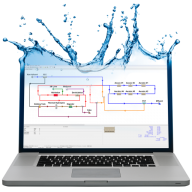
Website review
This review may include AI-generated content and is not individually verified. Domain, certificate and other facts come from the observed data on this page.
What is EnviroSim?
EnviroSim is a Canadian software company that develops wastewater treatment plant simulation tools. Its flagship product, BioWin, is a process simulator that combines biological, chemical and physical models to help users design, upgrade and optimize municipal and industrial treatment plants. The company also offers a related tool called BioTwin.
Who it is for
- Consulting engineering firms that model plant performance for clients
- Utility staff responsible for design decisions, upgrades and day-to-day optimization
- Industrial operations treating their own wastewater
What makes it distinctive
BioWin's core is a proprietary biological model owned, developed and supported exclusively by EnviroSim, supplemented by water chemistry models for pH and precipitation and mass-transfer models for oxygen and other gas–liquid interactions. Because one vendor controls the whole model and its support, users get a consistent modelling framework rather than a patchwork of third-party components—useful when results need to stand up in design reviews.
Practical next step
If you are evaluating it for a specific project, start with the training seminars and software support pages, then ask whether the model covers your plant's configuration and your local effluent requirements. A useful decision criterion: choose BioWin when you need an integrated biological-plus-chemistry simulator with direct vendor support; consider lighter tools if you only need rough sizing or simple mass balances. Current version details and license renewal are handled through the company's site: EnviroSim.
How does BioWin differ from other wastewater treatment simulators?
BioWin's main differentiator is its single, proprietary biological model that integrates biological, chemical and physical processes in one simulator. According to EnviroSim's own description, the core biological model is supplemented by water chemistry models for pH and precipitation, plus mass-transfer models for oxygen and other gas–liquid interactions. In practice, that means you can move between carbon, nitrogen and phosphorus behaviour, pH effects and aeration within one model rather than linking separate tools.
Where that matters most
- Consulting engineers designing or upgrading municipal and industrial plants, who need one model to carry a project from concept through calibration.
- Utility process staff optimising an existing plant, where pH and precipitation interactions often explain performance that a biology-only model misses.
- Project teams where the vendor participates directly, since EnviroSim states it supports clients through training seminars, software support and involvement in project teams.
How to compare it with alternatives
| Criterion | Why it separates simulators |
|---|---|
| Model ownership | BioWin's model is owned and supported exclusively by EnviroSim; other packages may rely on publicly documented or third-party models |
| Integrated chemistry | pH and precipitation built into the same simulation as biology |
| Gas transfer | Oxygen and other gas–liquid interactions modelled alongside biological processes |
| Vendor role | Training, support and direct project involvement, not just a licence |
Practical next step
If you are evaluating simulators, pick a plant problem you already understand — for example, a phosphorus or pH issue — and ask each vendor to reproduce it. A single integrated model should let you trace the cause through biology, chemistry and aeration without exporting data between programs. BioWin's fit is strongest where those interactions drive the design decision; a narrower biological simulator may be sufficient, and cheaper to run, for straightforward carbon and nitrogen work.
What types of wastewater treatment plants can BioWin model?
BioWin is built for wastewater treatment plant simulation across the full range of municipal and industrial facilities. According to EnviroSim's own description, it is used to design, upgrade, and optimize "wastewater treatment plants of all types," and the company lists both municipal and industrial plants among its user base.
What that means in practice
The simulator links biological, chemical, and physical process models rather than treating each in isolation. That combination is what lets it cover plants with different treatment goals:
- Biological nutrient removal plants — the proprietary biological model handles the organism groups and reactions central to carbon, nitrogen, and phosphorus removal.
- Plants where chemistry matters — water chemistry models calculate pH and precipitation reactions, which is relevant to phosphorus precipitation and chemical dosing.
- Plants with significant aeration and gas transfer — mass transfer models cover oxygen transfer and other gas–liquid interactions.
- Industrial facilities — the same framework is applied to industrial wastewater, though the influent characterisation and process configuration will differ from municipal work.
A practical next step
If you are evaluating it for a specific site, don't ask only "can it model my plant type?" Ask whether the process units in your flowsheet are represented and whether the influent data you can realistically collect supports calibration. A plant with unusual industrial loads, sidestream treatment, or membrane processes deserves a closer check against the model's unit-process library than a conventional activated sludge facility.
EnviroSim supports users through training seminars, direct software support, and participation in project teams, which matters if your team is new to dynamic simulation. See EnviroSim for the current version and product details, and BioWin for the flagship product itself.
What training and support does EnviroSim provide for BioWin users?
EnviroSim supports BioWin users through a mix of structured training, direct software support, and project-level involvement, according to the company's own description of its services.
Training
- EnviroSim runs training seminars for clients. These are the main formal way new users learn the software and existing users deepen their process modeling skills.
Software support
- The company provides ongoing software support for BioWin. Because the BioWin model is developed and supported exclusively in-house, support questions go to the people who build and maintain the model rather than to a third party.
Project involvement
- Beyond training and help-desk style support, EnviroSim staff participate in project teams where BioWin is being applied. This is useful when a utility or consultant wants expert input on a particularly difficult plant, such as an industrial treatment process or a complex upgrade.
Who this suits
- Consulting engineering companies and utilities designing, upgrading, or optimizing municipal and industrial wastewater treatment plants are the stated audience.
- If you are evaluating the software, ask whether training is included with a license, offered as a separate paid course, or bundled with support. The page does not spell this out, so confirm it directly.
Next step Before committing, contact EnviroSim to ask three things: what training format is available (on-site, online, or seminar-based), what the response expectations are for software support, and whether project-team involvement is part of a standard support agreement or a separate engagement. If you want to compare the wider category first, EnviroSim is the vendor's own site, and you can review general wastewater modeling resources from organizations such as the Water Environment Federation at WEF to understand industry expectations for plant simulation.
How do I upgrade or renew my BioWin license?
Renewals and upgrades are handled through your EnviroSim account rather than a self-service download page. The site provides a "Renew License / Pay an Invoice" path and account payment-method management, and it lists the current BioWin version alongside a "Get BioWin or Update Current Version" prompt. So the practical route is: sign in to your account, renew or pay the invoice, then obtain the current version through the same account/download channel.
A workable sequence
- Sign in to your EnviroSim account and open the renewal or invoice payment option.
- Settle any outstanding invoice — renewal typically gates access to the latest build.
- Download and install the current version, then confirm your license is recognised on first launch.
If the account route stalls — for example, a licence tied to a company purchaser rather than you — contact EnviroSim support directly. Their team handles licence and version questions, and the page notes support and training as part of what they provide.
Whose problem is this?
A consultant upgrading a plant model mid-project needs the newest build to match a client's file format; a utility renewing annually mainly needs continuity so existing plant models keep opening. The first case makes version alignment the priority; the second makes the renewal date the priority. Decide which applies before you start, because the steps overlap but the urgency differs.
Decision criteria
- If your invoice is unpaid, renewal comes first — an upgrade without a valid licence usually won't run.
- If you're mid-project, check whether colleagues or clients are on the same version before updating.
- If your licence is held by an organisation, ask the licence administrator to renew rather than purchasing separately.
For anything account-specific — licence transfers, multi-seat arrangements, or version compatibility — the reliable next step is EnviroSim support at EnviroSim.
Can EnviroSim's software help optimize an existing wastewater treatment plant's performance?
Yes. EnviroSim's BioWin is built for exactly that kind of work: it is a wastewater treatment process simulator that ties biological, chemical and physical process models together, and the company states it is used worldwide to design, upgrade and optimize plants of all types, municipal and industrial. Optimization of an existing plant is one of the three named uses, alongside design and upgrades, so this is a core intended application rather than a side benefit.
What optimization looks like in practice
The simulator's value is that it lets you test changes on a model before committing money and downtime. A typical reader here is a consulting engineer or utility process engineer asking questions such as:
- Can we meet a tighter effluent limit without building new tanks?
- What happens to aeration demand, sludge production and pH if we change SRT or recycle flows?
- Will an industrial load or seasonal flow shift destabilize the biology?
- Which upgrade option gives the best performance per dollar?
BioWin's core is a proprietary biological model, supplemented by water chemistry models for pH and precipitation, and mass transfer models for oxygen and other gas–liquid interactions. That combination matters for optimization because nutrient removal, pH drift and aeration are usually coupled problems — adjusting one shifts the others.
A concrete scenario
Suppose a municipal plant is intermittently exceeding its ammonia limit in winter. Rather than guessing, you build a calibrated model of the existing configuration, then run scenarios: lower SRT, added mixing, supplemental aeration, different internal recycle rates. You compare predicted effluent quality, oxygen demand and sludge yield across options, then pilot or implement the most promising one. The model narrows the field; it does not replace sampling and calibration.
Trade-offs and decision criteria
| Consideration | Practical implication |
|---|---|
| Model calibration effort | Results are only as good as the influent characterization and calibration data you invest in |
| Proprietary model | Single-vendor development and support — consistent, but you depend on EnviroSim for the underlying model |
| Scope | Strong for process simulation; not a substitute for detailed mechanical or civil design |
| Learning curve | Training seminars and software support are offered, which suggests new users should expect a ramp-up |
Next step
If you are weighing this for a specific plant, start by defining the decision you need to make — effluent compliance, energy reduction, capacity expansion, or industrial load acceptance — then ask EnviroSim what calibration data and training their support and project-team involvement would require for that case. Compare that against your in-house modeling capability before committing.
 Cloudflare
User reviews (0)