
 简体中文
 English

Website review
This review may include AI-generated content and is not individually verified. Domain, certificate and other facts come from the observed data on this page.
What is Essential Skills of Persuasion and Personal Performance?
Essential Skills of Persuasion and Personal Performance is a training site focused on persuasion and influence, led by Tom Vizzini and Kim McFarland. It presents itself as teaching "the science of persuasion and the art of influence," with content aimed at people in sales, leadership roles, or anyone who wants more influence in everyday situations. The emphasis in its own description is on practical, immediately usable techniques: building quick rapport, shifting mindsets, and communicating with impact.
What you'll find there
- Persuasion and influence material framed as learnable skills rather than personality traits.
- A video channel component, since the site invites visitors to subscribe to its channel and describes what viewers will "discover" there.
- Recurring posts and events, including a webinar listed in an event calendar and short posts on topics like "bad anchors," optimism, and New Year's resolutions.
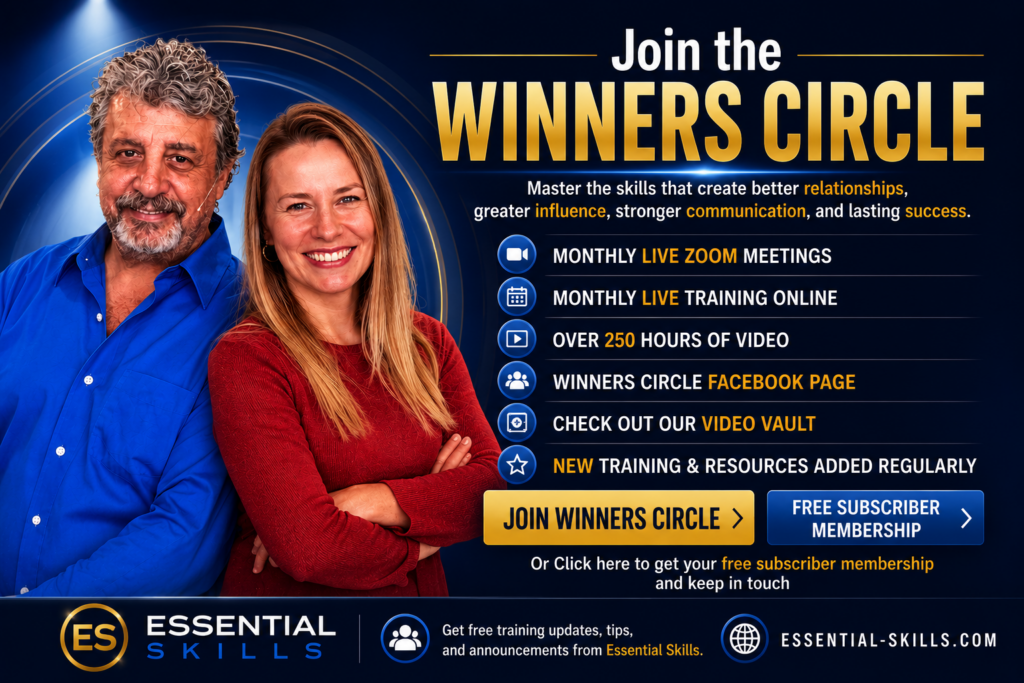
- A free subscriber membership ("Winner's Circle") for staying in touch, plus a members' login area.
Who it suits, and the trade-offs
This is a reasonable starting point if you want bite-sized persuasion ideas and are comfortable learning through videos and blog-style posts. The trade-off is structure: the site reads as a hub of ongoing content and community access rather than a defined curriculum, so you'll need to impose your own sequence. If you want a step-by-step program with clear milestones, check whether the membership area provides that before committing time.
A practical next step: pick one skill you actually need this month, such as opening a sales conversation or handling resistance in a team meeting, then work through the related posts and videos and test the technique in a low-stakes situation before using it where the outcome matters. For comparison, general communication and influence resources are also offered by organizations such as Toastmasters International for speaking practice and Coursera for structured courses.
How can I join the Winner's Circle or become a free subscriber member?
Based on the site's own wording, there are two paths: a paid-style "Winner's Circle" membership and a free subscriber membership. The homepage presents them side by side with the invitation "Join Our Winner's Circle Or Click here to get your free subscriber membership and keep in touch," so the free option is framed as a way to stay in touch rather than a full membership.
What the page shows
- Winner's Circle: Named as a membership you "join," but the page itself does not spell out steps, cost or what's included. Treat any specifics as something to confirm directly with the site.
- Free subscriber membership: The page points to a sign-up ("click here") and separately invites you to "Subscribe to our channel," which appears to refer to their video channel rather than the website membership.
- Account access: The page shows a login box with Register and Lost Your Password links, suggesting a member account area exists behind the sign-up.
A practical next step
Start with the free subscriber membership, since it requires only an email and lets you see the tone and frequency of their material—posts like "The Power of Bad Anchors" and the "Winner's Circle Webinar" notices give a sense of what members receive. If the webinar schedule and persuasion content match what you need, ask about Winner's Circle terms before committing.
For comparison, general persuasion training is widely available; Essential Skills of Persuasion and Personal Performance is the source here, and you can weigh it against broader options such as Coursera or Udemy if you want structured courses with visible syllabi and reviews.
One decision criterion: if you mainly want updates and sample techniques, the free subscription is enough. If you want live webinars and a community, confirm what Winner's Circle actually includes—delivery format, schedule and any cost—before joining.
What specific persuasion techniques do Tom Vizzini and Kim McFarland teach for building instant rapport?
The site names rapport-building as a core outcome of Tom Vizzini and Kim McFarland's persuasion training, but the homepage itself does not itemize the individual techniques. What it does make clear is the framing: rapport is treated as something you build deliberately through communication choices—matching how someone thinks, adjusting mindsets, and speaking with impact—rather than as a byproduct of being likeable. The site groups this under "Persuasion Codes" and "Life, Mind & Persuasion Skills," and points to a video channel plus webinars as the places where the methods are actually demonstrated.
For a reader who wants the specific techniques, the practical next step is to go to those demonstrations rather than expect a written list on the landing page. Salespeople and team leaders are the stated audience, so watch for how the instructors handle a live conversation—what they adjust first, how they test whether rapport is landing, and what they do when it stalls.
What to look for when evaluating rapport methods
- Pacing before leading. Good rapport training shows you matching the other person's language and energy before attempting to steer. If a method skips straight to influence, it tends to feel manipulative in practice.
- Observable signals. Ask whether the technique gives you something concrete to notice—speech tempo, word choices, posture—so you can tell if it is working.
- Fit with your context. A technique built for a one-to-one sales call may not transfer to a group presentation or a written exchange.
Where this approach fits and where it doesn't
The site's positioning—instant rapport, shifting mindsets, everyday influence—suits people in persuasion-heavy roles who want applied tactics they can try immediately. It is less suited to readers looking for research citations or a structured curriculum; the emphasis is on demonstration and practice. If you prefer a more academic grounding in influence principles, Influence at Work covers Cialdini's work directly, and comparing the two will quickly show you whether you want drills or theory.
A concrete way to decide: pick one upcoming conversation—a negotiation, a client call, a difficult colleague—and watch a single demonstration with that situation in mind. If you can name one specific behavior to change afterward, the training is doing its job.
How can sales professionals or leaders apply these persuasion strategies in their work?
Sales professionals and leaders can apply the persuasion approach here by treating persuasion as a set of communication habits—rapport-building, mindset framing and message delivery—rather than a one-off closing trick. The site frames its material around Tom Vizzini and Kim McFarland and explicitly names sales, leadership and everyday influence as audiences, with an emphasis on techniques "you can use immediately." The practical use is therefore in preparation and delivery of conversations: how you open, how you frame a proposal, and how you respond to resistance.
For sales professionals
- Open with rapport, not pitch. The site stresses "instant rapport," which in practice means matching tone and pace and asking questions before presenting a solution.
- Frame the offer around the buyer's existing mindset. "Shift mindsets" suggests addressing how a prospect already sees the problem before introducing your product as the answer.
- Watch for anchoring effects. A recent post is titled "The Power of Bad Anchors," a reminder that an early number or first impression can distort later judgment—useful when structuring pricing conversations or correcting a prospect's outdated benchmark.
For leaders
- Use the same rapport skills in one-to-ones. Influence in leadership often depends on being heard first; the rapport emphasis transfers directly to feedback and change conversations.
- Frame change before announcing it. Mindset-shifting techniques suit rolling out new priorities, where resistance is usually about interpretation rather than the decision itself.
- Treat communication as a skill to rehearse. The site's framing as "essential skills" implies practice and repetition, not innate charisma.
A practical next step
Pick one upcoming high-stakes conversation—a renewal call or a team briefing—and script only its first two minutes: one rapport-building question and one framing sentence that acknowledges the other person's current view. Review how the rest of the conversation changed. The site's webinar and subscriber content, including its "Winner's Circle" membership, appears oriented toward ongoing practice rather than a single course, so it suits people who want recurring material rather than a one-time read.
For broader grounding in influence research, Influence at Work covers Cialdini's principles, which pair well with the rapport-and-framing emphasis described here.
What topics are covered in the Winner's Circle webinars and recent posts?
The site centers on persuasion and influence skills taught by Tom Vizzini and Kim McFarland, aimed at people in sales, leadership, and everyday communication. The webinars and blog posts sit within that same theme rather than covering unrelated business topics.
Topics visible on the site
- Persuasion and influence techniques, framed as "the science of persuasion and the art of influence."
- Building instant rapport and communicating with impact.
- Shifting mindsets, both your own and others'.
- Applied persuasion for sales and leadership, plus general everyday influence.
- Anchors and framing, suggested by a recent post titled "The Power of Bad Anchors."
- Advice and mindset commentary, such as posts on "Bad Advice Monday," a New Year's resolution piece, and "Why is Optimism Important?"
What the webinars appear to be
The Winner's Circle is presented as a membership community, with a webinar listed at 12 AM Eastern Time and a free subscriber option to "keep in touch." The site does not list specific webinar agendas, so the exact session topics aren't documented beyond the persuasion-and-performance focus.
If you're deciding whether to join, scan the recent-posts list first: if titles like "The Power of Bad Anchors" and the optimism and resolution posts match what you want to learn, the webinars likely extend the same practical, technique-oriented style. For broader context on influence and negotiation, Essential Skills of Persuasion and Personal Performance is the primary source here; general persuasion reading from established business publishers can complement it.
What is the difference between a paid membership and the free subscriber option?
The free subscriber option is an email or channel subscription: you join the "Winner's Circle" list, receive updates and keep in touch. A paid membership is the full program: the site's persuasion and influence training from Tom Vizzini and Kim McFarland, including webinars such as the Winner's Circle session and the broader course material.
What each option gives you
| Free subscriber | Paid membership | |
|---|---|---|
| Cost | None | Paid (price not shown on the page) |
| Access | Announcements, posts, webinar notices | Training content, live sessions, member area |
| Commitment | Email address only | Ongoing fee and time to practise |
| Best for | Testing whether the teaching style fits you | People applying persuasion skills in sales, leadership or daily life |
A practical way to decide
Start with the free list if you are unsure whether the approach suits you. Read a few posts, attend or review a webinar announcement, and see whether the techniques feel usable in your work. Move to the paid membership when you want structured practice rather than occasional tips, for example if you manage a sales team and need consistent language for rapport and framing.
The free option is also the low-risk route if you mainly want reminders about events. The paid route makes sense when you have a specific goal, such as handling objections in negotiations, and want the full sequence of lessons rather than isolated posts.
If you want to compare approaches before committing, Essential Skills of Persuasion and Personal Performance is the source for its own program, while general communication training is widely available elsewhere; check what each includes before paying for either.
User reviews (0)