Website profiles · Technology insights · Alternatives

explodingtopics.com

See new market opportunities, trending topics, emerging technology, hot startups and more on Exploding Topics.

Paid content
Visit website
Profile views 7 Outbound visits 12 Normal
Exploding Topics Full homepage screenshot

At a glance

Category
Marketing
Language
English
Paid-content signal
Paid contentObserved
Registered
2019
Hosting
CloudflareInferred
HTTPS certificate trusted
PassedObserved
Last updated

Website review

This review may include AI-generated content and is not individually verified. Domain, certificate and other facts come from the observed data on this page.

What is Exploding Topics?

Exploding Topics is a trend-discovery website. It surfaces topics, technologies, startups and market shifts that are gaining momentum early — its pitch is spotting trends 12+ months before they hit the mainstream — and it also lets you check real search demand for a topic or keyword. Alongside the trend database, it publishes free tools and expert-written articles, such as a piece on surveillance pricing and how AI makes hyper-personalized pricing viable.

Who it's for

  • Founders and product teams hunting for new market opportunities before competitors notice.
  • Marketers and SEO specialists who want keyword or topic ideas with rising demand rather than peak popularity.
  • Investors and analysts scanning emerging categories and startups.
  • Writers and researchers who need trend context and data-backed commentary.

How it's typically used

  1. Browse or search a category to see which topics are accelerating.
  2. Validate a hunch by checking search-demand data for the keyword.
  3. Use free tools for quick exploration before committing to deeper research.
  4. Read the editorial pieces for interpretation of why a trend matters.

Trade-offs to weigh

  • Early signals are, by definition, unproven. A rising curve is a prompt to investigate, not a guarantee of commercial success.
  • Trend data tells you that interest is growing, not whether your audience will pay. Pair it with customer conversations or sales data.
  • Free browsing covers a lot, but deeper tracking and alerts sit behind paid plans — check Exploding Topics for current tiers before budgeting.

A practical next step

Pick one trend relevant to your work, then test it against a second source: run the keyword through a search-volume tool you already use, or check whether the topic appears in industry news. If both agree, it's worth a deeper look; if they diverge, treat it as noise until more evidence appears.

How can I use Exploding Topics to spot market opportunities before my competitors?

Exploding Topics is built for exactly that job: finding topics and keywords that are gaining momentum before they become obvious. Its core promise is early detection — the site frames its value as spotting trends 12+ months ahead of mainstream attention — plus a search-demand check so you can separate genuine interest from hype.

A practical workflow

  1. Scan for rising topics in your category. Look for terms adjacent to your product or service that are climbing but not yet saturated.
  2. Validate with search demand. Before acting, confirm that real people are searching for the topic, not just talking about it. A trend with rising chatter but flat search volume is usually a content opportunity, not a market.
  3. Map the trend to a commercial action. Decide whether it justifies a landing page, a new feature, an ad test, a newsletter issue, or simply a note to revisit in a quarter.
  4. Set a review cadence. Trends move; a topic that looks early this month may be crowded in six. Re-check monthly rather than treating one snapshot as permanent.

Where it fits — and where it doesn't

Use case Good fit? Why
Content and SEO planning Yes Early topics give you a head start on keywords competitors haven't targeted
Product or feature ideas Partly Signals interest, not willingness to pay or feasibility
Market sizing and forecasting No Trend direction isn't a substitute for revenue or demand modelling
Investor or category research Partly Useful as a starting point, weak as a standalone source

Who benefits most

Founders, marketers, content strategists, and product teams at small or mid-sized companies get the most leverage, because being early is one of the few advantages available against larger competitors with bigger budgets. Enterprise research teams may find it a useful supplement rather than a primary tool.

A concrete scenario

Suppose you run a small B2B software company. You notice a rising term related to a workflow your product partly addresses. Instead of rebuilding your roadmap, you publish a focused comparison page and run a small ad test. If search demand and conversion both hold up over two months, you have evidence to invest further — and you found it before the term appeared in every competitor's blog.

Next step

Pick three rising topics relevant to your business and run each through the demand check. Keep the one with the clearest search interest and a plausible path to revenue, and schedule a follow-up review in 30 days.

For broader market context alongside trend data, you can cross-reference sources such as Google Trends for search interest over time, Statista for market figures, and Product Hunt for early product activity.

How does Exploding Topics find trends 12+ months before everyone else?

Exploding Topics says it identifies trends 12+ months before they go mainstream by looking at early signals of rising interest rather than waiting for a topic to become obvious. Its own explanation is framed around search and demand data: the site says it checks "real search demand for any topic or keyword" and has a section titled "How We Find Trends." In practice, that means it is not a crystal ball. It is a monitoring service that surfaces topics whose search volume or related activity is growing from a small base — before that growth shows up in mainstream news, saturated ad markets or widely shared reports.

What that looks like for a user

If you run content, product or marketing research, the value is timing. A topic with fast-rising but still modest search demand can be cheap to cover, rank for or build for. By the time it appears in every industry newsletter, competition and ad costs have usually caught up. The trade-off is that early signals are noisier: some rising topics fade, are seasonal, or are driven by a short-lived news event. Exploding Topics is best treated as a shortlist generator, not a final decision.

How to judge an early trend before acting

  • Check whether growth is sustained over several months rather than one spike.
  • Look for related terms rising together, which suggests a real category rather than a single meme.
  • Compare search demand with how many established sites already cover the topic.
  • Ask whether your audience would act on it now or only after it becomes mainstream.

For a concrete example, imagine you publish software buying guides. A term with steady month-over-month growth and little serious coverage is a better bet than a viral phrase already covered by major tech publications. You can use Exploding Topics to find candidates, then validate with your own audience data or a keyword tool.

If you want to see the method and current examples directly, start with Exploding Topics and read its "How We Find Trends" section alongside the free tools it offers.

Is Exploding Topics worth paying for compared to free trend tools?

Exploding Topics is worth paying for if you need to spot consumer and startup trends months ahead of mainstream coverage and want the search-demand data to back it up. If you only check trends occasionally, or your work is tied to a single platform's own analytics, the free tools are usually enough.

The site's own pitch is early detection: it claims to surface trends "12+ months before everyone else," pairs that with real search-demand checks for any topic or keyword, and offers free tools alongside its paid plans. Its editorial side publishes explainer-style trend articles (for example, a piece on surveillance pricing), which suggests the product is aimed at people who want context, not just a rising line on a chart.

Who gets the most from paying

  • Marketers and content strategists planning campaigns a quarter or more out, who need to justify budget with demand data rather than intuition.
  • Founders and product teams hunting for emerging categories before they get crowded, where being early is the whole advantage.
  • Investors and analysts tracking hot startups and emerging technology as a screening layer before deeper research.

Where free alternatives hold up

  • Google Trends (Google Trends) is free and excellent for confirming whether interest in a term is rising or falling, though it shows relative interest rather than absolute volume and gives little help deciding what to look at next.
  • Platform-native tools such as TikTok Creative Center or Pinterest Trends are free and reflect real behavior on those platforms, but they only cover their own ecosystem.
  • Reddit and niche communities surface early enthusiasm at no cost, but the signal is anecdotal and time-consuming to verify.

A practical way to decide

Your situation Reasonable choice
You check trends a few times a year Free tools
You need trend discovery plus demand validation in one place Paid
You mainly need one platform's data That platform's free tool
You need to brief stakeholders with numbers Paid, if the data covers your terms

A simple test: pick five topics you already believe are rising and five you suspect are fading. Run them through the free options first. If you can't tell them apart confidently, or you can't find the emerging topics until they're already obvious, the paid tier is doing real work for you. If the free tools answer cleanly, spend the money elsewhere.

One caution that applies to any trend tool, including this one: early signals are probabilistic, not guarantees. Treat a rising trend as a hypothesis to test against your own audience, and check whether the site's data covers your geography and language before committing to an annual plan.

How can I check real search demand for a specific topic or keyword on Exploding Topics?

On Exploding Topics, the search-demand check is built around the site's own trend database rather than a generic keyword tool. The page presents it as “Check Real Search Demand for Any Topic or Keyword,” which tells you the intended workflow: enter a term, then look at the search-interest and trend signals attached to it.

What to do

  1. Go to Exploding Topics and find the search or “check demand” entry point.
  2. Type the topic or keyword you are evaluating — a broad category like “surveillance pricing” or a narrower phrase like a product name.
  3. Read the demand view as a trend over time, not a single number. Look for whether the line is rising, flat or falling, and how long the rise has lasted.
  4. Cross-check the term against adjacent keywords. If the exact phrase has little demand but a related phrase is climbing, the underlying interest may still be real.
  5. Use the site's free tools and trend articles to put the number in context — for example, whether the topic is early, mainstream or already saturated.

Who this is for

  • Founders and product marketers testing whether a niche is worth entering.
  • Content teams deciding which topics deserve investment.
  • Investors or analysts scanning for emerging categories before they become obvious.

Trade-offs to keep in mind

A demand graph shows relative interest, not revenue potential or willingness to pay. A rising keyword can still be a bad business if the audience is small, hard to reach or unwilling to buy. Conversely, a flat keyword may be a stable, profitable market rather than a dying one. Exploding Topics is strongest for spotting direction and timing; it is weaker for sizing a market precisely or understanding why people search.

A concrete scenario

Suppose you are considering a tool for retail pricing personalization. Searching “surveillance pricing” on Exploding Topics would show whether that phrase is gaining attention. If the trend is early and rising, you might treat it as a content or positioning opportunity. If it is already spiking, the window for early-mover advantage may be closing. Pair the demand view with the site's articles, such as its piece on surveillance pricing, to understand the narrative behind the number.

Decision criterion

Use Exploding Topics when your main question is “Is interest in this topic growing, and how early am I?” Use a dedicated keyword or market-research tool when your main question is “How many people will actually pay for this?” The two answers are different, and the strongest decisions come from checking both.

What are some examples of emerging trends or hot startups featured on Exploding Topics?

Exploding Topics is built around spotting topics and startups early, so its featured examples tend to be companies and ideas in the "gaining traction but not yet mainstream" phase rather than household names. From the page evidence, the site organizes this around a few clear use cases: discovering trends 12+ months before they peak, checking real search demand for a topic or keyword, and reading expert analysis of what's rising.

The clearest concrete example of the kind of trend it covers is surveillance pricing — also called personalized or algorithmic pricing — where sellers show different prices to different customers based on collected data. The site frames this as a trend that has become more viable in the age of AI, and its treatment points to the broader category of AI-enabled retail and pricing tools.

What "hot startups" means here

Rather than a fixed list, the value is in the recurring categories the site tracks. Based on the page's own framing, expect emerging companies and topics in:

  • AI-powered business and retail tools (surveillance pricing is one instance)
  • Emerging technology categories that are still early in adoption
  • Consumer and market niches where search demand is climbing
  • Startups that appear in trend data before they appear in mainstream press

How to use this practically

If you're a founder, investor, or marketer, the useful move is to treat the site as a starting point rather than a verdict. Pick a trend category you already understand, then check whether the search-demand data backs up the narrative. A trend can be rising in search interest while still having no clear business model — that gap is where the real opportunity or the real trap lives.

For adjacent trend and startup discovery, you can also compare against TrendHunter for consumer-culture shifts and Product Hunt for day-to-day startup launches. Exploding Topics sits between those: earlier than launch coverage, more data-driven than pure editorial trend spotting.

Decision criterion: use Exploding Topics when you want a lead indicator with search data attached; use launch and community sites when you want to see what's already shipping and getting user feedback.

Related questions

More questions →
What Pricing Plans Does Exploding Topics Offer?

Exploding Topics has a dedicated pricing page at explodingtopics.com/pricing, and it lists more than one paid plan tier. The site's own navigation points to that page (and to a plans section on it), so the current plan names, limits, and prices should be read there rather than from any secondhand summary — pricing pages change, and this article can only confirm what the site itself exposes.

What the site confirms about pricing

Based on the site's own signals:

  • There is a Pricing link in the main navigation, pointing to https://explodingtopics.com/pricing.
  • That page also has a plans anchor (/pricing#plans), which indicates the page is structured around a comparison of plan options rather than a single price.
  • No payment platforms, currency, or specific dollar amounts are stated in the available site data, so those details are not reproduced here.

In other words: paid plans exist, they are documented on one page, and the exact figures live there.

What each plan is likely to gate

The homepage messaging gives a reasonable picture of what a subscription is for, even without plan-level detail:

Site claim What it implies for plan selection
"Discover Trends 12+ Months Before Everyone Else" Earlier or fuller trend data is the core value being sold
"Check Real Search Demand for Any Topic or Keyword" Search-demand lookups are a paid capability
"Powerful Free Tools To Give You An Edge" Some tools are free, so a paid tier is not the only way in
"Expert Insights, Data, And Trends" Reports/insights may sit in higher tiers

The practical takeaway: if you only need occasional trend spotting, the free tools may cover it. If you need early trend signals plus search-demand data on an ongoing basis, that is the case for a paid plan.

How to choose a plan

  1. Open https://explodingtopics.com/pricing and read the plan table.
  2. Match the plan to your actual usage pattern — one-off research versus recurring monitoring.
  3. Check whether the features you care about (early trend access, search demand, insights) are in the tier you are considering, since the homepage presents them as distinct capabilities.
  4. Re-check the page before purchasing, because plan structures on SaaS pricing pages are revised periodically.

Common sticking points

  • Assuming one price fits all. The presence of a #plans anchor suggests tiered options, so compare rather than assume.
  • Confusing free tools with the paid product. The site explicitly advertises free tools, which can make the paid tier look redundant — it is not, if you need the trend-timing and demand data.
  • Relying on cached prices. Any number quoted outside the pricing page can go stale; treat the live page as the source of truth.

If your goal is simply to understand what Exploding Topics is before pricing matters, start with the product overview; if your goal is cost, the pricing page is the only place with an answer you can act on.

What Free Tools Does Exploding Topics Provide?

Exploding Topics offers free tools for checking real search demand and browsing trending topics, and its homepage explicitly advertises "Powerful Free Tools To Give You An Edge." You can use these without paying, but the site also has a separate pricing page, which signals that some capabilities sit behind a paid plan. Treat the free tools as a way to explore trends and validate demand, not as guaranteed access to everything on the platform.

What the free tools are meant to do

Based on the site's own headings, the free offering centers on two jobs:

  • Discover trends early — the homepage claims you can "Discover Trends 12+ Months Before Everyone Else," which is the core promise of the product.
  • Check real search demand — a dedicated section, "Check Real Search Demand for Any Topic or Keyword," indicates a tool for looking up whether people are actually searching for a term.

The site also lists "Expert Insights, Data, And Trends," suggesting editorial or data-driven content is part of what you can access.

How to use them

  1. Go to explodingtopics.com.
  2. Use the search or discovery area to enter a topic or keyword you're curious about.
  3. Review the trend direction and search-demand signals shown for that term.
  4. Cross-check against the site's trend listings to see whether your topic appears in emerging categories.

The expected result is a read on whether interest in a topic is rising, flat, or fading — useful before you commit time or budget to a niche.

What to watch for

  • Free vs. paid is not fully specified here. The presence of a pricing page means limits likely exist. Don't assume every feature, data point, or export is free.
  • "Free tools" is the site's own framing. The homepage heading is the source; the exact feature list behind it isn't detailed in the available material.
  • Trend signals are directional. Use them as one input alongside your own research, not as a standalone decision.

If your goal is simply to spot rising topics and sanity-check search interest, the free tools cover that. If you need deeper data, exports, or ongoing tracking, check the pricing page to see what the paid tiers add.

How Does Exploding Topics Find Trends?

Exploding Topics identifies trends by analyzing large volumes of data signals and surfacing topics that are growing before they reach mainstream attention. The site claims it can help users "Discover Trends 12+ Months Before Everyone Else," and it also offers a tool to "Check Real Search Demand for Any Topic or Keyword." The exact data sources and ranking algorithm are not fully disclosed on the page, so the method is best understood as a data-driven early-signal system rather than a single public formula.

What Signals It Uses

Based on the site's own descriptions, Exploding Topics works with at least two broad categories of input:

  • Search demand data — The site explicitly offers a way to "Check Real Search Demand for Any Topic or Keyword," which suggests search volume and related query data are central to how it evaluates momentum.
  • Trend and topic signals — The homepage frames its output around "new market opportunities, trending topics, emerging technology, hot startups and more," implying it monitors a wide range of topic categories rather than a single vertical.

The page does not list specific data providers, crawl sources, or the full set of signals. Any claim about exact inputs beyond search demand and general trend monitoring would go beyond what the site states.

How the "12+ Months Early" Claim Works

The headline "Discover Trends 12+ Months Before Everyone Else" is a positioning statement about timing, not a guarantee for every topic. In practice, this kind of early-detection system typically works by:

  1. Tracking growth rate rather than absolute volume — A topic with a small but rapidly rising signal can be flagged before it becomes a household term.
  2. Comparing current activity against historical baselines — A spike only matters relative to what is normal for that topic.
  3. Filtering out noise — Not every uptick becomes a trend, so some form of sustained-growth check is implied.

The site does not publish the exact thresholds or the length of the observation window, so treat "12+ months" as the platform's stated aim, not a verifiable per-topic metric.

What the Output Looks Like

Exploding Topics presents its findings as a feed of emerging topics, plus free tools and editorial content. The page highlights:

  • Trend discovery — A stream of topics described as emerging or exploding.
  • Search demand checking — A utility for validating whether a keyword has real demand.
  • Free tools — Positioned as "Powerful Free Tools To Give You An Edge."
  • Expert insights and data — Articles and analysis, such as the featured piece on surveillance pricing.

This mix means the site functions as both a data product and a content layer that explains why a trend matters.

How to Judge the Data's Credibility

Because the methodology is not fully public, credibility depends on how you use it:

Question What to check
Is the trend relevant to your market? Cross-reference the topic against your own audience or niche.
Is the signal sustained? Look for repeated appearances over weeks, not a one-time spike.
Can you verify demand? Use the search-demand tool and compare with your own keyword data.
Is the timing realistic? Treat "12+ months early" as a directional claim, not a precise forecast.

For most users, the practical approach is to treat Exploding Topics as a discovery layer, then validate any topic with independent data before acting on it.

How to Check Real Search Demand for a Topic on Exploding Topics

Exploding Topics lets you check real search demand for a topic or keyword directly on its site — the homepage lists "Check Real Search Demand for Any Topic or Keyword" as one of its core capabilities. You use it to validate whether a trend has genuine, measurable interest behind it before committing time or budget. The main caveat: the site's own pricing page exists, so some depth of data may sit behind a paid plan, and you should confirm what the free tools expose before relying on them for a decision.

What "real search demand" means here

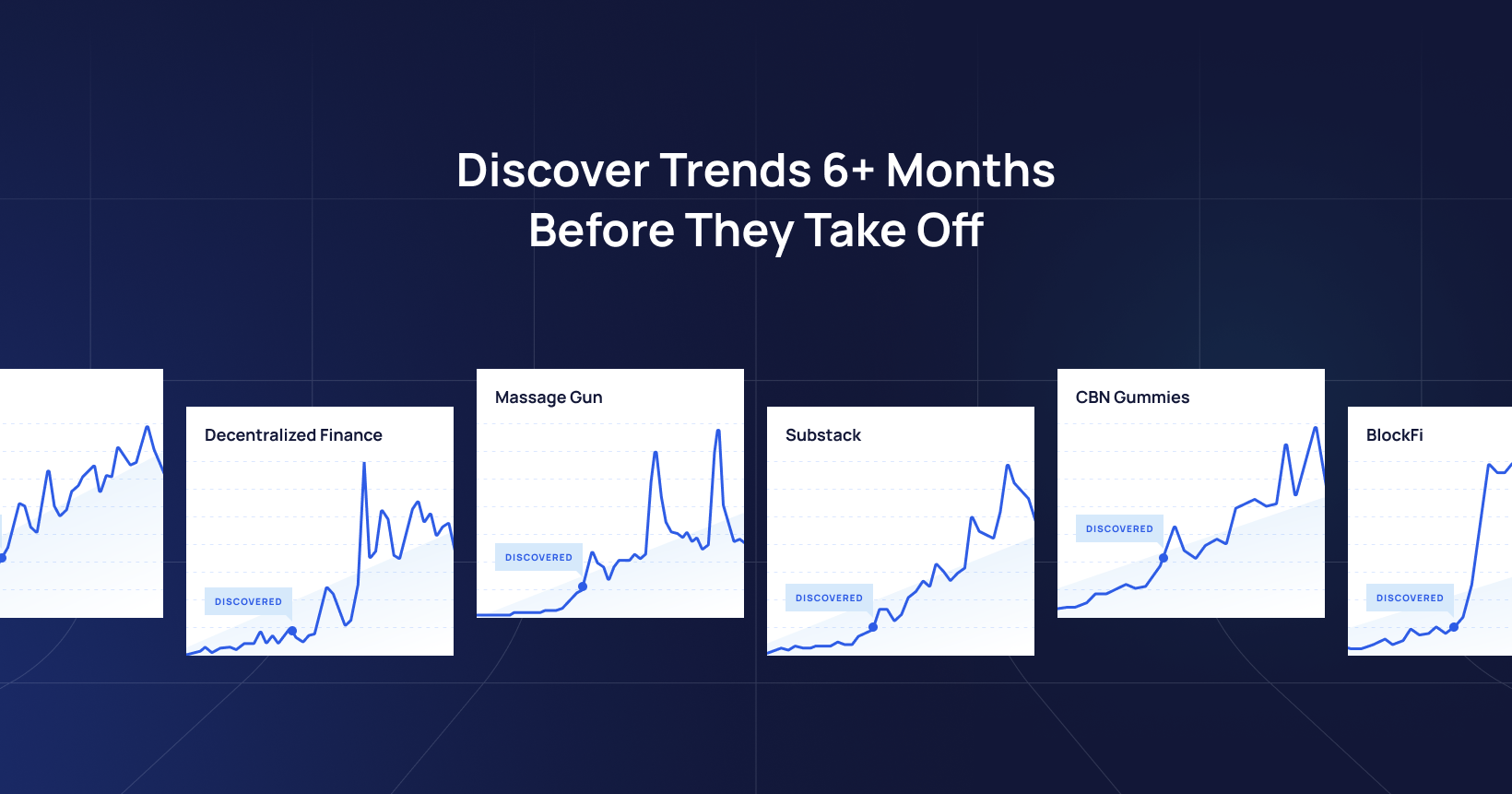
Exploding Topics is a trend-discovery platform. Its stated purpose is to surface new market opportunities, trending topics, emerging technology, and hot startups — with the pitch of discovering trends "12+ Months Before Everyone Else."

That early-detection angle matters for how you read demand data. A topic can show rising search interest while total volume is still small. The value is in the direction and timing, not in comparing it to a mature, high-volume keyword.

How to check demand for a topic

  1. Go to explodingtopics.com and locate the search or topic-entry area. The homepage promotes checking search demand for "any topic or keyword," so this is the intended starting point.
  2. Enter your topic or keyword. Use the term as a buyer or searcher would type it, not your internal product name.
  3. Read the demand signal. Look at whether interest is trending up, flat, or declining, and how steep the curve is.
  4. Cross-check the trend stage. Exploding Topics separates "exploding" topics from established ones. A topic already at peak interest is a different bet than one still climbing.
  5. Verify before acting. Confirm the demand pattern holds when you search related phrasings of the same idea.

The expected result is a directional read: is this topic gaining real search interest, and how early are you relative to that curve.

What to do with the result

What you see Reasonable read Condition to check first
Steep, sustained upward curve Early demand forming; possible opportunity Is the volume large enough for your business model?
Rising then flattening Trend maturing; competition likely arriving Are you entering too late to differentiate?
Spiky, short-lived Event- or news-driven, not durable demand Does the spike repeat over time?
Flat or declining No emerging demand signal Is your keyword phrased the way the market searches?

Free tools and expert content

The site also advertises "Powerful Free Tools To Give You An Edge" and "Expert Insights, Data, And Trends." These are worth using to sanity-check a single topic before you invest in deeper research. Treat free-tool output as a first filter, not a final answer — and check the pricing page to see what additional data a paid plan unlocks, since the site does not present itself as fully free.

Common pitfalls

  • Confusing trend direction with market size. A fast-rising topic can still be too small to build a business on.
  • Using jargon instead of search language. Demand data reflects what people actually search, so enter the popular phrasing.
  • Ignoring the trend stage. "Exploding" is the platform's core framing; a topic past its explosion is a different decision.
  • Skipping verification. Confirm the pattern across related terms before treating one chart as proof.

Bottom line

Exploding Topics is built for exactly this task: checking whether a topic or keyword shows real, emerging search demand. Use it as an early-signal filter, confirm the demand holds across related terms, and check what the free tools cover versus the paid plan before you make a commitment based on a single trend line.

What Is Exploding Topics?

Exploding Topics is a trend-discovery platform that surfaces emerging topics, technologies, and startups before they hit the mainstream. Its core promise, stated on the site, is helping users "discover trends 12+ months before everyone else." It's aimed at people who need early signal on market opportunities — founders, marketers, investors, and product teams — rather than a general news reader. The site combines trend data with editorial articles and free tools, and it also offers paid plans (a Pricing page exists, so some functionality sits behind a subscription).

What the platform actually does

The site organizes its value around a few concrete capabilities:

  • Early trend detection — the headline claim is spotting trends over a year ahead of broad adoption.
  • Search demand checks — you can "check real search demand for any topic or keyword," which connects a trend to measurable interest rather than hype.
  • Free tools — the site advertises "powerful free tools" as an entry point without a subscription.
  • Expert insights and data — trend write-ups and analysis, such as its article on surveillance pricing, sit alongside the raw data.

How it finds trends

The site includes a "How We Find Trends" section, which matters because the whole product depends on its detection method. Rather than relying on a single signal, the approach is to combine data sources and surface topics that are growing but not yet saturated. The practical takeaway: treat the output as a candidate list to investigate, not a finished verdict. A topic flagged as "exploding" tells you interest is rising; it doesn't tell you whether the trend is durable, monetizable, or relevant to your specific market.

Who it's for, and when it's worth using

If you are… Exploding Topics is useful when… It's less useful when…
A founder or product lead You want to validate a new category before competitors crowd in You already have a defined niche and need depth, not breadth
A marketer or content strategist You need topic ideas with rising search demand You need precise, exportable keyword volumes for an existing campaign
An investor or analyst You want a scan of emerging startups and technologies You need financials or due diligence data
A casual reader You want free trend articles and tools You need guaranteed, real-time accuracy

How to get value from it

  1. Start with the free tools. Use them to check search demand for a topic you already care about, so you can calibrate how the platform's signals compare to what you know.
  2. Read a trend entry end to end. Look at the growth curve and the surrounding article, not just the label. The context is where the judgment lives.
  3. Cross-check before acting. Confirm the trend against your own data, customer conversations, or a second source. The site's own framing — "see new market opportunities" — positions it as a starting point for decisions, not the decision itself.
  4. Decide on paid access only if you need scale. Since a Pricing page exists, evaluate whether the free tier covers your use case before subscribing; the site doesn't present itself as entirely free.

Common pitfalls

  • Mistaking "rising" for "right for you." A trending topic can be growing and still irrelevant to your audience or too early to monetize.
  • Ignoring the 12-month framing. The value is in the lead time. If you only act once a trend is obvious, you've lost the advantage the platform is selling.
  • Skipping the source method. Understanding how trends are detected helps you judge which signals to trust and which to verify independently.

The short version: Exploding Topics is an early-warning system for market and technology trends, best used as a research starting point that you validate with your own data before committing resources.

Website Overview

An established domain and managed infrastructure suggest continuity of operations and may support dependable delivery, although neither guarantees service quality. Page metadata, canonical configuration and social previews work together to provide more consistent search and sharing presentation.

Domain and Registration

Registered in 2019, this domain has about 7 years of history. That suggests continuity, although ownership and purpose may have changed. The registrar, MarkMonitor Inc., specializes in corporate domain and brand management, suggesting attention to domain asset protection. Transfer-protection status is present, helping reduce the risk of unauthorized domain transfers. The domain uses the common .com extension, which is not an independent safety signal.

DNS and Email

Nameservers are provided by Cloudflare, indicating managed DNS hosting. MX records point to the Google Workspace email service. No CNAME was found; the observed records resolve directly to addresses. SPF and DMARC are configured. DKIM status is unknown. TXT records include verification markers for Google. Such markers may also remain after a service stops being used.

TLS and Certificates

The public key uses EC with 256 bits. The server supplied a complete certificate chain. No organization name is present in the certificate; the available fields are consistent with domain validation. The certificate was issued within the Google Trust Services cloud or CDN ecosystem. The certificate's total validity is about 90 days, consistent with a short renewal cycle.

HTTP and Browser Security

The checked browser-security headers were not detected, leaving fewer explicit browser-side safeguards. No X-Powered-By header was found, reducing one common source of backend fingerprinting information. The cf-ray response header indicates a CDN or caching proxy in the delivery path. No obvious internal addresses or debug information were found in the headers. The Server header identifies cloudflare without an exact version.

Technology Stack Analysis

The public page identifies Next.js, Google Tag Manager, Cloudflare without precise versions, leaving fewer clues for version-specific scanning.

Search and Social Sharing

Twitter Card metadata is configured. JSON-LD includes Organization data, helping describe the organization as an entity. The title has 51 characters, within a common display range. A meta description is present, with 110 characters. The observed directives allow indexing and link following.

Hosting and Email

DNSCloudflare
HostingCloudflare
EmailGoogle Workspace
Approximate IP geolocation (inferred; a CDN or proxy may differ from the origin server) Location unknown Inferred 104.21.2.146

Registration details

RDAP / WHOIS

RegistrarMarkMonitor Inc.
Registered2019-10-12
Expires2027-10-12
Domain statusclient delete prohibited、client transfer prohibited、client update prohibited
Nameserversguy.ns.cloudflare.com、nia.ns.cloudflare.com
DNSSECunsigned

DNS records

DNS

TypeNameValueTTLPriority
Aexplodingtopics.com104.21.2.146300—
Aexplodingtopics.com172.67.129.80300—
AAAAexplodingtopics.com2606:4700:3031::ac43:8150300—
AAAAexplodingtopics.com2606:4700:3032::6815:292300—
MXexplodingtopics.comaspmx.l.google.com3001
MXexplodingtopics.comalt1.aspmx.l.google.com3005
MXexplodingtopics.comalt2.aspmx.l.google.com3005
MXexplodingtopics.comalt3.aspmx.l.google.com30010
MXexplodingtopics.comalt4.aspmx.l.google.com30010
NSexplodingtopics.comguy.ns.cloudflare.com86400—
NSexplodingtopics.comnia.ns.cloudflare.com86400—
TXTexplodingtopics.comahrefs-site-verification_15c905c7bfa5ee93f43795fa25fed2d0913ff2767ee576c7bc0234cb4fd1313a300—
TXTexplodingtopics.comgoogle-site-verification=dqV-JsriO0dAEZ12Omh3JGKxXs1GTV8AvGi6g1bcUxE300—
TXTexplodingtopics.comgoogle-site-verification=lH_RABQ6sYCD8shph4OnK1k093WzuzRGryvPnVM2VBQ300—
TXTexplodingtopics.comgoogle-site-verification=uCEYMQIJ61GN27q11j1JeBMRmfI3VU0aCp6eAHguz5I300—
TXTexplodingtopics.comv=spf1 include:send.aweber.com ~all300—
DMARC_dmarc.explodingtopics.comv=DMARC1; p=none; pct=100; rua=mailto:[email protected]; sp=none; aspf=r;300—

TLS and certificates

TLS / SSL

AssessmentNormal configuration
Supported protocolsTLSv1.2、TLSv1.3
Negotiated protocolTLSv1.3
Certificate subjectexplodingtopics.com
IssuerGoogle Trust Services
Valid until2026-12-03T13:47 · Remaining when checked: 63 days
Verification detailsCertificate trust: Passed · Hostname match: Passed

HTTP response headers

HTTP

HeaderValue
content-typetext/html; charset=utf-8
servercloudflare
set-cookieRedacted

Identified technologies

Next.jsGoogle Tag ManagerCloudflare

Pages, Search and Sharing

Meta descriptionSee new market opportunities, trending topics, emerging technology, hot startups and more on Exploding Topics.
Canonical URLhttps://explodingtopics.com
LanguageEnglish (default)
Twitter Cardsummary_large_image
All bots 1 allowed · 0 disallowed
  • Allow/

User reviews (0)

  • No reviews yet.