
 简体中文
 English

Website review
This review may include AI-generated content and is not individually verified. Domain, certificate and other facts come from the observed data on this page.
What is GemmeCotti used for?
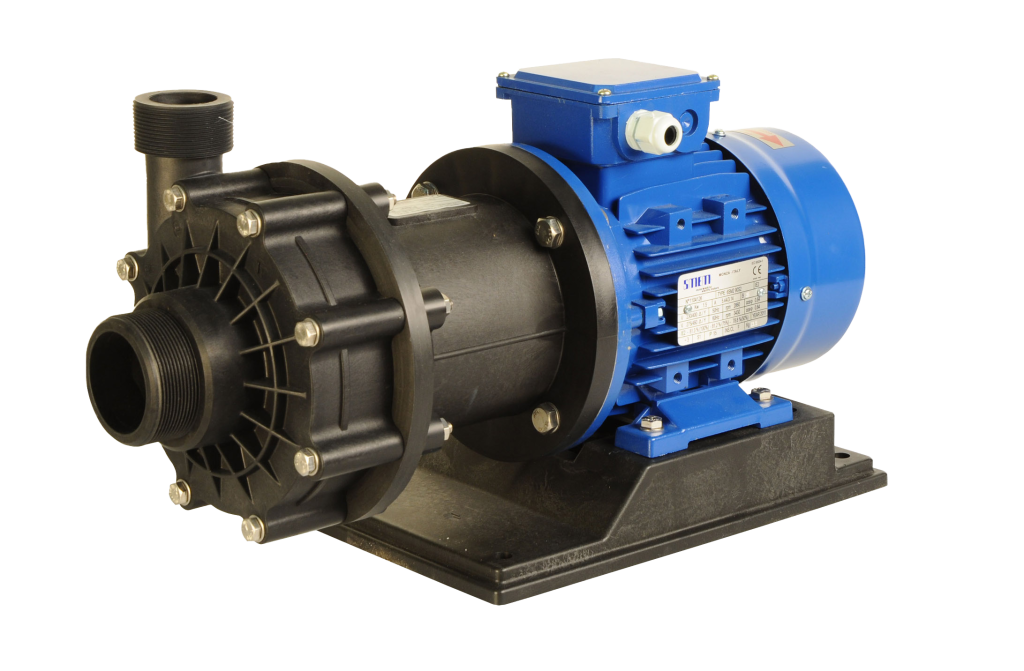
GemmeCotti is a manufacturer of industrial chemical pumps built to move acids, aggressive chemicals, and other corrosive liquids safely. Its catalog covers magnetic drive centrifugal, turbine, vane, and self-priming pumps, mechanical seal pumps, ATEX-rated pumps, vertical pumps, air-operated double diaphragm pumps, portable pumps, drum pumps, dosing pumps, and mixers. The site describes the company as designing and manufacturing these pumps since 1992, with components sourced from Italian suppliers.
Where these pumps typically fit
- Process chemical transfer — moving acids and corrosive solutions between tanks, reactors, or lines in chemical, pharmaceutical, fertilizer, and biofuel operations.
- Surface finishing and electronics — circulating or dosing aggressive baths in galvanic and PCB production.
- Water and air treatment — feeding treatment chemicals where leaks or seal wear would be a safety concern.
- Tank loading/unloading and drum handling — drum pumps and portable pumps suit smaller volumes and mobile tasks.
- Specialized settings — the site also lists food, bottling, aquarium, textile, oil and gas, and data-center refrigeration applications.
Choosing among the pump types
| Need | Likely fit | Trade-off to weigh |
|---|---|---|
| Higher flow in continuous service | Mag drive centrifugal pumps | Seal-free design reduces leak risk, but magnetic drive limits torque and handling of solids |
| Higher pressure at low flow | Mag drive turbine or vane pumps | Better pressure per stage, but lower flow ceilings |
| Emptying tanks or drawing from below | Self-priming or vertical pumps | Convenient installation, but added complexity versus standard centrifugal units |
| Explosive atmospheres | ATEX-rated pumps | Necessary compliance, but narrower options and higher cost |
| Viscous or shear-sensitive fluids | Air-operated double diaphragm pumps | Tolerant of solids and run-dry, but pulsating flow and air consumption |
For a practical decision, start with the fluid's chemistry and concentration, then required flow and head, then whether the environment demands ATEX certification. A plant engineer replacing a leaking mechanical-seal pump on an acid line, for example, would typically compare a mag drive centrifugal unit for seal-free operation against keeping a mechanical seal model where higher torque is needed. The site's quote request is the natural next step, since pump selection depends on the specific duty point.
Which GemmeCotti pump type should I choose for a high-flow acid transfer versus a high-pressure application?
For high-flow acid transfer, start with the mag drive centrifugal pumps; for high-pressure duty, look at the mag drive rotary vane pumps. For a middle case—moderate flow with higher head than a centrifugal—the mag drive turbine pumps are the natural candidate.
Comparing the three main choices
| Pump type | Best suited to | Trade-off to weigh |
|---|---|---|
| Mag drive centrifugal | Large-volume transfer of acids and corrosive liquids, tank loading/unloading, circulation | Pressure rise per stage is limited; not the right pick when the system needs a strong pressure boost |
| Mag drive turbine | Moderate flow with more head than a centrifugal, compact installations | Lower maximum flow than centrifugal models, so it suits smaller transfer duties |
| Mag drive rotary vane | High-pressure duties, including positive-displacement applications | Lower flow volumes; check that the liquid is compatible with the vane and internal materials |
How to decide in practice
- Define flow and pressure separately. Write down the required flow rate and the pressure (or head) the system must overcome at that flow. A pump chosen for maximum flow will often fall short on pressure, and vice versa.
- Match the pump family to the dominant requirement. If moving large batches between tanks is the job, flow wins—centrifugal. If feeding a pressurised reactor, filter or closed loop, pressure wins—rotary vane. If both are moderate, turbine.
- Check the liquid, not just the duty. Acid concentration, temperature and the presence of solids affect which wetted materials and which pump design are acceptable. Mag drive designs avoid a mechanical seal and its leak path, which matters for aggressive or dangerous liquids; mechanical seal pumps remain an option where that arrangement suits the process.
- Confirm the environment. For flammable atmospheres, the ATEX-rated range is the relevant starting point; for drum emptying or sump work, vertical, drum and portable pumps are more practical than a fixed centrifugal unit.
A concrete scenario
A PCB or galvanic plant emptying and transferring acid from storage tanks into process baths usually needs volume, so a mag drive centrifugal pump is the sensible first question. The same plant dosing the same acid into a pressurised line at a modest flow needs pressure instead, which points toward a rotary vane unit. Two different pumps, same liquid.
As a next step, the range pages at GemmeCotti let you compare the published flow and head figures for each family side by side; matching those numbers against your duty point is the quickest way to narrow the shortlist before requesting a quote.
How do I select the right pump materials for handling a specific corrosive liquid safely?
Select the pump's wetted materials from the liquid's actual chemistry and operating conditions, not from a generic "acid-proof" label. The safe sequence is: identify the liquid and concentration, check temperature and flow, then choose materials and seal/containment type that match.
Practical selection criteria
- Identify the fluid precisely. "Acid" is not enough. Concentration matters: dilute sulfuric acid and concentrated sulfuric acid behave very differently toward metals and polymers. Note contaminants and whether the liquid is a mixture.
- Record operating temperature and pressure. Corrosion rate and material strength change with temperature; a material acceptable cold may fail hot.
- Check compatibility of every wetted part, including the pump body, impeller, shaft, bearings (if wetted), O-rings and seals. A compatible housing with an incompatible elastomer still leaks.
- Match containment to hazard. For aggressive or toxic liquids, a sealless magnetic-drive pump removes the mechanical seal as a leak path. Mechanical-seal pumps suit duties where that seal can be specified in a compatible material and monitored.
- Confirm the duty point. Required flow and head determine pump type and size; a magnetically driven centrifugal pump and a turbine or vane pump cover different flow/head ranges.
- Check site and regulatory needs. Flammable or explosive atmospheres may require ATEX-rated equipment; drum unloading, tank transfer and dosing each favor different pump formats.
Quick comparison of containment choices
| Option | Main advantage | Main trade-off |
|---|---|---|
| Magnetic-drive (sealless) | No mechanical seal to leak; suited to aggressive or hazardous liquids | Limited by magnet coupling; dry running and solids handling need care |
| Mechanical seal | Familiar, serviceable, broad flow range | Seal faces and elastomers are a leak and wear point |
| Air-operated double diaphragm | Self-priming, tolerant of run-dry, good for transfer | Pulsating flow; air supply needed |
| Vertical / drum pump | Convenient for tank and drum emptying | Limited head; installation-specific |
Concrete scenario
A PCB workshop transferring hot, contaminated acid from a tank: first confirm concentration and temperature, then ask the supplier for a material-compatibility statement covering body, impeller, O-rings and any seal, and specify a sealless mag-drive unit if leakage near operators is unacceptable. A food or pharmaceutical bottling line handling a corrosive cleaning agent instead prioritizes cleanability and compatible elastomers over maximum chemical resistance.
Next step
Write a one-page duty specification — fluid, concentration, temperature, flow, head, solids, hazardous-area classification — and send it for a materials recommendation and quote. GemmeCotti's range of mag-drive centrifugal, turbine and vane pumps, mechanical-seal, vertical and diaphragm pumps is described at GemmeCotti, and its application list (chemical, galvanic, PCB, water treatment, pharmaceutical and others) helps you judge whether your duty fits its standard range or needs customization. For independent material-compatibility data, consult a corrosion-resistance reference or the material supplier's own guide before finalizing.
Are GemmeCotti pumps available in ATEX-certified versions for hazardous or explosive environments?
Yes. GemmeCotti lists ATEX pumps as a distinct category in its chemical pump range, alongside mag drive centrifugal, turbine, vane, mechanical seal and vertical pumps. The ATEX line is shown with the same headline performance as the standard mag drive centrifugal range (Q max = 130 m³/h, H max = 48 mlc), which suggests it is built around that platform rather than being a separate small series. The site also frames the whole range around acids, aggressive and corrosive liquids, and notes customization for industrial and OEM processes.
What this means in practice
ATEX certification matters most where the liquid or the surrounding atmosphere can form an explosive mixture—solvent transfer, tank loading/unloading, biofuel, oil & gas, or detergent and pharmaceutical plants handling flammable media. For a reader specifying a pump, the practical question is not just "is there an ATEX version" but which zone the pump sits in and whether the motor, seals and wetted materials all carry the required marking.
A concrete scenario: a galvanic or PCB plant transferring a corrosive bath in a area classified for flammable vapours needs a pump whose ATEX marking covers the full assembly, not only the motor. Mag drive pumps are often attractive here because the sealless design removes a leak path, which is exactly the kind of detail worth confirming with the manufacturer for the specific model.
Decision criteria before requesting a quote
- Zone and gas/dust group: confirm the exact classification with your safety engineer; ATEX covers equipment groups and categories that must match the installation.
- Liquid compatibility: check wetted materials against the acid or solvent, since ATEX approval does not imply chemical suitability.
- Duty point: compare your flow and head against the published maxima and pick the closest family (centrifugal, turbine, vane) rather than oversizing.
- Documentation: ask for the declaration and marking details for the complete pump, including accessories such as mixers or drum pumps if used in the same area.
For broader context on hazardous-area equipment rules, HSE publishes guidance on explosive atmospheres that helps frame the questions to put to any supplier.
Can GemmeCotti customize a chemical pump for my OEM or industrial process requirements?
Yes. GemmeCotti states that it combines product customization with its pump expertise to fit industrial and OEM processes, and that it analyzes each customer's needs to find a suitable pump for acid, chemical and corrosive-liquid duty. The range is broad enough to make customization plausible across pump types: mag drive centrifugal and turbine pumps, rotary vane and self-priming mag drive pumps, mechanical seal, ATEX, vertical, air-operated double diaphragm, portable, drum and dosing pumps, plus mixers and accessories. The published maximums (for example Q max 130 m³/h and H max 48 mlc for centrifugal and mechanical seal pumps, or H max 13 bar for rotary vane pumps) give a rough starting point for judging whether a standard platform is near your duty point.
What to prepare before asking
- Fluid: exact chemistry, concentration, temperature and any solids or gas entrainment.
- Duty point: required flow, head or pressure, and how much it varies.
- Environment: ATEX or other hazardous-area classification, indoor/outdoor, available space and orientation (vertical vs horizontal).
- Installation: drum, tank top, submerged or inline; piping, seal-flush or barrier-fluid arrangements.
- Commercial: OEM volumes, expected life, spare-parts and documentation needs, and any material or certification constraints.
How to decide
Ask for a written proposal that names the pump family, wetted materials, seal or mag drive arrangement, motor and compliance details, and confirms the duty point. Compare that against a standard catalogue unit: if the standard model meets the flow, head and material requirements, customization mainly buys mounting, connections or documentation changes; if not, expect changes to hydraulics, materials or drive configuration, which affect lead time and price. A practical next step is to send a completed datasheet for one representative duty point and ask which of the listed families they would adapt, and what would remain standard.
For independent context on pump selection and corrosive-service practice, see Hydraulic Institute and ASM International.
How do I request a quote or get technical assistance from GemmeCotti for my application?
Use the “Request a quote” link on the GemmeCotti website, or contact the company through the phone and email details in its site footer or contact page. The site says it provides specialized assistance throughout the purchase process, so you can ask for help choosing a pump at the same time as requesting pricing.
What to include in your request
To get a useful quote rather than a generic price list, describe your application:
- Liquid: the specific acid or chemical, concentration and temperature.
- Duty point: required flow rate and head (or pressure), plus any varying conditions.
- Installation: horizontal or vertical, flooded or self-priming, and available space.
- Environment: whether the area is classified ATEX or otherwise hazardous.
- Material constraints: wetted materials that are acceptable or must be avoided.
- Operation: continuous or intermittent, and any dry-run risk.
- Extras: mixers, drum pumps, dosing pumps or accessories you may need.
Choosing the right pump family
GemmeCotti lists several families, and the right one depends on your duty point and installation:
| Family | Typical use | Trade-off |
|---|---|---|
| Mag drive centrifugal | General acid transfer at higher flows | Limited head; not ideal for high-viscosity or self-priming duties |
| Mag drive turbine | Lower flows at higher heads | Lower maximum flow |
| Mag drive rotary vane | Small flows at higher pressures | Best suited to low-flow duties |
| Mechanical seal | Applications where a seal arrangement is preferred | Seal wear and leak risk need attention |
| Vertical | Tank or sump installations | Suited to specific mounting arrangements |
| AODD and drum pumps | Transferring from drums or containers | Different flow and pressure limits |
For example, if you are transferring hydrochloric acid from a storage tank to a reactor at a modest flow and head, a mag drive centrifugal pump is the natural starting point; if you need to draw from a drum without flooding the pump, ask specifically about the self-priming or drum pump options.
A useful next step
Before contacting GemmeCotti, write down your duty point and liquid data in one short paragraph. Then ask for a recommendation and a quote for that duty point, and request the relevant datasheet and chemical compatibility information for your fluid. If you are comparing suppliers, GemmeCotti is the official source for its pump range and enquiry route.
 Cloudflare
 Google Workspace
 Arezzo, Province of Arezzo, Italy

User reviews (0)