Website profiles · Technology insights · Alternatives

jimmacmillan.com

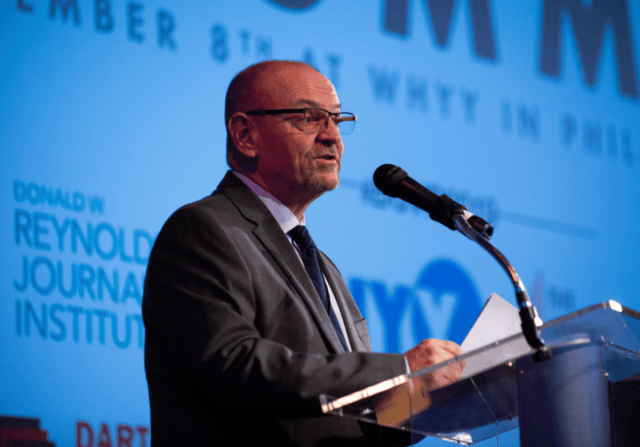
I’m a journalist, educator, media advisor, researcher and social innovator. I have launched several nonprofit initiatives and held several fellowships, residencies and faculty appointments. My photographic coverage of the Iraq War was recognized with a Pulitzer Prize and Le Prix Bayeux. Professional Journey I recently relocated to Cork, Ireland, after leading the Philadelphia Center for…

No paid content found
Visit website
Profile views 2 Outbound visits 1 Normal
Jim MacMillan Full homepage screenshot

At a glance

Category
Social & Community
Language
English
Paid-content signal
No paid content foundObserved
Registered
2003
Hosting
Google LLCInferred
HTTPS certificate trusted
PassedObserved
Last updated

Website review

This review may include AI-generated content and is not individually verified. Domain, certificate and other facts come from the observed data on this page.

What is Jim MacMillan known for?

Jim MacMillan is a journalist, educator, media advisor, researcher and social innovator whose career spans photojournalism, gun violence reporting, trauma-informed journalism and academic leadership.

What he is best known for

  • Pulitzer-recognized photojournalism. His photographic coverage of the Iraq War was recognized with a Pulitzer Prize and Le Prix Bayeux. He spent 17 years as a photojournalist at the Philadelphia Daily News.
  • Founding the Philadelphia Center for Gun Violence Reporting. He launched the organization in 2019 during a residential fellowship at the Reynolds Journalism Institute at the University of Missouri, and led it until his recent relocation to Cork, Ireland. It was originally known as the Initiative for Better Gun Violence Reporting.
  • Building a body of research and programs around gun violence reporting. The work includes a "5 Years of Impact" report, the What Now national conference, five studies published by the Multidisciplinary Research Collaborative, the Association of Gun Violence Reporters, the Survivor Connection, The Second Trauma documentary and the Better Gun Violence Reporting Toolkit.
  • Teaching and academic appointments. He has held faculty appointments at the University of Missouri School of Journalism, Swarthmore College, NYU's Carter Journalism Institute and Temple University's Klein College of Media and Communication, and designed courses in peace journalism, solutions journalism and trauma journalism.
  • Advisory work. As founder and principal of Duffy Malone, he advises media institutions in the US and Europe on ethics and institutional risk, messaging under pressure, and leadership through transition.

Fellowships and affiliations

His selected affiliations include Journalist in Residence at Swarthmore College, a Fellow with the Philadelphia Social Innovations Lab at the University of Pennsylvania, a Practitioner in Residence at the Institute for Global Leadership at Tufts University, an Ochberg Fellow with the Global Center for Journalism and Trauma, and the Knight Fellow in Medicine and Health Sciences Journalism with the Knight-Wallace Fellows at the University of Michigan.

A useful next step

If you are evaluating him as a speaker, advisor or collaborator, start with the research and toolkit side of the work rather than the Pulitzer line. The gun violence reporting studies and the Better Gun Violence Reporting Toolkit show how he turns a reporting problem into practical guidance for newsrooms. The photojournalism record establishes credibility; the research and advisory work shows what he does now.

What is the Philadelphia Center for Gun Violence Reporting?

The Philadelphia Center for Gun Violence Reporting is a nonprofit initiative founded by journalist and educator Jim MacMillan to improve how news media cover gun violence. MacMillan launched it in 2019, originally as the Initiative for Better Gun Violence Reporting, during a residential fellowship at the Reynolds Journalism Institute at the University of Missouri, and led it until recently relocating to Cork, Ireland.

What it does

The center's work combines research, journalism practice and collaboration with people directly affected by violence. According to MacMillan's account of his own work, its activities have included:

  • A multidisciplinary research collaborative that has produced five published studies
  • A national conference, "What Now"
  • The Association of Gun Violence Reporters
  • The Survivor Connection
  • The Second Trauma documentary
  • A Better Gun Violence Reporting Toolkit

Why it matters

Traditional crime coverage often reduces shootings to body counts and arrest statistics, which can stigmatize victims and communities. An initiative like this one is aimed at newsrooms that want to report on violence rigorously without amplifying harm — for example, a local editor deciding how much weight to give a suspect's prior record, or whether to name a surviving child. Its audience is mainly journalists, editors and newsroom leaders, plus researchers and community organizations.

A practical next step

If you are evaluating this kind of resource for a newsroom, start with the toolkit and the research studies, then compare their recommendations against your own outlet's style guide and past coverage. A useful test: pick one recent shooting story and ask whether the reporting explained causes, context and possible responses, or only the incident itself. For broader context on journalism ethics and trauma-informed practice, see Dart Center for Journalism and Trauma and Poynter Institute.

What is Duffy Malone?

Duffy Malone is the advisory practice Jim MacMillan founded and runs as principal, separate from his journalism and teaching career. Through it, he advises media institutions in the United States and Europe on ethics and institutional risk, messaging under pressure, and leadership through transition, according to his site Jim MacMillan.

In practical terms, that points to a one-person consultancy rather than a newsroom, agency or software product. The client is likely an outlet, press body or media organization facing a reputational or organizational problem, and the work is advice and guidance rather than published reporting.

How it fits into his wider work

Duffy Malone sits at the commercial end of a career that also includes nonprofit leadership, research and academia. MacMillan led the Philadelphia Center for Gun Violence Reporting from 2020 and, before that, spent 17 years as a photojournalist at the Philadelphia Daily News, with Iraq War coverage recognized by a Pulitzer Prize and Le Prix Bayeux. He has also held fellowships and faculty appointments at institutions including the University of Missouri, Swarthmore College, NYU and Temple University.

That mix matters for anyone considering him: the advisory work draws on newsroom experience, trauma and ethics expertise, and years of running nonprofit initiatives, not on a general management background.

When it is the right fit

  • Ethics and institutional risk: useful when a newsroom faces a difficult editorial or governance decision and wants outside judgment.
  • Messaging under pressure: relevant during a public controversy, crisis or scrutiny of coverage.
  • Leadership through transition: suits an organization changing editors, owners, funders or strategy.

If you need day-to-day production, investigations or sustained newsroom staffing, an advisory practice is not the right service. If you need an experienced outside voice on a specific decision, start by reading the advisory section of his site and his research and nonprofit work, then make contact through the details listed there.

What courses has Jim MacMillan taught?

Jim MacMillan has designed and taught courses in peace journalism, solutions journalism, and trauma journalism, according to his own account of his teaching. Those three subjects are the specific courses named on Jim MacMillan. They sit at the intersection of his reporting career and his research on how news organizations cover violence, conflict and its aftermath.

Where the teaching fits

His faculty appointments give those courses a home. He has held appointments at the University of Missouri School of Journalism, Swarthmore College, New York University's Carter Journalism Institute, and Klein College of Media and Communication at Temple University. The course list is short but unusually coherent: each subject addresses how journalism can do less harm and explain more, whether the subject is war, community violence or the people living with its consequences.

What each course likely covers

  • Peace journalism: framing conflict coverage around causes, possible resolutions and the voices of those affected, rather than only escalation and casualty counts.
  • Solutions journalism: reporting on responses to problems, including what has been tried, what evidence exists and where it fell short.
  • Trauma journalism: interviewing survivors and grieving families with informed consent, minimizing re-traumatization, and recognizing how repeated exposure affects journalists themselves.

A useful next step

If you are a student or journalist looking for this kind of training, treat the three course names as a checklist for your own gaps. Read one solutions journalism study and one trauma-informed interviewing guide before your next sensitive assignment, then compare how each changes your questions. For related teaching and research in this field, see the Dart Center for Journalism and Trauma and the Knight Foundation.

What awards has Jim MacMillan received?

Jim MacMillan's site names two recognitions for his photographic coverage of the Iraq War: a Pulitzer Prize and Le Prix Bayeux. Both appear under his account of his career, with the Pulitzer listed as part of a team effort in war photography rather than as a solo honor. The page also notes several competitive fellowships and residencies—an Ochberg Fellowship with the Global Center for Journalism and Trauma and a Knight Fellowship in Medicine and Health Sciences Journalism at the University of Michigan—though these are professional appointments rather than awards in the traditional sense.

How to read these credentials

  • Pulitzer Prize: the highest-profile U.S. journalism honor; here tied to Iraq War photography.
  • Le Prix Bayeux: a European award for war correspondents, reinforcing the international reach of that same work.
  • Fellowships and residencies: selective, funded positions at institutions such as the Reynolds Journalism Institute and Swarthmore College; they signal peer recognition but differ from prizes.

If you are evaluating him as a speaker, advisor or collaborator, treat the Pulitzer and Prix Bayeux as evidence of sustained reporting under extreme conditions, and the fellowships as evidence of standing among journalism educators and researchers. For verification, the Pulitzer Prize archive at The Pulitzer Prizes lists winning teams by year, and the Bayeux award site at Prix Bayeux documents its honorees.

What is the Better Gun Violence Reporting Toolkit?

The Better Gun Violence Reporting Toolkit is a resource Jim MacMillan helped launch as part of his work leading the Philadelphia Center for Gun Violence Reporting, the organization he founded in 2019 (originally the Initiative for Better Gun Violence Reporting). It sits alongside related projects such as the Association of Gun Violence Reporters, the Survivor Connection, and The Second Trauma documentary.

What it is for

The toolkit addresses a specific reporting problem: coverage of shootings often leans on police accounts, recycles the same traumatized sources, and treats each incident as an isolated crime. The toolkit's purpose is to give newsrooms practical guidance for reporting on gun violence in ways that reflect its causes, its survivors, and its prevention — without adding harm to the people involved.

Who should use it

  • Reporters and editors on crime, health or community beats who cover shootings regularly, even occasionally.
  • Newsroom leaders setting style, sourcing or ethics policy.
  • Journalism educators and students studying trauma-informed or solutions-oriented reporting.
  • Advocacy and public health communicators who want to understand how news coverage shapes public perception.

How to use it in practice

Start with a recent story your newsroom published about a shooting. Check three things against the toolkit's guidance: whose voices appear, whether the framing is incident-by-incident or contextual, and whether survivors were approached with consent and care. Then adjust your sourcing list and language before the next story, rather than after publication.

For broader context on the organization and its research, see Jim MacMillan. The center's research collaborative has produced peer-reviewed studies on how gun violence reporting affects audiences and survivors, which are worth reading alongside the toolkit if you need evidence to justify a change in newsroom practice.

Related questions

More questions →
What Nonprofit Initiatives and Research Has Jim MacMillan Led in Gun Violence Reporting?

Jim MacMillan founded and led the Philadelphia Center for Gun Violence Reporting, originally launched in 2019 as the Initiative for Better Gun Violence Reporting during a residential fellowship at the Reynolds Journalism Institute at the University of Missouri. He led the organization until recently relocating to Cork, Ireland, after serving since 2020. The work centers on changing how news media cover gun violence, and it has produced a research collaborative, a professional association, a toolkit, a documentary, and a national conference.

The founding and the five-year record

The organization began as an initiative, not a center. MacMillan launched it in 2019 while a residential fellow at the Reynolds Journalism Institute. It was later renamed the Philadelphia Center for Gun Violence Reporting, and MacMillan led it from 2020 until his move to Ireland.

The center's first five years are documented in its 5 Years of Impact report, which MacMillan's site cites as a reflection of the organization's work. That report is the primary public record of what the initiative set out to do and what it produced.

Research: the Multidisciplinary Research Collaborative

MacMillan co-authored five studies published by the center's Multidisciplinary Research Collaborative. The collaborative is the research arm of the organization, and the five co-authored studies are the concrete scholarly output tied to his leadership.

If you want to evaluate the research itself, the useful next step is to locate the collaborative's published studies and check their methods and sample — the site names the body of work but does not reproduce the individual papers.

Related projects and initiatives

Beyond the center and its research, MacMillan helped launch several connected efforts:

  • Association of Gun Violence Reporters — a professional association for journalists covering this beat.
  • Survivor Connection — a project involving survivors of gun violence.
  • The Second Trauma — a documentary.
  • Better Gun Violence Reporting Toolkit — a practical resource for newsrooms.
  • What Now — a national conference, which MacMillan led.

Each of these addresses a different part of the same problem: how journalists report on gun violence, how survivors are treated in that coverage, and what newsrooms need in order to do it better.

What this means if you're evaluating the work

The initiatives form a connected set rather than isolated projects. The research collaborative produces evidence, the toolkit turns it into practice, the association builds a professional community, and the conference and documentary extend reach. If your interest is the research, start with the five collaborative studies. If your interest is newsroom practice, the toolkit and the association are the more directly usable outputs. If you want the overall account of the first five years, the 5 Years of Impact report is the document to read.

MacMillan's broader background — a Pulitzer Prize for photographic coverage of the Iraq War, faculty appointments at Missouri, Swarthmore, NYU, and Temple, and an advisory practice called Duffy Malone — provides context for why the gun violence reporting work took the shape it did, but the center and its spin-off projects are the core of the answer.

What Media Advisory Services Does Jim MacMillan Provide Through Duffy Malone?

Jim MacMillan provides media advisory services through Duffy Malone, his advisory practice, where he serves as founder and principal. According to his site, he advises media institutions in the US and Europe on three areas: ethics and institutional risk, messaging under pressure, and leadership through transition. This is a fit if your newsroom or media organization is navigating an ethical question, a reputational or institutional risk, a high-pressure communications moment, or a leadership change.

What Duffy Malone Is

Duffy Malone is described on jimmacmillan.com as MacMillan's advisory practice. He positions himself as founder and principal, which means the engagement is with him personally rather than a large firm. The practice is aimed at media institutions rather than general corporate clients.

The Three Service Areas

Service area What it addresses Typical trigger
Ethics and institutional risk Ethical questions and risks to the institution A coverage decision, a conflict, or a policy gap that could damage trust
Messaging under pressure How an organization communicates in high-stakes moments A crisis, public criticism, or a sensitive story about the organization itself
Leadership through transition Guiding leadership during change A leadership change, restructuring, or strategic shift

Each area maps to a decision point rather than a routine service. That distinction matters when judging fit.

Who This Is For

The site states the advisory work is for media institutions in the US and Europe. That scope is worth noting if you are outside those regions, since the stated focus is regional.

The background behind the practice is relevant to fit. MacMillan led the Philadelphia Center for Gun Violence Reporting from 2020, launched what was originally the Initiative for Better Gun Violence Reporting in 2019, and co-authored five studies published by the organization's Multidisciplinary Research Collaborative. He also helped launch the Association of Gun Violence Reporters, the Survivor Connection, The Second Trauma documentary, and the Better Gun Violence Reporting Toolkit. Before that he spent 17 years as a photojournalist at the Philadelphia Daily News, and his Iraq War photography was recognized with a Pulitzer Prize and Le Prix Bayeux. He has held faculty appointments at the University of Missouri School of Journalism, Swarthmore College, NYU's Carter Journalism Institute, and Temple University's Klein College of Media and Communication, and has designed and taught courses in peace journalism, solutions journalism, and trauma journalism.

That combination — newsroom experience, research leadership, and teaching — is the basis for the advisory positioning.

How to Judge Whether You Need This Kind of Support

Ask these questions:

  • Is the problem ethical or reputational rather than operational? Ethics and institutional risk work fits when the core issue is judgment and trust, not workflow or tooling.
  • Is there a deadline or public pressure? "Messaging under pressure" implies a time-bound, high-stakes moment. If nothing is forcing a decision, the fit is weaker.
  • Is leadership itself in flux? Transition advisory applies when the people setting direction are changing or the organization is restructuring.
  • Are you a media institution? The stated focus is media institutions in the US and Europe, not individual creators or non-media companies.

If most answers point to yes, the practice's stated scope covers your situation. If your need is routine training, software, or general PR, the three listed areas do not describe that.

What the Site Does Not Specify

jimmacmillan.com does not list pricing, engagement formats, contract terms, or availability. The page evidence shows no pricing signals, payment platforms, or booking details. If you want to explore an engagement, the site includes a Contact Me section, which is the stated route to reach him.

What Is jimmacmillan.com?

jimmacmillan.com is the personal professional website of Jim MacMillan, a journalist, educator, media advisor, researcher, and social innovator. It functions as a portfolio and professional profile rather than a news outlet or commercial service. If you want to understand who MacMillan is, what he has worked on, and how to reach him, the site is the primary source.

Who Jim MacMillan Is

MacMillan describes himself across several overlapping roles:

  • Journalist — including 17 years as a photojournalist at the Philadelphia Daily News.
  • Educator — he has held faculty appointments and designed courses in peace journalism, solutions journalism, and trauma journalism.
  • Media advisor — he advises media institutions in the US and Europe on ethics and institutional risk, messaging under pressure, and leadership through transition.
  • Researcher — he co-authored five studies published by the Multidisciplinary Research Collaborative tied to his gun violence reporting work.
  • Social innovator — he has launched several nonprofit initiatives.

Recognition and Awards

His photographic coverage of the Iraq War was recognized with a Pulitzer Prize and Le Prix Bayeux. These are the two named awards on the site and are central to his public profile as a photojournalist.

Current Location and Main Work

MacMillan recently relocated to Cork, Ireland. Before that, he led the Philadelphia Center for Gun Violence Reporting since 2020, an organization he launched in 2019 during a residential fellowship at the Reynolds Journalism Institute at the University of Missouri. That organization was originally known as the Initiative for Better Gun Violence Reporting.

Today he runs an advisory practice called Duffy Malone, through which he advises media institutions on ethics, institutional risk, messaging under pressure, and leadership through transition.

Initiatives He Has Helped Launch

Beyond the Philadelphia Center for Gun Violence Reporting, the site lists involvement in:

  • Association of Gun Violence Reporters
  • Survivor Connection
  • The Second Trauma documentary
  • Better Gun Violence Reporting Toolkit
  • What Now national conference

Fellowships, Residencies, and Affiliations

His listed positions include:

Role Institution
Journalist in Residence Swarthmore College
Fellow Philadelphia Social Innovations Lab, University of Pennsylvania
Practitioner in Residence Institute for Global Leadership, Tufts University
Ochberg Fellow Global Center for Journalism and Trauma (formerly Dart Center at Columbia University)
Knight Fellow in Medicine and Health Sciences Journalism Knight-Wallace Fellows, University of Michigan

He has also held faculty appointments at the University of Missouri School of Journalism, Swarthmore College, NYU's Carter Journalism Institute, and Temple University's Klein College of Media and Communication. Administrative roles include Assistant Director of the Logan Center for Urban Investigative Reporting at Temple, Program Manager for Temple's Center for Public Interest Journalism, and Manager for Media and Social Responsibility at Swarthmore's Lang Center for Civic and Social Responsibility.

When This Site Is Useful to You

  • You are researching MacMillan's background, awards, or affiliations.
  • You want to understand the origins and leadership of the Philadelphia Center for Gun Violence Reporting.
  • You are looking for his advisory practice, Duffy Malone, for media ethics or institutional risk work.
  • You need to contact him — the site includes a "Contact Me" section.

The site is a personal professional profile, so it presents his own account of his work and roles rather than independent reporting about him.

What Courses and Teaching Experience Does Jim MacMillan Offer?

Jim MacMillan has held faculty appointments at four universities and designed and taught courses in peace journalism, solutions journalism, and trauma journalism. His teaching draws on prior roles as a journalist in residence, practitioner in residence, and fellow at several institutions, plus 17 years as a photojournalist at the Philadelphia Daily News. If you are looking for a journalism instructor, guest lecturer, or curriculum collaborator in those subject areas, his background is the relevant starting point.

Where He Has Held Faculty Appointments

According to his site, MacMillan has held faculty appointments at:

  • University of Missouri School of Journalism
  • Swarthmore College
  • New York University's Carter Journalism Institute
  • Klein College of Media and Communication at Temple University

These are the institutions where he has taught, not necessarily current appointments. The site does not list current course offerings, syllabi, or enrollment details, so anyone seeking to take a specific class should confirm directly with the relevant department.

What Subject Areas He Has Designed and Taught

The site states he has designed and taught courses in three areas:

Course area What it typically covers
Peace journalism How reporting frames conflict, sources, and escalation vs. de-escalation
Solutions journalism Reporting on responses to problems, with evidence of what works
Trauma journalism Interviewing and reporting on victims, survivors, and traumatic events

The site does not publish course numbers, credit hours, or whether these are graduate or undergraduate offerings. Treat the list as his stated teaching focus, not a current catalog.

How His Residencies and Fellowships Support His Teaching

MacMillan's teaching is backed by practice-based roles the site describes:

  • Journalist in Residence at Swarthmore College
  • Fellow with the Philadelphia Social Innovations Lab at the University of Pennsylvania
  • Practitioner in Residence at the Institute for Global Leadership at Tufts University
  • Ochberg Fellow with the Global Center for Journalism and Trauma (formerly the Dart Center at Columbia University)
  • Knight Fellow in Medicine and Health Sciences Journalism with the Knight-Wallace Fellows at the University of Michigan

These positions are relevant if you want an instructor who connects classroom material to active reporting, trauma-informed practice, or innovation work rather than theory alone.

Administrative Roles Relevant to Teaching and Program Design

Beyond the classroom, the site lists administrative experience that may matter for curriculum or program partnerships:

  • Assistant Director of the Logan Center for Urban Investigative Reporting at Temple University
  • Program Manager for the Center for Public Interest Journalism at Temple
  • Manager for Media and Social Responsibility at Swarthmore's Lang Center for Civic and Social Responsibility

These suggest familiarity with building and running journalism programs, not just delivering individual courses.

Who Should Reach Out, and For What

Consider contacting him if you are:

  • A journalism school or department seeking a guest lecturer or instructor in peace, solutions, or trauma journalism
  • A newsroom or nonprofit designing training on trauma-informed reporting or gun violence reporting
  • A program builder looking for someone with both faculty and administrative experience

The site's Contact Me section is the listed route for inquiries. It does not state availability, rates, or response times, so those details would need to be confirmed directly.

What the Site Does Not Specify

To avoid overreading the source: the site does not list current teaching appointments, course schedules, tuition, or whether any courses are open to the public. It also does not state that he is currently accepting students or speaking engagements. Use the above as a summary of documented experience, and verify current status through the contact page or the relevant institution.

How to Contact Jim MacMillan or Review His Professional Background

jimmacmillan.com is the personal professional site of Jim MacMillan, a journalist, educator, media advisor, researcher and social innovator. Use it to review his career history, research, teaching and affiliations, and to find his contact entry point. The site is organized around a few clear sections: Course of Life, Professional Journey, Research, Photojournalism, Selected Affiliations, and Contact Me. If you want to reach him, start with Contact Me; if you want to understand who you are contacting, read Professional Journey and Selected Affiliations first.

What the site covers

The homepage presents a short self-description and then breaks his background into labeled sections. According to the site, he is a journalist, educator, media advisor, researcher and social innovator who has launched several nonprofit initiatives and held fellowships, residencies and faculty appointments. His photographic coverage of the Iraq War was recognized with a Pulitzer Prize and Le Prix Bayeux.

Professional Journey

This section summarizes his recent and current work. Key points stated on the site:

  • He recently relocated to Cork, Ireland, after leading the Philadelphia Center for Gun Violence Reporting since 2020.
  • He launched the organization, originally known as the Initiative for Better Gun Violence Reporting, during a residential fellowship at the Reynolds Journalism Institute at the University of Missouri in 2019.
  • He advises media institutions in the US and Europe on ethics and institutional risk, messaging under pressure, and leadership through transition as founder and principal of his advisory practice, Duffy Malone.
  • He helped launch the Association of Gun Violence Reporters, the Survivor Connection, The Second Trauma documentary, and the Better Gun Violence Reporting Toolkit.

Selected Affiliations

This section lists fellowships, residencies and faculty appointments. Use it to verify institutional ties rather than relying on third-party summaries. The site names:

  • Journalist in Residence at Swarthmore College
  • Fellow with the Philadelphia Social Innovations Lab at the University of Pennsylvania
  • Practitioner in Residence at the Institute for Global Leadership at Tufts University
  • Ochberg Fellow with the Global Center for Journalism and Trauma (formerly the Dart Center at Columbia University)
  • Knight Fellow in Medicine and Health Sciences Journalism with the Knight-Wallace Fellows at the University of Michigan
  • Faculty appointments at the University of Missouri School of Journalism, Swarthmore College, New York University's Carter Journalism Institute, and Klein College of Media and Communication at Temple University
  • Administrative roles including Assistant Director of the Logan Center for Urban Investigative Reporting at Temple University, Program Manager for the Center for Public Interest Journalism at Temple, and Manager for Media and Social Responsibility at Swarthmore's Lang Center for Civic and Social Responsibility
  • Earlier career: 17 years as a photojournalist at the Philadelphia Daily News

Research and teaching

The site states he has designed and taught courses in peace journalism, solutions journalism, and trauma journalism. It also references co-authorship of five studies published by the Multidisciplinary Research Collaborative and a "5 Years of Impact" report. If your reason for contacting him relates to research, teaching or speaking, these sections give you the vocabulary to make a specific request.

How to make contact

The site includes a Contact Me section as the intended entry point. The page evidence does not specify a contact form, email address, response time or any login requirement, so treat the section itself as the starting point and follow whatever method it presents.

Before writing, decide which of these matches your purpose:

Your goal Read first What to include
Media advisory or consulting Professional Journey (Duffy Malone) The institution, the decision or transition you face, and the timeline
Research collaboration Research The topic, your data or method, and what you want from a collaborator
Teaching, guest lecture or curriculum Course of Life / teaching notes Course level, format, dates, and learning goals
Speaking or conference Professional Journey Audience, theme, and format
General inquiry Contact Me A short, specific request and how to reply

What to verify before you rely on it

  • The site describes roles and affiliations but does not publish rates, availability or booking terms. Do not assume any service is free or open.
  • Some affiliations are described in the past tense ("served as," "was also"). Confirm current status in your message rather than assuming an active role.
  • The advisory practice is named Duffy Malone; if your inquiry is about consulting, naming it helps route the request correctly.

If you only need a quick background check, the homepage's Professional Journey and Selected Affiliations sections are enough. If you need to act — hire, invite, collaborate or interview — read those sections, then use Contact Me with a specific, dated request.

Website Overview

Identifiable technologies and additional version or configuration signals make the service easier to fingerprint, which may help targeted scanners narrow their checks. An established domain and managed infrastructure suggest continuity of operations and may support dependable delivery, although neither guarantees service quality.

Domain and Registration

Registered in 2003, this domain has about 23 years of history. That suggests continuity, although ownership and purpose may have changed. Transfer-protection status is present, helping reduce the risk of unauthorized domain transfers. The registrar is Squarespace Domains II LLC, a widely used domain service provider. The domain uses the common .com extension, which is not an independent safety signal.

DNS and Email

Nameservers are provided by siteground.net, indicating managed DNS hosting. MX records point to the mailspamprotection.com email service. No CNAME was found; the observed records resolve directly to addresses. SPF and DMARC are configured. DKIM status is unknown. DNSSEC signatures were not detected, so this additional DNS authenticity protection is not confirmed.

TLS and Certificates

The certificate uses an RSA 2048-bit public key, offering broad client compatibility. The server supplied a complete certificate chain. No organization name is present in the certificate; the available fields are consistent with domain validation. The certificate was issued by Let's Encrypt, commonly associated with automated certificate services. The certificate's total validity is about 89 days, consistent with a short renewal cycle.

HTTP and Browser Security

The checked browser-security headers were not detected, leaving fewer explicit browser-side safeguards. No X-Powered-By header was found, reducing one common source of backend fingerprinting information. No obvious internal addresses or debug information were found in the headers. The Server header identifies nginx without an exact version. No explicit CDN or WAF marker was found in the response headers.

Technology Stack Analysis

The public page identifies WordPress 7.1.3, nginx, with exact versions exposed for 1 technologies. These details can narrow vulnerability checks, although exposure alone is not a vulnerability.

Search and Social Sharing

The title has 69 characters and may be truncated in search results. The meta description has 390 characters and may be shortened in search results. The Generator tag identifies WordPress 7.1.3, making the publishing system easier to fingerprint. Twitter Card metadata is configured. A viewport declaration is present, providing a basis for mobile layout.

Hosting and Email

DNSsiteground.net
HostingGoogle LLC
Emailmailspamprotection.com
Approximate IP geolocation (inferred; a CDN or proxy may differ from the origin server) United States flagCouncil Bluffs, Iowa, United States Inferred 35.209.232.21

Registration details

RDAP / WHOIS

RegistrarSquarespace Domains II LLC
Registered2003-09-11
Expires2027-09-11
Domain statusclient delete prohibited、client transfer prohibited
Nameserversns1.giowm1225.siteground.biz、ns2.giowm1225.siteground.biz
DNSSECunsigned

DNS records

DNS

TypeNameValueTTLPriority
Ajimmacmillan.com35.209.232.2186400—
MXjimmacmillan.commx10.mailspamprotection.com8640010
MXjimmacmillan.commx20.mailspamprotection.com8640020
MXjimmacmillan.commx30.mailspamprotection.com8640030
NSjimmacmillan.comns1.siteground.net86400—
NSjimmacmillan.comns2.siteground.net86400—
TXTjimmacmillan.comv=spf1 +a +mx +ip4:35.209.217.74 include:jimmacmillan.com.spf.auto.dnssmarthost.net ~all14400—
DMARC_dmarc.jimmacmillan.comv=DMARC1; p=none; aspf=r; adkim=r;86400—

TLS and certificates

TLS / SSL

AssessmentNormal configuration
Supported protocolsTLSv1.2、TLSv1.3
Negotiated protocolTLSv1.3
Certificate subject*.jimmacmillan.com
IssuerLet's Encrypt
Valid until2026-12-06T10:09 · Remaining when checked: 51 days
Verification detailsCertificate trust: Passed · Hostname match: Passed

HTTP response headers

HTTP

HeaderValue
content-typetext/html; charset=UTF-8
servernginx

Identified technologies

WordPress 7.1.3nginx

Pages, Search and Sharing

Meta descriptionI’m a journalist, educator, media advisor, researcher and social innovator. I have launched several nonprofit initiatives and held several fellowships, residencies and faculty appointments. My photographic coverage of the Iraq War was recognized with a Pulitzer Prize and Le Prix Bayeux. Professional Journey I recently relocated to Cork, Ireland, after leading the Philadelphia Center for…
Canonical URLhttp://jimmacmillan.com/
LanguageEnglish (default)
Twitter Cardsummary_large_image
All bots 1 allowed · 1 disallowed
  • Allow/wp-admin/admin-ajax.php
  • Disallow/wp-admin/

User reviews (0)

  • No reviews yet.