
 简体中文
简体中文 English
Website review
This review may include AI-generated content and is not individually verified. Domain, certificate and other facts come from the observed data on this page.
What is KWV?
KWV is a South African wine and spirits producer based in Paarl, in the Western Cape. Founded in 1918, it describes itself as having played a major role in uniting wine producers during the early years of the country's wine industry, and it now positions itself as a leading producer with a distinguished heritage.
Its range spans both wine and spirits, including brands such as Roodeberg, The Mentors, Laborie, Cathedral Cellar, Classic Collection, Cruxland, Imagin and Wild Africa Cream, alongside KWV Brandy. The company sources grapes from more than 50 farms and roughly 400 vineyard sites across Western Cape regions including Paarl, Stellenbosch, Swartland, Perdeberg, Malmesbury, Darling, Elgin, Robertson and Wellington.
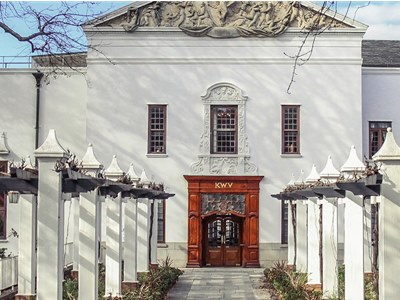
For visitors and shoppers, KWV offers two main routes: an online shop for buying its brands, and the KWV Emporium in Paarl, where you can also book destination experiences such as House of Fire and Cathedral Cellar tastings and pairings. The Cathedral Cellar itself, built in 1930, sits at the heart of a roughly 32-hectare site.
H3 Practical next step
If you are deciding whether KWV is relevant to you, start from what you actually want:
- Buying bottles: browse the online shop if you already know which brand or style you want.
- A day out in the Cape Winelands: look at the Paarl experiences, especially the tastings and pairings, rather than treating KWV purely as an online retailer.
- Following the brand: the site's news section covers items such as trophy show results and wine club releases, which suits people who want updates rather than a one-off purchase.
If you are planning a visit, check the experience options and any booking requirements directly through KWV before travelling, since tasting formats and availability can change.
Can I buy KWV wines and spirits online?
Yes. KWV sells its wines and spirits through an online shop on its own site, so you can order directly from the producer rather than going through a retailer.
What you can expect to find
- The brand range spans wine and spirits: Roodeberg, The Mentors, Laborie, Cathedral Cellar, Classic Collection, KWV Brandy, Cruxland, Imagin and Wild Africa Cream, among others.
- The site also acts as a hub for its Paarl destination, including the KWV Emporium and tasting experiences such as House of Fire and Cathedral Cellar, so you can combine an online purchase with a visit if you are in the Cape Winelands.
Practical next step Start at the online shop on KWV and browse by brand if you already know what you want. If you are buying as a gift or for a specific occasion, compare a few bottles across the brand tiers before checking out, since the range covers both everyday drinking and premium, age-worthy wines.
One thing to decide first Buying from the producer makes most sense when you want specific KWV labels, brandy or limited releases that general retailers may not stock. If you only need a single familiar bottle quickly, a local wine merchant or supermarket may still be simpler. For anyone outside South Africa, check the shop's delivery options before building a basket, as cross-border shipping terms vary.
What types of experiences does KWV offer at its Paarl location?
KWV's Paarl location centres on three named experiences: House of Fire, Cathedral Cellar and the KWV Emporium. All three are described as tasting and pairing destinations, so the visit is built around guided drinking rather than a self-guided walk-through.
What each offers
- House of Fire — a tasting and pairing experience; the name suggests a warm, fire-focused setting, which suits cooler Winelands days.
- Cathedral Cellar — tastings and pairings inside KWV's historic cellar building, the landmark at the heart of the Paarl site.
- KWV Emporium — tastings and pairings plus shopping, since KWV's brands can be bought at the Emporium as well as through the online shop.
How to choose
If your priority is the historic setting, Cathedral Cellar is the obvious pick — it dates to 1930 and anchors the estate. If you want to combine tasting with buying bottles to take home, the Emporium covers both. House of Fire is the one to choose when you want a more atmospheric, occasion-style tasting.
A practical next step: decide whether you want one experience or a combination, then check current opening times and booking requirements directly with KWV before travelling, since tasting and pairing sessions are usually scheduled rather than drop-in.
For context on the wider Cape Winelands and planning a route, Wines of South Africa is a useful reference.
How can I join the KWV Wine Club?
The KWV site promotes a "KWV Wine Club" through its news section and offers a newsletter signup, but the supplied page information does not describe a dedicated wine club membership page, tiers, fees or a join form. So the reliable route is to start from the official site and look for the club or contact options.
Practical next step
- Go to KWV and check the main navigation for "Wine Club", "Experiences" or "Contact".
- If no club page appears, use the site's contact details to ask about Wine Club membership, current benefits and how to sign up.
- Subscribe to the newsletter if you mainly want club news and releases; note that the page evidence shows a newsletter signup, which is not necessarily the same as Wine Club membership.
What the page does confirm
- KWV is a South African wine and spirits producer with brands such as Roodeberg, The Mentors, KWV Brandy, Laborie, Cathedral Cellar, Classic Collection, Cruxland, Imagin and Wild Africa Cream.
- Its brands can be bought through its online shop or at the KWV Emporium in Paarl.
- Visitor experiences include House of Fire, Cathedral Cellar and KWV Emporium for tastings and pairings.
- A newsletter signup asks for first name, last name and email address.
Decision criterion
If you want tastings and in-person events, ask whether club membership includes Emporium or Cathedral Cellar experiences. If you mainly want allocations of rare or vintage releases, ask how the club handles allocations, shipping and collection. The page evidence mentions rare and vintage wines sold at auction, which suggests limited releases exist, but it does not state that club members receive priority access. Treat that as a question to ask, not a confirmed benefit.
Which brands and wine ranges does KWV produce?
KWV's brand portfolio spans wine, brandy and spirits. From the page evidence, the named brands and ranges are:
- Roodeberg – a well-known red wine label
- The Mentors – a premium wine range
- Laborie – wine
- Cathedral Cellar – wine, also the name of a visitor experience at the Paarl estate
- Classic Collection – wine
- KWV Brandy – brandy
- Cruxland – spirits (gin)
- Imagin – spirits
- Wild Africa Cream – cream liqueur
KWV describes itself as a South African wine and spirits producer founded in 1918, sourcing grapes from more than 50 farms and 400 vineyard sites across the Western Cape, including Paarl, Stellenbosch, Swartland, Perdeberg, Malmesbury, Darling, Elgin, Robertson and Wellington. That scale explains why the portfolio covers both everyday and premium tiers rather than a single style.
How to choose among them
If you are deciding what to look for, think about the occasion rather than the label alone:
- Everyday reds and crowd-pleasers – Roodeberg and Laborie are the more accessible, food-friendly end.
- Special-occasion or cellar-worthy wines – The Mentors and Cathedral Cellar sit at the premium end.
- Brandy and spirits – KWV Brandy, Cruxland, Imagin and Wild Africa Cream cover sipping, mixing and dessert serves respectively.
A practical next step: browse the KWV online shop to see which ranges are currently listed, or visit the KWV Emporium in Paarl, where tastings and pairings (including House of Fire and Cathedral Cellar) let you compare styles before buying. For broader context on the Cape Winelands, Wines of South Africa is a useful reference.
What is KWV's history and heritage in the South African wine industry?
KWV is one of South Africa's oldest and most storied wine and spirits producers, founded in 1918 — the same year Nelson Mandela was born. For much of the 20th century it functioned less as a single estate and more as a coordinating force for the wider industry, helping to unite wine producers during the fledgling years of South African winemaking. That institutional role is a large part of why the name carries weight: it is tied to the industry's history, not just to a brand.
From cooperative origins to a modern producer
According to the site, KWV built its reputation on pioneering work in wine and spirits, and today describes itself as a leading South African producer with a distinguished heritage. Its home base is Paarl, where the Cathedral Cellar — built in 1930 — stands at the heart of a roughly 32-hectare site. The Cathedral Cellar name survives as both a physical landmark and one of the company's wine ranges, which is a neat illustration of how heritage and commerce overlap here.
The heritage made visible
For a visitor, the history is not just a plaque. The site lists destination experiences in Paarl, including House of Fire, Cathedral Cellar and the KWV Emporium, offering tastings and pairings. If you are deciding whether a visit is worth your time, the Cathedral Cellar experience is the most directly heritage-focused option; the Emporium suits someone who wants to browse and buy across the brand portfolio.
Brands that carry the story
The portfolio spans wine and spirits, including Roodeberg, The Mentors, KWV Brandy, Laborie, Cathedral Cellar, Classic Collection, Cruxland, Imagin and Wild Africa Cream. The breadth matters: KWV is a multi-brand house rather than a single-label winery, so its heritage is expressed across several ranges at different price and style levels.
Practical next step
If you want to explore the heritage angle, start with the Cathedral Cellar range or a tasting at the Paarl property, then branch into Roodeberg for a more everyday expression. For the company's own framing, see KWV. For broader context on the regions it sources from, the industry bodies Wines of South Africa and South African Wine are useful independent references.
 mimecast.co.za
 Johannesburg, Gauteng, South Africa
User reviews (0)