
 简体中文
 English

Website review
This review may include AI-generated content and is not individually verified. Domain, certificate and other facts come from the observed data on this page.
What is Meteor Crater?
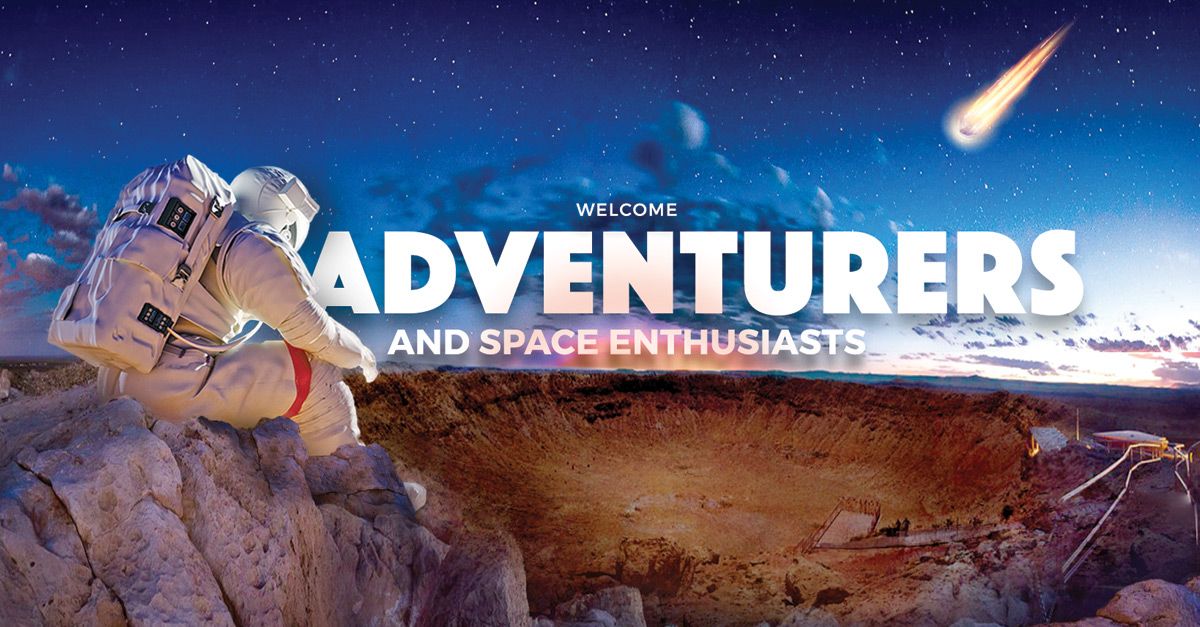
Meteor Crater is a mile-wide, roughly 550-foot-deep impact crater in northern Arizona, formed about 50,000 years ago when a meteorite struck the Earth. The site presents itself as the best-preserved meteorite impact site on Earth and operates as a visitor attraction built around the crater itself.
What you'll find there
- Outdoor observation points overlooking the crater, described as "Crater Gazin'" viewpoints.
- Guided rim tours led by guides covering the impact's history, how the landscape changed, and the site's founding by Daniel M. Barringer.
- Discovery Center & Space Museum, with exhibits on meteors, meteorites and asteroids, impact sites worldwide, and planetary defense, plus a 60-year NASA connection—Apollo 11 astronauts trained here before the 1969 moon mission.
- The Holsinger Meteorite, a 1,406-lb. specimen, the largest found at the crater, which visitors can see and touch.
- Other attractions: a "Collision!" 4D theater, an Apollo 11 space capsule, a gift and mineral shop, and an RV park.
- Special events such as full rim hikes, Asteroid Day, Sci-Fi Fest and VIP floor tours.
Who it suits
Space and science enthusiasts, families, road-trippers, and anyone interested in geology or the Apollo program. The mix of viewpoints, museum exhibits and hands-on elements means it works for casual visitors as well as dedicated space buffs. Note that the crater is viewed from observation points and rim tours rather than by descending into it, and the listed rim hikes and floor tours are scheduled events, so check dates before planning around them.
Practical next step
Decide whether you want a general visit or a scheduled experience. If the guided rim tour or a special event is the draw, confirm its date first—the site lists events well in advance—then build your visit around it. For a straightforward overview, start at Meteor Crater to see current attractions and ticket options.
How much does it cost to visit Meteor Crater and its attractions?
Ticket prices are not listed on the site's introduction page, so admission costs can't be confirmed from it. What the page does show is that entry is ticketed ("BUY TICKETS") and that some experiences sit outside general admission: Full Rim Hikes and VIP Floor Tours are listed as separate events with their own pages. Budget for a base admission plus any add-ons you want.
What the page tells you about paid extras
- Full Rim Hikes: scheduled event dates (an October 2026 date appears), guided by staff.
- VIP Floor Tours: listed separately from standard attractions.
- Special events: Asteroid Day and Sci-Fi Fest have their own dates.
- Included-style attractions: the page presents the guided tour, lookout points, Discovery Center & Space Museum, 4D theater, Apollo 11 capsule and gift shop as featured attractions, though it doesn't state which are covered by admission.
Practical next step
Check the official ticket page at Meteor Crater for current adult, child and senior rates, then compare the combined cost of admission plus a rim hike or VIP tour against a plain visit. As a planning rule, families should price per person for every add-on, since event tickets are often charged individually.
For broader Arizona trip budgeting alongside other stops, official state tourism information at Visit Arizona can help you sequence costs.
What can visitors do on a guided rim hike at Meteor Crater?
A guided rim hike at Meteor Crater takes you along the crater's edge with an expert guide who explains the site's history—how the impact formed the crater, how the landscape changed, and how Daniel M. Barringer came to found the site. It is a way to combine the outdoor observation points with the human and geological story behind the crater, rather than viewing it only from the visitor center.
What the hike adds
- Guided interpretation: The guide covers the impact story and the site's founding, so the walk is as much a history lesson as a hike.
- Rim-level views: You see the crater from along the rim rather than from the standard lookout points described on the site.
- A more active visit: It suits travelers who want to move rather than only tour the museum and theater.
The site lists Full Rim Hikes as a scheduled event, so check dates and any age, fitness or booking requirements before planning around it. If you prefer a shorter, less strenuous visit, the guided tour, lookout points, 4D theater and Discovery Center & Space Museum cover the core experience without the rim walk.
For broader Arizona trip planning alongside this stop, see Arizona Highways and National Park Service.
How did Apollo 11 astronauts use Meteor Crater for training?
Apollo 11 astronauts trained at Meteor Crater as part of preparing for the 1969 Moon mission, according to the site's own account of its 60-year history with NASA. The crater served as an Earth analogue for lunar terrain: a large, well-preserved impact structure where crews could practise recognising crater geology, judging scale and distance, and working in a stark, rocky landscape comparable in feel to the lunar surface. The site presents this training history as part of its Discovery Center and Space Museum exhibits, alongside an Apollo 11 space capsule.
What to look for on a visit
- The NASA connection in the museum: exhibits cover the centre's history with NASA and the Apollo 11 training, so allow time there rather than treating the crater rim as the whole visit.
- Guided rim tours: these explain the impact, how the land changed, and the site's founding by Daniel M. Barringer—useful context for understanding why the crater resembles lunar terrain.
- The Holsinger Meteorite: at 1,406 lbs., it is the largest found at the site, and visitors can see and touch it.
Who gets the most from it
Space and geology enthusiasts, families, and anyone driving through northern Arizona will find the combination of outdoor viewpoints and indoor exhibits efficient for a half-day stop. If your interest is specifically in Apollo history, go straight to the museum section on NASA training; if it is geology, prioritise a guided rim tour. Check the events calendar before booking, since the site lists special programmes such as full rim hikes and an Asteroid Day.
What is the difference between meteors, meteorites, and asteroids?
A meteoroid is a small rocky or icy body travelling in space. A meteor is the streak of light you see when such a body enters Earth's atmosphere and burns up—the "shooting star." A meteorite is the piece that survives the passage and lands on the ground. An asteroid is a much larger rocky body orbiting the Sun, mainly between Mars and Jupiter; the one that formed Meteor Crater is described as roughly 150 feet wide, so it sits at the asteroid scale rather than the grain-of-sand scale of most meteors.
The practical difference for a visitor is what you can actually see and touch. At Meteor Crater, the Discovery Center & Space Museum is where the site explains these distinctions and shows impact sites from around the world, while the Holsinger Meteorite—1,406 lbs., the largest found at the crater—is a hands-on example of the "meteorite" category. A reader planning a trip with children or a space-curious friend can use that pairing: read the definitions, then look at a real fragment, then walk to an observation point to see the mile-wide crater the impact left behind.
A simple way to keep the terms straight is to follow the object's journey:
| Term | Where it is | What you observe |
|---|---|---|
| Asteroid | In space, orbiting the Sun | A distant body, usually through a telescope |
| Meteoroid | In space, smaller debris | Nothing directly; it is the incoming object |
| Meteor | Burning in the atmosphere | A streak of light |
| Meteorite | On the ground after landing | A physical rock you can examine |
If the goal is to understand how a small body becomes a crater, start with the museum exhibits on impact sites and Earth protection, then take the guided tour or rim hike for the scale and history of the Barringer site. If the goal is a quick science refresher before a family visit, the meteorite display and the definitions are enough for most children.
Is Meteor Crater worth visiting for families with kids?
Yes, if your kids are curious about space, rocks or big explosions—Meteor Crater is a strong family stop, especially as a half-day break on an Arizona road trip. The site pairs the crater itself with indoor attractions that work well for children: the Discovery Center & Space Museum, the Collision! 4D Theater, the Blast Zone, and the Apollo 11 space capsule exhibit. The hands-on highlight is the Holsinger Meteorite, which visitors can see and touch, and the museum explains the difference between meteors, meteorites and asteroids in terms kids can follow.
What works for families
- A real, visible payoff. The crater is a mile wide and 550 feet deep, so even kids who tire of reading exhibits get an immediate "wow" from the observation points.
- Space history with a kid-friendly hook. The museum covers how Apollo 11 astronauts trained at the site, which connects to school lessons and space books.
- Indoor backup. The theater and museum give you something to do if the weather turns or attention spans fade.
- Guided options. The guided tour and guided rim hike add structure and storytelling, though the full rim hike is likely better for older children and adults.
Trade-offs to plan around
The crater is in northern Arizona, off the highway, so it works best as a planned stop rather than a quick detour. Much of the experience is self-guided exhibits and lookout points, which suits ages roughly 6 and up better than toddlers. The 4D theater may be intense for very young or sensitive kids. Check current ticket options and event dates—such as Asteroid Day and Sci-Fi Fest—on Meteor Crater before you go, since special events can change the day's rhythm.
A practical next step
If you're building an Arizona itinerary, treat Meteor Crater as a 2–3 hour family stop and pair it with nearby Route 66 or Grand Canyon driving. Decide based on your kids' ages: space-and-dinosaur-loving school-age children will get the most from it; families with toddlers may find it a shorter visit.
 Cloudflare
 Microsoft 365

User reviews (0)