
 简体中文
简体中文 English
Website review
This review may include AI-generated content and is not individually verified. Domain, certificate and other facts come from the observed data on this page.
What is Wildflowers of Turkey?
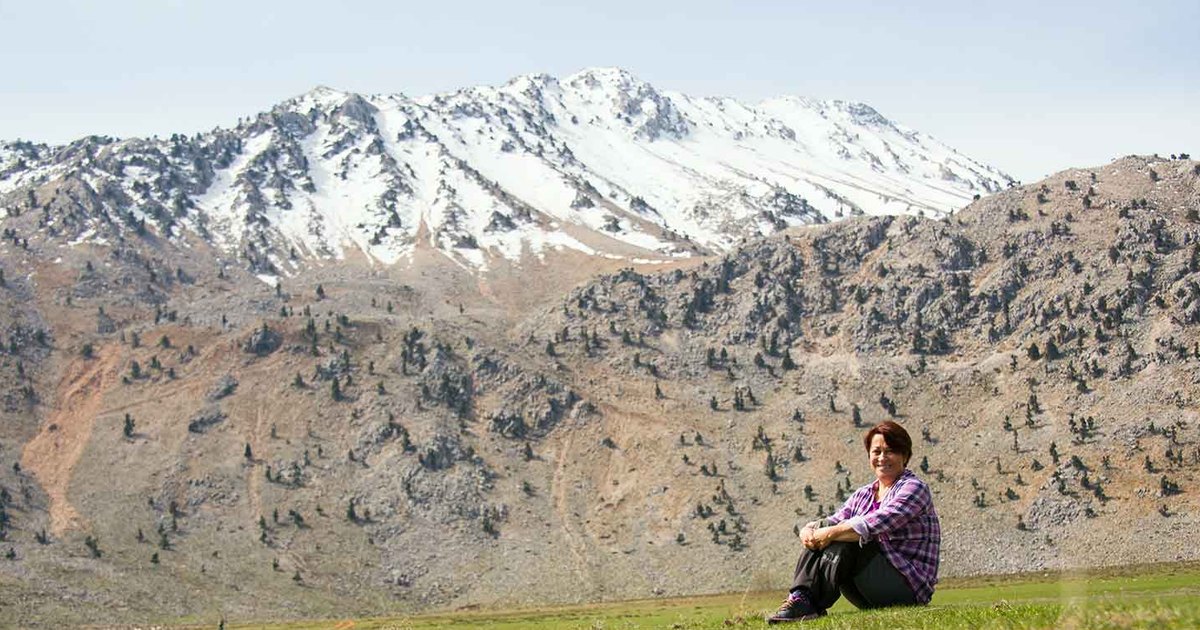
Wildflowers of Turkey is a private botanical tour service in Türkiye (Turkey), led by Yasemin Konuralp, an Antalya-based field guide author, mountain guide and photographer who has been leading tours since 1997. The tours combine wildflower-focused days in Anatolia with visits to archaeological sites, and are written individually for each group rather than sold from a fixed catalogue.
What the tours cover
- Botany at field pace. Days are built around finding and naming plants where they grow, not around a checklist of stops.
- Spring bulbs and Mediterranean mountain flora. Orchids, crocus, cyclamen, fritillaries and colchicum in the ranges behind Antalya as the snow recedes.
- Botanical and archaeological combinations. Endemic flora set against sites such as Troy and Ephesus, plus quieter ruins in between.
- Tailor-made specialist trips. Survey-paced days for photographers, growers, botanists and other specialists, in small groups with long stops.
Who it suits
The strongest fit is a traveller who already knows some plants, or wants to learn them properly, and is willing to trade a conventional sightseeing schedule for slower, season-dependent days. Photographers and bulb growers get the most from the specialist format; general travellers who mainly want comfort and headline monuments may find the botanical focus narrow.
The field guide connection
Yasemin Konuralp published Wildflowers of Turkey, Volume I — Bulbous Plants in 2013, a guide to 553 bulbous plants. The stated purpose is conservation: a guide in the hands of travellers and local people, on the argument that people protect a flora once they know it. Türkiye's flora is unusually rich — 11,466 species, 3,649 of them endemic — and equally exposed to collection pressure, which the site traces back to commercial bulb hunting around the turn of the twentieth century.
Practical next step
Because itineraries are quoted per trip, there is no published price or fixed departure to compare. Write with your dates, target species or genera, group size and how much walking you want per day, then ask for a detailed itinerary. If spring bulbs are the goal, say so early — the flowering window in the Antalya mountains is short and drives everything else in the plan.
How do I book a private botanical tour with Yasemin Konuralp?
Booking a private botanical tour with Yasemin Konuralp starts with a direct enquiry rather than an online checkout. The site describes every journey as private and written for the people travelling, with itineraries quoted per trip rather than pulled from a fixed catalogue. So the practical route is to write to Yasemin, say roughly when you can travel and what you want to see, and ask for a detailed itinerary and a quote.
What to put in your first message
- Dates and flexibility — a window of a week or two is more useful than a single date, since flowering peaks shift with the snow.
- Group size and who is coming — botanists, photographers, growers, or a mixed group of friends with different patience levels.
- Your level — whether you want species named to subspecies or simply want to see orchids, fritillaries, crocus and cyclamen in flower.
- How much archaeology you want — the ten-day Anatolia journey sets endemic flora against Troy, Ephesus and quieter ruins, so say whether ruins are a priority or a pleasant extra.
- Pace — the tailor-made option is described as survey-paced: small groups, long stops, notebooks open.
Choosing between the trip types
| Trip type | Suits | Trade-off |
|---|---|---|
| Ten days botanical & archaeological Anatolia | Travellers who want flowers and classical sites in one trip | Longer commitment; less time on any single genus |
| Spring bulbs of the Mediterranean mountains | Anyone in Antalya in early spring wanting orchids, crocus and cyclamen at their short peak | Narrow season and a regional focus |
| Tailor-made field trips for botanists | Photographers, growers and specialists | Requires you to define the target list yourself |
A useful next step is to name two or three plants you would most like to see and ask whether your dates overlap their flowering. That single question tells you more about fit than any brochure line. If you are new to the flora, Yasemin's own field guide, Wildflowers of Turkey, Volume I — Bulbous Plants, covering 553 bulbous plants, is a sensible way to arrive already knowing some of the names. The wider context — Türkiye's 11,466 plant species, 3,649 of them endemic — is why a guide who has led tours since 1997 and surveys the flora herself changes what you actually find. For general background on the country before you write, Go Türkiye is the official tourism site.
What endemic flowers and plants can I see on a spring tour in Antalya?
Spring tours in the Antalya region focus on the bulbous flora of the Mediterranean mountains, timed to the weeks after snowmelt when the flowering window is short and intense. According to the site, the typical targets are orchids, crocus, cyclamen, fritillaries and colchicum — the groups covered in Yasemin Konuralp's field guide to Turkey's bulbous plants.
What the site actually names
- Endemic orchids — listed among the headline draws of the region.
- Fritillaries (Fritillary) — named both in the ten-day Anatolia itinerary and in the spring programme.
- Crocus and cyclamen — described as appearing "at their short peak" in the ranges behind Antalya as the snow leaves.
- Colchicum — the autumn-flowering counterpart, but named in the Anatolia itinerary alongside fritillary.
The wider context
Türkiye is described as holding 11,466 plant species, 3,649 of them endemic, and the richest variety of bulbs in the world. That scale matters for a spring trip: you are not chasing a single species but walking through a succession of them, and the exact list shifts with altitude, aspect and how late the snow sits that year.
A practical way to plan
Because every journey is private and quoted per trip rather than sold from a fixed catalogue, the plant list is best treated as a starting point for a conversation rather than a guaranteed tick-list. If you have specific genera in mind — say, Ophrys orchids or particular Fritillaria — say so when you ask for an itinerary, and ask which elevations are likely to be in flower for your dates. Late March to mid-May is the broad window implied by the "as the snow leaves them" description, but the ranges behind Antalya rise steeply, so a single week can move you from coastal scrub to high pasture.
For background on the flora before you travel, the field guide Wildflowers of Turkey, Volume I — Bulbous Plants is the author's own reference, and a general orientation to Turkish botany is available through Wildflowers of Turkey.
Which archaeological sites are included on the botanical and archaeological Anatolia itinerary?
The site does not name a fixed list of archaeological sites for the botanical and archaeological Anatolia itinerary. The only sites mentioned in the page evidence are Troy and Ephesus, described as standing alongside "the quieter ruins between them." That phrasing suggests the itinerary is built around a route rather than a checklist, with the lesser-known sites chosen to fit the season, the group's interests and the travel distances.
For a ten-day trip, expect the archaeology to be woven around the botany rather than treated as a separate sightseeing programme. A practical way to plan is to treat Troy and Ephesus as the anchors, then ask which other ruins lie on the chosen route and how much walking time each one takes from the day's flower stops.
If the specific sites matter to you, the useful next step is to request a detailed itinerary and ask directly:
- Which archaeological sites are included, and roughly how long is spent at each?
- Are any of them reached on foot through habitat that is itself botanically interesting?
- Can a site be swapped for more field time, or vice versa, without changing the overall route?
Because the itinerary is quoted per trip rather than taken from a catalogue, the site list is likely to be negotiable. Travellers who care most about the flora should say so early, so the archaeology supports the botanising instead of crowding it.
Is the field guide Wildflowers of Turkey, Volume I — Bulbous Plants useful for identifying plants during a tour?
Yes. The guide is written by the same person who leads the tours, Yasemin Konuralp, and it covers 553 bulbous plants — the group the tours are built around (orchid, fritillary, crocus, colchicum, cyclamen). For anyone travelling on these trips, that overlap is the main point: the book and the itinerary were assembled from the same three decades of fieldwork in Anatolia. A field guide in the hand also lets you keep naming plants after the tour ends, rather than relying on someone else's identification in the moment.
Where it helps most, and where it won't
- Strong fit: spring bulb trips and any day spent on orchids, fritillaries, crocus or colchicum. Volume I is explicitly about bulbous plants, so it matches the spring itineraries closely.
- Weaker fit: trees, shrubs, grasses and the many non-bulbous endemics of Türkiye's 11,466 species. Those fall outside this volume, so treat it as one tool rather than a complete flora.
- Useful before you go: reading it in advance means you arrive recognising the genera and can spend tour time on habitat, variation and the archaeological stops instead of on first principles.
A practical way to decide
Ask yourself what you want from the tour. If you are a photographer, grower or specialist who wants to identify plants independently and record them properly, buying the guide before departure is straightforwardly worthwhile — you can annotate it with your own field notes as you travel. If you mainly want someone else to point and name, the guided days already do that work, and the book becomes a souvenir and a reference for later.
One caveat worth naming: a single-volume guide to one plant group is not a substitute for local knowledge. Flowering dates shift with snowmelt and altitude, and some species are genuinely difficult in the field. That is exactly the gap a guide who has led tours since 1997 fills.
Next step
Write to the site and ask two specific questions: whether the guide is available to buy or bring on your chosen itinerary, and which pages correspond to the sites you will actually visit. If you want to compare the approach with other botanical travel operators, Responsible Travel lists specialist nature departures, and RHS is a reliable reference for bulb cultivation and identification terminology if you are new to the group.
How does a tailor-made field trip for botanists differ from a standard botanical tour?
A tailor-made field trip for botanists is built around survey work and specialist interests, while a standard botanical tour is built around a fixed seasonal itinerary and the general traveller's experience of a region. On this site the distinction is explicit: the ten-day botanical and archaeological journey and the Spring Bulbs route are described as journeys with defined themes and seasons, whereas the tailor-made option is described as "field trips for botanists" with "survey-paced days for photographers, growers and specialists — small groups, long stops, notebooks open."
What actually changes
| Standard botanical tour | Tailor-made botanist field trip | |
|---|---|---|
| Pace | Region-to-region travel with archaeology in between | Long stops at fewer sites, time to work a population properly |
| Group | Usually a small party travelling together | Very small group, often specialists who already know the families |
| Focus | Seasonal spectacle — orchids, crocus, cyclamen at their short peak | Target taxa, endemics, photography, collection of field notes |
| Planning | Route set by season and region | Route written for the people travelling; quoted per trip |
| Day shape | Sightseeing and botanising balanced | Survey hours, often early starts and repeated visits |
The practical consequence is that a standard tour optimises for what is flowering and what is nearby; a tailor-made trip optimises for what you specifically need to see, record or photograph, even if that means a long drive to one hillside and a second visit the next morning.
Who each suits
A first visit to Türkiye, or a trip where a non-botanical partner comes along, works well on the fixed journeys — the archaeology at Troy and Ephesus and the quieter ruins gives the days variety, and the season is chosen for you. A grower chasing a particular fritillary, a photographer who wants the same clump in three lights, or a botanist working on a genus will get more from the tailor-made format, because the itinerary can be argued over in advance rather than accepted.
A concrete example: on a standard spring departure you might see several crocus species across a week in the mountains behind Antalya. On a tailor-made trip you could ask to spend two days on one limestone ridge above the snowline, returning at dawn and again in late afternoon, and skip the coastal sites entirely.
How to decide
Ask yourself three questions: do you have a target list of taxa, or do you want an introduction to Anatolian flora? Do you photograph or collect data? Can you travel in a very small group? Three yeses point to the tailor-made route.
The next step is to write with those specifics — the genera you care about, roughly when you can travel, and whether archaeology matters to you — and ask for a detailed itinerary with the day-by-day shape shown, so you can see how many hours are actually spent in the field. Yasemin Konuralp has led tours since 1997 and wrote the field guide Wildflowers of Turkey, Volume I — Bulbous Plants, so the correspondence itself is a reasonable test of whether the trip will be pitched at your level. Her base in Antalya also makes the Mediterranean mountain ranges the easiest ground to build a short specialist trip around.
 Türkiye

User reviews (0)