
 moravianmusic.org
 Paid content
Categories: Other
Preserving, Sharing, Celebrating Moravian music from the 17th and 18th century to the present. Producing resources for the Moravian Church, musicians, researchers, educators and audiences; publishing music, creating recordings and video, and presenting concerts; offering classes, lectures and workshops.
 Visit website
 Updated: 2026-09-30 02:52
 Language: English (default)
 Access: Normal
 Profile views 0
 Outbound visits 0
Related questions
More questions →How Does Research Work at a Marine Science Center Like Hatfield?
Research at the Hatfield Marine Science Center (HMSC) works through a shared coastal campus model: Oregon State University operates the site in Newport, Oregon, and uses it as both its coastal campus and an oceanographic research base for six state and federal agencies. That means multiple institutions run their own research programs from one location, while students, educators, and the public connect to that work through academic programs, education resources, and public-facing facilities. If you want to understand marine science research as a field, as a possible career, or as a visitor, the useful thing to grasp is how these pieces fit together.
What kinds of research happen at a coastal marine lab
A marine science center positioned on the coast studies the ocean from close to it, which shapes the questions researchers can ask. At a facility like HMSC, the work generally falls into a few overlapping areas:
- Oceanography — studying ocean physics, chemistry, and biology, often relying on the center's role as an oceanographic research base for launching and supporting field work.
- Fisheries and marine ecology — how marine species, populations, and ecosystems function, and how human activity interacts with them.
- Coastal and estuarine science — the nearshore and estuary environments that a coastal campus sits next to and can access directly.
The practical advantage of a coastal campus is proximity. Instead of traveling long distances to reach study sites, researchers based at the center can move between laboratories and the ocean, estuary, or shore regularly. That shortens the loop between collecting data and analyzing it.
How university and agency researchers share one facility
The distinctive feature of HMSC is that it is not a single lab run by a single team. It serves as Oregon State University's coastal campus and as a research base for six state and federal agencies. In practice, this means:
| Participant | Role at the center |
|---|---|
| Oregon State University | Operates the center; runs academic and research programs |
| State and federal agencies | Use the site as an oceanographic research base |
| K-12 educators and the public | Access the center as an education and learning resource |
For a researcher, the benefit is access to shared infrastructure, nearby expertise, and collaborators from different institutions working on related problems. For a student, it means exposure to both academic and agency science in one place — two career paths that often look different from the outside but overlap heavily in marine research.
How students get involved in marine science research
If you are a student trying to move from coursework into actual research, a coastal campus is one of the more direct routes. The general path looks like this:
- Build a foundation in biology, chemistry, physics, or earth science, plus quantitative skills such as statistics or data analysis.
- Look for a coastal campus or marine lab connected to a university, since these combine coursework with proximity to field sites.
- Reach out to researchers directly — at a shared facility, there are multiple labs and agencies, so there are more potential mentors than at a single-lab site.
- Start with support roles such as assisting with field sampling, data processing, or lab work, then take on more independent questions as you gain experience.
- Use the setting — living and working on the coast means field work is part of the routine rather than a rare trip.
The key point is that marine research is not only done by senior scientists. Much of the day-to-day work — sampling, measuring, recording, analyzing — is carried out by students and early-career researchers, which is exactly why these centers function as training grounds.
How the public can engage with ongoing research
You do not need to be a scientist or student to connect with a marine science center. HMSC explicitly serves K-12 educators and the public as a resource. In general, public engagement at a marine lab takes forms like:
- Visitor and education programming that explains what researchers study and why it matters.
- Resources for K-12 educators who want to bring marine science into classrooms.
- Public talks, exhibits, or events that translate current research for a general audience.
The value here is that a working research facility lets the public see science as an active process rather than a finished result. If you are a teacher, a parent, or simply curious, checking what public programs a center offers is the practical first step.
What to take away
Research at a marine science center like Hatfield is collaborative by design: a university coastal campus, multiple state and federal agencies, and public education all share one coastal location. That structure creates more entry points — for students seeking mentors, for scientists seeking collaborators and field access, and for the public seeking to understand ocean science. The main condition to keep in mind is that access to specific programs, positions, or facilities depends on the individual lab, agency, or program, so the reliable move is to check with the center or the specific group you are interested in.
How to Listen to Free Music, Radio, and Podcasts on iHeart
iHeart is a free streaming platform that combines live radio stations, customizable artist stations, playlists, and podcasts in one place. You can start listening without paying by opening iheart.com in a browser or using the iHeart app, then searching for a station, artist, song, or podcast. A subscription is only relevant for certain premium features; the core listening experience described on iHeart's site is available for free.
What you can listen to on iHeart
iHeart organizes its content into a few main types, and knowing the difference helps you find what you want faster.
| Content type | What it is | Best for |
|---|---|---|
| Live radio stations | Thousands of real-time broadcast stations | Hearing a scheduled show, local station, or live event |
| Artist stations | Stations built around a specific artist | Continuous music in the style of an artist you like |
| Playlists | Curated or self-made collections of songs | A defined set of tracks for a mood or activity |
| Podcasts | On-demand episodic shows | Talk, news, storytelling, and interviews |
| Music and trending news | Updates on artists, songs, and bands | Discovering what's new |
The key distinction is live versus on-demand. Live radio plays whatever is broadcasting right now, so you can't skip tracks. Artist stations and playlists behave more like on-demand listening, where you control the starting point.
How to start listening for free
You can begin on either the web or the app. The steps are similar.
- Open the platform. Go to iheart.com in a browser, or install the iHeart app on your phone or tablet.
- Search or browse. Use the search function to enter a station name, artist, song, or podcast. Alternatively, browse categories to see what's available.
- Select what you want to hear. Choosing a live station starts playback immediately. Choosing an artist creates or opens a station built around that artist.
- Press play and adjust. Use the player controls to pause, change volume, or move between stations. On live radio, expect no track skipping; on artist stations, you have more control over what plays next.
- Save what you like. Favoriting a station or artist makes it easier to return to later without searching again.
Expected result: audio begins playing shortly after you select content, and your favorites appear in your account for quick access next time.
Creating your own stations and playlists
- Artist stations: Start from an artist you like, and the station plays music in that style. This is the fastest way to get continuous music without building a list yourself.
- Playlists: Add individual songs to a playlist when you want a specific set of tracks rather than a continuous stream. This suits workouts, commutes, or a fixed party set.
- Tip: Use artist stations for discovery and playlists for control. If a station drifts away from what you want, switch to a playlist instead of fighting the stream.
What's free versus what needs a subscription
iHeart's own description states that its music, podcasts, and radio stations are available for free, and that you can listen to thousands of live stations or create your own artist stations and playlists. The site also references a subscription, which indicates that some features sit behind a paid tier.
Because the exact free-versus-paid split isn't fully detailed in the available information, treat it this way:
- Assume free: live radio stations, artist stations, playlists, podcasts, and general music/news browsing, based on iHeart's stated offering.
- Check before assuming: any feature labeled as premium, ad-free, or subscription-only. If a paywall appears, that specific feature requires payment.
- Don't assume: that a subscription is required to listen at all, or that everything is free. Verify at the point where you're asked to sign up or pay.
Common snags and how to handle them
- A station won't play. Live stations can be unavailable due to regional restrictions or temporary outages. Try another station to confirm whether the issue is the station or your connection.
- You can't skip a track. That's expected on live radio. Switch to an artist station or playlist if you want control.
- Search returns too many results. Add the type of content to your search, such as the artist name plus "station," or search podcasts separately from music.
- You lose your favorites. Sign in to an account so saved stations and playlists persist across sessions and devices.
Quick decision guide
- Want background music with no effort? Open an artist station.
- Want a specific set of songs? Build a playlist.
- Want a live show or local broadcast? Pick a live radio station.
- Want talk or storytelling? Go to podcasts.
- Want to avoid paying? Stick to the free listening options above and check any prompt before entering payment details.
How Do Typo Tolerance and Faceting Work in a Hosted Search Service?
Typo tolerance lets a search engine return relevant results even when the query contains misspellings, transposed letters, or missing characters—without you maintaining a manual list of synonyms or corrections. Faceting lets users narrow a result set by attributes such as category, brand, price range, or availability, typically shown as filterable counts alongside the results. In a hosted search service, both features run on the same index and query pipeline: typo tolerance expands which documents match, while faceting organizes how those matches are filtered and displayed. The two interact closely, and tuning one often affects the other.
What Typo Tolerance Actually Does
Typo tolerance is a matching strategy, not a spell checker. Instead of correcting the query and searching for the corrected term, the engine compares the query against indexed terms using an edit-distance threshold (commonly Levenshtein distance) and returns documents whose terms fall within that threshold.
Key mechanics:
- Edit distance budget: A query term can differ from an indexed term by a set number of insertions, deletions, substitutions, or transpositions. A common default is 1 edit for short terms and 2 for longer ones.
- Prefix matching: Many engines treat the last token in a query as a prefix, so "headph" matches "headphones" without counting as a typo.
- Per-word tolerance: Tolerance is usually applied per token, so "wirlress hedphones" can still match "wireless headphones."
- Ranking by closeness: Exact matches typically rank above typo matches, so results degrade gracefully rather than becoming noisy.
Because this works at query time against the index, you generally don't need to build synonym lists for common misspellings. You may still want synonyms for genuine vocabulary differences ("sofa" vs. "couch"), which is a separate concern from typos.
When typo tolerance helps most
- User-generated queries on mobile keyboards, where transpositions and dropped letters are frequent.
- Product catalogs with long, technical, or brand names that users rarely spell exactly.
- Internal document search where users half-remember terminology.
When to tighten or disable it
- Short or numeric queries: Order IDs, SKUs, or codes like "A102" can match unintended items when tolerance is loose. Consider disabling tolerance for numeric fields.
- High-precision domains: Legal, medical, or financial lookups may need exact matching to avoid surfacing the wrong record.
- Small alphabets or dense vocabularies: If many terms are one edit apart, tolerance can produce false positives.
What Faceting Adds
Faceting computes, for a given result set, the distribution of values across designated fields and returns counts per value. The user then applies filters, and the result set (and the facet counts) update.
A typical faceted interface shows:
| Facet | Example values | Count |
|---|---|---|
| Category | Headphones (128), Speakers (74) | per value |
| Brand | Acme (52), Nord (31) | per value |
| Price | Under $50 (40), $50–$100 (61) | per range |
| Rating | 4★ and up (88) | per threshold |
Two design choices matter:
- Conjunctive vs. disjunctive facets: Within one facet (e.g., Brand), selecting two values usually means "Acme OR Nord." Across facets (Brand AND Category), selections combine with AND. Engines often let you choose whether a facet's own counts ignore its current selection, so users can still see sibling options.
- Count accuracy vs. speed: Exact counts are more expensive on large indexes. Some services offer approximate counts or cap the number of facet values returned.
Faceting is not the same as filtering. Filtering applies a condition; faceting computes and returns the available values and their counts so the UI can present choices. Most hosted services do both in one query.
How the Two Features Interact
This is where behavior gets interesting, and where default settings can surprise you.
- Typo matches inflate facet counts. If "hedphones" matches "headphones," those documents appear in the result set and contribute to the Category and Brand counts. Users see counts that include loosely matched items.
- Facet filters usually don't loosen. Once a user selects Brand = Acme, the query is constrained. Typo tolerance still applies to the text query, but it can't pull in documents outside the selected facet.
- Relevance and counts can disagree. A typo-matched document might rank low but still be counted in a facet. If your UI shows "128 results" but the top 10 look unrelated, users lose trust.
- Index size and field configuration affect both. Fields marked as facetable are often stored differently (as structured values rather than tokenized text), so you generally can't facet on the same field you use for fuzzy full-text matching without configuring it appropriately.
A practical consequence: tune typo tolerance before you tune facet counts, because the tolerance setting defines the population that faceting summarizes.
Trade-offs to Weigh
| Decision | Benefit | Cost |
|---|---|---|
| Higher typo tolerance | Fewer zero-result searches | More false positives, noisier facets |
| More facetable fields | Richer filtering UI | Larger index, slower indexing |
| Exact facet counts | Trustworthy numbers | Higher query latency at scale |
| Many facet values returned | Complete filter menus | Larger responses, UI clutter |
| Disabling tolerance on codes | Precise lookups | Users must type codes exactly |
Performance notes: typo tolerance adds query-time work but is generally cheap relative to faceting, which must aggregate across the matched set. On large indexes, the dominant cost is usually facet computation, not fuzzy matching. Index size grows mainly with the number of facetable fields and stored attributes, not with tolerance settings.
A Workable Starting Configuration
If you're setting up a hosted search service and want sensible defaults:
- Enable typo tolerance globally, with 1 edit for terms up to ~5 characters and 2 for longer terms.
- Treat the final query token as a prefix so partial typing returns results.
- Disable tolerance on identifier-like fields (SKU, order number, ISBN).
- Mark only fields users actually filter on as facetable—category, brand, price, rating, availability. Avoid faceting on free-text descriptions.
- Return facet counts for the top N values (e.g., 20–50) rather than all values.
- Decide per facet whether counts should reflect the facet's own selection, so users can switch between brands without losing the menu.
- Test with real misspellings from your logs or support tickets, and check whether the top results and facet counts still make sense.
Example: tuning by use case
- E-commerce catalog: High tolerance, many facets, counts that ignore the current facet's own selection.
- Documentation search: Moderate tolerance, few facets (product version, doc type), prioritize exact phrase matches.
- Internal records lookup: Low or no tolerance on IDs, tolerance on names, minimal faceting.
FAQ
Does typo tolerance replace synonyms? No. It handles spelling variation, not vocabulary differences. Keep synonyms for terms users genuinely use differently.
Why do my facet counts change when I type a typo? Because the matched document set changed. Counts are computed over whatever the query matched, including fuzzy matches.
Can I have typo tolerance without faceting? Yes. They're independent features that happen to share a query pipeline.
Is faceting the same as filtering? Filtering applies a constraint; faceting computes available values and counts. Most interfaces use both together.
Will enabling both slow down search? Faceting is usually the larger cost. Measure with your own data rather than assuming.
The short version: typo tolerance decides what counts as a match, faceting decides how matches are organized and narrowed. Configure tolerance first, keep facetable fields deliberate, and verify that the counts your users see reflect results they'd actually recognize.
What Is Marketing Performance and How Do You Measure It?
Marketing performance is the measurable outcome of marketing activity against the goals and budget you set for it. You measure it by comparing what you planned to spend and do with what you actually spent and did, then judging the results. In an enterprise setting, that means tracking three things continuously: budget utilization, plan vs. actual spend, and campaign or channel results — with reporting that arrives fast enough to change decisions. This applies to any organization running hierarchical campaigns, multiple channels, or partner programs where spend and activity are spread across teams.
The three questions performance tracking has to answer
Q:chi frames enterprise marketing performance around three questions a CMO needs to answer:
- What activity is my team planning, and what will they need to spend?
- What are they doing right now, and what are they spending?
- What have they done already, and what have they spent?
Each question maps to a different time horizon — forward plan, live execution, and historical result. Performance measurement breaks down when you can only answer one of them. A team that reports last quarter's spend accurately but can't see current commitments is measuring history, not performance.
Core metrics to track
| Metric | What it tells you | Why it matters |
|---|---|---|
| Budget utilization | Share of allocated budget actually used | Low utilization signals underspend and wasted planning cycles |
| Plan vs. actual spend | Variance between planned and real spend | Reveals where forecasts drift and where money is stuck |
| Campaign results | Outcomes of specific campaigns against their goals | Connects spend to activity, not just totals |
| Reporting timeliness | How fast results reach decision-makers | Late reporting turns measurement into an audit, not a control |
| Partner program performance | Incentives, MDF, rebates, and SPIFs against budgets | Shows whether channel spend produces auditable results |
The first two are the ones most often missing in enterprise marketing operations. Campaign results are usually tracked somewhere; real-time budget position often isn't.
How real-time planning and spend control change the picture
Traditional budget control works in cycles — plan annually, spend, reconcile at period end. That model lets underspend accumulate silently and makes it hard to respond to change mid-quarter.
Real-time planning and spend control means budgets are visible and adjustable as activity happens. Q:chi describes this as planning and controlling marketing budgets with agility in real time, specifically to prevent underspend and respond to change. The practical difference:
- Cycle-based control: you discover underspend after the period closes, when the money can no longer be redeployed.
- Real-time control: you see the gap while there's still time to shift budget toward activity that will use it.
For performance measurement, this matters because a budget that's 60% used at 90% through the period isn't a result — it's a signal that needs acting on. Real-time visibility is what makes that signal actionable.
Where workflow automation and integrations fit
Performance data is only as good as the process that produces it. When approvals, activity requests, and payments run through manual handoffs, reporting lags and errors accumulate.
Q:chi's marketing operations automation covers running hierarchical campaigns aligned with corporate strategy, automating workflows, analyzing results, and hitting reporting deadlines through integrations. The mechanism is straightforward: if approvals and spend requests are captured in the same system that holds the budget, then reporting is a byproduct of normal work rather than a separate collection exercise.
For channel programs specifically, the same logic applies to incentives, MDF, rebates, and SPIFs — running them against budgets with streamlined activity requests, approvals, and payments, plus auditable proof of performance. Proof of performance is the piece that turns a payment record into a performance record.
Setting up performance tracking: a practical sequence
- Define the plan structure first. Hierarchical campaigns that align with corporate strategy give you the levels at which you'll later compare plan to actual. Without this, reporting has nothing to roll up to.
- Attach budgets to that structure. Each campaign or program node needs an allocated amount before you can measure utilization.
- Capture spend at the point of commitment, not payment. Approvals and activity requests are earlier signals than invoices.
- Automate the approval and request workflow. This is what keeps the data current without a manual reporting cycle.
- Report on plan vs. actual at a fixed cadence, and review variance. The cadence should be short enough that variance is still correctable.
- Extend the same tracking to partner programs if you run them — incentives, MDF, rebates, and SPIFs against their own budgets.
Steps 3 and 4 are where most setups fail. If spend is only recorded when it's paid, your performance view is always weeks behind reality.
Common pitfalls that distort performance visibility
- Siloed data. Budgets in one system, campaign activity in another, partner programs in a third. Each produces a partial answer to a different one of the three questions.
- Delayed reporting. If results arrive after the period closes, you're measuring outcomes you can no longer influence.
- Underspend treated as savings. Unused budget usually means planned activity didn't happen, not that the team was efficient.
- No proof of performance for partner spend. Without auditable evidence that an activity occurred, partner program spend can't be assessed against results.
- Tracking results without tracking plan. Campaign outcomes without the original plan and budget give you numbers with no baseline to judge them against.
What to take away
Marketing performance in an enterprise context is the continuous comparison of planned activity and spend against actual activity and spend, plus the results those activities produced. Measure it with budget utilization, plan vs. actual variance, campaign and channel results, and reporting timeliness. Improve it by making budgets visible in real time, capturing spend at commitment rather than payment, and automating the workflows that generate the data. The test of a working setup is simple: can you answer what your team is planning, doing, and has done — each with its spend — without waiting for a reporting cycle to close?
Website Overview
Identifiable technologies and additional version or configuration signals make the service easier to fingerprint, which may help targeted scanners narrow their checks. An established domain and managed infrastructure suggest continuity of operations and may support dependable delivery, although neither guarantees service quality.
Domain and Registration
Registered in 1998, this domain has about 28 years of history. That suggests continuity, although ownership and purpose may have changed. Transfer-protection status is present, helping reduce the risk of unauthorized domain transfers. The registrar is NameCheap, Inc., a widely used domain service provider. The domain uses the common .org extension, which is not an independent safety signal.
DNS and Email
The observed email authentication setup is incomplete: DMARC is missing. Nameservers are provided by signalitsystems.com, indicating managed DNS hosting. MX records point to the Microsoft 365 email service. No CNAME was found; the observed records resolve directly to addresses. TXT records include verification markers for Microsoft. Such markers may also remain after a service stops being used.
TLS and Certificates
The certificate issuer is Sectigo Limited, a commercial certificate authority. The certificate uses an RSA 2048-bit public key, offering broad client compatibility. The server supplied a complete certificate chain. No organization name is present in the certificate; the available fields are consistent with domain validation. The certificate is valid for about 198 days in total, with 196 days remaining.
HTTP and Browser Security
The checked browser-security headers were not detected, leaving fewer explicit browser-side safeguards. No X-Powered-By header was found, reducing one common source of backend fingerprinting information. No obvious internal addresses or debug information were found in the headers. The Server header identifies Apache without an exact version. No explicit CDN or WAF marker was found in the response headers.
Technology Stack Analysis
The public page identifies All in One SEO (AIOSEO) 4.5.4, WordPress, jQuery, Apache, with exact versions exposed for 1 technologies. These details can narrow vulnerability checks, although exposure alone is not a vulnerability.
Search and Social Sharing
The meta description has 304 characters and may be shortened in search results. The Generator tag identifies All in One SEO (AIOSEO) 4.5.4, making the publishing system easier to fingerprint. Twitter Card metadata is configured. JSON-LD includes Organization data, helping describe the organization as an entity. The title has 25 characters, within a common display range.
 Hosting and Email
 Hosting
 Namecheap, Inc.
 Microsoft 365
 Location
 United States
 Pages, Search and Sharing
| Meta description | Preserving, Sharing, Celebrating Moravian music from the 17th and 18th century to the present. Producing resources for the Moravian Church, musicians, researchers, educators and audiences; publishing music, creating recordings and video, and presenting concerts; offering classes, lectures and workshops. |
|---|---|
| Canonical URL | https://moravianmusic.org/ |
| Language | English (default) |
| Twitter Card | summary |
Social Sharing Preview
14 fields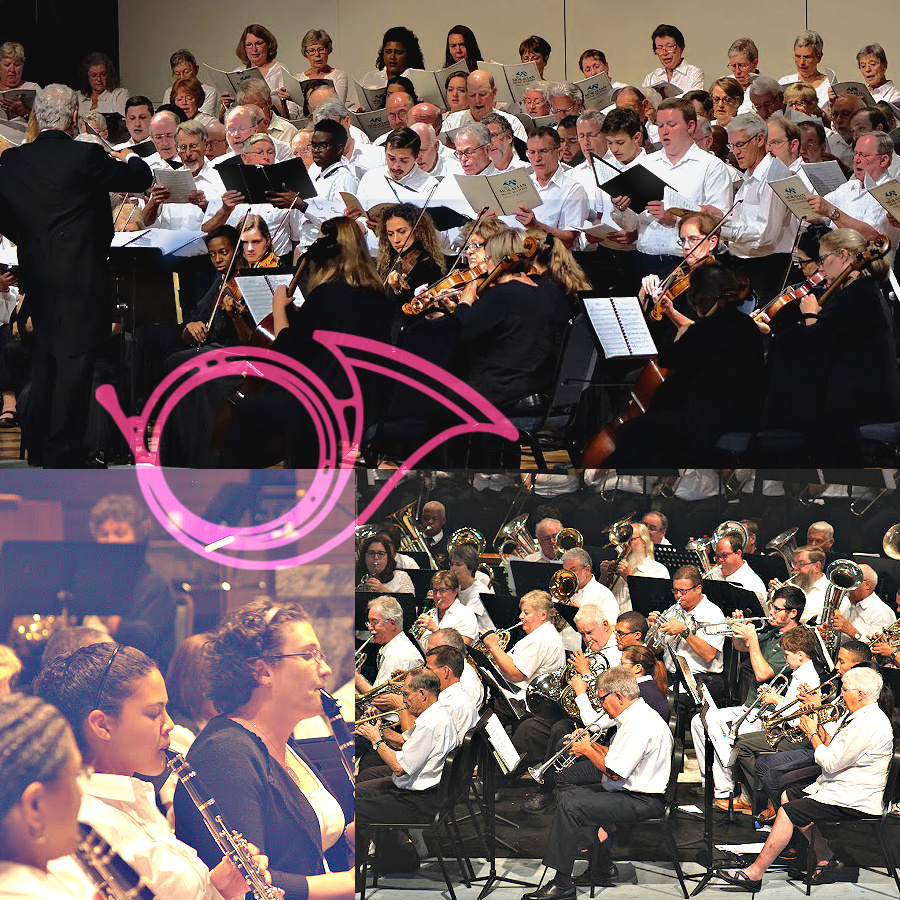

Sharing metadata
| og:url | https://moravianmusic.org/ |
|---|---|
| og:type | article |
| og:image | https://moravianmusic.org/wp-content/uploads/Image-for-AIOSEO.jpg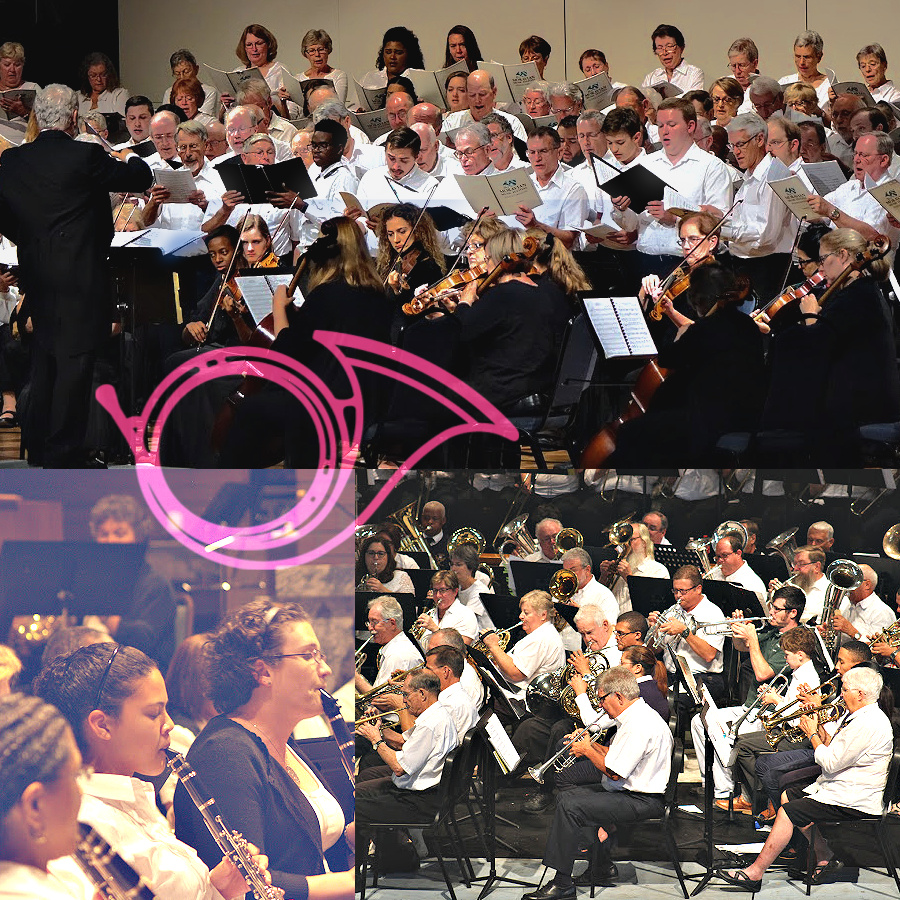 |
| og:title | Moravian Music Foundation |
| og:locale | en_US |
| og:site_name | Moravian Music Foundation | Preserving, Sharing, and Celebrating Moravian Musical Culture |
| og:description | Preserving, Sharing, Celebrating Moravian music from the 17th and 18th century to the present. Producing resources for the Moravian Church, musicians, researchers, educators and audiences; publishing music, creating recordings and video, and presenting concerts; offering classes, lectures and workshops. |
| og:image:width | 900 |
| og:image:height | 900 |
| og:image:secure_url | https://moravianmusic.org/wp-content/uploads/Image-for-AIOSEO.jpg |
| twitter:card | summary |
| twitter:image | https://moravianmusic.org/wp-content/uploads/Image-for-AIOSEO.jpg |
| twitter:title | Moravian Music Foundation |
| twitter:description | Preserving, Sharing, Celebrating Moravian music from the 17th and 18th century to the present. Producing resources for the Moravian Church, musicians, researchers, educators and audiences; publishing music, creating recordings and video, and presenting concerts; offering classes, lectures and workshops. |
robots.txt (opens in a new tab)
5 rulesAll bots 1 allowed · 4 disallowed

 All bots

/wp-admin/admin-ajax.php
/wp-content/uploads/wc-logs//wp-content/uploads/woocommerce_transient_files//wp-content/uploads/woocommerce_uploads//wp-admin/
No matching rules.
Sitemaps
2 Registration details RDAP / WHOIS
| Registrar | NameCheap, Inc. |
|---|---|
| Registered | 1998-01-21 |
| Expires | 2027-01-20 |
| Domain status | client transfer prohibited |
| Nameservers | ns1.signalitsystems.com、ns2.signalitsystems.com |
| DNSSEC | unsigned |
 DNS records
| Type | Name | Value | TTL | Priority |
|---|---|---|---|---|
| A | moravianmusic.org | 192.64.117.236 | 1200 | — |
| MX | moravianmusic.org | moravianmusic-org.mail.protection.outlook.com | 3600 | 0 |
| NS | moravianmusic.org | ns1.signalitsystems.com | 1800000 | — |
| NS | moravianmusic.org | ns2.signalitsystems.com | 1800000 | — |
| TXT | moravianmusic.org | MS=ms11918748 | 1200 | — |
| TXT | moravianmusic.org | TG=y89gyk | 1200 | — |
| TXT | moravianmusic.org | v=spf1 +a +mx +ip4:192.64.117.93 +ip4:192.64.117.146 include:spf.web-hosting.com +ip4:192.64.117.236 +include:spf.protection.outlook.com -all | 1200 | — |
 TLS and certificates
| Assessment | Normal configuration |
|---|---|
| Supported protocols | TLSv1.2、TLSv1.3 |
| Negotiated protocol | TLSv1.3 |
| Certificate subject | moravianmusic.org |
| Issuer | Sectigo Limited |
| Valid until | 2027-04-14T23:59 · Remaining when checked: 196 days |
| Verification details | Certificate trust: Passed · Hostname match: Passed |
 HTTP response headers
| Header | Value |
|---|---|
| content-type | text/html; charset=UTF-8 |
| cache-control | max-age=0, no-cache, no-store, must-revalidate |
| server | Apache |
 Identified technologies
User reviews (0)