Website profiles · Technology insights · Alternatives

newsletter.mondaygrowing.com Paid content

Categories: Social & Community

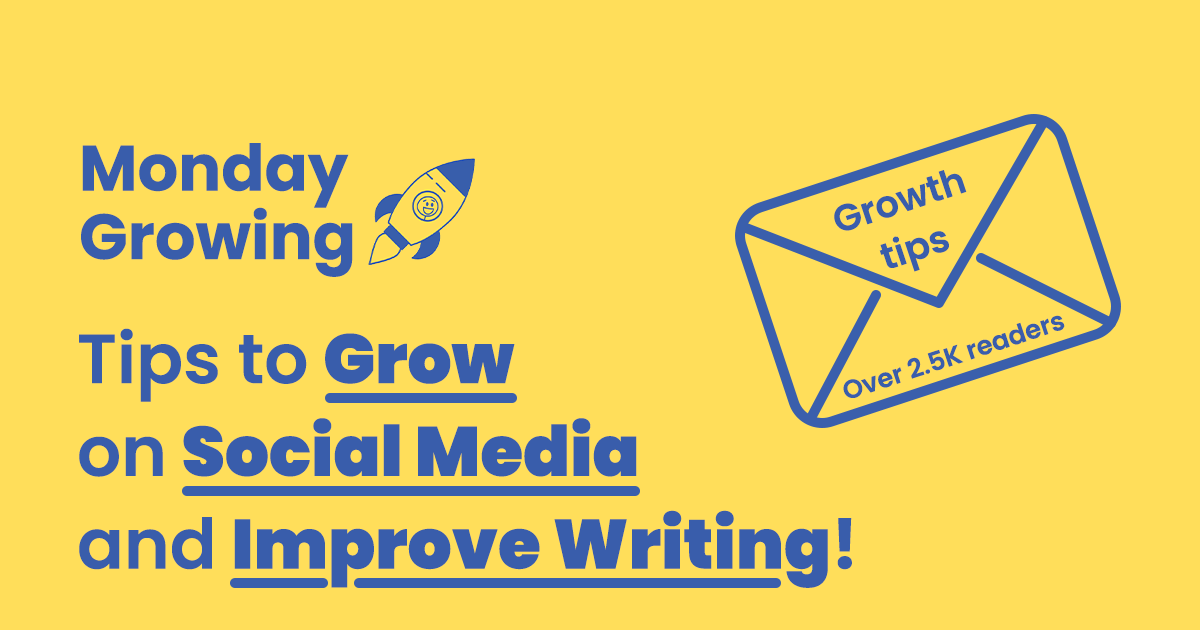
Newsletter with tips to grow on Social Media

Visit website

Updated: 2026-09-27 14:38 Language: English (default) Access: Normal

Profile views 6 Outbound visits 1
Grow on Social Media | Monday Growing Newsletter Full homepage screenshot
Editorial Review

Website Review

What is Monday Growing Newsletter?

Monday Growing Newsletter is a weekly email newsletter about growing on social media, published at newsletter.mondaygrowing.com and written mainly by Javier García. Rather than platform tactics or growth hacks, it reads as short brand-marketing case studies: each issue takes one recognizable company and shows how a specific branding move works. Recent subjects include Nintendo, H&M, LEGO, Aesop, Adidas, Spotify, L'Oréal, American Express, Iberdrola, Puma, AXA and Visa.

Its angle is closer to copywriting and brand strategy than to channel mechanics. The issue titles are compact arguments in themselves — "Read What Others Skip" on Aesop turning copy into a product feature, "Built Slowly" on Adidas treating time as credibility, "After the Payment" on American Express reframing value as what stays with you. That makes each edition easy to skim and easy to reuse as a reference point for your own messaging.

Who it suits

  • Marketers and founders who want brand-positioning ideas rather than algorithm updates
  • Writers and content people looking for concrete examples of how copy carries meaning
  • Anyone building a swipe file of brand stories to cite in decks or briefs

Who it may not suit

  • People seeking platform-specific tactics, posting schedules or ad performance data
  • Readers who want long-form analysis; these are short, focused pieces
  • Non-English readers, since the newsletter is in English

How to use it

Treat it as a case-study library rather than a how-to. If you are working on a positioning statement, search the archive for a brand in an adjacent category and study how the issue frames the problem before the solution. The archive is paginated across multiple pages with a "Back/Next" navigation, so older issues are reachable rather than buried.

Next step: open the newsletter at Monday Growing Newsletter and read two or three issues in your own category. If the framing style is useful to you, subscribe from that page; the site's own call to action is a Subscribe link, and no pricing details are stated on the page.

How can I subscribe to Monday Growing Newsletter?

Subscribe directly through the newsletter's own signup page: Monday Growing Newsletter. The site lists a "Subscribe" link, and the homepage also shows a "Signup" section, so either entry point should work. Expect a short form asking for your email address; the newsletter is described as weekly tips for growing on social media.

A practical next step

Before signing up, skim a few recent issues in the archive to judge whether the style fits you. The visible archive includes pieces like "Read What Others Skip" (how Aesop turns copy into a product feature) and "Built Slowly" (how Adidas turns time into credibility), each credited to Javier García. If that brand-analysis angle is what you want, subscribing is worthwhile; if you need platform-specific tactics instead, the archive will tell you quickly.

What to check after subscribing

  • Confirm the welcome email arrives and note the sending address so it doesn't land in spam.
  • Decide whether you want it in your main inbox or a dedicated marketing folder.
  • Give it three or four issues before judging; a weekly cadence means a month is a fair trial.

If you'd rather sample before committing, the archive on the same site is the fastest way to decide.

What kind of social media growth tips does Monday Growing Newsletter provide?

Monday Growing Newsletter is a weekly email that teaches social media growth by dissecting how big brands build loyalty, trust and memorability — then translating those lessons into writing and content ideas you can apply to your own posts. It is less a list of algorithm hacks and more a case-study-driven writing newsletter: each issue takes one brand and one specific move, and shows what makes it work.

What the issues actually cover

Based on the archive, the recurring pattern is a single brand paired with a single behavioural insight:

  • Still Playing — how Nintendo turns childhood habits into lifelong brand loyalty
  • Worn, Not Replaced — how H&M reframes fashion around time instead of trends
  • Play, Unfinished — how LEGO turns abandonment into imagination still in progress
  • Read What Others Skip — how Aesop turns copy into a product feature
  • Built Slowly — how Adidas turns time into credibility, not hype
  • One Song More — how Spotify turns a UI detail into an emotional ritual
  • The Moment You Speak — how L'Oréal turns confidence into action, not appearance
  • After the Payment — how American Express reframes value as what stays with you
  • When Nothing Happens — how Iberdrola and Visa turn unseen reliability into brand trust
  • Before the Win — how Puma makes effort, not victory, the most powerful moment in sport
  • The One Decision — how AXA simplifies protection by freezing everything except what matters

Who it suits

Reader Why it fits Trade-off
Writers and content marketers Each issue is essentially a copy and positioning teardown you can imitate You get concepts, not templates or post-by-post calendars
Founders building a personal brand Brand-level lessons transfer to small accounts No platform-specific algorithm tactics or hashtag advice
Social media managers wanting ideas A steady weekly stream of angles to adapt Growth is treated as a slow writing craft, not a quick reach fix
People wanting growth hacks — Little here about posting frequency, hooks or paid promotion

How to use it

Pick one issue, write down the underlying move in a single sentence, then apply that move to your own niche before the next issue arrives. For example, take the "unfinished" idea from the LEGO issue and post a work-in-progress instead of a polished result — the point is to practise the principle, not copy the brand. If that exercise feels useful, subscribing to the weekly email is the natural next step; if you want platform mechanics instead, this newsletter will likely feel too indirect.

How can I use the brand case studies in Monday Growing Newsletter to improve my social media marketing?

Use the case studies as a pattern library rather than as news. Each issue takes one brand and one small move — a habit, a reframe, a ritual — and shows how that move shapes how people feel about the brand. Your job is to extract the move, strip out the brand, and test it on your own channel.

Turn one case into one test

Pick a single recent issue, such as the Nintendo piece on childhood habits or the Spotify piece on a UI detail becoming an emotional ritual. Write down three things:

  • The move: what the brand actually did (not the campaign name).
  • The feeling it targets: nostalgia, patience, confidence, reliability.
  • The smallest version you could run this week: one post, one caption style, one recurring format.

Then run it for two weeks and compare saves, replies and profile visits against your usual posts. The newsletter gives you the idea; your own numbers tell you whether it transfers.

Match the case to your constraint

If your problem is… Look for cases about… Your test
Posts feel generic Reframing, like the H&M angle on time over trends Rewrite one product post around time, wear or longevity instead of novelty
Copy is ignored Copy as a feature, like the Aesop case Turn one instruction or detail into a line people would screenshot
Growth feels forced Slow credibility, like the Adidas case Publish one proof-of-work post instead of a hype post
Engagement is flat Small rituals, like the Spotify case Add one repeatable detail your audience can expect each week

Read the archive as a curriculum

The archive is organised by brand and date, with a single author, Javier García, across the visible entries. That consistency is useful: you can read several issues in one sitting and compare how different brands handle the same underlying problem — trust, memory, effort. Treat the Monday Growing Newsletter archive as a swipe file, and keep a running note of moves you have not tried yet.

A practical next step: choose one case this week, write its move in a single sentence, and schedule the smallest possible version of it. If it works, keep it as a recurring format; if not, you have still learned which emotional angle your audience ignores.

Is Monday Growing Newsletter suitable for beginners in social media marketing?

Yes, with one caveat: it is beginner-friendly in topic, not in format. The newsletter is a weekly read of short brand case studies, not a step-by-step course. Each issue takes one recognizable company and shows how a marketing idea plays out in its messaging — for example, how Nintendo converts childhood habits into brand loyalty, how LEGO frames unfinished play as imagination, or how Aesop treats copy as a product feature. A beginner can follow all of that without prior training, because no jargon or platform mechanics are assumed.

Where a beginner gets value

  • Mental models before tactics. Seeing how Adidas builds credibility through time, or how Puma makes effort rather than victory the emotional core, teaches you why a post or campaign is framed a certain way. That reasoning transfers to any platform.
  • Copywriting instincts. The Aesop and Spotify examples are essentially lessons in choosing words and interface details that carry emotion — useful the first week you write captions or product descriptions.
  • A low-commitment habit. One short case per week is easy to keep up with while you are still learning, unlike a long certification course.

Where it will not be enough on its own

A beginner looking for platform-specific how-tos — posting schedules, hashtag strategy, ad setup, analytics dashboards — will not find them here. The archive entries are brand-narrative analyses by a single author, Javier García, so you are getting one consistent editorial lens rather than a range of practitioner viewpoints. Treat it as a source of ideas and language, not a manual.

A practical next step

Pick one recent issue, read it, then immediately rewrite a caption or landing-page line for your own product using the same framing device — for instance, shifting from "features" to "what stays with you." Subscribe at Grow on Social Media | Monday Growing Newsletter if that exercise feels useful. If you need platform mechanics first, pair it with a general marketing reference such as HubSpot or Buffer, and use this newsletter for the thinking layer.

How often is Monday Growing Newsletter published?

The archive dates suggest Monday Growing publishes roughly weekly, though not on a fixed day. Entries cluster tightly: several posts share the same date (for example, Jan 05, Jan 06 and Jan 07, 2026), and there is a gap from early January to the Feb 04, 2026 posts. That pattern fits a newsletter that batches issues or backfills archive items rather than one that lands every Monday on the dot.

For a reader, the practical takeaway is to expect about one issue a week, with occasional pauses. If you want to follow the brand case studies without checking the site, subscribe so the issues arrive on their own schedule rather than relying on the archive.

To judge whether the cadence suits you, look at the archive: each issue is a short teardown of one brand (Nintendo, H&M, LEGO, Aesop, Adidas, Spotify and others), so a weekly rhythm means one idea at a time rather than a daily feed. If you prefer a denser digest, this pace may feel slow; if you want something you can read in a few minutes, it fits.

Start with the archive at Monday Growing Newsletter and read two or three consecutive issues to see whether the weekly rhythm matches your reading habits.

Related questions

More questions →
What Is Grant Writing and How Do You Write a Grant Proposal?

Grant writing is the process of researching funding opportunities and producing a structured proposal that persuades a funder to pay for a specific project. It applies to public and private sector organizations seeking grants, and the work runs from opportunity research through drafting, submission, and post-award reporting. It differs from general writing or fundraising: the proposal must match a funder's published priorities and guidelines, and it competes against other applicants on evidence, fit, and budget credibility.

What Grant Writing Is (and What It Isn't)

Grant writing is proposal development for a defined funder and program. It is not:

  • General writing. Persuasion matters, but the structure, sections, and review criteria are set by the funder, not the writer.
  • Fundraising. Fundraising usually builds ongoing relationships with many donors; grant writing responds to a specific solicitation with a specific deadline and scope.
  • A one-time document. A competitive proposal depends on research before writing and reporting after an award.

Grants Office describes itself as a full-service provider of grant resources for public and private sector organizations, with support tailored to the needs of a grant application. That framing is useful: the writing is one part of a larger intelligence and preparation process.

The Standard Sections of a Grant Proposal

Most proposals, especially federal ones, follow a similar skeleton. Names vary by funder, but the underlying questions do not.

Section Question it answers What reviewers look for
Need statement Why is this project necessary? Local data, documented gaps, connection to the funder's priorities
Goals and objectives What will change, and by how much? Specific, measurable outcomes tied to the need
Methods / activities How will you do it? A realistic plan, timeline, staffing, and evidence the approach works
Evaluation How will you know it worked? Metrics, data collection, and who is responsible
Budget and justification What will it cost, and why? Every cost tied to an activity, math that adds up
Organizational capacity Can you deliver? Relevant experience, staff, partnerships, past results

A proposal that answers these questions consistently — the need matches the goals, the goals match the methods, the methods match the budget — reads as credible. A proposal where the sections contradict each other is one of the most common reasons reviewers lose confidence.

How to Align a Proposal With a Funder's Priorities

Alignment is the difference between a fundable project and a good project that gets rejected.

  1. Read the notice of funding opportunity (NOFO) or guidelines in full. Note eligibility, required sections, page limits, formatting, and review criteria.
  2. Extract the funder's language. If the program prioritizes a specific population, outcome, or region, use the same terms and show how your project serves that priority.
  3. Map your project to the review criteria. If the funder scores "need" at 20 points, your need statement should be strong enough to earn them.
  4. Check eligibility before writing. An ineligible applicant cannot be rescued by good prose.
  5. Confirm the deadline and submission system. Late or misformatted submissions are often rejected without review.

Step-by-Step: From Research to Reporting

1. Research opportunities. Identify programs whose priorities and eligibility match your organization and project. Track deadlines, required documents, and contacts.

2. Decide whether to apply. Weigh fit, effort, competition, and whether the project can succeed at the funding level offered. Not every opportunity is worth a proposal.

3. Plan the project. Define the need, goals, objectives, activities, staffing, timeline, and evaluation before drafting. A logic model or outline keeps the sections consistent.

4. Draft the narrative. Write the need, goals, methods, and evaluation in plain language. Use data your organization can document, and avoid claims you cannot support.

5. Build the budget. Cost out each activity, include required categories (personnel, fringe, travel, supplies, indirect costs, as applicable), and write a justification that explains every line.

6. Gather attachments and approvals. Collect letters of support, resumes, financial documents, and any required signatures or institutional approvals.

7. Review against the criteria. Have someone who did not write the proposal check it against the funder's scoring rubric, page limits, and formatting rules.

8. Submit early. Enter the submission system before the deadline, confirm receipt, and keep a copy of everything submitted.

9. Report and follow up. If funded, meet reporting requirements and document outcomes. If not, request reviewer feedback where the funder offers it and use it in the next application.

Common Mistakes That Get Proposals Rejected

  • Ignoring the guidelines. Wrong format, missing sections, or over-length proposals can be disqualified before review.
  • A weak or generic need statement. Reviewers want documented local need, not general statements about a problem.
  • Goals that aren't measurable. "Improve outcomes" is not an objective; "increase X by Y% among Z participants by [date]" is.
  • A budget that doesn't match the narrative. Costs that appear in the budget but not the activities — or the reverse — raise doubts.
  • Overpromising. A plan that is too large for the budget, timeline, or staff is a red flag.
  • No evaluation plan. Funders want to know how results will be measured and reported.
  • Missing the deadline. Submit with time to spare; technical problems near a deadline are common.

Where Training and Resources Fit

Grant writing is a learnable process, and training typically covers opportunity research, proposal structure, budgeting, and compliance. Grants Office positions itself as a full-service provider of grant resources for public and private sector organizations, with support tailored to each application — useful when an organization needs help matching a project to the right program or strengthening a proposal before submission. Whether you build the skills in-house or use outside support, the core requirement is the same: a project that fits a funder's priorities, described in the sections and format that funder requires.

How Do You Grow on Social Media?

Growth on social media means building an audience that returns, trusts, and acts—not just accumulating followers. The practical path is consistent publishing, brand-focused storytelling, and reading the signals that show whether people actually engage. This explainer is for creators, marketers, and small brands who want durable audience growth rather than short-lived spikes from trend-chasing.

What "Growth" Actually Means

Follower count is the most visible number and the least useful on its own. A large audience that ignores your posts is worth less than a small one that reads, replies, and shares. Treat growth as a set of layered outcomes:

  • Reach: how many people see a post.
  • Resonance: how many stop, read, watch, or react.
  • Retention: how many come back for the next one.
  • Trust: how many act on what you say—click, subscribe, buy, recommend.

The Monday Growing newsletter frames this well: its case studies look at how brands turn habits, time, and small details into loyalty rather than chasing a single viral moment. Examples from its archive include Nintendo turning childhood habits into lifelong brand loyalty, LEGO treating unfinished play as imagination in progress, and Spotify turning a single UI detail into an emotional ritual. Each is a story about resonance and retention, not reach alone.

Content Habits That Build Lasting Trust

Publish on a rhythm you can sustain

Consistency beats intensity. A weekly post you can keep up for a year outperforms a daily sprint that dies in three weeks. Pick a cadence, then protect it.

Lead with a point of view, not a trend

Trends borrow attention; a point of view earns it. The brands in the Monday Growing archive—Aesop, Adidas, H&M, American Express—each anchor their content in a specific idea (craft, time, durability, what stays with you after payment) rather than whatever is trending that week.

Make the brand the throughline

Every post should be recognizably yours in tone, format, or subject. If a post could have been published by anyone, it does not build your audience—it builds the platform's.

Write for the reader who skips

The archive entry "Read What Others Skip" makes the point directly: treat copy as a product feature. Assume your audience is skimming, and give them a reason to stop.

A Repeatable Publishing Loop

  1. Choose one idea per post. State it in the first line or first three seconds.
  2. Match format to idea. A quick observation suits a short text post; a process suits a carousel or short video.
  3. Publish on schedule. Same day, same time where possible—this trains both you and your audience.
  4. Read the response within 48 hours. Note which posts got saves, replies, and shares, not just likes.
  5. Repeat what resonated. Reuse the topic, angle, or format in a new post. Drop what did not.

The loop matters more than any single post. Growth compounds through repetition, not through one lucky hit.

Signals That Matter vs. Vanity Metrics

Signal What it tells you Why it matters
Saves and bookmarks The post was useful enough to keep Strongest predictor of return visits
Replies and DMs The post started a conversation Shows trust, not just attention
Shares and reposts The audience vouched for you Brings in new people who already trust the sharer
Profile visits after a post Curiosity about who you are Indicates the post did brand work
Follower count alone Almost nothing Can rise from a single viral post and mean nothing next week

Track two or three of these per post, not all of them. A simple spreadsheet with date, topic, format, and one engagement signal is enough to spot patterns within a month.

Common Traps

  • Chasing every trend. You compete with everyone and sound like no one.
  • Posting without a point. Volume without a message trains people to scroll past.
  • Judging a post in the first hour. Some content compounds over days; check again at 48 hours.
  • Copying a bigger account's format. Their audience came for them, not the format.
  • Quitting at week six. Most accounts that "failed" stopped before the loop had time to work.

Where to Go Deeper

The Monday Growing newsletter publishes weekly case studies on how brands grow through storytelling and consistency rather than hype. Its archive covers Nintendo, LEGO, Spotify, Aesop, Adidas, H&M, American Express, and others, each as a short, specific example you can adapt to your own content. A subscribe link is available on the site if you want the weekly edition.

Growth on social media is a habit, not a hack: pick a cadence, publish a clear point of view, watch what people save and share, and do more of that.

What Is Marketing? Core Concepts and How It Works Online

Marketing is the process of attracting, converting, and keeping customers—not just advertising. If you run a small business, creator project, or website, you can start by picking one audience, one channel, and one measurable action, then improving from there. This explainer covers the core concepts and how they map to web, email, video, and social channels.

The Core Definition

Marketing is everything a business or creator does to create awareness of an offer, persuade people to try it, and keep them coming back. It includes research, positioning, messaging, distribution, and measurement.

A useful way to think about it: marketing is the system that connects what you make to the people who need it.

Marketing vs. Advertising, Sales, and Branding

These terms overlap, but they are not the same:

Term What it covers Example
Marketing The whole system: research, positioning, channels, pricing, retention Deciding to target small studios and reach them through web design case studies
Advertising Paid placement to put a message in front of an audience A promoted post or paid search ad
Sales Direct conversation or transaction to close a deal A call, a checkout page, a proposal
Branding The identity and associations people hold about you Logo, tone of voice, reputation

Advertising and sales are parts of marketing. Branding shapes how well marketing lands.

The Marketing Funnel

Most marketing plans follow a funnel with four stages:

Awareness

People discover you exist. Channels: search results, social posts, video, word of mouth.

Consideration

People compare options. Channels: your website, case studies, reviews, email newsletters.

Conversion

People take the action you want—buy, sign up, book a call. Channels: landing pages, checkout flows, direct outreach.

Retention

People come back and refer others. Channels: email, community, support, follow-up content.

Each stage needs different content and a different measure. Awareness is measured in reach; conversion is measured in actions.

How Online Channels Fit Together

The LUX55 site describes its work as "unique web designs and strategy for clients that deserve more," with keywords spanning web, marketing, viral, HTML, video, YouTube, Myspace, and email. That mix reflects how a web-focused studio treats marketing as a set of connected channels rather than one tactic.

A simple way to assign channels:

  • Web: your home base. It holds the offer, proof, and conversion path.
  • Email: the retention and nurture channel. It brings people back.
  • Video: strong for awareness and consideration—demos, explainers, testimonials.
  • Social: distribution and discovery, including viral moments that send traffic back to your site.

The channels are not independent. A video drives awareness, the website converts, email retains.

A First Step for a Small Business or Creator

You do not need a full plan to begin. Do this:

  1. Write one sentence: "I help [specific audience] get [specific result]."
  2. Pick one channel where that audience already spends time.
  3. Define one measurable action—a signup, a purchase, a reply.
  4. Publish consistently for 30 days and track that one action.
  5. Keep what produces the action; cut what does not.

The goal of the first month is not scale. It is learning which message and channel produce a response.

Common Mistakes

  • Treating marketing as only advertising.
  • Trying every channel at once with no measurement.
  • Skipping retention, then paying to re-acquire the same customers.
  • Building a website with no clear conversion path.

Marketing works when attraction, conversion, and retention reinforce each other. Start with one audience, one channel, and one measurable action, then expand once you know what works.

Website Overview

Page metadata, canonical configuration and social previews work together to provide more consistent search and sharing presentation.

Domain and Registration

Transfer-protection status is present, helping reduce the risk of unauthorized domain transfers. The domain has about 2 years of registration history; its current configuration provides more context than age alone. The domain uses the common .com extension, which is not an independent safety signal.

DNS and Email

Nameservers are provided by dns-parking.com, indicating managed DNS hosting. MX records point to the Hostinger Email email service. SPF and DMARC are configured. DKIM status is unknown. TXT records include verification markers for Google. Such markers may also remain after a service stops being used. DNSSEC signatures were not detected, so this additional DNS authenticity protection is not confirmed.

TLS and Certificates

The public key uses EC with 256 bits. The server supplied a complete certificate chain. No organization name is present in the certificate; the available fields are consistent with domain validation. The certificate was issued within the Google Trust Services cloud or CDN ecosystem. The certificate's total validity is about 90 days, consistent with a short renewal cycle.

HTTP and Browser Security

The checked browser-security headers were not detected, leaving fewer explicit browser-side safeguards. No X-Powered-By header was found, reducing one common source of backend fingerprinting information. The cf-ray response header indicates a CDN or caching proxy in the delivery path. No obvious internal addresses or debug information were found in the headers. The Server header identifies cloudflare without an exact version.

Technology Stack Analysis

The public page identifies Remix, Cloudflare without precise versions, leaving fewer clues for version-specific scanning.

Search and Social Sharing

Twitter Card metadata is configured. The title has 48 characters, within a common display range. A meta description is present, with 44 characters. The observed directives allow indexing and link following. No Generator meta tag is publicly exposed.

Hosting and Email

DNSdns-parking.com
HostingCloudflare
EmailHostinger Email
Location United States flagUnited States 2606:4700::6810:1778

User reviews (0)

  • No reviews yet.

Pages, Search and Sharing

Meta descriptionNewsletter with tips to grow on Social Media
Canonical URLhttps://newsletter.mondaygrowing.com/
LanguageEnglish (default)
Twitter Cardsummary_large_image
amazonbot 0 allowed · 1 disallowed
  • Disallow/
googlebot 0 allowed · 1 disallowed
  • Disallow/nogooglebot/
All bots 0 allowed · 1 disallowed
  • Disallow/login
adsbot-google 0 allowed · 1 disallowed
  • Disallow/login
nutch 0 allowed · 1 disallowed
  • Disallow/
ahrefsbot 0 allowed · 1 disallowed
  • Disallow/login
  • IntervalCrawl delay 10 seconds
ahrefssiteaudit 0 allowed · 1 disallowed
  • Disallow/login
  • IntervalCrawl delay 10 seconds
mj12bot 0 allowed · 1 disallowed
  • Disallow/login
  • IntervalCrawl delay 10 seconds

Registration details RDAP / WHOIS

RegistrarHOSTINGER operations, UAB
Registered2024-02-23
Expires2027-02-23
Domain statusclient transfer prohibited
Nameserversns1.dns-parking.com、ns2.dns-parking.com
DNSSECunsigned

DNS records

TypeNameValueTTLPriority
Acname.beehiiv.com104.16.23.120300—
Acname.beehiiv.com104.16.24.120300—
AAAAcname.beehiiv.com2606:4700::6810:1778300—
AAAAcname.beehiiv.com2606:4700::6810:1878300—
MXmondaygrowing.commx1.hostinger.com144005
MXmondaygrowing.commx2.hostinger.com1440010
NSmondaygrowing.comns1.dns-parking.com86400—
NSmondaygrowing.comns2.dns-parking.com86400—
TXTmondaygrowing.comgoogle-site-verification=_D8eTzb7C8dCSjGJ8gaBZS67WmjV1FCUZutF0HlR-G414400—
TXTmondaygrowing.comv=spf1 include:_spf.mail.hostinger.com ~all14400—
CNAMEnewsletter.mondaygrowing.comcname.beehiiv.com14400—
DMARC_dmarc.mondaygrowing.comv=DMARC1; p=none3600—

TLS and certificates

AssessmentNormal configuration
Supported protocolsTLSv1.2、TLSv1.3
Negotiated protocolTLSv1.3
Certificate subjectnewsletter.mondaygrowing.com
IssuerGoogle Trust Services
Valid until2026-12-10T18:47 · Remaining when checked: 74 days
Verification detailsCertificate trust: Passed · Hostname match: Passed

HTTP response headers

HeaderValue
content-typetext/html; charset=utf-8
cache-controlpublic, max-age=0, s-maxage=2592000, stale-while-revalidate=60
servercloudflare
set-cookieRedacted

Identified technologies

RemixCloudflare