
 简体中文

phipilates.com
PHI Pilates offers premier studio classes and has been training Pilates professionals and rehabilitation professionals since 1999.
At a glance
- Category
- Education & Learning
- Language
- English
- Paid-content signal
- Paid contentObserved
- Registered
- 2005
- Hosting
- phipilates.comInferred
- HTTPS certificate trusted
- PassedObserved
- Last updated
Related questions
More questions →How PHI Pilates Teacher Training and Certification Works
PHI Pilates offers teacher training and certification for Pilates professionals and rehabilitation professionals, delivered as a module-by-module educational program rather than a single block of study. According to the site, the program has been training these professionals since 1999 and was the first to bring education to students "a module at a time." Completing the PHI Pilates educational program is positioned as the path to obtaining certification through the National Pilates Certification Program. This route suits people who want to teach Pilates or grow a Pilates business while continuing to work, since the modular structure lets you take the training in stages.
Who the program is built for
The site names two audiences explicitly:
- Pilates professionals — those building or advancing a teaching career.
- Rehabilitation professionals — practitioners who want Pilates-based movement education alongside their clinical work.
This dual focus matches the studio's broader positioning: PHI Pilates describes itself not just as a studio but as "a school where your body will learn good posture and healthy movement patterns." The same organization also offers Deep Tissue Laser Therapy and Radial Pressure Shockwave Therapy, and the site notes that many clients combine shockwave with Pilates-based rehabilitation, exercise, laser, or manual therapy. That context helps explain why rehabilitation professionals are a stated audience for the training.
How the module-by-module model works
The core mechanism is sequencing: instead of one long course, the curriculum is broken into modules you complete over time. The site presents this as a founding distinction — PHI Pilates "was the first to bring education to you a module at a time."
What the site does not specify: the number of modules, the hours per module, prerequisites for each level, the order modules must be taken in, or the total cost. Those details would need to come from the program pages linked from the teacher training section, not from the homepage.
The certification pathway
The stated outcome of the educational program is eligibility to obtain certification through the National Pilates Certification Program. Two things are worth separating here:
| Element | What the site says |
|---|---|
| Training provider | PHI Pilates educational program |
| Certification body | National Pilates Certification Program |
| Stated purpose | "The education you need to grow your Pilates business and obtain certification" |
In other words, PHI Pilates delivers the education; the certification is issued through the National Pilates Certification Program. The site does not describe exam format, fees, renewal requirements, or whether any modules are optional for certification — check the certification program's own materials for those.
What else the site offers around training
- Continuing education and live events. PHI Pilates offers teacher training and continuing education courses and presents at conferences worldwide; the site maintains an upcoming live events schedule.
- Online courses. A link labeled "Access Online Courses (PHI University)" appears on the site, indicating a separate online learning channel. Pricing and access terms are not stated on the homepage.
- Studio classes as context. In-person group and private classes run in a 9,000-square-foot studio, alongside virtual classes and on-demand home workouts — useful if you want to observe the teaching style before committing to training.
How to decide if this path fits you
Choose PHI Pilates teacher training if you want a staged, module-based program from an organization that has trained Pilates and rehabilitation professionals since 1999 and that explicitly connects its curriculum to National Pilates Certification Program certification. It is a reasonable fit if you are a working professional who needs to spread study over time, or a rehab practitioner wanting Pilates-specific movement education.
Before enrolling, confirm directly with PHI Pilates: the full module list and sequence, total hours and cost, any prerequisites, and how completion maps to the certification application. The homepage establishes the pathway and its history but not the logistics — those determine whether the schedule and investment actually work for you.
Where to Find PHI Pilates Class Prices, Online Courses, and Upcoming Events
On phipilates.com, the three things you're looking for sit in different places: class prices are reached through the CLASS PRICES link in the Studio Classes section, online courses and home workouts are accessed through PHI University and the Home Workouts plan links, and the training and continuing-education schedule is under UPCOMING LIVE EVENTS. The sections below give the exact entry points and what to expect at each one.
Class Prices
The homepage's Studio Classes section describes in-person group and private classes in a 9,000-square-foot studio, plus virtual classes and on-demand home workouts. A CLASS PRICES link appears alongside VIRTUAL TOUR, VIRTUAL CLASSES, and AT HOME WORKOUTS in that same block.
- What it covers: pricing for studio classes. The homepage does not list dollar amounts, so the linked page is where you confirm current rates.
- Before you click: decide whether you want in-person group, private, or virtual classes, since the price page may separate them.
- If the link doesn't resolve: use the site navigation or contact form under "STAY IN TOUCH" rather than guessing a URL.
Online Courses and Home Workouts
PHI Pilates runs its online education through a separate membership platform (phi-pilates.mn.co). Two plan links are published:
| What you want | Entry point | Notes |
|---|---|---|
| Online courses (PHI University) | "Access Online Courses (PHI University)" plan link | Aimed at Pilates and rehabilitation professionals pursuing education |
| Home workouts | "Home Workouts" plan link | On-demand workouts for individual practice |
Both links open plan pages on the membership platform, which is where you'll see what each plan includes and any sign-up requirements. The homepage does not state prices for these plans, so treat the plan page as the source of truth. If you're choosing between the two, the split is professional education versus personal workout content — pick based on whether you want to teach or to train.
Upcoming Live Events
The UPCOMING LIVE EVENTS section states that PHI Pilates offers teacher training and continuing education courses and presents at conferences worldwide. A See Upcoming Events link opens the schedule.
- What you'll find: dates and locations for teacher training modules and continuing-education courses, plus conference appearances.
- Who it's for: Pilates professionals and rehabilitation professionals. PHI Pilates has trained these groups since 1999 and describes its program as the first to deliver education "a module at a time," with certification available through the National Pilates Certification Program.
- Planning tip: if you're working toward certification, check the events schedule before committing to an online plan, since the two paths serve different goals.
Other Services Listed on the Homepage
The same page also describes two therapy services, which may matter if you're booking around rehabilitation rather than classes:
- Deep Tissue Laser Therapy — a medical treatment using focused light (photobiomodulation) intended to reduce pain and inflammation and support healing.
- Radial Pressure Shockwave Therapy — a non-invasive treatment using acoustic pressure waves, listed for uses such as plantar fasciitis, Achilles tendon pain, tennis or golfer's elbow, shoulder and hip pain, and tendon irritation. The site notes many clients combine it with Pilates-based rehabilitation, exercise, laser, or manual therapy.
These are described as treatments with medical aims; the site does not publish pricing for them on the homepage, so ask the studio directly if cost is a deciding factor.
Quick Reference
- Class prices: CLASS PRICES link in the Studio Classes section.
- Online courses: PHI University plan link on the membership platform.
- Home workouts: Home Workouts plan link on the same platform.
- Training and events: UPCOMING LIVE EVENTS → See Upcoming Events.
- General questions: the "STAY IN TOUCH" contact area at the bottom of the homepage.
What PHI Pilates Is and What phipilates.com Offers
PHI Pilates is a Pilates studio and education provider that has been training Pilates and rehabilitation professionals since 1999. Its website, phipilates.com, serves two audiences at once: people looking to take classes (in person or online) and professionals seeking teacher training, certification, and continuing education. The site also presents two therapy services offered alongside Pilates-based work. If you are trying to decide whether PHI Pilates is a studio to join, a school to train with, or a place to explore recovery services, the sections below map what each part of the site actually covers.
Studio Classes: In-Person, Virtual, and On-Demand
PHI Pilates describes itself not just as a studio but as "a school where your body will learn good posture and healthy movement patterns." The class offering has three delivery formats:
- In-person group and private classes in a 9,000 square-foot studio
- Virtual classes held live online
- On-demand home workouts you can do on your own schedule
The site links to a virtual tour, class prices, virtual classes, and home workouts. The homepage does not list specific class times, price amounts, or membership terms, so those details have to be checked on the linked pages. The presence of a "Home Workouts" plan link indicates an online subscription option exists, but the homepage itself does not state what it costs or what it includes.
Who this part is for
This section suits anyone who wants Pilates instruction — from general posture and movement improvement to private sessions — and who prefers either a physical studio or a remote option. Because the studio is large and offers both group and private formats, it can accommodate beginners and people who want individualized attention.
Teacher Training and Certification
This is the part of the site with the clearest track record. PHI Pilates states it has been training Pilates professionals and rehabilitation professionals since 1999, and that it was the first to bring education to you a module at a time — meaning the training is structured in modular pieces rather than one long block.
The program is positioned to help you "grow your Pilates business and obtain certification through the National Pilates Certification Program." The site links to a "Start Today" entry point and to upcoming live events.
What to check before committing
- Certification pathway: The site references the National Pilates Certification Program as the certification body. Confirm on the linked training pages which modules are required, in what order, and whether the program prepares you specifically for that exam.
- Modular structure: The module-at-a-time format is useful if you are working while training, but you should verify how modules are scheduled and whether they are available remotely or only in person.
- Audience: The program explicitly includes rehabilitation professionals, not only aspiring Pilates instructors, so it may fit physical therapists and similar practitioners.
Therapy Services Listed on the Site
The homepage presents two non-Pilates services. These are described as complementary to Pilates-based rehabilitation rather than replacements for it.
Deep Tissue Laser Therapy
Described as a medical treatment using focused light to stimulate photobiomodulation (PBM). Per the site, photons enter the tissue and trigger a biological cascade that increases cellular metabolism, which "can decrease pain and inflammation and accelerate the healing process." The site links to a "Learn How It Works" page for detail.
Radial Pressure Shockwave Therapy
Described as a non-invasive treatment using acoustic pressure waves aimed at irritated or injured tissues. The site says it may help reduce pain, improve circulation, stimulate healing, and support recovery in chronic or stubborn problem areas. Listed common uses:
| Area | Examples given |
|---|---|
| Foot | Plantar fasciitis |
| Heel/leg | Achilles tendon pain |
| Elbow | Tennis or golfer's elbow |
| Shoulder | Shoulder pain |
| Hip | Hip pain |
| General | Tendon irritation; muscle tightness and trigger points |
The site notes that many clients combine shockwave with Pilates-based rehabilitation, exercise, laser, or manual therapy for a "well-rounded recovery plan."
Important condition: These are described as medical-adjacent treatments. Whether either is appropriate for you depends on your own condition and should be confirmed with a qualified clinician — the website describes the services but does not provide eligibility criteria or contraindications on the homepage.
Online Learning and Events
Two additional entry points round out the site:
- PHI University online courses — an online course access plan is linked from the site, aimed at the education side of the business.
- Upcoming live events — PHI Pilates says it offers teacher training and continuing education courses and presents at conferences worldwide, with a schedule page to see where events are held.
The site also has a "Recent Updates" feed and an Instagram follow prompt, which are useful if you want to track new course dates or studio news.
How to Decide If It Fits You
Use the following conditions to sort yourself:
- You want to take Pilates classes → Start with the studio classes section; check the virtual tour and class prices pages for schedule and cost, since the homepage does not list them.
- You want to train as an instructor or add Pilates to a rehab practice → Go to teacher training; verify the modular structure, the National Pilates Certification Program pathway, and whether modules fit your schedule.
- You are exploring recovery options for a specific injury → Read the laser and shockwave pages, but treat the site's descriptions as general information and confirm suitability with a clinician before booking.
- You want to train from home → The online courses and home workout plans are the relevant links; confirm pricing and access terms on those pages, as the homepage does not state them.
The main gap to be aware of: the homepage establishes what PHI Pilates offers and its history since 1999, but specific prices, schedules, and program requirements live on linked pages rather than in the overview itself.
What Class Formats Does PHI Pilates Offer, and How Do In-Person, Virtual, and On-Demand Options Differ?
PHI Pilates offers three main ways to take class: in-person group and private sessions at its 9,000-square-foot studio, live virtual classes, and on-demand home workouts. Choose in-person if you want hands-on correction and full equipment; choose live virtual if you want a scheduled class with real-time guidance from home; choose on-demand if your schedule is unpredictable and you mainly need to move on your own time. The studio describes itself as "a school where your body will learn good posture and healthy movement patterns," so the format you pick should match how much feedback and structure you actually need.
The Three Formats at a Glance
| Format | Where it happens | Guidance | Best for |
|---|---|---|---|
| In-person group class | PHI studio (9,000 sq ft) | Instructor-led, shared session | People who want equipment, atmosphere, and correction |
| In-person private session | PHI studio | One-on-one instructor attention | Beginners, rehab-focused work, specific goals |
| Live virtual class | From home, scheduled | Real-time instructor-led | Travelers or those who want a fixed appointment without commuting |
| On-demand home workouts | From home, anytime | Recorded, self-paced | Busy schedules and independent practice |
The site lists "in-person group and private classes," "virtual classes," and "on-demand home workouts" as separate offerings, and provides a virtual tour and a class prices page for the studio side.
How In-Person Group and Private Classes Differ
Both happen in the same studio, but they solve different problems. Group classes give you a set schedule and the energy of training alongside others; private sessions give you an instructor's full attention, which matters if you're new to Pilates, working around an injury, or targeting a specific movement pattern. If you're unsure, a reasonable path is a private session or two to learn the basics, then move into group classes once you can follow cues independently.
Live Virtual vs. On-Demand: The Real Trade-Off
Live virtual classes keep the accountability of a scheduled appointment and let an instructor guide you in real time, but you're responsible for your own space and any props you have at home. On-demand workouts remove scheduling entirely, which suits irregular weeks, but you lose real-time correction and the class won't adapt to how you're moving that day. A practical rule: pick live virtual when you need someone expecting you to show up; pick on-demand when the alternative is skipping the session altogether.
A Simple Way to Choose
- Check your constraint first. Fixed weekly availability points to in-person group or live virtual; fragmented schedules point to on-demand.
- Ask how much correction you need. New to Pilates, returning from injury, or refining technique? Start with private in-person sessions.
- Match the environment to your goal. If equipment variety and a dedicated studio matter, in-person wins; if convenience matters more, home formats cover it.
- Verify before committing. The site links to a virtual tour and a class prices page, so confirm schedule, pricing, and what equipment is provided before booking.
Beyond Classes
PHI Pilates has trained Pilates and rehabilitation professionals since 1999 and offers teacher training and certification, including a module-at-a-time format and preparation for the National Pilates Certification Program. The studio also lists deep tissue laser therapy and radial pressure shockwave therapy, which some clients combine with Pilates-based rehabilitation. If your goal is to teach rather than take class, the teacher training track is the relevant entry point, not the studio schedule.
What Are Deep Tissue Laser Therapy and Radial Pressure Shockwave Therapy at PHI Pilates?
PHI Pilates offers two non-invasive, device-based treatments alongside its Pilates and rehabilitation services: deep tissue laser therapy and radial pressure shockwave therapy. The laser uses focused light to trigger a cellular healing response that may reduce pain and inflammation; the shockwave device uses acoustic pressure waves aimed at irritated or injured tissue to support circulation and recovery. Both are described as complementary to Pilates-based rehabilitation and are aimed at people dealing with persistent pain or stubborn problem areas—not as standalone cures.
Deep Tissue Laser Therapy: How It Works
According to PHI Pilates, laser therapy is a medical treatment that applies focused light to stimulate a process called photobiomodulation (PBM). During PBM, photons enter the tissue and set off a biological cascade that increases cellular metabolism. The stated goals are to decrease pain and inflammation and to accelerate healing.
In practical terms, the mechanism is light-driven rather than mechanical: the treatment targets tissue at the cellular level, and the expected result is a calmer, faster-healing environment in the affected area. PHI Pilates presents it as one component of a broader plan—the site notes that many clients combine shockwave with Pilates-based rehabilitation, exercise, laser, or manual therapy.
What to expect as a client
- Input: focused light applied to the target tissue.
- Action: photobiomodulation triggers increased cellular metabolism.
- Expected result (as described): reduced pain and inflammation, faster healing.
- Best fit: people whose clinician or therapist has identified a soft-tissue or inflammatory component worth addressing alongside movement work.
Radial Pressure Shockwave Therapy: How It Works
Shockwave therapy is described as a non-invasive treatment using acoustic pressure waves to target irritated or injured tissues. PHI Pilates lists four potential benefits: reducing pain, improving circulation, stimulating healing, and supporting recovery in chronic or stubborn problem areas.
The site names these common uses:
- Plantar fasciitis
- Achilles tendon pain
- Tennis or golfer's elbow
- Shoulder pain
- Hip pain
- Tendon irritation
- Muscle tightness and trigger points
What to expect as a client
- Input: acoustic pressure waves delivered to the irritated or injured area.
- Action: the pressure waves target the tissue directly.
- Expected result (as described): less pain, better circulation, stimulated healing, and progress on chronic problems.
- Best fit: tendon, fascia, and trigger-point complaints that have persisted—the kind of issue the site calls "chronic or stubborn."
Laser vs. Shockwave: Same Goal, Different Mechanism
| Dimension | Deep Tissue Laser Therapy | Radial Pressure Shockwave Therapy |
|---|---|---|
| Physical mechanism | Focused light (photons) | Acoustic pressure waves |
| Biological route | Photobiomodulation → increased cellular metabolism | Direct pressure targeting of irritated/injured tissue |
| Stated benefits | Decrease pain and inflammation; accelerate healing | Reduce pain, improve circulation, stimulate healing, support recovery |
| Typical targets | Tissue-level inflammation and healing | Plantar fasciitis, Achilles tendon pain, tennis/golfer's elbow, shoulder and hip pain, tendon irritation, muscle tightness and trigger points |
| Invasiveness | Non-invasive (light-based medical treatment) | Non-invasive |
The two are not presented as substitutes. The site's own framing is that clients often combine shockwave with Pilates-based rehabilitation, exercise, laser, or manual therapy to build "a well-rounded recovery plan"—so the choice is less "which one" and more "which combination fits the problem."
How These Fit With Pilates at PHI Pilates
PHI Pilates describes itself as more than a studio: "a school where your body will learn good posture and healthy movement patterns." It offers in-person group and private classes in a 9,000-square-foot studio, plus virtual classes and on-demand home workouts. The therapy services sit alongside that movement education and the studio's teacher training and certification programs, which have run since 1999.
That context matters for choosing: if your goal is general posture and movement quality, studio classes are the core offering. If you have a specific, persistent soft-tissue complaint, the therapy pages describe adjunct treatments intended to be paired with movement and rehab work rather than used alone.
Deciding Whether Either Treatment Suits You
Use these conditions to narrow it down:
- Choose laser therapy as a conversation point if the concern is pain and inflammation at the tissue level and you want a light-based, non-invasive option described as accelerating healing.
- Choose shockwave as a conversation point if you have a named tendon or fascia issue—plantar fasciitis, Achilles or elbow tendon pain, shoulder or hip pain, or stubborn trigger points.
- Consider combining them with Pilates if you want the movement-retraining side addressed at the same time; the site explicitly supports this combined approach.
- Verify before booking: the site does not publish session pricing, treatment protocols, or eligibility rules for these therapies on the pages reviewed. The pricing links shown are for online courses (PHI University) and home workouts, not for therapy sessions—so confirm cost, scheduling, and whether a referral or assessment is required directly with the studio.
Both treatments are described in general, non-diagnostic terms. Whether either is appropriate for a specific injury or condition is a question for a qualified clinician, ideally one who can assess you in person and coordinate with your Pilates or rehab program.
Website Overview
An established domain and managed infrastructure suggest continuity of operations and may support dependable delivery, although neither guarantees service quality. Page metadata, canonical configuration and social previews work together to provide more consistent search and sharing presentation.
Domain and Registration
Registered in 2005, this domain has about 21 years of history. That suggests continuity, although ownership and purpose may have changed. Transfer-protection status is present, helping reduce the risk of unauthorized domain transfers. The registrar is GoDaddy.com, LLC, a widely used domain service provider. The domain uses the common .com extension, which is not an independent safety signal.
DNS and Email
Nameservers are provided by squidix.net, indicating managed DNS hosting. MX records point to the phipilates.com email service. SPF and DMARC are configured. DKIM status is unknown. DNSSEC signatures were not detected, so this additional DNS authenticity protection is not confirmed. The lowest observed DNS TTL is 3600 seconds.
TLS and Certificates
The certificate uses an RSA 2048-bit public key, offering broad client compatibility. The server supplied a complete certificate chain. No organization name is present in the certificate; the available fields are consistent with domain validation. The certificate was issued by Let's Encrypt, commonly associated with automated certificate services. The certificate's total validity is about 89 days, consistent with a short renewal cycle.
HTTP and Browser Security
The checked browser-security headers were not detected, leaving fewer explicit browser-side safeguards. No X-Powered-By header was found, reducing one common source of backend fingerprinting information. No obvious internal addresses or debug information were found in the headers. The Server header identifies Apache without an exact version. No explicit CDN or WAF marker was found in the response headers.
Technology Stack Analysis
The public page identifies WordPress, jQuery, Google Analytics, Apache without precise versions, leaving fewer clues for version-specific scanning.
Search and Social Sharing
Twitter Card metadata is configured. JSON-LD includes Organization data, helping describe the organization as an entity. The title has 22 characters, within a common display range. A meta description is present, with 130 characters. The observed directives allow indexing and link following.
Hosting and Email
 Phoenix, Arizona, United States
Inferred
162.218.117.90
Registration details
| Registrar | GoDaddy.com, LLC |
|---|---|
| Registered | 2005-02-21 |
| Expires | 2027-02-21 |
| Domain status | client delete prohibited、client renew prohibited、client transfer prohibited、client update prohibited |
| Nameservers | ns1.squidix.net、ns2.squidix.net、ns3.squidix.net、ns4.squidix.net、ns5.squidix.net |
| DNSSEC | unsigned |
DNS records
| Type | Name | Value | TTL | Priority |
|---|---|---|---|---|
| A | phipilates.com | 162.218.117.90 | 3600 | — |
| MX | phipilates.com | phipilates.com | 3600 | 0 |
| NS | phipilates.com | ns1.squidix.net | 3600 | — |
| NS | phipilates.com | ns2.squidix.net | 3600 | — |
| NS | phipilates.com | ns3.squidix.net | 3600 | — |
| NS | phipilates.com | ns4.squidix.net | 3600 | — |
| TXT | phipilates.com | v=spf1 +a +mx +ip4:162.218.117.90 +ip4:198.58.122.108 +ip4:45.33.30.174 +ip4:45.33.24.233 +include:_spf.google.com ~all | 3600 | — |
| CNAME | www.phipilates.com | phipilates.com | 3600 | — |
| DMARC | _dmarc.phipilates.com | v=DMARC1; p=quarantine; rua=mailto:[email protected]; ruf=mailto:[email protected]; fo=1; | 3600 | — |
TLS and certificates
HTTP response headers
| Header | Value |
|---|---|
| content-type | text/html; charset=UTF-8 |
| cache-control | max-age=3, must-revalidate, max-age=2592000 |
| server | Apache |
Identified technologies
Pages, Search and Sharing
| Meta description | PHI Pilates offers premier studio classes and has been training Pilates professionals and rehabilitation professionals since 1999. |
|---|---|
| Canonical URL | https://www.phipilates.com/ |
| Language | English (default) |
| Twitter Card | summary_large_image |
Social Sharing Preview
8 fields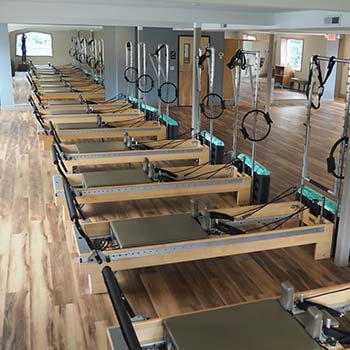
robots.txt (opens in a new tab)
7 rulesAll bots 1 allowed · 6 disallowed
- Allow
/wp-admin/admin-ajax.php - Disallow
/wp-content/uploads/wc-logs/ - Disallow
/wp-content/uploads/woocommerce_transient_files/ - Disallow
/wp-content/uploads/woocommerce_uploads/ - Disallow
/*?add-to-cart= - Disallow
/*?*add-to-cart= - Disallow
/wp-admin/
No matching rules.
Sitemaps
1Recent Updates
- Website images
- Screenshots
User reviews (0)