Website profiles · Technology insights · Alternatives

whatlang.fun

Guess the language from street signs, store names and random inscriptions

No paid content found
Visit website
Profile views 1 Outbound visits 0 Normal
whatlang Full homepage screenshot

At a glance

Category
Games & Board Games
Language
English
Paid-content signal
No paid content foundObserved
Registered
2025
Hosting
FastlyInferred
HTTPS certificate trusted
PassedObserved
Last updated

Website review

This review may include AI-generated content and is not individually verified. Domain, certificate and other facts come from the observed data on this page.

What is whatlang?

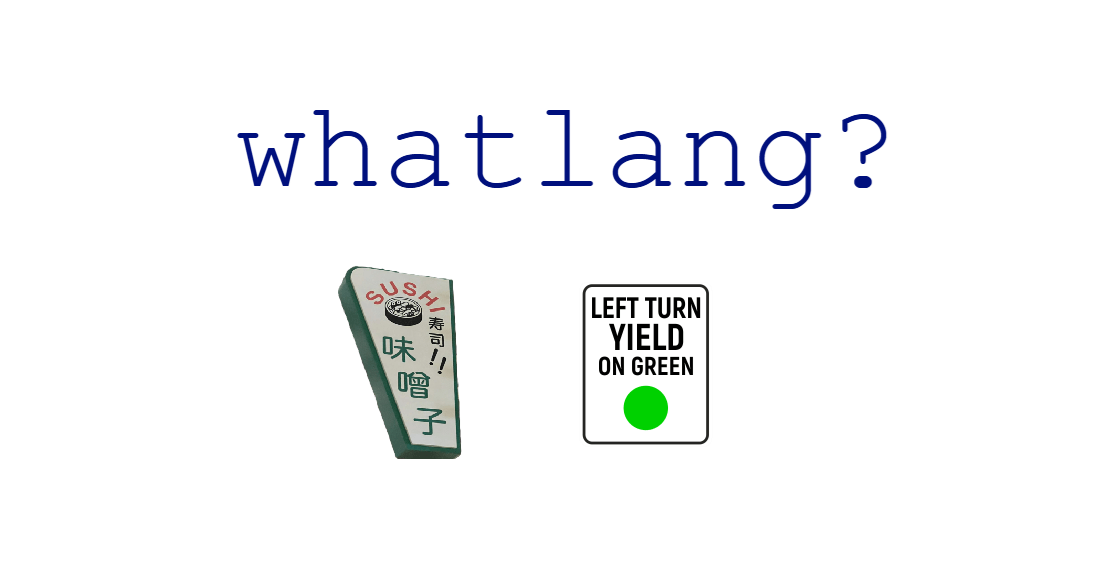
whatlang is a small browser game: you look at a picture of a street sign, shop name or random inscription and try to guess which language it is written in.

How it works

The page keeps a running score and a record, and you choose a round length before starting: 10, 20 or 30 rounds, or no limit for an endless session. Each round shows an image; you name the language, then move on with Next. The short round options suit a quick break, while the unlimited mode fits players who want a longer streak and a record worth beating.

Who it suits

  • Language learners testing whether they can tell, say, Polish from Czech or Norwegian from Danish on a short sign.
  • Travellers and map nerds who enjoy recognising scripts and place names.
  • Casual players who want a light quiz without accounts or setup.

Trade-offs

The appeal is also the limit: recognition of a script or a familiar word is not the same as understanding a language, and short signs can be ambiguous — a brand name or a Latin-script loanword may not point clearly to one answer. Treat the score as a fun signal of pattern recognition, not a proficiency test.

Next step: start with 10 rounds to see how the pictures read, then switch to no limit once you know whether you are guessing from script, vocabulary or geography — that tells you which skill the game is actually training for you.

For a different take on the same idea, LanguageGuessr drops you into map locations instead of signs.

How do I play a round of whatlang and how is my score calculated?

A round of whatlang asks you to look at a photo of real-world text—street signs, shop names, or random inscriptions—and identify which language it is written in. You pick a round length first (10, 20, or 30 rounds, or no limit), then work through the images one at a time using the "Next" control to move on.

How scoring works in practice

The page shows a running Score and a separate Record, so your current session total and your best result are tracked independently. The evidence stops at the counter display, so treat the exact points-per-correct-answer rule as something to confirm on the site itself rather than assume. As a working expectation: correct guesses add to your Score, a wrong guess typically ends or resets the streak, and Record keeps your best run across sessions.

A practical way to use the two numbers: watch Score within a session to judge how you are doing now, and watch Record to judge whether you are actually improving over time. If your Score climbs but Record stays flat, you are consistent but not yet beating your best run—try the longer round lengths to give yourself more chances to build a streak.

A concrete example

Suppose you choose 10 rounds. Round one shows a shopfront with Cyrillic lettering; you guess Russian and the Score ticks up. Round four shows a sign with diacritics that could be Czech or Slovak—a genuinely hard pair. That is the useful test case: the game rewards recognising script families and distinctive letterforms (ř, ě, Ě) rather than vocabulary, so a reader with no language study can still make progress by pattern-matching.

Choosing a round length

  • 10 rounds suits a quick break or a first try while you learn what the images look like.
  • 20–30 rounds gives a more meaningful Record attempt, since one unlucky image matters less.
  • No limit is for practice and for testing whether your accuracy holds up as fatigue sets in.

If you want a second opinion on a disputed sign, Wikipedia articles on writing systems are a reasonable reference for distinguishing scripts that share letterforms.

Can whatlang help me improve my ability to identify languages in everyday life?

Yes. whatlang is built around exactly that skill: guessing a language from street signs, store names and random inscriptions. The page presents it as a round-based game — you pick 10, 20 or 30 rounds, or "no limit" — with a running score and record, and a "Next" control to move through items. That loop trains recognition of scripts and letter patterns as they actually appear on signs and shopfronts, rather than in textbook sentences.

Where it helps most

  • Script-to-language recognition: short inscriptions give little context, so you learn to read cues from alphabets and diacritics — useful when travelling and trying to place a sign quickly.
  • Speed under uncertainty: scoring rewards committing to a guess, which mirrors real life, where you rarely get to deliberate over a menu or shop name.
  • Habit building: short sessions of 10 rounds fit into spare minutes, and the record counter gives a reason to return.

Where it falls short

Picking a language from a few words is not the same as understanding it. The game won't teach vocabulary, grammar or pronunciation, and short strings can be genuinely ambiguous — closely related languages or shared scripts can produce the same visual cues. Treat a correct guess as pattern recognition, not comprehension.

A practical way to use it

Play a 10-round set before a trip to a region you don't know, then follow up by checking the languages you missed against a reference such as Ethnologue or a phrasebook for that country. Deciding whether it suits you comes down to your goal: if you want faster recognition of written language in the wild, the format is well matched; if you want conversational ability, pair it with a proper course.

What types of images or signs does whatlang use in its language guessing game?

whatlang uses everyday real-world text rather than textbook sentences: street signs, store names and "random inscriptions" are the examples given on the site itself. In practice, that means short fragments of public writing — a shopfront, a road sign, a notice or a label — where the script, letterforms and a few recognisable words are the only clues.

What that means for play

  • Street signs reward script recognition: distinguishing, say, Cyrillic from Greek, or Devanagari from Bengali, often settles a round quickly.
  • Store names mix scripts with brand-style Latin lettering, so a sign may combine two writing systems and the clue is which one dominates.
  • Random inscriptions are the wildcard — short, sometimes partial text where you may only get a handful of characters to work with.

Because the clues are fragments, the game suits players who already read at least one non-Latin script and want to sharpen quick recognition, more than beginners looking for vocabulary practice. The round-length options (10, 20, 30 or unlimited) let you decide whether to treat it as a two-minute warm-up or a longer session.

A useful next step: before your first round, pick two or three scripts you can already identify and one you cannot, then play a short 10-round set to see whether your errors cluster around a single writing system — that tells you what to study next.

Is whatlang free to play, and do I need to create an account?

Yes. whatlang is presented as a free browser game, and the page shows no sign-up step: you choose a round count (10, 20, 30 or no limit) and press Next to start. There is no account or login prompt in the game's interface.

What that means in practice

  • No registration barrier: you can play a quick set of rounds without creating a profile.
  • Progress is session-based: the page tracks a Score and a Record, so expect your record to live in the browser rather than in a persistent account. Clearing site data may reset it.
  • Free is the model shown: the page evidence contains no pricing, subscription or payment signals, so there's nothing suggesting a paid tier.

A useful next step

If you want to keep a record across sessions, note your best score before closing the tab, or play the "no limit" mode when you have time for a longer run. For a short break, 10 rounds is the natural choice.

How does the record tracking work in whatlang, and can I compare my results with others?

The record tracking in whatlang is a personal running score rather than a shared leaderboard. The game screen shows a Score and a Record counter alongside the round controls, so your record builds up as you play through a set of rounds. You choose a session length before starting — 10 rounds, 20 rounds, 30 rounds, or no limit (∞) — and the record reflects how you do within that play.

What the page shows

  • Score: your current tally during a session.
  • Record: your saved best or cumulative result, displayed next to the score.
  • Round options: 10, 20, 30, or unlimited, selected before you begin.

Comparing with others

There is no visible mechanism on the page for comparing results with other players — no leaderboard, profile, or sharing feature is indicated. The record appears to be kept locally for your own reference, so you can track improvement across sessions but not rank yourself against others.

Practical use

If you want a fair self-comparison, keep the round count fixed — say, always 20 rounds — so your record reflects skill rather than session length. For a casual test of street-sign and store-name recognition, unlimited mode lets you play until you miss, which gives a cleaner sense of your ceiling.

As a next step, try a fixed 10-round session to set a baseline, then repeat it later to see whether your record moves. If comparing with friends matters to you, a game with shared scores would suit better; whatlang is best treated as a solo vocabulary and script-recognition drill.

Related questions

More questions →
What Is whatlang.fun?

whatlang.fun is a browser-based guessing game in which you identify languages from pictures of street signs, store names, and random inscriptions. It suits anyone who wants a quick, low-commitment language-recognition challenge; you play in rounds and the page tracks a score and a record.

How the Game Works

The site presents an image containing written text, and your task is to work out which language it is. The premise is that real-world signage — shopfronts, road signs, public inscriptions — gives you short, imperfect samples of a language, and recognizing them is part observation, part prior knowledge.

The page shows a running Score and Record, so each session is measurable against your own best result. The visible interface includes a Next control for moving through images.

Round Lengths

Before or during play you choose how long a session runs:

Option What it means
10 rounds A short session
20 rounds A medium session
30 rounds A longer session
No limit (∞) Play until you stop

Shorter sessions suit a quick break; the unlimited option suits practice or a longer run at a personal record.

What You Need to Play

  • A web browser — the game runs on the page itself, with no download described.
  • No account is mentioned in the available site information, so play appears to start directly from the page.
  • Nothing in the site information states a price or a login requirement; treat those as unconfirmed rather than assuming the game is free or open without sign-in.

Tips for Better Guessing

Because the clues are short real-world texts, a few habits help:

  1. Look at the script first. Writing systems narrow the field faster than individual words — distinguishing, for example, Latin, Cyrillic, Greek, Arabic, or Hangul letterforms immediately rules out most candidates.
  2. Use diacritics and special characters. Accented letters and unique marks are strong signals of a specific language within a shared script.
  3. Read for recognizable roots. Store names and signs often contain common words — words for "shop," "street," "open," or food terms — that point to a language family.
  4. Watch for place names. Signs frequently include a town or region name, which can anchor the language geographically.
  5. Expect close calls. Languages that share a script and vocabulary (for example, closely related European languages) are the hardest rounds; commit to your best answer rather than overthinking.

When It's a Good Fit

The game works well if you enjoy geography, travel, or linguistics and want a short, repeatable challenge with a score to beat. It is less suited to structured language learning — there are no lessons, translations, or explanations of answers described on the site, so it functions as recognition practice and entertainment rather than study material.

Is whatlang.fun free to play, and how do you get started?

whatlang.fun is a browser-based guessing game: you look at a picture of a street sign, store name, or random inscription and try to identify the language. The page shows no pricing, payment links, or subscription signals, so there is no indication that it costs anything to play. To start, open the site, choose a round length, and press Next.

How to start playing

  1. Open the site. Go to whatlang.fun in any modern web browser. No account or download is mentioned on the page.
  2. Pick a round length. The page offers four options: 10 rounds, 20 rounds, 30 rounds, or no limit ∞.
  3. Press Next. This loads the first picture prompt and begins the game.

The page also displays a Score: 0 and Record: 0 counter from the start, so you can track your progress as you play.

What you'll see on the page

Element What it shows
Round selector 10 / 20 / 30 rounds, or no limit
Next button Loads the next picture prompt
Score Your current points
Record Your best result

What to expect from the game

The premise is simple: each round presents a real-world image — a street sign, a shop name, or an inscription — and you guess which language it's in. Because the pictures come from everyday signage rather than textbook examples, the difficulty varies naturally from round to round.

If you want to understand how points accumulate or how the record is tracked, see the related question on how score and record work. If you're curious about the range of images and languages used, that's covered separately as well.

Common things to know before you start

  • No login wall is mentioned. The page presents the game directly, with the round selector and Next button visible immediately.
  • Round length is your main setting. Choosing "no limit ∞" means the game continues until you stop; the fixed options give you a defined session.
  • Nothing on the page suggests a paywall. Since no pricing or payment information appears, there's no evidence of a paid tier — but the absence of pricing details is not itself a guarantee of anything beyond what the page shows.

The fastest way to decide whether it's for you is to load a 10-round game and see how the first few pictures feel.

What kinds of pictures and languages does whatlang use?

whatlang.fun uses photos of real-world written language — street signs, store names, and random inscriptions — and asks you to guess which language appears in the image. The game interface is in English, but the images themselves can show any language, so the challenge is reading visual cues rather than translating a prompt.

What appears in the images

The site describes its content as language found on street signs, store names and random inscriptions. In practice, that means the pictures are everyday public text rather than textbook sentences or studio portraits. For example, you might see a shopfront with a painted name, a road sign, or a short piece of writing on a wall or object.

Because the images are drawn from ordinary surroundings, the text is often:

  • Short — a few words or a single line, not a paragraph
  • Contextual — the setting (street, storefront, sign) is part of what you see
  • Varied in script — the writing system itself is a clue, not just the words

How the guessing works

You look at the image and identify the language from visual cues in the writing. That can include the script or alphabet, letter shapes, diacritics, and any recognizable words or place-name patterns. The game does not appear to give you a list of options in the page evidence; the excerpt shows only the round controls and the next-image button, so the guess is yours to make.

A useful way to think about it: treat each image as a small puzzle where the script narrows the field first, then specific words or spelling conventions confirm the answer. For example, if you see a sign with a distinctive alphabet, that alone may rule out most candidates before you read a single word.

What the page shows about rounds

The page evidence includes round-length choices — 10 rounds, 20 rounds, 30 rounds, and no limit (∞) — plus a score and record display and a Next button. That tells you the game is structured as a series of images you advance through one at a time, with your score tracked across rounds.

Element What it suggests
10 / 20 / 30 / ∞ rounds You choose session length before or during play
Score and Record Correct guesses are counted and a personal best is kept
Next button You move through images one by one

The evidence does not show a timer, hint system, or answer-reveal mechanic, so don't assume those exist until you see them on the site.

What the game does not tell you

The available page material does not list which specific languages are included, how many images exist, or whether the images are user-submitted. If you need that level of detail — for example, to know whether a particular language you're studying is covered — the reliable move is to play a few rounds and observe, since the images themselves are the only stated source of the language content.

The content is presented in English, so instructions and interface labels are in English even when the pictured text is not.

How Score and Record Work in whatlang

In whatlang, your Score and Record both start at 0 and are displayed at the top of the game screen, next to the round options (10, 20, 30, or no limit ∞). The Score reflects how you are doing as you guess languages from pictures, while the Record tracks your performance across rounds. The exact point values and record rules are not described on the page, so treat the display as live feedback rather than a documented formula.

What the two numbers mean

Display Starting value What it reflects
Score 0 Your current result as you guess languages during play
Record 0 Your performance tracked across rounds

Both appear together in the header area, so you can watch them change without leaving the picture you are guessing from.

How a round fits in

  1. Choose a round length: 10 rounds, 20 rounds, 30 rounds, or no limit (∞).
  2. Look at the picture — a street sign, store name, or random inscription.
  3. Submit your guess for the language.
  4. Check the Score and Record displays to see the result.

The page shows a "Next" control, which moves you to the following picture. The round-length choice sets how long a session runs; "no limit" means the session continues until you stop.

Practical points before you play

  • Because the page does not publish a scoring formula, do not assume a correct guess is worth a fixed number of points. Use the Score display as the source of truth.
  • The Record is most useful when you play a fixed number of rounds (10, 20, or 30), since the session has a clear end point to compare against.
  • No pricing or login details are stated on the page, so nothing here should be read as confirming free or account-free access beyond what you see when you open the site.

If your goal is simply to understand the interface: Score is your in-game result, Record is your tracked performance, and both are visible alongside the round options from the first moment you load whatlang.

How to Play a Round on whatlang.fun

whatlang.fun is a browser-based guessing game: you look at a picture of a street sign, store name, or random inscription and try to identify the language. To play, open the site, pick a round length (10, 20, 30, or no limit), then for each image type your language guess and submit it. Your score and record update as you go, and the page shows the next image after each round.

Before You Start

  • A web browser and an internet connection; the game runs on the page itself.
  • No account setup is described on the site, so you can begin from the main screen.
  • The page displays a score, a record, and round-length options alongside a Next control.

Step by Step

1. Choose a round length

On the main screen you'll see four options: 10 rounds, 20 rounds, 30 rounds, and no limit ∞. Pick one to set how long your session lasts. A short session (10 rounds) suits a quick break; unlimited lets you keep going until you stop.

2. Look at the image

Each round presents a picture — the site's description names street signs, store names, and random inscriptions as the sources. Read the text in the image and note spelling, letter shapes, accents, and diacritics, since these are the main clues to the language.

3. Submit your guess

Enter the language you think the text is in and submit it. The game then moves you to the next image, typically via the Next control.

4. Track your score and record

Your Score counts correct guesses in the current session, and Record tracks your best result. Both are visible on the page, so you can see progress as rounds advance.

What to Expect

Element What it shows
Score Points earned so far in the session
Record Your best result to date
Round options 10, 20, 30, or unlimited
Next Moves to the following image

Common Snags

  • Similar-looking languages: Scripts shared across languages (for example Latin-based languages with accents) make guesses harder. Focus on distinctive characters and word endings rather than overall look.
  • Short inscriptions: A single word or abbreviation may not give enough context. Use letter combinations and diacritics as your main signal.
  • Ending a session: With a fixed round count, the session ends after that many images; choose unlimited if you don't want a cutoff.

Practical Tips

  • Start with 10 rounds to learn how the clues work before committing to a longer session.
  • Say the text silently — recognizing a word often identifies the language faster than analyzing letters.
  • Keep a mental note of languages you've already seen; repeated scripts can trip you up.

Website Overview

An active inbound-mail setup with incomplete authentication may leave the domain more open to impersonation. Provider hosting alone does not close that gap.

Domain and Registration

The domain was registered less than a year ago and has limited historical evidence to assess. Transfer-protection status is present, helping reduce the risk of unauthorized domain transfers. The domain uses the common .fun extension, which is not an independent safety signal.

DNS and Email

The observed email authentication setup is incomplete: DMARC is missing. Nameservers are provided by timeweb.ru, indicating managed DNS hosting. MX records point to the timeweb.ru email service. No CNAME was found; the observed records resolve directly to addresses. DNSSEC signatures were not detected, so this additional DNS authenticity protection is not confirmed.

TLS and Certificates

The certificate uses an RSA 2048-bit public key, offering broad client compatibility. The server supplied a complete certificate chain. No organization name is present in the certificate; the available fields are consistent with domain validation. The certificate was issued by Let's Encrypt, commonly associated with automated certificate services. The certificate's total validity is about 89 days, consistent with a short renewal cycle.

HTTP and Browser Security

The checked browser-security headers were not detected, leaving fewer explicit browser-side safeguards. CORS permits any origin to read this response. This is common for public resources; sensitive responses need narrower handling. No X-Powered-By header was found, reducing one common source of backend fingerprinting information. The x-cache, x-served-by, via response header indicates a CDN or caching proxy in the delivery path. No obvious internal addresses or debug information were found in the headers.

Technology Stack Analysis

The public page identifies Fastly without precise versions, leaving fewer clues for version-specific scanning.

Search and Social Sharing

Open Graph is partially configured; og:type is missing. The title has 44 characters, within a common display range. A meta description is present, with 73 characters. The observed directives allow indexing and link following. No Generator meta tag is publicly exposed.

Hosting and Email

DNStimeweb.ru
HostingFastly
Emailtimeweb.ru
Approximate IP geolocation (inferred; a CDN or proxy may differ from the origin server) United States flagUnited States Inferred 185.199.108.153

Registration details

RDAP / WHOIS

RegistrarPDR Ltd. d/b/a PublicDomainRegistry.com
Registered2025-12-06
Expires2026-12-06
Domain statusclient transfer prohibited
Nameserversns1.timeweb.ru、ns2.timeweb.ru、ns3.timeweb.org、ns4.timeweb.org
DNSSECunsigned

DNS records

DNS

TypeNameValueTTLPriority
Awhatlang.fun185.199.108.153600—
Awhatlang.fun185.199.109.153600—
Awhatlang.fun185.199.110.153600—
Awhatlang.fun185.199.111.153600—
AAAAwhatlang.fun2606:50c0:8000::153600—
AAAAwhatlang.fun2606:50c0:8001::153600—
AAAAwhatlang.fun2606:50c0:8002::153600—
AAAAwhatlang.fun2606:50c0:8003::153600—
MXwhatlang.funmx1.timeweb.ru60010
MXwhatlang.funmx2.timeweb.ru60020
NSwhatlang.funns1.timeweb.ru600—
NSwhatlang.funns2.timeweb.ru600—
NSwhatlang.funns3.timeweb.org600—
NSwhatlang.funns4.timeweb.org600—
TXTwhatlang.funv=spf1 include:_spf.timeweb.ru ~all600—

TLS and certificates

TLS / SSL

AssessmentNormal configuration
Supported protocolsTLSv1.2、TLSv1.3
Negotiated protocolTLSv1.3
Certificate subjectwhatlang.fun
IssuerLet's Encrypt
Valid until2027-01-01T02:38 · Remaining when checked: 65 days
Verification detailsCertificate trust: Passed · Hostname match: Passed

HTTP response headers

HTTP

HeaderValue
content-typetext/html; charset=utf-8
cache-controlmax-age=600
serverGitHub.com
access-control-allow-origin*

Identified technologies

Fastly

Pages, Search and Sharing

Meta descriptionGuess the language from street signs, store names and random inscriptions
Canonical URLhttps://whatlang.fun/
LanguageEnglish (default)
Twitter CardNot detected

No robots.txt found

No sitemaps found

User reviews (0)

  • No reviews yet.