Website profiles · Technology insights · Alternatives

avaloniabooks.com

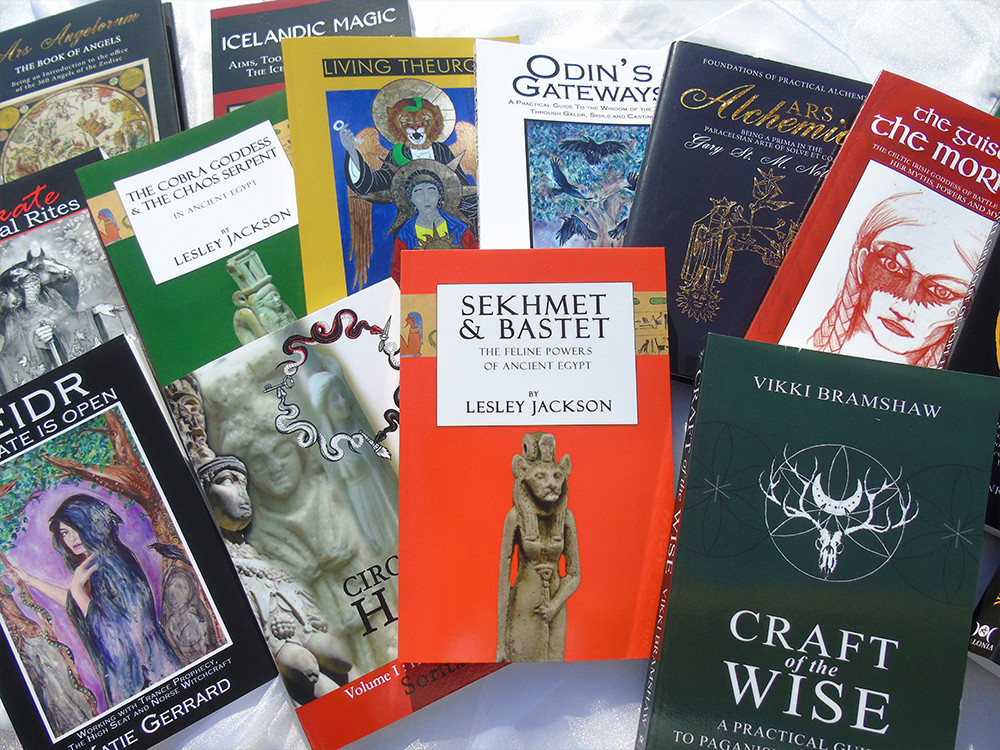
Discover books on witchcraft, paganism, wicca, magic, mythology and the occult from Avalonia, an independent publisher of scholarly and practical esoteric works.

No paid content found
Visit website
Profile views 1 Outbound visits 0 Normal
Independent publishing. Enduring curiosity. Full homepage screenshot

At a glance

Category
Books & Reading
Language
English
Paid-content signal
No paid content foundObserved
Registered
2019
Hosting
FastlyInferred
HTTPS certificate trusted
PassedObserved
Last updated

Website review

This review may include AI-generated content and is not individually verified. Domain, certificate and other facts come from the observed data on this page.

What is Avalonia Books?

Avalonia Books is an independent publisher of esoteric and occult literature, founded by Sorita d’Este. Its catalogue spans witchcraft, paganism, Wicca, magic, mythology, folklore, ancient religions, historical grimoires and ceremonial magic. The publisher describes its approach as bringing together scholarship, original research and the experience of practitioners, with titles aimed at informed practice and deeper enquiry rather than introductory novelty.

Who it suits

  • Practitioners who want historically grounded material on witchcraft, devotion or ceremonial magic.
  • Readers of mythology and folklore, particularly those interested in specific deities such as Hekate or the gods of ancient Egypt.
  • Independent researchers looking for specialised subjects and books with lasting reference value.

A practical next step

Start with the subject areas closest to your interest — deity-focused works, grimoire history or folklore — and compare a few titles within that area before choosing. If you are new to the field, a historically oriented overview is usually a better entry point than a specialist grimoire study; if you already practise, the practitioner-authored titles are likely to be more directly useful.

For broader comparison, Website Name is not a substitute here; Avalonia's distinct value is its focus on specialised, research-informed esoteric publishing rather than general-interest spirituality.

Which subjects and traditions does Avalonia publish, such as witchcraft, grimoires, or mythology?

Avalonia publishes across witchcraft, paganism and Wicca, magic and ceremonial magic, mythology, folklore, ancient religions and deities, and the historical grimoire tradition. Its stated approach combines scholarship and original research with practitioners' experience, so the catalogue spans both history-of-esotericism work and books written for people actively practising.

What the subject areas mean in practice

  • Witchcraft, paganism and Wicca: likely to suit readers exploring living traditions, whether they want background or practical guidance.
  • Ancient religions and deities: the page names Hekate and the deities of ancient Egypt as examples, which points to focused, tradition-specific studies rather than broad surveys.
  • Historical grimoires and ceremonial magic: oriented toward source-based study and informed practice, per the publisher's description.
  • Mythology and folklore: for readers interested in the stories and customs behind esoteric traditions.

Choosing between them

If you want to understand where a practice comes from, start with the grimoire and ancient-religion titles. If you want to apply a tradition, the witchcraft and pagan titles are the closer fit. For a reader weighing a first purchase, picking one tradition-specific book over a general introduction is often the better test of whether the publisher's voice suits you.

Avalonia was founded by Sorita d'Este and describes itself as championing specialised subjects and books of lasting value. For comparison, Llewellyn Worldwide covers a broader mass-market range of occult and pagan titles, while Scarlet Imprint leans toward limited-edition esoteric publishing; Avalonia sits between those poles, with an academic-practitioner emphasis.

Who founded Avalonia, and how does its independent publishing approach differ from mainstream occult publishers?

Avalonia was founded by Sorita d'Este, according to the publisher's own introduction. The site describes the press as bringing together scholarship, original research and practitioner experience, with titles spanning ancient religions, goddess traditions, witchcraft, folklore, historical grimoires and ceremonial magic.

What the independent approach means in practice

The difference is less about size than about editorial focus. Avalonia presents itself as championing specialised subjects and "books of lasting value," and as publishing scholars, independent researchers and experienced practitioners. That points to a catalogue built around depth in narrow areas—Hekate and Egyptian deities, the grimoire tradition, living devotional practice—rather than a broad, trend-led list.

For a reader, the practical trade-offs look like this:

  • Depth over breadth: You are more likely to find a focused monograph on a specific deity or magical tradition than a general beginner's overview.
  • Mixed voices: Scholarship and practitioner writing sit side by side, so check whether a given title is primarily historical research or personal practice.
  • Smaller discovery paths: Niche presses rely more on subject browsing and specialist recommendation than on wide retail visibility, so use the catalogue's subject categories deliberately.

Mainstream occult publishers often cast a wider net, favouring accessible introductions and titles with broad commercial reach. That makes them a reasonable starting point for newcomers, while a specialist press like Avalonia suits readers who already know their area and want sustained treatment of it.

Next step: If you are choosing a first book, decide whether you want an entry-level survey or a research-led treatment of one tradition; then browse Avalonia's catalogue by subject and compare the author's background—academic, independent researcher or practising occultist—against what you actually want from the book. For a wider field of comparable independent esoteric publishers, Scarlet Imprint is one to know.

How can I browse the catalogue by subject to find a book on a specific topic like Hekate or Egyptian deities?

Start with Avalonia's subject-based catalogue rather than its general "latest publications" list: the publisher organizes titles across areas such as Hekate and ancient Egyptian deities, witchcraft, folklore, and the grimoire tradition. Use the catalogue's subject browsing to narrow to the tradition or figure you want, then open individual title pages to confirm the book's scope and approach before choosing.

A practical browsing sequence

  • Pick the closest subject cluster first. For Hekate, look under goddess spirituality or ancient religion; for Egyptian deities, look under ancient religions rather than general mythology, since the catalogue groups them with deity-focused works.
  • Compare within the cluster. Avalonia publishes both scholarly and practitioner-oriented books, so two titles on the same figure may differ sharply in emphasis. Check whether a book foregrounds historical sources, original research, or lived practice.
  • Use the catalogue as a map, not a search engine. If a specific deity or topic has no dedicated section, scan the nearest broader subject and check adjacent titles on ancient religions or folklore.

What to check on each title

Question Why it matters
Scholarly or practical? Determines whether you get source analysis or ritual and devotional guidance
Single figure or wider tradition? A Hekate-focused book suits deep study; a broader goddess title gives context
Historical period covered Egyptian deity books can span different eras and regional cults

For readers who want to go deeper after browsing, Avalonia is the catalogue to start with; broader academic coverage of Hekate and Egyptian religion can be checked through JSTOR or a university library catalogue once you know the author and title you want.

What should I consider when choosing between Avalonia's scholarly research titles and its practical practitioner guides?

Choose based on what you want to do with the book: build a research-grounded understanding of a tradition, or apply a practice now. Avalonia's catalogue spans both, and its own framing stresses bringing "scholarship, original research and the experience of practitioners" together, so the split is often one of emphasis rather than a hard line.

How the two kinds of titles differ in use

If you want to… Lean toward What to expect
Trace a deity, text or grimoire through historical sources Scholarly research titles Close reading of primary material, argument and context; slower, citation-minded reading
Start or refine a working practice Practitioner guides Experience-led instruction, ritual structure and application
Understand why a practice looks the way it does A research title first, then a guide Concepts before technique, fewer false starts
Deepen an existing practice with background A guide plus a focused history Practical momentum with informed context

Practical criteria

  • Your starting point. Newcomers often do better with a practitioner guide to establish vocabulary and routine, then a research title to test assumptions. Readers with academic background may prefer the reverse.
  • Subjects where evidence is contested. Topics such as Hekate, Egyptian deities or the grimoire tradition involve interpretation of fragmentary sources. Research titles make those debates visible; guides tend to present a workable synthesis. Knowing which you want prevents frustration.
  • Whether you will act on it. If you will perform rituals or follow a devotional path, a guide's sequencing matters more than exhaustive sourcing. If you are writing, teaching or comparing traditions, the research titles carry more weight.
  • Reading stamina. Scholarly works reward slow, note-taking reading; guides are usually built for repeated consultation.

A useful next step: pick one subject you care about, such as witchcraft or the grimoire tradition, and compare one research-led title with one practical title in that same area before committing to a larger order. Browsing the catalogue by subject makes those pairings easy to spot at Avalonia.

How does Avalonia select and work with its authors, researchers, and practitioners?

Avalonia presents itself as a publisher that brings together scholarship, original research and practitioner experience, with founder Sorita d'Este named as its founder. That combination is the clearest signal of how it frames its author relationships: it publishes scholars, independent researchers and experienced practitioners, and champions specialised subjects and "books of lasting value."

What the site makes clear

  • Who it publishes: scholars, independent researchers and experienced practitioners, not only academics or only practitioners.
  • What it looks for: work grounded in original research and informed practice, spanning ancient religions, witchcraft, historical grimoires and ceremonial magic.
  • Its editorial stance: books that encourage "informed practice, thoughtful questioning and independent discovery," which suggests an emphasis on rigour and depth over introductory or trend-driven titles.

What the site does not specify

The page evidence does not describe a formal acquisitions process, submission guidelines, proposal requirements, peer review, contracts or timelines. So anyone wanting to know exactly how Avalonia selects and works with authors should treat the above as its stated ethos rather than a documented procedure.

A practical next step

If you are a researcher or practitioner considering approaching Avalonia, start by reading two or three of its existing titles in your subject area to see whether your work fits its depth and tone. Then prepare a short proposal covering your research basis, your practical grounding and why the subject has lasting value—the three qualities the publisher says it looks for. For comparison, other independent esoteric publishers such as Scarlet Imprint and Strandberg Publishing publish in adjacent areas, and reading their author pages can help you judge which house best suits your manuscript.

Related questions

More questions →
Who Writes the Books Published by Avalonia?

Avalonia's books are written by a mix of scholars, independent researchers, and experienced practitioners. The publisher states that it brings together "scholarship, original research and the experience of practitioners," so authorship varies by title rather than following a single profile. If you are weighing whether a particular book is right for you, the useful question is not "who writes for Avalonia?" in general, but which of these three backgrounds the author of that specific title comes from.

The Three Author Backgrounds Avalonia Names

Avalonia describes its contributor base in three overlapping categories:

  • Scholars — writers grounded in academic study of ancient religions, historical sources, and texts such as grimoires.
  • Independent researchers — people doing original research outside formal academic institutions.
  • Experienced practitioners — authors writing from lived practice in witchcraft, paganism, and related traditions.

These categories are not presented as separate imprints or series. They describe the range of people Avalonia publishes, and a single author may fit more than one.

What This Means for the Books Themselves

The mix of backgrounds shows up in the subject matter. Avalonia says its books explore ancient religions, gods and goddesses, witchcraft, historical grimoires, and ceremonial magic. It also describes publishing "works that encourage informed practice, thoughtful questioning and independent discovery."

That phrasing points to two kinds of content sitting side by side:

Emphasis What the book typically does Author background most often behind it
Historical source interpretation Reads and interprets historical texts and traditions Scholars and independent researchers
Living traditions Expresses practice within ongoing traditions Experienced practitioners

A book on historical grimoires, for example, leans toward source interpretation. A book on contemporary devotional practice leans toward the practitioner side. Many titles combine both, which is consistent with Avalonia's stated aim of connecting scholarship with practice.

Why Avalonia Frames Authorship This Way

Avalonia was founded by Sorita d'Este, and the publisher says it "publishes scholars, independent researchers and experienced practitioners" while championing "specialised subjects and books of lasting value to readers."

The emphasis on specialised subjects matters for how you read the author question. Avalonia is not positioning itself as a mass-market publisher with a house style imposed on writers. It presents itself as an independent publisher selecting authors with specific expertise, whether that expertise is academic, research-based, or practical. The catalogue spans subjects from Hekate and the deities of ancient Egypt to folklore, witchcraft, and the grimoire tradition — a range that only works if authors are drawn from different backgrounds.

How to Check a Specific Author

Avalonia's site does not list author credentials in a single directory, so the practical approach is title by title:

  1. Open the catalogue and browse by subject to find the book you are considering.
  2. Read the book's own description for how it frames its sources — historical documents, original research, or personal practice.
  3. Look at how the author is introduced on that book's page; Avalonia presents authors as scholars, researchers, or practitioners depending on the title.
  4. Match the framing to what you want: a source-based study, original research, or guidance from practice.

The general answer — scholars, independent researchers, and experienced practitioners — tells you what kinds of authors to expect. The specific answer for any book comes from that book's own page.

What Kinds of Books Does Avalonia Publish?

Avalonia publishes books on witchcraft, paganism, Wicca, magic, mythology, folklore, ancient religions, historical grimoires, and ceremonial magic, with a particular strength in goddess spirituality and deity-focused works. It describes itself as an independent publisher that combines scholarship, original research, and the experience of practitioners. If you are looking for serious but accessible esoteric books rather than general New Age titles, Avalonia is aimed at you.

Core subject areas

Avalonia's catalogue is organized around a few connected areas of interest:

  • Witchcraft, paganism, and Wicca — practical and historical works on living traditions and their development.
  • Magic and ceremonial magic — including the grimoire tradition and the interpretation of historical sources.
  • Mythology, folklore, and ancient religions — including books on gods and goddesses and on devotional practice.
  • Goddess spirituality and deity-focused works — the site specifically names Hekate and the deities of ancient Egypt as examples.

The publisher frames these subjects as ones that "reward deeper enquiry," and says it publishes works that encourage informed practice, thoughtful questioning, and independent discovery. In practice, that means the list leans toward books that explain sources and context rather than only offering introductory overviews.

What distinguishes Avalonia's approach

Two things stand out from the publisher's own description:

  1. Practitioner plus scholar. Avalonia says it brings together scholarship, original research, and the experience of practitioners. Books are written by scholars, independent researchers, and experienced practitioners — not by a single in-house voice.
  2. Specialised subjects. The publisher explicitly says it champions specialised subjects and books of lasting value. That is a signal that some titles will go deep into a narrow topic, such as a particular deity, a historical grimoire, or a regional folklore tradition.

Avalonia was founded by Sorita d'Este, which helps explain the emphasis on deity-focused and devotional subjects alongside historical magic.

How to tell whether a title fits you

Because the catalogue spans both historical study and living practice, the useful question is not "is this an occult book?" but "which kind of occult book is this?" Use these distinctions when browsing:

If you want… Look for titles on…
Historical grounding Historical grimoires, interpretation of historical sources, ancient religions
Practice and tradition Witchcraft, Wicca, ceremonial magic, living traditions
Devotion and deity work Goddess spirituality, Hekate, Egyptian gods
Cultural context Mythology and folklore

The site offers two entry points: a "latest publications" section for new releases and a catalogue browsable by subject. Browsing by subject is the faster route if you already know which of the areas above you want.

A practical example

Suppose you are researching Hekate and want something beyond a general introduction. On Avalonia, you would go to the catalogue, select the subject area covering goddess spirituality or ancient religions, and look for titles that name Hekate directly. The publisher's stated focus on scholarship and original research suggests these titles will engage with sources and historical context — which is what you want if the goal is informed practice rather than a quick overview. The same approach works for Egyptian deities, folklore, or the grimoire tradition.

Bottom line

Avalonia is a good fit if you want independent, specialised esoteric publishing that treats witchcraft, paganism, magic, mythology, and ancient religions as subjects worth studying seriously. It is less suited to readers seeking broad, beginner-level surveys across many traditions at once. Start with the subject-based catalogue and match the title's focus — historical, practical, or devotional — to what you actually want to do with the book.

What Is Avalonia Books?

Avalonia (avaloniabooks.com) is an independent publisher of esoteric and occult books, founded by Sorita d'Este. It publishes works on witchcraft, paganism, Wicca, magic, mythology, folklore, ancient religions, historical grimoires, and ceremonial magic. Its stated approach is to bring together scholarship, original research, and the experience of practitioners — so it is a good fit if you want books that treat these subjects seriously rather than as trend-driven entertainment.

What Avalonia publishes

According to the site, Avalonia's catalogue spans:

  • Ancient religions and deities — including Hekate and the gods and goddesses of ancient Egypt
  • Witchcraft and Wicca — living traditions and practice
  • Pagan and goddess spirituality
  • Magic and ceremonial magic — including the grimoire tradition
  • Mythology and folklore
  • Historical grimoires — interpretation of historical sources

The publisher describes its list as exploring "the history and practice of esoteric traditions," from the interpretation of historical sources to the expression of living traditions.

Who it's for

Avalonia positions itself for readers who want informed practice, thoughtful questioning, and independent discovery. In practice, that means:

  • Practitioners looking for books grounded in tradition and experience
  • Independent researchers and scholars interested in specialised esoteric subjects
  • Curious readers exploring mythology, folklore, or the history of magic for the first time

The site explicitly says Avalonia champions "specialised subjects and books of lasting value," which signals a focus on depth over breadth.

How to use the site

  1. Start with the catalogue — the site invites you to "find your next read" by browsing by subject, from Hekate and Egyptian deities to folklore, witchcraft, and the grimoire tradition.
  2. Check the latest publications — the homepage highlights new releases if you want recent titles.
  3. Read the about section — it explains the publisher's editorial stance and Sorita d'Este's role as founder, useful for judging whether a title's perspective matches your interests.

A reasonable expectation: the site is a publisher's catalogue, so you'll find book descriptions and subject browsing rather than a general bookstore's search tools. The available site information does not specify prices, payment options, or shipping details, so check individual title pages or the publisher directly for purchasing specifics.

Quick reference

Question Answer
What is it? Independent esoteric/occult book publisher
Founded by Sorita d'Este
Core subjects Witchcraft, paganism, Wicca, magic, mythology, folklore, grimoires, ancient religions
Editorial approach Scholarship + original research + practitioner experience
Best for Readers seeking specialised, lasting works on esoteric traditions

If your interest is in serious, research-informed books on magic, mythology, and pagan traditions, Avalonia's catalogue is worth browsing by subject. If you need general-interest occult titles or mainstream retail convenience, look elsewhere first.

How to Browse Avalonia's Catalogue and Latest Publications

To browse Avalonia's books, start at avaloniabooks.com and use two entry points: the latest publications section for new releases, and the catalogue for browsing by subject. The catalogue covers subjects including Hekate and the deities of ancient Egypt, folklore, witchcraft, and the grimoire tradition, so you can go straight to the area you want rather than scanning the full list.

Start With the Latest Publications

If you want to know what Avalonia has released most recently, the latest publications section is the quickest route. The site presents it as the place to "find your next read" and to explore new titles before diving into the wider catalogue. This suits readers who already know Avalonia's general focus and want to see what is new.

Browse the Catalogue by Subject

The catalogue is organised by subject, which is the more efficient path when you have a specific interest. According to the site, you can browse "by subject, from Hekate and the deities of ancient Egypt to folklore, witchcraft and the grimoire tradition."

If you are interested in Browse toward
Hekate and related devotion Subject area for Hekate
Ancient Egyptian religion Deities of ancient Egypt
Traditional stories and customs Folklore
Magical practice and history Witchcraft; historical grimoires; ceremonial magic
Mythology and ancient religions Mythology; ancient religions; gods and goddesses

The publisher describes its list as bringing together "scholarship, original research and the experience of practitioners," covering "ancient religions, gods and goddesses, witchcraft, historical grimoires and ceremonial magic." Use those labels as your guide when choosing a subject category.

Decide Which Entry Point Fits

  • Choose latest publications if you want new or recent titles and have no fixed subject in mind.
  • Choose the subject catalogue if you already know your area — for example, grimoire tradition or Egyptian deities — and want a focused list.
  • Browse broadly first if you are new to the publisher: the subject overview shows the full range, from historical sources to living traditions, before you commit to one area.

A Practical Browsing Sequence

  1. Open avaloniabooks.com.
  2. Go to the latest publications section to see recent releases.
  3. Move to the catalogue and select the subject closest to your interest.
  4. Note titles that match, then check the individual book pages for details before deciding.

A common sticking point is treating the catalogue as a single flat list. It is organised by subject, so picking a category first will surface relevant titles faster than scrolling everything. If a subject you expect is not obvious, try the nearest related category — for instance, material on historical magic may sit under grimoires or ceremonial magic rather than a general "magic" heading.

About the Publisher

Avalonia is an independent publisher founded by Sorita d'Este. It publishes scholars, independent researchers and experienced practitioners, with a stated emphasis on specialised subjects and "books of lasting value." That focus explains why the catalogue leans toward specific traditions and historical sources rather than general-interest titles — useful context when deciding whether a subject category is likely to hold what you want.

Website Overview

An established domain and managed infrastructure suggest continuity of operations and may support dependable delivery, although neither guarantees service quality.

Domain and Registration

Registered in 2019, this domain has about 7 years of history. That suggests continuity, although ownership and purpose may have changed. The domain uses the common .com extension, which is not an independent safety signal.

DNS and Email

Nameservers are provided by wixdns.net, indicating managed DNS hosting. No MX record was found. A conventional explicit inbound-mail route is not configured. DNSSEC signatures were not detected, so this additional DNS authenticity protection is not confirmed. The lowest observed DNS TTL is 3600 seconds. No CAA record was found; there is no additional DNS-based restriction on certificate issuers.

TLS and Certificates

The certificate uses an RSA 2048-bit public key, offering broad client compatibility. The server supplied a complete certificate chain. No organization name is present in the certificate; the available fields are consistent with domain validation. The certificate was issued within the Google Trust Services cloud or CDN ecosystem. The certificate's total validity is about 89 days, consistent with a short renewal cycle.

HTTP and Browser Security

The response lacks these common security headers: CSP, Referrer-Policy, Permissions-Policy, clickjacking protection. No X-Powered-By header was found, reducing one common source of backend fingerprinting information. The cf-ray, x-served-by response header indicates a CDN or caching proxy in the delivery path. No obvious internal addresses or debug information were found in the headers. The Server header identifies cloudflare without an exact version.

Technology Stack Analysis

The public page identifies Wix.com Website Builder, Wix, React, Sentry, Cloudflare, Fastly without precise versions, leaving fewer clues for version-specific scanning.

Search and Social Sharing

The meta description has 161 characters and may be shortened in search results. The Generator tag identifies Wix.com Website Builder, making the publishing system easier to fingerprint. Twitter Card metadata is configured. The title has 43 characters, within a common display range. The observed directives allow indexing and link following.

Hosting and Email

DNSwixdns.net
HostingFastly
EmailUnknown
Approximate IP geolocation (inferred; a CDN or proxy may differ from the origin server) United States flagUnited States Inferred 162.159.143.12

Registration details

RDAP / WHOIS

Registrar123-Reg Limited
Registered2019-06-26
Expires2027-06-26
Domain statusactive
Nameserversns6.wixdns.net、ns7.wixdns.net
DNSSECunsigned

DNS records

DNS

TypeNameValueTTLPriority
Acfd.wixdns.net162.159.143.123600—
Acfd.wixdns.net172.66.3.83600—
NSavaloniabooks.comns6.wixdns.net86400—
NSavaloniabooks.comns7.wixdns.net86400—
CNAMEwww.avaloniabooks.comcdn3.wixdns.net3600—

TLS and certificates

TLS / SSL

AssessmentNormal configuration
Supported protocolsTLSv1.2、TLSv1.3
Negotiated protocolTLSv1.3
Certificate subjectavaloniabooks.com
IssuerGoogle Trust Services
Valid until2026-12-12T19:44 · Remaining when checked: 45 days
Verification detailsCertificate trust: Passed · Hostname match: Passed

HTTP response headers

HTTP

HeaderValue
content-typetext/html; charset=UTF-8
content-languagezh-CN
cache-controlpublic,max-age=0,must-revalidate
servercloudflare
strict-transport-securitymax-age=31556952
x-content-type-optionsnosniff
set-cookieRedacted

Identified technologies

Wix.com Website BuilderWixReactSentryCloudflareFastly

Pages, Search and Sharing

Meta descriptionDiscover books on witchcraft, paganism, wicca, magic, mythology and the occult from Avalonia, an independent publisher of scholarly and practical esoteric works.
Canonical URLhttps://www.avaloniabooks.com
LanguageEnglish (default)
Twitter Cardsummary
All bots 1 allowed · 1 disallowed
  • Allow/
  • Disallow*?lightbox=
adsbot-google-mobile 0 allowed · 2 disallowed
  • Disallow/_partials*
  • Disallow/pro-gallery-webapp/v1/galleries/*
adsbot-google 0 allowed · 2 disallowed
  • Disallow/_partials*
  • Disallow/pro-gallery-webapp/v1/galleries/*
petalbot 0 allowed · 1 disallowed
  • Disallow/
dotbot 0 allowed · 0 disallowed
  • IntervalCrawl delay 10 seconds
ahrefsbot 0 allowed · 0 disallowed
  • IntervalCrawl delay 10 seconds

User reviews (0)

  • No reviews yet.