
 简体中文
 English

brandmentions.com
AI social listening and brand monitoring across social media, news, blogs, forums and the web. Context, sentiment and client-ready reports, trusted by 12,400+ brands.
At a glance
- Category
- Social & Community
- Language
- English
- Paid-content signal
- No paid content foundObserved
- Registered
- 2009
- Hosting
- Hetzner Online GmbHInferred
- HTTPS certificate trusted
- PassedObserved
- Last updated
Related questions
More questions →What Is a Social Listening Tool and What Should You Look for Before Choosing One?
A social listening tool monitors conversations across social media, news sites, blogs, forums, and the wider web for mentions of your brand, competitors, or topics, then uses AI to interpret context and sentiment and delivers alerts and reports. It differs from a basic mention alert in that it aims to tell you how you're being talked about, not just that you were mentioned. BrandMentions, for example, describes itself as an AI social listening and brand monitoring tool covering social media, news, blogs, forums, and the web, with context and sentiment analysis and client-ready reports, and offers a 7-day free trial with no obligation. Choose a tool like this if you need ongoing reputation and competitor visibility; a simple alert feed may suffice if you only need to know when your name appears.
What a social listening tool actually does
The core loop is: collect mentions → interpret them → alert you → report on them.
- Multi-source monitoring. The tool watches the channels where people talk about your brand. BrandMentions states it monitors "all the important channels," spanning web and social media.
- Sentiment and context analysis. Rather than counting keywords, the tool assesses the tone of conversations you appear in. BrandMentions advertises "comprehensive sentiment analysis" and AI that decodes context to "cut through the noise."
- Real-time alerts. BrandMentions says it provides real-time alerts straight to your inbox, so you learn about important mentions as they happen.
- Reporting. The output is meant to be shareable: BrandMentions emphasizes automated, client-ready reports.
How this differs from adjacent tools
| Tool type | What it answers | Typical limit |
|---|---|---|
| Basic mention alert | "Was my brand name posted?" | Little context; noise from irrelevant matches |
| Media monitoring | "What did the press say?" | Often narrower channel coverage |
| Social listening tool | "Who is talking about us, how, and what should we do?" | Requires setup and review to be useful |
Practical use cases
BrandMentions groups its use cases into four areas, each of which maps to a real task:
- Reputation management — know who is talking about you and what they're saying, so you can respond before an issue spreads.
- Competitor research — analyze competitors' marketing strategies and positioning to see where the competition actually stands.
- Customer acquisition and retention — learn customers' core interests and where to promote products or find new customers.
- Engagement and influencer discovery — find customers and key influencers in your niche for larger brand exposure.
For example, if you need to know why a product complaint is circulating, sentiment plus context lets you separate genuine criticism from sarcastic or unrelated mentions — something a raw keyword alert can't do.
What to evaluate before choosing
Use the same dimensions across candidates and score them:
- Source coverage. Does it monitor the channels your audience actually uses — social networks, news, blogs, forums, and the open web? BrandMentions claims coverage across all of these.
- Context and sentiment accuracy. Ask for a trial and check whether the tool correctly reads tone on real mentions of your brand, including ambiguous or sarcastic ones.
- Alerting. Confirm alerts are timely and delivered where you work (BrandMentions cites inbox delivery).
- Reporting. Check whether reports are exportable and presentable to clients — important if you're an agency or reseller, a segment BrandMentions explicitly lists.
- Trial and commitment terms. BrandMentions offers a 7-day free trial with no obligation; verify current terms on the site, since pricing details are not specified in the available material.
- Social proof, cautiously. BrandMentions cites 12,400+ brands and agencies and a 4.9/5 rating; treat vendor-published figures as a starting point, not a verdict.
A simple first-step workflow
- Define what to track. List your brand name, product names, key executives, and two or three competitors.
- Set up monitoring for those terms in the tool, using the source coverage you confirmed during evaluation.
- Let alerts accumulate for a few days, then review them for relevance and sentiment accuracy.
- Triage: flag mentions needing a response (reputation), note competitor patterns, and identify engaged customers or influencers.
- Generate a report from the collected data and compare it against your baseline expectations.
Verification: after the first week, you should be able to answer "how are we being talked about, and by whom?" from the tool's alerts and reports alone. If too many irrelevant mentions appear, tighten your tracked terms; if sentiment looks wrong, that's a signal to test another tool's context accuracy before committing.
What Is Brand Monitoring and How Do You Set It Up to Track Mentions and Sentiment?
Brand monitoring is the ongoing process of finding and analyzing every public mention of your company, product, or key people across social networks, news, blogs, forums, and the wider web, then using that data to protect reputation and inform decisions. You set it up by defining your search terms (brand, product, and competitor names plus common misspellings), choosing a tool that covers the channels your audience uses, enabling real-time alerts and sentiment analysis, and assigning someone to review and respond. Tools like BrandMentions, which markets AI-driven monitoring across web and social sources with context and sentiment analysis and automated reports, are built for exactly this workflow. The rest of this guide explains the mechanics and walks through a practical setup.
Brand monitoring vs. social listening vs. media monitoring
The three terms overlap, and vendors often use them interchangeably. The practical distinction:
| Practice | Primary scope | Typical output |
|---|---|---|
| Brand monitoring | All public mentions of your brand: social, news, blogs, forums, web | Alerts, reputation tracking, mention reports |
| Social listening | Social conversations, including topics and competitors, not just your name | Sentiment trends, audience and influencer insight, campaign measurement |
| Media monitoring | News outlets, press, and broadcast-style coverage | Coverage reports, PR measurement |
Brand monitoring is the umbrella activity; social listening is the social-channel slice with more emphasis on conversation analysis; media monitoring is the earned-media slice. In practice, a single tool usually covers all three, which is why BrandMentions positions itself as both a social listening and brand monitoring tool.
Why it matters: what you actually get
- Early warning on reputation issues. A complaint or critical article surfaces in an alert before it spreads.
- Engagement opportunities. People asking about your product or recommending it are identifiable and reachable.
- Competitor intelligence. Tracking competitor names reveals their campaigns, launches, and where they get attention.
- Evidence for reporting. Mention volume and sentiment over time give you something concrete to show stakeholders.
BrandMentions frames these as three use cases: building engaged relations (finding customers and influencers), acquiring and retaining customers (understanding interests and where to promote), and managing brand reputation (knowing who says what).
Step 1: Decide which channels to monitor
Start from where your audience actually talks, not from a checklist. The main categories:
- Social networks — the highest-volume source for most consumer brands.
- News and press — matters if you have PR exposure, are publicly visible, or operate in regulated industries.
- Blogs — review posts, roundups, and industry commentary.
- Forums and communities — often where detailed complaints and recommendations live.
- The wider web — review sites, directories, and long-tail pages.
BrandMentions states it monitors "all the important channels where people talk about your brand," covering web and social media. Confirm coverage of your specific platforms before committing to any tool.
Step 2: Build your keyword set
This is where most setups succeed or fail. A brand name alone misses a large share of relevant mentions.
Include:
- Brand name — exact and common variants.
- Product and service names — each one separately if volume justifies it.
- Common misspellings and abbreviations — how people actually type your name.
- Handles and hashtags — your social usernames and campaign tags.
- Key people — founders or spokespeople, if they are public-facing.
- Competitor names — for benchmarking and market context.
- High-risk phrases — e.g., "brand name + refund," "brand name + scam," to catch problems early.
Keep each term specific enough to avoid noise. A generic word that happens to be part of your name will flood your feed; test each term's volume before adding it.
Step 3: Turn on alerts and sentiment analysis
Real-time alerts are the operational core. BrandMentions describes "real-time alerts straight to your inbox" and "comprehensive sentiment analysis" that tells you the tone of conversations you appear in.
A workable alert design:
- High-priority alert (immediate): negative sentiment, high-risk phrases, mentions from large accounts or major outlets.
- Daily digest: all new mentions, grouped by source.
- Weekly summary: volume and sentiment trends, competitor share of voice.
Sentiment analysis is a filter, not a verdict. Automated tools misread sarcasm, mixed reviews, and industry jargon, so treat negative flags as a queue to review rather than a final judgment. BrandMentions emphasizes AI that decodes context to "cut through the noise" — useful, but still worth spot-checking.
Step 4: Turn mentions into action
Monitoring only pays off if someone acts on the output. A simple operating loop:
- Engage: reply to questions, thank advocates, route complaints to support.
- Escalate: flag reputation risks to whoever owns communications.
- Report: use automated reports (BrandMentions advertises client-ready automated reports) for stakeholders.
- Benchmark: compare your mention volume and sentiment against competitors tracked with the same terms.
Assign an owner and a review cadence (daily for alerts, weekly for trends). Without this, alerts pile up unread.
Choosing a tool: what to check
BrandMentions cites 12,400+ brands and agencies and a 4.9/5 rating, and offers a 7-day free trial with no obligation. Beyond marketing claims, evaluate any brand monitoring tool on the same dimensions:
| Dimension | What to verify |
|---|---|
| Source coverage | Does it monitor the specific social networks, news, blogs, and forums your audience uses? |
| Keyword flexibility | Can you add misspellings, phrases, and competitor terms, and exclude noise? |
| Sentiment quality | How accurate is it on your language and industry? Test with real mentions. |
| Alerts | Real-time vs. digest, and routing options (email, integrations). |
| Reporting | Automated, shareable reports for clients or leadership. |
| Competitor tracking | Can you benchmark against rivals in the same view? |
| Trial and pricing | Test during the trial; confirm current pricing and plan limits directly, since published details vary. |
The 7-day trial is the right moment to run a real test: load your actual keyword set, check a week of mentions against what you know happened, and judge sentiment accuracy before deciding.
Common pitfalls
- Too few keywords — you miss misspellings and product-level mentions.
- Too many broad terms — the feed becomes noise and gets ignored.
- Ignoring sentiment errors — treating automated scores as ground truth.
- No owner — alerts without a responder are just email clutter.
- Monitoring without benchmarking — mention counts mean little without competitor context.
Set up the keyword list, alerts, and an owner first; refine terms and sentiment rules after the first two weeks of real data.
What Is AI Social Listening and How Does It Differ from Traditional Social Listening?
AI social listening is the use of machine learning to find, interpret, and report on brand mentions across social media, news, blogs, forums, and the wider web—going beyond keyword matching to judge context and sentiment. It suits teams that already track mentions but are drowning in noise, or that need to monitor many channels without reading every post. BrandMentions, for example, describes its platform as "deep web & social monitoring powered by proprietary and advanced AI" that aims to "decode context, cut through the noise, and automate your reports."
The core tasks AI social listening automates
Traditional social listening is essentially a saved search: you enter keywords, the tool returns every post containing them. AI social listening keeps the search but adds interpretation on top. Three tasks matter most:
- Mention discovery. Finding where a brand, product, or competitor is discussed across multiple sources and social networks, rather than one platform at a time.
- Sentiment and context analysis. Judging the tone of a conversation—positive, negative, neutral—and what the mention actually means, not just that a keyword appeared.
- Reporting. Turning raw mentions into summaries and client-ready reports, so the output is a decision aid rather than a feed.
BrandMentions frames these as real-time alerts to your inbox, comprehensive sentiment analysis, and automated reports, with coverage spanning web and social channels.
How AI differs from keyword-based listening
The practical difference shows up in the mentions a keyword search gets wrong. Consider a brand called "Anchor." A keyword tool returns every post about boat anchors, news anchors, and podcast anchors alongside genuine brand mentions. An AI layer is meant to separate the brand from the homonym by reading the surrounding text.
The same applies to tone. A post reading "Great, another outage" contains the word "great," which naive sentiment scoring may read as positive. Context-aware analysis is designed to catch the sarcasm. This is the "decode context" claim in BrandMentions' positioning—and it is also where you should test any tool before trusting it, since sentiment accuracy varies by language, slang, and industry.
A useful way to compare the two approaches:
| Dimension | Keyword-based listening | AI social listening |
|---|---|---|
| Matching | Exact terms and Boolean strings | Terms plus contextual interpretation |
| Sentiment | Word-level polarity | Sentence- and conversation-level tone |
| Noise handling | Manual filtering by the analyst | Automated relevance filtering (verify it) |
| Reporting | Export and build reports yourself | Automated summaries and reports |
| Main risk | Missed variants, false positives | Misclassified tone, opaque filtering |
Practical use cases
- Brand reputation monitoring. Know who is talking about you and what they are saying, so you can respond before an issue spreads. BrandMentions lists reputation management as a core use case.
- Competitor tracking. Analyze competitors' marketing strategies and where they stand in your niche—BrandMentions markets "competitor spying" for exactly this.
- Customer and market insight. Learn customers' core interests to shape products and find where to promote them; BrandMentions describes discovering customers and influencers in your niche for engagement and retention.
What to evaluate before choosing a tool
- Source coverage. Confirm the specific networks, news sites, blogs, and forums you care about are monitored—coverage claims are broad, so check your own channels.
- Sentiment accuracy. Run a test with known-sarcastic and ambiguous posts in your language and industry before committing.
- Alerting and reporting. Check whether alerts arrive in real time and whether reports are genuinely client-ready or need heavy editing.
- Noise control. Ask how false positives are filtered and whether you can tune relevance rules.
- Trial terms. BrandMentions advertises a 7-day free trial with no obligation; use it to run the tests above rather than to browse the interface.
Common limitations to watch for
AI social listening reduces manual filtering but does not eliminate it. Expect some false positives on common-word brand names, sentiment errors on sarcasm and mixed-tone threads, and gaps where a platform's data is hard to access. Treat AI output as a prioritized shortlist that a human still reviews, especially before acting on a negative mention or publishing a report.
What Is Social Listening and How Can You Use It to Monitor Your Brand?
Social listening is the practice of collecting and analyzing online conversations about your brand, products, competitors, and market across social networks, news, blogs, forums, and the wider web — then interpreting the context and sentiment behind those mentions so you can act on them. It goes beyond counting mentions: the goal is to understand what is being said, by whom, and why, and to turn that into decisions about reputation, content, product, and outreach. You can start with a small keyword set and a single monitoring tool, then expand as you learn which channels and terms produce useful signal.
Social Listening vs. Mention Tracking
Mention tracking answers "how many times was my brand named?" Social listening answers "what does the conversation mean, and what should we do about it?"
| Dimension | Mention tracking | Social listening |
|---|---|---|
| Core question | How many mentions? | What is said, by whom, and in what tone? |
| Output | Volume counts, share of voice | Context, sentiment, themes, influencer identification |
| Channels | Usually one platform | Social networks, news, blogs, forums, web |
| Action | Report a number | Respond, adjust messaging, find partners, fix issues |
A rising mention count can be good or bad — a product complaint thread and a product launch announcement look identical in a raw count. Sentiment and context analysis is what separates the two. BrandMentions, for example, positions its platform around AI-driven context and sentiment analysis rather than raw mention volume, and offers real-time alerts to your inbox.
What to Monitor
The channels worth covering depend on where your audience actually talks. A reasonable starting scope:
- Social networks — direct customer comments, complaints, and praise.
- News and media — coverage that shapes perception beyond your followers.
- Blogs — reviews, tutorials, and opinion pieces with long shelf life.
- Forums and communities — candid discussion that rarely surfaces on social feeds.
- The wider web — any page that names your brand, including comparison and review sites.
BrandMentions states that it monitors "all the important channels where people talk about your brand," spanning web and social media. If your audience is concentrated on one or two platforms, start there rather than spreading thin.
Reading Sentiment and Context
Sentiment analysis classifies mentions as positive, negative, or neutral. Treat it as a triage layer, not a verdict:
- Positive mentions are candidates for amplification — reshare, thank the poster, or invite them into a case study.
- Negative mentions need a human read before a response. Sarcasm, comparisons, and mixed reviews often get misclassified.
- Neutral mentions (news roundups, listicles) are often the most valuable for PR and partnership outreach because they indicate where your brand sits in the market narrative.
BrandMentions advertises "comprehensive sentiment analysis" that shows the tone of conversations you appear in. Whatever tool you use, spot-check a sample of classified mentions against your own reading before trusting aggregate sentiment scores in a report.
Practical Use Cases
Reputation management. Knowing who is talking about you and what they are saying lets you respond early to emerging issues. BrandMentions frames this as understanding and protecting your reputation in a competitive market.
Competitor research. Monitoring competitor names reveals their campaigns, launches, and the complaints their customers voice — gaps you can address. BrandMentions describes "competitor spying" as analyzing top players in your niche from multiple angles.
Influencer and community discovery. Listening surfaces the people already talking about your category, which is more reliable than guessing who has reach. BrandMentions lists building engaged relations with customers and niche influencers as a core use case.
Customer retention and product insight. Mentions reveal what customers actually want, which feeds product and messaging decisions. BrandMentions describes using listening to understand customers' core interests and where to promote products.
Setting Up Your First Monitoring Program
- Define your keyword set. Start with your brand name and common misspellings, product names, and your own handles. Add competitor names and two or three category terms. Keep the first set small — 10 to 20 terms — so you can review results manually.
- Choose channels and a tool. Pick the platforms where your audience is active plus general web coverage. A dedicated tool such as BrandMentions consolidates social, news, blogs, forums, and web into one stream; BrandMentions offers a 7-day free trial with no obligation, which is enough to test whether its coverage matches your keyword set.
- Configure alerts. Set real-time email alerts for high-priority terms (brand name plus crisis words like "refund" or "broken") and a daily digest for everything else. BrandMentions states that alerts arrive straight to your inbox.
- Establish a review rhythm. A 15-minute daily scan of negative and high-reach mentions, plus a weekly review of themes and sentiment trends, is enough for most small teams.
- Produce a recurring report. Summarize volume, sentiment split, top themes, notable influencers, and competitor share of voice. BrandMentions highlights client-ready automated reports as a feature — useful if you report to stakeholders or clients.
- Verify and refine. After two weeks, drop keywords that produce noise and add terms that surfaced unexpectedly. Re-check sentiment accuracy on a sample.
Verification: you know the setup is working when alerts arrive for mentions you can independently find, sentiment labels match your own reading on most sampled mentions, and the weekly report surfaces at least one actionable item.
Common Pitfalls
- Too many keywords at once. Broad terms flood the stream and hide the signal; expand gradually.
- Trusting sentiment scores blindly. Always sample-check, especially for sarcasm and comparison content.
- Monitoring without a response process. Decide in advance who responds to negative mentions and within what timeframe.
- Ignoring forums and blogs. High-intent discussions often live there rather than on social feeds.
- Treating volume as success. A spike in mentions is a prompt to read, not a KPI on its own.
Choosing a Tool: What to Check
Before committing, evaluate candidates on the same dimensions: channel coverage (social, news, blogs, forums, web), sentiment and context quality, alert speed and delivery, competitor monitoring, reporting and export, and trial terms. BrandMentions positions itself on AI-driven context analysis, multi-channel coverage, competitor monitoring, and automated reports, and cites adoption by 12,400+ brands and agencies with a 4.9/5 rating on its site. Pricing details are not specified in the available material, so confirm plan costs and limits directly with the vendor during the trial. Use the free trial to test coverage against your own keyword list before deciding.
What to Look for in a Brand Monitoring Tool Before You Choose One
Look for four things before you commit: coverage of the channels where your brand is actually discussed, real-time alerts, sentiment analysis you can trust, and reports you can hand to a client or manager without rework. Then test those four on a short trial using your own brand name, not a demo dataset. BrandMentions, for example, positions itself on deep web and social monitoring with AI-driven context and automated reports, and offers a 7-day free trial with no obligation — a workable window to run exactly that test.
The four criteria that decide most of the choice
1. Source coverage
A tool is only as good as the places it looks. Check whether it monitors social networks, news sites, blogs, forums, and the general web — the page evidence for BrandMentions lists all of these as monitored channels. If your audience lives in forums and niche blogs, a tool that only indexes major social platforms will miss the conversations that matter most.
Ask a concrete question during evaluation: where did our last five significant mentions come from? If the tool can't surface those sources, coverage is a gap.
2. Real-time alerts
Monitoring you have to log in to check is monitoring you will forget. BrandMentions describes real-time alerts delivered straight to your inbox. Before choosing, confirm:
- Which channels trigger alerts and which are digest-only
- Whether you can set alert thresholds (e.g., only negative sentiment, only high-reach accounts)
- How fast an alert arrives after a mention is published
3. Sentiment and context accuracy
Sentiment analysis is where tools diverge most. BrandMentions markets "comprehensive sentiment analysis" and AI that decodes context to cut through noise. That claim is worth testing directly: pick ten recent mentions of your brand, including sarcasm, mixed reviews, and ambiguous phrasing, and compare the tool's labels to your own reading. A tool that misreads sarcasm will inflate or deflate your reputation dashboard.
4. Reporting and export
If you work in an agency or report upward, the output matters as much as the input. BrandMentions advertises client-ready automated reports and lists "Resellers and Agencies" among its use cases. Check whether reports are exportable, brandable, and schedulable — and whether the metrics match what your stakeholders already track.
Brand monitoring vs. social listening: which do you need?
The two overlap but are not identical, and knowing the difference keeps you from over- or under-buying.
| Dimension | Brand monitoring | Social listening |
|---|---|---|
| Primary question | What is being said about us? | Why are people saying it, and what should we do? |
| Typical scope | Mentions of brand, product, executives, competitors | Broader market, category, and audience conversations |
| Main outputs | Alerts, sentiment trends, reputation reports | Audience insight, content and campaign strategy |
| Best fit | Reputation management, PR, customer support | Marketing strategy, product and audience research |
BrandMentions bundles both: its feature list covers brand monitoring, reputation management, competitor spying, media monitoring, and business intelligence. If you mainly need to know when and where you're mentioned and how it's toned, brand monitoring is the core job. If you need to understand audience interests to shape products and campaigns — which the page describes as getting to know customers' core interests — you need the listening layer too.
Competitor monitoring: a differentiator worth checking
Competitor tracking is often the feature that justifies the subscription. BrandMentions frames it as revealing competitors' marketing strategies and researching any brand quickly. When evaluating, test whether you can:
- Add competitor names and see their mention volume alongside yours
- Compare share of voice over the same period
- Identify which channels competitors earn coverage in
If a tool treats competitors as an add-on module rather than a first-class object, comparison work becomes manual.
How to run the trial before you commit
Use the 7-day free trial to test the tool against your own data rather than its marketing. A practical sequence:
- Set up tracking for your brand, two competitors, and one product name. Note how long setup takes and whether the tool suggests related terms you missed.
- Let it run 48–72 hours, then compare the mention count against a manual search of the same period. Large gaps in either direction signal coverage or noise problems.
- Audit sentiment on 20 mentions you classify yourself. Record the agreement rate.
- Build one report as if delivering it to a stakeholder. Time how long it takes and whether it needed manual cleanup.
- Check alert latency by noting when a known mention triggered an email versus when it was published.
If steps 2–4 hold up, the tool fits. If sentiment agreement is poor or reports need heavy editing, the trial has done its job.
Common sticking points
- Noise from generic brand names. Short or common words generate false positives. Test whether the tool supports exclusion terms and phrase matching.
- Sentiment skew on mixed mentions. Reviews that praise and criticize in one post often get a single label. Decide whether that granularity is acceptable for your reporting.
- Trial scope creep. Seven days is enough to test coverage and sentiment, not to judge long-term trend accuracy. Plan a second check after a month if you subscribe.
- Pricing and plan limits. The page shows a free trial but does not publish plan details in the material reviewed here; confirm mention limits, user seats, and export rights directly with the vendor before deciding.
The short version: choose on coverage, alerting, sentiment accuracy, and report usability — in that order — and let a hands-on trial with your own brand name, not a sales demo, make the final call.
Website Overview
Identifiable technologies and additional version or configuration signals make the service easier to fingerprint, which may help targeted scanners narrow their checks. An established domain and managed infrastructure suggest continuity of operations and may support dependable delivery, although neither guarantees service quality.
Domain and Registration
Registered in 2009, this domain has about 17 years of history. That suggests continuity, although ownership and purpose may have changed. Transfer-protection status is present, helping reduce the risk of unauthorized domain transfers. The registrar is GoDaddy.com, LLC, a widely used domain service provider. The domain uses the common .com extension, which is not an independent safety signal.
DNS and Email
Nameservers are provided by first-ns.de, indicating managed DNS hosting. MX records point to the Google Workspace email service. No CNAME was found; the observed records resolve directly to addresses. SPF and DMARC are configured. DKIM status is unknown. TXT records include verification markers for Google. Such markers may also remain after a service stops being used.
TLS and Certificates
The certificate issuer is Sectigo Limited, a commercial certificate authority. The certificate uses an RSA 2048-bit public key, offering broad client compatibility. The server supplied a complete certificate chain. No organization name is present in the certificate; the available fields are consistent with domain validation. The certificate is valid for about 396 days in total, with 73 days remaining.
HTTP and Browser Security
The Server header exposes the software version: nginx/1.28.0. This makes version-targeted checks easier, but is not proof of an exploitable vulnerability. X-Powered-By exposes backend information: PHP/8.4.22. The checked browser-security headers were not detected, leaving fewer explicit browser-side safeguards. No obvious internal addresses or debug information were found in the headers. No explicit CDN or WAF marker was found in the response headers.
Technology Stack Analysis
The public page identifies Google Tag Manager, Google Analytics, nginx 1.28.0, PHP, with exact versions exposed for 1 technologies. These details can narrow vulnerability checks, although exposure alone is not a vulnerability.
Search and Social Sharing
The meta description has 166 characters and may be shortened in search results. Twitter Card metadata is configured. The page declares 6 language or regional alternatives using hreflang. The title has 59 characters, within a common display range. The observed directives allow indexing and link following.
Hosting and Email
 Hetzner Online GmbH
 Google Workspace
 Falkenstein, Saxony, Germany
Inferred
78.46.67.222
Registration details
| Registrar | GoDaddy.com, LLC |
|---|---|
| Registered | 2009-06-20 |
| Expires | 2032-06-20 |
| Domain status | client delete prohibited、client renew prohibited、client transfer prohibited、client update prohibited |
| Nameservers | ns1.first-ns.de、robotns2.second-ns.de、robotns3.second-ns.com |
| DNSSEC | unsigned |
DNS records
| Type | Name | Value | TTL | Priority |
|---|---|---|---|---|
| A | brandmentions.com | 78.46.67.222 | 300 | — |
| MX | brandmentions.com | aspmx.l.google.com | 300 | 1 |
| MX | brandmentions.com | alt1.aspmx.l.google.com | 300 | 5 |
| MX | brandmentions.com | alt2.aspmx.l.google.com | 300 | 5 |
| MX | brandmentions.com | alt3.aspmx.l.google.com | 300 | 10 |
| MX | brandmentions.com | alt4.aspmx.l.google.com | 300 | 10 |
| NS | brandmentions.com | ns1.first-ns.de | 300 | — |
| NS | brandmentions.com | robotns2.second-ns.de | 300 | — |
| NS | brandmentions.com | robotns3.second-ns.com | 300 | — |
| TXT | brandmentions.com | google-site-verification=8jRg4GPnvdCTFvB_g5MzTaqGn3adIKfGmXdYyTXjJOk | 300 | — |
| TXT | brandmentions.com | v=spf1 include:_spf.google.com include:spf.mail.intercom.io include:servers.mcsv.net ~all | 300 | — |
| DMARC | _dmarc.brandmentions.com | v=DMARC1; p=quarantine; pct=100; rua=mailto:[email protected]; ruf=mailto:[email protected]; sp=none | 300 | — |
TLS and certificates
HTTP response headers
| Header | Value |
|---|---|
| content-type | text/html; charset=UTF-8 |
| server | nginx/1.28.0 |
Identified technologies
Pages, Search and Sharing
| Meta description | AI social listening and brand monitoring across social media, news, blogs, forums and the web. Context, sentiment and client-ready reports, trusted by 12,400+ brands. |
|---|---|
| Canonical URL | https://brandmentions.com/ |
| Language | English (default) · Multilingual |
| Twitter Card | summary_large_image |
Social Sharing Preview
11 fields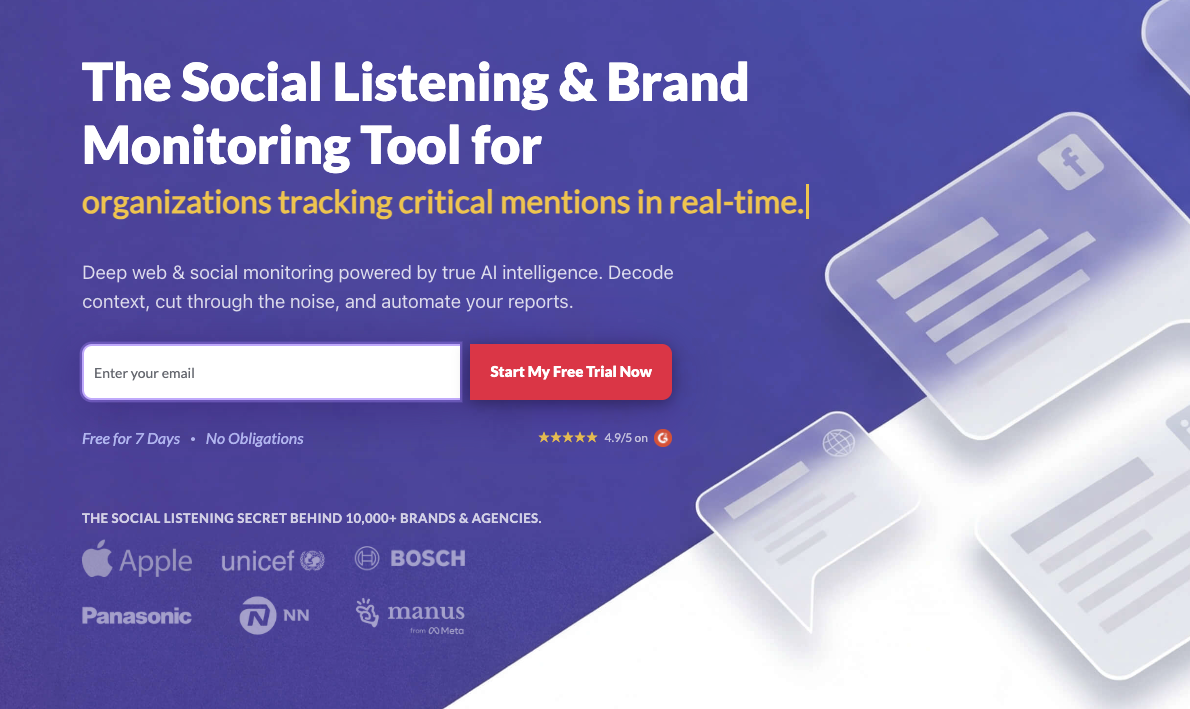

robots.txt (opens in a new tab)
296 rulesisrabot 0 allowed · 0 disallowed
orthogaffe 0 allowed · 0 disallowed
ubicrawler 0 allowed · 1 disallowed
- Disallow
/
doc 0 allowed · 1 disallowed
- Disallow
/
zao 0 allowed · 1 disallowed
- Disallow
/
sitecheck.internetseer.com 0 allowed · 1 disallowed
- Disallow
/
zealbot 0 allowed · 1 disallowed
- Disallow
/
msiecrawler 0 allowed · 1 disallowed
- Disallow
/
sitesnagger 0 allowed · 1 disallowed
- Disallow
/
webstripper 0 allowed · 1 disallowed
- Disallow
/
webcopier 0 allowed · 1 disallowed
- Disallow
/
fetch 0 allowed · 1 disallowed
- Disallow
/
offline explorer 0 allowed · 1 disallowed
- Disallow
/
teleport 0 allowed · 1 disallowed
- Disallow
/
teleportpro 0 allowed · 1 disallowed
- Disallow
/
webzip 0 allowed · 1 disallowed
- Disallow
/
linko 0 allowed · 1 disallowed
- Disallow
/
httrack 0 allowed · 1 disallowed
- Disallow
/
microsoft.url.control 0 allowed · 1 disallowed
- Disallow
/
xenu 0 allowed · 1 disallowed
- Disallow
/
larbin 0 allowed · 1 disallowed
- Disallow
/
libwww 0 allowed · 1 disallowed
- Disallow
/
zyborg 0 allowed · 1 disallowed
- Disallow
/
download ninja 0 allowed · 1 disallowed
- Disallow
/
wget 0 allowed · 1 disallowed
- Disallow
/
grub-client 0 allowed · 1 disallowed
- Disallow
/
k2spider 0 allowed · 1 disallowed
- Disallow
/
npbot 0 allowed · 1 disallowed
- Disallow
/
webreaper 0 allowed · 1 disallowed
- Disallow
/
All bots 0 allowed · 266 disallowed
- Disallow
/blog/*/attachment/* - Disallow
/blog/attachment/* - Disallow
/wiki/User_talk: - Disallow
/wiki/User: - Disallow
/wiki/Special:Login - Disallow
/wiki/dynamic_file.php - Disallow
/es/wiki/User_talk: - Disallow
/es/wiki/User: - Disallow
/es/wiki/Special:Login - Disallow
/es/wiki/dynamic_file.php - Disallow
/es/wiki/Special:Search - Disallow
/es/wiki/index.php - Disallow
/wiki/index.php - Disallow
/wiki/*oldid - Disallow
/wiki/*from - Disallow
/wiki/*title - Disallow
/wiki/*curid - Disallow
/wiki/*hidelinks - Disallow
/wiki/*redlink - Disallow
/wiki/*direction - Disallow
/wiki/*namespace - Disallow
/w/ - Disallow
/trap/ - Disallow
/wiki/Especial:Search - Disallow
/wiki/Especial%3ASearch - Disallow
/wiki/Special:Collection - Disallow
/wiki/Spezial:Sammlung - Disallow
/wiki/Special:Random - Disallow
/wiki/Special%3ARandom - Disallow
/wiki/Special:Search - Disallow
/wiki/Special%3ASearch - Disallow
/wiki/Spesial:Search - Disallow
/wiki/Spesial%3ASearch - Disallow
/wiki/Spezial:Search - Disallow
/wiki/Spezial%3ASearch - Disallow
/wiki/Specjalna:Search - Disallow
/wiki/Specjalna%3ASearch - Disallow
/wiki/Speciaal:Search - Disallow
/wiki/Speciaal%3ASearch - Disallow
/wiki/Speciaal:Random - Disallow
/wiki/Speciaal%3ARandom - Disallow
/wiki/Speciel:Search - Disallow
/wiki/Speciel%3ASearch - Disallow
/wiki/Speciale:Search - Disallow
/wiki/Speciale%3ASearch - Disallow
/wiki/Istimewa:Search - Disallow
/wiki/Istimewa%3ASearch - Disallow
/wiki/Toiminnot:Search - Disallow
/wiki/Toiminnot%3ASearch - Disallow
/wiki/%D8%AE%D8%A7%D8%B5:Search - Disallow
/wiki/%D8%AE%D8%A7%D8%B5%3ASearch - Disallow
/wiki/Wikipedia:L%C3%B6schkandidaten/ - Disallow
/wiki/Wikipedia:Löschkandidaten/ - Disallow
/wiki/Wikipedia:Vandalensperrung/ - Disallow
/wiki/Wikipedia:Benutzersperrung/ - Disallow
/wiki/Wikipedia:Vermittlungsausschuss/ - Disallow
/wiki/Wikipedia:Administratoren/Probleme/ - Disallow
/wiki/Wikipedia:Adminkandidaturen/ - Disallow
/wiki/Wikipedia:Qualitätssicherung/ - Disallow
/wiki/Wikipedia:Qualit%C3%A4tssicherung/ - Disallow
/wiki/Spezial: - Disallow
/wiki/Special: - Disallow
/wiki/Datei: - Disallow
/wiki/File: - Disallow
/wiki/Wikipedia:Vandalismusmeldung/ - Disallow
/wiki/Wikipedia:Gesperrte_Lemmata/ - Disallow
/wiki/Wikipedia:Löschprüfung/ - Disallow
/wiki/Wikipedia:L%C3%B6schprüfung/ - Disallow
/wiki/Wikipedia:Administratoren/Notizen/ - Disallow
/wiki/Wikipedia:Schiedsgericht/Anfragen/ - Disallow
/wiki/Wikipedia:L%C3%B6schpr%C3%BCfung/ - Disallow
/wiki/Wikipedia:Checkuser/ - Disallow
/wiki/Wikipedia_Diskussion:Checkuser/ - Disallow
/wiki/Wikipedia_Diskussion:Adminkandidaturen/ - Disallow
/wiki/Wikipedia:Spam-Blacklist-Log - Disallow
/wiki/Wikipedia%3ASpam-Blacklist-Log - Disallow
/wiki/Wikipedia_Diskussion:Spam-Blacklist-Log - Disallow
/wiki/Wikipedia_Diskussion%3ASpam-Blacklist-Log - Disallow
/wiki/Wikipedia:Articles_for_deletion/ - Disallow
/wiki/Wikipedia%3AArticles_for_deletion/ - Disallow
/wiki/Wikipedia:Votes_for_deletion/ - Disallow
/wiki/Wikipedia%3AVotes_for_deletion/ - Disallow
/wiki/Wikipedia:Pages_for_deletion/ - Disallow
/wiki/Wikipedia%3APages_for_deletion/ - Disallow
/wiki/Wikipedia:Miscellany_for_deletion/ - Disallow
/wiki/Wikipedia%3AMiscellany_for_deletion/ - Disallow
/wiki/Wikipedia:Miscellaneous_deletion/ - Disallow
/wiki/Wikipedia%3AMiscellaneous_deletion/ - Disallow
/wiki/Wikipedia:Copyright_problems - Disallow
/wiki/Wikipedia%3ACopyright_problems - Disallow
/wiki/Wikipedia:Protected_titles/ - Disallow
/wiki/Wikipedia%3AProtected_titles/ - Disallow
/wiki/Wikipedia:WikiProject_Spam/ - Disallow
/wiki/Wikipedia%3AWikiProject_Spam/ - Disallow
/wiki/MediaWiki - Disallow
/wiki/MediaWiki:Spam-blacklist - Disallow
/wiki/MediaWiki%3ASpam-blacklist - Disallow
/wiki/MediaWiki_talk:Spam-blacklist - Disallow
/wiki/MediaWiki_talk%3ASpam-blacklist - Disallow
/wiki/Wikipedia:Poistettavat_sivut - Disallow
/wiki/K%C3%A4ytt%C3%A4j%C3%A4: - Disallow
/wiki/Käyttäjä: - Disallow
/wiki/Keskustelu_k%C3%A4ytt%C3%A4j%C3%A4st%C3%A4: - Disallow
/wiki/Keskustelu_käyttäjästä: - Disallow
/wiki/Wikipedia:Yll%C3%A4pit%C3%A4j%C3%A4t/ - Disallow
/wiki/Wikipedia:Ylläpitäjät/ - Disallow
/wiki/Wikip%C3%A9dia:Pages_%C3%A0_supprimer/ - Disallow
/wiki/Wikip%C3%A9dia:Pages_soup%C3%A7onn%C3%A9es_de_violation_de_copyright/ - Disallow
/wiki/%D7%9E%D7%99%D7%95%D7%97%D7%93:Search - Disallow
/wiki/%D7%9E%D7%99%D7%95%D7%97%D7%93%3ASearch - Disallow
/wiki/Speci%C3%A1lis:Search - Disallow
/wiki/Speci%C3%A1lis%3ASearch - Disallow
/wiki/%E7%89%B9%E5%88%A5:Search - Disallow
/wiki/%E7%89%B9%E5%88%A5%3ASearch - Disallow
/wiki/Wikipedia:Pagini_de_%C5%9Fters - Disallow
/wiki/Wikipedia%3APagini_de_%C5%9Fters - Disallow
/wiki/Discu%C5%A3ie_Wikipedia:Pagini_de_%C5%9Fters - Disallow
/wiki/Discu%C5%A3ie_Wikipedia%3APagini_de_%C5%9Fters - Disallow
/wiki/%D0%A1%D0%BF%D0%B5%D1%86%D0%B8%D0%B0%D0%BB%D1%8C%D0%BD%D1%8B%D0%B5:Search - Disallow
/wiki/%D0%A1%D0%BF%D0%B5%D1%86%D0%B8%D0%B0%D0%BB%D1%8C%D0%BD%D1%8B%D0%B5%3ASearch - Disallow
/wiki/Wikipedia:%E5%89%8A%E9%99%A4%E4%BE%9D%E9%A0%BC/ - Disallow
/wiki/Wikipedia%3A%E5%89%8A%E9%99%A4%E4%BE%9D%E9%A0%BC/ - Disallow
/wiki/Wikipedia:%E5%88%A9%E7%94%A8%E8%80%85%E3%83%9A%E3%83%BC%E3%82%B8%E3%81%AE%E5%89%8A%E9%99%A4%E4%BE%9D%E9%A0%BC - Disallow
/wiki/Wikipedia%3A%E5%88%A9%E7%94%A8%E8%80%85%E3%83%9A%E3%83%BC%E3%82%B8%E3%81%AE%E5%89%8A%E9%99%A4%E4%BE%9D%E9%A0%BC - Disallow
/wiki/Wikipedia:Páginas_para_eliminar/ - Disallow
/wiki/Wikipedia:P%C3%A1ginas_para_eliminar/ - Disallow
/wiki/Wikipedia%3AP%C3%A1ginas_para_eliminar/ - Disallow
/wiki/Wikipedia_Discussão:Páginas_para_eliminar/ - Disallow
/wiki/Wikipedia_Discuss%C3%A3o:P%C3%A1ginas_para_eliminar/ - Disallow
/wiki/Wikipedia_Discuss%C3%A3o%3AP%C3%A1ginas_para_eliminar/ - Disallow
/wiki/Wikipedia:删除投票/侵权 - Disallow
/wiki/Wikipedia:%E5%88%A0%E9%99%A4%E6%8A%95%E7%A5%A8/%E4%BE%B5%E6%9D%83 - Disallow
/wiki/Wikipedia:删除投票和请求 - Disallow
/wiki/Wikipedia:%E5%88%A0%E9%99%A4%E6%8A%95%E7%A5%A8%E5%92%8C%E8%AF%B7%E6%B1%82 - Disallow
/wiki/Category:快速删除候选 - Disallow
/wiki/Category:%E5%BF%AB%E9%80%9F%E5%88%A0%E9%99%A4%E5%80%99%E9%80%89 - Disallow
/wiki/Category:维基百科需要翻译的文章 - Disallow
/wiki/Category:%E7%BB%B4%E5%9F%BA%E7%99%BE%E7%A7%91%E9%9C%80%E8%A6%81%E7%BF%BB%E8%AF%91%E7%9A%84%E6%96%87%E7%AB%A0 - Disallow
/wiki/Wikipedia:Pagine_da_cancellare - Disallow
/wiki/Wikipedia%3APagine_da_cancellare - Disallow
/wiki/Wikipedia:Utenti_problematici - Disallow
/wiki/Wikipedia%3AUtenti_problematici - Disallow
/wiki/Wikipedia:Vandalismi_in_corso - Disallow
/wiki/Wikipedia%3AVandalismi_in_corso - Disallow
/wiki/Wikipedia:Amministratori - Disallow
/wiki/Wikipedia%3AAmministratori - Disallow
/wiki/Wikipedia:Proposte_di_cancellazione_semplificata - Disallow
/wiki/Wikipedia%3AProposte_di_cancellazione_semplificata - Disallow
/wiki/Categoria:Da_cancellare_subito - Disallow
/wiki/Categoria%3ADa_cancellare_subito - Disallow
/wiki/Wikipedia:Sospette_violazioni_di_copyright - Disallow
/wiki/Wikipedia%3ASospette_violazioni_di_copyright - Disallow
/wiki/Categoria:Da_controllare_per_copyright - Disallow
/wiki/Categoria%3ADa_controllare_per_copyright - Disallow
/wiki/Progetto:Rimozione_contributi_sospetti - Disallow
/wiki/Progetto%3ARimozione_contributi_sospetti - Disallow
/wiki/Categoria:Da_cancellare_subito_per_violazione_integrale_copyright - Disallow
/wiki/Categoria%3ADa_cancellare_subito_per_violazione_integrale_copyright - Disallow
/wiki/Progetto:Cococo - Disallow
/wiki/Progetto%3ACococo - Disallow
/wiki/Discussioni_progetto:Cococo - Disallow
/wiki/Discussioni_progetto%3ACococo - Disallow
/wiki/Wikipedia:Strony_do_usuni%C4%99cia - Disallow
/wiki/Wikipedia%3AStrony_do_usuni%C4%99cia - Disallow
/wiki/Wikipedia:Do_usuni%C4%99cia - Disallow
/wiki/Wikipedia%3ADo_usuni%C4%99cia - Disallow
/wiki/Wikipedia:SDU/ - Disallow
/wiki/Wikipedia%3ASDU/ - Disallow
/wiki/Wikipedia:Strony_podejrzane_o_naruszenie_praw_autorskich - Disallow
/wiki/Wikipedia%3AStrony_podejrzane_o_naruszenie_praw_autorskich - Disallow
/wiki/Portal:Prepared_stories/ - Disallow
/wiki/Portal%3APrepared_stories/ - Disallow
/wiki/Wikinotizie:Richieste_di_cancellazione - Disallow
/wiki/Wikinotizie:Sospette_violazioni_di_copyright - Disallow
/wiki/Wikinotizie:Storie_in_preparazione - Disallow
/wiki/ויקיפדיה:רשימת_מועמדים_למחיקה/ - Disallow
/wiki/ויקיפדיה%3Aרשימת_מועמדים_למחיקה/ - Disallow
/wiki/%D7%95%D7%99%D7%A7%D7%99%D7%A4%D7%93%D7%99%D7%94:%D7%A8%D7%A9%D7%99%D7%9E%D7%AA_%D7%9E%D7%95%D7%A2%D7%9E%D7%93%D7%99%D7%9D_%D7%9C%D7%9E%D7%97%D7%99%D7%A7%D7%94/ - Disallow
/wiki/%D7%95%D7%99%D7%A7%D7%99%D7%A4%D7%93%D7%99%D7%94%3A%D7%A8%D7%A9%D7%99%D7%9E%D7%AA_%D7%9E%D7%95%D7%A2%D7%9E%D7%93%D7%99%D7%9D_%D7%9C%D7%9E%D7%97%D7%99%D7%A7%D7%94/ - Disallow
/wiki/ויקיפדיה:ערכים_לא_קיימים_ומוגנים - Disallow
/wiki/ויקיפדיה%3Aערכים_לא_קיימים_ומוגנים - Disallow
/wiki/%D7%95%D7%99%D7%A7%D7%99%D7%A4%D7%93%D7%99%D7%94:%D7%A2%D7%A8%D7%9B%D7%99%D7%9D_%D7%9C%D7%90_%D7%A7%D7%99%D7%99%D7%9E%D7%99%D7%9D_%D7%95%D7%9E%D7%95%D7%92%D7%A0%D7%99%D7%9D - Disallow
/wiki/%D7%95%D7%99%D7%A7%D7%99%D7%A4%D7%93%D7%99%D7%94%3A%D7%A2%D7%A8%D7%9B%D7%99%D7%9D_%D7%9C%D7%90_%D7%A7%D7%99%D7%99%D7%9E%D7%99%D7%9D_%D7%95%D7%9E%D7%95%D7%92%D7%A0%D7%99%D7%9D - Disallow
/wiki/ויקיפדיה:דפים_לא_קיימים_ומוגנים - Disallow
/wiki/ויקיפדיה%3Aדפים_לא_קיימים_ומוגנים - Disallow
/wiki/%D7%95%D7%99%D7%A7%D7%99%D7%A4%D7%93%D7%99%D7%94:%D7%93%D7%A4%D7%99%D7%9D_%D7%9C%D7%90_%D7%A7%D7%99%D7%99%D7%9E%D7%99%D7%9D_%D7%95%D7%9E%D7%95%D7%92%D7%A0%D7%99%D7%9D - Disallow
/wiki/%D7%95%D7%99%D7%A7%D7%99%D7%A4%D7%93%D7%99%D7%94%3A%D7%93%D7%A4%D7%99%D7%9D_%D7%9C%D7%90_%D7%A7%D7%99%D7%99%D7%9E%D7%99%D7%9D_%D7%95%D7%9E%D7%95%D7%92%D7%A0%D7%99%D7%9D - Disallow
/wiki/Wikipedia%3ASidor_f%C3%B6reslagna_f%C3%B6r_radering - Disallow
/wiki/Wikipedia:Sidor_f%C3%B6reslagna_f%C3%B6r_radering - Disallow
/wiki/Wikipedia:Sidor_föreslagna_för_radering - Disallow
/wiki/Användare - Disallow
/wiki/Anv%C3%A4ndare - Disallow
/wiki/Användardiskussion - Disallow
/wiki/Anv%C3%A4ndardiskussion - Disallow
/wiki/Wikipedia:Skyddade_sidnamn - Disallow
/wiki/Wikipedia%3ASkyddade_sidnamn - Disallow
/wiki/Wikibooks:Votes_for_deletion - Disallow
/wiki/Wikipedia:Sidor_som_bör_raderas - Disallow
/wiki/Wikipedia:Sidor_som_b%C3%B6r_raderas - Disallow
/wiki/Wikipedia%3ASidor_som_b%C3%B6r_raderas - Disallow
/wiki/Wikipedia:Requests_for_arbitration/ - Disallow
/wiki/Wikipedia%3ARequests_for_arbitration/ - Disallow
/wiki/Wikipedia:Requests_for_comment/ - Disallow
/wiki/Wikipedia%3ARequests_for_comment/ - Disallow
/wiki/Wikipedia:Requests_for_adminship/ - Disallow
/wiki/Wikipedia%3ARequests_for_adminship/ - Disallow
/wiki/Wikipedia_talk:Articles_for_deletion/ - Disallow
/wiki/Wikipedia_talk%3AArticles_for_deletion/ - Disallow
/wiki/Wikipedia_talk:Votes_for_deletion/ - Disallow
/wiki/Wikipedia_talk%3AVotes_for_deletion/ - Disallow
/wiki/Wikipedia_talk:Pages_for_deletion/ - Disallow
/wiki/Wikipedia_talk%3APages_for_deletion/ - Disallow
/wiki/Wikipedia_talk:Miscellany_for_deletion/ - Disallow
/wiki/Wikipedia_talk%3AMiscellany_for_deletion/ - Disallow
/wiki/Wikipedia_talk:Miscellaneous_deletion/ - Disallow
/wiki/Wikipedia_talk%3AMiscellaneous_deletion/ - Disallow
/wiki/Wikipedia:Consultas_de_borrado/ - Disallow
/wiki/Wikipedia%3AConsultas_de_borrado/ - Disallow
/wiki/Bruker: - Disallow
/wiki/Bruker%3A - Disallow
/wiki/Brukerdiskusjon - Disallow
/wiki/Wikipedia:Administratorer - Disallow
/wiki/Wikipedia%3AAdministratorer - Disallow
/wiki/Wikipedia-diskusjon:Administratorer - Disallow
/wiki/Wikipedia-diskusjon%3AAdministratorer - Disallow
/wiki/Wikipedia:Sletting - Disallow
/wiki/Wikipedia%3ASletting - Disallow
/wiki/Wikipedia-diskusjon:Sletting - Disallow
/wiki/Wikipedia-diskusjon%3ASletting - Disallow
/wiki/Spesial: - Disallow
/wiki/Spesial%3A - Disallow
/wiki/Fundraising_2007/comments - Disallow
/wiki/Wikipedia:Changing_username - Disallow
/wiki/Wikipedia%3AChanging_username - Disallow
/wiki/Wikipedia:Changing_username/ - Disallow
/wiki/Wikipedia%3AChanging_username/ - Disallow
/wiki/Wikipedia_talk:Changing_username - Disallow
/wiki/Wikipedia_talk%3AChanging_username - Disallow
/wiki/Wikipedia_talk:Changing_username/ - Disallow
/wiki/Wikipedia_talk%3AChanging_username/ - Disallow
/wiki/Wikiquote:Votes_for_deletion/ - Disallow
/wiki/Wikiquote%3AVotes_for_deletion/ - Disallow
/wiki/Wikiquote_talk:Votes_for_deletion/ - Disallow
/wiki/Wikiquote_talk%3AVotes_for_deletion/ - Disallow
/wiki/Wikiquote:Votes_for_deletion_archive/ - Disallow
/wiki/Wikiquote%3AVotes_for_deletion_archive/ - Disallow
/wiki/Wikiquote_talk:Votes_for_deletion_archive/ - Disallow
/wiki/Wikiquote_talk%3AVotes_for_deletion_archive/ - Disallow
/wiki/Wikipedia:Sperrpr%C3%BCfung - Disallow
/wiki/Wikipedia:Sperrprüfung - Disallow
/wiki/Wikipedia%3ASperrpr%C3%BCfung - Disallow
/wiki/Wikipedia%3ASperrprüfung - Disallow
/wiki/Wikipedia:Schiedsgericht/Wahl/ - Disallow
/wiki/Wikipedia%3ASchiedsgericht/Wahl/ - Disallow
/wiki/Wikipedia:Adminwiederwahl/ - Disallow
/wiki/Wikipedia%3AAdminwiederwahl/ - Disallow
/wiki/Wikipedia:Entsperrw%C3%BCnsche - Disallow
/wiki/Wikipedia:Entsperrwünsche - Disallow
/wiki/Wikipedia%3AEntsperrw%C3%BCnsche - Disallow
/wiki/Wikipedia%3AEntsperrwünsche - Disallow
/wiki/Wikipedia%3AL%C3%B6schkandidaten%2F - Disallow
/wiki/Wikipedia%3AL%C3%B6schkandidaten/ - Disallow
/wiki/Wikipedia%3ALöschkandidaten%2F - Disallow
/wiki/Wikipedia%3ALöschkandidaten/ - Disallow
/wiki/Wikipedia:L%C3%B6schkandidaten%2F - Disallow
/wiki/Wikipedia:Löschkandidaten%2F
ia_archiver 0 allowed · 3 disallowed
- Disallow
/wiki/User - Disallow
/wiki/Benutzer - Disallow
/wiki/index.php
No matching rules.
Sitemaps
7- https://brandmentions.com/sitemap.xml(opens in a new tab)
- https://brandmentions.com/es/sitemap.xml(opens in a new tab)
- https://brandmentions.com/fr/sitemap.xml(opens in a new tab)
- https://brandmentions.com/de/sitemap.xml(opens in a new tab)
- https://brandmentions.com/pt/sitemap.xml(opens in a new tab)
- https://brandmentions.com/blog/xmlsitemap.xml(opens in a new tab)
- https://brandmentions.com/wiki/sitemap/sitemap-brandmentionscom-0.xml(opens in a new tab)
Recent Updates
- Website images
- Screenshots
- Network details
- Website Technologies
- Pages and Search Information
- HTTP Response Information
- TLS and certificates
- DNS Information
- Domain Registration
- Website profile
- Website Description
- Website Name
- Website profile
- Website Description
- Website Name
User reviews (0)