
 简体中文
简体中文 English
Website review
This review may include AI-generated content and is not individually verified. Domain, certificate and other facts come from the observed data on this page.
What is Brunswick Community College?
Brunswick Community College (BCC) is a public community college in North Carolina, based on its own site Brunswick Community College. It offers degree programs, diplomas and certificates, and presents itself as an affordable, accessible option for people pursuing a degree, learning a trade, transferring to a university or advancing a career.
Its site is organized around the question "who you are," which is a useful clue to how it sees its audience. The groups it names include:
- Recent high school graduates starting college
- Active-duty military, veterans and their families
- Returning students who have been away more than a year (who may need to re-apply)
- Business owners, served through a Small Business Center
- Adult learners and career changers
- High school students, through a Career & College Promise program
Two features stand out for prospective students. A "Pathways Wizard" is described as an academic navigator that helps map a path toward a goal, and the site points to student support services, accessibility services, a bookstore, an events calendar and a prospective student portal. The site also highlights a student story: Ann Faircloth, who completed an Associate Degree in Early Childhood Education 22 years after beginning her college journey.
A practical next step: if you are deciding whether BCC fits, start with the audience category that matches you, then use the Pathways Wizard or explore programs to see whether a specific credential lines up with your goal. If you are a returning student, check the re-application requirement first, since that affects your timeline. For program-level details such as length, cost and transfer agreements, confirm directly with the college, as those specifics are not on the page summarized here.
How do I apply to Brunswick Community College?
Applying to Brunswick Community College (BCC) starts on the college's website, where the main "Apply Now" button and a Prospective Student Portal guide you through the process. The exact steps depend on which type of student you are, so the most useful first move is to pick your category on the "Who you are" section of the homepage.
Find your student type first. BCC organizes admissions around situations rather than a single form. The homepage lists these groups:
- Recent high school graduate — apply as a first-time college student.
- Returning student — if you've been away more than a year, you likely need to re-apply.
- Military veteran or active duty — staff can help you use your benefits and transition in.
- Adult learner or career changer — for first-time, returning, or skills-building students.
- High school student — enroll through the Career & College Promise program.
- Business owner — the Small Business Center handles small-business help rather than degree admissions.
Use the Pathways Wizard if you're unsure. BCC describes the Pathways Wizard as a personal academic navigator that maps a path to your goal. If you don't yet know which program fits, run that before applying so your application points at the right credential.
Then submit and follow up. After applying, use the Prospective Student Portal to track what's outstanding. Expect to handle placement, transcripts, and financial aid steps; the site's Student Support and Explore Resources sections cover services from enrollment through graduation.
One practical note: the homepage advertises a specific start date for new classes, so check the Academic & Events Calendar for current deadlines rather than relying on a date you saw earlier.
For official details and the application itself, go to Brunswick Community College. If you're a high school student, ask your school counselor about Career & College Promise eligibility before you apply, since that route often has its own paperwork.
What programs and degrees does Brunswick Community College offer?
Brunswick Community College offers degree programs, diplomas, and certificates, with pathways organized around who you are and where you're starting. The site emphasizes that students can pursue a degree, learn a trade, transfer to a university, or advance a career, so the program mix spans both transfer-oriented academic study and career-focused training.
A few concrete program areas appear in the page's own examples:
- Early Childhood Education – an associate degree pathway, illustrated by student Ann Faircloth, who completed her Associate Degree in Early Childhood Education at BCC.
- Career & College Promise – a dual-enrollment route letting high school students complete college classes at BCC.
- Small Business Center programs – support for business owners or people thinking about opening a small business.
- Military and veteran pathways – help understanding benefits and transitioning into BCC.
The site does not list every program on the homepage. To see the full catalog, use the "Explore Programs" link and the Pathways Wizard, which the college describes as a personal academic navigator for mapping a path to your goal. If you already know your objective—transfer to a four-year university, enter a trade, or build skills in your current job—start with the "Who you are" section, since it routes recent high school graduates, returning students, adult learners, veterans, business owners, and high school students to the most relevant next step.
Can high school students take college classes at Brunswick Community College?
Yes. Brunswick Community College (BCC) lets high school students take college classes through its Career & College Promise program, which the college lists under its "Who you are" section for high school students. You can start from the college's own site at Brunswick Community College.
What this typically means
Career & College Promise in North Carolina is designed so eligible high school students can take community college courses, often tuition-free for approved pathways, while still in high school. BCC frames the option as enrolling in and completing college classes, so the practical steps are usually:
- Talk to your high school counselor about eligibility and which pathway fits (college transfer, career/technical, or a specific program).
- Apply to BCC as a high school student and submit any required permission or documentation.
- Meet with an advisor to choose courses that won't conflict with your high school schedule or graduation requirements.
- Confirm how the credits will transfer or count toward a credential before registering.
Who it suits
- Students ready for college-level work and looking to earn credits early.
- Families seeking a lower-cost head start before a four-year university.
- Students interested in a trade or certificate who want to begin technical coursework in high school.
Trade-offs to weigh
- College courses move faster and count on a permanent college transcript, so a weak grade can follow you.
- Scheduling can be tight alongside high school classes, sports, and jobs.
- Not every course is open to high school students, and transferability depends on the receiving university.
Next step: check BCC's Career & College Promise page or contact admissions to confirm current eligibility rules, deadlines, and course options, then bring that information to your high school counselor.
Does Brunswick Community College help veterans use their military benefits?
Yes. Brunswick Community College (BCC) states directly on its homepage that it welcomes active-duty service members, veterans, and their families, and that it can help them understand their benefits and transition into the college. That is the institution's own description of the support it offers, so the practical takeaway is that benefit guidance for military-connected students is an advertised part of what BCC provides.
H3 What that help likely covers in practice
At most community colleges, "help understanding your benefits" means assistance with the paperwork and decisions that stand between you and enrolling, such as:
- Determining which benefit program fits your situation and how to start a claim
- Coordinating certification of enrollment so payments are processed
- Understanding how your benefit interacts with tuition, fees, and program choice
- Connecting you with advising so your military experience and goals map onto a program
Treat the list above as general advice about how these offices typically work, not as a published inventory of BCC services. The page itself says only that BCC can help you understand your benefits and transition into the college.
H3 A concrete scenario
Suppose you separated from the service two years ago and want a two-year degree in a technical field. You would apply to BCC, then contact the school's veterans point of contact early — ideally before you register for classes — so the benefit certification can be set up alongside your academic plan rather than after the term starts. Doing this in the same conversation as your program choice avoids the common problem of picking courses that don't fit your benefit timeline.
H3 How to move forward
Start at Brunswick Community College and look for the veterans or military-affiliated services contact, then ask three specific questions:
- Who is the school certifying official for VA benefits?
- What documents do you need from me, and by what deadline each term?
- Can I meet with an advisor who understands military benefits before I choose a program?
If you are still weighing options, compare BCC's answers with another North Carolina community college and with a UNC system school; the deciding factor is usually how quickly and clearly each one responds on certification and credit for military training, not the general welcome language on the homepage.
How can the Small Business Center at Brunswick Community College help me start or grow a business?
The Small Business Center at Brunswick Community College is aimed at people who own or are thinking of opening a small business, and the college presents it as a resource for helping them succeed. On the college's own site, the Small Business Center appears under the "Business Owner" pathway, alongside other audience-specific routes such as recent high school graduate, returning student and adult learner. That placement is a useful signal: it is designed as a starting point for business owners rather than a general admissions track.
What that means in practice depends on what stage you are at.
- Pre-launch: If you have an idea but no formal business yet, the center is the natural first contact for sorting out whether the idea is viable and what the next step is.
- Existing owners: If you already run a small business, it is positioned as a place to get help growing or strengthening it rather than only starting from scratch.
- Career changers: If you are moving toward self-employment, the center sits alongside BCC's broader programs, so you can combine business guidance with credit or non-credit coursework.
One practical next step is to use the college's Pathways Wizard, described as a personal academic navigator that maps a path toward your goals. For a business owner, that can help connect the Small Business Center to any courses or credentials you may want at the same time. Start at Brunswick Community College, choose the business owner pathway, and ask directly about the center's current services, format and cost — those details are not specified on the page.
A concrete scenario: a tradesperson with steady side work but no formal business setup could use the center to clarify the transition, while also checking whether a BCC certificate or diploma would strengthen the service side. The trade-off is focus: the center is most useful when you arrive with a specific question — licensing, planning, marketing, finances — rather than a vague intention to "start a business."
For comparison, if you want to see how another North Carolina community college frames its small business support, NCBiotech is not a fit, but America's SBDC covers the state's small business center network and can help you judge what a typical center offers.
 Cloudflare
 Microsoft 365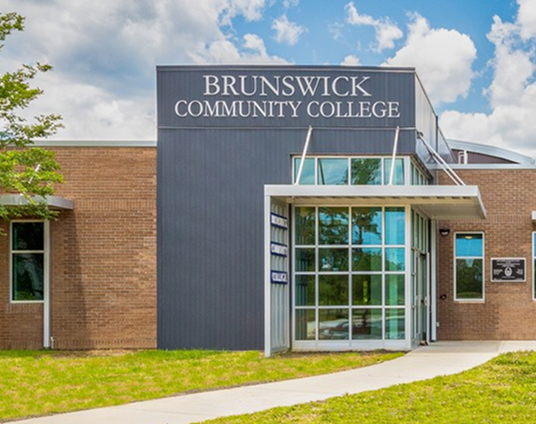
User reviews (0)