
 简体中文
 English

Website review
This review may include AI-generated content and is not individually verified. Domain, certificate and other facts come from the observed data on this page.
What is the Unitarian Universalist Church of Buffalo?
The Unitarian Universalist Church of Buffalo is a liberal faith community in Buffalo, New York, describing itself as compassionate, thoughtful and diverse, and centered on spiritual growth, social justice and care for one another. Its site presents it less as a single set of beliefs than as a gathered community with shared values and a covenant, a minister and staff, and a structured congregational life.
What the site shows
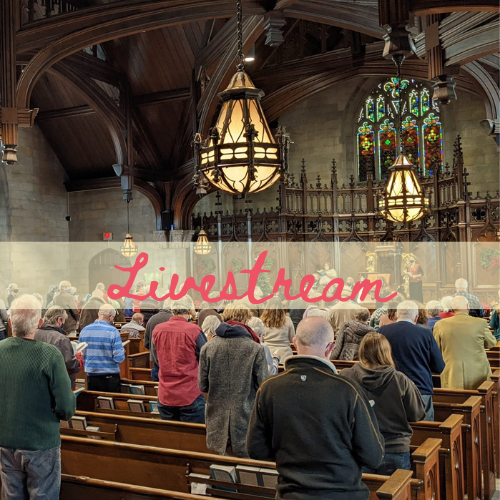
- Worship and spiritual life: in-person services plus a YouTube livestream, with an order of service and archived services.
- Religious education: programs for children and youth, plus adult faith development.
- Music: a music ministry with periodic "MUUsic Weekends."
- Community and care: ministry teams, a food ministry, lay pastoral care and a "Care for People" group.
- Social justice: a dedicated social justice ministry.
- Governance and belonging: a path to membership, bylaws-style governance pages and advisory committees.
- Life events and space: weddings, child dedications and naming ceremonies, memorial services, and room rentals.
Who it suits
Someone in or near Buffalo looking for a non-creedal, socially engaged congregation; a family seeking religious education for children; or a person needing a wedding, dedication or memorial venue with a liberal religious framing. A visitor who wants a fixed doctrinal statement may find the values-and-covenant approach less defined than expected.
A practical next step
Check the calendar and the current order of service, then attend a Sunday service in person or via the livestream before deciding whether to explore the path to membership. If you are planning a ceremony or rental, contact the church directly through the details on Unitarian Universalist Church of Buffalo to confirm availability and requirements.
How can I watch a Sunday service online if I can't attend in person?
Watch the Sunday service through the church's YouTube livestream, which the congregation links from its homepage at Unitarian Universalist Church of Buffalo. The same page offers a "Current Order of Service," so you can follow hymns, readings and the sermon order while watching from home.
Practical steps
- Open the church homepage shortly before the service begins.
- Choose the "Livestream" or "Watch Live" link to reach the YouTube broadcast.
- Download or open the "Current Order of Service" in a second tab or on your phone.
- If you miss the live hour, check the "Service Archives" section, which suggests past services are kept for later viewing.
Who this suits
This setup fits people who are ill, traveling, caregiving at home, or testing whether the community feels right before visiting in person. Watching live preserves the shared timing; the order of service compensates for not being in the room.
A useful next step
If you want to take part rather than only observe, look at the "Path to Membership" and "Getting Involved" pages, or subscribe to the E-Blast for event notices. For a broader sense of the tradition, the Unitarian Universalist Association at UUA explains what to expect from a UU service.
What is Unitarian Universalism and how does it differ from other faiths?
Unitarian Universalism (UU) is a liberal religious tradition that brings people together around shared values rather than a required creed. The UU Church of Buffalo describes itself as "a welcoming liberal faith community… dedicated to spiritual growth, social justice, and compassion," and its page lists values, a covenant, and a mission rather than a statement of doctrine. In practice, UU congregations draw from many sources—religious and secular—and expect members to form their own beliefs while supporting one another.
How it differs from many other faiths
| Dimension | Typical UU approach | Common contrast |
|---|---|---|
| Belief | No single required creed; personal exploration is expected | Many faiths center on a shared doctrine or confession |
| Scripture and sources | Multiple sources, including reason and experience | Often one primary scripture or tradition |
| Membership | A covenant of how people treat one another | Often assent to specific beliefs |
| Worship | Varies by congregation; music, reflection, preaching | Often fixed liturgy or sacraments |
| Community life | Strong emphasis on social justice and care ministries | Varies; justice work may be one part of a broader program |
The Buffalo congregation illustrates this with ministry teams for food, pastoral care, and social justice, plus religious education for children, youth, and adults—signs of a community organized around mutual care and learning rather than doctrinal uniformity.
A practical next step
If you are deciding whether to visit, treat it as a values fit question. Read the congregation's values and covenant, then attend a Sunday service in person or via its livestream; the order of service shows what worship actually looks like. Ask yourself whether the emphasis on shared values, open inquiry, and justice work matches what you want from a religious community. For broader context on the tradition, Unitarian Universalist Association is the official denominational body.
How do I become a member of the UU Church of Buffalo?
Membership at the UU Church of Buffalo begins with a "Path to Membership" section on the church's site, which is the natural starting point. In practice, expect a process that moves from visiting to learning to formally joining: attend a Sunday service (in person or via the livestream), then take part in the membership path and any orientation or class it describes. The congregation describes itself as a welcoming liberal faith community centered on spiritual growth, social justice and compassion, so joining is less about subscribing to a creed and more about entering a shared covenant and community life.
A useful next step: open UU Church of Buffalo, read the Path to Membership page, and use the contact details or E-Blast signup to ask the membership team about the next orientation date. As a concrete example, someone who has watched several livestreams and attended a couple of services could email the church to confirm what the membership class covers and when the next one runs.
What to check before you commit
- The covenant and values: read the Our Covenant and Our Values pages to see whether the community's stated commitments match what you want from a church.
- The membership path: confirm the steps, any required sessions, and whether a formal signing or ceremony marks joining.
- Your own involvement: decide whether you want Sunday worship only, or also a ministry team, religious education, music, or social justice work.
- Practical fit: consider service times, livestream access, and the location in Buffalo if you plan to attend in person.
A comparison to guide your decision
| If your goal is… | Start with… | Why |
|---|---|---|
| Exploring before joining | Livestream or a Sunday service | Low commitment; lets you sense the tone and preaching |
| Understanding expectations | Path to Membership and Our Covenant | Shows what members affirm and how joining works |
| Finding your niche | Ministry Teams, Religious Education, Music Ministry | Membership usually deepens through participation |
| A lifecycle ceremony | Weddings, Child Dedication, Memorial Services | These pages explain how the church serves members and others |
If you are unsure whether you want membership or simply a regular place to worship, ask the church directly; many congregations welcome long-term visitors, and the staff can explain the difference between attending and becoming a member.
Can I rent the church space for a wedding or memorial service?
Yes. The church lists space rentals, weddings, and memorial services among its rental offerings, so both a wedding and a memorial service are explicitly within scope. It also offers child dedication and naming ceremonies, which suggests the rentals are aimed at life-cycle events, not just meetings or parties.
What the site indicates
- Weddings: listed as a distinct rental use.
- Memorial services: also listed separately, so you don't need to fit a memorial into a general "event rental" category.
- Other ceremonies: child dedication and naming ceremonies appear alongside these, useful if you're planning a related family event.
- Space rentals generally: presented as a category of its own, implying rooms or spaces can be booked for other purposes too.
How to decide whether it fits
For a wedding, the key question is capacity and layout: whether the sanctuary or another space suits your guest count and whether you want a religious or secular tone, since this is a Unitarian Universalist congregation with a liberal faith identity. For a memorial, the practical concerns are usually timing, whether a minister or lay pastoral support can be involved, and whether a reception or gathering space is available nearby.
The site's "Space Rentals" and "Weddings" pages under Getting Involved are the natural next step; they should clarify availability, room options, and how to inquire. If your date is fixed and close, contact the church directly rather than relying on the calendar alone.
A concrete example
A Buffalo couple wanting a small, non-dogmatic ceremony with room for a gathering afterward would check the sanctuary capacity first, then ask whether the same booking can include a reception space. A family arranging a memorial would instead ask about weekday availability and whether pastoral care staff can help shape the service, since the church lists a Lay Pastoral Ministry and Pastoral Care Ministry that may support such events.
For comparison, other Buffalo venues with published rental information include Buffalo History Museum and Buffalo and Erie County Botanical Gardens; these are worth checking if you want a secular setting or a larger capacity.
What social justice and community outreach programs does the church run?
The church lists a Social Justice Ministry and a Food Ministry among its ministry teams, alongside a Lay Pastoral Ministry and a "Care for People" Advisory Task Force focused on pastoral care. It also supports community giving through Share The Plate, a collection-sharing practice listed under "Support Our Mission," and runs space rentals for weddings, child dedications and memorial services. The site frames these activities under a stated commitment to "spiritual growth, social justice, and compassion."
What the site tells you, and what it doesn't
The evidence names the programs but gives no schedules, partner organizations, eligibility rules or volunteer requirements. So treat the list as a map of where the church puts its effort rather than a program catalog.
- Food Ministry — the clearest outward-facing outreach; likely the place to start if you want hands-on volunteering.
- Social Justice Ministry — the organizing hub for advocacy and justice work; the natural contact for campaign or partnership questions.
- Share The Plate — a recurring giving mechanism that directs part of collections to outside causes; useful if you are a local group wondering whether the church supports community organizations.
- Lay Pastoral Ministry and "Care for People" — inward-facing care for members and neighbors in difficulty, not outreach in the volunteering sense.
A practical next step
If you are deciding whether to volunteer, donate or seek support, the Calendar and E-Blast pages are the fastest way to see what is actually happening in a given month, since the ministry names alone won't tell you whether the Food Ministry needs drivers, packers or donors this season. For a neighboring congregation to compare with, the broader Unitarian Universalist association site at Unitarian Universalist Association explains how UU congregations typically structure justice work, which helps you read Buffalo's list in context.
One trade-off worth naming: a congregation that runs many small ministries can be welcoming but hard to navigate from the outside. Email the specific ministry rather than the general office, and ask one concrete question — what they need this month — rather than a broad offer to help.
 IONOS SE
 Microsoft 365
User reviews (0)