
 简体中文
简体中文 English
Website review
This review may include AI-generated content and is not individually verified. Domain, certificate and other facts come from the observed data on this page.
What is Casey Trees?
Casey Trees is a Washington, DC–focused nonprofit that plants, cares for, and protects trees across the national capital region. Its work combines direct planting with education, advocacy, conservation, and ongoing tree care, and it frames those efforts around a measurable goal: expanding the city’s tree canopy to 40% by 2032, up from 35% in 2001.
Casey Trees
The organization is best understood as part civic greening program and part environmental advocate. It works with certified arborists on plantings for homes, schools, parks, and businesses, runs school programs meant to build children’s connection to trees, and has spent more than two decades pushing policies that protect and expand DC’s urban forest.
For a resident, the practical entry points are:
- Plant or request trees: Planting programs serve local properties and community spaces.
- Nominate a location: Anyone can suggest a DC site—a school, house of worship, apartment complex, or business—that could use more shade and greenery.
- Volunteer or advocate: There are roles for people who want hands-on planting help or to support tree-protection policy.
- Learn: Educational programming is aimed especially at young people.
The main trade-off is geographic. Casey Trees is not a national tree-planting charity; its programs, advocacy, and planting capacity are concentrated in and around Washington, DC. If you live elsewhere, its model may still be useful as a reference for local canopy goals and partnership-based planting, but you would typically look to a regional or municipal group for direct services.
A useful next step: if you know a DC site that needs shade—or want to volunteer—start with the Get Involved section on the Casey Trees site and use the space nomination form to flag a specific location.
How can I volunteer with Casey Trees in Washington, DC?
Volunteer through Casey Trees’ own Get Involved and Volunteer pages: Casey Trees. The organization plants, cares for, and protects trees in the national capital region, and its site lists volunteering as one of the main ways to participate alongside planting, advocating, and joining the team.
What volunteering typically involves
- Planting events — hands-on tree planting in DC neighborhoods, schools, parks, and other nominated spaces.
- Tree care — helping maintain young trees so they survive and grow, which is often the less glamorous but higher-impact work.
- Community and outreach support — assisting at events, with education programs, or with advocacy efforts.
- Space nomination — not a volunteer shift itself, but residents can suggest schools, houses of worship, apartment complexes, or businesses that could use more trees.
How to get started
- Go to the Casey Trees website and open the Get Involved or Volunteer section.
- Look for the events calendar or sign-up form; many urban-forestry groups post specific shifts with dates, locations, and age or skill requirements.
- Register for a shift, then watch for confirmation details such as meeting point, what to wear, and whether tools are provided.
Practical considerations
- Best for: individuals, families, school groups, corporate teams, and anyone who wants a few hours of outdoor, tangible work rather than a long-term commitment.
- Trade-off: planting events are seasonal and weather-dependent, and spaces fill quickly in spring and fall. If you want steadier involvement, ask about recurring care or education roles.
- Accessibility: check each listing for physical requirements and transit or parking information, since planting sites are often in parks or residential blocks rather than at a single office.
For a concrete first step, email or use the site’s contact form to ask which upcoming shifts need the most help and whether any training is required.
How do I nominate a space in DC for new trees?
To nominate a space in Washington, DC for new trees, use the nomination form linked from the "Nominate a Space" section on Casey Trees. The page describes this as a way to "help shape a greener DC by sharing spaces that could use more trees, shade, and greenery." Nominations are not limited to public parks: the page explicitly welcomes schools, houses of worship, apartment complexes, businesses, and similar sites.
What to have ready before you start
The nomination form itself isn't reproduced on the homepage, so gather the basics first:
- The address or a clear description of the location, plus the neighborhood.
- Who owns or manages the site, and whether you have their permission or contact details.
- Why the site needs trees — for example, a hot, shade-free schoolyard or a bare apartment courtyard.
- Any known constraints: overhead wires, underground utilities, or planned construction.
- Photos, if the form allows uploads, since they speed up site review.
What happens after you submit
Expect a screening step rather than an instant planting date. Casey Trees plants on both public and private property and works with certified arborists to check species choice, spacing, and long-term survival, so a nomination is more of a lead than a confirmed project. Sites with willing landowners, room for mature trees, and strong shade or cooling needs tend to move forward fastest.
A practical next step: if you're nominating land you don't control, talk to the owner or manager before submitting so the follow-up conversation doesn't stall. If you want to be involved beyond the nomination, the same page lists ways to volunteer, plant, or advocate with the organization.
What does Casey Trees do to care for and conserve existing trees?
Casey Trees combines direct tree care with land conservation and policy work in Washington, DC. Its page describes five program areas — Plant, Educate, Advocate, Conserve, and Care — and the care and conservation work sits mainly in the last two, supported by advocacy that protects trees already standing.
Caring for existing trees
- The Care program focuses on proper tree maintenance, with the stated aim of keeping planted trees healthy and long-lived. The page emphasizes that planting partners work with certified arborists, so care decisions follow professional practice rather than volunteer guesswork.
- Care is presented as an ongoing commitment, not a one-time planting event. That matters in an urban setting, where young street trees often fail within a few years without watering, mulching, and pruning.
Conserving green space
- The Land Conservation program protects green spaces for both nature and people. Its stated work includes restoring fragmented forests, improving ecosystems, and creating places where residents can connect with nature.
- Conservation is done in partnership with landowners, which suggests the model relies on agreements and cooperation rather than outright public ownership of every parcel.
Advocacy as a protective layer
- Casey Trees says it has spent over 20 years championing policies that support, protect, and expand DC's urban forest, and credits those efforts with some of the strongest tree protections among major U.S. cities. In practice, this is the piece that can matter most for existing trees: removal and replacement rules, permit requirements, and canopy targets shape what happens to mature trees on private and public land.
How the pieces fit together
| Goal | Main mechanism |
|---|---|
| Keep planted trees alive | Care program, arborist-guided maintenance |
| Protect larger green areas | Land Conservation with landowners |
| Shield existing canopy citywide | Advocacy for tree protection policies |
A practical next step If you are a DC resident worried about a specific tree — on your property, at a school, or in a park — the page's "Nominate a Space" route is the most direct entry point for suggesting where trees are needed. For questions about maintaining a tree you already have, the Care program is the relevant starting point. If your concern is a tree being removed or a weak protection rule, the Advocacy work is where citywide change happens, and joining as a volunteer or member is the usual way to support it.
The 40% canopy goal by 2032, against 35% in 2001 and more than 60,000 trees planted, is the framing number to keep in mind: reaching it depends as much on keeping existing trees alive as on planting new ones.
How does Casey Trees advocate for urban forest policies in DC?
Casey Trees advocates by combining long-term policy work with public participation and on-the-ground planting. On its site, the organization says it has "championed policies that support, protect and expand Washington, DC's urban forest" for over 20 years, and points to some of the strongest tree protections among major cities as a result. Its stated canopy goal — 40% by 2032, up from 35% in 2001 — gives that advocacy a concrete target to measure against.
H3 What that looks like in practice
- Policy and protection: Pushing for rules that preserve existing trees and expand canopy, rather than treating planting as a standalone fix.
- Public mobilization: Inviting residents to volunteer, advocate, plant, and nominate spaces in DC — schools, houses of worship, apartment complexes, businesses — that could use more trees.
- Accountability: Publishing a Tree Report Card, which turns canopy and tree-care data into a public scorecard that residents and officials can use.
- Partnerships: Working with certified arborists, landowners, and community partners so policy goals connect to actual planting and care.
H3 How to use this If you want to influence DC tree policy rather than just plant a tree, start with the advocacy and nomination routes on Casey Trees — volunteering or nominating a specific site puts a real location behind the request, which tends to be more persuasive to decision-makers than a general appeal. For broader context on urban forestry in the region, the District's own tree programs are worth comparing.
A useful decision rule: choose advocacy when you want to change rules or funding; choose planting or care programs when you want a visible result on a specific block. The two reinforce each other — protections matter most where planting is already happening.
What educational programs does Casey Trees offer for kids and schools?
Casey Trees runs school-focused education that mixes classroom-style learning with hands-on planting and outdoor exploration, with the stated goal of building the next generation of “tree guardians.” Its education work sits alongside its planting, advocacy, conservation and tree-care programs, so a school can often combine a lesson-based visit with an actual planting event.
What a school or family can typically plug into
- School programs: Curriculum-linked sessions that teach why trees matter to a city — shade, cooling, cleaner air, stormwater and habitat.
- Tree-planting events: Students help plant trees on school grounds or nearby sites, which turns an abstract lesson into a physical, memorable activity.
- Outdoor exploration: Guided time outside to observe, identify and learn about trees in the neighborhood.
- Youth engagement: Activities aimed at kids, designed to build long-term stewardship rather than a one-off field trip.
How to choose the right fit
| If your goal is… | Ask for… | Why |
|---|---|---|
| A one-time class enrichment | A school program session | Lowest commitment, fits a single class period |
| A lasting campus improvement | A planting event on school grounds | Combines education with shade and green space students can revisit |
| A recurring club or unit | A multi-session or outdoor exploration series | Builds knowledge over time instead of a single visit |
For a concrete example: a fifth-grade teacher in Washington, DC who wants a science unit on urban heat could pair a classroom session on tree canopy with a planting day on the schoolyard, then have students track the trees’ growth across the year.
The practical next step is to contact Casey Trees directly through Casey Trees and ask which education offering matches your grade level, group size and site. If you are a parent or community member rather than a school, the same programs page is the place to ask about youth-oriented events; if you are mainly looking for trees on a specific property, the “Nominate a Space” route is the better starting point.
 Cloudflare
 Mimecast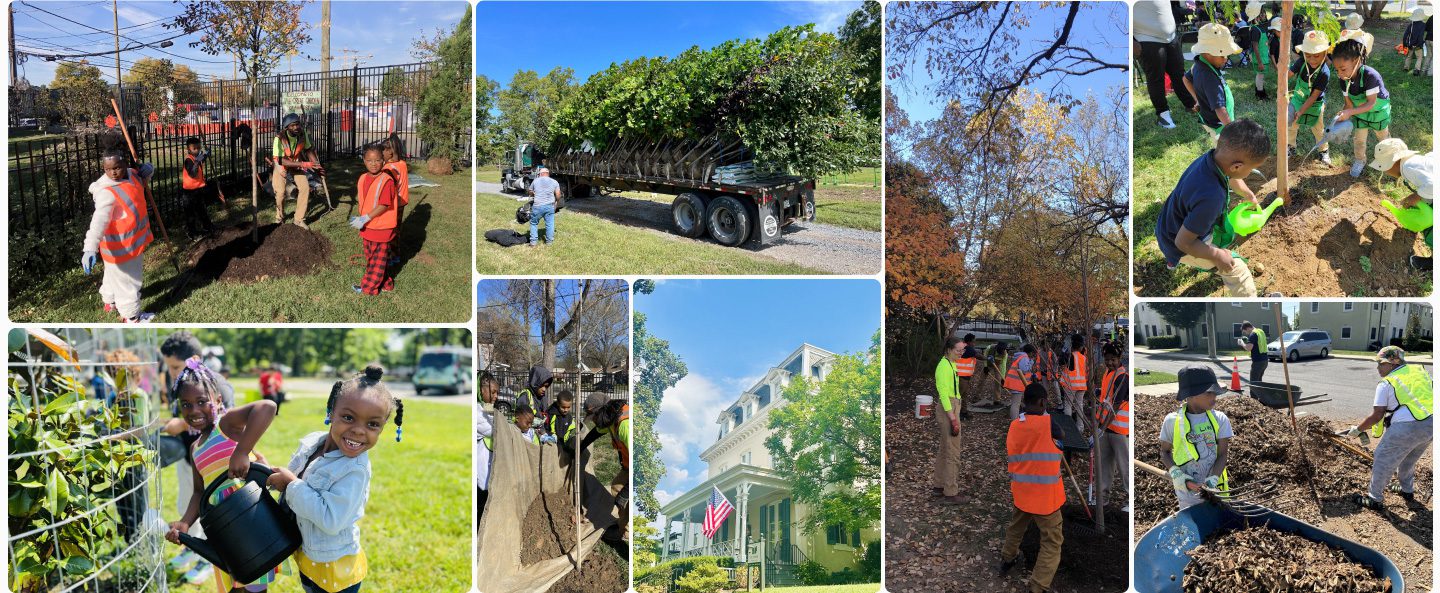

User reviews (0)