
 简体中文
简体中文 English
Website review
This review may include AI-generated content and is not individually verified. Domain, certificate and other facts come from the observed data on this page.
What is Charisma.ai?
Charisma.ai is a platform for building immersive, conversation-driven experiences. Its focus is on two jobs: realistic conversational training simulations and brand-facing interactive campaigns. The page describes an "award-winning responsible AI system," "realistic conversation simulations," "KPI-driven, real-time analytics," and "cross-platform friendly technology," with avatars and conversations running in real time.
What it is used for
- Training & Development: Practice-style scenarios where a learner talks with an AI character, with real-time stats on how the conversation went.
- Brand experiences: Conversation-led interactive content meant to hold attention and build engagement rather than just deliver a message.
Who it suits
Learning-and-development teams that need repeatable, measurable conversation practice; and marketing or brand teams that want an interactive character experience instead of a passive video or page. The trade-off is scope: this is a specialised conversational layer, so you still need your own script, subject-matter expertise and success criteria to get value from it.
A practical next step: pick one scenario you already run with a human role-player or a static script, and ask whether real-time conversation plus engagement analytics would change the outcome. If yes, Charisma.ai is worth a direct look.
How does Charisma.ai improve training outcomes compared to traditional methods?
Charisma.ai improves training outcomes mainly by replacing passive content with realistic, interactive conversation practice. Instead of reading a script or watching a module, learners talk with AI-driven characters, make choices, and see consequences in real time. The page describes this as “realistic conversation simulations” with “KPI-driven, real-time analytics on engagement with courses and campaigns,” and positions the system for “high-impact conversational scenarios that maximize training outcomes.”
Where the difference shows up
- Practice over presentation. Traditional e-learning often tests recall. Charisma.ai’s approach asks learners to handle dialogue, objections, or sensitive moments as they happen, which is closer to how skills are used on the job.
- Consistency at scale. Human role-play depends on who is available and how they perform. AI characters can deliver the same scenario repeatedly, so every learner meets comparable situations.
- Immediate feedback loops. Real-time stats on engagement let trainers see where learners struggle or disengage, rather than waiting for end-of-course surveys.
- Safe repetition. Learners can rehearse difficult conversations without risking a real customer, patient, or colleague relationship.
A practical example
A customer-service team preparing for upset callers could use Charisma.ai to run a branching conversation: the AI character escalates, the learner chooses how to respond, and the system records engagement and completion signals. A trainer then reviews which scenarios caused drop-off or repeated failure and adjusts the coaching. That is a different workflow from a slide deck followed by a multiple-choice quiz.
Trade-offs and decision criteria
AI conversation practice is strongest for interpersonal skills: sales, support, onboarding, compliance conversations, and brand-facing scenarios. It is less obviously suited to hands-on physical tasks or purely factual certification.
Choose it when you need repeatable, measurable dialogue practice at scale. Be more cautious when the scenario depends on deep emotional nuance, complex escalation, or human judgment that cannot be safely simulated. The page also highlights “cross-platform friendly technology” and an “award-winning responsible AI system,” which matter if you need to deploy across devices or operate in a regulated environment.
Next step
Define one high-stakes conversation your learners currently rehearse with a colleague, then map its key decision points. Use that map to judge whether Charisma.ai’s simulation and analytics fit better than your current role-play or e-learning format. You can see the company’s own framing at Charisma.ai.
What types of brand campaigns can be created with Charisma.ai?
Charisma.ai is built for conversation-driven brand experiences, so the campaigns it suits best are those where the audience talks back rather than just watches. Its page describes "compelling, conversation-driven immersive experiences to enhance brand value and engagement," with realistic conversation simulations, avatars, and KPI-driven real-time analytics on engagement.
Campaign types that fit this model
- Character-led storytelling: A brand mascot, fictional guide, or spokesperson that audiences question and answer in real time, rather than a fixed video narrative.
- Interactive product discovery: A conversational guide that helps a visitor narrow down options, understand a range of products, or explore a category through dialogue.
- Promotional tie-ins: Campaigns built around a film, game, or event where fans converse with a character from that world.
- Educational brand content: Explainer experiences where the audience asks questions and the brand answers in character, useful for categories that need more explanation than a banner ad allows.
- Event and retail activations: Screen-based or kiosk-style installations where passers-by start a conversation with an on-screen persona.
What makes these campaigns different
The common thread is that the brand gives up some control over the sequence. Instead of a scripted path, you author a character and a set of conversational possibilities, and the audience decides where to take it. That is what creates the engagement the platform measures, and it is also the main trade-off: a linear video is predictable and cheap to produce, while a conversational experience needs careful writing, testing, and moderation of what the character will and will not say.
The analytics angle matters for campaign planning. Because engagement is tracked in real time against KPIs, these experiences are easier to justify than a one-off gimmick: you can see how many people started, how long they stayed in conversation, and where they dropped off.
A practical next step
Before commissioning anything, write one sample exchange: the opening line your character says, and the three most likely things a real customer would type back. If those three replies are interesting to answer in character, the campaign concept is probably viable. If they are not, no amount of avatar polish will save it.
For deeper, structured learning scenarios rather than consumer campaigns, the same platform is positioned for training and development with realistic simulations. You can see the split between the two on Charisma.ai.
How does Charisma.ai's responsible AI system ensure ethical conversations?
Charisma.ai frames its responsible AI system as the governance layer behind its conversational scenarios, and the page evidence supports three practical commitments rather than a formal ethics charter: the system is described as “responsible,” it is “award-winning,” and it is positioned around “high-impact conversational scenarios” for training and brand work. In practice, that combination matters most in scripted, goal-driven conversations—role-play with a virtual customer, a trainee practising a difficult conversation, or a branded character guiding a user—where the risk is not open-ended chatbot misuse but off-script drift, bias in simulated characters, and data handling in recorded sessions.
What the page actually supports
- Responsible by design, not as an add-on. The system is presented as the core of the product, so safety and quality controls sit inside the conversation engine rather than being bolted on after deployment.
- Real-time analytics tied to outcomes. KPI-driven, real-time analytics on engagement with courses and campaigns give teams a way to see how conversations actually unfold, which is the practical basis for catching problems early.
- Realistic simulation as the point. Because the scenarios are realistic conversation simulations, the ethical value comes from giving people a safe place to rehearse high-stakes interactions without real-world consequences.
- Cross-platform delivery. Cross-platform-friendly technology means the same governed conversation logic can run across the channels a team already uses.
Where ethical assurance is thin
The page does not spell out bias auditing, consent flows, data retention rules, escalation paths for harmful user input, or human review of transcripts. Those are the details most ethics reviewers ask for, and they are absent from the evidence here. Treat the “responsible” and “award-winning” labels as signals of intent and external recognition, not as proof of specific safeguards.
A concrete reader scenario
A learning-and-development lead at a healthcare or financial-services firm wants trainees to rehearse sensitive conversations—delivering bad news, handling an angry customer, discussing a compliance failure. She needs the simulated character to stay in role, avoid inventing policy, and not record anything the organisation cannot lawfully keep. Her practical test: run one scenario end to end, inspect the transcript and analytics, and ask the vendor directly how the system handles off-script or harmful inputs, what is logged, and who can access it.
Decision criterion and next step
Choose Charisma.ai when the conversation is scripted, measurable, and tied to a training or brand outcome; look elsewhere if you need open-domain assistants with published safety documentation. Next step: review Charisma.ai pricing and request a scenario walkthrough, then compare against a general-purpose conversational AI platform on the specific safeguards you require.
What analytics does Charisma.ai provide for tracking engagement?
Charisma.ai describes its analytics as KPI-driven and real-time, focused on engagement with courses and campaigns. In practice, that means you can monitor how learners or audiences interact with a conversational scenario as it happens, rather than waiting for a batch report.
What the platform says it tracks
- Engagement with courses and campaigns: The page evidence explicitly links real-time analytics to both training courses and brand campaigns. This suggests the same measurement layer serves L&D and marketing teams.
- KPI-driven reporting: The analytics are framed around key performance indicators, so the intended use is outcome measurement, not just activity logging.
- Real-time visibility: Because the stats are described as real-time, you can see how a conversation is progressing while it is still running, which is useful for live training or campaign monitoring.
What to confirm before relying on it
The page evidence does not list specific metrics such as completion rates, sentiment scores, response times or drop-off points. If those matter to you, ask Charisma.ai directly which KPIs are available out of the box and which require custom configuration. The Charisma.ai pricing page may also indicate whether analytics are included at every tier or gated to higher plans.
A practical scenario
A training manager running a customer-service simulation could use real-time stats to spot where learners disengage mid-conversation and adjust the scenario. A brand team running an interactive campaign could watch engagement during the live period and shift messaging. In both cases, the value depends on whether the platform exposes the specific behaviours you care about, so define your KPIs before the build, not after.
How much does Charisma.ai cost and what pricing plans are available?
Charisma.ai does not publish its prices on the page supplied here. The site describes an "award-winning responsible AI system" for training and brand scenarios, and it links to a pricing page, but no plan names, tiers or figures appear in the material available. The practical conclusion: Charisma.ai appears to price by quote rather than by a self-serve rate card, so you need to contact the company to get numbers.
What to expect from a quote-based product like this
Conversational AI platforms in this category usually charge along one or more of these axes, and you should ask which apply to you:
- Usage volume – number of conversations, messages or minutes of interaction per month.
- Seats or creator accounts – how many people can build and manage scenarios.
- Project or campaign scope – one-off training module versus an ongoing brand campaign.
- Enterprise terms – security review, data handling, support level and onboarding.
How to get a useful answer quickly
Before you contact Charisma.ai, write down three things so the quote is comparable to alternatives:
- Your expected monthly conversation volume (even a rough range).
- Whether you need training-and-development scenarios, brand experiences, or both.
- Any compliance or data-residency requirements your organisation imposes.
Then ask directly whether pricing is a flat platform fee, usage-based, or a blend, and request a written example based on your own volume estimate. That single question separates vendors more effectively than a headline rate, because the cheapest listed tier is often irrelevant once real usage is modelled.
A concrete decision criterion
If your project is a short pilot — a handful of scenarios tested with one team — a usage-based or time-limited pilot price is usually the right shape. If you are rolling out training across a large workforce or running a persistent brand experience, per-conversation costs compound quickly, and a negotiated annual agreement with a volume cap will generally serve you better. Ask for both structures and compare the total cost at your realistic volume, not at the minimum.
 Cloudflare
 Vercel
 Google Workspace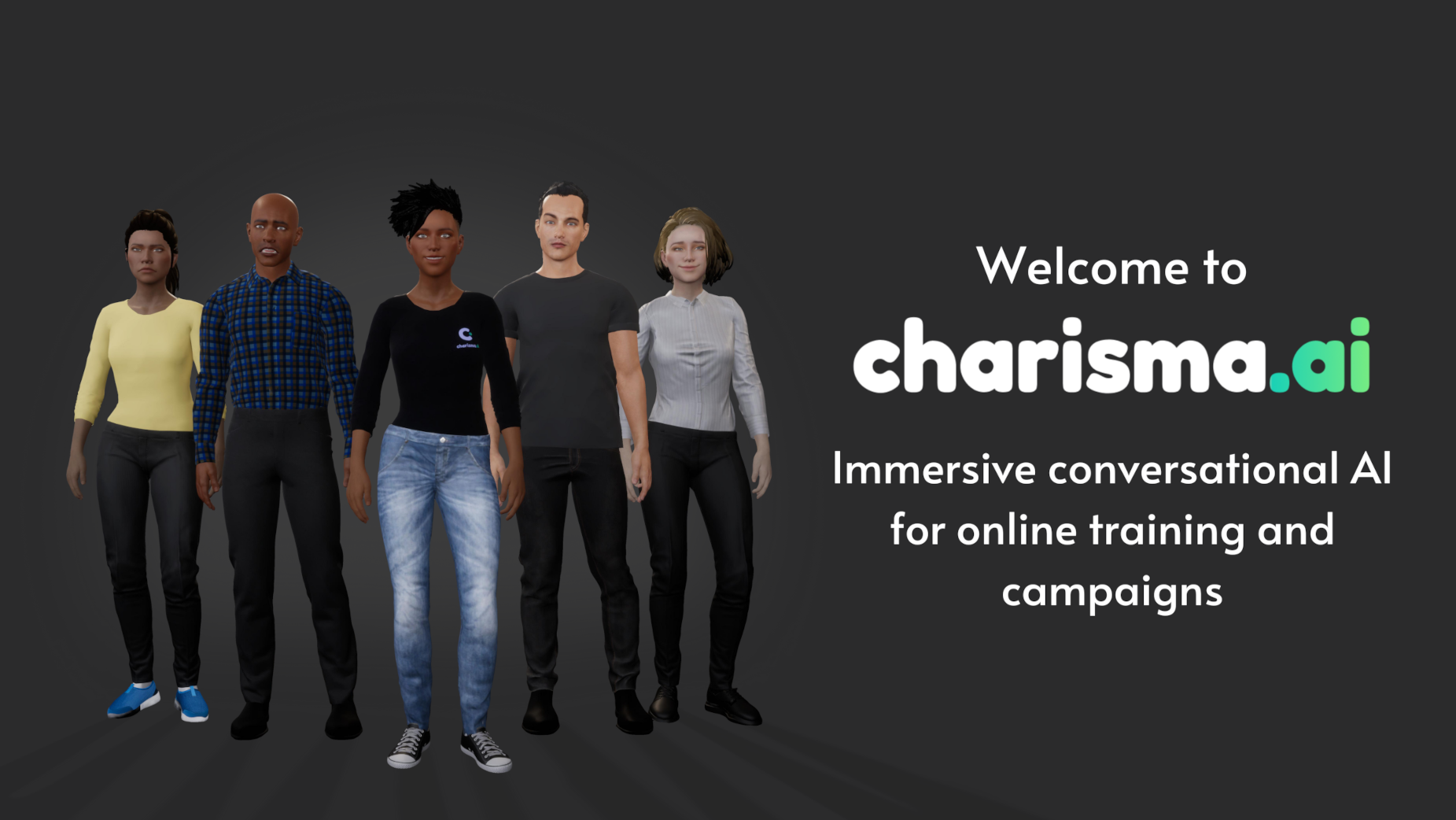
User reviews (0)