

Website profiles · Technology insights · Alternatives

coe.tcu.edu

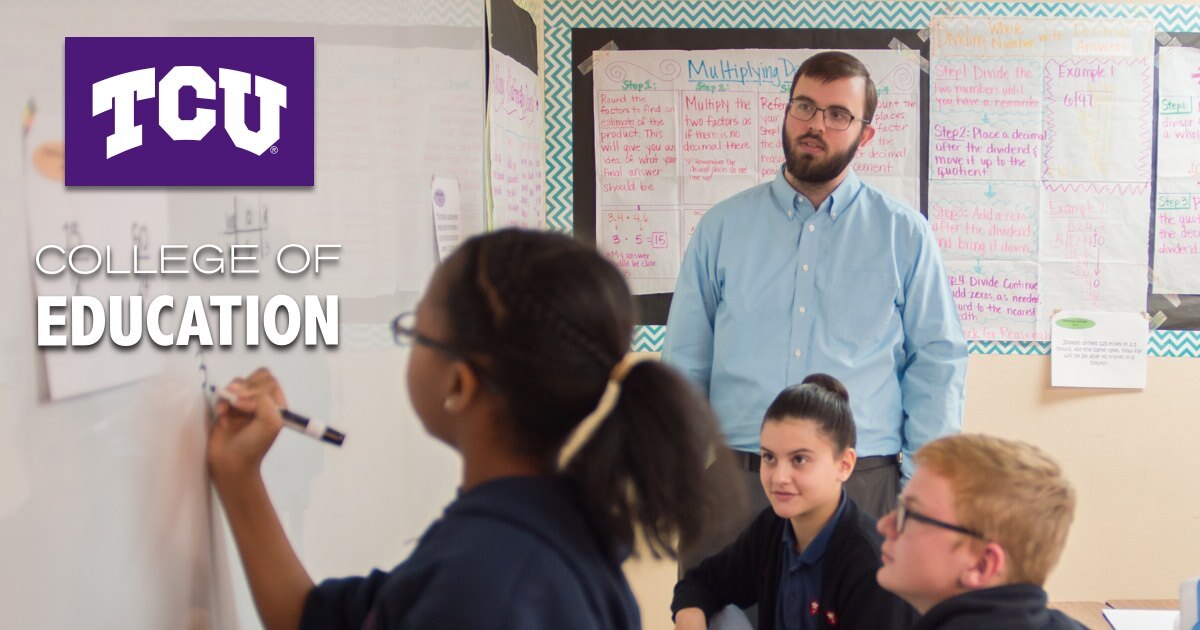
Home to two laboratory schools and nationally recognized programs, TCU’s College of Education prepares exemplary leaders for diverse educational settings.

No paid content found
Visit website
Profile views 0 Outbound visits 0 Normal
College of Education | Texas Christian University Full homepage screenshot

At a glance

Category
Education & Learning
Language
English
Paid-content signal
No paid content foundObserved
Registered
Unknown
Hosting
amazonaws.comInferred
HTTPS certificate trusted
PassedObserved
Last updated

Website review

This review may include AI-generated content and is not individually verified. Domain, certificate and other facts come from the observed data on this page.

What is the TCU College of Education?

The TCU College of Education is the education school at Texas Christian University, preparing teachers and educational leaders for a range of settings. Its page presents it as distinctive in three ways: two laboratory schools for children with special needs, an internationally recognized early childhood teacher education program, and a nationally recognized middle/secondary program. It offers undergraduate and graduate degree options, and its dean describes a focus on strong local and global partnerships.

Who it suits

  • Prospective undergraduates deciding between early childhood, middle/secondary, or special education pathways.
  • Graduate students looking for one of the 12 nationally ranked graduate programs the page cites.
  • Career switchers interested in new routes such as the professional aviation degree program housed in the college.

What stands out

The page's own claims—100% teacher placement, 80% of graduates teaching locally, and the lab schools—suggest a strong regional pipeline into North Texas schools. That local emphasis is an advantage if you plan to teach in the area, but it says less about placement elsewhere.

As a next step, browse the Majors & Programs section to match a specific degree to your goals, then check faculty listings in that area. For comparison, other Texas education schools such as UT Austin College of Education and Texas A&M School of Education and Human Development publish their own program and placement information.

How does the College of Education's laboratory school model benefit students preparing to teach special education?

The lab-school model benefits future special education teachers mainly by putting them in sustained, supervised contact with children who have special needs while they are still learning to teach. On its own site, the college describes two nationally recognized laboratory schools for children with special needs and an early childhood teacher education program it calls internationally recognized. The practical value is that methods coursework and real classroom behavior can be studied side by side rather than in separate semesters.

What the model offers a pre-service teacher

  • Observation before responsibility. A novice can watch experienced teachers handle IEP-related routines, transitions and behavior supports before leading them.
  • Feedback loops. University supervisors and lab-school mentors can connect what happens in the room to what is taught in methods classes.
  • Familiarity with diverse needs. Lab schools serving children with special needs give candidates repeated exposure to a range of disabilities and support levels, not a single one-off visit.
  • A bridge to local hiring. The college reports 100% teacher placement and that 80% of graduates teach locally, which suggests field placements and regional school partnerships reinforce one another.

How to judge whether it fits you

Ask how much time candidates spend in the lab schools, whether placements are observation-only or include co-teaching, and who supervises. A reader weighing special education preparation should compare programs on the amount of supervised classroom time and the range of student needs encountered, not on the existence of a lab school alone.

For broader context on special education teacher preparation, the Council for Exceptional Children Council for Exceptional Children publishes standards and resources, and the U.S. Department of Education U.S. Department of Education outlines national preparation and shortage information.

What undergraduate and graduate degree programs does the TCU College of Education offer, and how do I choose between them?

The TCU College of Education offers undergraduate and graduate pathways in education, with undergraduate study aimed at students preparing to become teachers and graduate study aimed at practicing educators who want to deepen expertise, move into leadership, or specialize. The college's page points visitors to a Majors & Programs section split into undergraduate and graduate options, and highlights strengths in early childhood teacher education, middle/secondary preparation, and special education through two laboratory schools. It also cites 100% teacher placement and notes that 80% of graduates teach locally — useful signals if you want a program with strong regional hiring connections.

Choosing between undergraduate and graduate study

Your situation Likely fit What to weigh
No prior teaching credential; want to teach Undergraduate major Time to first classroom role, field placements, certification requirements
Certified teacher seeking specialization or leadership Graduate program Whether your goal is a classroom specialty, administration, or research
Career changer Either, depending on prior degree How much of an existing bachelor's degree can count toward certification

A practical next step: list your target role (elementary teacher, secondary subject teacher, special education specialist, administrator) and the certification your state requires, then match that against the specific program pages rather than the college overview. If you are deciding between early childhood and middle/secondary focus, visit or ask about the laboratory schools and field placements, since hands-on experience is where these pathways differ most in day-to-day preparation.

For comparison, other educator-preparation routes include TCU College of Education program pages, and general teacher-certification guidance is available from Texas Education Agency if you plan to teach in Texas.

What do teacher placement rates and local hiring outcomes look like for TCU College of Education graduates?

TCU's College of Education reports 100% teacher placement and notes that 80% of its graduates teach locally, according to TCU College of Education. Those two figures answer different questions: the first is about whether graduates land teaching roles at all, and the second is about where they take those roles. Read together, they suggest a program whose graduates are hired quickly and tend to stay in the surrounding region rather than dispersing nationally.

What the numbers mean in practice

  • 100% teacher placement is a strong headline, but placement rates depend on how "placement" is defined and measured—for example, whether it covers all completers, only those actively seeking teaching jobs, and within what time window. If exact placement matters to your decision, ask an admissions contact how the rate is calculated and for which cohort.
  • 80% teaching locally points to a regional pipeline. For someone who wants to build a career in North Texas, that concentration is an advantage: local districts know the program, and alumni networks and mentor relationships are close at hand. For someone aiming to teach in another state or region, it means the built-in hiring network is thinner where you're headed, and you should plan to lean on certification reciprocity and your own job search.

A concrete way to use this

Suppose you're choosing between TCU and an out-of-state program and hope to teach near Fort Worth. The local-hiring figure is a real signal that district relationships and alumni ties will work in your favor during student teaching and hiring season. If you instead plan to return to, say, the Pacific Northwest, weigh the program's national reputation and your target state's licensure requirements more heavily than the local placement share.

Useful next step

Ask two specific questions before committing: how placement is defined and tracked (cohort, timeframe, job-seeking status), and which districts most graduates join. The college's lab schools for children with special needs are also worth asking about, since hands-on placement settings can shape where graduates end up. You can compare regional alternatives through UT Arlington or University of North Texas to see how their local hiring footprints differ.

How does the new professional aviation degree program fit within the College of Education?

The professional aviation degree is housed within TCU's College of Education, which frames aviation preparation as educator-led professional training rather than a standalone flight-school track. The page presents it as the college's newest program and ties its launch to an industry event bringing together North Texas aviation leaders, suggesting the degree is being positioned around partnerships with employers and operators as much as around classroom coursework.

What the placement signals

  • Broader definition of education. The college already describes its mission as preparing leaders for "diverse educational settings," and aviation sits alongside teacher preparation, early childhood education and special education lab schools under that same umbrella.
  • Industry-connected design. The launch event with regional aviation names points to an emphasis on workforce pipelines, which matters if you want a degree that opens doors through employer relationships rather than only through a flight certificate.
  • Access to college-wide resources. Students would presumably draw on the college's advising, field-placement and partnership infrastructure, though the page does not detail aviation-specific curriculum, flight hours or certification pathways.

Who this fits, and what to check

This structure tends to suit students who want an aviation career grounded in a broader educational and leadership context—for example, someone aiming at flight instruction, aviation training roles or operations management rather than only logging hours. It is less clearly a fit for someone seeking a purely technical or military-style flight program.

Because the page emphasizes the announcement and industry ties rather than program mechanics, prospective students should ask directly about:

  1. Whether flight training is included or arranged with a partner provider, and where.
  2. Which certifications or ratings the degree path supports.
  3. How advising and scheduling work across the College of Education and any aviation partners.

As a next step, compare the program's structure with other Texas offerings that publish detailed flight-training pathways, such as Embry-Riddle Aeronautical University or Texas A&M University, to see how much flight time and certification each degree actually delivers.

What steps should a prospective student take to request information or apply to the College of Education?

Start by using the College of Education's "Request More Information" form, then confirm the application steps for your intended program level on the TCU site. The college separates undergraduate and graduate program searches, and application requirements (transcripts, test scores, deadlines, interviews) can differ by program, so verify details for the specific degree rather than relying on general admissions pages.

Practical steps

  1. Identify your program level and subject. Browse the Majors & Programs section and filter by Undergraduate or Graduate. Note the exact program name, since early childhood, middle/secondary, and special education pathways may have different contacts.
  2. Submit the information request. The "Request More Information" link is the intended first contact and typically routes you to an admissions counselor or program coordinator who can answer questions about prerequisites and timelines.
  3. Check the program page for application requirements. Look for deadline dates, required materials, and whether the program admits for fall only or multiple terms.
  4. Contact faculty or staff directly if you have program-specific questions. The Faculty & Staff Directory lets you reach the people who teach in the area you're considering—useful for questions about field placements, laboratory school involvement, or research opportunities.
  5. Attend an event or visit. The college lists events and news; admissions sessions and campus visits are the fastest way to clarify fit and see the laboratory schools and classrooms in person.
  6. Apply through the university's admissions portal once you've confirmed the correct program and deadline. Keep copies of submitted materials and note confirmation emails.

A concrete scenario

Suppose you want to teach secondary science. You would search the graduate or undergraduate program list for the middle/secondary pathway, request information, then ask the coordinator two specific questions: which science credits satisfy subject requirements, and how clinical placements are arranged. That conversation is more useful than a general campus tour because it addresses transcript evaluation and scheduling.

Decision criteria

Situation Best first step
Unsure which program fits Information request plus a conversation with an admissions counselor
Decided on a program Program page requirements, then faculty contact for placement questions
Weighing TCU against other schools Visit events and compare field-experience structure
International or transfer applicant Ask early about credential evaluation and credit transfer

For comparison, you can review how other education schools structure their application steps, such as UT Austin College of Education or NYU Steinhardt, but confirm every requirement on the official page for your intended program.
Related questions

More questions →
How to Find Faculty and Staff at the TCU College of Education

The TCU College of Education lists a Faculty & Staff Directory as a main section of its website (coe.tcu.edu), so the directory is the intended starting point for looking up a specific instructor or staff member. Use it when you already know the person's name or program area; if you need a general department contact or aren't sure who to reach, contact the college directly instead.

Start With the Directory

The college's homepage navigation includes Faculty & Staff Directory alongside Majors & Programs, Connected Community, and Why Study Education. That placement means you can reach it from the main menu without hunting through subpages.

How to look up a specific person

  1. Open coe.tcu.edu.
  2. Select Faculty & Staff Directory from the main navigation.
  3. Search or browse for the person by name or program area.
  4. Use the contact details shown on their directory entry to reach them.

Expected result: a listing for the individual with their role and contact information. The site does not publish a separate search syntax or filter set beyond the directory itself, so rely on the name and program information you already have.

When the Directory Isn't Enough

If you can't find the person — for example, a new hire, an adjunct, or someone whose listing hasn't been updated — or if you need help routing a question to the right office, contact the College of Education directly. The homepage also offers a Request More Information option for prospective students and general inquiries, which is a reasonable fallback when you don't have a named contact.

What the College Covers

Knowing the college's program areas helps you guess which faculty member or office to look for:

Area What the college highlights
Laboratory schools Two nationally recognized lab schools for children with special needs
Early childhood Internationally recognized early childhood teacher education program
Middle/secondary Nationally recognized middle/secondary program
Graduate study 12 nationally ranked graduate programs
New programs A professional aviation degree program housed in the College of Education

The college also reports 100% teacher placement and that 80% of graduates teach locally — useful context if you're contacting faculty about field placements or career paths.

Practical Tips

  • Search by program, not just name. If you know the program (early childhood, middle/secondary, special education), browse that area's faculty listings first.
  • Check the news and events pages for program launches and public events; they often name the faculty or dean involved, which can confirm who to contact. The dean is Frank Hernandez, whose welcome message appears on the site.
  • Use the directory for academic questions (courses, programs, advising) and the general contact or Request More Information route for admissions-style inquiries.
What Are the Laboratory Schools at TCU's College of Education?

TCU's College of Education is home to two laboratory schools for children with special needs, and both are described by the college as nationally recognized. They are the college's most distinctive feature: real classrooms for children that also serve as training and observation sites for future teachers. If you are evaluating TCU for teacher preparation, special education, or a career working with children with disabilities, the lab schools are the part of the program worth understanding first.

What "laboratory school" means here

A laboratory school is a functioning school for children that sits inside a university's teacher education program. Children are taught by qualified staff, while university students observe, assist, and practice under supervision. At TCU, the college frames these schools as part of how it prepares "exemplary leaders for diverse educational settings" — the lab schools are where that preparation becomes concrete rather than theoretical.

The two schools and their focus

The college's own description is specific on two points:

  • There are two laboratory schools.
  • Both serve children with special needs.

The college also identifies them as nationally recognized, and lists "2 special education lab schools" among the facts that make the college different. Beyond that, the site's summary does not name the individual schools, their age ranges, or their locations, so confirm those details directly with the college before relying on them.

How they fit into teacher preparation

The lab schools connect to the college's broader program mix, which the site describes as including:

Program area How the site describes it
Early childhood teacher education Internationally recognized
Middle/secondary teacher education Nationally recognized
Special education lab schools Two schools, nationally recognized
Graduate programs 12 nationally ranked

For a prospective student, the practical implication is that special education fieldwork is built into the college's identity rather than offered as an add-on. The site also reports 100% teacher placement and that 80% of graduates teach locally — figures that suggest strong regional hiring relationships, which lab school experience can reinforce.

What to check before you decide

The homepage is a summary, not a program guide. Before treating the lab schools as a deciding factor, verify:

  1. Which degree levels actually use the lab schools — undergraduate, graduate, or both. The site lists both levels but does not map lab school placements to specific programs.
  2. Whether fieldwork there is required or optional for your intended major.
  3. Age ranges and disability focus of each school, so you know what classroom experience you would gain.
  4. Supervision and observation structure — who mentors you and how often you are in the classroom.

The college's Majors & Programs section and the faculty and staff directory are the natural starting points for these questions; the dean's welcome also emphasizes partnerships "locally and globally," which is consistent with the local hiring pattern the college reports.

The short answer

TCU's College of Education operates two nationally recognized laboratory schools for children with special needs, and they anchor the college's approach to preparing teachers through direct classroom experience. They are a strong signal of the college's special education emphasis — but confirm program-by-program placement details with the college before making a decision.

Why Study Education at TCU's College of Education?

TCU's College of Education is worth considering if you want a teacher-preparation program with strong placement outcomes, hands-on experience in special education laboratory schools, and a community that emphasizes local and global partnerships. The college reports 100% teacher placement, with 80% of graduates teaching locally, and it operates two special education lab schools alongside an internationally recognized early childhood teacher education program and a nationally recognized middle/secondary program.

Outcomes and Recognition

The college's own figures give a concrete picture of what graduates do:

Indicator Reported Figure
Teacher placement 100%
Graduates teaching locally 80%
Special education lab schools 2
Nationally ranked graduate programs 12

These numbers matter most if your goal is a teaching career in North Texas: the high local placement rate suggests strong school-district relationships in the region. If you plan to teach elsewhere or pursue a non-teaching education role, ask admissions how placement support works outside the local market.

Hands-On Experience Through Lab Schools

The two laboratory schools for children with special needs are a distinctive feature. They give education students direct exposure to special education practice within the college's own setting rather than only through external field placements. This is particularly relevant if you are considering special education, early childhood, or any role that involves working with diverse learners.

Program Range

The college organizes its offerings into undergraduate and graduate degree options, spanning early childhood through middle/secondary preparation. The early childhood teacher education program is described as internationally recognized, and the middle/secondary program as nationally recognized. Prospective students can browse majors and programs by level and request more information through the college's site.

Community and Partnerships

Dean Frank Hernandez describes the college's focus as providing the best learning experiences for students and building strong partnerships locally and globally. In practice, that framing points to field experiences and connections with area schools, plus international dimensions of the programs. If global or cross-cultural teaching experience is a priority for you, ask specifically which programs include international placements or partnerships.

A Note on New Directions

The college has also launched a professional aviation degree program, with an industry event featuring North Texas aviation leaders. This signals that the college's program portfolio extends beyond traditional classroom teaching, which may interest students looking at education-adjacent careers.

How to Decide

Choose TCU's College of Education if local teaching placement, special education lab experience, and a connected cohort community are your priorities. Before committing, confirm with the college which specific program matches your certification goals, how field placements are arranged, and what support exists if you intend to teach outside the region.

What Is the TCU College of Education Website?

The TCU College of Education website (coe.tcu.edu) is the official online home of Texas Christian University's College of Education. It serves as the entry point for prospective and current students to explore undergraduate and graduate degree programs, learn about the college's laboratory schools, and connect with faculty and staff. Use it if you are researching education programs at TCU, considering an application, or looking for the college's faculty directory and news.

What the College Offers

The College of Education describes its mission as preparing "exemplary leaders for diverse educational settings." Its stated strengths include:

  • Two laboratory schools for children with special needs, described as nationally recognized
  • An internationally recognized early childhood teacher education program
  • A nationally recognized middle/secondary program
  • 12 nationally ranked graduate programs

The site also highlights outcome figures: 100% teacher placement and 80% of graduates teaching locally. These are the college's own published claims, so treat them as marketing statements rather than independently verified statistics.

Degree Programs

The Majors & Programs section organizes offerings into two paths:

Path What to expect
Undergraduate Initial teacher preparation and education-related majors
Graduate Master's and other advanced programs, including the 12 nationally ranked programs cited on the homepage

You can browse all options or search within the program listings, and the site provides a "Request More Information" route for prospective students who want details before applying.

Beyond the Classroom

The homepage emphasizes a "connected community" and "preparing global leaders," with Dean Frank Hernandez describing a focus on strong local and global partnerships. Practical resources linked from the main page include:

  • Faculty & Staff Directory — for contacting specific people
  • News and Events — for college announcements; recent coverage includes the launch of a new professional aviation degree program housed in the College of Education
  • Dean's Welcome — for the college's stated priorities and direction

How to Use the Site

  1. Start with Majors & Programs if you are deciding what to study; filter by undergraduate or graduate.
  2. Submit a Request More Information form if you want admissions details sent to you.
  3. Check the Faculty & Staff Directory when you need to reach a specific department or advisor.
  4. Read the News section for program launches and events, such as the aviation program celebration.

One caveat: the homepage does not publish tuition, application deadlines, or admission requirements. For those specifics, follow the links into the individual program pages or contact the college directly rather than assuming costs or timelines from the overview page.

What Majors and Programs Does the TCU College of Education Offer?

TCU's College of Education offers undergraduate and graduate degree options in education, and its website (coe.tcu.edu) organizes them under a single "Majors & Programs" section with filters for undergraduate and graduate study. The college describes itself as home to an internationally recognized early childhood teacher education program, a nationally recognized middle/secondary program, and two laboratory schools for children with special needs. If you are choosing a program, start with the undergraduate/graduate split below, then confirm the specific degree and admission requirements directly with the college, since the site's program search is the authoritative list.

Undergraduate Programs

The site's "Majors & Programs" section includes an undergraduate filter, and the college highlights its early childhood teacher education program and middle/secondary program as areas of national recognition. These are the pathways most relevant if you are preparing for initial teacher certification or a career working with children and adolescents.

The college also houses a new professional aviation degree program, which it announced with an industry event in North Texas. That program sits within the College of Education rather than a separate aviation school, which is worth noting if you are searching for aviation-related study at TCU.

Graduate Programs

The college reports 12 nationally ranked graduate programs. The graduate filter in the "Majors & Programs" section is the place to see the current list, since program names and rankings can change between catalog years. Graduate study here suits educators seeking advanced preparation, leadership roles, or specialization rather than initial certification.

What Distinguishes the College

Several details on the site help you judge fit beyond the program list:

Feature What the site states
Laboratory schools Two special education lab schools for children with special needs
Teacher placement 100% teacher placement reported
Local impact 80% of graduates teach locally
Graduate recognition 12 nationally ranked graduate programs
Global focus Dean Frank Hernandez describes partnerships locally and globally

The lab schools matter practically: they give education students supervised experience with children with special needs within the college itself, which is unusual for a education school and relevant if special education is your interest.

How to Explore and Apply

  1. Go to coe.tcu.edu and open "Majors & Programs."
  2. Use the undergraduate or graduate filter to narrow the list to your level.
  3. Note the program name and degree type, then use "Request More Information" on the site to get details on admission requirements and deadlines.
  4. Check the Faculty & Staff Directory if you want to identify faculty in your intended specialty before applying.

The site does not publish tuition, application deadlines, or admission criteria in the material available here, so treat those as questions for the college's admissions contact rather than assumptions. The "Request More Information" form is the direct route to those answers.

Website Overview

Identifiable technologies and additional version or configuration signals make the service easier to fingerprint, which may help targeted scanners narrow their checks. Page metadata, canonical configuration and social previews work together to provide more consistent search and sharing presentation.

Domain and Registration

Unknown

DNS and Email

The lowest TTL is 60 seconds, supporting rapid record changes at the cost of more frequent lookups. Nameservers are provided by tcu.edu, indicating managed DNS hosting. MX records point to the tcu.edu email service. The infrastructure is associated with the amazonaws.com cloud platform. SPF and DMARC are configured. DKIM status is unknown.

TLS and Certificates

The certificate uses an RSA 2048-bit public key, offering broad client compatibility. The server supplied a complete certificate chain. No organization name is present in the certificate; the available fields are consistent with domain validation. The certificate was issued within the Amazon cloud or CDN ecosystem. The certificate is valid for about 197 days in total, with 146 days remaining.

HTTP and Browser Security

The Server header exposes the software version: Apache/2.4.68 (Amazon Linux). This makes version-targeted checks easier, but is not proof of an exploitable vulnerability. X-Powered-By exposes backend information: PHP/8.5.10. All six checked browser-security headers are present. Their effectiveness still depends on the policy values and application behavior. No obvious internal addresses or debug information were found in the headers. No explicit CDN or WAF marker was found in the response headers.

Technology Stack Analysis

The public page identifies jQuery, Google Tag Manager, Apache 2.4.68, PHP, with exact versions exposed for 1 technologies. These details can narrow vulnerability checks, although exposure alone is not a vulnerability.

Search and Social Sharing

Twitter Card metadata is configured. The title has 49 characters, within a common display range. A meta description is present, with 154 characters. The observed directives allow indexing and link following. No Generator meta tag is publicly exposed.

Hosting and Email

DNStcu.edu
Hostingamazonaws.com
Emailtcu.edu
Approximate IP geolocation (inferred; a CDN or proxy may differ from the origin server) United States flagAshburn, Virginia, United States Inferred 18.205.30.209

Registration details

RDAP / WHOIS

Unknown

DNS records

DNS

TypeNameValueTTLPriority
Awebserve-alb-fdotjchvj8m0-1021690910.us-east-1.elb.amazonaws.com18.205.30.20960—
Awebserve-alb-fdotjchvj8m0-1021690910.us-east-1.elb.amazonaws.com54.90.14.15960—
MXtcu.eduppagent01.tcu.edu18000
MXtcu.eduppagent02.tcu.edu18000
MXtcu.eduppagent05.tcu.edu18000
MXtcu.eduppagent06.tcu.edu18000
NStcu.eduns1.tcu.edu86400—
NStcu.eduns99.tcu.edu86400—
TXTtcu.edu00D1N000002Dnnm=1TBPX00000000EX86400—
TXTtcu.edu00DDp0000016Gcj=1TBUo00000000xh86400—
TXTtcu.edu00DKd00000Izwvv=1TBPo0000000IEf86400—
TXTtcu.eduDA141D986E7ECAADFA978AFECD0F76315CA4805286400—
TXTtcu.eduGOOGLE-SITE-VERIFICATION=AG0GPOYTVHKDNKJNMRJXZYII_LENSMKNFVR7P8ROAO886400—
TXTtcu.eduadobe-idp-site-verification=00278a3b-4d82-4417-94f7-276f487ec23f86400—
TXTtcu.eduatlassian-domain-verification=qrZfHeypcqID8x04nOdqBzQ6sWIiBcNsOSsvp4kjyy97YC3u1v/jW55fVawBF27Z86400—
TXTtcu.eduautodesk-domain-verification=gMWaJfj7FTzmTbetMl2z86400—
TXTtcu.educanva-site-verification=f_Zjl_Dy-1b6x2Aj8G00qg86400—
TXTtcu.edudocusign=ac598160-7bff-43e2-9ed0-d7b0d420a8a886400—
TXTtcu.edudocusign=ae2738f0-b2d5-43bc-a744-c6b9cca2a72186400—
TXTtcu.edue2ma-verification=ch6fb86400—
TXTtcu.edue2ma-verification=p6bfb86400—
TXTtcu.edugoogle-site-verification=-FKZDY0HULh4sYK3piTTxG9pWFxmzgBtL3ghnSyk8Bo86400—
TXTtcu.edugoogle-site-verification=x-5CLyClAL0MgQsvFdzTdOh6xon2OSLt6xv3-kIJMFk86400—
TXTtcu.eduka6i2AHD9eajryzVss2EXBb6Z9VLLv7NJZ07CrS1wW3En8ENMq/6ZQdeVaTkncVYm9xYCp6Pv0X1AjVDl4MRHw==86400—
TXTtcu.eduodyssey-f713f0bd363b0258d314c372dfec1ca986400—
TXTtcu.edupardot496491=3b8331f01386b761b77972f6f74304df60d851ed29879396aec144b18bd1637786400—
TXTtcu.edupardot496491=b43285b21a75602b2f171f1b180ca884983b17ac40ab15e3b1742168156ebdcd86400—
TXTtcu.eduscholarly-software-inc-domain-verification-m4a0qe=ekiYJEMDmqszP2Jcr9uTNjCgg86400—
TXTtcu.eduv=spf1 include:spf0.tcu.edu ~all86400—
TXTtcu.eduvwNnqwCOU0m1++yIeoNrReAF5Z9En+QUSThz2IGHX56pnMsc3IRN97zWXORiOfVnbFH7lwiJqAWPAeOWJfcfFg==86400—
CNAMEcoe.tcu.eduwebserve-alb-fdotjchvj8m0-1021690910.us-east-1.elb.amazonaws.com86400—
DMARCtcu.edu.hosted.dmarc-report.comv=DMARC1; p=none; rua=mailto:[email protected],mailto:[email protected]; ruf=mailto:[email protected]238—

TLS and certificates

TLS / SSL

AssessmentNormal configuration
Supported protocolsTLSv1.2
Negotiated protocolTLSv1.2
Certificate subjectcoe.tcu.edu
IssuerAmazon
Valid until2027-03-16T23:59 · Remaining when checked: 146 days
Verification detailsCertificate trust: Passed · Hostname match: Passed

HTTP response headers

HTTP

HeaderValue
content-typetext/html; charset=UTF-8
cache-controlmax-age=3600
serverApache/2.4.68 (Amazon Linux)
strict-transport-securitymax-age=31536000; includeSubDomains
content-security-policyframe-ancestors 'self' https://a.cms.omniupdate.com
x-content-type-optionsnosniff
referrer-policyno-referrer-when-downgrade
permissions-policyaccelerometer=('self' 'https://www.youvisit.com'), ambient-light-sensor=(), autoplay=('self'), battery=(), camera=(), cross-origin-isolated=(), display-capture=(), document-domain=(), encrypted-media=('self'), execution-while-not-rendered=(), execution-while-out-of-viewport=(), fullscreen=('self'), geolocation=(), gyroscope=('self' 'https://www.youvisit.com'), keyboard-map=(), magnetometer=(), microphone=(), midi=(), navigation-override=(), payment=(), picture-in-picture=('self'), publickey-credentials-get=(), screen-wake-lock=(), sync-xhr=(), usb=(), web-share=(), xr-spatial-tracking=(), clipboard-read=('self'), clipboard-write=('self'), gamepad=(), speaker-selection=(), conversion-measurement=(), focus-without-user-activation=(), hid=(), idle-detection=(), interest-cohort=(), serial=(), sync-script=(), trust-token-redemption=(), window-placement=(), vertical-scroll=()

Identified technologies

jQueryGoogle Tag ManagerApache 2.4.68PHP

Pages, Search and Sharing

Meta descriptionHome to two laboratory schools and nationally recognized programs, TCU’s College of Education prepares exemplary leaders for diverse educational settings.
Canonical URLhttps://coe.tcu.edu/index.php
LanguageEnglish (default)
Twitter Cardsummary_large_image
All bots 6 allowed · 19 disallowed
  • Allow/_resources/css/
  • Allow/_resources/emergency-alerts/
  • Allow/_resources/images/
  • Allow/_resources/js/
  • Allow/_resources/static/
  • Allow/_resources/video/
  • Disallow/_resources/
  • Disallow/_training-department/
  • Disallow/cornerstone/
  • Disallow/_menu.php
  • Disallow/news/_footer.php
  • Disallow/research-outreach/andrews-institute/_local-footer.php
  • Disallow/research-outreach/andrews-institute/_menu.php
  • Disallow/research-outreach/ansers-institute/_local-footer.php
  • Disallow/research-outreach/ansers-institute/_menu.php
  • Disallow/research-outreach/center-for-public-education/_local-footer.php
  • Disallow/research-outreach/center-for-public-education/_menu.php
  • Disallow/research-outreach/college-advising-corps/_local-footer.php
  • Disallow/research-outreach/college-advising-corps/_menu.php
  • Disallow/research-outreach/trio-programs/_local-footer.php
  • Disallow/research-outreach/trio-programs/_menu.php
  • Disallow/lab-schools/starpoint-school/includes/local-footer-starpoint-school.php
  • Disallow/lab-schools/starpoint-school/_menu.php
  • Disallow/lab-schools/kinderfrogs-school/includes/local-footer-kinderfrogs-school.php
  • Disallow/lab-schools/kinderfrogs-school/_menu.php

User reviews (0)

  • No reviews yet.