
 Paid content
 Multilingual
 Visit website
 Updated: 2026-10-02 06:25
 Access: Normal
 Profile views 0
  Outbound visits 0
 Website Review
What is ESO?
ESO is the European Organisation for Astronomical Research in the Southern Hemisphere, an intergovernmental research organisation that operates major observatories in Chile on behalf of its member states. Its site serves two main audiences: professional astronomers and the general public.
What ESO does
- Builds and runs ground-based telescopes and instruments, largely in Chile's Atacama Desert, where clear skies and high altitude suit optical and infrared observing.
- Provides observing time and data services to researchers through a science user portal.
- Publishes news, press releases, blogs and images, and runs outreach through ESOshop merchandise, annual reports and educational materials.
What visitors can find on the site
| Section | Useful for |
|---|---|
| About / Organisation | Membership, governance, mission and strategy |
| Telescopes & Instruments | Observatory and instrument details, including Paranal and La Silla facilities |
| News, Press Room, ESOblog | Plain-language updates and announcements |
| Images and Videos | Pictures of the week, image comparisons, usage rules |
| ESOshop | Books, posters, apparel and free educator/media orders |
| Visits | Practical information for site visits, including weekend and night visits |
Practical next step
If you are a researcher, start with the Science User Portal to check instrument capabilities and observing routes. If you are planning a visit or looking for teaching material, go to the Visits pages or the Images and Videos section, where usage terms are stated. For general context, the About section explains the organisation and its member states.
Related official sites include ESO itself and, for the observatories ESO hosts or partners with, ESO's telescope pages; the European Southern Observatory's public shop is also on the same domain.
How can I visit ESO's observatories in Chile?
ESO offers several ways to visit its Chilean observatories, but access is more limited than a typical tourist attraction. Most sites are working scientific facilities, so visits are organized, scheduled and often run only on specific days. The main destinations are Paranal (home of the Very Large Telescope), La Silla, and the higher-altitude Chajnantor area associated with ALMA.
H3 Practical options
- Weekend visits to Paranal or La Silla — the most accessible route for the general public; these are guided tours that must be booked in advance.
- Night visits to Paranal or La Silla — a smaller, more specialized option for people who want to see the observatory after dark.
- Virtual visits — a good fallback if you cannot travel to Chile or if tours are full.
- Media visits — reserved for journalists and press on assignment, not general tourists.
H3 What to check before planning
- Dates and booking — tours run on a limited calendar and fill up; confirm the current schedule and reserve early through ESO's official visit pages.
- Altitude and health — Paranal and especially Chajnantor sit at very high elevations. If you have heart or respiratory conditions, treat this as a real constraint, not a minor detail.
- Travel logistics — the sites are remote. Paranal is reached from Antofagasta, La Silla from La Serena, and Chajnantor requires a longer, higher-altitude journey. Plan transport and accommodation around the tour, not the other way round.
- Age and mobility rules — observatories often set minimum ages and restrict areas for safety; check these before booking for a family.
- Weather — clear skies matter for observing, but tours run regardless; bring layers, sun protection and water.
H3 A concrete scenario
If you are an amateur astronomer flying into Santiago, the realistic plan is to pick one site, build a trip around its nearest city, and book the tour as soon as dates open. Trying to combine Paranal, La Silla and Chajnantor in one short trip usually fails on distance and altitude alone.
Your next step: go to ESO and open the Visits pages under "About" to see the current tour calendar, booking rules and site-specific requirements before you book flights.
What are the main telescopes and instruments at ESO?
ESO operates several observatory sites in Chile, each hosting different telescopes and instrument suites. The main facilities are:
- Paranal Observatory — home of the Very Large Telescope (VLT), comprising four 8.2-metre Unit Telescopes plus four movable Auxiliary Telescopes. The VLT Interferometer combines their light for higher resolution.
- VLT instruments — a large suite including ESPRESSO, X-shooter, MUSE, SPHERE, HAWK-I, KMOS, ERIS, CRIRES+, UVES, FORS1/FORS2, FLAMES, and the interferometry instruments GRAVITY, MATISSE, and PIONIER.
- Survey telescopes at Paranal — VISTA (with the 4MOST instrument and survey programmes) and the VST (with OmegaCAM).
- La Silla Observatory — hosts the New Technology Telescope (NTT) with EFOSC, plus the Swedish–ESO Submillimetre Telescope.
- Other facilities — SPECULOOS, NGTS, and ESO's participation in the Cherenkov Telescope Array Observatory.
- ELT (Extremely Large Telescope) — under development at Armazones, with instruments such as BlueMUSE, CUBES, and MAVIS listed among planned or contributing projects.
How to choose what to look at: if you want the flagship optical/infrared science and interferometry, start with the VLT pages. For wide-field surveys, VISTA and VST are the relevant entries. For upcoming extremely large telescope instruments, the ELT and instrument pages are the right place.
A useful next step is to browse the telescope and instrument sections on ESO directly, since instrument pages list the specific capabilities and science cases for each.
How can I access ESO's astronomical data and images?
Access ESO's public astronomy material through two separate doors: the science archive for raw and processed observational data, and the public image/video sections for press-quality visuals. They serve different needs, so start by deciding whether you need to analyse data or simply view and reuse images.
For images and video (general audiences, media, educators)
- Use the Images and Videos sections reachable from the main menu. ESO provides advanced search, image comparisons, a Picture of the Week feature, and separate pages explaining usage of ESO images and videos.
- If you plan to publish or teach with them, read the usage and copyright notices first; they set out credit requirements and what counts as permitted reuse.
- Educators and media can find free-order information in the shop's information pages, which is a practical route for printed materials.
For astronomical data (researchers, students, citizen scientists)
- The Science User Portal is the entry point for observational data and related services. Access usually requires registering or logging in, and some data may sit under proprietary periods before becoming public.
- Expect to work with instrument-specific formats and calibration files rather than ready-made pictures. This is normal for archive work and is why a raw-data search differs from browsing the image gallery.
A quick comparison
| Goal | Where to go | Typical audience | Trade-off |
|---|---|---|---|
| Download a poster-ready photo | Images / Picture of the Week | Public, media, teachers | Credit and usage terms apply |
| Watch or reuse footage | Videos section | Media, outreach | Format and licensing checks needed |
| Analyse observations | Science User Portal archive | Researchers, students | Steeper learning curve, account likely required |
| Buy prints or merchandise | ESOshop | Public | Paid, separate from free data access |
Next step: if you only want a striking image for a school project, search the image gallery and note the credit line; if you need spectra or raw frames for analysis, create an account on the Science User Portal and search by instrument, target or date. For background on the organisation behind the archive, see ESO.
Example scenario: a teacher preparing a lesson can pull a Picture of the Week image and its caption in minutes, while a postgraduate student studying a specific instrument would instead query the archive, filter by that instrument, and download calibration data alongside the science frames.
What educational resources does ESO offer for teachers and students?
ESO's public site is built primarily for people who want to follow professional astronomy, and its educational value for teachers and students comes mainly from three areas: news and blog explainers, the image and video archive, and the ESO Supernova visitor centre's materials. It is not a structured curriculum or a classroom platform, so treat it as a source of current, authoritative astronomy content rather than a ready-made course.
What is actually useful in a classroom
- Press releases and announcements on new results from ESO telescopes. These are written for a general audience and are a good fit for reading comprehension or "science in the news" tasks.
- ESOblog, which goes deeper than press releases and often explains instruments, observing techniques and how research actually gets done.
- Picture of the Week, image comparisons and the image/video archive, useful for presentations, art and design work, and for showing students what real observational data looks like.
- Explicit reuse terms. ESO publishes usage conditions for its images and videos, which matters if students are publishing work online or in a school magazine.
- The ESOshop, which includes books, brochures, posters, postcards and mounted images, and has a stated route for free orders from educators and media. That is the most directly teacher-facing part of the site.
A realistic scenario
A physics teacher preparing a unit on stars or exoplanets could take one recent ESO press release as the core reading, pull two or three high-resolution images for slides, and set a short task asking students to identify the telescope, the instrument and the type of measurement involved. The site's telescope and instrument pages give enough background to answer those questions without needing a textbook.
Where to look first
| Need | Best starting point |
|---|---|
| Current research news | Press releases and announcements |
| Explaining methods and instruments | ESOblog and the telescope/instrument pages |
| Visuals for teaching | Image and video archive, Picture of the Week |
| Printed or physical materials | ESOshop, including educator orders |
| In-person or virtual engagement | ESO Supernova activities and virtual visits |
Trade-offs to know
Content is aimed at an interested general reader, not graded by age or aligned to any national curriculum, so you will usually need to adapt it yourself. Much of it is in English, though the site offers a language selector covering many European languages. Some material assumes familiarity with terms like spectroscopy or adaptive optics.
A practical next step: start from the news section for one recent result, then check the image usage terms before you build anything around the visuals. If you need physical classroom materials, look at the educator order route in the shop rather than buying individual items. For broader context, NASA's education pages and the European Space Agency's education site are long-established complements, but ESO's strength is specifically ground-based observing.
How can I work or collaborate with ESO as a researcher?
Researchers typically collaborate with ESO through its science user portal, applying for observing time on ESO telescopes or joining instrument and data projects. Start at the ESO science user portal and the telescope/instrument pages to see which facilities and calls match your field. ESO
H3 Practical routes
- Apply for observing time: proposals are submitted through the user portal for VLT, VLTI, La Silla, survey telescopes and other facilities. Check the current call and instrument pages before writing.
- Join an instrument or survey team: pages for instruments such as ESPRESSO, MUSE, SPHERE, 4MOST or OmegaCAM show which consortia and science teams are involved.
- Use ESO data and archives: archived observations and survey products support research without new observing runs.
- Work with ESO fellowships and studentships: ESO hosts researchers and students, so watch the ESO vacancies and fellowship announcements.
- Collaborate through member-state institutions: most ESO science collaboration happens via universities and institutes in ESO member states and partners.
H3 What to check first
- Whether your country is an ESO member state or partner, since this affects eligibility for some programmes.
- Which telescope and instrument combination fits your science case.
- Proposal deadlines, instrument availability and data policy.
H3 Example A PhD student studying exoplanet atmospheres might check the ESPRESSO and CRIRES+ instrument pages, join a proposal with a member-state group, and apply for an ESO studentship. A senior researcher might instead lead a survey collaboration or use the archive for a large sample study.
Next step: open the ESO science user portal, review the current observing call, and contact the instrument team or an ESO science contact before the deadline.
 Hosting and Email
 Hosting
 Microsoft 365
 Location
 Garching, Bavaria, Germany
 Pages, Search and Sharing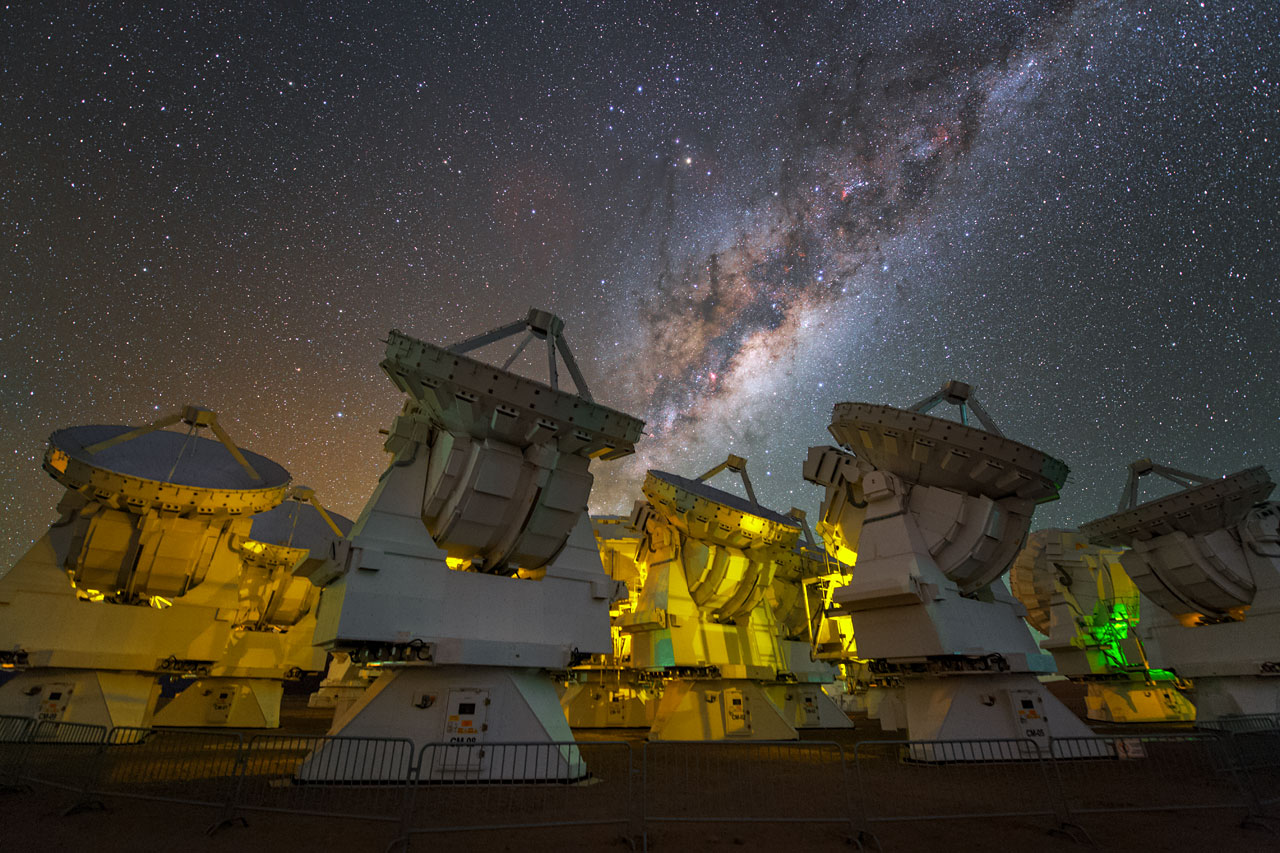


 All bots

 Registration details

 Identified technologies
User reviews (0)