
 简体中文
简体中文 English
Website review
This review may include AI-generated content and is not individually verified. Domain, certificate and other facts come from the observed data on this page.
What is Flag Guesser?
Flag Guesser is a browser-based quiz game built around identifying flags and similar symbols. According to its own description, it covers all countries of the world, plus US states, coats of arms and emblems, with continent-specific quizzes for Africa, Asia, Europe, North America, Oceania and South America.
The site's visible page content is essentially a JavaScript notice, so the practical experience comes from that description rather than from feature details shown on the page. The main trade-off is straightforward: broad coverage and continent filters make it easy to drill into a region, but the quizzes depend on JavaScript being enabled, so a blocked or failed script leaves you with nothing to play.
A sensible way to use it: start with the continent you know least, then move to the worldwide set to see whether your recall holds up across regions. If you want a different take on the same subject, Sporcle and JetPunk are established quiz sites with geography categories.
How do I play the Flag Guesser quiz game?
Flag Guesser is a browser-based quiz game where you identify flags from around the world. The page is built with JavaScript, so it needs to be enabled in your browser before the game will load.
How a round typically works
- Open Flag Guesser in your browser.
- Choose a quiz category — the site advertises continent-specific sets (Africa, Asia, Europe, North America, Oceania, South America) plus world flags, US states, coats of arms and emblems.
- A flag or emblem appears, and you enter or select the matching country, state or name.
- You get immediate feedback and move through the set, with your score tracking correct answers.
Practical tips
- Start with a single continent rather than "all countries" so the pool stays manageable.
- Play in short sessions; flag recall improves faster with repeated, spaced rounds than with one long marathon.
- When you miss one, say the country name out loud and picture the flag's distinctive feature (a colour order, a central emblem, a unique shape) — that association sticks better than re-reading a list.
A concrete scenario
If you have a geography test on African flags next week, run the Africa quiz daily, note the flags you miss, and review only those before the next round. Once you're consistently scoring high, switch to the world quiz to mix them with other regions.
Choosing between this and other options
Flag Guesser is a good fit if you want quick, region-based drills with extra categories like US states and coats of arms. If you'd rather learn through structured country profiles alongside the flags, CIA World Factbook and Encyclopaedia Britannica are useful references to check details after a round. For spaced-repetition style memorisation, a general flashcard tool such as Anki lets you build your own flag deck and review on a schedule.
Which continents and regions are covered in Flag Guesser quizzes?
Flag Guesser organises its quizzes around continents and world regions rather than a single global pool. Based on the site's own description, the continent-specific quizzes cover Africa, Asia, Europe, North America, Oceania and South America — effectively every inhabited continent.
Beyond country flags, the description also lists quizzes on US states, coats of arms and emblems, so the regional coverage is broader than national flags alone.
What the coverage means in practice
- Full continental sweep: Africa, Asia, Europe, North America, Oceania and South America each have their own quiz, so you can drill one region at a time instead of facing every flag at once.
- Sub-national geography: US states appear as a separate category, useful if you already know the national flags and want a harder set.
- Heraldry: Coats of arms and emblems extend the quiz beyond rectangular flags, which suits players who want a different visual challenge.
Choosing how to use it
A learner revising for a geography test would start with the continent they are weakest on, then rotate through the others. A casual player wanting variety can jump between continents and the emblem quizzes. The continent split is the main trade-off: it makes focused practice easy, but there is no indication of a single mixed-world mode, so you would need to combine regions yourself if you want that.
A practical next step: pick your weakest continent first, complete that quiz, then move to US states or coats of arms for a fresh challenge. For a second source of continent-based flag practice, Seterra offers map and flag quizzes by region.
Can I practice US state flags and coats of arms on Flag Guesser?
Yes. Flag Guesser is built around flag-guessing quizzes, and its own description lists US states alongside coats of arms and emblems, so state-flag and coat-of-arms practice is part of what the site offers rather than an extra you have to hunt for.
What that looks like in practice
A typical session is recognition training: you see a flag or emblem, then choose or type the matching name. The value comes from repetition across a set, not from a single pass.
- US state flags suit anyone studying for a civics quiz, trivia night, or a school project where the 50-state set is the actual goal.
- Coats of arms and emblems go beyond flags, which helps if you keep mixing up similar-looking designs or want heraldry rather than banners.
- Continent-specific quizzes (Africa, Asia, Europe, North America, Oceania, South America) let you narrow the pool, which matters because a 50-item set and a 200-item world set demand different memory strategies.
How to decide if it fits you
| Your goal | Flag Guesser's fit | Trade-off |
|---|---|---|
| Learn all 50 US state flags | Direct match | State flags are visually similar (blue fields, seals), so expect slow early progress |
| Practice coats of arms/emblems | Covered by the site's scope | Emblem sets are less standardized than national flags, so naming conventions vary |
| Drill one continent at a time | Supported | Narrow sets build confidence fast but can mask gaps when you return to the full world set |
| Casual five-minute practice | Workable | Short sessions favor small subsets; a full world run needs more time |
A useful next step
Start with the US states set alone and track which flags you miss twice. Those repeats are your real study list. Once you're consistently clean there, move to coats of arms, then widen to a continent quiz to test whether your recognition holds outside the set you memorized.
One practical note: the site needs JavaScript enabled to run, so if the page appears blank, that's the cause rather than a missing feature.
Is Flag Guesser free to play or does it require payment?
Flag Guesser is free to play. The site presents itself as a flag-guessing quiz game covering all countries of the world, plus US states, coats of arms, emblems and continent-specific quizzes for Africa, Asia, Europe, North America, Oceania and South America. Nothing in the available information points to a paid tier, subscription or paywalled quiz set.
One practical caveat: the page only renders with JavaScript enabled, so if it appears blank, that is a browser setting to fix rather than a payment prompt. Enable JavaScript and reload.
How to judge a "free" quiz site before committing time
- Access model: If a quiz loads and starts without a login wall or checkout page, it is free at the point of use.
- Hidden costs: Watch for ad-heavy layouts, forced account creation, or a "pro" mode that unlocks extra regions. Free-to-start is not always free-to-finish.
- What you actually get: A world-flags quiz is enough for most casual learners; US states, coats of arms and emblems add depth if you want more than the standard country set.
Who it suits
- Students and trivia players who want quick, repeatable rounds by continent rather than one giant mixed quiz.
- Teachers looking for a low-friction warm-up activity, provided classroom devices allow JavaScript.
- Flag enthusiasts who have outgrown country flags and want coats of arms and emblems as a harder tier.
If your goal is comparing study tools, Sporcle and JetPunk are established quiz platforms with large user-made geography sections, while Flag Guesser is the narrower, flag-focused option. Start with one continent quiz on Flag Guesser; if you finish it easily, move to the emblems and coats of arms sets for a real difficulty jump.
How can I improve my world flag knowledge using Flag Guesser?
Use Flag Guesser as a repeatable practice loop rather than a one-off test: start with the continent you know worst, play in short sessions, and review the flags you miss before moving on. The site is built around flag-guessing quizzes covering all countries of the world, plus US states, coats of arms, emblems, and continent-specific sets for Africa, Asia, Europe, North America, Oceania, and South America. That range lets you choose between broad world practice and focused regional drilling.
A practical routine
- Warm up with a continent you know well. Europe or North America is a low-friction start that builds momentum.
- Move to your weakest continent. Africa, Asia, and Oceania usually expose the biggest gaps for most learners.
- Note every miss, not just the score. Group errors by cause: similar color schemes (red, white, blue), shared pan-Arab or pan-African colors, or confusable emblems.
- Re-test the same set within a day or two. Spaced repetition is what converts recognition into recall.
- Switch modes once country flags feel easy. US states, coats of arms, and emblems test a different kind of visual memory.
What each quiz type is good for
| Quiz type | Best for | Trade-off |
|---|---|---|
| World (all countries) | Testing overall recall | Long sessions, harder to isolate weak spots |
| Continent-specific | Targeted drilling | Narrower context; less cross-region confusion practice |
| US states | Regional and subnational knowledge | Only useful if you care about US geography |
| Coats of arms and emblems | Detail-level recognition | Harder than flags; needs more prior knowledge |
Turning misses into knowledge
Flag quizzes train recognition, but recognition alone fades. After a session, look up the flags you missed and attach a fact to each one: independence date, colonial history, or the meaning of a specific symbol. A flag tied to a story sticks better than a flag tied only to a shape. If you want a second source for country profiles and flag symbolism, Encyclopaedia Britannica and CIA World Factbook both cover national flags and country background.
For a concrete plan: ten minutes a day, one continent per week, and a full world run at the end of each week. Track which flags you miss twice — those are your real study list.
A useful next step is to start with the continent where you scored lowest, play one round, and write down only the flags you got wrong. Then repeat that same set tomorrow before adding a new region.
 Amazon Route 53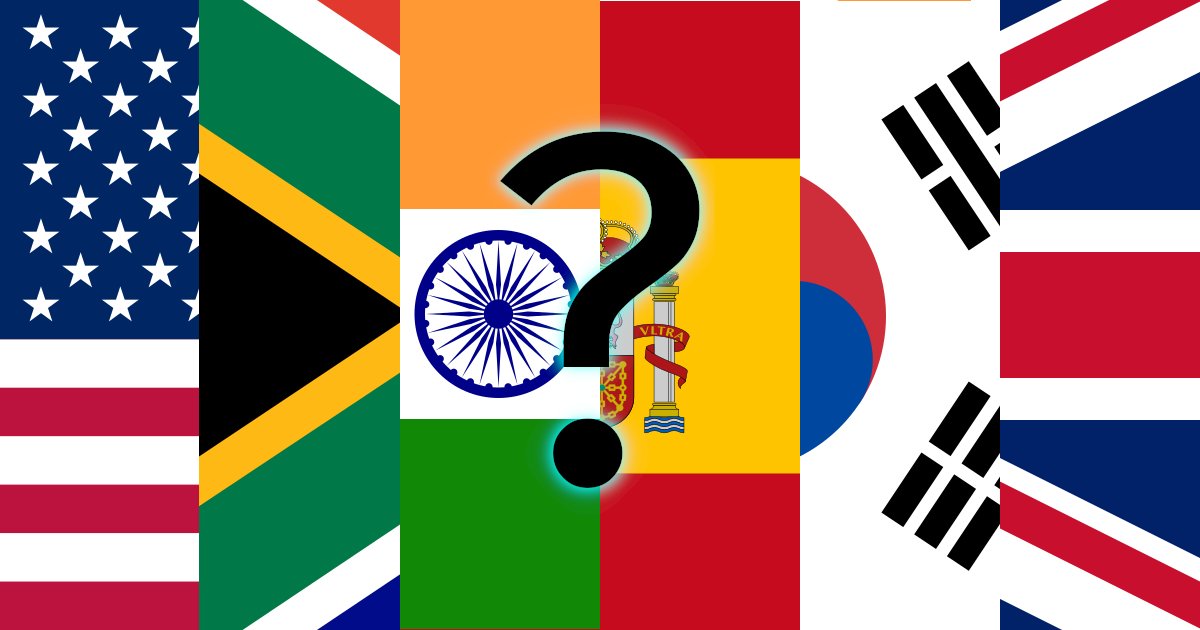
User reviews (0)