
 简体中文
 English

flightguesser.com
Explore the skies, test your aviation knowledge! Get random flights and guess their origin and destination airports with the fewest tries.
At a glance
- Category
- Travel
- Language
- English
- Paid-content signal
- No paid content foundObserved
- Registered
- 2022
- Hosting
- CloudflareInferred
- HTTPS certificate trusted
- PassedObserved
- Last updated
Related questions
More questions →What Is Flight Guesser and How Do You Play the Flight Guessing Game?
Flight Guesser is a browser-based aviation quiz on flightguesser.com: it gives you a random flight, and you guess the origin and destination airports, trying to do it in as few attempts as possible. It suits anyone who knows a bit about airports and airline routes and wants a short, repeatable knowledge challenge. No download or account is described on the site, so treat it as a casual web game you open and play.
How the game works
The site describes the core loop in one sentence: get random flights and guess their origin and destination airports with the fewest tries.
- Input: a randomly selected flight. The site does not spell out exactly which details each flight shows, so the practical approach is to read whatever route or flight information appears before guessing.
- Action: name the departure airport and the arrival airport.
- Result: your attempt count is tracked, and the goal is to finish with fewer tries.
Because the site's own description is short, avoid assuming features it doesn't mention, such as a map mode, hints, or a daily challenge. Play the version you see when you open the page and judge the rules from what the interface actually shows.
Why fewer tries matters
The scoring logic is simple: attempts are the score. A first-try correct answer is the best possible result; each extra guess is a cost. That changes how you should play compared with a relaxed trivia game — a fast, confident guess on a route you recognize beats a slow, exploratory one only if it's right. When you're unsure, a structured narrowing process usually saves attempts overall.
A beginner strategy that reduces attempts
The intent behind the game is aviation and airport knowledge, not general geography, so build your guess in layers:
- Read the flight information first. Before guessing anything, extract every clue the flight gives you — carrier, flight number patterns, aircraft type, or any route hint shown. Airline identity is often the strongest signal, since many carriers are tied to a home hub.
- Place the region. Decide the likely continent or country for each end. Long-haul versus short-haul route patterns help here.
- Narrow to a city or hub. Think about which airports an airline of that type would actually serve.
- Commit to specific airports. Only at this stage name the airport, and use the correct IATA code or name as the game accepts it.
This order — clue, region, hub, airport — keeps you from burning attempts on random airport names.
Common mistakes and how to fix them
| Mistake | Why it costs attempts | Fix |
|---|---|---|
| Confusing airport codes | Similar codes (and city vs. airport codes) send you to the wrong airport | Learn the difference between a city's main hub and secondary airports before guessing |
| Ignoring flight clues | Guessing blind wastes the cheapest information available | Always scan the flight details before your first guess |
| Guessing both ends at once | One wrong end can make a correct end look wrong | Settle the more recognizable end first, then work on the other |
| Assuming unlisted features | Expecting hints or a map that the site may not offer | Play the interface as presented and adapt |
Who it's for
Flight Guesser fits people who enjoy airport and airline trivia and want a quick challenge with a clear score. If you're new to aviation, expect a steep first few rounds; the fastest improvement comes from learning major airline hubs and the airport codes you keep missing. If you want a deeper geography game rather than an aviation-focused one, this isn't that — the emphasis here is on identifying airports from flight information.
Start with one round, note which clue you used first, and track whether your attempt count drops as your hub knowledge grows.
What Is an Airplane Guesser Game and How Do You Play It?
An airplane guesser is a lightweight browser game where you identify an aircraft or a flight from limited clues, and the goal is to get it right in as few tries as possible. You play it by reading the clue (a photo, a flight number, or a route hint), submitting a guess, and using the feedback after each attempt to narrow the field. It suits anyone who wants a short aviation-themed puzzle break; it is not a flight tracker or a study course, and it does not require real-world aviation knowledge to start, though that knowledge helps you win faster.
The two main types of guessing games
"Airplane guesser" is used loosely, and the games behind the term fall into two families that test different knowledge:
| Type | What you guess | Typical clue | Knowledge tested |
|---|---|---|---|
| Aircraft guesser | The aircraft model (e.g., a narrow-body vs. a wide-body, or a specific type) | A photo or a set of visual/technical hints | Aircraft recognition: shape, engines, winglets, livery |
| Flight / airport guesser | The origin and destination airports of a flight | A random flight, flight number, or partial route info | Airport codes, geography, airline route networks |
Flight Guesser (flightguesser.com) sits in the second family: its own description says it gives you random flights and asks you to guess their origin and destination airports with the fewest tries. If your goal is to name a specific plane model, look for an aircraft-recognition game instead; if your goal is to name where a flight flies, a flight/airport guesser is the right fit.
How a round works
Most of these games share the same loop, even when the interface differs:
- Pick a mode. Choose whether you are guessing aircraft or airports, and whether you want a photo clue or a flight clue.
- Read the clue carefully. For a flight game, note the flight number, airline, and any partial route shown. For an aircraft game, look at engine count and placement, fuselage length, wing shape, and tail.
- Submit a guess. Type an airport code or aircraft name and confirm.
- Use the feedback. Good versions tell you how close you were — for example, whether the airport is in the right country or region, or whether the aircraft is the right size class. Each attempt should eliminate possibilities.
- Repeat until correct, then check your try count. The score is usually the number of guesses, so the skill is in making each guess informative rather than random.
A worked example
Suppose a flight game shows you a flight number beginning with a European carrier's code and a departure airport you recognize as a major hub. Instead of guessing a random destination, use the airline: carriers with hub-and-spoke networks usually fly from that hub to their other focus cities. Guess the most likely destination first; if the feedback says "same country" or "same region," move to the next most probable city rather than jumping continents. Two or three informed guesses usually beat ten scattered ones.
Common reasons players lose
- Confusing the airline with the aircraft. An airline's livery tells you who operates the plane, not what model it is. Two airlines can fly the same type.
- Ignoring airport codes. Many airport guesser games expect the three-letter IATA code (e.g., LHR, JFK). Typing a city name may not register, and near-miss codes for the same metro area (multiple airports serving one city) cost you tries.
- Skipping the clue details. A flight number's airline prefix, a stopover, or a seasonal route hint is often the fastest path to the answer.
- Guessing wide instead of narrow. Randomly naming famous airports wastes attempts; each guess should be chosen to split the remaining possibilities.
Where to try it
Flight Guesser at flightguesser.com is a direct example of the flight-and-airport variant, and it is the natural starting point if you want to guess origins and destinations. For the aircraft-model variant, search for "aircraft recognition quiz" or "guess the plane" games; the play loop is the same, but the clues are visual rather than route-based. Either way, start with a few rounds to learn how the feedback works before trying to optimize your try count.
What Is the "Guess the Flight" Game and How Do You Play It?
"Guess the Flight" is a browser-based aviation guessing game in which you are shown a random flight and must identify its origin and destination airports in as few tries as possible. It is the core game offered by Flight Guesser (flightguesser.com), and the same concept also appears under names like flight guesser, plane guesser, or airport guesser. You need only a browser and some general aviation and geography knowledge — no account or special software is described on the site.
How a Round Works
Each round follows a simple loop:
- A random flight is presented. The game gives you a flight to work with, and your job is to name the two airports at either end of it.
- You submit a guess for the origin and destination airports. You are guessing airports, not airlines or flight numbers.
- The game returns feedback on your guess. That feedback is what tells you whether you are close or far off, so you can adjust the next attempt.
- You keep guessing until you solve the flight. The fewer tries it takes, the better your result.
The site's own description frames the goal directly: get random flights and guess their origin and destination airports "with the fewest tries."
Using Feedback to Narrow Down Airports
The feedback loop is the heart of the game. Treat each guess as a test of a hypothesis rather than a shot in the dark:
- Start with what the flight itself suggests. If the route implies a long-haul international service, your first guesses should be major international hubs rather than small regional fields.
- Read the feedback as a direction, not just a verdict. A guess that comes back "close" tells you to stay in the same region or airport tier; one that comes back "far" tells you to shift continents, countries, or airport size.
- Change one variable at a time. If you move both the origin and destination at once, you cannot tell which change produced the new feedback.
- Lock in one end first. Once you are confident about one airport, hold it fixed and use your remaining guesses to work the other end.
For example, if a flight looks like a transatlantic route and your first guess of two large European and North American hubs returns feedback that one end is close, keep that end and test progressively smaller or differently located airports on the other side.
What the Game Tests
Success depends on two overlapping kinds of knowledge:
- Aviation knowledge — which airports exist, which cities they serve, and what kinds of routes connect them.
- Geography — where those cities and airports actually are, which is what lets you interpret "close" and "far" feedback correctly.
Players who know major hub airports and their IATA-style city associations tend to solve flights faster, because their first guesses land nearer the answer.
Tips for Fewer Tries
- Open with high-traffic hubs. Large hubs are statistically more likely to be an endpoint than obscure airfields, and they also generate more informative feedback.
- Use route length as a clue. Short hops point to airports within one country or region; long flights point to intercontinental gateways.
- Keep a mental map of feedback. If two guesses both came back "close" in the same region, the answer is probably in that region — stop guessing elsewhere.
- Avoid repeating equivalent guesses. Guessing two airports in the same city or the same metro area usually wastes a try.
Where to Play
The game is playable in a browser at flightguesser.com. The site presents it as a way to "explore the skies" and test your aviation knowledge, with random flights as the core content. No pricing or login requirements are stated in the available site information, so check the site itself for any current access details before you plan around them.
If you have played similar daily guessing games, the rhythm will feel familiar: one flight, a limited set of guesses, and feedback that rewards careful reasoning over luck.
What Is a Plane Guesser Game and How Do You Play It?
A plane guesser game is a browser-based puzzle where you are shown a flight and must identify its origin and destination airports in as few guesses as possible. Flight Guesser (flightguesser.com) is one example: it presents a random flight, you submit airport guesses, and each guess returns feedback you use to narrow the field. No download or account is described on the site, so you can start playing directly in a browser.
The Core Gameplay Loop
The game follows a simple repeatable cycle:
- A random flight is shown. The game selects a flight for you to identify.
- You submit an airport guess for the origin or destination.
- You get feedback on how close your guess is.
- You refine and resubmit until both airports are identified.
The scoring pressure comes from the guess count: the fewer tries you use, the better your result. That makes the feedback step the most important part of play — it is where the actual deduction happens.
How to Use Feedback to Narrow Down Airports
Each guess is a data point, not just a shot in the dark. Treat the feedback as a set of constraints and eliminate possibilities systematically:
- Track every result. Keep a mental (or written) list of which airports you have ruled out and which remain plausible.
- Work one end at a time. Locking in the origin first often makes the destination easier, because flight pairs are not random — certain airports connect to certain regions.
- Use geography as a filter. If feedback points toward a region, stop guessing airports outside it.
- Reuse near-misses. A guess that was "close" tells you more than one that was far off; adjust slightly rather than starting over.
Plane Guesser vs. Airport Guesser
The terms overlap, but the emphasis differs:
| Term | What you identify | Typical focus |
|---|---|---|
| Plane guesser / airplane guesser | The flight's origin and destination airports | Deduction across a full route |
| Airport guesser | A single airport from clues | Identifying one location |
| Flight guesser | The complete flight (origin + destination) | Fewest-tries route solving |
Flight Guesser sits in the flight-guesser category: its stated goal is to "get random flights and guess their origin and destination airports with the fewest tries." If you enjoy route-based deduction rather than single-location trivia, that is the mode you want.
Practical Tips to Lower Your Guess Count
- Start with high-traffic hubs. Major airports appear in more flight pairs, so an early hub guess is more likely to produce useful feedback.
- Read the flight, not just the airports. Any route detail shown is a clue about distance and region.
- Avoid scattered guessing. Randomly jumping between continents wastes tries; each guess should test a specific hypothesis.
- Slow down on the last step. Once you have one airport, think about which destinations are actually served from it before submitting.
When This Game Is a Good Fit
A plane guesser like Flight Guesser suits players who like geography, aviation, and logic puzzles with a clear score to beat. It is less suited to people wanting real-time flight tracking or booking tools — the site is framed as a knowledge game, not a flight-data service. If you want a quick, repeatable deduction challenge in the browser, start with the flight-guesser format and focus on reading feedback carefully; that single habit will do more for your guess count than memorizing airport codes.
What Is an Airport Guesser Game and How Do You Play It?
An airport guesser is an aviation knowledge game in which you identify an airport from limited clues—most often by looking at a flight and working out its origin or destination. On Flight Guesser (flightguesser.com), the format is: you get a random flight, then guess its origin and destination airports, trying to do so in as few attempts as possible. It suits anyone who enjoys geography, airline routes, and airport codes, and needs no special equipment beyond a browser.
How a typical round works
The core loop is the same across most versions of the game:
- Receive a flight or clue. The game shows you a flight—sometimes just a route hint, sometimes partial details—and asks you to name the airports involved.
- Submit a guess. You enter an airport (usually by name or IATA code) as your origin or destination guess.
- Read the feedback. The game tells you whether you're right or how close you are, then you adjust.
- Repeat until solved. Your score is essentially the number of tries it took; fewer is better.
On Flight Guesser specifically, the stated goal is to "get random flights and guess their origin and destination airports with the fewest tries," so the challenge is accuracy under uncertainty rather than speed alone.
Airport guesser vs. flight guesser vs. plane guesser
These terms overlap and are often used interchangeably, but they emphasize slightly different things:
| Term | What you're identifying | Typical focus |
|---|---|---|
| Airport guesser | The airport (origin and/or destination) | Airport names, codes, and locations |
| Flight guesser | The flight's route as a whole | Matching a flight to its two endpoints |
| Plane guesser / airplane guesser | The aircraft | Aircraft models and types |
| Guess the flight | The flight | Route and airline knowledge |
In practice, an airport guesser round usually is a flight-guessing round: the flight is the clue, and the airports are the answer. If you see "plane guesser" or "airplane guesser," expect the target to shift from airports to aircraft.
Using Flight Guesser as your example
Flight Guesser describes itself as a way to "explore the skies" and "test your aviation knowledge," serving random flights for you to solve. The practical flow is:
- Input: the game presents a random flight.
- Action: you submit airport guesses for the origin and destination.
- Expected result: the game confirms correct airports and tracks how many tries you needed, so you can aim to beat your own count.
Because the site serves random flights, you can't pre-select an easy route—each round is a fresh test, which is what makes repeat play useful for building recognition.
Practical ways to improve your hit rate
- Use geography first. Ask which regions the flight plausibly connects, then narrow to major hubs before guessing smaller airports.
- Lean on airport codes. Familiarity with IATA codes (the three-letter identifiers) lets you guess faster and recognize when a code doesn't match the region implied by the flight.
- Think about route logic. Long-haul vs. short-haul, hub-to-hub vs. secondary airports, and common airline bases all narrow the field.
- Guess strategically, not randomly. Each wrong guess should eliminate a region or a type of airport, so your tries carry information.
- Track your patterns. If you keep missing a certain region or code family, that's the area to study between rounds.
What to expect before you start
Flight Guesser presents itself as a free-to-access browser game for exploring flights and testing aviation knowledge; the available site information does not list pricing, accounts, or login requirements, so treat any such detail as unconfirmed until you see it on the site. The main prerequisite is simply a browser and enough familiarity with airports to make a first guess—beginners can start with major hubs and improve as they play.
Website Overview
The available information shows a mix of normal operation and configuration gaps. Depending on how the website is used, these gaps may affect secure access or the consistency of its public presentation.
Domain and Registration
Transfer-protection status is present, helping reduce the risk of unauthorized domain transfers. The domain has about 3 years of registration history; its current configuration provides more context than age alone. The registrar is Cloudflare, Inc., a widely used domain service provider. The domain uses the common .com extension, which is not an independent safety signal.
DNS and Email
Nameservers are provided by Cloudflare, indicating managed DNS hosting. MX records point to the Proton Mail email service. No CNAME was found; the observed records resolve directly to addresses. SPF and DMARC are configured. DKIM status is unknown. TXT records include verification markers for Google. Such markers may also remain after a service stops being used.
TLS and Certificates
The public key uses EC with 256 bits. The server supplied a complete certificate chain. No organization name is present in the certificate; the available fields are consistent with domain validation. The certificate was issued within the Google Trust Services cloud or CDN ecosystem. The certificate's total validity is about 90 days, consistent with a short renewal cycle.
HTTP and Browser Security
The checked browser-security headers were not detected, leaving fewer explicit browser-side safeguards. No X-Powered-By header was found, reducing one common source of backend fingerprinting information. The cf-ray response header indicates a CDN or caching proxy in the delivery path. No obvious internal addresses or debug information were found in the headers. The Server header identifies cloudflare without an exact version.
Technology Stack Analysis
The public page identifies Cloudflare without precise versions, leaving fewer clues for version-specific scanning.
Search and Social Sharing
No homepage canonical URL was detected. If duplicate URLs exist, consolidation may be less explicit. Twitter Card metadata is configured. The title has 34 characters, within a common display range. A meta description is present, with 138 characters. The observed directives allow indexing and link following.
Hosting and Email
 Cloudflare
 Proton Mail
Registration details
| Registrar | Cloudflare, Inc. |
|---|---|
| Registered | 2022-10-28 |
| Expires | 2027-10-28 |
| Domain status | client transfer prohibited |
| Nameservers | dora.ns.cloudflare.com、mark.ns.cloudflare.com |
| DNSSEC | unsigned |
DNS records
| Type | Name | Value | TTL | Priority |
|---|---|---|---|---|
| A | flightguesser.com | 104.26.10.35 | 300 | — |
| A | flightguesser.com | 104.26.11.35 | 300 | — |
| A | flightguesser.com | 172.67.74.111 | 300 | — |
| AAAA | flightguesser.com | 2606:4700:20::681a:a23 | 300 | — |
| AAAA | flightguesser.com | 2606:4700:20::681a:b23 | 300 | — |
| AAAA | flightguesser.com | 2606:4700:20::ac43:4a6f | 300 | — |
| MX | flightguesser.com | mail.protonmail.ch | 300 | 10 |
| MX | flightguesser.com | mailsec.protonmail.ch | 300 | 20 |
| NS | flightguesser.com | dora.ns.cloudflare.com | 86400 | — |
| NS | flightguesser.com | mark.ns.cloudflare.com | 86400 | — |
| TXT | flightguesser.com | google-site-verification=q9uhT2wnYLggAMw1GIe3-II6cMEPkdAmk6SV9VlkmPg | 300 | — |
| TXT | flightguesser.com | protonmail-verification=9f37f6759ddefdc10d95a2fd733014abfad5550d | 300 | — |
| TXT | flightguesser.com | v=spf1 include:_spf.protonmail.ch include:spf.mandrillapp.com mx ~all | 300 | — |
| DMARC | _dmarc.flightguesser.com | v=DMARC1; p=none | 300 | — |
TLS and certificates
| Assessment | Normal configuration |
|---|---|
| Supported protocols | TLSv1.2、TLSv1.3 |
| Negotiated protocol | TLSv1.3 |
| Certificate subject | flightguesser.com |
| Issuer | Google Trust Services |
| Valid until | 2026-12-10T04:04 · Remaining when checked: 50 days |
| Verification details | Certificate trust: Passed · Hostname match: Passed |
HTTP response headers
| Header | Value |
|---|---|
| content-type | text/html; charset=utf-8 |
| cache-control | public, max-age=10, s-maxage=86400 |
| server | cloudflare |
| set-cookie | Redacted |
Identified technologies
Pages, Search and Sharing
| Meta description | Explore the skies, test your aviation knowledge! Get random flights and guess their origin and destination airports with the fewest tries. |
|---|---|
| Canonical URL | Not detected |
| Language | English (default) |
| Twitter Card | summary_large_image |
Social Sharing Preview
10 fields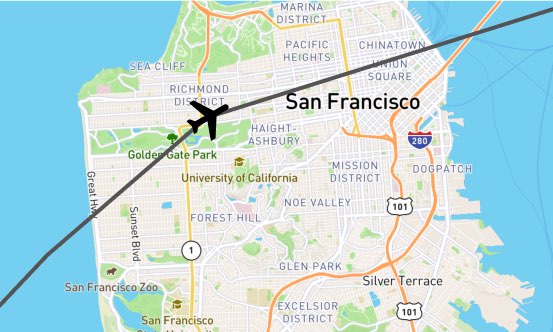

robots.txt (opens in a new tab)
1 rulesAll bots 1 allowed · 0 disallowed
- Allow
/
No matching rules.
User reviews (0)