Website profiles · Technology insights · Alternatives

jonalecfund.org

Help The Jon-Alec Fund, a non-profit, support training in Emergency Medical Services, Wildland Firefighting and Addiction Counseling.

No paid content found
Visit website
Profile views 13 Outbound visits 20 Normal
The Jon-Alec Fund | Non-Profit Organization Full homepage screenshot

At a glance

Category
Nonprofits & Volunteering
Language
English
Paid-content signal
No paid content foundObserved
Registered
2019
Hosting
FastlyInferred
HTTPS certificate trusted
PassedObserved
Last updated

Website review

This review may include AI-generated content and is not individually verified. Domain, certificate and other facts come from the observed data on this page.

What is The Jon-Alec Fund?

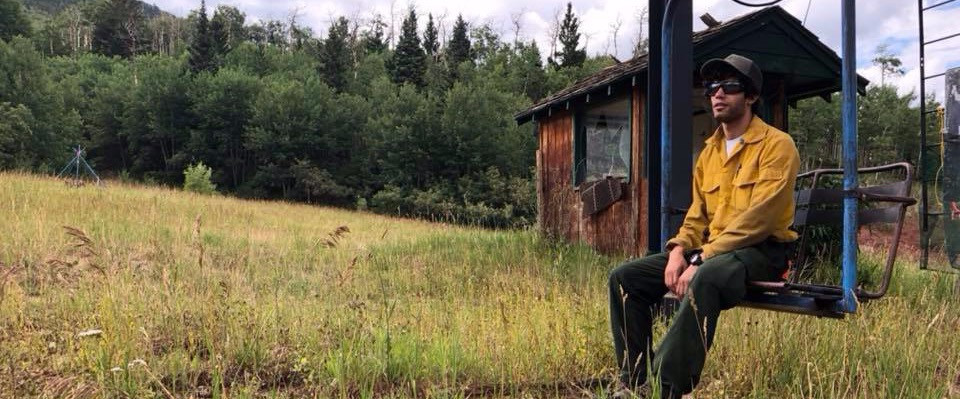
The Jon-Alec Fund is a nonprofit public charity that provides educational scholarships to young people pursuing certifications in three fields: Emergency Medical Services (EMS), wildland firefighting, and addiction counseling. It was founded in memory of Jon-Alec Chervin, an EMT and wildland firefighter/medic who had begun coursework to become a certified addiction counselor before his death in 2018.

The fund's stated purpose is to carry forward his interest in caring for people in crisis—particularly those facing mental health and addiction emergencies—by helping others enter the same kinds of service careers.

Who it's for

  • Students seeking certification (rather than a full degree) in EMS, wildland firefighting, or addiction counseling
  • People whose interests align with the fund's emphasis on outdoor work, personal responsibility, and helping others

How it differs from a typical scholarship fund

Its scope is narrow by design. Instead of awarding across many disciplines, it concentrates on three hands-on public-safety and behavioral-health roles, which makes it most relevant if your training path falls squarely in one of them.

For application steps, deadlines, and eligibility specifics, contact the organization directly through The Jon-Alec Fund.

How can I apply for a scholarship from The Jon-Alec Fund?

The Jon-Alec Fund's site describes its purpose as providing educational scholarships to young people pursuing certifications in Emergency Medical Services, wildland firefighting, and addiction counseling, but the page content does not include an application form, eligibility rules, deadlines, or a contact address. So the practical answer is: you cannot apply from the information shown here alone.

What to do next

  1. Look for a "Scholarships," "Apply," or "Contact" page on the same site, since the homepage mainly tells Jon-Alec's story and the fund's mission.
  2. If no application page exists, use the organization's published contact channel to ask directly. Ask three things: who is eligible, what documents are required (proof of enrollment, program acceptance, references), and the review timeline.
  3. Prepare your materials in advance so you can respond quickly once you have the requirements.

A realistic applicant scenario

Suppose you are a high school graduate enrolled in an EMT certification program and also applying to a wildland fire academy. You would likely need to show acceptance or enrollment, explain your career goal in one page, and provide at least one reference who can speak to your commitment. Because the fund names three distinct fields, your statement should connect your plan to one of them rather than describing general public service.

Decision criteria

  • Fit: Your program should lead to certification in EMS, wildland firefighting, or addiction counseling, matching the fund's stated focus.
  • Stage: The fund describes supporting young people seeking certifications, so applicants early in training are the natural audience.
  • Verification: Confirm every requirement with the organization itself. Treat any deadline or amount you see elsewhere as unverified unless the fund publishes it.

For context on the fields involved, the national EMS scope of practice is maintained by NASEMSO, wildland fire training standards are published by the National Wildfire Coordinating Group, and addiction counseling credentialing varies by state, often through boards affiliated with NAADAC. These are general reference points, not part of the fund's application process.

What can I do to support The Jon-Alec Fund's mission?

The Jon-Alec Fund supports scholarships for young people training in Emergency Medical Services, wildland firefighting, and addiction counseling — the three fields Jon-Alec Chervin himself worked or was preparing to enter. Your support therefore goes toward certification costs for students who might otherwise not be able to afford them.

Ways to help

  • Donate. A memorial fund of this kind typically lives on small and mid-sized gifts rather than large endowments, so a one-time or recurring contribution is the most direct form of support. Check the site's own giving page for current options.
  • Contribute in someone's name. A gift made in memory or in honor of an EMT, firefighter, or counselor is a natural fit here, and it can introduce the fund to people who never knew Jon-Alec.
  • Share the mission. The page itself asks visitors to "Share" and "Learn more." Passing the link to a fire department, ambulance service, or treatment program puts it in front of the people most likely to know a candidate for a scholarship.
  • Point students to it. If you teach, supervise, or work alongside someone pursuing an EMT certification, a wildland firefighter pack test, or a counseling credential, tell them the fund exists.
  • Ask about volunteering or skills. Small charities often need help with outreach, event organizing, or professional expertise as much as money. Ask directly rather than assuming.

Matching your support to the cause

If you want to… Best fit
Honor someone with a EMS or fire background Memorial or tribute gift
Help a specific student Ask whether scholarships can be designated by field
Give without money Share the fund with training programs and departments
Give regularly Recurring donation, if offered

A practical next step

Decide which of the three fields matters most to you — EMS, wildland firefighting, or addiction counseling — then reach out through the fund's contact page and ask how gifts are directed and whether you can specify a field. That one question tells you whether your money will land where you intend.

For context on the organizations these graduates typically join, you can look at National Fire Protection Association for wildland and structural fire standards, National Association of EMTs for the EMS profession, and NAADAC for addiction counseling credentials.

What types of training programs does The Jon-Alec Fund fund?

The Jon-Alec Fund supports training that leads to certification in three public-safety and behavioral-health fields:

  • Emergency Medical Services (EMS) — training toward EMT and related emergency medical credentials.
  • Wildland Firefighting — certification for firefighters and medics who work on wildland incidents.
  • Addiction Counseling — coursework and certification for people preparing to counsel those with substance-use disorders.

The fund frames this as scholarships for young people pursuing these careers, continuing Jon-Alec Chervin's own path as a Denver EMT, a wildland firefighter/medic, and a student of addiction counseling.

Next step: If you're considering applying, check the site's "Learn more" and community sections for current scholarship details, eligibility and deadlines, then gather proof of enrollment or acceptance in an accredited EMS, wildland fire, or addiction-counseling program.

Who is eligible for The Jon-Alec Fund scholarships?

The Jon-Alec Fund does not publish detailed eligibility rules on its site. It describes its purpose as providing educational scholarships to young people pursuing careers in Emergency Medical Services, Wildland Firefighting and Addiction Counseling, and says it aims to fund young people with convictions similar to Jon-Alec's, including a love and respect for nature.

What that suggests about likely applicants

  • Students seeking certifications (rather than only four-year degrees) in EMS, wildland firefighting or addiction counseling.
  • Younger applicants who are early in their training or career path.
  • People who can show a genuine commitment to service, outdoors work and helping others.

Those are reasonable inferences from the stated mission, not confirmed criteria. The page does not list age limits, residency requirements, enrollment status, GPA, citizenship or financial need.

How to check before applying

Treat the mission statement as a starting point and confirm the specifics directly. The most reliable step is to use the fund's own contact route and ask for the current scholarship guidelines, deadline and required documents. If you are advising a student, have them prepare a short statement linking their training plans to EMS, wildland firefighting or addiction counseling, plus a reference who can speak to their character and service.

For context on the fields involved, professional bodies such as NAEMT and NAADAC explain certification pathways in EMS and addiction counseling, which can help applicants describe their goals clearly.

How does The Jon-Alec Fund honor Jon-Alec Chervin's legacy?

The Jon-Alec Fund honors Jon-Alec Chervin by turning his personal commitments into scholarships. According to the organization's own page, it is a non-profit public charity that provides educational scholarships to young people pursuing certifications in Emergency Medical Services, Wildland Firefighting and Addiction Counseling — the three fields where Jon-Alec worked or was preparing to work.

The fund's stated purpose is to continue what the page calls his mission of caring: supporting students who share his convictions, his love and respect for nature, and his intention to give back through hands-on service. The page describes his own path as an EMT in Denver, a wildland firefighter/medic across the West, and a student beginning coursework to become a certified addiction counselor, with a particular instinct for patients facing mental health emergencies.

What a scholarship gift actually supports

  • EMS training — certification paths for people who want to work on ambulances and in emergency response.
  • Wildland firefighting — training for the physically demanding, seasonal work of fighting fires in remote terrain.
  • Addiction counseling — credentialing for people who want to help others through recovery.

These are relatively short, practical certification programs rather than long academic degrees, which means a donation can move a student toward employment fairly directly.

A concrete scenario

Imagine a student who has finished a wilderness first-responder course and wants to work a fire season but cannot cover the cost of the required training and gear. A scholarship from a fund like this can close that gap. The same applies to someone working nights while studying for an addiction-counseling credential.

If you want to help

Check the fund's own site for current scholarship criteria, application details and donation options before giving or applying: The Jon-Alec Fund. If you are a student, confirm which certifications and expenses the fund covers and what documentation it asks for; if you are a donor, ask how recipients are selected and whether gifts can be directed to one of the three fields.

Related questions

More questions →
What Is a Tagline, and How Is It Different From a Slogan or Brand Name?

A tagline is a short, fixed phrase that expresses what a brand stands for and stays with it over time. It is not your brand name (that's what you're called), not a slogan (that's a campaign-specific line), and not a mission statement (that's an internal compass). The tagline is the public-facing bridge between your name and your customer's memory: it tells people what you do, for whom, and in what spirit—usually in five to eight words.

For a small business or a product line, a good tagline does three jobs at once: it positions you against alternatives, it makes you easier to recall, and it sets the tone of the relationship. Everything below explains those jobs, shows how the same tagline flexes across contexts, and gives you criteria and a template to judge your own.

The four terms people mix up

Term What it is Lifespan Example (hypothetical)
Brand name What you are called Permanent "Kakesa"
Tagline A fixed phrase attached to the brand Years, often permanent "Handmade steel, honest sound"
Slogan A line tied to one campaign or promotion Weeks to months "Free mallets with every pan this spring"
Mission statement Internal statement of purpose Years, internal "To make handcrafted steel instruments accessible to every player"

The practical test: if the line would look strange on a business card ten years from now, it's a slogan. If it describes your internal decision-making rather than your customer's benefit, it's a mission statement. If it's the word people search for to find you, it's your name.

Why the distinction matters

Small businesses often burn a good tagline by treating it as a campaign line—swapping it every quarter until nobody associates anything with the brand. The reverse mistake is treating a slogan as permanent, so the brand gets stuck describing a promotion that ended. Keep one tagline stable; rotate slogans underneath it.

What a tagline actually does

1. Positioning

A tagline answers "compared to what?" A steel drum maker could position on craft ("handmade in small batches"), on range ("pans, mallets, and stands in one place"), or on accessibility ("a first pan that stays in tune"). Each choice attracts a different buyer. You cannot position on all three at once; pick the one your best customers already believe.

2. Recall

Short, concrete, rhythmic phrases stick. "Handmade steel, honest sound" is easier to remember than "Quality musical instruments and accessories for every setup" because it uses concrete nouns and a parallel structure. Recall comes from repeatability, not cleverness—if you can't say it out loud without stumbling, customers won't repeat it either.

3. Tone

The tagline signals whether you're warm, technical, playful, or premium. A repair shop and a luxury retailer can sell the same service with completely different taglines, and the tagline is what tells a visitor which one they've walked into.

How one tagline adapts across contexts

The tagline stays the same; its placement and supporting copy change.

  • Storefront / signage: tagline under the name, no explanation. It's a signature.
  • Packaging: tagline on the front panel; the back panel carries the proof (materials, dimensions, care instructions).
  • Product pages: tagline in the header or hero area, followed immediately by specifics—size, finish, what's included. The tagline frames; the specs convince.
  • Email signature and invoices: tagline as a one-line reminder of what you do, useful when the recipient forwards it.
  • Social profiles: tagline in the bio, with a link to the relevant collection rather than the homepage.

A tagline that only works on a billboard but not on a product page is usually too abstract.

Criteria for judging a tagline

Score your candidate from 1 to 5 on each:

  1. Clarity — Can a stranger tell what you sell within two seconds?
  2. Differentiation — Could a direct competitor use this exact line? If yes, rewrite.
  3. Memorability — Can you recall it a day later without looking?
  4. Fit — Does it match the audience's vocabulary, not industry jargon?
  5. Durability — Will it still be true in three years if your product line grows?
  6. Proof — Can your product pages, photos, or service back up the claim?

A line scoring high on memorability but low on differentiation ("Quality you can trust") is the most common failure: pleasant, forgettable, and usable by anyone.

Common pitfalls

  • Vague claims. "Excellence in sound" says nothing a competitor couldn't say.
  • Inside language. Terms your team uses but customers don't search for.
  • Two ideas in one line. A tagline that tries to cover both craftsmanship and affordability usually communicates neither.
  • Puns that hide the product. Cleverness that requires explanation costs you clarity.
  • All-caps superlatives. "The world's best" invites skepticism instead of trust.

A fill-in template

Use this to generate candidates, then test them against the criteria above:

[What you make], [how it's made or who it's for].

Examples in that shape:

  • "Handcrafted steel drums, built to be played for decades."
  • "Steelpans and mallets, matched for beginners."
  • "Durable stands, made for touring bands."

Keep the first half concrete (the product) and the second half distinguishing (the method, audience, or promise). Then say each candidate aloud, put it on a mock product page, and ask three people who don't work with you what they think you sell. If their answer matches your intent, you have a tagline. If not, the line is doing tone work but not positioning work—and positioning is the job that matters most.

What Does 'Business' Coverage Actually Include on a Site Like Forbes?

Business coverage on a site like Forbes is not one topic but a bundle of related areas: investing, technology, entrepreneurship, leadership, and lifestyle. If you arrive with a broad interest in "business," the fastest way to get value is to decide which of those areas matches your current question, then read within that section rather than skimming everything. This guide breaks down what each area typically contains, how they connect, and how to navigate from a general interest to a specific answer.

The five core areas under one business umbrella

Forbes describes itself as covering business, investing, technology, entrepreneurship, leadership, and lifestyle. Those labels are not random. They map onto the actual decisions people make around work and money.

Investing

This area covers markets, stocks, funds, personal finance, and economic trends. You will find reporting on market moves, analysis of sectors and companies, and opinion pieces on strategy. It is aimed at readers who want to understand where money goes and why.

Technology

Technology coverage focuses on how new tools and platforms change how businesses operate. Expect product and platform news, analysis of industry shifts, and commentary on regulation and competition. The business angle is usually explicit: who gains, who loses, and what it means for companies and workers.

Entrepreneurship

This is about starting and running a business. Typical formats include founder profiles, lessons from building a company, fundraising and operations advice, and interviews. It suits readers who are launching something or want practical models from people who have done it.

Leadership

Leadership coverage deals with managing people, strategy, and organizational culture. You will see executive interviews, advice columns, and analysis of how leaders handle change. It is useful if your question is about how to run a team or organization, not just how to make money.

Lifestyle

Lifestyle is the broadest and most consumer-facing area. It can include travel, cars, real estate, food, and personal pursuits, often framed through a business or wealth lens. Treat it as the human-interest edge of business coverage rather than the core.

How these areas connect

The connecting thread is decision-making under uncertainty. Investing asks where to put capital. Technology asks how tools reshape competition. Entrepreneurship asks how to build something new. Leadership asks how to direct people. Lifestyle asks how success and money show up in daily life. A single story can touch several areas at once—for example, a technology company's IPO involves investing, entrepreneurship, and leadership.

That overlap is why they appear together. A reader interested in "business" is usually interested in at least one of these angles, and often in how they interact.

News, analysis, and opinion: know what you are reading

Forbes, like most business publications, publishes three distinct content types. Confusing them is the most common source of misunderstanding.

Type What it does How to spot it
News reporting States what happened Factual, sourced, often short
Analysis Explains why it happened and what it means Interpretive, connects events to trends
Opinion / commentary Argues a point of view First-person or clearly labeled as a column

When you read a business article, check which type it is before acting on it. A news piece tells you an event occurred. An analysis piece offers a framework. An opinion piece reflects the author's view, not a settled fact.

A simple way to navigate from "business" to a specific topic

Use this three-step routine:

  1. Name your question in one sentence. For example: "How do I evaluate a company's stock?" or "How do I manage a growing team?"
  2. Match it to one area. Investing for the first, leadership for the second. If your question spans two areas, pick the one closest to your decision.
  3. Read two or three pieces in that area, then stop. Business coverage is broad; depth comes from staying in one lane long enough to see patterns, not from reading across all five areas at once.

If you are unsure where to start, begin with the area tied to a decision you actually face this month. That keeps the reading practical instead of abstract.

What to expect and what to watch for

Expect a mix of formats: short news items, longer features, interviews, lists, and columns. Expect some content to be written for a general audience and some for specialists. Watch for the difference between reporting and opinion, and note when a piece is sponsored or contributed rather than staff-written.

Business coverage is a starting point for orientation, not a substitute for primary sources or professional advice. Use it to understand the landscape, then go deeper where your decision requires it.

Website Overview

An established domain and managed infrastructure suggest continuity of operations and may support dependable delivery, although neither guarantees service quality. Page metadata, canonical configuration and social previews work together to provide more consistent search and sharing presentation.

Domain and Registration

Registered in 2019, this domain has about 7 years of history. That suggests continuity, although ownership and purpose may have changed. Transfer-protection status is present, helping reduce the risk of unauthorized domain transfers. The domain uses the common .org extension, which is not an independent safety signal.

DNS and Email

Nameservers are provided by wixdns.net, indicating managed DNS hosting. No MX record was found. A conventional explicit inbound-mail route is not configured. DNSSEC signatures were not detected, so this additional DNS authenticity protection is not confirmed. The lowest observed DNS TTL is 3600 seconds. No CAA record was found; there is no additional DNS-based restriction on certificate issuers.

TLS and Certificates

The certificate uses an RSA 2048-bit public key, offering broad client compatibility. The server supplied a complete certificate chain. No organization name is present in the certificate; the available fields are consistent with domain validation. The certificate was issued by Let's Encrypt, commonly associated with automated certificate services. The certificate's total validity is about 89 days, consistent with a short renewal cycle.

HTTP and Browser Security

The response lacks these common security headers: CSP, Referrer-Policy, Permissions-Policy, clickjacking protection. No X-Powered-By header was found, reducing one common source of backend fingerprinting information. The cf-ray, x-cache, x-served-by response header indicates a CDN or caching proxy in the delivery path. No obvious internal addresses or debug information were found in the headers. The Server header identifies cloudflare without an exact version.

Technology Stack Analysis

The public page identifies Wix.com Website Builder, Wix, React, Sentry, Cloudflare, Fastly without precise versions, leaving fewer clues for version-specific scanning.

Search and Social Sharing

The Generator tag identifies Wix.com Website Builder, making the publishing system easier to fingerprint. Twitter Card metadata is configured. The title has 43 characters, within a common display range. A meta description is present, with 133 characters. The observed directives allow indexing and link following.

Hosting and Email

DNSwixdns.net
HostingFastly
EmailUnknown
Approximate IP geolocation (inferred; a CDN or proxy may differ from the origin server) United States flagUnited States Inferred 162.159.143.12

Registration details

RDAP / WHOIS

RegistrarNetwork Solutions, LLC
Registered2019-07-10
Expires2027-07-10
Domain statusclient transfer prohibited
Nameserversns14.wixdns.net、ns15.wixdns.net
DNSSECunsigned

DNS records

DNS

TypeNameValueTTLPriority
Acfd.wixdns.net162.159.143.123600—
Acfd.wixdns.net172.66.3.83600—
NSjonalecfund.orgns14.wixdns.net86400—
NSjonalecfund.orgns15.wixdns.net86400—
CNAMEwww.jonalecfund.orgcdn3.wixdns.net3600—

TLS and certificates

TLS / SSL

AssessmentNormal configuration
Supported protocolsTLSv1.2、TLSv1.3
Negotiated protocolTLSv1.3
Certificate subjectjonalecfund.org
IssuerLet's Encrypt
Valid until2026-12-25T04:34 · Remaining when checked: 81 days
Verification detailsCertificate trust: Passed · Hostname match: Passed

HTTP response headers

HTTP

HeaderValue
content-typetext/html; charset=UTF-8
content-languagezh-CN
cache-controlprivate,max-age=0,must-revalidate
servercloudflare
strict-transport-securitymax-age=31556952
x-content-type-optionsnosniff
set-cookieRedacted

Identified technologies

Wix.com Website BuilderWixReactSentryCloudflareFastly

Pages, Search and Sharing

Meta descriptionHelp The Jon-Alec Fund, a non-profit, support training in Emergency Medical Services, Wildland Firefighting and Addiction Counseling.
Canonical URLhttps://www.jonalecfund.org
LanguageEnglish (default)
Twitter Cardsummary_large_image
All bots 1 allowed · 1 disallowed
  • Allow/
  • Disallow*?lightbox=
adsbot-google-mobile 0 allowed · 2 disallowed
  • Disallow/_partials*
  • Disallow/pro-gallery-webapp/v1/galleries/*
adsbot-google 0 allowed · 2 disallowed
  • Disallow/_partials*
  • Disallow/pro-gallery-webapp/v1/galleries/*
petalbot 0 allowed · 1 disallowed
  • Disallow/
dotbot 0 allowed · 0 disallowed
  • IntervalCrawl delay 10 seconds
ahrefsbot 0 allowed · 0 disallowed
  • IntervalCrawl delay 10 seconds

User reviews (0)

  • No reviews yet.