
 pdf.ai
No paid content found
pdf.ai
No paid content found
Categories: Artificial Intelligence Development
Chat with any PDF using AI: ask questions, get summaries, and find answers. Use our API to parse documents, extract data, and split PDFs in your own workflows.
 Visit website
 Updated: 2026-09-26 11:06
 Language: English (default)
 Access: Normal
 Profile views 0
 Outbound visits 0
Related questions
More questions →PDF Invoices in Legal Billing: What to Include and When to Use Them
A PDF invoice in legal billing is a fixed-format document that presents the fees and costs owed on a matter in a layout that looks the same on every device. It is the digital equivalent of a printed bill: readable, portable, and easy to attach to an email or upload to a client portal. Its main limitation is that it is not machine-readable in the way a LEDES file is, so a client's e-billing system cannot automatically ingest it. PDF works best for flat-fee matters, small or one-off engagements, and clients who do not run an automated billing platform.
What "PDF" means in a legal billing context
When a billing tool offers to send an invoice "in PDF," it is generating a rendered document rather than a structured data file. The distinction matters:
- PDF is a presentation format. A human reads it. Line items, totals, and matter details appear as text and tables on a page.
- LEDES (Legal Electronic Data Exchange Standard) is a structured, delimited text format. An e-billing system parses it, validates it against outside counsel guidelines, and routes it for review.
- Email delivery is a transport method, not a format. You can email a PDF, email a LEDES file, or email a link to an online invoice.
These three are often confused because a single invoice can combine them: a LEDES file delivered by email, or a PDF attached to an email. The format is what the client's systems can read; the delivery method is how it arrives.
When a PDF invoice is the right choice
PDF is usually appropriate when the client does not require electronic submission through a billing platform. Common scenarios:
- Flat-fee and fixed-price matters. When the invoice is one or two lines, a structured file adds no value.
- Small businesses and individuals. Clients without an accounts payable system can open a PDF and pay from it.
- Retainers and replenishment requests. A simple statement of the retainer balance is easy to read as a PDF.
- Pro bono or courtesy bills. Where no formal e-billing review applies.
- Backup documentation. Even when a LEDES file is submitted, a PDF is often attached for the reviewer's convenience.
If the client has outside counsel guidelines requiring LEDES submission, a PDF alone will typically be rejected or returned for manual entry. Check the client's billing requirements before choosing the format.
PDF versus LEDES versus emailed invoice: a quick comparison
| Factor | LEDES | Email (as delivery) | |
|---|---|---|---|
| Machine-readable | No | Yes | N/A |
| Accepted by e-billing platforms | Rarely | Yes | Depends on attachment |
| Setup effort | Low | Higher (mapping fields) | Low |
| Best for | Flat fees, small clients, backup | Corporate and insurer clients | Any format |
| Risk | Manual re-entry by client | Format rejection if fields are wrong | Lost or filtered messages |
Core elements of a compliant legal PDF invoice
A PDF invoice should stand on its own. If a client's AP department picks it up with no context, it should still answer who, what, when, and how much.
Firm and client identification
- Firm name, address, and contact details
- Tax or VAT identification number where applicable
- Client name and billing contact
- Invoice number and invoice date
- Client matter number or reference
Matter and timekeeper detail
- Matter name and description
- For each timekeeper: name, initials, and billing rate
- Time entries with date, narrative description, and time recorded in tenths of an hour
- Clear separation of fee earners if rates differ
Fees, expenses, and totals
- Fees subtotal
- Disbursements and expenses, itemized with dates
- Taxes applied
- Prior payments, credits, or trust retainer applied
- Total amount due and currency
Payment terms
- Due date and payment window
- Accepted payment methods
- Remittance details or a payment link
- Late-payment terms if the engagement letter specifies them
A useful test: hand the PDF to someone who has never seen the matter and ask them to confirm the amount due and the period covered. If they hesitate, the invoice is missing something.
Practical limitations to plan around
PDF invoices shift work to the recipient. Someone at the client has to read the document and key the data into their system, which introduces delay and transcription errors. PDFs also cannot be validated against billing guidelines automatically, so a reviewer may reject a line item that a LEDES rule would have caught before submission.
Two habits reduce the friction:
- Send a consistent template. Clients learn where to find the total, the matter number, and the payment terms.
- Keep a LEDES version in reserve. If a client later adopts an e-billing platform, you can convert rather than rebuild.
Choosing between PDF, LEDES, and email delivery
Work from the client's requirements backward:
- Does the client mandate LEDES submission? If yes, PDF is a supplement, not a substitute.
- Is the matter flat-fee or very small? PDF is usually sufficient.
- Does the client have no billing system? PDF delivered by email or portal is the simplest path.
- Is the invoice complex with many timekeepers and expenses? A structured format reduces disputes, even if the client accepts PDF.
When in doubt, ask the client's billing contact which format they prefer and whether a PDF attachment is acceptable alongside any required file. That one question prevents most rejected invoices.
Easy Legal Billing supports sending or scheduling invoices in LEDES, email, or PDF formats, which lets you match the format to each client's requirements rather than forcing one approach across every matter.
What Is OpenAPI-Generated API Documentation and How Does It Work?
OpenAPI-generated API documentation is reference documentation that is produced automatically from an OpenAPI description file rather than written by hand. You write (or generate) a machine-readable specification of your API — endpoints, parameters, request bodies, responses, schemas, and auth — and a documentation tool reads that file and renders a browsable, often interactive reference site. The spec becomes the single source of truth; the docs become a build artifact.
This differs from manually written docs in one fundamental way: with hand-written docs, the prose is the source of truth and the API is described separately. With spec-driven docs, the API description is the source, and every page, table, and code sample is derived from it.
How the workflow actually runs
A typical spec-driven documentation pipeline has five stages:
- Author or generate the spec. You either write an OpenAPI document by hand (YAML or JSON), or generate it from code annotations, framework metadata, or a design-first editor. Design-first means the spec is written before implementation; code-first means it is extracted from existing code.
- Validate and lint. The spec is checked against the OpenAPI schema and against style rules — consistent naming, required descriptions, no undocumented
4xxresponses, no orphaned schemas. - Bundle and transform. Multi-file specs are combined,
$refpointers are resolved, and the document is optionally split into per-tag or per-version outputs. - Render. A documentation tool converts the spec into HTML: an endpoint list, a sidebar of operations, parameter tables, response schemas, and a "try it" console.
- Publish and version. The rendered site is deployed, and each API version gets its own snapshot so consumers can read docs matching the version they call.
Steps 2 through 5 are usually automated in CI. If the spec fails validation, the docs build fails — which is the point.
Spec-driven vs. hand-written documentation
| Dimension | OpenAPI-generated | Hand-written |
|---|---|---|
| Source of truth | The spec file | The prose |
| Consistency with the API | High, if the spec is accurate | Drifts as the API changes |
| Effort per endpoint | Low after setup | Repeated for every endpoint |
| Narrative and tutorials | Weak; needs separate pages | Strong |
| Code samples | Generated per language from schemas | Written and maintained manually |
| Customization | Bounded by the tool's templates | Unlimited |
| Failure mode | Accurate spec, poor docs, or stale spec | Beautiful docs that describe an API that no longer exists |
The practical conclusion most teams reach: generate the reference, write the guides. Reference material is repetitive and mechanical, which is exactly what generation is good at. Conceptual explanations, migration notes, and tutorials carry judgment that a spec cannot express.
What you get out of the box
Generated reference pages commonly include:
- An operation list grouped by tag or path, with HTTP method and path.
- Parameter tables showing name, location (path, query, header, cookie), type, required flag, and description.
- Request and response schemas rendered as expandable trees, including nested objects and arrays.
- Authentication details pulled from the
securitySchemessection. - Interactive request consoles that let a reader send a real call from the browser.
- Generated code samples in several languages, derived from the same schemas.
- Multiple output formats, such as a static site, a single HTML file, or a mock server.
Because all of these come from one document, changing a field name in the spec updates the parameter table, the schema tree, and every code sample at once.
Where spec-driven documentation breaks down
Generation is not free. The trade-offs are real:
Spec quality becomes documentation quality. A field with no description produces a table row with an empty cell. A vague summary produces a vague heading. Tools can enforce presence of descriptions via linting, but they cannot enforce that the description is useful.
Customization has limits. If you need a page that does not map to an OpenAPI concept — a conceptual overview, a pricing explanation, a comparison of two endpoints — you write it outside the generator and link to it.
Not everything is expressible. Webhooks, streaming responses, long-polling behavior, and complex multi-step flows are awkward or impossible to describe fully in OpenAPI. Those need prose.
The spec can go stale. If the spec is maintained separately from the implementation, it drifts just like hand-written docs. The mitigation is to generate the spec from code, or to test the implementation against the spec in CI.
Interactive consoles need care. A "try it" button that hits a production API with real credentials is a security and rate-limit problem. Point it at a sandbox, or disable it.
Deciding whether to adopt it
Adopt spec-driven reference documentation if most of these are true:
- Your API has more than a handful of endpoints, or changes frequently.
- You ship client SDKs or code samples in more than one language.
- Multiple teams consume the API and need a consistent, always-current reference.
- You already have, or are willing to maintain, an OpenAPI description.
Stay with hand-written docs, or a hybrid, if:
- Your API is small and stable, and the reference fits on one page.
- Your documentation is mostly conceptual and contains little endpoint-level detail.
- You cannot commit to keeping the spec in sync with the implementation.
A reasonable middle path: generate the reference from the spec, and hand-write the getting-started guide, authentication walkthrough, and error-handling page. Link the two directions so readers can move from concept to endpoint and back.
A minimal starting checklist
- Produce one valid OpenAPI document for a single API version.
- Add a linter with rules for descriptions, operation IDs, and error responses.
- Wire the docs build into CI so a failing spec fails the build.
- Render the reference and review it as a reader, not as the author.
- Write the two or three conceptual pages the generator cannot produce.
- Version the published docs alongside the API version.
The core idea is simple: describe the API once, in a format both machines and humans can read, and let the reference documentation fall out of that description. Everything else — tooling, hosting, interactivity — is a detail on top of that decision.
Website Overview
An established domain and managed infrastructure suggest continuity of operations and may support dependable delivery, although neither guarantees service quality. Page metadata, canonical configuration and social previews work together to provide more consistent search and sharing presentation.
Domain and Registration
Registered in 2017, this domain has about 8 years of history. That suggests continuity, although ownership and purpose may have changed. Transfer-protection status is present, helping reduce the risk of unauthorized domain transfers. The registrar is NameCheap, Inc., a widely used domain service provider. Registration contact information is publicly available through RDAP. The domain uses the common .ai extension, which is not an independent safety signal.
DNS and Email
Nameservers are provided by Cloudflare, indicating managed DNS hosting. MX records point to the Fastmail email service. No CNAME was found; the observed records resolve directly to addresses. SPF and DMARC are configured. DKIM status is unknown. TXT records include verification markers for Google. Such markers may also remain after a service stops being used.
TLS and Certificates
The certificate uses an RSA 2048-bit public key, offering broad client compatibility. The server supplied a complete certificate chain. No organization name is present in the certificate; the available fields are consistent with domain validation. The certificate was issued by Let's Encrypt, commonly associated with automated certificate services. The certificate's total validity is about 89 days, consistent with a short renewal cycle.
HTTP and Browser Security
The response lacks these common security headers: CSP, X-Content-Type-Options, Referrer-Policy, Permissions-Policy, clickjacking protection. CORS permits any origin to read this response. This is common for public resources; sensitive responses need narrower handling. No X-Powered-By header was found, reducing one common source of backend fingerprinting information. No obvious internal addresses or debug information were found in the headers. The Server header contains the custom value Vercel.
Technology Stack Analysis
The public page identifies Next.js, jQuery, Google Analytics, Vercel without precise versions, leaving fewer clues for version-specific scanning.
Search and Social Sharing
Twitter Card metadata is configured. The title has 57 characters, within a common display range. A meta description is present, with 159 characters. The observed directives allow indexing and link following. No Generator meta tag is publicly exposed.
 Hosting and Email
 Cloudflare
 Hosting
 Vercel
 Fastmail
 Location
 Walnut, California, United States
 Pages, Search and Sharing
| Meta description | Chat with any PDF using AI: ask questions, get summaries, and find answers. Use our API to parse documents, extract data, and split PDFs in your own workflows. |
|---|---|
| Canonical URL | https://pdf.ai |
| Language | English (default) |
| Twitter Card | summary_large_image |
Social Sharing Preview
8 fields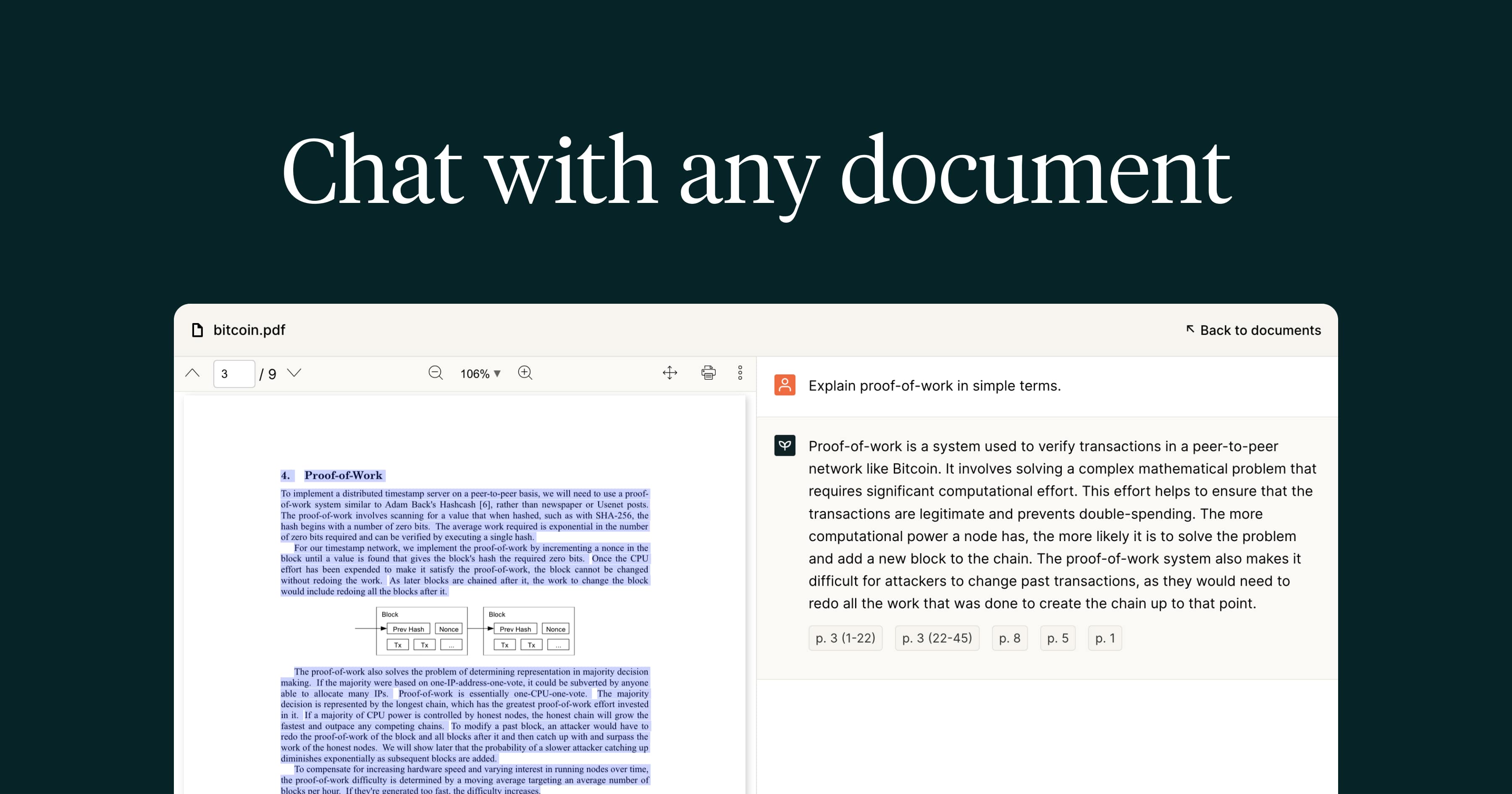
Sharing metadata
| og:url | https://pdf.ai |
|---|---|
| og:type | website |
| og:image | http://pdf.ai/ogimage.jpg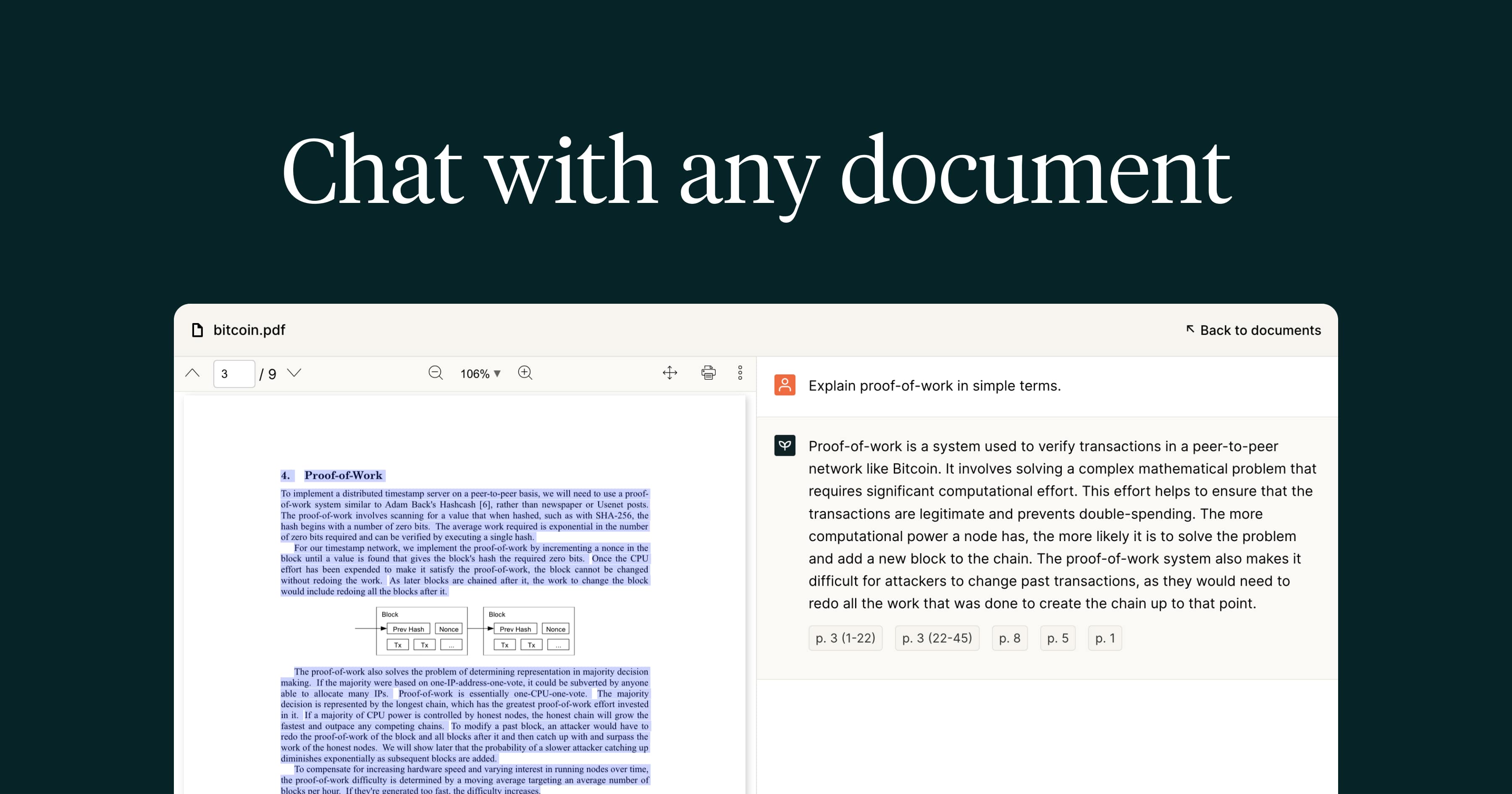 |
| og:title | PDF.ai | Chat with PDFs & PDF API (parse, extract, split) |
| og:image:type | image/jpeg |
| og:description | Chat with any PDF using AI: ask questions, get summaries, and find answers. Use our API to parse documents, extract data, and split PDFs in your own workflows. |
| twitter:card | summary_large_image |
| twitter:site | @PDFdotai |
robots.txt (opens in a new tab)
1 rulesAll bots 1 allowed · 0 disallowed

 All bots

/
No matching rules.
Sitemaps
1 Registration details RDAP / WHOIS
| Registrar | NameCheap, Inc. |
|---|---|
| Registered | 2017-12-16 |
| Expires | 2028-09-16 |
| Domain status | client transfer prohibited |
| Nameservers | jamie.ns.cloudflare.com、javier.ns.cloudflare.com |
| DNSSEC | unsigned |
 DNS records
| Type | Name | Value | TTL | Priority |
|---|---|---|---|---|
| A | pdf.ai | 76.76.21.21 | 300 | — |
| MX | pdf.ai | in1-smtp.messagingengine.com | 300 | 10 |
| MX | pdf.ai | in2-smtp.messagingengine.com | 300 | 20 |
| NS | pdf.ai | jamie.ns.cloudflare.com | 86400 | — |
| NS | pdf.ai | javier.ns.cloudflare.com | 86400 | — |
| TXT | pdf.ai | brevo-code:419d60cb39e658add1b48d44700c3e50 | 300 | — |
| TXT | pdf.ai | dan-ownership-verification=t8ao5e6u | 300 | — |
| TXT | pdf.ai | google-site-verification=5fABWhobaUzTAjQCKyFfYna55apInVg1wlGvzVZJ860 | 300 | — |
| TXT | pdf.ai | google-site-verification=vMmZuhAPU5E4KH9WB3u54ZcTMoBsb6RVg2fEECOOOUk | 300 | — |
| TXT | pdf.ai | openai-domain-verification=dv-yqhoSD3GTT5Fo96L59z13M9E | 300 | — |
| TXT | pdf.ai | v=spf1 include:spf.messagingengine.com ?all | 300 | — |
| DMARC | _dmarc.pdf.ai | v=DMARC1; p=none; rua=mailto:[email protected] | 300 | — |
 TLS and certificates
| Assessment | Normal configuration |
|---|---|
| Supported protocols | TLSv1.2、TLSv1.3 |
| Negotiated protocol | TLSv1.3 |
| Certificate subject | pdf.ai |
| Issuer | Let's Encrypt |
| Valid until | 2026-11-23T18:19 · Remaining when checked: 58 days |
| Verification details | Certificate trust: Passed · Hostname match: Passed |
 HTTP response headers
| Header | Value |
|---|---|
| content-type | text/html; charset=utf-8 |
| cache-control | public, max-age=0, must-revalidate |
| server | Vercel |
| strict-transport-security | max-age=63072000 |
| access-control-allow-origin | * |
| set-cookie | Redacted |
 Identified technologies
User reviews (0)