
 简体中文
 English
Website review
This review may include AI-generated content and is not individually verified. Domain, certificate and other facts come from the observed data on this page.
What is Prince Chazz?
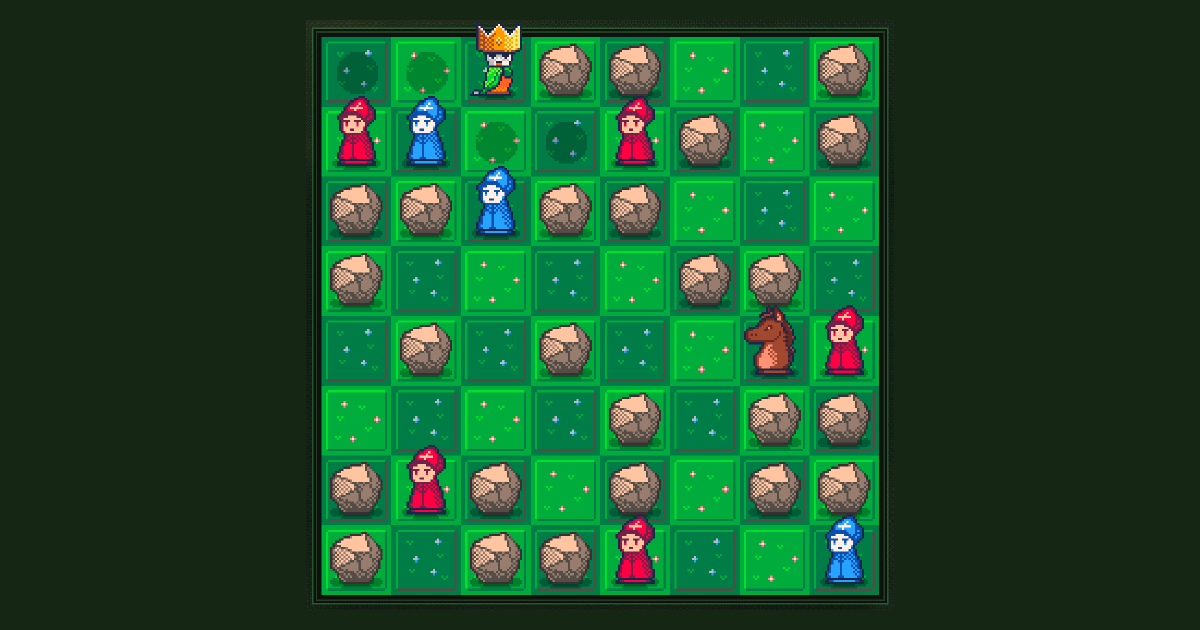
Prince Chazz is a seeded chess-pathfinding roguelite: you guide a prince across a chessboard, dodge enemy pieces, and compete on a per-seed leaderboard. The chess vocabulary shapes the obstacle logic (pieces and their movement), while the roguelite structure means each run is a fresh attempt with its own board and seed.
Who it suits
- Players who like small, replayable puzzle-runs rather than long campaigns.
- Chess players who enjoy the movement rules but want something less formal than a full game.
- Leaderboard chasers, since the per-seed setup lets you compare attempts on identical boards.
How to approach a first run
Pick a seed, learn the enemy pieces' threat patterns, and treat each move as a routing decision rather than a chess match. Because results are tied to a seed, replaying the same seed is the most direct way to measure improvement. If you want broader context on roguelites and chess variants, see Wikipedia or itch.io.
How does the seeded chess-pathfinding roguelite gameplay work?
Prince Chazz is a roguelite built around chess movement rules: you guide the title character across a board while enemy pieces threaten squares according to how those pieces actually move. Each run is tied to a seed, so the board layout and piece placement are reproducible, and you compete on a per-seed leaderboard against others who faced the same arrangement.
What that means in play
The core loop combines two familiar ideas:
- Pathfinding under threat. You plan a route across the board, but each enemy piece controls squares the way it would in chess—so a bishop's diagonals or a rook's lines become danger zones to route around rather than capture.
- Roguelite structure. Runs are short and repeatable, and the seed fixes the challenge so results are comparable. A bad run can be retried on the same seed to learn the layout, or a fresh seed can be attempted for a new puzzle.
Who it suits
Players who enjoy route-planning puzzles and light chess knowledge will get the most from it: you need to read piece threats quickly, but you are not playing full chess. The seeded leaderboard adds a competitive layer for players who like optimizing a known puzzle rather than facing randomness.
A practical next step: note the seed before a run you find interesting. Replaying the same seed turns the leaderboard into a fair comparison and lets you test whether a different route through the same threats scores better.
How does the per-seed leaderboard compare runs and rank players?
The per-seed leaderboard ranks players by comparing runs that begin from the same seed, so everyone on a given board faces the same starting layout and can be judged against a shared set of conditions rather than a random draw. The site describes the game as a seeded chess-pathfinding roguelite in which you guide Prince Chazz across the board while dodging enemy pieces; the leaderboard is tied to that seed, meaning your result is slotted against others who played the identical setup.
What the comparison implies
- Same seed, same test: Because the seed fixes the board, differences in ranking reflect how each player navigated that particular arrangement of pieces, not luck of a fresh random board.
- Run against run: Each completed attempt on a seed becomes a comparable entry, and the ranking orders those attempts. The exact scoring metric (moves, time, survival, or a combination) isn't specified on the page, so treat the precise ranking rule as something to confirm in-game.
- Practical use for players: If you want a fair benchmark of your pathfinding skill, replay a seed where you scored poorly and study how higher-ranked runs on that same seed differ. That is more informative than comparing across different seeds.
A concrete scenario: you finish a seed in a certain number of moves and see yourself mid-table. Replaying the same seed lets you test whether a different route past the enemy pieces improves your standing, since the board conditions are held constant. The trade-off is that per-seed boards reward seed-specific route memorization as much as general skill, so a strong general player may still rank lower on an unfamiliar seed until they learn its layout.
What strategies help dodge enemy pieces while crossing the board?
The core strategy is to treat each enemy piece's movement pattern as a zone to route around, not a threat to fight. Since Prince Chazz is a seeded pathfinding roguelite where you guide the prince across the board while dodging enemy pieces, the useful habits are planning a route in segments, reading which squares each piece can reach next, and keeping a fallback lane open.
Practical approaches
- Read the piece, not the board. Each enemy type threatens a different shape (straight lines, diagonals, short hops). Before moving, identify which squares are currently unsafe and pick the square that reduces your exposure.
- Move in short commitments. Advance one or two squares at a time so a new enemy placement doesn't strand you; long dashes across open files are where runs end.
- Keep two lanes open. Aim to have a primary path and a backup column or rank you can pivot to if the primary gets cut off.
- Use the edges deliberately. Board edges limit your escape options but also constrain some pieces' reach; decide case by case rather than always hugging the rim.
- Learn the seed. Because layouts are seeded, replaying a seed lets you test a different route against the same piece arrangement — a fast way to build pattern recognition.
A concrete example
If a straight-line attacker sits on your intended file, shift one file over early rather than waiting until you're adjacent, then rejoin your route further up the board. This costs a couple of moves but avoids the moment where you have no safe square.
Decision criterion
When two routes look equally safe, choose the one that keeps more empty squares adjacent to your next position. Mobility is the resource that keeps you alive; distance from enemies matters less than having somewhere to go.
Is Prince Chazz free to play, and where can I play it?
Prince Chazz is described as a seeded chess-pathfinding roguelite: you guide the character across a board, dodge enemy pieces, and compete on a per-seed leaderboard. The supplied page details don't include pricing information, so there's no confirmed statement that it's free to play. Treat "free" as unverified until the game page itself says so.
Where to play
The game's official site is Prince Chazz. That's the place to check for how it's played and whether there's a download, browser version, or store listing. The page excerpt supplied here is empty, so the specific platform isn't confirmed.
Practical next step
Open the official page and look for a "Play" or "Download" button, a platform label (browser, itch.io, Steam, mobile), and any price or "free" tag. If you want a quick trial before committing, a browser-playable version is the easiest way to test whether the seeded-leaderboard loop suits you.
How does the seed system change each run and affect replayability?
The seed system is the main reason Prince Chazz plays differently from run to run: each seed sets up a specific board layout and enemy-piece arrangement, so a new seed means new routes to find rather than the same puzzle restarted. Because the site also runs a per-seed leaderboard, the seed does double duty—it defines the challenge and gives players a shared reference point for comparing attempts on that exact layout.
What changes between runs
- Board and enemy placement: Dodging enemy pieces depends on where they sit relative to your path, so a fresh seed reshuffles the risk profile of every route.
- Route planning: With a fixed layout per seed, the interesting decision is which path you commit to early and how you adapt when a piece blocks it.
- Comparison: The per-seed leaderboard turns each seed into its own small competition, which rewards learning one layout deeply before moving on.
Replayability trade-off
Seeded runs split players into two habits. Some prefer to grind a single seed until their route is near-optimal, which suits players who like optimisation and leaderboard climbing. Others prefer a constant stream of new seeds, which suits players who enjoy reading a fresh board and improvising. The first group gets depth from repetition; the second gets variety. A game that leans on seeds needs both groups to feel served, and the per-seed leaderboard is the mechanism that gives repeated attempts on one seed a purpose.
As a practical next step, try one seed several times to learn its layout, then switch seeds and note how much of your skill transfers. If your improvement carries over, the seed system is adding variety without erasing mastery—usually the sign of a healthy roguelite loop.
 Cloudflare

User reviews (0)