
 简体中文
 English

Website review
This review may include AI-generated content and is not individually verified. Domain, certificate and other facts come from the observed data on this page.
What is the Royal Northern College of Music?
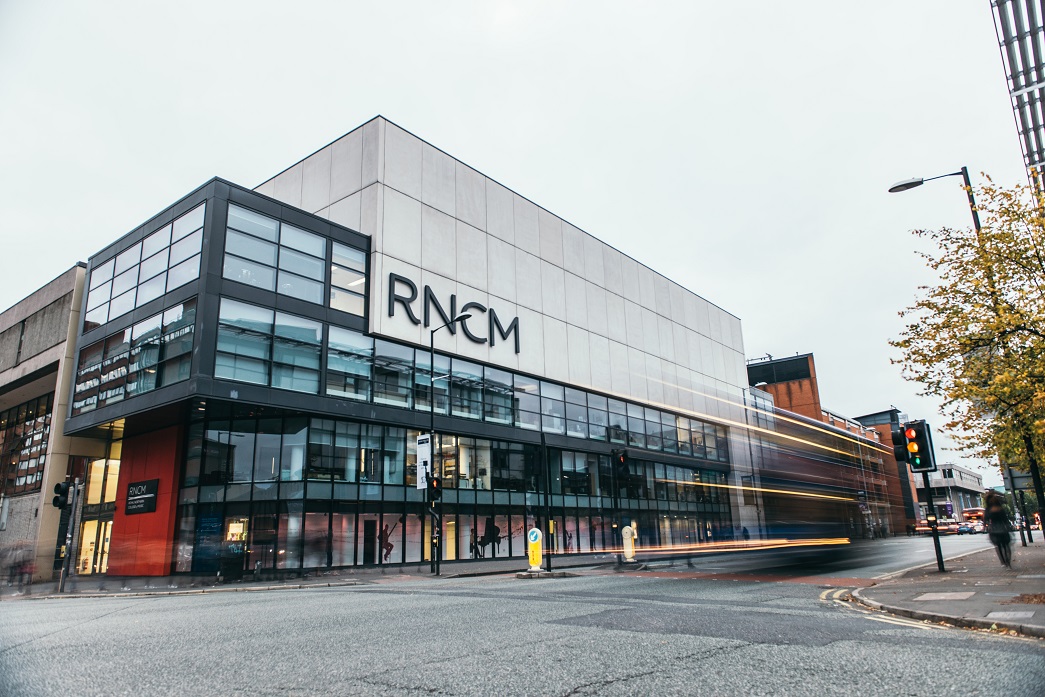
The Royal Northern College of Music (RNCM) is a music conservatoire in Manchester, England, and a constituent conservatoire of the Associated Board of the Royal Schools of Music. It is a higher-education institution focused on training musicians, with study spanning undergraduate, graduate and research degree programmes, plus short courses and an associate student scheme.
What it offers
- Performance-led study: The site foregrounds teaching, performance and admissions, and lists schools of study and specialisms ranging from composition and conducting to keyboard, strings, vocal, and wind, brass and percussion.
- Levels of study: Undergraduate School, Graduate School, research degrees, and Junior RNCM for younger musicians.
- Beyond the degree: Professional opportunities, placements, exchanges and international partnerships are presented as part of the student experience.
- Public-facing activity: Concerts, festivals, series and ticket booking make the college a venue as well as a school.
Who it suits
A prospective student preparing for conservatoire-level performance or composition, a teacher advising a pupil, or an audience member looking for Manchester concerts. The site also addresses international applicants, with English language requirements, qualifications on entry, and a Chinese-language section.
Practical next step
If you are considering applying, start with the entrance requirements and audition pages, then use an open day or virtual tour to test the fit. The audition is the decisive stage, so repertoire and preparation matter more than the prospectus. For context on other UK conservatoires, see Royal College of Music and Royal Academy of Music.
What undergraduate and graduate music programmes can I study at the RNCM?
The RNCM lists its teaching under two main schools — an Undergraduate School and a Graduate School — plus a separate Research Degree Programme. Its site also groups teaching by "Schools of Study" and "Specialisms," which is the clearest way to see what you can actually apply for.
What the site shows
- Undergraduate: the Undergraduate School is the entry point for first degrees, and the site directs applicants through a single "Make an Application" route with sections on entrance requirements, audition, offer, and fees and funding.
- Graduate: the Graduate School covers postgraduate study, sitting alongside the research route rather than inside it.
- Research: a distinct Research Degree Programme exists for those pursuing a research qualification, with its own events, forums and staff profiles.
- Specialisms and Schools of Study: these pages are where the individual disciplines are named and described, and they are the best place to check whether your instrument, voice type or subject is taught.
- Associate Student Scheme and CPD, plus Short Courses: listed separately from the degree schools, so they suit people who want training without committing to a full programme.
- Junior RNCM: its own department with its own application and fee information, aimed at younger students rather than degree applicants.
How to choose between them
| Route | Typical fit | What to check first |
|---|---|---|
| Undergraduate School | School-leavers and others starting a first degree | Entrance requirements and audition repertoire |
| Graduate School | Graduates specialising further or changing focus | Whether your specialism is offered at postgraduate level |
| Research Degree Programme | Those wanting a research qualification | Research centres, staff interests, proposal requirements |
| Short Courses / CPD / Associate Scheme | Professionals and keen amateurs wanting focused study | Whether the scheme matches your level and availability |
| Junior RNCM | Younger players preparing for conservatoire study | Age and fee conditions on the Junior pages |
A practical next step
Work backwards from the repertoire you want to play. Pick two or three specialisms that match your instrument or voice, note which school each sits in, then read the entrance requirements and audition pages for those routes before you look at fees. If your specialism appears only at one level, that effectively decides your application.
Where the RNCM sits
The RNCM describes itself as a constituent conservatoire of the Associated Board of the Royal Schools of Music, so if you are weighing up conservatoire study in the UK more broadly, it is worth comparing with Royal College of Music and Royal Academy of Music, and with university music departments such as Oxford Faculty of Music if you want a more academic balance. The practical difference is usually intensity and specialisation versus breadth and academic flexibility — conservatoires tend to be performance-led with heavy one-to-one teaching, while university departments tend to offer more room for musicology, composition and combined honours.
How do I apply and audition for the RNCM, and what are the entrance requirements?
Applications to the Royal Northern College of Music run through its own admissions route rather than a single central form, and the audition is the decisive part of the process. Start by choosing your programme level and specialism on Royal Northern College of Music, then work through the application, entrance requirements, audition and offer pages before you submit anything.
The application sequence
- Pick your programme and specialism. The site separates undergraduate, graduate, research degrees, Junior RNCM, the Associate Student Scheme and short courses. Each has its own application and fee information.
- Check entrance requirements and English language requirements. These pages set out the academic and musical baseline, plus the English evidence expected of international applicants. Requirements differ by course, so read the page for your specialism rather than the general one.
- Apply through the official route. The "How to Apply" and "Apply to the RNCM" pages carry the current instructions. International applicants have a separate section covering qualifications on entry and exchanges.
- Prepare and attend your audition. The "Your Audition" page explains format and expectations. Auditions may be in person or by recorded submission depending on your circumstances, so confirm which applies to you.
- Receive your offer and arrange funding. The "Your Offer" and "Fees and Funding" pages cover next steps once a decision is made.
Entrance requirements at a glance
| Area | What to check | Why it matters |
|---|---|---|
| Academic qualifications | Qualifications on entry, by course and country | Determines eligibility before audition |
| Musical standard | Audition repertoire and level expected for your specialism | The main selection criterion |
| English language | English Language Requirements page | Applies to international applicants |
| Fees and funding | Fees and Funding, scholarships and support | Affects your decision and deposit timing |
A practical example
A clarinettist applying for undergraduate study would choose the relevant school of study, read the entrance requirements for that specialism, confirm the English language requirement if applying from abroad, book or record the audition to the stated repertoire, then review fees and funding while waiting for a decision. A postgraduate applicant follows the same path but with graduate-level repertoire and a research or performance focus.
How to decide
Treat the audition requirements as your syllabus: build your preparation around them, and confirm deadlines well before you plan recording or travel. If you are unsure which level fits you, the open days and "Chat with Us" options on Royal Northern College of Music are the quickest way to check before committing to an application. For a broader view of conservatoire study in the UK, ABRSM explains the Associated Board framework that the RNCM is part of, and UCAS covers how conservatoire applications relate to the wider higher education system.
What support does the RNCM offer international students, including English language requirements and exchanges?
The RNCM treats international students as a distinct audience with its own admissions route. Its navigation lists International Students, English Language Requirements, Qualifications on Entry, Application and Audition, Exchanges, and a 中文网站 (Chinese-language site) — so prospective applicants from outside the UK can find country-relevant guidance rather than working through the general undergraduate pages alone.
For English language, the key practical point is that the requirement is listed separately from academic qualifications. That means a conservatoire audition offer can still carry a language condition you must satisfy before enrolment. Check the English Language Requirements page for the level attached to your programme, then confirm whether your existing test or prior study is accepted.
On exchanges, the RNCM lists an Exchanges section alongside Worldwide Partnerships and an International Benchmarking Group. These are different things: exchanges usually involve a period of study at a partner institution, while partnerships cover broader institutional collaboration. If a term or year abroad matters to you, ask the admissions or international office early which partner institutions are open to your instrument, voice or programme, and how credit and fees are handled.
The site also points to Discover RNCM (Open Days), a Virtual Tour, and Chat with Us — useful if you cannot visit Manchester before auditioning. International applicants should also look at Accommodation, Fees and Funding, and Support and Wellbeing, since visa, cost and settling-in questions sit outside the audition itself.
A sensible next step: open the International Students page, note the English language and qualification requirements for your specific programme, then email admissions with your instrument, level and current qualifications. Compare the RNCM with other UK conservatoires such as Royal Academy of Music and Royal College of Music on language thresholds, exchange options and international student support before applying.
What is life like as a student at the RNCM, including accommodation, wellbeing and professional opportunities?
Life at the Royal Northern College of Music combines intensive conservatoire training with the wider student experience of living in Manchester. The college presents itself as a place to study, perform and build a professional career, with dedicated pages for accommodation, support and wellbeing, and professional opportunities. In practice, that means your week is likely to revolve around lessons, rehearsals, performances and practice, while the college's student-support and city-life information helps with the practical side of moving to and living in Manchester.
H3 Study and daily rhythm
- You can expect a performance-led routine: individual tuition, ensemble and repertoire work, and public events listed under What's On.
- The college organises study by level and specialism, with Undergraduate, Graduate and Research degree programmes, plus Schools of Study, specialisms and short courses.
- Open Days, a Virtual Tour and "Chat with Us" are the main ways to test the fit before applying.
H3 Accommodation and wellbeing
- Accommodation is handled as part of the student-life information, alongside Support and Wellbeing.
- Because Manchester is a large student city, the realistic trade-off is between college-managed or college-linked housing and private renting further out: the first usually shortens commutes and keeps you close to practice rooms and evening events, while the second can offer more space or lower rent at the cost of travel time.
- Use the college's own accommodation and support pages as your starting point, then compare with the city's wider student housing market.
H3 Professional opportunities
- The site highlights Professional Opportunities, Performance and Placements, and an alumni network, which are the routes through which students gain stage experience, teaching work and industry contacts.
- International activity is part of the picture: the college publicises taking teaching, performance and admissions to South Korea, and lists worldwide partnerships and exchanges, which can matter if you want international projects or study abroad.
- Alumni pages are organised by discipline (composition, conducting, strings, vocal, keyboard, popular music, wind/brass/percussion), useful for seeing where graduates in your specialism have gone.
H3 A practical next step If you are weighing up the RNCM, treat the Open Day or Virtual Tour as the moment to ask three concrete questions: how accommodation is allocated and what it costs relative to private renting; what wellbeing support looks like in a conservatoire where performance pressure is constant; and which professional opportunities are guaranteed versus competitive. Compare the answers with another conservatoire or university music department so the differences in daily life, not just prestige, guide your choice. You can also look at Royal Northern College of Music for the official study, accommodation and support information, and at UCAS for how conservatoire applications and auditions fit into the wider application process.
How can I support the RNCM through donations, named awards or leaving a gift in my will?
The Royal Northern College of Music (RNCM) offers several ways to give, and the right one depends mainly on whether you want your support to be unrestricted, tied to a specific student, or part of your long-term legacy. The college's own site lists three main routes: general donations, named awards, and gifts in your will.
Donations and regular giving One-off or recurring gifts are the most flexible option. RNCM describes a "Regular Giving" route alongside straightforward donations, which suits supporters who want to contribute steadily rather than in a single sum. Unrestricted gifts are typically the most useful to an institution because they can be directed to whatever need is most pressing, such as scholarships or instruments. If you want your money to reach students quickly, this is usually the simplest starting point.
Named awards A named award lets you attach your name, or someone else's, to a specific scholarship or prize. RNCM lists "Support a Student" and "Named Award" as distinct options, so this route is for donors who want a defined, visible connection to a particular recipient or area of study. It generally involves a larger or more structured commitment than a standard donation, and the college will discuss the size and purpose with you. This suits alumni, families marking a milestone, or anyone who wants their giving to be identifiable over time.
Leaving a gift in your will A legacy gift is arranged through your will and takes effect later. RNCM includes "Leave a Gift in" among its support options, meaning planned giving is an established part of its fundraising. This is often chosen by people who want to support music education without reducing their income or savings during their lifetime, and it can be structured to fund a named award or general purposes. Because it involves legal wording, you would normally work with your solicitor alongside the college's development team.
Other routes RNCM also lists "Principal's Circle," "Name a Seat," and corporate support. Name a Seat is a tangible, one-off option tied to the venue, while the Principal's Circle is a higher-level giving group. Corporate support suits businesses wanting partnership or visibility rather than personal philanthropy.
Choosing between them
| Route | Best for | Commitment |
|---|---|---|
| Donation / Regular Giving | Flexible, immediate support | Any amount, one-off or recurring |
| Named Award | A visible link to a student or prize | Larger, structured |
| Gift in Will | Legacy giving without lifetime cost | Arranged through your will |
| Name a Seat / Principal's Circle | Tangible or higher-tier recognition | One-off or ongoing |
Next step: Decide what matters most to you — flexibility, recognition, or legacy — then contact the RNCM development or alumni team directly to discuss the appropriate route and any naming or recognition arrangements. If you are considering a legacy, ask for their suggested wording before you instruct a solicitor. For context on conservatoire fundraising more broadly, you can also look at ABRSM, since RNCM is a constituent conservatoire of the Associated Board of the Royal Schools of Music.
 Cloudflare
 Microsoft 365
User reviews (0)