Website profiles · Technology insights · Alternatives

rocketgoal.io No paid content found

Categories: Sports & Outdoors

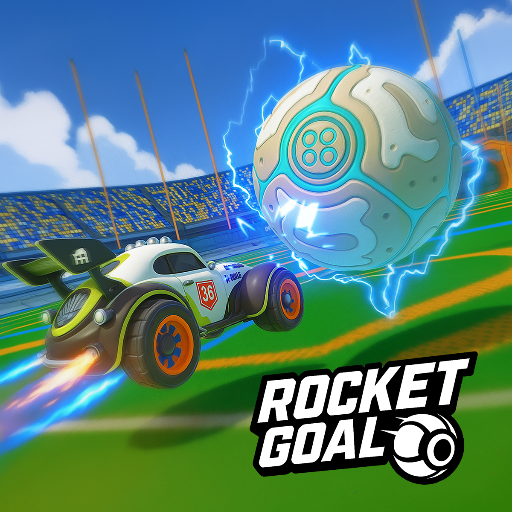
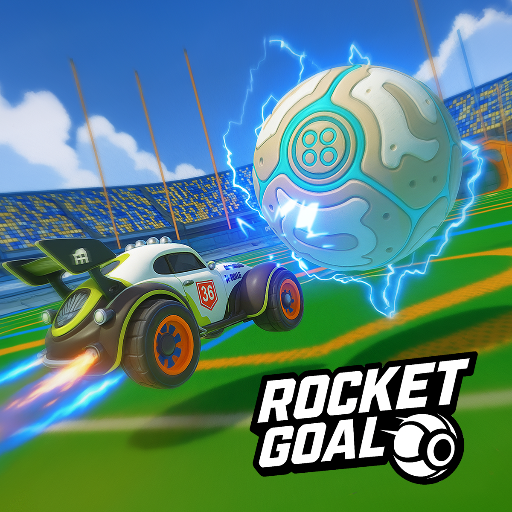
Play RocketGoal - the ultimate online multiplayer car soccer game and compete in the Rocket Goal League. Drive rocket-powered cars, score amazing goals, and dominate the arena. Come compete in fast-paced matches and win against players worldwide in this addictive vehicle football battle arena. Free to play!

Visit website

Updated: 2026-10-01 17:24 Language: English (default) Access: Normal

Profile views 2 Outbound visits 0
RocketGoal Full homepage screenshot
Editorial Review

Website Review

What is RocketGoal?

RocketGoal is a free-to-play online multiplayer game that combines car driving with soccer. Players control rocket-powered cars in an arena and try to score goals against other players in fast-paced matches. The site also mentions a "Rocket Goal League," suggesting a competitive or ranked mode layered on top of casual play. It's essentially vehicle soccer — think cars instead of footballers, boost instead of sprinting.

RocketGoal

Who it's for and what to expect

  • Genre fans: If you enjoy arcade sports or vehicular combat games, this fits that niche — simple objective (put the ball in the net), high skill ceiling (car control, timing, positioning).
  • Multiplayer-focused players: Matches are against real people worldwide, so the experience depends on an active player base. Expect a mix of casual and competitive opponents.
  • Short-session players: Fast matches suit quick play sessions better than long campaigns.

Practical next step

Before committing time, check whether the game is playable in your browser or requires a download, and look for a current player count or matchmaking wait times. A multiplayer game lives or dies by its population — if queues are long or lobbies are empty, the experience suffers regardless of how good the core mechanics are. If you can, watch a gameplay clip first to judge whether the car handling looks fun to you, since that's the make-or-break element in this genre.

How do I play RocketGoal?

RocketGoal is a free online multiplayer game in which you drive a rocket-powered car and try to knock a ball into the opposing team's goal. Matches are short and fast, so the basic loop is simple: drive, hit the ball, score more goals than the other team before time runs out.

H3. The basics of a match

  • You control a car, not a player character. Your car is both your movement and your main tool for hitting the ball.
  • The ball is large and bounces off walls, so positioning matters as much as raw speed.
  • Goals are scored by driving the ball into the opponent's net. After a goal, play typically resets to a kickoff.
  • Matches are usually team-based and played against other people online, so you will need an internet connection and a browser or supported device.

H3. A sensible first session

  1. Open the game and look for the play or quick-match option.
  2. Spend a few minutes in any practice or free-play mode if one is offered, just to get a feel for steering and boosting.
  3. Join a casual match rather than a ranked league game at first. The Rocket Goal League is the competitive side, so it is better once you can reliably hit the ball.
  4. Keep your first goals simple. Driving straight into the ball toward the net is more effective than attempting aerials or tricks.

H3. Controls and skills to build The exact controls depend on your device, but the skills transfer across most car-soccer games:

  • Steering and reversing without losing orientation.
  • Using boost to reach the ball first, then saving some boost for the trip back.
  • Rotating between offense and defense instead of chasing the ball as a group.
  • Hitting the ball with the correct part of your car to aim it.

H3. Where RocketGoal fits If you enjoy this style of game, the best-known comparison is Rocket League, which offers a similar car-soccer concept with a much larger player base and more modes. RocketGoal's appeal is that it is free to play in a browser and centers on its own Rocket Goal League, which suits players who want quick matches without installing a large game. The trade-off is likely a smaller community and less polished matchmaking than a major title.

Your next step: open RocketGoal, play one casual match, and note whether you spend more time chasing the ball or defending your goal. That tells you which skill to practice next.

Is RocketGoal free to play?

Yes — RocketGoal is described as free to play. You can jump into online multiplayer car soccer matches and compete in the Rocket Goal League without a stated purchase requirement.

A practical next step is to check how the free experience is structured before investing time: whether all cars, arenas and league modes are available from the start, or whether some are unlocked through play or optional purchases. If you mainly want casual matches with friends, the free tier is likely enough; if you care about ranked progression, confirm what the league requires.

For a quick comparison of the wider car-soccer genre, you can also look at Psyonix (the studio behind Rocket League) or Epic Games.

What is the Rocket Goal League?

The Rocket Goal League is the competitive, ranked-style structure for RocketGoal's online car-soccer matches, as described on the game's own site. Rather than just a casual lobby, it frames play as a league you enter and progress through by winning against players worldwide. Think of it as the game's answer to a ranked ladder: you play fast-paced vehicle-football matches, and your results feed into a broader competitive standing.

A few practical points about what that means:

  • It's the competitive layer, not a separate game. The core loop stays the same — drive a rocket-powered car, hit a ball, score in an arena. The League is the framing that gives those matches stakes and continuity.
  • It's built around repeat play. "League" implies ongoing matches and a reason to come back, so expect progression tied to winning rather than one-off games.
  • It's aimed at players who want opponents, not just practice. The pitch is explicitly about competing against people worldwide, so the League is where that motivation gets rewarded.

A concrete scenario: If you enjoy short, high-intensity matches and want a reason to keep improving rather than just playing for fun, the League is the mode to start with. If you mainly want to learn the controls or mess around with friends, casual matches are the better entry point.

Next step: Open RocketGoal, play a few unranked matches to get comfortable with the car handling and ball physics, then move into League play once you can reliably score. That way your early League results reflect your actual skill rather than first-session fumbling.

Can I play RocketGoal with friends in a private match?

RocketGoal is built around online multiplayer car soccer, so playing with friends is the natural way to use it. The site markets fast-paced matches, a Rocket Goal League and worldwide competition, but the supplied page information does not confirm a dedicated private-match or custom-lobby feature. Treat "invite friends and play privately" as something to verify in-game rather than a confirmed mode.

H3 How to find out quickly

  • Open the game and look for menu options such as Play, Custom Game, Create Lobby, Party or Invite.
  • If there is a friends or party system, add each other first, then start a lobby and send invites from there.
  • If only public matchmaking exists, you can still play together by joining the same queue at the same moment, though you may land on opposite teams or in different matches.

H3 Practical options if private lobbies aren't available

  • Party up and queue as a group, so matchmaking keeps you on the same side where the game supports it.
  • Use voice chat outside the game (for example a call or a chat app) to coordinate, since team play matters in car soccer.
  • Agree on a time and mode in advance; short, fast matches suit quick sessions between friends.

H3 What to weigh A private match is best for practicing, settling friendly rivalries or playing with mismatched skill levels. Public matchmaking is better for quick games, ranking up and meeting new opponents. If private play is essential to you, confirm it before committing time to the game.

Next step: check the game's own community channels or in-game help for "private match," "custom lobby" or "party," and ask other players whether invites work. For broader context on the car-soccer genre, see Rocket League.

What are the best strategies for winning matches in RocketGoal?

The best strategies come down to three habits: keep your boost for the moment it changes a play, rotate behind the ball instead of chasing it, and treat positioning as more valuable than a flashy touch. RocketGoal is a car-soccer arena game where rocket-powered vehicles hit a ball into a goal, so the fundamentals resemble real football played at high speed.

Start with the basics

  • Hit the ball with purpose. A weak touch in front of your own goal is worse than no touch. Aim to clear toward the sides, or pass to a teammate with space.
  • Defend from the goal side. If you are the last player back, stay between the ball and your net. Let a teammate challenge while you cover.
  • Learn one reliable shot. A consistent, well-aimed strike beats a highlight attempt you only land occasionally.

Boost and rotation

Boost is a resource, not a speed setting. Spend it to win a race to the ball, to recover after a failed challenge, or to reach a shot. Wasting it on empty driving leaves you slow when it matters.

Rotation means players take turns attacking and defending. When a teammate pushes forward, someone should hang back. Double-committing to the same ball usually ends with an open goal behind you.

Pick a role that suits the match

Situation Better approach Trade-off
You are clearly faster than opponents Pressure early, force mistakes Leaves your goal exposed if you miss
Opponents are faster Sit deeper, counterattack Less possession, more waiting
Teammates ball-chase Hold the back position You score less but concede less
You are new Focus on clears and saves Slower progress on scoring skills

Small habits that decide close games

  • Watch the ball, not your car.
  • After a save or clear, immediately check where you are relative to your goal.
  • If you are low on boost, rotate back rather than contest a ball you cannot reach.
  • Communicate intent with quick signals if the game offers them.

A useful next step: play a few matches with one rule only — never be the second player contesting the same ball. You will likely concede fewer easy goals, and the wins will follow from there. For match formats and league details, see RocketGoal.

Related questions

More questions →
What Is Car Soccer? How Vehicle Soccer Games Work

Car soccer is a video game format in which players drive cars — usually rocket-powered ones — around an enclosed arena and try to knock a large ball into the opposing team's goal. You don't kick the ball with a character; the car itself is your only tool, so every touch, pass, and shot comes from driving, jumping, or boosting into the ball. RocketGoal is a browser-based example of the genre: an online multiplayer car soccer game where you drive rocket-powered cars, score goals, and compete in the Rocket Goal League against players worldwide.

Core mechanics of car soccer

The genre works because a small set of vehicle controls produces a deep skill curve. In a typical car soccer game you have:

  • Driving — steering and acceleration to position yourself relative to the ball and opponents.
  • Boosting — a burst of speed (in RocketGoal, tied to the rocket-powered cars) used to win races to the ball or add power to a hit.
  • Jumping — lifting the car off the ground to reach aerial balls, clear your own goal, or challenge an opponent mid-air.
  • Hitting the ball — the ball moves based on how and where your car contacts it, so angle and speed matter more than a single "shoot" button.

The result is that "shooting" is a physical act: you aim your car, choose your speed, and let momentum do the work. That's the main mechanical difference from a soccer video game where a button press determines shot power and direction.

How a match typically plays out

Most car soccer games follow a team-versus-team structure inside a walled arena:

  1. Kickoff — cars start in set positions and race for the ball.
  2. Open play — players rotate between attacking the ball and falling back to defend their goal.
  3. Scoring — a goal counts when the ball fully crosses the opponent's goal line.
  4. Reset — play restarts from kickoff positions after each goal.

Team sizes vary by game and mode, from small squads to larger lobbies. Because the arena is enclosed, the ball stays in play off the walls, which is why positioning and prediction matter as much as raw speed.

Car soccer vs. traditional soccer and racing games

It helps to separate car soccer from the two genres it borrows from:

Dimension Traditional soccer game Racing game Car soccer
Primary control Player character Car Car
Objective Score goals Finish first Score goals
Ball interaction Kicks, passes, shots None Car contact only
Arena Open pitch Track or circuit Enclosed arena with goals
Win condition Most goals Best time/position Most goals

So car soccer isn't racing with a ball bolted on, and it isn't soccer with cars as a skin. The vehicle is the mechanic — the same way the ball is the mechanic in soccer.

Examples of car soccer games

  • RocketGoal — a free-to-play online multiplayer car soccer game played in the browser, with rocket-powered cars and a competitive Rocket Goal League. Its pitch is straightforward: drive, boost, jump, score, and climb the league against players worldwide.
  • Rocket League — the best-known commercial car soccer title, which popularized the "rocket-powered car + ball + goal" formula for a mainstream audience.

If you want to try the format without installing anything, a browser game like RocketGoal is the lowest-friction entry point; if you want a deeper competitive scene and more vehicle customization, a dedicated client-based title is the usual next step.

What to expect when you start

New players usually hit the same early walls: over-boosting into the ball, losing track of the goal they're defending, and treating the ball as something to chase rather than something to position around. The fix is the same in most car soccer games — spend your first sessions learning to hit the ball away from your own goal, and only add aerials and boost-heavy plays once basic ground control feels natural.

What Is RocketGoal? How the Online Multiplayer Car Soccer Game Works

RocketGoal is a free-to-play online multiplayer car soccer game: you drive a rocket-powered car in an arena and try to hit a ball into the opposing goal, competing against players worldwide and in the Rocket Goal League. It suits players who want short, fast-paced matches that mix driving skill with team football, rather than a realistic racing sim or a traditional 11-v-11 football game.

The core idea: car soccer, not racing or football

RocketGoal combines two familiar genres into one match format:

  • From racing games: you control a vehicle with acceleration, steering, boosting, and momentum. Positioning and speed matter as much as aim.
  • From football/soccer: there is a ball, goals at each end, and the objective is to score more goals than the opponent before the match ends.

The result is a vehicle football battle arena: two sides of rocket cars, one ball, and a shared arena. You are not chasing a finish line, and you are not controlling individual human players — the car is your player.

What makes it different from a normal racing game

Dimension Typical racing game RocketGoal
Objective Finish first / fastest lap Score more goals than the opponent
Opponent Mostly the track and other racers Other players, directly contesting a ball
Role of your vehicle The thing being raced The "player" that hits the ball
Match shape Laps or point-to-point Arena rounds with a scoreline

What makes it different from a traditional football game

Dimension Traditional football game RocketGoal
Control unit Individual human players A rocket-powered car
Movement Running, passing, dribbling on foot Driving, drifting, boosting, jumping into the ball
Skill focus Passing, positioning, shooting Vehicle control, timing, aerial hits, boost management
Feel Simulation-style Arcade, fast-paced, physics-driven

How a match actually works

The basic loop is simple, and that is the point:

  1. Enter an online match. You join a multiplayer session against players worldwide.
  2. Drive your rocket car. Use acceleration and steering to move around the arena; use your rocket boost to move faster and reach the ball sooner.
  3. Hit the ball toward the enemy goal. Contact between your car and the ball is what moves it. Angle, speed, and timing decide where it goes.
  4. Defend your own goal. The same mechanics apply in reverse — you block, clear, and challenge for the ball.
  5. Win by scoring more. The team with more goals when the match ends takes the result.

Because the ball only moves when a car touches it, every goal is the product of a driving decision: how you approach, at what speed, and from what angle.

Vehicle control and scoring: the key points

You do not need a complex control scheme to start, but a few mechanics decide most matches:

  • Momentum is your shot power. A slow tap nudges the ball; a fast, well-angled hit drives it. Speed is not just for travel — it is your shooting stat.
  • Boost changes the timing of everything. Rocket boost lets you arrive at the ball before an opponent. Using it well is often the difference between a clean hit and getting beaten to the ball.
  • Angle beats brute force. Hitting the ball straight at the goal is easy to read; hitting it across the goalmouth or off a bounce is harder to defend.
  • Positioning off the ball matters. If everyone chases the ball, your own goal is open. Spreading out creates passing-like plays through car hits.
  • Aerial and vertical play. Rocket-powered vehicles can leave the ground, which opens up higher balls and clears that a ground-only car cannot reach.

The Rocket Goal League and competitive play

Beyond casual matches, RocketGoal includes the Rocket Goal League, a competitive structure for players who want ranked or organized play rather than one-off games. In practice, a league mode gives you:

  • A reason to keep playing beyond a single match — progress and standing instead of isolated results.
  • Stronger opponents over time, which is where the vehicle-control mechanics actually get tested.
  • A clearer measure of improvement than a casual win/loss record.

If you only want to try the game, casual online matches are the entry point. If you enjoy the mechanics and want a goal to chase, the League is the natural next step.

Is RocketGoal free, and what do you need to play?

The game is described as free to play, and it runs in a browser as an online multiplayer game — so the practical requirements are a device with a browser and an internet connection, plus other players online for multiplayer matches. The available site information does not list pricing tiers, payment platforms, or account/login requirements, so treat any specific claim about paid content or mandatory sign-up as unconfirmed rather than assumed.

Who should try it, and who should skip it

Worth trying if you:

  • Like short, arcade-style multiplayer matches you can jump into.
  • Enjoy skill-based vehicle control where practice visibly improves your play.
  • Want a football-like team objective without simulation-level rules and tactics.

Probably not for you if you:

  • Want a realistic racing simulation with tracks, tuning, and lap times.
  • Want a deep football sim with player management, formations, and season modes.
  • Prefer single-player progression over competing against other people online.

The fastest way to decide is to play one match: if the first time you boost into a ball and score feels good, the mechanics will keep you playing. If you find yourself wishing for a track or a tactics screen instead, RocketGoal is a different kind of game than the one you are looking for.

Rocket-Powered Vehicles in Car Soccer: How They Work and Why They Matter

Rocket-powered vehicles in car soccer are cars equipped with a rear booster that provides thrust, letting players accelerate faster, jump higher, and steer while airborne. In games like RocketGoal, this mechanic is the core of the sport: it turns a simple driving game into a fast, three-dimensional contest where goals are scored by hitting a ball into a net. The boost matters most in moments that require speed or height—kickoffs, aerial challenges, and last-second saves—while ordinary driving handles the rest.

What "Rocket-Powered" Actually Means

A rocket-powered vehicle is a car whose main movement tool is a directional thruster, not just an engine. In practice, the vehicle combines three systems:

  • Ground driving — normal acceleration and steering for positioning and dribbling.
  • Boost thrust — a rear-facing rocket that consumes a limited resource (usually called boost) to increase speed beyond the normal maximum.
  • Jump and air control — the ability to leave the ground and adjust orientation mid-air, often using the same boost to extend a jump or change direction.

The result is a vehicle that behaves like a car on the ground and like a small aircraft in the air. That dual nature is what separates car soccer from ordinary racing or football games.

How Rocket Propulsion Changes Acceleration, Steering, and Air Control

Acceleration

Boost gives a burst of forward speed that normal driving cannot match. Because boost is a limited resource, players must decide when to spend it: saving it for a shot or a defensive recovery, or burning it to win a race to the ball. This trade-off is a constant tactical decision, not a one-time upgrade.

Steering

On the ground, steering stays close to normal car handling, so boost is mainly a straight-line tool. The interesting part comes when steering and boost combine in the air, where the car can rotate and redirect thrust to curve toward the ball.

Air control

Air control is where rocket power has the largest effect. A player can jump, tilt the car, and fire the booster to:

  • Reach a ball that is too high for a grounded car.
  • Adjust the angle of contact so the ball travels toward the goal instead of away from it.
  • Recover after a missed challenge and land facing the play.

Without air control, most aerial plays would be impossible, and the game would collapse into ground-level passing.

Rocket-Powered vs. Ordinary Vehicles in Car Soccer

Dimension Rocket-powered vehicle Ordinary vehicle
Top speed Can exceed normal maximum using boost Limited to engine speed
Vertical play Can jump and fly with air control Stays on the ground
Resource management Boost must be collected and spent No boost resource
Skill ceiling High—aerial and boost control take practice Lower—mostly driving and positioning
Role in the match Enables shots, saves, and aerial duels Positioning and ground play only

The practical difference is that a rocket-powered car makes the ball reachable from almost any position, which raises both the pace and the skill requirement of the match.

How Players Use Rocket Mechanics to Score and Defend

Common uses of rocket power in a match include:

  1. Kickoff boost — grabbing boost immediately to reach the ball first.
  2. Aerial shots — jumping and boosting into the ball at height to shoot over defenders.
  3. Clears and saves — using boost to get back to goal faster than normal driving allows.
  4. Dribbling and flicks — small boost taps to push the ball past an opponent.
  5. Recovery — using air control to land facing the ball after a failed challenge.

Each of these depends on the same principle: boost converts into speed or height, and the player chooses which to buy with a limited resource.

Why Rocket-Powered Vehicles Matter in Multiplayer Competition

In a multiplayer arena, every player has the same rocket system, so the mechanic is a level playing field rather than an advantage. What separates players is how well they manage boost, time their jumps, and read the ball. This is why car soccer rewards practice and decision-making over raw reflexes alone, and why the rocket-powered vehicle is the defining feature of the genre rather than a cosmetic detail.

If you want to see the mechanic in action, RocketGoal is a free-to-play online multiplayer car soccer game where you drive rocket-powered cars and compete in the Rocket Goal League against players worldwide.

Rocket Cars in Car Soccer: How Rocket-Powered Vehicles Work

A rocket car in car soccer is a vehicle whose movement is driven by a boost system rather than by engine speed alone. Instead of only steering and accelerating, you collect and spend a limited energy resource to gain sudden speed, change direction mid-air, and reach balls that a normal car could not. This matters most in arena games where the ball is large, the field is enclosed, and play happens both on the ground and in the air — the setup used by RocketGoal, an online multiplayer car soccer game where players drive rocket-powered cars and compete in the Rocket Goal League.

What Makes a Car a "Rocket Car"

The defining feature is not the shape of the vehicle but the propulsion model. A rocket car has:

  • A boost meter — a stored energy reserve that drains while you boost and refills from pickups or pads on the field.
  • Directional thrust — boost pushes the car forward along its facing direction, so where you point matters as much as when you press.
  • Air control — once airborne, the car can still rotate and adjust, letting boost be used for flight rather than just straight-line speed.
  • Momentum-based physics — the car keeps moving after you release the accelerator, so stopping and turning require deliberate input rather than instant response.

In short, a "rocket car" is a car whose top performance comes from managing an energy budget, not from holding down one button.

How Rocket Boost Changes Gameplay

Boost turns a driving game into a resource-management game. Every decision has a cost:

Action Boost cost Effect
Ground speed burst Continuous drain Close distance to the ball faster than a non-boosting opponent
Aerial hit Continuous drain while airborne Reach balls above car height
Recovery after a bad hit Continuous drain Get back into position before the opponent scores
Save or clear Continuous drain Intercept a shot near your own goal

Because the meter is finite, the skill is in choosing when not to boost. A player who boosts constantly will be fast for a few seconds and then slow for the rest of the play. A player who collects boost pads while rotating back to defense usually has energy available at the moment it decides the play.

Why Rocket Cars Are Central to Games Like RocketGoal

In vehicle soccer, the ball is large and the arena is walled, so the ball spends a lot of time in the air. A standard car with no boost can only play the ground game. Rocket cars make the vertical dimension playable, which is what separates this genre from ordinary racing or driving games. RocketGoal builds its matches and its Rocket Goal League competition around exactly this: fast-paced arena play where rocket-powered cars contest the ball in three dimensions.

Rocket Cars vs. Standard Cars in Car Soccer

The differences show up in four areas:

  • Vertical play — standard cars are effectively ground-locked; rocket cars can jump, fly, and strike from above.
  • Speed ceiling — a standard car's top speed is fixed by its engine; a rocket car can exceed it temporarily by spending boost.
  • Skill floor — standard cars are easier to pick up because there is one less system to manage; rocket cars reward practice but punish poor resource use.
  • Positioning — with boost, a player can be out of position and still recover; without it, a wrong turn is usually permanent for that play.

If you want a simpler driving experience, a standard car is the easier entry. If you want the aerial, high-tempo version of car soccer that defines the genre, the rocket car is the point.

Basic Tips for Controlling a Rocket Car

  1. Learn the boost pads first. Before worrying about aerials, drive laps and note where boost refills. Knowing your refill route is what keeps you fast.
  2. Boost in straight lines, not in turns. Boosting while turning usually wastes energy and throws off your angle.
  3. Jump, then boost. For aerial hits, get airborne first, then use boost to adjust your height and angle toward the ball.
  4. Save boost for defense. A boost held in reserve near your own goal is often worth more than a boost spent on a speculative attack.
  5. Practice recovery. After a missed hit, the fastest way back is usually a boost-assisted turn rather than reversing.

FAQ

Do you need a rocket car to play car soccer? No. Vehicle soccer games can be played with standard cars, but the aerial and high-speed elements that define the genre come from rocket-powered movement.

Is boost unlimited? No. Boost is a finite resource that drains as you use it and refills from pads on the field, which is why managing it is a core skill.

Is RocketGoal free to play? The game is described as free to play on its site. Pricing details beyond that are not specified in the available information.

What is the Rocket Goal League? It is the competitive league structure within RocketGoal where players compete in fast-paced matches against others online.

Car Football Explained: How Vehicle Soccer Games Work and How to Play

Car football (also called car soccer or vehicle soccer) is a video game format where players drive cars in a walled arena and hit a large ball into the opponent's goal. Instead of controlling a humanoid player with feet, you control a vehicle with acceleration, boosting, and jumping. RocketGoal is a browser-based online multiplayer example of this format: you drive rocket-powered cars, score goals, and compete in the Rocket Goal League against players worldwide, and the site describes it as free to play.

What Makes Car Football Different From Regular Soccer

The rules borrow from soccer — two sides, one ball, two goals — but the control scheme and physics change everything about how the game feels.

Dimension Standard soccer Car football
What you control A player's body and feet A car with drive, boost, and jump
Ball contact Kicks, headers, passes Ramps, hits, and aerial touches from the car's body
Movement Running, sprinting, turning Acceleration, drifting, boosting, aerial control
Vertical play Limited to jumps and headers Cars can launch into the air to meet the ball
Arena Open pitch with sidelines Enclosed arena with walls and ramps

The practical consequence: you are not aiming a shot with a foot, you are aiming a vehicle's momentum. Positioning, speed, and angle of approach matter more than a "shoot" button.

Core Mechanics of Vehicle Soccer

Driving rocket-powered cars

Your car has throttle, steering, and a boost. Boost is the resource that separates a slow bump from a fast, powerful hit — spending it at the wrong moment leaves you out of position, so treat it as a limited tool rather than a constant hold.

Hitting the ball

Contact is physical. The ball's direction and speed come from where and how fast your car meets it. A glancing touch nudges the ball; a full-speed hit sends it hard. Because the ball is large relative to the car, you can also block shots by putting your car in the path.

Scoring goals

A goal counts when the ball fully crosses the opponent's goal line inside the arena. The same walled arena that keeps the ball in play also lets you use walls and ramps to redirect the ball at angles a flat pitch would not allow.

Match structure and arena format

Matches are fast-paced and played in a shared arena with other players in real time. The site frames this as a "vehicle football battle arena" with multiplayer matches and a competitive league (the Rocket Goal League) where you play against players worldwide.

How to Start Playing RocketGoal

  1. Open the game in a browser. RocketGoal is presented as an online multiplayer game you play in the browser, so no separate download step is described on the site.
  2. Enter a match. You join multiplayer matches against other players rather than playing a single-player mode.
  3. Learn the car first. Before chasing the ball, drive around the arena to feel acceleration, turning, and how boost changes your speed.
  4. Practice ball contact. Hit the ball from different angles and speeds to see how your car's momentum transfers to it.
  5. Play matches and track progress. The Rocket Goal League is the competitive structure the site points to for ongoing play.

Note: the site describes the game as free to play, but it does not publish pricing details or payment options, so treat any account or access requirements as something to confirm on the site itself.

Tips for Controlling the Car and Scoring

  • Aim with your approach angle, not just your speed. Where you meet the ball decides the direction; how fast you meet it decides the power.
  • Save boost for the moment before contact. Boosting into a hit adds force, but boosting early just puts you past the ball.
  • Use the walls. In an enclosed arena, a wall hit can redirect the ball toward goal when a direct shot is blocked.
  • Play defense by occupying space. Parking your car between the ball and your goal forces the opponent to go around you.
  • Recover after every hit. After contact you are usually moving away from the play — turn back early instead of chasing your own momentum.

Quick Answer: Is Car Football for You?

If you want a soccer-like team game but prefer driving and physics-based play over footwork and passing, car football is the format to try. RocketGoal fits that description: browser-based, multiplayer, rocket-powered cars, arena matches, and a league to compete in. Start by learning the car, then the ball, then the league.

Website Overview

The available information shows a mix of normal operation and configuration gaps. Depending on how the website is used, these gaps may affect secure access or the consistency of its public presentation.

Domain and Registration

The domain was registered less than a year ago and has limited historical evidence to assess. Transfer-protection status is present, helping reduce the risk of unauthorized domain transfers. The registrar is GoDaddy.com, LLC, a widely used domain service provider. The domain uses the common .io extension, which is not an independent safety signal.

DNS and Email

Nameservers are provided by GoDaddy, indicating managed DNS hosting. No CNAME was found; the observed records resolve directly to addresses. No MX record was found. A conventional explicit inbound-mail route is not configured. TXT records include verification markers for Google. Such markers may also remain after a service stops being used. DNSSEC signatures were not detected, so this additional DNS authenticity protection is not confirmed.

TLS and Certificates

The certificate uses an RSA 2048-bit public key, offering broad client compatibility. The server supplied a complete certificate chain. No organization name is present in the certificate; the available fields are consistent with domain validation. The certificate was issued within the Google Trust Services cloud or CDN ecosystem. The certificate's total validity is about 90 days, consistent with a short renewal cycle.

HTTP and Browser Security

The response lacks these common security headers: CSP, X-Content-Type-Options, Referrer-Policy, Permissions-Policy, clickjacking protection. No X-Powered-By header was found, reducing one common source of backend fingerprinting information. The x-cache, x-served-by response header indicates a CDN or caching proxy in the delivery path. No obvious internal addresses or debug information were found in the headers. No CORS permission header was found, so browsers normally restrict cross-origin script access.

Technology Stack Analysis

The public page identifies Google Analytics, Fastly without precise versions, leaving fewer clues for version-specific scanning.

Search and Social Sharing

The meta description has 308 characters and may be shortened in search results. Twitter Card metadata is configured. JSON-LD includes Product or Offer data, potentially supporting eligible product search features. The title has 47 characters, within a common display range. The observed directives allow indexing and link following.

Hosting and Email

DNSGoDaddy
HostingFastly
EmailUnknown
Location United States flagUnited States 199.36.158.100

User reviews (0)

  • No reviews yet.

Pages, Search and Sharing

Meta descriptionPlay RocketGoal - the ultimate online multiplayer car soccer game and compete in the Rocket Goal League. Drive rocket-powered cars, score amazing goals, and dominate the arena. Come compete in fast-paced matches and win against players worldwide in this addictive vehicle football battle arena. Free to play!
Canonical URLhttps://rocketgoal.io
LanguageEnglish (default)
Twitter Cardsummary_large_image
All bots 1 allowed · 0 disallowed
  • Allow/

Registration details RDAP / WHOIS

RegistrarGoDaddy.com, LLC
Registered2025-10-29
Expires2026-10-29
Domain statusclientDeleteProhibited https://icann.org/epp#clientDeleteProhibited、clientRenewProhibited https://icann.org/epp#clientRenewProhibited、clientTransferProhibited https://icann.org/epp#clientTransferProhibited、clientUpdateProhibited https://icann.org/epp#clientUpdateProhibited
Nameserversns03.domaincontrol.com、ns04.domaincontrol.com
DNSSECunsigned

DNS records

TypeNameValueTTLPriority
Arocketgoal.io199.36.158.100600—
NSrocketgoal.ions03.domaincontrol.com3600—
NSrocketgoal.ions04.domaincontrol.com3600—
TXTrocketgoal.iogoogle-site-verification=AOKE7GGZCJ9FKm5w_NcLLrltD_KJu5k_4Hw5ngsZMfM1800—
TXTrocketgoal.iohosting-site=rocketball-23c121800—
DMARC_dmarc.rocketgoal.iov=DMARC1; p=quarantine; adkim=r; aspf=r; rua=mailto:[email protected];3600—

TLS and certificates

AssessmentNormal configuration
Supported protocolsTLSv1.2、TLSv1.3
Negotiated protocolTLSv1.3
Certificate subjectwww.oluwalojullc.com
IssuerGoogle Trust Services
Valid until2026-11-16T03:49 · Remaining when checked: 45 days
Verification detailsCertificate trust: Passed · Hostname match: Passed

HTTP response headers

HeaderValue
content-typetext/html; charset=utf-8
cache-controlmax-age=3600
strict-transport-securitymax-age=31556926

Identified technologies

Google AnalyticsFastly