

 Visit website
 Updated: 2026-09-30 03:24
 Language: English (default)
 Access: Normal
 Profile views 1
  Outbound visits 0
 Website Review
What is St. Gregory Cathedral School?
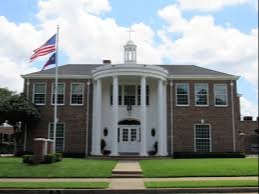
St. Gregory Cathedral School is a private Catholic elementary school in Tyler, Texas, serving pre-K through 5th grade. Founded in 1946, it describes itself as East Texas' oldest private elementary school, and it operates as part of the Diocese of Tyler school system. Its stated mission centers on the educational ministry of the Catholic Church, with a vision of developing the whole child through sacramental life and a dynamic curriculum.
What it offers
- Faith-based education: Catholic teachings are described as infused across all areas of student life, not confined to religion class.
- Academics with support programs: The school highlights gifted and talented and dyslexia services alongside its general curriculum.
- Specialty areas: Fine arts, technology, and spiritual formation appear as distinct program emphases.
- Early learning: A separate St. Gregory Early Learning Center is listed, which matters if you have a preschool-age child.
- Summer programs: Available for families seeking year-round engagement.
Who it suits
Families in the Tyler area who want a Catholic school environment for young children and who value a defined elementary span ending at 5th grade. If you are seeking a school that continues through middle or high school, note that Bishop Thomas K. Gorman Catholic School in Tyler is listed separately, which suggests a natural next step after 5th grade.
A practical next step
Start with the admissions page and the calendar, then call the office at (903) 595-4109 to ask about grade availability, class sizes, and how the gifted/talented and dyslexia programs are delivered. If cost is a factor, ask directly about tuition and any state education savings account options, since the site references Texas Education Freedom Accounts (TEFA).
How does St. Gregory Cathedral School support students with dyslexia or gifted and talented needs?
St. Gregory Cathedral School names both dyslexia and gifted-and-talented (G&T) services among its program offerings, alongside fine arts, technology, faith formation, and spirituality. The school's stated vision is to "develop the whole child" through a dynamic curriculum, which is the framing it uses for how these two very different learner groups fit into one school.
Because the site lists these as program areas rather than describing them in detail, the practical answer depends on what you ask the school directly. Here is how the two needs typically differ, and what to clarify for each:
| Dyslexia support | Gifted and talented | |
|---|---|---|
| Typical focus | Structured, explicit reading and language instruction; often multisensory and sequential | Enrichment, acceleration, or deeper independent work beyond grade level |
| Who it serves | Students whose reading or spelling lags their ability | Students working above grade level in one or more subjects |
| Common models | Pull-out intervention, in-class accommodations, progress monitoring | Pull-out enrichment, cluster grouping, subject acceleration, independent projects |
| Key question for the school | Is intervention delivered on campus or referred out? How is progress measured? | Is there a formal identification process, and does it start in pre-K or later? |
What to ask on a visit
For dyslexia: who provides the intervention, how often, whether it is individual or small-group, how eligibility is determined, and how parents receive progress updates.
For gifted and talented: how students are identified, whether services begin in the early grades, whether acceleration is possible in specific subjects, and how G&T work is scheduled alongside regular classroom time.
A useful next step
Request a tour and ask to speak with the staff member who coordinates learning support, not just the admissions office. Bring a short written summary of your child's current evaluation or work samples so the conversation stays concrete. Also ask how the school coordinates with the Diocese of Tyler and whether TEFA (Texas Education Freedom Accounts), referenced on the site, can be applied to any support services your child needs.
For comparison, other private elementary options in the Tyler area include Bishop Thomas K. Gorman Catholic School and St. Gregory Early Learning Center; public-school districts in Texas are separately required to provide dyslexia services and G&T programs, which is worth weighing if specialized support is your deciding factor.
What is the admissions process and key deadlines for St. Gregory Cathedral School?
The school's own site does not lay out a step-by-step admissions process or dated deadlines; it directs families to an Admissions page and a calendar, so the practical answer is to start there and confirm timing directly with the office rather than rely on a general timetable.
St. Gregory Cathedral School
What the school itself provides
- An Admissions link in the main menu, which is the intended entry point for applying.
- A Calendar for school events and dates.
- TEFA Info — Texas Education Freedom Accounts — which matters to families weighing tuition funding.
- Contact routes: phone (903) 595-4109, email, and the address 500 S. College Ave., Tyler, Texas 75702.
- An Early Learning Center listed alongside the school, relevant if you are starting younger than pre-K.
What is not stated
No application steps, required documents, assessment or visit requirements, deposit, or cut-off dates appear in the supplied page content. Treat any specific deadline you hear as coming from the school, not from this page.
A practical sequence
- Call the office and ask three things: the application deadline for your child's grade, whether seats are open, and what documents are needed.
- Ask how TEFA affects your cost and whether it changes the application steps.
- Request a tour or shadow visit — for a pre-K to 5th grade school, seeing classrooms in session tells you more than a brochure.
- Ask about support services if relevant: the school highlights Gifted and Talented and Dyslexia programs, so confirm eligibility and how services are delivered.
- Submit early. Small elementary schools often fill by grade level, and mid-year moves depend on openings rather than a fixed window.
Decision criterion
If your child would enter at pre-K or kindergarten, deadlines usually fall in the winter and spring before the school year; for transfer grades, availability drives timing. Confirm both with the admissions office before planning around any date.
How much does tuition cost at St. Gregory Cathedral School, and what financial aid options like TEFA are available?
Tuition figures are not published on the school's homepage, so the site itself does not give a dollar amount. The page does point to two concrete financial-aid paths: Texas Education Freedom Accounts (TEFA) and a fundraising effort labeled "Build A Brighter Future Fund." For current rates and aid deadlines, contact the school office directly at (903) 595-4109 or use the admissions inquiry form at St. Gregory Cathedral School.
What the site confirms
- TEFA: The homepage links to "TEFA Info," confirming the school participates in or accepts Texas Education Freedom Accounts.
- Fundraising support: A "GIVE NOW: Build A Brighter Future Fund" link suggests donor-funded assistance, though the homepage does not detail eligibility or award amounts.
- Admissions contact: Admissions, email, and phone details are provided for families to request a tuition schedule.
How to get exact numbers
- Call or email admissions and ask for the current tuition schedule by grade (pre-K through 5th).
- Ask specifically how TEFA funds are applied, whether they cover full tuition, and what the application timeline looks like.
- Request information on the Build A Brighter Future Fund and any parish, diocesan, or need-based aid.
- If you belong to a Catholic parish, ask whether parishioner rates or parish subsidies apply.
Practical comparison
| Aid route | What it typically covers | Who should ask |
|---|---|---|
| TEFA | State-funded education account applied to tuition | Any eligible Texas family |
| Build A Brighter Future Fund | Donor-funded tuition assistance | Families with demonstrated need |
| Parish or diocesan aid | Possible tuition reduction or subsidy | Catholic parishioners |
Next step: Call (903) 595-4109 and ask for the tuition sheet and TEFA application packet in the same conversation, so you can compare total out-of-pocket cost before committing.
What before- and after-school care or summer programs does St. Gregory Cathedral School offer for working families?
St. Gregory Cathedral School's site confirms summer programs are part of its offering, but it does not spell out before- or after-school care on the page provided. Families who need coverage beyond the school day should treat that as the first thing to verify directly.
What the school's own page supports
- Summer programs: listed among the school's offerings, alongside fine arts, technology, faith and academics. Details such as ages, dates and hours are not given.
- Grade range: pre-K through 5th grade, so any care question concerns younger children who cannot be left unsupervised.
- Extended-day care: not described in the page content. Absence of a mention is not proof it doesn't exist.
How to get a definite answer
Call the school office at (903) 595-4109 and ask specifically:
- Is there morning supervision before the first bell, and what time does it start?
- Is there an after-school program, and what is the latest pickup time?
- Is extended care included in tuition or billed separately, and is it billed hourly or by the week?
- Are summer programs open to non-enrolled children, and do they run full days or half days?
- Is there a waitlist, and what happens on early-dismissal or teacher in-service days?
Practical context for working parents
A school ending around mid-afternoon leaves a gap that most full-time schedules cannot absorb. Typical arrangements in elementary schools are a supervised morning room, an on-site after-school program with snack and homework time, and occasional "school's out" camps on holidays. Which of these exist here, and whether they run until 5:30 or 6:00 p.m., matters more than the label.
If after-school care is essential, ask whether the program is run by the school itself or a separate provider, since pickup location, staffing and calendar can differ. Also ask how care is handled on days when school closes early — a common weak point for working families.
Next step: call the office with the five questions above, and ask them to email the current extended-care and summer-program schedules so you can compare times against your commute. For the wider picture of the school, see St. Gregory Cathedral School.
How does St. Gregory Cathedral School's Catholic faith integrate into daily academics and student life?
Faith at St. Gregory Cathedral School is presented as a whole-school framework rather than a separate religion class. The site describes the school as a Catholic faith community that "infuses the teachings of Jesus Christ in all areas of student life," and its stated mission is the educational ministry of the Catholic Church with the ongoing formation of the Christian person as the primary goal. The stated vision pairs that formation with "superior academics through a dynamic curriculum," so faith and academics are meant to run together rather than compete.
What that looks like day to day
- Across subjects, not just one period. The wording "all areas of student life" suggests Gospel values shape how teachers treat students and how conduct, service and character are handled, not only what happens in a religion lesson.
- Sacramental life as part of the program. The vision specifically names participation in the sacramental life of the Catholic Church as the means of developing the whole child, which points to liturgy, prayer and sacrament preparation woven into the school calendar.
- Formation as the goal, academics as the vehicle. The mission frames the end result as Christian formation; the curriculum is the delivery method.
- A defined school culture. The "Home of the Squires" identity and the listed program areas — fine arts, hearts and minds, spirituality, technology, faith — show the school presents itself as a community with a shared identity, not an academic-only institution.
Who this fits, and who should look elsewhere
This structure tends to suit families who want their child's school day to reinforce what is taught at home and at church, and who value the sacraments being part of school life. Families of other faiths or no faith tradition should ask directly how non-Catholic students are included in liturgies, retreats and religion classes, since "infuses" can mean anything from full participation to accommodated observation. That is a question for the admissions conversation, not something the homepage answers.
A practical next step
Ask two specific questions when you visit or call: how many minutes a week are given to explicit religious instruction versus how faith is integrated into other subjects, and how students who are not Catholic participate in Mass, prayer and sacramental preparation. Those answers tell you whether the integration matches your family's expectations.
For context on the wider diocesan school system the site belongs to, see Diocese of Tyler.
 Hosting and Email
 Cloudflare
 Hosting
 Fastly
 Google Workspace
 Location
 United States
 Pages, Search and Sharing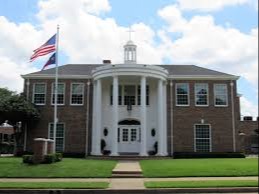



 All bots


 Registration details

 Identified technologies
User reviews (0)