Website profiles · Technology insights · Alternatives

superdatascience.com

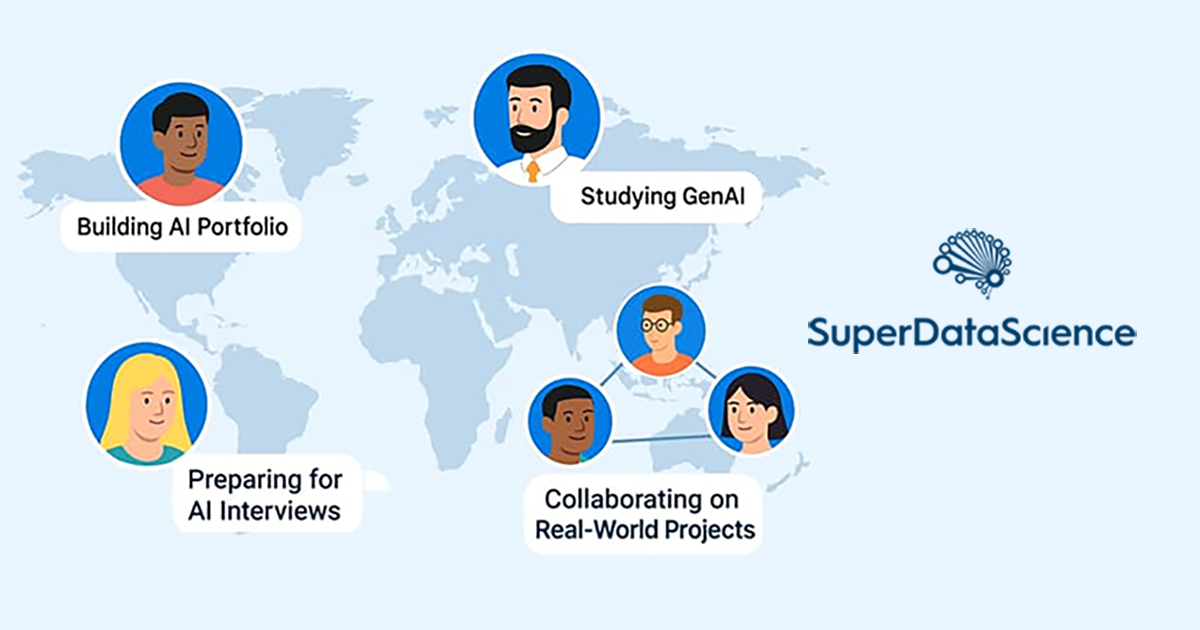
We want to Make The Complex Simple. SuperDataScience is an online educational platform for current and future Data Scientists from all around the world. We believe learning such an immensely valuable topic requires a dynamic, deep and fun approach, available to anyone willing to learn.

Paid content
Visit website
Profile views 4 Outbound visits 11 Normal
SuperDataScience Full homepage screenshot

At a glance

Category
Artificial Intelligence
Language
English
Paid-content signal
Paid contentObserved
Registered
2015
Hosting
CloudflareInferred
HTTPS certificate trusted
PassedObserved
Last updated

Website review

This review may include AI-generated content and is not individually verified. Domain, certificate and other facts come from the observed data on this page.

What is SuperDataScience?

SuperDataScience is an online education platform for people who want to build data science and AI skills and move into AI-related jobs. Its pitch centers on structured "Career Paths" (17 are listed, spanning roles such as AI Engineer, Machine Learning Engineer, Data Scientist and GenAI Expert), a library of 50+ courses, and support beyond video lessons: mentorship, a community, live labs and certificates. The stated aim is job readiness—building a portfolio and interview confidence—rather than purely academic study.

Who it suits, and how it differs from a typical course site

Reader situation How SuperDataScience fits
Career changer aiming for a first AI/data role Career Paths bundle courses toward a target job; mentorship and community help when you get stuck
Working professional upskilling part-time Short, focused courses (the catalogue shows options from about 2 to 14 hours) plus certificates
Leader needing AI literacy, not coding depth Courses such as "AI Literacy for Enterprise" and "Careers in AI" are aimed at strategy and role awareness
Learner who prefers self-directed browsing Free course access and a large catalogue let you sample before committing

The trade-off is the familiar one for subscription learning: breadth and community support versus the accountability of a cohort-based bootcamp. If you need deadlines and live instruction, this model may feel loose; if you want to explore several roles before choosing one, it is efficient.

A practical next step

Pick one target role—say, Data Scientist—and compare its Career Path against the free courses you can sample. If the introductory material holds your attention, a free trial is the low-risk way to test the mentorship and community, which are the main differentiators here. For broader context on the field, Kaggle offers free datasets and competitions to practice on, and Coursera is a general alternative if you want university-backed certificates instead.

How do SuperDataScience career paths help me land my first AI job?

SuperDataScience frames its career paths as a structured route to a first AI job rather than a loose course catalogue. The site describes 17 career paths—including AI Engineer, Machine Learning Engineer, Data Scientist and GenAI Expert—each pitched as a way to build a portfolio of practical projects and prepare for the job market. Around the courses, it layers mentorship, a community for questions and "Live Labs" for extra projects, plus certificates for completed courses.

What that structure actually gives you

For someone without work experience, the main obstacle is usually evidence: employers want proof you can build and explain real things. A path-based approach helps because it sequences skills instead of leaving you to assemble a curriculum yourself, and the portfolio-plus-certificate framing gives you artefacts to put in front of a hiring manager. The mentorship and community components matter most when you get stuck on a specific error or design decision—the moment where self-study usually stalls.

Where it fits, and where it doesn't

Your situation Career path value What to watch
Career changer with no technical background High—sequence and support reduce false starts Time commitment; paths are broad, so expect months not weeks
Developer moving into ML/AI Moderate—useful for filling gaps and framing You may skip beginner modules and go straight to projects
Student wanting depth in theory Partial—practical focus over academic rigour Supplement with formal coursework or primary texts
Job seeker needing interview practice Useful—portfolio and confidence framing Verify that your target roles match the path's focus

The trade-off is breadth versus depth. A path covering AI engineering concepts, LLMs, system design and the Hugging Face ecosystem gives you a working map, but hiring managers for specialist roles will probe one area hard. Pair the path with two or three projects you can defend line by line.

A practical next step

Open the career path closest to the job titles you're actually applying for, list the projects it includes, and check whether two of them could become portfolio pieces you'd be comfortable discussing in an interview. If not, the path may be too general for your target. For comparison, DataCamp and Coursera offer alternative structures worth weighing on curriculum depth and credential recognition.

How much does a SuperDataScience membership cost, and what does the free trial include?

SuperDataScience does not publish a single membership price on its homepage, so the honest answer is that cost depends on the plan you choose at signup. The page offers a free trial and an annual membership option, with "Cancel Anytime" messaging, but it doesn't state the trial length or the subscription rate. To get exact figures, check the pricing page: SuperDataScience.

What the free trial appears to include

Based on the site's own messaging, the trial gives access to the learning platform rather than a stripped-down demo:

  • The course library — 50+ courses spanning GenAI, Python, machine learning, AI engineering and agentic AI, plus beginner options like AI Literacy for Enterprise and Careers in AI.
  • The 17 career paths, which bundle courses and projects toward roles such as AI Engineer, Machine Learning Engineer, Data Scientist and GenAI Expert.
  • Community and mentorship — the site frames these as core to the membership, including live labs and mentor access when you get stuck.
  • Certificates for completed courses, per the page's "verified certificates" claim.

Practical guidance

Treat the trial as a test of fit, not just a price check. A realistic approach: pick one career path, work through the first module of a course in your target area, and post a question in the community. If the mentorship response and course depth match how you learn, the paid tier is easier to justify; if you mainly need structured video content, compare against alternatives before committing. For broader context on data science learning options, Coursera and DataCamp are well-known subscription-based platforms worth benchmarking on price and catalogue breadth.

Decision criterion: confirm the trial length and whether it converts automatically to a paid plan before you enter payment details — the homepage doesn't specify either.

Which SuperDataScience course should I start with if I'm a beginner in Python or machine learning?

For a true beginner in Python or machine learning, start with a short AI Literacy or Careers in AI course to orient yourself, then move into a longer Artificial Intelligence A-ZTM course once you can write basic Python. The site's own catalogue lists AI Literacy for Enterprise (2 hours, beginner) and Careers in AI (2 hours, beginner) alongside longer beginner courses such as Agentic AI (4 hours) and the 14-hour Artificial Intelligence A-ZTM course, which is described as building code from a blank page.

How to choose

  • No Python at all: Spend a week on Python fundamentals first (variables, loops, functions, lists). Then take the 14-hour AI A-ZTM course; its from-scratch coding style suits learners who want to type every line themselves.
  • Some Python, curious about AI: Start with AI Literacy for Enterprise only if you are a manager or leader; otherwise go straight to the 14-hour course.
  • Interested in agents and LLMs: The 4-hour Agentic AI course is listed as beginner, but it assumes comfort with Python and basic AI concepts, so treat it as a second step.
  • Career-focused: The 2-hour Careers in AI course maps 12 roles and helps you pick one of the site's 17 career paths before committing to a longer track.

A practical first month

  1. Week 1: Python basics on your own or through a free resource.
  2. Week 2: Careers in AI (2 hours) to pick a direction.
  3. Weeks 3–4: Artificial Intelligence A-ZTM (14 hours), coding along rather than watching passively.

The site promotes a free trial and community mentorship, which is most valuable when you hit a wall mid-course, so time your trial to the coding-heavy weeks rather than the orientation ones. For a second opinion on beginner Python pacing, Real Python and Kaggle offer free practice that pairs well with a paid course.

How does mentorship and community support work on SuperDataScience?

SuperDataScience frames mentorship and community as a support layer around its courses rather than a standalone service. The site's own description sets out three parts: expert mentors available "the moment you hit a wall," a community that answers questions, and hands-on Live Labs with extra projects. It presents these as the answer to learning alone, alongside 50+ courses and 17 career paths. Membership is sold as a free trial you can cancel, so the practical way to judge the mentorship is to test it during the trial.

What to expect, based on the site's description

  • Mentorship tied to getting unstuck. The emphasis is on help when you hit a specific problem, not a scheduled one-to-one coaching programme. Treat it as troubleshooting support rather than career coaching unless your trial shows otherwise.
  • Community Q&A. Other learners and, per the site, instructors are the first line of response. This suits people who ask good questions and can work from written answers.
  • Live Labs. Extra project work with a live component is where mentorship is most likely to feel concrete: you build something, then get feedback.
  • Certificates and portfolio. Verified certificates per completed course and a project portfolio are positioned as the job-search payoff, so mentorship is meant to serve employability, not just course completion.

How it compares in practice

Learner need What SuperDataScience emphasizes Where it may fall short
Stuck on a bug or concept Mentor access plus community answers Response times and mentor depth aren't specified on the site
Structured accountability Career paths and Live Labs No mention of fixed cohorts or 1:1 scheduling
Job-search help Portfolio building, interview confidence No stated guarantee of placement or recruiter access
Self-paced learners 50+ courses, flexible trial Community value depends on how actively you participate

A concrete test during the trial

Pick one intermediate course, such as the 14-hour Artificial Intelligence A-ZTM listing, and deliberately hit a wall in week one: post a specific question in the community and request mentor input. Note the response time and whether the answer teaches the concept or just gives the fix. Then join a Live Lab and see whether feedback on your project is specific enough to improve it. If both hold up, the support layer is doing real work for you; if not, the courses alone may be the better reason to stay.

For a second opinion on the broader data science learning landscape, Kaggle offers free datasets and public notebooks where community feedback happens in the open, which makes it a useful benchmark for how much you rely on a paid community.

Are SuperDataScience certificates recognized by employers when applying for AI roles?

SuperDataScience presents its certificates as “verified certificates for every course you finish,” framed around building a portfolio and interview confidence rather than as a formal accreditation. The platform does not claim that employers specifically recognize its certificates, so the honest answer is: they can support an application, but they are unlikely to be a deciding credential on their own.

How employers actually weigh them

What the certificate shows What it doesn't show
You completed structured training in a named area (e.g., AI Engineering, ML Engineering) A degree, professional certification, or independently assessed exam
Familiarity with tools and concepts covered in the course Proof you can apply them under real constraints
Initiative and self-directed learning Verified identity or proctored assessment

Recruiters for AI roles typically screen on demonstrated ability: projects, code, prior work, and interviews. A certificate from any online platform functions best as a signal attached to evidence, not as the evidence itself.

A practical way to use it

Treat the certificate as the wrapper around a portfolio piece. For example, if you take the AI Engineering course, finish it by shipping a small working application—a retrieval-augmented assistant over your own documents, with a README explaining design choices and limits—and link both the certificate and the repository. In an interview, the project will carry the conversation; the certificate just explains where the skills came from.

Decision criterion

If a job posting lists a specific credential as required, an online course certificate won't substitute for it. If the posting asks for demonstrable skills, hands-on projects, or a portfolio, a SuperDataScience certificate is a reasonable supporting line on a CV—provided you can talk through what you built. For broader context on how AI skills are assessed in hiring, it helps to compare how other learning platforms position their credentials, such as Coursera or DataCamp.

Related questions

More questions →
What Is SuperDataScience and Who Is It For?

SuperDataScience is an online education platform for current and aspiring data scientists and AI professionals. It combines 50+ courses, 17 structured career paths, mentorship, and a collaborative community, with a stated goal of making complex topics simple. It fits people who want job-oriented AI skills with support, rather than isolated self-study. The site offers a free trial and says you can cancel anytime; pricing details are on its pricing page.

What the platform provides

The core offer is a guided path from learning to employment, built around three stages the site describes:

  1. Build job-ready AI skills — 50+ courses taught by practitioners, starting from first principles and including practical exercises.
  2. Get unstuck fast — access to mentors when you hit a wall, a community for questions, and hands-on Live Labs with extra projects.
  3. Land the job — verified certificates for each completed course, a portfolio of projects, and interview preparation.

The site reports a 4.8 rating and says it is trusted by professionals at leading companies. It also emphasizes that you "never learn alone," positioning mentorship and community as the differentiator versus course libraries.

Career paths and course topics

The 17 career paths each bundle the skills for a specific role. Examples from the site:

Career path Focus
AI Engineer Develop and implement AI solutions for business problems
Machine Learning Engineer Train and deploy ML algorithms into production
Data Scientist Analyze data, build predictive models, solve business problems
GenAI Expert Build and fine-tune generative AI models

Course topics span GenAI, Python, machine learning, and AI engineering. Sample courses listed include:

  • AI Engineering (Intermediate, 6 hours) — LLMs, generative AI, system design, the Hugging Face ecosystem, and hands-on tools.
  • Agentic AI (Beginner, 4 hours) — multi-agent systems, autonomy, and frameworks like MCP in Python.
  • AI Literacy for Enterprise (Beginner, 2 hours) — for leaders: AI's strategic impact, risks, and business integration.
  • Careers in AI (Beginner, 2 hours) — 12 AI career paths, workflows, and role interdependencies.
  • Artificial Intelligence A-Z (Intermediate, 14 hours) — coding self-improving AI from a blank page.

Who it is for

  • Career switchers and beginners aiming at a first AI job: the career paths, portfolio projects, and certificates target exactly this outcome.
  • Working data professionals who want structured upskilling in GenAI, ML engineering, or agentic AI.
  • Leaders and managers who need strategic AI literacy rather than coding depth (see the enterprise course).
  • Self-learners who stall alone: the mentorship and community model suits people who need answers when they get stuck.

It is less suited to someone who only wants a single cheap course on one topic, or who prefers fully self-paced study with no community involvement.

How to evaluate it before committing

  1. Open the pricing page to confirm current plan costs and what the free trial includes.
  2. Pick one career path matching your target role and check whether its course list covers the skills in job postings you are targeting.
  3. Use the trial to test the mentorship and community response times — that is the main differentiator.
  4. Verify certificate recognition with employers in your market if credentials matter to you.

The site says signup takes under 60 seconds and you can cancel anytime, so the trial is the lowest-risk way to judge fit.

Can SuperDataScience Help Beginners Land Their First AI Job?

SuperDataScience is built around exactly that goal: its homepage headline is "Land Your First AI Job Faster," and the platform combines 50+ courses, 17 structured career paths, mentorship, a community, and hands-on Live Labs. It is a reasonable fit for a beginner who wants a guided, career-oriented path into AI or data science rather than scattered self-study. The main caveat is that the site markets outcomes ("job-ready skills," "land the job") without publishing placement rates, so treat it as structured learning support, not a job guarantee.

What the platform actually offers

According to the site, the core offer breaks into three stages:

  1. Build job-ready AI skills — 50+ courses taught from first principles, with practical lessons and real-world projects.
  2. Get unstuck fast — expert mentorship, a community for questions, and Live Labs with extra projects.
  3. Land the job — verified certificates for each completed course and a portfolio that demonstrates your skills.

The site also states it is trusted by professionals at leading companies and carries a 4.8 rating, though it does not break down how that rating was collected.

The 17 career paths

The career paths are the platform's main organizing structure. Each bundles the courses and projects needed for a specific role. The four paths highlighted on the homepage:

Career Path What it covers
AI Engineer Developing and implementing AI solutions for practical business challenges
Machine Learning Engineer Training and deploying ML algorithms into production environments
Data Scientist Using AI to analyze data, build predictive models, and solve business problems
GenAI Expert Building and fine-tuning generative AI models for business innovation

The site says 17 paths exist in total, so the remaining 13 cover adjacent roles. If your target job is one of the four above, the mapping is direct; otherwise, check the full catalogue before committing.

Course library and level

The catalogue spans beginner to intermediate material, with individual courses ranging from about 2 to 14 hours. Examples shown on the site:

  • AI Literacy for Enterprise (Beginner, 2 hours) — for leaders on AI strategy, risk, and business integration
  • Careers in AI (Beginner, 2 hours) — explores 12 AI career paths and how roles interconnect
  • Agentic AI (Beginner, 4 hours) — multi-agent systems, autonomy, and frameworks like MCP in Python
  • AI Engineering (Intermediate, 6 hours) — LLMs, generative AI, system design, and the Hugging Face ecosystem
  • Artificial Intelligence A-Z (Intermediate, 14 hours) — coding self-improving AI from a blank page

The "from first principles" and "write the code from scratch" framing is the strongest signal for beginners: the material assumes no prior codebase, but the intermediate courses do assume some programming comfort.

Who it suits — and who it doesn't

Good fit if you:

  • Are starting from zero and want a defined sequence rather than assembling your own curriculum
  • Want projects and a portfolio as part of the learning, not as an afterthought
  • Value having mentors and a community to unblock you, since the site explicitly positions "never learn alone" as its differentiator
  • Are targeting one of the named roles (AI engineer, ML engineer, data scientist, GenAI)

Think twice if you:

  • Need verified placement statistics before paying — the site does not publish them
  • Already have strong fundamentals and only want advanced, specialized material; much of the visible catalogue is beginner-to-intermediate
  • Prefer fully self-paced study without community or mentorship components

Cost and commitment

The site offers a free trial ("Start Your Free Trial Today," "Get Started in Less Than 60 Seconds," "Cancel Anytime") and an annual membership option, with a dedicated pricing page. Specific prices are not stated in the material available here, so check the pricing page directly before signing up. The trial is the sensible way to test whether the teaching style and course depth match your level before committing to a paid plan.

A practical way to evaluate it

  1. Start the free trial and open the career path closest to your target role.
  2. Complete one beginner course end to end — for example, Careers in AI (2 hours) to confirm the role fits, then a technical one like Agentic AI (4 hours) to test the teaching style.
  3. Use the community or mentorship once deliberately, to see how quickly you get unblocked.
  4. Check whether the portfolio projects from that path would be something you'd show an interviewer.
  5. Only then compare the paid plan against your budget and timeline.

If steps 2–4 feel productive, the structured path is doing its job. If you find yourself skipping the lessons and only wanting the projects, a project-first resource may suit you better.

How to Try SuperDataScience Before Subscribing

You can try SuperDataScience through the free trial linked on its homepage: the site shows a "Start Your Free Trial Today" button and a "Try For Free" link that leads to a standard-subscription checkout, and it states you can get started in less than 60 seconds and cancel anytime. Use the trial to test course fit and mentorship before committing; check the Pricing page for current terms, since the site does not publish price details in the material reviewed here.

What the trial gives you access to

The trial is positioned as entry to the full learning system rather than a sample lesson. According to the site, membership includes:

  • 50+ courses across GenAI, Python, machine learning, AI engineering, and agentic AI, taught by practitioners
  • 17 Career Paths, including AI Engineer, Machine Learning Engineer, Data Scientist, and GenAI Expert
  • Mentorship for when you get stuck, plus a community and hands-on Live Labs
  • Verified certificates for each completed course

Course listings show level and time estimates, for example: Agentic AI (Beginner, 2 hours), AI Engineering (Intermediate, 6 hours), Artificial Intelligence A-Z (Intermediate, 14 hours), and AI Literacy for Enterprise (Beginner, 2 hours). These let you judge quickly whether the catalog matches your goal.

Steps to start

  1. Go to superdatascience.com and select Start Your Free Trial Today (or the Try For Free link).
  2. You land on the standard-subscription checkout at community.superdatascience.com. The site says setup takes under 60 seconds.
  3. Complete checkout to activate the trial, then open the course catalog and pick one course or Career Path.
  4. Verify access by starting a lesson and, if you want to test the support layer, posting a question to the community or mentorship channel.

Expected result: an active trial account with course access. If the checkout asks for payment details, that is the subscription flow, not an error — the site's "cancel anytime" statement is the relevant condition to confirm on the Pricing page.

Monthly vs. annual: what to compare

The site offers two membership routes: a standard subscription and an annual membership. It does not publish prices in the pages reviewed, so compare them directly on the Pricing page using the same criteria:

Check Why it matters
Billing cycle and renewal date Confirms when the trial converts and when you'd be charged
Cancellation window The site says cancel anytime; confirm how and by when
Access differences Whether annual includes anything the monthly plan does not
Refund terms Not stated in the reviewed material — verify before paying

Who should trial first, and who can decide now

  • Trial first if you are choosing between Career Paths, unsure whether the teaching style fits, or want to test mentorship responsiveness before paying for a year.
  • Decide from the catalog if you already know your target role and the listed course hours and levels match your available time — the free course browsing on the site may be enough to judge fit.

A practical trial test: pick the Career Path closest to your goal, complete one module, and ask one real question in the community. That single loop tells you whether the courses, support, and pace justify a subscription.

What Courses and Career Paths Does SuperDataScience Offer?

SuperDataScience offers a library of 50+ courses and 17 career paths focused on AI, machine learning, data science, and generative AI. The career paths are the main organizing structure: each one maps to a specific job role and bundles the courses, projects, and mentorship needed to build a portfolio for that role. Courses are labeled by level (Beginner or Intermediate) and estimated hours, so you can filter by your current skill level before committing.

The 17 Career Paths

The site presents 17 career paths, each tied to a target job. Four are described in detail on the homepage:

Career Path What You Learn
AI Engineer Develop and implement AI solutions for practical business challenges
Machine Learning Engineer Train and deploy machine learning algorithms into production environments
Data Scientist Use AI to analyze data, build predictive models, and solve business problems
GenAI Expert Build and fine-tune generative AI models for business innovation

The remaining paths follow the same model—a defined role, a course sequence, and portfolio projects—but the homepage does not list them individually. To see all 17, browse the full course catalogue or the career paths section of the site.

Each path is structured around three stages the platform describes explicitly:

  1. Build job-ready AI skills — 50+ courses taught from first principles, with practical lessons.
  2. Get unstuck fast — mentorship when you hit a wall, a community for questions, and hands-on Live Labs with extra projects.
  3. Land the job — verified certificates for every completed course and a portfolio that demonstrates your skills.

Course Catalogue: What's Listed and How It's Labeled

The homepage highlights a sample of courses with level and duration tags. This is useful for choosing a starting point:

Course Level Duration Focus
AI Engineering Intermediate 6 hours Core AI engineering concepts: LLMs, generative AI, system design, the Hugging Face ecosystem, hands-on tools
Agentic AI Beginner 4 hours Multi-agent systems, autonomy, and frameworks like MCP in Python
AI Literacy for Enterprise Beginner 2 hours For leaders: AI's strategic impact, risks, and business integration
Careers in AI Beginner 2 hours 12 AI career paths, workflows, and how roles depend on each other
Artificial Intelligence A-Z Intermediate 14 hours Coding self-improving AI; tutorials build code from a blank page

The full catalogue contains 50+ courses beyond these five, covering GenAI, Python, and machine learning among other topics.

How to Choose Your Starting Point

The level and duration labels make the decision fairly mechanical:

  • No technical background, exploring options: Start with Careers in AI (2 hours) to understand the 12 roles and how they relate, then AI Literacy for Enterprise if you're in a leadership position.
  • Some Python familiarity, want to build: Agentic AI (Beginner, 4 hours) is the lowest-commitment hands-on entry point listed.
  • Ready for a structured job track: Pick a career path rather than a single course. The path sequences courses and projects toward one role, which matters if the goal is a portfolio rather than general knowledge.
  • Already working in tech, targeting AI engineering: AI Engineering (Intermediate, 6 hours) covers LLMs, system design, and the Hugging Face ecosystem—the concepts most directly tied to that role.

If you're unsure between paths, the platform's stated approach is to start with a free trial and browse the catalogue before committing. The homepage advertises a free trial with signup "in less than 60 seconds" and cancellation anytime; pricing details are on the separate pricing page.

What the Career Paths Include Beyond Courses

Courses alone don't distinguish the paths—the support layer does. Each path includes:

  • Mentorship described as available "the moment you hit a wall"
  • A community for answering questions
  • Live Labs with additional hands-on projects
  • Verified certificates for each completed course

The platform reports a 4.8 rating and says its users work at leading companies, though the homepage does not name specific employers or provide review sources. Treat the rating as a marketing claim until you verify it independently.

Practical Next Step

Open the full course catalogue from the homepage ("Browse our full course catalogue"), filter by level, and compare two or three career paths against the job titles you're actually targeting. The Careers in AI course (2 hours, Beginner) is the cheapest way to see how the 12 roles differ before you pick a path—useful if the 17 paths feel like too many options to evaluate at once.

What Support and Certificates Does SuperDataScience Provide?

SuperDataScience pairs self-paced courses with three layers of support—expert mentorship, a collaborative community, and hands-on Live Labs—and issues a verified certificate for every course you finish. Those certificates, combined with the portfolio projects you build along the way, are positioned as proof of job-ready skills rather than a standalone credential. The support model is aimed at learners working through one of the platform's 17 Career Paths (such as AI Engineer, Machine Learning Engineer, Data Scientist, or GenAI Expert) who want help when they get stuck and something concrete to show employers at the end.

The support structure, layer by layer

The site describes support as a three-step progression, and each step answers a different problem a learner runs into.

1. Build job-ready AI skills

  • 50+ courses taught by instructors the platform describes as top-class practitioners.
  • Instruction starts from first principles rather than assuming prior background.
  • Practical lessons are framed as "reps"—repeated hands-on practice rather than passive video watching.

2. Get unstuck fast

This is the part that distinguishes the platform from a plain course library:

  • Expert mentorship available "the moment you hit a wall," so a blocked learner does not have to wait for a scheduled office hour.
  • A community ready to answer your questions, which matters most for setup errors, environment issues, and interpretation questions that are hard to resolve alone.
  • Hands-on Live Labs with extra projects, giving you additional guided practice beyond the core course material.

3. Land the job

  • Verified certificates for every course you finish—the certificate is tied to completion, so it reflects work done rather than a purchase.
  • A portfolio that proves your skills, built from the real-world projects in the Career Paths.
  • Interview confidence, which the platform treats as an outcome of having demonstrable projects and mentorship feedback.

What the certificates actually represent

Element What you get What it signals
Course certificate Verified certificate issued on course completion You finished a specific course
Career Path projects A portfolio of real-world projects You can apply skills to tasks
Mentorship and Live Labs Feedback and extra project practice You worked with guidance, not in isolation

The certificate is per course, not per Career Path, based on the site's wording ("verified certificates for every course you finish"). If your goal is a credential covering an entire path, treat the portfolio as the stronger artifact and the certificates as supporting evidence.

Who this support model fits

The structure suits learners who are prone to stalling—people who start a course, hit an installation or modeling problem, and stop. Mentorship on demand plus a question-answering community directly targets that failure mode. It also suits career changers who need portfolio pieces and interview preparation more than theoretical depth.

It fits less well if you only want standalone reference material and will never use mentorship or the community; in that case you are paying for support you won't consume.

How to evaluate it before committing

  1. Pick your target role first. Choose among the listed paths (AI Engineer, Machine Learning Engineer, Data Scientist, GenAI Expert) so you can judge whether the courses and projects map to the job you want.
  2. Check the course level and length against your background. The catalogue lists entries such as AI Engineering (Intermediate, 6 hours), Agentic AI (Beginner, 4 hours), AI Literacy for Enterprise (Beginner, 2 hours), Careers in AI (Beginner, 2 hours), and Artificial Intelligence A-Z (Intermediate, 14 hours). A 2-hour beginner course and a 14-hour intermediate course imply very different time commitments.
  3. Test the support, not just the videos. During any trial period, post a real question in the community and see how quickly and usefully it is answered—that is the feature you are paying for.
  4. Confirm the certificate by completing one short course. Finishing a 2-hour course is the fastest way to see the certificate format and decide whether it is worth showing.
  5. Ask about mentorship access before subscribing. The site promises mentorship when you hit a wall but does not specify response times or session limits on the pages reviewed, so verify the practical terms directly.

The platform offers a free trial with a stated setup time of under 60 seconds and cancellation at any time, and it also lists monthly and annual membership options. Pricing figures are not included in the material reviewed, so check the pricing page for current amounts rather than assuming a cost.

Common sticking points

  • Expecting one certificate for a whole Career Path. Certificates are issued per completed course; the portfolio carries the weight for path-level proof.
  • Treating Live Labs as optional extras. They are the main source of additional project practice, which is what feeds the portfolio.
  • Not using mentorship early. The value depends on asking when blocked; learners who wait until the end of a course get less from it.
  • Skipping the level check. Enrolling in an intermediate path without the prerequisites is the most common reason people stall and then need the support layer in the first place.

Website Overview

An established domain and managed infrastructure suggest continuity of operations and may support dependable delivery, although neither guarantees service quality. Several search or sharing settings need attention. Together they may make snippets, preview images or preferred URLs less consistent across platforms.

Domain and Registration

Registered in 2015, this domain has about 11 years of history. That suggests continuity, although ownership and purpose may have changed. Transfer-protection status is present, helping reduce the risk of unauthorized domain transfers. The registrar is GoDaddy.com, LLC, a widely used domain service provider. The domain uses the common .com extension, which is not an independent safety signal.

DNS and Email

The observed email authentication setup is incomplete: SPF is missing. Nameservers are provided by GoDaddy, indicating managed DNS hosting. MX records point to the Google Workspace email service. DNSSEC signatures were not detected, so this additional DNS authenticity protection is not confirmed. The lowest observed DNS TTL is 600 seconds.

TLS and Certificates

The public key uses EC with 256 bits. The server supplied a complete certificate chain. No organization name is present in the certificate; the available fields are consistent with domain validation. The certificate was issued by Let's Encrypt, commonly associated with automated certificate services. The certificate's total validity is about 89 days, consistent with a short renewal cycle.

HTTP and Browser Security

The response lacks these common security headers: CSP, Permissions-Policy. No X-Powered-By header was found, reducing one common source of backend fingerprinting information. The cf-ray response header indicates a CDN or caching proxy in the delivery path. No obvious internal addresses or debug information were found in the headers. The Server header identifies cloudflare without an exact version.

Technology Stack Analysis

The public page identifies Elementor 4.3.3; features: e_font_icon_svg, additional_custom_breakpoints; settings: css_print_method-external, google_font-enabled, font_display-swap, WordPress, jQuery, Google Tag Manager, Google Analytics, Cloudflare without precise versions, leaving fewer clues for version-specific scanning.

Search and Social Sharing

The title has 84 characters and may be truncated in search results. The meta description has 286 characters and may be shortened in search results. The Generator tag identifies Elementor 4.3.3; features: e_font_icon_svg, additional_custom_breakpoints; settings: css_print_method-external, google_font-enabled, font_display-swap, making the publishing system easier to fingerprint. Twitter Card metadata is configured. JSON-LD includes Organization data, helping describe the organization as an entity.

Hosting and Email

DNSGoDaddy
HostingCloudflare
EmailGoogle Workspace
Approximate IP geolocation (inferred; a CDN or proxy may differ from the origin server) United States flagUnited States Inferred 162.159.135.42

Registration details

RDAP / WHOIS

RegistrarGoDaddy.com, LLC
Registered2015-03-27
Expires2027-03-27
Domain statusclient delete prohibited、client renew prohibited、client transfer prohibited、client update prohibited
Nameserversns21.domaincontrol.com、ns22.domaincontrol.com
DNSSECunsigned

DNS records

DNS

TypeNameValueTTLPriority
Asuperdatascience.com162.159.135.42600—
MXsuperdatascience.comaspmx.l.google.com36001
MXsuperdatascience.comalt1.aspmx.l.google.com36005
MXsuperdatascience.comalt2.aspmx.l.google.com36005
MXsuperdatascience.comalt3.aspmx.l.google.com360010
MXsuperdatascience.comalt4.aspmx.l.google.com360010
NSsuperdatascience.comns21.domaincontrol.com3600—
NSsuperdatascience.comns22.domaincontrol.com3600—
CNAMEwww.superdatascience.comsuperdatascience.com3600—
DMARC_dmarc.superdatascience.comv=DMARC1; p=quarantine; adkim=r; aspf=r; rua=mailto:[email protected];3600—

TLS and certificates

TLS / SSL

AssessmentNormal configuration
Supported protocolsTLSv1.2、TLSv1.3
Negotiated protocolTLSv1.3
Certificate subjectsuperdatascience.com
IssuerLet's Encrypt
Valid until2026-12-14T23:24 · Remaining when checked: 52 days
Verification detailsCertificate trust: Passed · Hostname match: Passed

HTTP response headers

HTTP

HeaderValue
content-typetext/html; charset=UTF-8
cache-controlpublic, max-age=0, s-maxage=86400
servercloudflare
strict-transport-securitymax-age=31536000; includeSubDomains
x-frame-optionsSAMEORIGIN
x-content-type-optionsnosniff
referrer-policystrict-origin-when-cross-origin

Identified technologies

Elementor 4.3.3; features: e_font_icon_svg, additional_custom_breakpoints; settings: css_print_method-external, google_font-enabled, font_display-swapWordPressjQueryGoogle Tag ManagerGoogle AnalyticsCloudflare

Pages, Search and Sharing

Meta descriptionWe want to Make The Complex Simple. SuperDataScience is an online educational platform for current and future Data Scientists from all around the world. We believe learning such an immensely valuable topic requires a dynamic, deep and fun approach, available to anyone willing to learn.
Canonical URLhttps://www.superdatascience.com
LanguageEnglish (default)
Twitter Cardsummary_large_image
All bots 1 allowed · 1 disallowed
  • Allow/wp-admin/admin-ajax.php
  • Disallow/wp-admin/

User reviews (0)

  • No reviews yet.